Unknown's avatar

About alexofarabia

I'm am obsessive compulsive communicator who has lived in the Gulf for almost a decade. Enjoying the challenge of working in a region where you've got to be innovative, patient and determined to make things happen. Miss being a full-time journalist! Miss family even more! Sometimes I mouth off, but more often I grit my teeth and try to encourage change through a smile (not as easy as you think). Despite now living in Dubai Bahrain is home for me.

Local Heroes: The Entrepreneur Osama Natto

osamanatto

I wanted to change the conversation on this blog, with the launch of a series of Q&As with people I know who are in the region and who are from the region and who are pushing for positive change. First up is Osama Natto, a Saudi gentleman who has worked in a range of roles. Today Osama’s focus is very much on encouraging entrepreneurship and innovation in the Kingdom. He’s touched thousands with his can-do attitude, his belief in local talent, and his love of technology.

I hope Osama will inspire you as much as he does me. If there’s someone you know who deserves a blog post, then please do drop me a note. In the meantime, enjoy the read.

Osama, tell us about your career and the choices that impacted your career?

I started working at a very young age in my father’s hardware shop in Makkah, Saudi Arabia. I used to clean the shelves and place price tags on products. I started with 10 Saudi Riyals a day, which around two and a half dollars. Working at the shop instilled in me workmanship, discipline, and how to be practical. It also built in me the sense of financial independency. I opened my first bank account as soon as I was legally old enough, and I started my first investment. When I joined the King Fahad University of Petroleum and Minerals I continued to work part time in odd jobs such as lab attendant, teacher assistant, and applications programmer at a shipping company. I also worked freelance as a tutor and research assistant to students. When I was a freshman I noticed a recruiting brochure at the dorm room of one of the senior students. The brochure was for Procter & Gamble. On that day I said to myself, “I will work for one company, I will work for five years only and that company will be Procter & Gamble.” And I did stick to my promise.

So, what made you become an entrepreneur?

My decision to become an entrepreneur was made when I was in my early teens. I was fascinated by success stories of Saudi businessmen such as Alwaleed Bin Talal and Abdulrahman Alzamil. I had my own ventures that made money when I was still in school including selling fireworks during celebration seasons, video production for family and school events, and selling custom made jewelry.

What made me become an entrepreneur is freedom. There is no price on personal freedom. Freedom in decisions, freedom in time, freedom in lifestyle, and financial freedom. This does not necessary mean being wealthy, but instead not being dependent on someone or an organization to make a living.

What entrepreneurial lessons would you share with others?

Dream big, look at what is holding you back. Most of what is holding us back are internal factors that can and will be overcome once we understand them. Focus on products that have an impact on people regardless of their age, geographic location or ethnic background. Stay away from service-based businesses as they tend to consume you.

How do you foster innovation, and why does it matter in this region?

Fostering innovation in the region is a bit challenging for many reasons. Understating of innovation, the innovation process, the availability of facilities and resources to foster innovation. Our region needs innovation the most due to the dependence on natural resources and the growing number of population compared to the availability of jobs. Only through innovation can we create new products, new markets and hence new jobs. There is an entrepreneurship movement in the region; what I would like to see is an innovation movement. My current venture is more about innovation and less about entrepreneurship. I want to build the innovative products that the world needs. I want to bring the Arabs back to innovation. Our Arab ancestors innovated many concepts and products which still serve as the basis of many innovations today.

What inspires you?

Nature and beauty inspire me.

How is technology changing how we work in the region?

Technology helped to a big extent to get rid of the borders. Anyone in the region with a computing device and a connection to the internet can create something and sell it to the world. Technology not just gave us access to the consumers around the world, it provided us with research and data available at our figure tips. With technology, you have access to unlimited talent and resources at affordable prices.

On my previous venture, I had millions of dollars and a team over 60 people working with me. In my current venture, I wanted to try something new so I started with $400, built a product by using resources from around the world and sold it to people from around the world by using my laptop and any internet connection that is now widely available and, in some cases, free.
Silicon Valley, Values-Based Communication & Reaction to the ‘Muslim Visa Ban’

trumpban

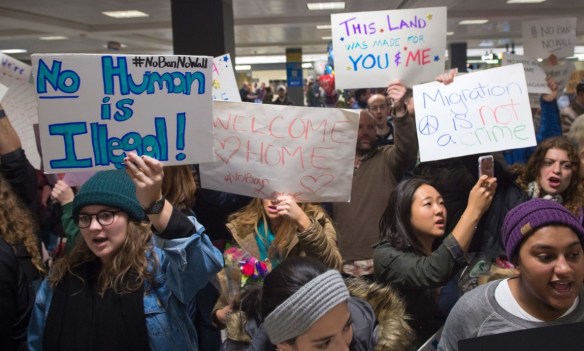
The executive order temporarily banning people from seven Muslim-majority countries in the Middle East from entering the US has sparked fierce debate among both the public as well as tech-focused corporations in America

Another day, another controversy in Washington D.C. This time, it’s about the Presidential executive order halting all refugee admissions and barring temporarily people from seven Muslim-majority countries. I’ve written about how corporations will either follow one of two strategies when dealing with the President – they’ll support his America first agenda (mainly by recycling old news), or they’ll stick to their values and come out against policy shifts such as this one.

Over the weekend, we’ve seen evidence of the latter. A swathe of tech firms, primarily from California’s Silicon Valley, have come out against this policy, which has been described as a ban on Muslims, which they view as both un-American and harmful to attracting talent. Here’s a snapshot of views as reported by the ‘fake news’ website Buzzfeed and Bloomberg:

Google’s CEO Sundar Pichai

“It’s painful to see the personal cost of this executive order on our colleagues,” Google Chief Executive Officer Sundar Pichai  wrote in the memo, a copy of which was obtained by Bloomberg News. “We’ve always made our view on immigration issues known publicly and will continue to do so.”

Apple’s CEO Tim Cook

In my conversations with officials here in Washington this week, I’ve made it clear that Apple believes deeply in the importance of immigration — both to our company and to our nation’s future. Apple would not exist without immigration, let alone thrive and innovate the way we do.

I’ve heard from many of you who are deeply concerned about the executive order issued yesterday restricting immigration from seven Muslim-majority countries. I share your concerns. It is not a policy we support.

Microsoft’s CEO Satya Nadella

“As an immigrant and as a CEO, I’ve both experienced and seen the positive impact that immigration has on our company, for the country, and for the world. We will continue to advocate on this important topic.”

Facebook’s Founder and CEO Mark Zuckerberg

Tesla’s CEO Elon Musk

Other Silicon Valley CEOs have also stepped in to support those who will be affected by this decision. In a post on Facebook Uber’s CEO Travis Kalanick wrote that the company is working out how it can financially support Uber drivers who aren’t able to travel back to the US due to the visa ban.

Airbnb’s Brian Chesky wrote on his own Facebook page that his firm would be supporting those impacted by this ruling with free housing.

The list of tech CEOs who are standing up goes on and on, and I don’t want to repeat too much here from what is an excellent article on Buzzfeed. The US tech sector, an industry that owes much to the talent of immigrants and which leads the world when it comes to innovation and product usage, has essentially spoken with one voice against the Presidential executive order halting all refugee admissions and barring temporarily people from seven Muslim-majority countries.

In contrast, older industries such as the automotive and manufacturing sectors (what could be dubbed the ‘older’ corporate sector) have not shared their views. In what is becoming a battle for hearts and minds across America, this public show of values-based beliefs will not be the last by an industry wary of what the Trump administration means for its future. I’ll leave you with another quote, this time from a wonderful article in The Atlantic on how this will be the first of many disputes between the Trump administration and Silicon Valley.

The barriers between Trump and the technology world span both values—the industry emphatically leans left on social issues—and interests. Trump’s hostility to immigration, opposition to free trade, and resistance to replacing fossil fuels with renewable sources to combat climate change all clash directly with the constellation of technology industries that rely on importing talent from around the world, sell their products across the globe, and have invested heavily in developing clean-energy alternatives to oil, gas, and coal. Tech leaders are also bracing for Trump to attempt to unravel the net-neutrality rules that Obama’s Federal Communications Commission adopted, and to push against the privacy standards many industry leaders have sought to maintain.

Whilst we won’t know who is winning over the majority of America’s public, it’s good to see organizations in the tech sector standing up for values which they believe in. I hope other organizations and corporations will remain true to the values that they talk about as well.

The American Strongman – A Middle East view on Trump’s first 48 hours as President

2016_11_30-trump-arab-dictator_homepage-3-22896132107

President Trump and his team have shown increasing disdain for the media during their first weekend in office. Some commentators have drawn parallels to my own region (image source: Vocativ)

If the first two days were anything to go by, we’re in for four years of presidential reality TV. From the spectacle of the inauguration of the 45th President of the United States to an impromptu press announcement at the White House (there were no questions, so I won’t call it a briefing), and news interviews by White House staffers attacking the media; all of these events have made for compelling viewing.

Looking in from the outside, here in the Middle East, none of these actions should surprise or startle me. I live in a region where the words media and propaganda are often used to mean the same thing in the Arabic language by the region’s population. I’ve also heard many commentators in the region (and in the US) compare what the Trump administration is doing with the media to how regimes such as Iraq’s Saddam Hussein ‘communicated’ (if you want an example, just watch this clip from Saddam’s Minister of Information Muhammed Saeed al-Sahaf during the 2003 Iraq invasion – the link has been updated).

While there’s been much laughter at some of the messaging (the phrase “alternative facts” is my vote for the dictionary addition of 2017), I’ve seen a number of worrying signs that the Trump Administration wants to take the media and the public down a path that we’re all too familiar with in the region. Here’s why.

  • Delegitimize the Media

The first step on this road is silencing critics. And those who have been most critical of President Trump are the media. During the weekend when visiting Langley, the CIA’s headquarters, he uttered the line, “The reason you’re my first stop is that, as you know, I have a running war with the media. They are among the most dishonest human beings on Earth.” This was in part due to their coverage of the Presidential Inauguration, and their rebuttal of the claims on the number of attendees.

This isn’t a new statement. President Trump has made the claim numerous times, including in April 2016 when he said, “You know we have a great time considering the subject matter is no good. Right? But when we say—look at all those hats, right?—”Make America Great Again.” When we say that—you know somebody, a reporter—by the way the world’s most dishonest people are back there. Look at all the cameras going. Look at all those cameras. It’s unbelievable. They are dishonest. Most of them. Not all of them. But Most of them.”

And, here he is on camera saying the same thing (the link has been updated).

The reasoning is simple. American media is independent of any government ownership, and as such it often takes politicians to task for their words and deeds. By delegitimizing the media and going straight to the public through social media (mainly Twitter), President Trump and his administration won’t face the same level of intrusive questioning. The administration has already threatened to hold the media to account, and President Trump has held one press conference since July 2016, during which he claimed CNN and Buzzfeed were fake news sites. A free media is an essential tool to hold governments to account; muzzle the media, discredit them, and you’ll face fewer questions from a diminishing press sector.

Vocativ has run a piece on this, named Trump And The Media: The Arab Dictator’s Guide. It’s a great read for those of you who follow media-related issues.

  • Change the Narrative

President Trump and his team are masters at switching attention from one issue to answer. In his blog, the London-based PR professional Stephen Waddington has listed a number of tactics used to divert attention from hard policy issues to softer social issues. One of my favorites is dead cats, and to quote from Wadds:

Trump uses Twitter as a tactical weapon, hitting out at opponents, and directly countering attacks.

Tweets are literal, short and direct. He uses capital letters, single words and repetition for effect. There can be no uncertainty in the content or context of a message, and he seldom entertains any further discussion.

It’s an approach is known as the dead cat, created by political strategist Lynton Crosby. His response to losing an argument was to throw an issue, known as a dead cat, on the table.

The appearance of a dead cat, albeit metaphorical, is shocking. It quickly shifts attention, forcing opponents to move on and focus on a new issue.

And then there’s a concept called the Overton Window. Developed by political analyst Joseph Overton, this is a spectrum of views which are deemed acceptable to the public. It also explains how  a theory of how a policy that’s initially considered extreme might over time be normalized through gradual shifts in public opinion.

There’s a similar theory in marketing. Known as the Anchoring Effect, this describes a common human tendency to rely too heavily on the first piece of information offered (the “anchor”) when making decisions. Once the anchor is set, decisions are then made by adjusting around the initial anchor, regardless of the legitimacy of the actual anchor number. For example, a brand will introduce a new, super premium/expensive toothpaste. That new product will shift perception of the whole category, and push consumers to spend more on toothpaste by choosing the second or third most expensive option.

We’re seeing this use of the Overton Window and the Anchoring Effect in US politics today, with politicians introducing extreme ideas to shift the discourse away from the mainstream and towards their own views and beliefs. They’re changing the narrative over the long-term, to make what was once unpalatable an acceptable argument.

These narrative tactics have been used in countless societies, most recently in countries such as Israel, where the public has accepted once right-wing ideas such as the expansion of settlements. It’s clear that President Trump’s team aren’t interested in answering questions on issues such as the Affordable Care Act, but rather they want to change the narrative around “Making America Great Again”, an idea of little substance but great appeal. We’re used to such efforts in the Middle East (Saddam regularly compared himself to great Iraqi heroes from history, as a means to encourage nostalgia and promote similar ideals).

  • Create a Cult of Personality

It’s also clear that President Trump has a thin skin. He’s repeated countless theories and statements about winning the popular vote (the President claims, without any evidence, that he lost the popular vote based on mass voter fraud). And then there’s the debate around the Inauguration attendance. This President takes things personally. He sees himself as a nation strongman who will change US politics for the betterment of its people. And woe betide those who disagree with him.

What’s also remarkable is how his team speak of the President. During the CIA visit at the weekend Vice President Pence introduced the President by informing the audience that he had never met anyone “who is a greater strategic thinker” on matters of national security. The White House Chief of Staff Reince Priebus said on Sunday that, “I’ve never seen anyone work harder or have more energy than this president.”

If you were to listen to the administration’s messaging, you’d think President Trump is a superman, an Übermensch from the pages of Friedrich Nietzsche. The Chicago Tribune’s Steve Chapman points out the folly in their praise, but how many will believe the fawning praise? And where will this lead us to? Will we see the White House building a cult of personality around the President?


As a person who straddles both Eastern and Western cultures, I can see the successes and failures of these societies a different clarity. I admire the US for its freedom of speech (which is enshrined in the Constitution) and for its media industry. I’m also a believer in public debate when it comes to governance. Are the past couple of days a sign of things to come in the US? I hope that I’m mistaken, but over this first weekend of the Trump Presidency I have seen parallels between the two regions when it comes to media messaging. And this isn’t what I want to see for the US. I hope I’m wrong.


A crisis of competence or character? How to understand (and prepare for) crisis basics

crisisahead

Are you prepared for the worst? (image source: http://www.adweek.com)

The past 18 months has been a remarkable time for crisis watchers. We’ve watched as global brands and leaders have become embroiled in crises. Some of these have been of their own making (think Sepp Blatter and FIFA, or Volkswagen and emissions). Others have been due to unfortunate circumstances, such as with Emirates flight 521.

As communications professionals out there know, there’s nothing like working on a crisis. In an excellent piece for the Financial Times by David Bond, Rupert Younger, director at the Oxford University Centre for Corporate Reputation, sorts crises into two basic definitions – a crisis of competence or a crisis of character. To quote from the piece:

Examples of competence scandals include Toyota’s 2009-11 recall of 4m of its cars because of defective accelerator pedals, or the battery defaults on some of Boeing’s Dreamliner aircraft. These, according to Mr Younger, can deliver a direct, and in some cases short-term, hit to a company’s sales figures.

A character crisis calls into question the culture and behaviour of a company and its senior executives and often arises out of media scrutiny or criminal or regulatory investigations. Fifa and News International were both crises of character.

The worst type of crisis involves both. The BP Deepwater Horizon oil spill in 2010 is a case in point. It was triggered by a disastrous oil rig explosion that called BP’s offshore drilling competence into question. But the company’s response turned the crisis into a far wider issue of trust.

As communicators, our roles have traditionally covered managing the fallout from a crisis. However, whether we like it or not (I hope the former), we’re also becoming the conscience of our organizations. It’s incumbent on us to speak up when we hear about or see an issue that could harm an organization’s reputation. This is easier said than done. Volkswagen is a great example of a crisis of character – dozens of VW employees must have known about the manipulation of data, and yet no one spoke up (or, if they did, the information didn’t get to the right people).

To tackle such a crisis, communicators need to work with executive management to create an ‘incident aware culture’. Employees should feel that they can report issues without reproach or fear of retaliation. Employees also need to feel that they’re working for and in an ethical organization that cares about doing the right thing. This requires continuous communication from and engagement by the board and management, as well as support from legal and HR teams. If things do go wrong, communicators and management need to proactively engage with stakeholders to explain what has happened and why, a strategy known as stealing thunder. This is best defined as an organization “breaking the news about its own crisis before the crisis is discovered by the media or other interested parties” (Arpan & Roskos-Ewoldsen, 2005).

Unfortunately, as has been noted by academics such as An-Sofie Claeys, this type of self-disclosure is rare in practice. As with the case of VW, organizations are tempted to conceal the crisis rather than make it public.

Crises of competence are easier to deal with. However, many of us still aren’t prepared for what happens when this type of crisis occurs. Here’s a simple crisis communications assessment grid developed by the communications team at US firm Timken, which establishes crisis severity based on the type of incident and the involvement of various stakeholders, as well as who needs to be involved.

timken-crisis-comms-framework

For a more detailed look at how to handle a crisis (pre, during and post), then have a look at this post I wrote after meeting with crisis communications expert Caroline Sapriel. And, if you have any feedback on how do deal with a crisis, please do share. I’d love to hear your views.

Recycle Old News or Stick to Brand Values? How will firms deal with Trump?

trump-brands

Trump’s Twitter attacks have targeted a number of firms. His behavior may not change when he takes up the Presidency today.

Trust me, it’s happening. Today, Donald Trump will be sworn in as President of the United States. And, judging by the past couple of months, Trump will personally run his agenda of making America great again across the entire business community. Shel Holtz has written a fantastic piece about the impact that Trump has when he Tweets about a company which he feels isn’t doing enough to support his American vision.

Companies will have two basic strategies to deal with this new type of political risk; they can either recycle old news, or they can resist Trump’s attacks, and fight back (yes, you read that right, brands will go up against Trump).

We’re already seeing firms come out with a raft of job announcements. This week General Motors said it would invest US$1 billion in its U.S. manufacturing operations, which will lead to the creation or retention of 1,500 jobs, adding that it would also add another 5,000 American jobs “over the next few years” in finance and advanced technology. Fulfilling another Trump pledge, GM announced that around 450 jobs will be returned to the US as GM transfers back parts production from Mexico.

Other firms have also put out jobs announcements. Amazon, whose founder Jeff Bezos publicly rowed with Trump during the election campaign, announced that it’d hire over 100,000 staff over the next 18 months. “It’s a very powerful headline, and the timing certainly makes Trump look good,” Ivan Feinseth, an analyst at Tigress Financial Partners LLC, told Bloomberg. “It’s going to happen in the first year and half of his administration. Bezos couldn’t have set him up any better to look good — timing is everything.”

China’s Alibaba has sought to allay Trump’s Chinese angst by promoting job creation in the US. Last week, Alibaba chairman Jack Ma met with the president-elect to tell him that the Chinese Internet giant would create 1 million jobs for Americans by helping small domestic businesses sell to Asian markets via Alibaba.

Job creation in the US is a tactic that many firms will seek to copy over the coming months as Trump takes charge. How many of these announcements will stack up, who knows. We’ll only know for sure after the space of months or years. However, many brands will be tempted to win favor with Trump’s administration and stay out of his crosshairs by pushing job news. The questions many will ask are, is the news real (for example, will Alibaba really be able to create a million jobs for Americans?), and is the news old? It’s been alleged that the GM announcement was planned as far back as 2014.

The other approach that companies will take is to stand up to Trump. Speaking to the San Francisco Chronicle, Richard Levick, president and CEO of the Levick public relations and communications firm explained why.

“Other companies will realize that the king doesn’t have a lot of clothing here,” he said. “At some point in the not too -distant future, a company will realize that there is greater value in being courageous and standing up to the president.”

To date, the best example of a brand fighting back against Trump is Vanity Fair. The publication, whose editor Graydon Carter has long been a critic, ran a piece in December last year titled, “Trump Grill Could Be The Worst Restaurant In America”. Needless to say, it didn’t go down well with the President-Elect.

The magazine responded  instantly, running a headline banner ad across its own and other sites entitled “The Magazine Donald Trump Doesn’t Want You to Read.” The result was 40,000 new subscribers.

“Vanity Fair played that perfectly,” Scott Farrell, an expert in crisis management and the president of Golin Corporate Communications, told the New York Times. “‘This was the magazine that Trump doesn’t want you to read.’ I think their response was consistent with the brand’s DNA.”

Firms will either have to proactively plan to put out information that will appeal to the new administration. Or they’ll have to plan on how to respond to a potential attach. Whatever they do, brands will have to move with speed, to counter Trump’s use of Twitter. Whichever route brands take, crisis comms experts (and the rest of us) are going to have an interesting four years. Unless someone turns off the WiFi in Trump Towers, that is.

Influencers & the Importance of Credibility – an Example from SeaWorld Abu Dhabi

life-lessons-article-by-khalid-alameri-in-the-national

When choosing influencers, brands and publishers need to ask themselves if the person has the credibility and expertise to influence others.

As anyone working in comms will have noticed, 2016 was the year of the influencer. That trend will not only continue into 2017, but it’ll pick up pace. Everywhere you will look, you’ll see brands and organizations working with influencers to address public issues with their stakeholders.

There’s many issues around working with influencers. One, which I’m going to highlight here, is the importance of credibility. Often brands (or publishers) will seek out an influencer  who has a wide following and is popular. That’s unfortunately not the best approach to follow. Instead, brands need to think about credibility, by asking themselves if the influencer they’d like to work with is 1) an expert in this field, and 2) has talked about the issue before, and 3) are considered to have integrity.

I’ve talked about this topic before, most notably when Etisalat brought on-board a load of social media influencers from rival Du. It’s a topic I’ll probably have to keep coming back to again and again, as brands (and publishers) keep on making the same basic mistake.

A fellow communications professional shared with me an opinion piece from the Abu Dhabi-based English-language newspaper yesterday. It was on why Abu Dhabi and SeaWorld will be a good fit, and why both will benefit the wider environment. The piece was written by Khalid AlAmeri, a well-known and well-respected influencer.

The piece is well-written in terms of the argument, and while I could argue to the contrary I’m going to focus on the choice of the influencer. Firstly, Khalid writes prolifically on entrepreneurship and issues around Emiratisation. He’s well-known and admired for this work. However, he’s not an expert on the environment or wildlife (if he is, his expertise should be highlighted here). He’s highlighted some criticisms of SeaWorld, which is the sign of an experienced writer who knows how to engage in a debate. But again, why should I believe someone who firstly isn’t an expert in the field, and who hasn’t written previously on the subject.

I’ll be the first to admit that it’s not an easy task to find influencers on issues that aren’t mainstream (fashion, food and travel). However, there are organizations in the UAE which do oversee the environment, such as the Environment Agency Abu Dhabi (which I assume Khalid references in the piece), or the Emirates Diving Association. There are also associations and people who take part in marine life conservation, such as the Dubai Turtle Rehabilitation Project. These bodies would have made for a much more powerful and compelling argument, primarily due to their expertise. Knowing this, I’d be much less willing to question their lines of argument. As it stands, Khalid’s opinion piece is weakened due to his lack of credibility in this area (as opposed to his expertise on entrepreneurship). To me, that lack of expertise weakens an argument rather than promotes it.

What challenges will communicators face in 2017?

crystal-ball-ss-1920

It’s no understatement to say that 2016 was a shock to the system. We’ve faced political upheavals, the rise of populists and the proliferation of fake news, and that’s just for starters. The Middle East region has been impacted by continuing conflict as well as financial belt-tightening caused by low oil and gas prices. Needless to say, 2016 hasn’t been the easiest 12 months for many communicators.

So what do we have to expect in 2017? Looking into my crystal ball, I see  a number of issues that will grow in prominence. Here’s my take on them:

  • Political Interference and its Impact on Brand Values

The rise of populist politicians isn’t anything new, but their use of social media to communicate directly with their publics, eschewing traditional media, is something brands will have to deal with. We’ve already seen how Donald Trump is impacting brands in the US (examples include his tweets on Boeing and Lockheed Martin, which have wiped billions off company share values).

Communicators will need to work out how to deal with this new type of political interference. They’ll need to improve their online engagement, using the same social media tools as these politicians (Twitter, I hope you realize how much of a god-send Trump is for your platform), as well as espouse brand values that stakeholders believe in and want to defend.

There’s a danger here that brands will retreat into communicating in the same populist language as the politicians, or simply keep quiet and hope that the storm will pass them by. I hope that brand owners and communicators will instead engage on issues with a purpose and positive values.

  • Expect More Fake News

Whether we like it or not, fake news is here to stay. The year that was 2016 saw fake news become a cottage industry, with ‘content producers’ in places like Macedonia spewing out false stories which went viral through social media and which generated thousands of dollars of ad revenues. Much of this fake news was focused on politics; this is likely to change in 2017, with fewer key political votes. Instead, we’re going to see more fake celebrity news, as well as fake news in languages other than English. This may play into regional conflicts. Brands need to be aware of what is being said about them, especially in Arabic, Farsi and other regional languages.

  • The Continued Rise of Social Influencers


Whether you like it or not, 2016 was the year of Social Influencers. This trend is set to continue into 2017, particularly with Snapchat having opened up an office in Dubai, and with brands/organizations realizing that they have to do more to engage with stakeholders online. Expect there to be more questions around online metrics such as reach, engagement and, most important of all, return-on-investment. Also expect that the cost of working with social influencers will rise, particularly in locations such as Dubai, Kuwait and Riyadh.

I hope that brands will start to think differently about the type of social influencers they’d like to work with, and begin nurturing relationships with real fans with smaller followings rather than purchase engagement through influencers who have large followings but who don’t necessarily understand or love the brand. In other words, we need to rethink what social influencers are and what they mean to us.

  • The Urgent Need to Prove Our Worth 

This is a perennial favorite, but we’re going to struggle to underline the value that we bring to our organizations in 2017. Why? Because of an inability to link our outcomes to organizational objectives for many of us, partly due to a lack of awareness/understanding about the need to leverage measurement values. We’re also lacking a universal definition of what we do and globally-accepted certifications that prove we can walk the talk. The Global Alliance is working hard on the first issue, and others such as the CIPR and IABC are pushing ahead on the second. However, we’re still going to struggle with proving our worth to those that we work with and others that we need to work with.

There are a number of others who have shared their own views. Wadds has a longer list which is a fascinating read (you can see it here), and Omnicom’s David Gallagher has written down his own thoughts on the issues we will face in the year ahead.

What are your thoughts. What challenges will we see, and what are you looking forward to in 2017? I’d love to hear from you.

Will Saudi’s telcos, government charge Saudi consumers to use social media?

Saudi is a country that isn’t well understood by many, especially by communicators. However, for all of the stereotypes the Kingdom has the capacity to surprise. Take for example a piece published by Saudi Arabic-language newspaper Al-Watan on the 15th of December. If true, the short story was a good piece of investigative journalism. To summarize for non-Arabic speakers out there, a number of telecommunications companies have met with the Communications and Information Technology Commission, the national regulator which oversees the telecommunications industry, to discuss levying on consumers a charge for social media services (the full story in Arabic is below).

Saudi telco operators have apparently met with the national regulator to discuss levying a social media charge on consumers, according to this piece in Al-Watan

Saudi telco operators have apparently met with the national regulator to discuss levying a social media charge on consumers, according to this piece in Al-Watan

The Kingdom has the most active social media base in the region; Saudis are avid users of services such as Snapchat, Twitter and YouTube. Saudis have taken to social media to call for boycotts against the telcos for what they describe as poor service and high costs. Quite understandably, this report didn’t go down too well with Saudi consumers. A new hashtag was conceived, named fees/charges on social media (#رسوم_علي_مواقع_التواصل).

The regulator has moved to deny the initial story – Al-Watan carried a denial piece the day after. However, partly due to a lack of trust in both the telcos and the regular, many Saudis online have expressed their belief that the news is true. The report prompted many Saudi influencers to share their own views online on the quality of service offered by Saudi telecommunications firm; below is a vblog by Saudi Gamer.

Globally telcos have been seeking solutions to redress the challenge of revenues lost to social media channels or applications which offer lower or free services such as messaging and calling. The issue is going to get worse, according to London-based research and analytics firm Ovum. The telecommunications industry will lose a combined $386 billion between 2012 and 2018, the firm predicts, from customers using over-the-top (OTT) voice applications such as Skype, or Whatsapp.

Some operators such as Verizon are looking to become content producers as well as deliver the content through the pipes. However, charging consumers for accessing social media would be a short-term but unpopular option for telcos to use as they seek to fill the revenue gap. How much it may impact online consumer behavior and advertising is anyone’s guess. We may find out next year.

Guest post – Communication, Engagement and Excellent Customer Service

For my third guest post this week, I’ve asked internal comms specialist Kevin Ruck to weigh in on the link between good internal communications, employee engagement and customer service. Kevin Ruck, who is a founding director of PR Academy, initiated and designed the internal comms qualifications accredited by the Chartered Institute of Public Relations. Kevin is a regular speaker and author on all aspects of internal comms. He can and should be followed on Twitter at @AcademyKev. Over to you Kevin!

Guest post – Communication, Engagement and Excellent Customer Service 

As exceptional levels of customer service become more commonplace and enable organisations to thrive in challenging times, poor and mediocre service are increasingly noticeable. And in this ‘age of outrage’ customers are likely be more inclined to call out poor service in a very public way.

So how can organisations find ways to ensure that customers love what they do? In this post, I reflect on my own experience as a customer service manager and consider how internal communication might be one way to underpin a customer service oriented culture.

I spent many years early in my career dealing with complaints about poor telephone service in the UK. This was back in the 1980s when most telephone exchanges were mechanical (not digital like today) and the state of the line plant was fairly poor, resulting in lengthy delays to repairs and ongoing problems. Anyone remember crossed lines?

Dealing with people who complain is a very demanding job. No organisation will always get everything right, but it’s how customers are treated when things go wrong that matters. Even back then we realised that turning round a dissatisfied customer could be very beneficial for business. This often entailed doing something unexpected or behaving in a way that showed that you really cared.

I ran a great customer service team and we had to resolve some pretty tough problems. However, Shep Hyken, a US speaker and author says that ‘Customer service is not a department, it’s a philosophy’. And he’s right. But if this is true, it begs the question ‘what is a philosophy of great customer service like?’ In an article for the Huffington Post, Doug Sandler provides five tips. These include:

  • Respond quickly on social media
  • Anticipate what customers want
  • Be honest and have a perspective
  • Take responsibility and own up to any errors you or your company has made
  • Be positive and listen

All good points. I also like the example of British company, Brilliant Bikes, who state that ‘We look for ways to help cyclists get more from their bike. If a customer turns up at the shop early, we open early. When someone phones, they get a human’. This exemplifies a sense of purpose within the business that is translated into customer service.

So, how can all organisations get these approaches embedded into what they do?

This is a tough question. One that many academics and CEOs have grappled with for many years. I’m not going to provide a personal five point listicle in this post. That would imply that there’s a simple solution which patently there isn’t, otherwise excellent customer service would be ubiquitous.  Instead, I will set out how two broad principles for internal communication are important for a strong customer service culture.

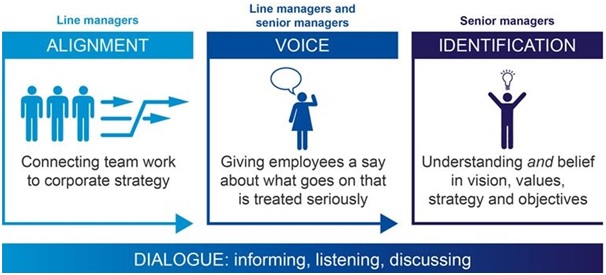
In my PhD research, I found that internal communication that is focused on keeping employees informed and employee voice is likely to lead to higher levels of organisational engagement, including what employees do to help the organisation succeed. Good internal communication is a strong enabler of an organisational culture that leads to engagement. And there’s little doubt that engagement and customer service are connected – as reviewed in an Engage for Success report in the UK. Organisations that adopt what I’ve called an AVID model of good internal communication practice (see below) are likely to develop a culture whereby employees trust senior managers and feel a strong sense of belonging. Feeling informed, feeling that it’s safe to voice opinions that are treated seriously and feeling that senior managers care about everyone makes employees feel valued. And this can, in turn, enable employees to bring their whole self to the work that they do – including the service provided to customers.

One employee said to me that she could tell when a senior manager was listening to her when she noticed that he ‘was smiling but not with his eyes’. In the same way customers can tell when an employee genuinely cares for you as a customer.

An AVID model of good internal communication

The AVID internal communication engagement model

The AVID internal communication engagement model

Some CEOs, such as Vineet Nayar at HCL Technologies, go as far as to say that the best way to provide great customer service is to put employees first. As Nayar explains, ‘The first thing that you need to do is create an environment of trust where the employees believe what you are saying and are willing to follow you wherever you are going’.

This focus on employees is also highlighted in a new approach to leadership, known as ‘responsible leadership’ which incorporates four dimensions; sustainability and the environment, risk analysis, care for employees and monitoring of subcontractors (italics added).

So, great customer service can be generated through responsible leadership, communication and engagement. It requires systemic approaches to communication where senior managers take their communication role seriously. That’s why it is hard to achieve. But get it right and organisations will thrive in a 21st century service centred economy.

Guest Blog – How To Meet Your Customers Changing Expectations

We've gone from digital natives to mobile natives. As consumer expectations change, how can we communicators remain relevant? (image source: www.mirror.co.uk)

We’ve gone from digital natives to mobile natives. As consumer expectations change, how can we communicators remain relevant? (image source: http://www.mirror.co.uk)

I’ve asked a number of prominent communicators to talk about the importance of communications and design when it comes to customers. Julio Romo (on Twitter as @twofourseven and on LinkedIn here), an International Communication Consultant and Digital and Innovation Strategist, shares his insights on how communications is changing and how customer experiences are impacting our jobs as communicators. Julio, over to you.

How To Meet Your Customers Changing Expectations

People around the world are today more connected than ever before. Let it be through social media, smartphones or both. The way we are now connected has influenced and changed the way in which our beliefs and expectations are shaped.

Let me give you some facts. There are over 2.3 billion social media accounts worldwide – Facebook has 1.79 billion monthly active users (92% access via mobile), Twitter has 313 million active monthly users and Instagram has 400 million monthly active users. These are very top line numbers. They are Impressive, but missing some context.

Now the context, one in every six minutes that is spent online is spent on Facebook, 2.5 billion comments are made on Facebook Pages, 6,000 Tweets are sent every second. The more content that is out there the quicker that we must be to filter out what we think is not relevant to what we want to learn.

Research by Microsoft also tells us that our attention span is now down to 8 seconds, that is shorter than that of a goldfish. The speed at which we make decisions has also shortened to what Adobe calls, the last millisecond. We live in extraordinary and highly competitive times.

People have changed how they make decisions. Today it is the experience that they get from their engagement that shapes their perceptions and decisions-making. Get the experience right and in a fraction of a second you keep and possibly convert an individual. Get it wrong and you risk loosing your customer, possibly for good.

Think about it this way:

And the benefits? Well, insight from Bain & Co tells us that increasing customer retention rates by 5% increases profits by 25% to 95%. Not bad at all.

Experience that your audiences receive matters. Design and the way in which they interact with you certainly matters. And today, the customer matters more, and they know this.

The customer journey has to be simple and rewarding. It has to deliver an experience that not just converts them, but gets them to return and amplify the positive engagement that they’ve had. And it is in this connected world that reputations are built and broken.

A McKinsey report states, ‘Consumers now have much more control over where they will focus their attention, so companies need to craft a compelling customer experience in which all interactions are expressly tailored to a customer’s stage in his or her decision journey.

So how do we secure better engagement from our target market and audiences? That is simple, yet not very straightforward. Organisation must become agile and nimble. They must become better at listening and learning. And their communications and marketing must be always-on and responsive – be ready to respond to customer service issues. Our digital touch points need to be built around the personas of our audiences, yet bearing in mind that like technology, peoples behaviour and expectations changes fast, especially when start-ups come into play disrupting business as usual.

Some companies have already embarked on a journey of change to ensure that they remain relevant. In 2005 the former FT US Technology Correspondent and Columnist Tom Foremski coined the term ‘Every Company is a Media Company.’ A term that still to this day is alien to many. Yet some organisations have changed their PR and communications teams into modern day brand newsrooms that monitor news, deliver content and engage through social channels.

Having and understanding of the audience and designing for them will give companies access to a global market that in 2014 McKinsey thought this year could have been worth $2 trillion in potential sales. Being nimble and agile is a must. Having your communications, marketing and customer service teams working together is what will help your businesses grow in a competitive market.

After all, bad news travels fast on social media. According to Zendesk, bad experiences are shared with more people than good experiences, and more customers share bad experiences than good through social networks like Twitter and Facebook.

Today, people who complain are the ones that you know about. People expect and we must deliver, we must be what they expect, more customer centric. Because it matters to our reputation, our business and in competing markets it gives us competitive advantage.

The building of successful businesses today depends on the gaining of more insight about audiences. Understanding their behaviour and decision-making and roadmappiing their journey so that they find what they want on platforms relevant to them.

Now more than ever we have to move towards acting on insight and data in order to secure attention and engagement from people.