Birth of digital influencers = death of true journalism! Who’s to blame?

Have social media influencers negatively impacted our profession?

I’ll be hosting more guest bloggers on the site. This piece is from Rijosh Joseph, and focuses on the contentious issue of social media influencers and their impact on the media and the concept of public relations in general. Enjoy the read, and thank you Rijosh!

Call me old-fashioned, but I am quite annoyed with the evolution of modern day PR! I often wonder, if not all but at least, some of us PR folks, have lost the plot or whether we are passing the buck to the modern-day advertisers?

The topic had been “vocal” both in my mind and among a few of my peers within this industry. A recent YouGov report published by BPG stirred further debate and hence I find the need to put forth a lay opinion.

When this study was posted as a pitch for editorial opportunities in “UAE Journalists”, a private Facebook group that has members within the media and communications industry, it laid the platform for members to “engage” with their views. And honestly, it was a very interesting thread to follow.

Coming back to the point, it frustrates me to sit with PR teams (clients + agency) only to educate them on the incorrect notion of treating journalists inferior to digital “influencers”.

For instance, a certified journalist, are in most cases, served with a press release, which PR folks expect them to carry in their publication. Yet a blogger or digital influencer, plugged to the cage of technology, and who does not possess any insights on journalism, gets pampered at an all-inclusive media event. I agree, product reviews, giveaways and meals never pay their bills. However, we hardly realize that it is a lifestyle choice that they made.

In my honest opinion, digital influencers could strive for a path wherein the real essence of journalism and the need for materialism, can co-exist. Instead of just showing up at events for the freebies, one can get creative in myriad ways of generating revenue while preserving the quality of good writing.

For starters, one can turn a blog into a revenue generating business-model with meaningful campaigns, rather than a platform for paid editorials or tainted and biased op-eds. For example, if you love travelling, then creating a memorable travel experience alongside partnering with brands that are willing to collaborate and for the same cause will let you fill your pocket and keep the sanctity of good blogging.

If one is in to fashion and beauty, then developing a fashion line or partnering with make-up brands they believe in for workshops etc., will lead consumers to their webpage, at the same time maintain the dignity of unbiased content with a penchant for money.

The core essence of blogging is channeling one’s opinion based on their passion points. It does not become a blog if it turns out to be a tool to endorse commercial products.

In the last couple of years I have come across several bloggers and digital influencers who “review” products, but end up in situations wherein they stoop-down to cringe-worthy negotiations, like refusing to publish the review without payments or price-tags being involved. It had also got to the point where they create a drama when we politely decline the opportunity and request to collect the product to return to the client as they are all part of a rotating media review sample quota.

Similarly for media events, if influencers expect them to be invited, it is only fair for PR folks to expect them to cover it. Be it, positive, negative or neutral – give us the coverage if you have shown up to the event and taken a press kit. It is highly frustrating when they send an email with their rate card following the event to publish or cover it. Instead, stop asking to be paid to be part of a media experience and honestly write your thoughts about it. That isn’t the role of true bloggers.

The point here is, I’m not trying to fully kill or disapprove influencer marketing. As communications professionals, we must tie up with influencers only if they can provide clients with tangible analytics to back up exactly what ROI they can bring to a campaign. But with the current state-of-affairs, too many lines have been crossed and it is appalling that we are forced to please every new kid on the block who claims to be an influencer and, worse, bend and break to their whims and fancies.

From the debate on this topic in the “UAE Journalists” Facebook post, there was one comment, which caught my attention to also reflect from the other side of the spectrum. The post stated:

“What is the difference between a paid influencer and a journalist who has absolutely no freedom or inclination to write a story unless there’s significant advertising spend? What’s the difference when a journalist calls you up, asking if you can get them tickets for a concert or movie, etc. Not saying all journalists do this, but let’s be honest, most do. Whether we like it or not, celebrity influencers have always been a part of the marketing and comms-mix, now with social media, the rise of the “digital influencer” is inevitable. You and I, may not have let an influencer sway our opinion on a product or service, but I think most of us, have tried out that new restaurant just because we heard everyone talk about it.”

And it is sad that I have to fully agree to the above post. All UAE journalists are not saints. We all have had our countless experiences that make us wonder as to why chose to be in PR. It is also a fact that in this region, the ethics in journalism among journalists have gone down. This might also be a reason for incessant rise in influencer marketing.

So, what can be done to clean up the mess?

To begin with, from a digital perspective, I feel it is time the scene becomes regulated by relevant authorities of the media council to make it mandatory that all paid editorial content on digital platforms get declared as “sponsored content” as opposed to how it is being offered to readers now. This should bring about a sense of equilibrium among all stakeholders playing within this sphere of media and communications.

And on that note, it is high-time, members within digital fraternity consider ways to stop asking for money merely to be part of a media experience. And as responsible PR professionals, we must not dig our own grave by fostering current practices with influencer marketing.

WhatsApp and why communicators should care about Dark Social (at least in a crisis)

When it comes to harmful materials, WhatsApp should be a key source of concern for communicators in the Gulf

When it comes to harmful materials, WhatsApp should be a key source of concern for communicators in the Gulf

Let me ask you a question. Name the most popular application on the phones of consumers in the Gulf. It’s not Instagram. It’s not Twitter, and it’s not Snapchat. As you clever ones may have guessed from the title of this post, it’s WhatsApp. At the last count, in a survey by TNS in 2015, the instant messenger app was used by 84% of smartphone users in the Gulf. And yet, it would seem that WhatsApp is hardly used, either by marketers or by communicators.

Part of the challenge is that WhatsApp is a closed network. It’s dark social, a term coined in 2012 that refers to online activity which cannot be monitored. WhatsApp and other applications such as WeChat and Facebook Messenger cannot be mined for data, and as they’re closed the only persons who know what is being written or shared are the sender and the recipient.

And that’s often the problem. For people who are responsible for looking after corporate reputations, ignorance definitely isn’t bliss. I wanted to understand more about WhatsApp and what it means to communicators during a crisis. And so I asked them. I asked communicators in the Gulf what WhatsApp means to them. And I want to share their responses with you.

First of all, let’s start with what communicators are using. The most popular social media channels for communicators are Twitter, Facebook, and Instagram. These are followed by LinkedIn and YouTube. Snapchat and WhatsApp are the least used, which is surprising considering their popularity in the region. This may suggest communicators are still struggling on how to use such channels.

Open platforms are the most popular among communicators. Dark social platforms are less popular.

Open platforms are the most popular among communicators. Dark social platforms are less popular.

What’s interesting is the channels that are used during a crisis. While Twitter again comes out tops, followed by Facebook, other channels don’t figure as much.

Twitter and Facebook are the two most popular social media channels during a crisis

Twitter and Facebook are the two most popular social media channels during a crisis

The majority of communicators I spoke to do see WhatsApp as a factor in the spread of harmful materials. However, relatively few have experienced crises over the past year.

The majority of comms practitioners have not seen a crisis spread over WhatsApp in the past 12 months

The majority of comms practitioners have not seen a crisis spread over WhatsApp in the past 12 months

What’s also illuminating is confidence in dealing with a crisis online. When asked about a generic crisis on social media, communicators were fairly confident in dealing with the issue. When you throw WhatsApp into the mix, that confidence level drops.

On the left, the question asked was, "I believe my organization is prepared for a social media crisis." On the right, the question asked was, "I prepared my organization is prepared for a crisis spread on WhatsApp."

On the left, the question asked was, “I believe my organization is prepared for a social media crisis.” On the right, the question asked was, “I prepared my organization is prepared for a crisis spread on WhatsApp.”

The issue that many of us face online is decreasing levels of trust in brands, particularly when it comes to social media pages. Whereas a couple of years back consumers believed that reaching out to branded Facebook pages or Twitter accounts would solve their issues, few hold such beliefs today. Add in issues such as defamation for online comments, and it’s no surprise that consumers are turning to WhatsApp to share their views with their friends and family and to ask them to take action against the brand.

Based on this research, there are a number of recommendations communicators (and marketing folks) need to take into account when it comes to dark social:

  • Communicators need to be familiar with dark social – it’s apparent that consumers are online and are using dark social tools to communicate. Communicators need to be conversant in these tools if they’re going to be effective in getting across organizational messaging, particularly during a crisis.
  • Dark social tools need to be part of crisis planning – one question which wasn’t asked was to do with which social media tools formed part of crisis planning. However, it’d seem that dark social doesn’t come into consideration when planning crisis scenarios or a response. This needs to change.
  • Communicators need to utilize dark social – certain industries, such as the media sector, have begun to make use of dark social in their public outreach. Communicators in this region may be advised to look at adding dark social to their social media planning, to increase the level of engagement and also to understand how much such channels are used vis-à-vis open channels when sharing from websites and other public sharing channels.

If you’re interested in the full research, drop me a note. Sharing is caring, especially when it comes to crisis communications and social media

The importance of reputation – the examples of Mubadala and IPIC


The concept of reputation, which can be defined as how much stakeholders trust organizations, is often difficult to measure. It’s an intangible, an idea which is often best understood at the most inappropriate time (in other words, during a crisis).

In Abu Dhabi last week news broke about a merger between two government-owned investment vehicles. The deal between Mubadala and IPIC would create a combined fund worth US$135 billion according to Reuters. At a time of budget tightening due to low oil prices, the merger promises to bring about significant cost savings according to media reports.

Reuters had another interesting take on the merger, which I’ll copy from the article.

IPIC is also in the midst of a row with 1MDB. The Abu Dhabi fund has asked a London court to arbitrate in a dispute with the Malaysian state fund over a debt restructuring in which IPIC is claiming about $6.5 billion.

While unlikely to impact these proceedings, the sovereign wealth fund analyst said the scandal had undermined IPIC’s reputation and so a tie-up with Mubadala, which is considered one of the better-run state investment funds in the region, would be beneficial.

The analyst that Reuters spoke to argued that IPIC’s reputation was hit by the issue in Malaysia. In addition, the departure of its previous CEO and dealings in its investments such as Arabtec have also contributed to reputation all issues. In contrast, Mubadala has a strong brand, helped in part to the leadership of its management and financial transparency.

It’s not only communicators who need to understand that every action will impact organizational reputation (leaders of listed companies know all too well what public sentiment can do to the stock price, and their jobs). The Mubadala-IPIC merger is an example of how much both good and not so good reputations can impact the business.

What can Brexit tell us about the importance of listening to communications

Was the Brexit vote a result of politicians not listening to voters? And what does this mean for us communicators? (image source: Asda.com)

For many, the events of last week were a shock of the greatest magnitude. The vote for Britain to leave the European Union wasn’t foreseen, even by the pollsters, those professionals whose vocation it is to use real-time data to build a picture of how the mass population will vote. Even the Exit camp had foreseen a narrow defeat.

Much of the post-event analysis has asked why people voted for Brexit and how everyone misunderstood the public mood. Reporting has focused on those areas of England in the North which have suffered as a result of the closure of heavy industries in the 1980s. One theory as to why more Brits voted for Brexit than for Bremain would seem to be, “we’ve suffered for years, and you haven’t listened. This is our rejection of Westminster and the politics in London.”

It’s an interesting observation, especially when one considers that the areas which pushed to leave the EU received fewer immigrants and received the most aid from the European Union. The idea that the electorate punished the politicians for failing to listen is a compelling one, and it offers a reminder to all organizations that listening to their stakeholders is key to success.

By listening and understanding the views of these groups, be they the public, consumers, customers, or members, organizations can better represent those they wish to engage with and talk to. Organizations, particularly those which aim to speak on behalf of a certain constituency, should comprehend that they can only lead through having the needs of their members at heart, and building trust through asking their stakeholders what is important to them.

The example is no different in our region, where organizations are often led top-down and executives rarely interact with their members or stakeholder groups. If Brexit proves anything to us communicators, it is that we must be the link between those on the inside and others on the outside, to develop and provide the means for these groups to talk to each other and for differing opinions to be heard in an environment which is conducive to understanding. There was little of this in evidence among many Brexit voters, not just during the campaign but for years prior to the vote.

As a recap, active listening helps to improves mutual understanding and trust and enables the listener to receive and accurately interpret the speaker’s message. Active listening doesn’t just help with building trust and respect, but it also helps to reduce tension, encourage information sharing and creates an environment that promote collaboration and problem solving. It’s key to communications and is a skill that a good communicator should possess and practice.

Conversely, organizations who don’t listen end up becoming irrelevant, and serve no purpose than to fulfill the wishes of their management rather than those which they aim to represent.

There’s much more to talk about when it comes to communications and Brexit, including the use of positive and negative messaging to influence voter outcomes and why those areas with the most to lose in terms of EU funding voted for Brexit. There was obviously a disconnect between the politicians and voters on the Bremain side, which wasn’t the case with the Brexit politicians. However, as we’re only just at the beginning of this story, I’ll save that post for another occasion.


What does Instagram’s UAE communications remit say about how outsiders understand the region?

Instagram has been a huge hit in Saudi, especially among the Kingdom's youth. How will Instagram's comms team reach out to these groups? (image source: http://sustg.com/)

Instagram has been a huge hit in Saudi, especially among the Kingdom’s youth. How will Instagram’s comms team reach out to these groups? (image source: http://sustg.com/)

Client wins can often make interesting reading, especially when the brand is a household name. Last week was no exception, with the Dubai-based House of Comms winning a brief to represent Instagram in the UAE.

The news caught my attention for a couple of reasons. Firstly, House of Comms is enjoying remarkable success; the agency which was founded in 2012 has expanded rapidly, picked up a host of big name clients and won numerous awards for its work. The agency’s growth reminds me of the rapid rise enjoyed by Dabo & Co (which was eventually bought by Edelman). House of Comms does have an affiliate network across the region, including in the Gulf.

What struck me was Instagram’s choice of market to enter into. While the UAE is the regional public relations hub of the wider Middle East region, I would have thought that the company would have taken a more regional approach to public outreach (Editor’s Note: the agreement with House of Comms is for the UAE, but also includes advisory work for other markets). For instance, the first market to embrace paid influencer marketing, particularly on Instagram, was Kuwait. In terms of numbers on the platform, Saudi is the largest country in the region by far, with a greater number of users than the UAE. Egypt is another key market for the picture and video service. If you’re looking for details on Instagram usage, have a look at the stats below from the second quarter of 2015 from an earlier blog.

In terms of the Gulf, it’s no surprise that Saudi leads the way – there are 10.7 million monthly active users in the Kingdom (just over a third of the population). The UAE follows with 2.2 million monthly users. And, to the West, Egypt has 3.2 million monthly active users. What’s even more impressive is daily active users – a whopping 6.1 million for Saudi, 1.2 million for the UAE, and 1.1 million for Egypt.

In addition, there’s the parent brand to think of. Instagram is owned by Facebook, which has its own PR agency in the region (which is regional). Up until recently, that agency was supporting Instagram. So, why the change? Would having two agencies for the two brands help or hinder media outreach, especially when Instagram is known as a Facebook product?

While the agreement is only for the UAE, I hope that Instagram, one of the most popular social platforms in the Middle East, expands its regional approach to engagement. The Instagram team should have oodles of data to look at when it comes to usage in each and every different country, and they’d be smart to look at Twitter’s model of engaging with influencers to get them onto the platform. Let’s hope that as a digital business, Instagram takes a data-based approach to engagement in an emerging market and work in key markets, rather than follow the much traveled path of using a hub to work remotely instead of actually doing the hard work and going in-country.

The State of the PR Industry in South Africa – key trends shaping business communications

I had the pleasure of being in Toronto recently, a remarkable place in an even more impressive country. I also had the honor of being in the presence of a couple hundred communicators at the World Public Relations Forum. The topic of the forum, which I’ll write more about in due course, was culture and communications. Being from Dubai and covering the MENA region, there was one particular presentation which caught my eye. The topic was the state of the PR Industry in South Africa – key trends shaping business communications.

Undertaken by Daniel Munslow, Principal Consultant at recruiters VMA Group, with support from the Public Relations Institute of Southern Africa and the International Association of Business Communicators, the research covered a range of issues, from employment trends, recruitment and outsourcing, to skills development and training, key business challenges, digital media and future proofing. Over 386 communicators from 251 organizations took part in the survey, the majority of them from South Africa, but with responses from Ghana, Kenya and Nigeria.

So, what are the learnings?

Challenging Times for Budgets

The communications industry, particularly in South Africa is facing a number of headwinds, including both economic and political pressures. Here are the financial highlights from the executive summary.

• 29% of respondents confirmed their teams had shrunk in the last year;
• 35% of comms budgets have increased, and the exact same amount have decreased their budgets;
• 30% of communicators say their salaries were cut or remained the same year on year;
• Nearly 9% of respondents have started their own consultancies on the back of retrenchments (5% of those surveyed have been retrenched since March 2015);
• Downward pressure on budgets has overtaken skills shortages as the number one concern for communicators. In 2015, 22% said budget was a key challenge for business over the next 12 months, this number has increased to 58%.

What impact will this have on agencies, especially those who are regionally headquartered in Dubai and who have taken a bet on the African market outgrowing the Middle East this year?

There's a great deal of scope for agencies to further their consultancy role with African corporations

There’s a great deal of scope for agencies to further their consultancy role with African corporations

Over three-quarters of in-house communicators outsource 25 percent or less of their communications activities to agencies. While budgetary pressures may limit the demand for agency services in the short term, will Africa follow other regions and embrace outsourcing to communications agencies?

An Increasingly Complex Business Environment

It’s also apparent that African communicators are not only having to deal with financial pressures, but a host of business and organizational issues which are making their jobs much harder.

The top five challenges for African communicators say much about how the industry is changing

The top five challenges for African communicators say much about how the industry is changing

Partly due to the ubiquity of digital, audiences are becoming ever more fragmented. And communicators are also worried about the ability of their leadership to communicate, both internally and externally. There’s a lack of African talent and a need for communicators to skill-up (interestingly, career development is the number one reason people leave their jobs. Remuneration is rated the third reason only). And, as organizations are getting larger, they’re also becoming more complex which is impacting the ability of communicators to engage internally.

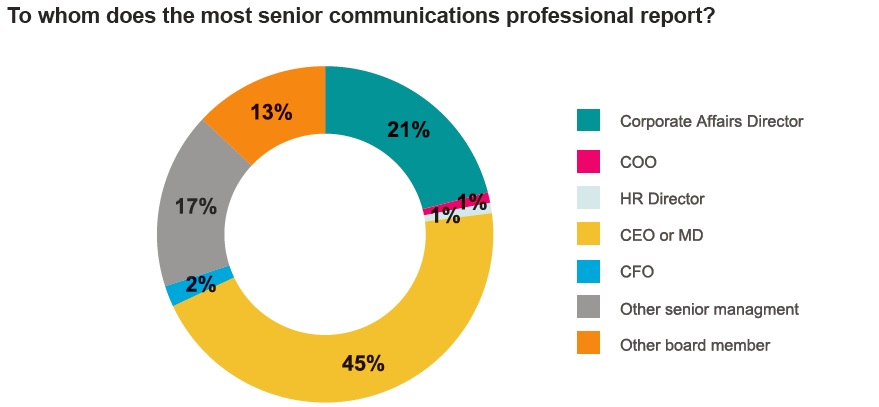
There are reasons to be optimistic, particularly when considering the seniority of communicators in South Africa. Forty-five percent of those surveyed responded that they reported into the CEO or MD of their organization.

Nearly half of South African communicators surveyed said they report into the most important executive in their organization

Nearly half of South African communicators surveyed said they report into the most important executive in their organization

A Digital Future

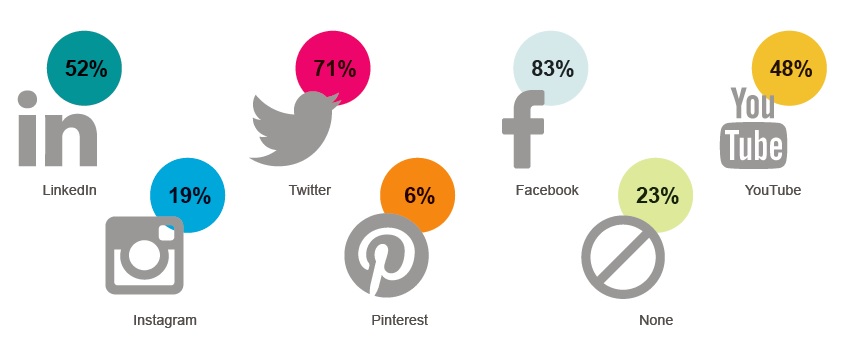
It’s unsurprising that digital is playing a major role in how communicators in South Africa engage with others. Facebook is the most popular channel, followed by Twitter and LinkedIn. Only 17 percent of social media communications is outsourced, with corporations instead preferring in-house resources (for now at least).

These are the most popular social networks among the communicators surveyed in Sub-Saharan Africa

These are the most popular social networks among the communicators surveyed in Sub-Saharan Africa

However, there are still major barriers including a lack of understanding regarding a return on investment, a lack of time and a fear that something inappropriate may be said online.

Barriers to social media in Southern AfricaDespite all the challenges that African communicators face in today’s troubled economic and political environment, there’s a strong belief among those surveyed that the industry will continue to go from strength to strength. Ninety-one percent of respondents strongly agreed or agreed that the influence exerted by the communications function will increase over the next two years.

Additionally, 64 percent of the communications functions surveyed are involved in projects from the get-go, rather than further down the development stage when reputation issues arise.

There’s no doubt that Africa represents an exciting market for the communications industry in the medium to long-term. However, short-term issues will need to be tackled, especially a lack of talent and a skills shortage.

You can download the full VMA Africa Communication Survey 2016 here. For more information on the survey, do reach out to Daniel Munslow at dmunslow@vmagroup.com

‘Bigger, Better and Smarter’ – how the Middle East’s PR industry rates its performance & development in 2015/2016

The Benchmark survey looked at communications practice areas. The results suggest media relations will soon be replaced by social media as the top communications priority.

The Benchmark survey looked at communications practice areas. The results suggest media relations will soon be replaced by social media as the top communications priority.

Yesterday was a busy day for the PR industry in the UAE, with two events on the same day. The first, which was organized by bespoke agency Secret PR and named PR Pressure, was held in Dubai and tackled the everyday issues faced by both PR professionals and their friends in the media sector (more on this later). The second event of the day was held by the Middle East Public Relations Association in Abu Dhabi and focused on innovation.

As part of the build-up to the event, MEPRA launched the Benchmark survey. Through a self-assessment approach, the research seeks to understand where the industry is headed, what is being done well and where improvements need to be made. And with 138 responses, including from 100 in-house departments, 34 agencies and 4 senior independent consultants representing over 1,611 PR professionals across 14 Middle East countries, there’s a lot to ponder.

Firstly, let’s look at the issues thrown up by the Benchmark research. According to respondents, the nature of the public relations is changing. While media relations is still seen as the backbone of the sector, the survey’s respondents expect this to change over the course of 2016 as social media becomes more important to clients and different stakeholder groups alike. There’ll be a similar growth in areas such as influencer engagement, employee engagement, and integrated communications.

There are also major challenges to tackle in the region’s communications sector, including the need to demonstrate results and show a return on investment. And then there’s the money issue; it’s clear that falling oil prices and subsequent slowing in the region’s economy is beginning to bite. In 2016, two out of three respondents see investment in PR staying the same or growing, down from 87.0 per cent in 2015. Similarly, the proportion of people who see budgets falling has more than doubled (13.0 per cent in 2015, up to 34.0 per cent in 2016). There does seem to be a silver lining however when it comes to budgets; one in six respondents expect budget growth of more than 20 per cent in 2016.

A fifth of respondents claimed they were world class. Would you agree?

A fifth of respondents claimed they were world class. Would you agree?

When it comes to performance some in the region’s PR sector clearly don’t lack for confidence – a fifth of in-house departments and agencies regard themselves as ‘world class’ (those scoring themselves an average of more than 7.0/10 for both practice and performance, across 12 elements of communications, were rated as ‘world class’). Despite this, there’s clearly a need to improve in terms of doing things differently; scores on the area of innovation were the lowest recorded by the survey. Responses were low (a rating of 2.31 out of 5) for the statement: ‘The PR industry in the Middle East is more innovative than the industry in other regions’ in 2015. Similarly, the statement: ‘Middle East campaigns are not afraid to ‘disrupt’ – to ignore established convention – to stand out and achieve results’ in 2015 was rated as low with a score of 2.49/5.0. This may change in 2016, as 12.6% more respondents expect the industry to become innovative.

Based on the survey results, another area which the industry has to get right is its hiring and retention practices, especially when it comes to attracting graduates, particularly locals. Talent acquisition scored 5.26 out of ten, and staff retention 5.16 out of 10. Graduate recruitment and attracting local talent were even lower, at 4.58 and 4.32 respectively.

Research is one thing, experiences are another. During the PR Pressure event there were strong emotions expressed on the issues of media relations, ethics and talent (check out the hashtag #PRPressure for all of the posts on the event). It was clear from those media who were present and talking about their own interactions with the PR industry that we still have a long way to go if we’re going to become ‘world class’. Similarly, unless we get talent issues right, including a focus on training, development and certification (which is a major failing as far as I’m concerned), then whatever progress we make will be unsustainable. If the industry keeps on bringing expats in to do a job at every level, it’s going to fail in engaging with local audiences (there’s also the issue of forced localization, which I’ll blog about at a later date).

While the industry may feel that it’s moving in the right direction (and in many areas it is), maybe it’s time for a more honest glimpse into the looking glass, to start addressing key areas of what we do and how we do it. I desperately want to believe that we’re ‘bigger, better and smarter’, but while my heart feels one emotion my head thinks something else. I for one am looking forward to next year’s MEPRA Benchmark. And if you want to play your part and fill in the survey, get in touch with MEPRA.

Jailed for switching identities for access to an event – What PR practitioners need to be aware of

Seven people working in or for PR agencies were jailed for three years for switching security cards during WFES.

Seven people working in or for PR agencies were jailed for three years for switching security cards during WFES.

Having been in the region for a fair period of time (my family’s history in the Gulf goes back over half a century), I’ve seen and experienced many a situation. These recollections have helped me to grow, metaphorically speaking, a fairly thick skin. But every now and then, a story emerges that still has the power to shock.

A friend shared the below story with me which is from the local rag 7Days. As a PR professional and a former journalist, I know that the below is common practice. But I’ve never heard of such a punishment.

Seven people have been sentenced to three years in jail for swapping security access to attend an energy summit in Abu Dhabi.

The criminal court handed down the sentences to the men and women from Philippines, India, China and Canada after they were found guilty of misusing official documents and access badges and allowing unauthorised people into the World Future Energy Summit on January 18 of this year.

Official documents stated that the defendants, who included expat employees and visitors, exchanged security access badges to allow others who had not registered to enter the conference.

The court heard this not acceptable as the summit was attended by top local government officials and international dignitaries.

Prosecutors said that in one of the cases, a Public Relations official from a local firm gave her access badge to a male photographer who had been sent by their client to take some pictures of the event.

Security officials spotted the Filipina with a woman’s access badge and he was arrested along with the PR official who offered him the access badge. In court the PR woman admitted to giving him the access badge issued in her name.

“I gave it to him so he could access the area and take photos for one of our clients participating in the exhibition at the summit,” said the PR official.

“I just wanted to facilitate the work of our client.”

She told the judge that she had no idea giving her access badge to another person was illegal or that it could jeopardise security at the summit.

The key speakers at the conference included United Nations Secretary-General Ban Ki-Moon.

The defendants can appeal their sentences within 14 days after the ruling was issued

.

With the number of events that are held in the UAE and the cost of entry, it’s not uncommon for photographers and even junior PR professionals from the agency side to resort to borrowing someone else’s badge. While it’s not the best or most ethical route to take, when you’re on a deadline and when you don’t have an hour or two to wait to get a new entry badge, it’s understandable that someone may take another’s badge to get access to do their job as quickly as possible. I’ve seen this countless times with big events. And I’ve seen people getting caught, which usually involves a ticking off from security for having (and using) someone else’s badge.

However, being jailed for three years in prison (which will presumably be followed by deportation for those expats who are involved) is something else entirely; I’ve never seen the like before. In future, just be careful when faced with a similar situation. Seven people from our industry being bars is hard to countenance. I’d hate to see anyone I know going to prison for the same reason.

Keep Calm, Say Nothing – QNB’s response to the customer data hack crisis

Qatar National Bank's reputation has literally gone down like the Titanic according to this visual from a reader of Doha News (source: Doha News)

Qatar National Bank’s reputation has literally gone down like the Titanic according to this visual from a reader of Doha News (source: Doha News)

Like it or not, there will be times when the proverbial @#$% hits the fan. Each and every organization will go through a crisis. What matters is how an organization responds to the crisis and communicates this response.

Before I talk about the bank in question, I want to step to talk a little about crisis communications. Crisis comms is an artform, and some people (who get paid lots of money) do crisis comms for a full time living. When dealing with a crisis, communications theory states that there are three steps. The first is pre-crisis, which involves setting up a team and processes (the who and the how), and then practising for situations that are likely to occur. The second phase is the crisis itself, and the third is post-crisis and fixing the issue.

Last week someone allegedly released a huge amount of customer data which was hacked from Qatar National Bank. The 1.4 gigabyte file was put online for download. A data hack of customer information is one of the worst things that can happen to a retail bank. But it gets worse. To quote from Doha News.

The data included the financial and personal information of thousands people, many of them QNB customers, and is being spread widely on social media and file-sharing websites.

Cyber security experts said as many as 400,000 customers could be affected, in what is being called one of Qatar’s biggest data breaches.

Since yesterday, several customers have reported attempts to break into their bank accounts, although these appear to have been blocked before any transfers took place.

Others have said there have been attempts to access and even alter their social media accounts.

Yes, it was that bad. But instead of communicating and advising customers on what to do and how to keep themselves safe, QNB’s media team didn’t say a thing. Well, almost. Again, back to Doha News.

More than 24 hours after the data breach became public, QNB has not answered questions from Doha News on what actions customers should take to protect themselves and many customers say they have yet to be contacted by the bank.

Online, it has continued to respond to questions by pointing to yesterday’s statement that said it does not comment on “social media speculation,” even though the confidential information about thousands of its customers is online for anyone to access.

According to the reaction of dozens of customers, some of the information is correct. And yet, even QNB’s Call Center and retail branches are holding fast and not saying anything. One customer was allegedly told that the allegations were ‘propaganda’.

All credit to Doha News. The Qatar-based news website has covered the issue from its beginning with a level of thoroughness that should be a lesson for all local media outlets in the region. The last piece it ran was about a website which could help QNB customers check if they were hacked or not.

Doha News has also been doing much of the work which should have been done by QNB itself, namely advise customers on what is happening, tell them what action they should take and why. QNB’s silence on the issue is a classic example of how organizations in the region used to deal with a crisis prior to the advent of social media. You dig your head in the sand and hope it’ll go away. Well, this is what they’ve done and their reputation has gone down with the Titanic.

Instead, they should have been responding through all consumer-focused communications channels, including social media (a digital crisis consultant I respect greatly and ex-head of comms for the BBC, Donald Steel, advises that any online response should take no longer than 15 minutes). By acknowledging the problem, by explaining how their customers can keep safe, and by promising a review of their security setup, QNB would have helped to have turned a crisis into an opportunity to demonstrate both transparency and concern for customers and their well-being.

In their response (or lack thereof) QNB has looked archaic and they’ve compounded the damage by seeming not to care. I hope that others take stock of the online backlash and understand that when it comes to a crisis in the Gulf, silence is never golden.

Taylor Bennett’s Kate Hamilton-Baily on what executives are looking for when it comes to top communicators

Reputation management and internal communications are two skill-sets in demand, according to Kate Hamilton-Baily

Reputation management and internal communications are two skill-sets in demand, according to Kate Hamilton-Baily

There’s been much talk about communications and how the role of the communicator is changing. As part of this debate, I wanted to get a different insight. I spoke to Kate Hamilton-Baily, Director at the leading global communications executive search firm, Taylor Bennett, to get her perspective on what business executives are looking for from their communication directors and what we need to do to make sure that we’re prepared for today’s job market. Kate spoke at IABC’s Eurocomm 2016 event in Rotterdam. I caught up with Kate to ask her a couple of questions on issues such as skills, employability and the convergence of marketing and communications.

Alex: So tell me about yourself Kate.

Kate: I’m one of the directors of Taylor Bennett, an specialist executive search firm which focuses purely on senior communications roles. With our sister companies Heyman Associates in the United States and Taylor Bennett Heyman, in Asia and Australasia. We have fifty search professionals globally focused on senior communications briefs and we meet over two thousand senior communications professionals every year, so we have a pretty good understanding of what is shaping today’s top communicators.

Alex: So, what are the big communications issues that executives care about?

Kate: Reputational management has moved up the agenda following the financial crash in 2008. It is now recognized as having a tangible impact on the success of a business or organization or institution. In line with this has been the breakdown of trust between the public, government and many parts of the business world, alongside the growth of digitization and an incredible range of new social media channels. Internal communications and engagement has really come of age and is seen as a strategic and important discipline. Then there is the convergence between marketing and communications.

Digital has had a major impact on the communications role, as has the breakdown in trust between the public, government and business. Executives want someone who can cut through all of the data and tell the organization’s story in a creative, transparent way that will engage multiple audiences externally and internally. They’re looking for a talent that can marry the gap between what the organization says and means and what the public hears and understands.

Alex: What other issues are you seeing? What is driving communications?

Kate: We’re witnessing the need for both deep expertise in areas such as internal communications and engagement but also broad corporate leadership attributes and skills at the top end able to understand how to campaign effectively and get their message across in a very noisy world. Business understanding remains critical.

If I look into career progression, mid-career experiences are vital in terms of your future progression. So, for example, if you have only worked in an external communications role, or in government relations, spending a year in internal communications will give you a completely different perspective and really help as you go for more senior director level roles.

Alex: Tell me about convergence. What does this concept mean to communicators and their careers?

Kate: Convergence has been around for a while, especially in the B2B space. Marketing used to lead communications especially in the B2C sectors, but with concepts such as reputation management it’s become more complex. You’re now seeing communication directors who have responsibility for the corporate brand. And on the flip side, CMOs who are responsible for a far more fluid and complex communications landscape. However, there is an opportunity for communicators to learn from their colleagues in marketing especially around adopting a strategic and analytical approach and merge those skills with the storytelling approach that communicators are expert in. Measurement isn’t a natural focus for some communicators but this is changing. And then there’s the ownership of channels, such as social media. That can be a difficult internal debate. Communicators also need to be very well networked, to know the business and understand the challenges that other functions and colleagues, in operations, HR and IT face so, that they can step in and support them.

Alex: What skills, experiences and personal attributes do clients ask for?

Kate: This varies based on the business leader and the industry they’re in. There’s a real variance in what the ideal communications leader looks like based on the business, the organization and what the CEO is looking to do.

There are general trends, however. Internal communications and engagement has moved up the CEO’s agenda. And many business leaders are looking for a strong, integrated in-house approach featuring the full complement of skills communications, public affairs, sustainability and internal communications that can work across multiple markets.

What I’d add is that business leaders want a communications person who has good judgment, who can offer strong counsel in a crisis, who understands the business, is a good leader and who can make a meaningful contribution to the business whilst building a strong communications team. There is a long list!

Alex: How should a communicator assess their abilities and look to get ahead?

Kate: Firstly, we want to understand what you have done in your career and how you did it. The context of the challenge, the a-b journey. People in communications can change sectors and the ability to adapt to different cultures and industries is highly valued. We are also interested in your leadership and management capability. How have you developed your team, what lessons have you learned and what challenges have you faced. Who you are as a person and what motivates you is really important to understand. Some firms will use psychometrics within a process to help understand how people will fit in and behave in contrast to others. And there’s the interview process which can be multifaceted, in order to get different viewpoints.

Alex: What’s your one piece of advice to communicators in terms of what they should do to help their career prospects?

Kate: Challenge yourself, don’t be afraid of changing sectors. Ask to do different things, ask for more responsibility, to be seconded to a different country, or have the opportunity to work on a new project. Know your strengths and areas for development and work on them. Network. Most importantly enjoy what you do. And of course, get to know headhunters!