Unknown's avatar

About alexofarabia

I'm am obsessive compulsive communicator who has lived in the Gulf for almost a decade. Enjoying the challenge of working in a region where you've got to be innovative, patient and determined to make things happen. Miss being a full-time journalist! Miss family even more! Sometimes I mouth off, but more often I grit my teeth and try to encourage change through a smile (not as easy as you think). Despite now living in Dubai Bahrain is home for me.

#MyDubai and the issue of whether to pay the public for content

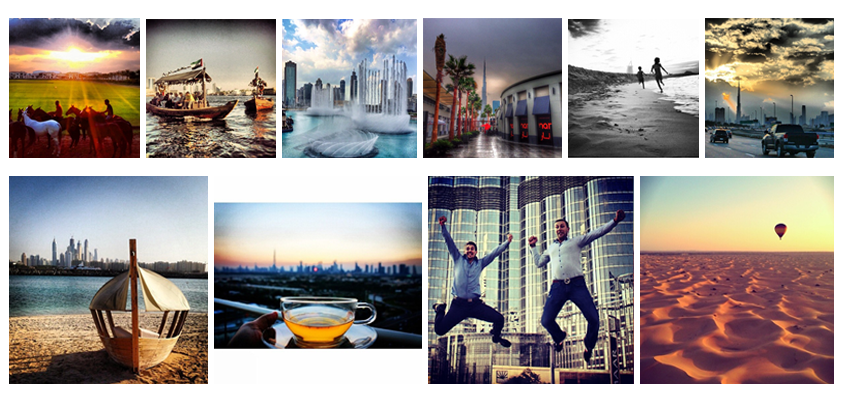
The first images from #MyDubai's initiative provided for free by Dubai residents (image source: www.facebook.com/DefinitelyDubai)

The first images from #MyDubai’s initiative provided for free by Dubai residents (image source: http://www.facebook.com/DefinitelyDubai)

To pay or not to pay? That’s the question. The city-state has launched an interesting project based on social media, dubbed as a social-media autobiography of Dubai to be written by its residents and visitors. To quote The National newspaper:

The year-long project will bring together people in the emirate through Twitter, Instagram, and Facebook. A call has gone out to share pictures and videos using the hashtag #MyDubai.

According to The National the project will tell the real and human stories of the city through residents’ contributions which are posted onto Facebook, Twitter and Instagram (there’s no mention of YouTube and Pinterest which is a shame).

The National followed up today with a second piece on the initiative. Tourism bosses from Dubai’s Department of Tourism and Commerce Marketing (DTCM) will select the best photographs and videos from the Emirate’s residents and showcase them in exhibitions and roadshows as part of the year-long #MyDubai project. The public’s images will be used to promote Dubai throughout the year.

What isn’t mentioned is if the public are going to be paid for their images which are going to be used for advertising the Emirate. As any content producer knows, photography and videography are expensive. While those lucky few whose images get chosen – to quote The National, “more than 25,000 images and videos were uploaded to Instagram using #MyDubai just 12 hours after the campaign was launched” – will be referenced and have been so far online on DTCM’s Definitely Dubai Facebook site is it right to use images provided by the public for free (even if it is with their consent).

And on another note, who owns the copyright to the images? Are the images commissioned by DTCM for their explicit use or do the copyright owners of the images, have the ability to pull the images as and when they please if they object to how the images are portrayed?

I love the concept of #MyDubai but should the public be paid for images that are used, even if only a token amount? If it’s for corporate usage, then I think they should do.

Make a New Year’s Resolution for your company and go volunteer in 2014

Volunteering will benefit you, your employees and your business more than you may imagine (image source - www.zmetravel.com)

Volunteering will benefit you, your employees and your business more than you may imagine (image source – http://www.zmetravel.com)

You’re finished with the festive period, the time of year when we have a tendency to overindulge. Now, having seen in the new year, most of us will have made a number of resolutions for our own betterment. But if you’re thinking of a way to make a difference in 2014, why not take a step forward and make a resolution for your company and community?

The concept of corporate social responsibility (CSR) is gaining a foothold among businesses across the region and one method that all businesses, both large and small, can adopt is to volunteer their time to support local charitable organisations.

There’s a misconception among business owners that volunteering or other forms of CSR is the preserve of large corporations. Nothing could be further from the truth. Giving back by donating your time and expertise to your community can be beneficial to you, your staff and business for many reasons. Not only can volunteering help your community and create a shared sense of achievement among your employees, but giving back can even help your business grow in way that you may not expect. Here’s how:

Volunteering can broaden your experience

Volunteering provides an opportunity to work on something different, with new people in a new place for a new cause. The experiences are not only personally rewarding, but you may and your staff will develop new skills and thinking from the not-for-profit sector that may benefit your own business. When you volunteer for the right reasons to give back to the community, you’ll not only develop new perspectives but you’ll also become more of an empathetic, well-rounded leader and be able to bring these skills and experiences back to bear on your own goals and those of your business.

Your employee morale will improve

Giving to the community has significant benefits for employee satisfaction. Studies by London in 2010 found that 94 per cent of companies had found that volunteering positively impacted employee morale. Volunteering allows your staff to give back to their communities, learn new skills and participate in causes that many of them may passionately believe in, such as the environment, good health and childcare. Volunteering has been found to boost employee health as well as their morale.

Doing well is good for your business reputation too

As a business owner, no one will know better than you that your actions impact your business reputation. Giving back to the local community will have positive effect on your brand. The more that you become part of your local community, the faster your reputation as a business that cares will grow. Volunteering helps your company show that you are empathetic and that you do understand the needs and concerns of local communities.

Develop new relationships and strengthen existing ones

There’s no better way to develop and maintain good relationships than working together with others for a good cause. Getting out there and volunteering will enable you to meet new people who you may not otherwise meet. Even if these relationships don’t initially seem relevant to you and your business, the power of networking will mean that you’ll have a group of individuals outside of your usual business circles to consult with and give you different perspectives.

If you haven’t ever volunteered before and don’t know where to start, there are a number of organisations and bodies that can advise you. For companies based in Dubai, the best place to start is the Dubai Chamber of Commerce and its Engage team that already has a strong connection with most of Dubai’s charitable organisations. The Engage team may be able to point you and your business in the right direction as to how and where to start. The Dubai Chamber of Commerce and the Engage team can be reached at responsiblebusiness@dubaichamber.com.

For companies in Abu Dhabi, the Abu Dhabi Sustainability Group is a governmental organisation that promotes sustainability best practises and would be best placed to provide similar advice as to where to start in the UAE’s capital. You can contact them at contact@adsg.ae.

For business owners in Saudi Arabia, your best resource may be the Ministry of Social Affairs, which has a database of all locally registered charities in the kingdom. The ministry has offices in most of the kingdom’s cities, so do check out its website at http://www.mosa.gov.sa.

Volunteering doesn’t have to take a tremendous amount of time or energy and yet giving back can be one of the most rewarding things you do over 2014 for yourself and your employees. Get started today and make a difference not only to yourself, but to your local community as well.

This piece was first published on the Kipp Report.

Death, Arrests and Censorship: How the Middle East’s media has fared over 2013

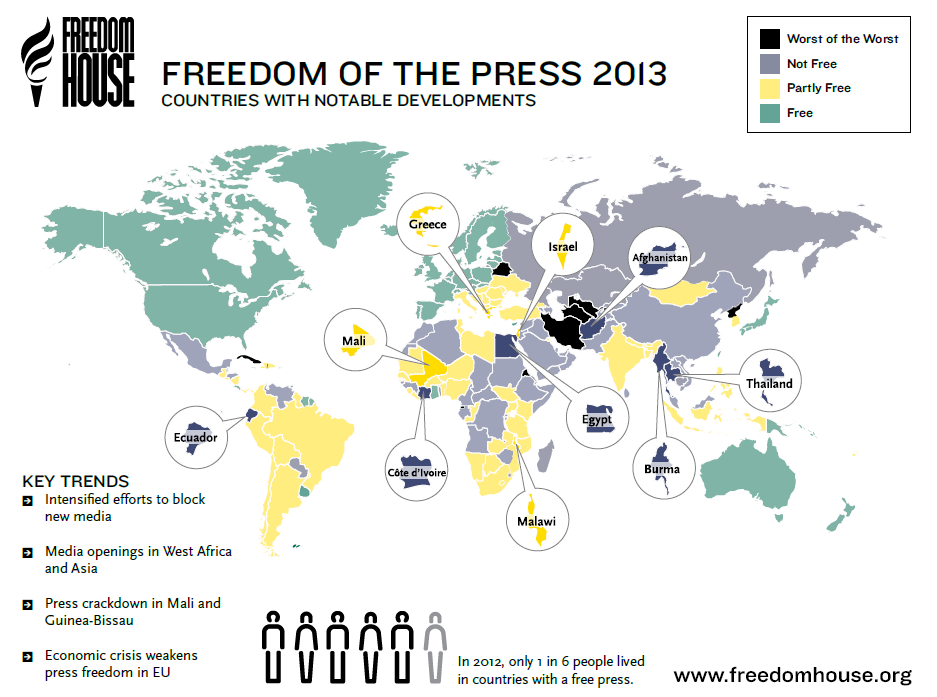
The Middle East's press freedoms have, on the whole, suffered in 2013 (image source: Freedom House)

The Middle East’s press freedoms have, on the whole, suffered in 2013 (image source: Freedom House)

The past twelve months haven’t been lacking in terms of seminal events across the Middle East – we’ve experienced war, coups/democratic/popular revolutions (choose/delete based on your bias), and economic revivals across this diverse region. However, it’s fair to say that 2013 hasn’t been a wonderful year for good quality and independent journalism in the Middle East and North Africa region.

Overall, 2013 recorded a grim milestone for global media. According to the Committee to Protect Journalists, the year documented the 1,000th journalist killed in relation to his/her work since the organization began documenting fatalities in 1992. Sky News cameraman Mick Deane was killed in Egypt in August of this year while covering the violence in Cairo.

Over half of the 70 journalists lost this year were killed in the Middle East trio of Syria, Iraq and Egypt. One of those whom we lost at the end of 2013 was Molhem Barakat, a young Syrian freelance photographer who submitted dozens of pictures of the bloody conflict in Aleppo to Reuters. Molhem was killed while covering fighting between government and opposition fighters on December 20th.

A full list of those who have laid down their lives to bring us the reality in war zones and areas of conflict can be seen here at the Committee to Protect Journalists.

Journalists working in safer climes across the MENA region have also faced serious challenges which has impeded their work. Media freedoms were curtailed across the region, with Lebanon being ranked by the US-based NGO Freedom House as the country with the most free press (Lebanon came in at number 112 globally and its press was rated as partly free).

I’m going to quote below from Freedom House’s Freedom of the Press report on the Middle East and North Africa. The report in full is available to download in pdf format here.

The Middle East and North Africa region continued to have the world’s poorest ratings in 2012, with no countries ranked in the Free category, 5 countries designated Partly Free, and 14 countries assessed as Not Free… Although new information platforms — including blogs, social media such as Twitter and Facebook, and smart phones — have had a positive impact, traditional media in much of the region were still constrained by emergency rule, state ownership and editorial directives, harsh blasphemy legislation, and laws against insulting monarchs and public figures.

While the concept of citizen journalism has been slow to take root in the Middle East, a number of countries have jailed persons who have uploaded information such as videos and photographs onto the internet on charges ranging from insulting the national image and harming the country’s reputation to defamation.

The over-riding trend over 2013 has been efforts to monitor, control and censor online debate. A number of countries in the Gulf and North Africa have enacted highly restrictive laws targeting online publishing including blogs and social media that hurts national interests. Even in Kuwait, which was ranked by Freedom House as the Gulf nation with the freest press, journalists have been jailed for reporting on opposition demonstrations. Journalists have been jailed and remain imprisoned in at least eight countries across the Middle East and North Africa according to the Committee to Protect Journalists.

Looking forward, there’s no reason to believe that 2014 will prove to be different to 2013. Civil disputes in Syria, Iraq and Egypt show no signs of being resolved, and sectarian issues seem to be growing in prominence across the region. One bright spot may be a thaw in relations between the West and Iran, following the election of President Rouhani and discussions over Iran’s nuclear programme. However, as social media becomes the most common form of communications across the Middle East the odds are that online censorship will become ever more prominent.

#Sandance and the virality of events going wrong

There’s few occasions which are as viral as events on social media: put together several hundreds or thousands of people, all equipped with mobile devices and the communication (usually via social media) will increase in line with the anticipation. However, that concept is equally true as an event goes from bad to worse and eventually to meltdown.

Last night, on New Year’s Eve, anyone with a care to watch would have seen how one event in Dubai went from band to worse and finally ended up in disaster shortly before midnight. Sandance is a music festival held on the huge Sandance Beach in Atlantis on Dubai’s Palm. Sandance is usually held on dates such as New Year’s Eve and last night was no different with headline acts such as DJs Pete Tong, Paul Oakenfold and Axwell.

Unfortunately for the planners of Sandance, Dubai was planning to break a world record last night for the most fireworks used in one event – 400,000 in total over a space of six minutes to be fired from the Palm and the World Islands off the Palm.

The Palm was supposed to be was in lockdown from 8am on New Year’s Eve; anyone wishing to enter had to have a car pass to keep the numbers of people limited to residents and hotel guests. Unlike previous Sandances, this year’s New Year’s Eve party at The Atlantis was shuttle bus only to keep traffic to a minimum. Seventy-five buses were to be used to carry nearly 17,000 partygoers between 5-9pm from Dubai’s American University at Media City to the venue about six kilometers away.

The plan didn’t go accordingly and due to an excess of traffic on the Palm people heading to Sandance on New Year’s Eve were stuck on shuttle buses for more than three hours. Many even spent the stroke of midnight on buses or walking trying to reach the event. And the frustration which included broken down buses, poured onto Twitter… (and also video)

https://twitter.com/mkdubai/status/418086695410479104

https://twitter.com/HassanYs/status/418073937831284736

https://twitter.com/AGiannas/status/418145613276917760

https://twitter.com/SaraKazzz/status/418269342942261248

Sandance bosses did use social media to post a few notes on Facebook, including one update which pointed to the reasons behind the chaos: “The NYE traffic on the palm is being controlled by Dubai Police and Nakheel. We are in touch with the authorities to smoothen traffic. We appreciate your patience.”

At the other end of town it was also a long night for Dubai Media Inc. The Emirate’s media organization was supposed to be livestreaming the fireworks from Dubai’s Burj Khalifa and possibly also from the Palm. However, it looks as if their servers weren’t able to cope with demand and visitors to DMI’s website. The difference is however that people hadn’t spent hundreds of Dirhams to visit DMI’s website or spent hours on a bus waiting to get to a destination they never reached.

For all those who were stuck on the buses my heart goes out to you. Sundance was poorly planned: the organizers put far too much faith in Nakheel and the police to ensure a good flow of traffic. That didn’t happen it seems. However, as evinced by social media the organizers will ultimately be held to blame. Could they have done more on the night via social media? Maybe, but there’s little you can do when things go wrong on New Year’s Eve to ease the pain of plans which go awry.

The concept of bona fide and the threat to the UAE’s classifieds industry

If the 7Days report is acted upon soon by the country’s authorities will this mean the end of classified adverts in the UAE? (image source: cre8network.com)

I’m playing catch-up at the moment on the blog, due to moving house and having too many things to do and not enough hours in the day. One piece which did catch my eye was a report in 7Days. The piece, which was entitled ‘UAE Interior Ministry warns newspapers against maids, tutors ads’, quotes a Major General at the UAE’s Interior Ministry as saying:

“Newspapers need to be careful before putting job adverts for domestic workers such as nannies, maids, drivers and private tutors in their publications.

“Publications need to first verify the identities of these people and confirm they are staying legally in the country before they advertise their services.”

The officer notes the numerous reports from families of children being abused by the domestic help or private tutors hired through classifieds. The Major General quotes a recent incident in Abu Dhabi when police arrested a teacher whom allegedly kissed and molested two girls during a private lesson at their home.

“The Australian parents of the girls reported the 58-year-old Egyptian man to police after their daughters, aged eight and 13, told them the private tutor kissed them and also touched the older girl during a maths lessons.

The parents told police they had contacted the teacher through a newspaper advert.”

I want to bring up the concept of bona fide or good faith, the term that encompasses a sincere belief or motive without any malice or the desire to defraud others. It derives from the translation of the Latin term bona fide, and courts use the two terms interchangeably. Just as any other party, newspapers and other providers of classified services including online sites such as Dubizzle need to trust that the other party they’re dealing with are acting in good faith and telling the truth.

To ask newspapers to do due diligence on each and every person advertising as a tutor and/or maid would seem to be a tall task. What would newspapers be asking for? How would they be able to do a background check? And for online sites which host thousands of adverts, would they even have the human resources for such a task?

Revealingly, the 7Days article ends by noting that the tutor to the Australian family had earlier been deported after he was convicted of molesting a child, but returned to the UAE by sneaking through one of the country’s ports. Maybe it’s not the newspapers who should be doing due diligence, but rather other parties?

The Gulf, social media and its self-deprecating humour

The Gulf is known for many things but a sense of humour hasn’t traditionally been on the list, even less so self-deprecating humour. With the advent of social media, in particular YouTube, both the Gulf’s residents and nationals have started to develop content like there’s no tomorrow. The best is currently coming from Saudi Arabia. One example is La Yekthar, one of the most popular comedy shows on the net. The team regularly tackles and takes on stereotypes of Saudis, and one of their latest clips was a fantastic set-up of how Saudis are often perceived by foreigners. The video, which is below, also sends a not-so-subtle message to Saudis that this type of image, of arrogance and violence, isn’t the right thing to do.

Bahrain has also followed suit with a number of send-ups of the typical Bahraini stereotypes. The clips, which are common on the video-sharing site Keek, focus on a variety of stereotypes which are mainly based on geography (for example, Al-Riffa and Muharraq). I’m going to have to search for these but I’m going to upload as soon as I can.

Even Qatar is getting in on the act. The only local Qatari comedian I know, Hamad Al-Amari, routinely does stand-up routines poking fun at Qatari stereotypes before switching effortlessly into an Irish accent (he spent part of his childhood in Ireland). Have a look at one of his sets below.

And then there’s the UAE. While there are a number of local comedians here including the likes of Ali Al Sayed the country has arrested those, even nationals, who have poked fun at the country’s stereotypes. Emirati Salim Dahman and a group of young males who made a spoof YouTube video named the ‘The Deadly Satwa Gs’ were arrested after uploading the clip. No reason seems to have been given for their arrest, but the assumption would be that they’ve been detained for insulting national sensitivities.

To quote from 7Days, which featured the story yesterday, ‘The Deadly Satwa Gs’ video is a spoof of young people who try to act tough. At the martial arts school, the recruits learn how to throw a shoe and call for back-up on their mobile phones. When they graduate from the school, they are all given Barcelona football jerseys, supposedly matching a style worn by young men in Dubai.

The video, which is still available online, is hardly groundbreaking satire and is fairly tame when compared to the content coming out of the Magic Kingdom. However, comedy isn’t always a laughing matter depending on where you are in the Gulf.

PS If you want to know why I haven’t mentioned Kuwait ask any Gulf Arab about Kuwaitis and humour.

Reality, fiction and a superfast highway for the UAE

You could soon be travelling – legally – at warp speed on Dubai’s highways (picture credit: storiesbywilliams.com)

We’re not big fans of irony in this part of the world. However, one website has been trying to change that. The Pan-Arabia Enquirer, which is also known by its tag-line ‘the world’s only 7-star news source, reported on a fantastical tale, of how a Gold Class lane was to be introduced on road between Dubai and Abu Dhabi. The news piece went like this:

Drivers looking for a bit of luxury on the road between Dubai and Abu Dhabi will soon be able to take advantage of an exclusive members-only car lane when it comes into service next year.

The ‘Gold Class’ lane, which will be available for a set monthly fee, offers a full range of extras unavailable in the other lanes. Gold Class drivers will be given an extra 10kmph top speed limit, newly laid top-of-the-range gold painted tarmac and discounts at various service stations. The whole lane will also be an extra 50cm wide, and will be cordoned off from the other lanes with a red velvet rope.

This piece of news would seem absurd anywhere in the world. But even though we are in Dubai, where reality is often more outlandish than fantasy, I had to pinch myself when I read about a proposal to build a highway with a top speed of 200 kilometers per hour. The Daily Telegraph’s Dubai-based blogger Annabel Kantaria wrote a great piece on the comparison which you can read here.

I’ve taken details of the proposal, from local English-language newspaper Emirates 24/7, which can be read below:

[The concept] was announced by Major General Mohammed Saif Al Zafeen, Director of Dubai’s Traffic Police Department, on the sidelines of a press conference in Dubai on Monday.

Mohammed Saif Al Zafeen explained that the plan is to have at least four lanes in each direction and allow only those cars to drive on the highway, which can go at high speed.

He said the project will be executed after thorough study and support from the private sector.

He said this has been decided following studies which suggest that high speed alone does not cause accidents but there’re other factors involved for the rise in accidents.

He explained that there is a correlation between the occurrence of accidents and the disparity between the car speeds, meaning that accidents increase when one car travelling at 140 kmph is surprised by a car going in front at 60 kmph.

According to the World Health Authority the UAE ranked 171 out of 179 countries in terms of road safety with 37.1 deaths per 100,000 of population in 2011. The good General’s own thinking is countered by the Health Authority of Abu Dhabi which states that the the most important factor relating to the severity of road injuries is speeding.

What does worry me is the concept that a faster car means a safer road. Driving is already poor enough in this part of the world. Would you want to risk your own life by driving on a highway where the sole aim seems to be to floor it and drive bat s$#@. What is the consistency of the message here? Some government departments are saying clearly that speed kills; others painly are saying something different. For the sake of the country, I hope that Major General Al Zafeen is either an admirer of or ghost writer for the Pan-Arabia Enquirer.

The UAE’s Obsession with (women’s) Rankings and its consequences when things go wrong

Is it right to trumpet the times when you come top and make excuses when you're not?

Is it right to trumpet the times when you come top and make excuses when you’re not?

Everybody loves a good ranking, especially when you’re ranked at or near the top of the listings. If you’re doing a survey, a list or a table then you’ll always be welcomed in the UAE. The country has leveraged off its rise up the rankings of global surveys to promote inward investments and position itself as the leading destination in the Gulf and the wider Middle East region for all things consumer and business-related.

However, things don’t always turn out so well with surveys. A recent Global Gender Report published by the World Economic Forum ranked the UAE 107 out of 135 countries listed in the report. The response from one writer, Shaikha Al Maskari, was to list what the UAE has done for women, and to showcase why Emirati women are pioneers in their field.

Rather than review the article (which was actually entitled ‘The Happiest Women in the World’ in print) I’m going to quote selectively. Enjoy the read while this writer throws her toys out of the pram, belittles the rest of the region and the strides the Gulf’s women have made and harps on about what her country has done without really saying much. Or maybe it’s just me…

“The question of women equality in the UAE is always brought under the limelight with a negative connotation that they are oppressed, discriminated against and constrained — especially in the social, cultural, economic and political perspective. To the UAE, it is just a stereotypical challenge; to other Arab countries, the problem is much more complex.”

“The constitution clearly states that women have equal rights as men and it ensures that they are provided equal opportunities in employment and advancement and equal pay at the work place. And in many cases, a female is favoured over a male candidate — form of an unannounced affirmative action.”

“…we have achieved what no other Arab country has in decades. It is no wonder that we take pride in calling her our model and “Mother of the Nation”. Emirati women enjoy vast privileges that are envied. Based on Islamic rulings, the man is the care provider for the family and financial responsibility rests with him.”

Is the Middle East’s CSR industry forgetting about its youth?

We’re in a region where the majority of the population is under the age of 24. The youth is the story of the Middle East. And yet I didn’t feel this way at a recently-held event on corporate social responsibility here in Dubai. Many of the speakers were in their fifties or sixties. The audience, while slightly younger, were still old enough to be a decade or two above the region’s median age.

While the speeches about sustainability and social responsibility were notable for their good intentions and advice, there still seems to be a good deal of the old leading the young rather than empowering young to help themselves. There have been a couple of notable attempts to break this mould, such as Coca Cola’s Ripples of Happiness which supported university students in Bahrain, Palestine, Saudi Arabia, Lebanon and Jordan to identify opportunities for CSR and employment projects.

I hope that corporations and governments understand what I’m trying to convey above. If we’re going to engender change in the region, the agents of change will be the youth. They need to be given the chance to set an agenda for social change and social responsibility rather than have ideas developed by older generations.

For more info about Coca Cola’s Ripples of Happiness please see the video below which is from the Dubailynx.com website.

XPRESS – the UAE’s investigative newspaper

Over the past couple of weekends I’ve become increasingly irritated. It’s not that I don’t like weekends; on the contrary I enjoy the time away from work. However, I’ve become accustomed to picking up the XPRESS newspaper. The title, which was launched in March 2007, is a weekly newspaper which is published by Al Nisr Group (Al Nisr also publishes Gulf News).

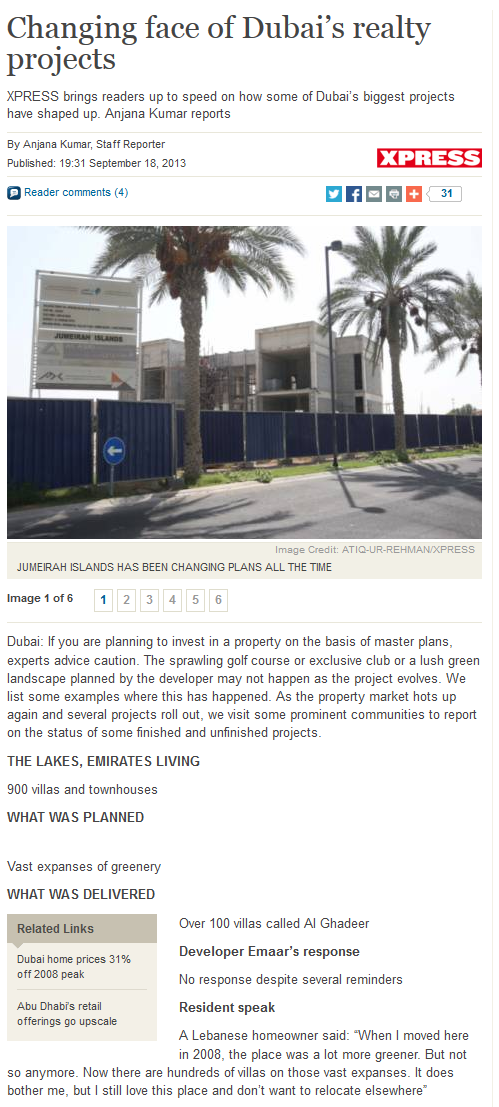
The paper, which describes itself as a community paper, is released every Thursday. Of late, XPRESS has focused on investigative pieces and has run a number of pieces that have caught my eye. Some of the best include a report on the changing face of a number of Dubai’s largest real estate projects (see the below or click on this link), the cost of wasted medicines to the country’s coffers and insurance firms, and the horror story of how the MMA forex scam robbed thousands of their money.

XPRESS regularly focuses on stories that engage the community including this piece on how developers have not kept their word on project developments

XPRESS regularly focuses on stories that engage the community including this piece on how developers have not kept their word on project developments

There have been some duds including a scandalous piece that seemed to suggest expats were more inclined to engage in illegal sexual acts which focused on a Norwegian lady who was raped and yet charged by the local police (this piece and the comments by a number of Emirati lawyers still shocks me). But in general XPRESS is a wonderful read which often puts other newspapers to shame. If you have a spare copy save it for me!

Another breaking news piece by XPRESS which wasn't picked up by other media outlets in the UAE

Another breaking news piece by XPRESS which wasn’t picked up by other media outlets in the UAE