Unknown's avatar

About alexofarabia

I'm am obsessive compulsive communicator who has lived in the Gulf for almost a decade. Enjoying the challenge of working in a region where you've got to be innovative, patient and determined to make things happen. Miss being a full-time journalist! Miss family even more! Sometimes I mouth off, but more often I grit my teeth and try to encourage change through a smile (not as easy as you think). Despite now living in Dubai Bahrain is home for me.

The Fire, the Selfie and Prison – why you should care about what your friends say online

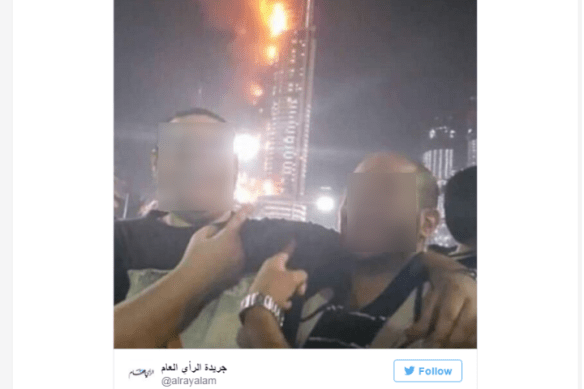
Was this inappropriate? Most certainly. But what could get you jailed is not just a picture that is in poor taste, but rather the comments your friends make on that post.

Was this inappropriate? Most certainly. But what could get you jailed is not just a picture that is in poor taste, but rather the comments your friends make on that post.

We all do stupid things, and we unfortunately then post these acts of idiocy online. Combine that with a situation like we had during New Year’s Eve, and you’ve got a situation that could at best be described as combustible.

As the flames ravaged Dubai’s The Address Hotel on New Year’s Eve, some people decided to take selfies. A few posted these selfies online, to Instagram and Facebook. At least two people, two young men, were arrested for their selfie (pictured above) while the Emirate’s Public Prosecution investigated their case.

There’s been much speculation online as to why the men were arrested, with many commentators arguing that the action defamed the country and its image – let’s remember that defamation is a criminal offense in the Gulf, with a minimum fine of 500,000 Dirhams and jail time in the UAE (as well as deportation for expatriates). Many have posted selfies at the same location, with smiles, grins and laughs, and such expressions of emotion may have been considered a case of schadenfreude by the authorities.

However, according to the English-language newspaper 7Days which spoke to the lawyer of the two accused, they were investigated not for the image per se, but rather for the comments made about the image. The argument goes that the person who posts content is also responsible for the comments on that post, even if those comments are not written by the same person but his or her friends, family (or anyone who wants to get you jailed).

Luckily for them, the two were released from prison after a couple of days with no charge after investigators found that there was “no evidence of criminal intent”. However, remember that in future it’s not just your stupidity that could land you in jail, but that of your online contacts as well. Their comments could cross the legal line of what is defined as defamation, so don’t post images or any other type of post that could get you into trouble. Just don’t…

What does Authenticity mean in the Gulf?

Are you being authentic? And what does authenticity mean to us in the Gulf?

Are you being authentic? And what does authenticity mean to us in the Gulf?

The notion of authenticity, that feeling of genuineness, has long been an issue to us communicators. The theory goes that the more authentic we (or our clients) are, the more people will believe us and like us. Even the use of the word authentic has grown; in the US, the word’s use has grown 74.5% since 2012 according to the Holmes Report, to 8,069 press releases and 20,471 media stories.

Well, you’d think that being in a world where everything is online it’d be harder than ever to fake it. Well, an Australian teen with over half a million followers on Instagram has put the sword to that theory. Here’s an excerpt from The Guardian on Essena O’Neill and how she strived to be perfect online:

An Australian teenager with more than half a million followers on Instagram has quit the platform, describing it as “contrived perfection made to get attention”, and called for others to quit social media – perhaps with help from her new website.

Essena O’Neill, 18, said she was able to make an income from marketing products to her 612,000 followers on Instagram – “$2000AUD a post EASY”. But her dramatic rejection of social media celebrity has won her praise.

On 27 October she deleted more than 2,000 pictures “that served no real purpose other than self-promotion”, and dramatically edited the captions to the remaining 96 posts in a bid to to reveal the manipulation, mundanity, and even insecurity behind them.

At a recent event I was chairing, one of the speakers told an anecdote about a Saudi youngster who claimed to be an entrepreneur, partly because it is the popular thing to do and also because he was unemployed. The experience also reminded me of comments left on a popular website about two local entrepreneurs who have set up their own business. Three of the comments were negative, and called into question the ‘authenticity’ of the two young gentlemen. One person wrote, “I have also noticed many so called ‘Entrepreneurs’ are only ‘Instagram-perneurs'”.

The question then comes to mind – who is being genuine and how can we tell if they’re genuine? Will the media challenge people on their achievements? Will the public call out these people? We live in a region where social media is all pervasive and yet, due to various barriers such as culture, language and traditions, it can be truly difficult to know if someone is being genuine or not. For me, the best way to understand the true meaning of authenticity is to grasp its meaning – one who does things himself/herself.

What are your thoughts on authenticity and the Gulf? Do people live to a certain image, or are they true to themselves? And what does this mean for how we communicate? I’d love to hear your thoughts on the issue.

Flip-Flopping during a crisis – how Damac’s handling of the Trump backlash has proved costly

First you don't see it, then you do. Damac initially removed Trump's name after his comments on Muslims, only to restore it a couple of days after (top photo by Reuters/bottom photo by  Rahul Gajjar of Khaleej Times)

First you don’t see it, then you do. Damac initially removed Trump’s name after his comments on Muslims, only to restore it a couple of days after (top photo by Reuters/bottom photo by Rahul Gajjar of Khaleej Times)

Imagine for a moment, if you will, one of your key business partners/influencers saying something controversial. Imagine that they’ve just racially attacked your most important group of customers. And then imagine that, rather than dumping this partner, you instead flip-flop around the issue and end up not only looking rather foolish, but do yourself and your reputation a fair amount of harm in the process.

If you work at Damac, you don’t need to imagine any of the above. The Dubai-headquartered real estate developer, which counts Donald Trump as one of its business partners, has been flip-flopping since Trump came out with a comment on the 7th of December that there should be a “total and complete shutdown of Muslims” entering the United States. This statement, which was made following the deadly shootings in California’s San Bernardino, weren’t the first Trump had made about Muslims. He had previously that he was in favour of shutting down American mosques and establishing a database for all Muslims living in the US or giving them a form of special identification that noted their religion.

Damac’s relationship with Trump International includes branding for two Trump-branded gold courses and a collection luxury villas at the developer’s Akoya project in Dubai. I don’t know the full extent of the relationship, but local newspaper 7DAYS claimed that, in addition to the licensing fees that Damac would have to pay to Trump for the use of his name and image, Trump himself had invested in the project.

Following the controversy around Trump’s latest Muslim statements, Damac put out a statement that could be called, at best, avoiding the issue.

Damac Properties senior vice president Niall McLoughlin told 7DAYS in a statement: “We would like to stress that our agreement is with the Trump Organisation as one of the premium golf course operators in the world and as such we would not comment further on Mr Trump’s personal or political agenda, nor comment on the internal American political debate scene.”

Instead of publicly taking Trump to task and distancing the company from his statements, Damac took a different approach. A couple of days after the outcry, on the 10th of December Damac took Donald Trump down – his image and name that is, from their developments. To quote from 7DAYS.

Hoardings that previously carried photos of the billionaire businessman advertising Damac’s Trump-branded golf course and luxury villas stood bare on Umm Suquiem Road on Thursday, right at the entrance to the development.

All well and good you may think – Damac quietly rebranded their development and distanced themselves from Trump. However, in a further twist, Trump’s name was back on billboards two days later, on the 12th of December. Here’s how the English-daily Khaleej Times put it:

On Friday, a prominent advertising billboard showing Trump golfing that had stood at the Akoya development, where the housing and one of the golf courses is being built, was gone. All that remained of it was the board’s brown wooden background. Another billboard declaring the development “The Beverly Hills of Dubai” still stood nearby.

Trump’s name also appeared to have been pulled off one sign greeting visitors to the complex. The sign, outside a sales office at the site, originally had Trump’s name in lettering on a stone wall. But on Friday the letters were littering the ground in front of it.

A second, similar sign facing a major road was intact with Trump’s name on it. Earlier in the week, that sign had been taken down but by Friday, it was back in place.

“The exterior signage at Trump International Golf Club, Dubai was temporarily removed on Tuesday for a short period of time, however as of last night, the signage is back up and fully intact,” the Trump Organization said in a statement to The Associated Press on Friday.

Also, the Damac webpage dedicated to the Trump PRVT gated community, which is part of the development, appeared to have been removed, leading only to a “not found” page.

Since the development is still under construction, the removal of the branding with Trump’s name and image seemed to be largely symbolic. It was not known if it signaled Damac will outright break the licensing contract.

Damac Properties has declined to comment on the removal of Trump’s name and billboard from the property. It earlier said it “would not comment further on Mr. Trump’s personal or political agenda, nor comment on the internal American political debate scene.”

To change the issue, Damac has switched tactic. Instead of talking politics, the developer announced that it would guarantee rental returns for those buying in its Akoya (Trump-branded) project. The National broke the story last week.

Damac Properties, the developer caught in a storm over its partnership with the controversial US presidential hopeful Donald Trump, is offering lucrative rental returns on some of its properties to lure investors.

Damac, which said it would stick with Trump International despite his anti-Muslim tirade, is providing a 24 per cent rental guarantee on selected units in Dubai, including the Akoya project associated with the billionaire, the developer said in a statement.

Owners of selected properties will be able to secure an eight per cent annual return in the first three years after handover.

The company was offering these returns because it believes the Dubai property market is “set for stable growth in the medium term”, Damac said. “We have seen quite a bit of scaremongering in the market in recent months, which can have a detrimental effect on sentiment in the market,” said Niall McLoughlin, the senior vice president at Damac. “By providing such a high, tax-free offering on our units, we are putting our head above the rest and underwriting any fluctuations that may occur down the line.”

Reputational issues become even more important for companies which are listed, as Damac is. Damac’s shares initially fell 15 percent following the muted response. Investors may also not have appreciated the rental guarantee initiative, as you can see from the share price chart below.

Damac's share price fell after the initial outcry. The share price has also fallen following Damac's attempts to repair the reputational damage through the rental incentive promise.

Damac’s share price fell after the initial outcry. The share price has also fallen following Damac’s attempts to repair the reputational damage through the rental incentive promise.

While I don’t know the relationship between the two, would Damac have been wiser to have taken an initial hit and exited the contract with Trump rather than flip-flopping on the issue, drawing it out and drawing more attention to the brand association? Add in the costs with guaranteeing rental returns in addition to the share drop, and this crisis will prove costly both in the short as well as the long-term. To me, the media and the company’s shareholders the answer about whether or not to dump Trump – and take a short term hit through contractual obligations but save the company’s reputation and keep shareholders and customers happy – seems fairly obvious.
Innovation, Data and Control – Squaring the Circle in Dubai

Can governments in the Middle East find a way to balance control with innovation and access to data?

Can governments in the Middle East find a way to balance control with innovation and access to data?

Someone re-found their mojo this month. The English-language newspaper The National published a number of eye-opening pieces on two issues that are often discussed, but little understood.

The first was an investigative piece (yes, I know!) on the challenges that Dubai’s Road and Transport Authority (RTA) has faced with the disruption caused by app-based taxi providers such as Uber and its local rival Careem. To put the story into context, the RTA does not only regulate taxis in the Emirate of Dubai, but it also manages its own fleet of taxis.

The piece, which is a fascinating insight into how the Emirate is not only run but also how it is looking to balance control with innovation, poses the question of how a government which controls much of the business in the country promotes innovation whilst protecting its revenues. For me, the key paragraphs in the article, written by the newspaper’s business editor Mustafa Alrawi, are below.

In Dubai, The National understands, Uber and Careem have narrowly escaped a clampdown by the regulator that would have significantly curtailed their abilities to operate. The biggest issue has been the alleged failure to maintain prices above taxi fares. On its website Uber states that “ … in Dubai, regulations require our fares be 30 per cent higher than taxi fares”.

It is understood, however, that the regulator had been planning a far stronger response to the practices of private hire companies booked by smartphone app, ahead of new regulations to address the emergence of technology-led companies in the transport sector. These regulations are expected next year, according to previously reported comments from the RTA.

It is understood that the Dubai government stepped in before the row escalated to ensure that innovative companies such as Uber and Careem would not be hamstrung by any action by the RTA. The circular is understood to represent a kind of temporary truce between the regulator and the technology firms maintaining the status quo for now.

A second article the following day in The National touched on another important issue for the country – that of statistics and control over information. Here’s the introduction:

A new law that demands companies seek government approval before carrying out surveys in Dubai could damage the property sector and discourage research in the emirate, experts have warned.

The Dubai government announced a law late last month intended to help enable the Dubai Statistics Center “to establish an advanced statistics system”, according to a statement. But experts zoomed in on a provision in the new law that forbids private companies from “conducting any survey[s] without obtaining authorisation from the Dubai Statistics Center”.

As pointed out by one of those interviewed, there’s no such thing as a data vacuum. The lack of any official data will be filled by rumours, which can prove to be much more damaging.

Professor Joseph Kadane, chair of the American Statistical Association’s committee on scientific freedom, which produces reports for the United Nations on best practice in government statistics, warned that the new law would likely lead to the spread of “uninformed rumours and uncertainty about the extent of the downturn” in Dubai’s property market.

“This will do far more harm to Dubai’s economy than allowing private surveys to be conducted and published,” Mr Kadane said. “International investors, in particular, are sensitive to the quality of the information available to them in deciding where to invest.”

Both articles touch on fundamental issues relating to innovation and data. The underlying theme is control. Governments in the Middle East have long controlled everything around them, including their economies. In today’s digital world, where innovation can come out of nowhere and where data can be created and spread in an instant, governments need to understand that the control of yesterday is no longer possible and instead look to collaborate.

And, on a final note it’s great to see good local reporting. I hope The National keeps it up.

When should brands step away from a toxic celebrity – the Trump effect

The Trump is known for his outspoken views, but what damage have his latest rants done to brands in the Gulf?

The Trump is known for his outspoken views, but what damage have his latest rants done to brands in the Gulf?

I know you’re tired of hearing about Donald Trump. Everywhere I look on the internet and social media, all I see is Trump, Trump, Trump… I am sorry to write about this man again, and give him yet more coverage that he doesn’t deserve, but this time I’m focusing on brands and what they do when their engagements with celebrities turn toxic.

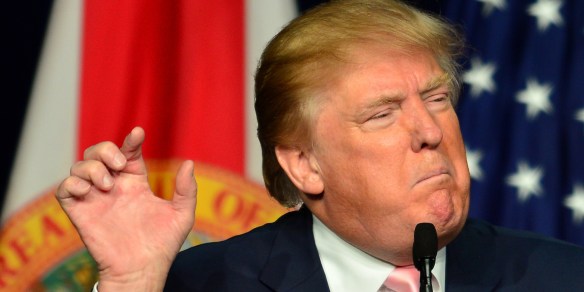
As everyone with an internet connection knows, Donald Trump said something very stupid about stopping Muslims from entering the US. Here’s the Trump in action below.

The problem for Donald, or should I say the brands that are associated with him, is that he has business interests in the Muslim world, including here in the Gulf. Dubai-headquartered real estate brand Damac has been working with Trump for several years, and has a number of golf courses and other developments named after Trump and his family. Dubai’s Landmark Group sells Trump Home-branded products across the Gulf in its Lifestyle shops. While the Al Tayer Group opened two Trump Home by Dorya galleries in the UAE in June.

The response to Trump’s comments about banning Muslims from the US has drawn different reactions from these three entities. Damac was the first to comment, with the company’s Senior VP for Comms saying effectively the Trump brand is distinct from the man himself.

“We would like to stress that our agreement is with the Trump Organisation as one of the premium golf course operators in the world and as such we would not comment further on Mr. Trump’s personal or political agenda, nor comment on the internal American political debate scene,” said Niall McLoughlin.

Al-Tayer shared its own views with the Dubai media’s 7Days paper, with the following statement: “The statement Mr Trump made on the campaign trail is unfortunate. Given his diverse business interests in the region, we hope that he will reconsider this stand.”

Most interestingly, Landmark Group has decided to drop the Trump range of products from its stores. Landmark works with another celebrity who has a love/hate relationship with the public. Bollywood star Salman Khan was convicted of manslaughter earlier this year back in his home country of India, and yet he is still a brand ambassador for one of Landmark’s retail brands.

“In light of the recent statements made by the presidential candidate in the U.S. media, we have suspended sale of all products from the Trump Home decor range,” Lifestyle CEO Sachin Mundhwa said in an email to media outlets including the UK’s Independent.

Will Damac and Al-Tayer follow Landmark’s example? Or will they stick out the ensuing furor? When does a celebrity engagement do more harm than good? With Trump unlikely to apologize for his comments this can only get messier for those companies which are still associated with the Trump.

Innovation and the need to think simply

Innovation starts with the ability to ask a question

Innovation starts with the ability to ask a question

This week is a special one in the UAE – it’s officially Innovation Week and the country is full of activities extolling the virtues of innovation and all that this word entails (I admit, I’ve come to dislike this word, not because of what it stands for but rather its constant misuse).

As I’m a media junkie, two news pieces stuck out. The first was an effort by the Dubai Media Office to promote innovation through its Media Innovation Lab, a quarterly event that aims to promote a culture of innovation and creativity in media. To quote from Emirates 24/7, “the initiative seeks to share knowledge on media-related innovation among corporate communication and media professionals and media students. It is also in line with the UAE leadership’s directives to promote innovation in all sectors.”

The second is even more ambitious, and, quite literally, out of this world. I’ll let The National’s copy explain this innovation for you:

High school and university students from across the UAE have the chance to directly shape the future of space exploration.

Two competitions giving them the opportunity to watch their experiments blast off on a rocket to the International Space Station were announced on Tuesday at the launch of The National Space Programme in Abu Dhabi.

In the initial stages of the programme, The National, Abu Dhabi Media’s English-language newspaper, has linked up during Innovation Week with the UAE Space Agency, Boeing and other public and private organisations.

The National Space Programme contests are Genes in Space, challenging high school pupils to create a DNA analysis experiment, and the Satellite Launch project, in which a university team will build a satellite.

There’s a third strand I’d like to bring in here. I had the pleasure of talking to a university professor who teaches media here in the UAE. He was recalling the story of an occasion when the power failed at his academic institution. One of his students, a local, asked if she should cover the happening for the university student publication. He said yes and encouraged her to go and follow up with the operations department who look after issues relating to maintenance.

This student did just that and headed down to the operations department to understand more about the power cut. When she did meet someone, she asked what happened and explained why she was asking a question. And the response? “Why are you asking such questions? Who is your professor?”

While I love the ambitions of blasting into space or talking about creativity in the media, I’d love to see us put our feet on the ground and push for a climate where a question is welcomed, both from each of us as individuals as well as the media. As for the curious student, the brave lady did publish her story. She’s my innovator this week.

How did Facebook fail with its Safety Check in emerging markets?

  
There are some times you really shouldn’t be making a distinction. Last week two tragedies took place, the first in Beirut and the second in Paris.

Others have written, much more eloquently than myself, on the raw emotion they felt after the two acts of terrorism – Beiruti blogger Elie Fares was one of the first to write about his anguish at Lebanons’s suffering being ignored by the West.

What is telling with the decision to activate the Facebook Safety Check was a comment by Alex Schultz, Facebook’s VP for Growth, who said:

In the middle of a complex, uncertain situation affecting many people, Facebook became a place where people were sharing information and looking to understand the condition of their loved ones. We talked with our employees on the ground, who felt that there was a need to fill. So we made the decision to try something that we’ve never done before: activating Safety Check for something other than a natural disaster. There has to be a first time for trying something new, even in complex and sensitive times, and for us that was Paris.

While Facebook’s intentions were to help those in need, the appearance to many in emerging markets such as Africa and the Middle East was that of bias. In effect, it was as if a life in Paris was worth more than a life in Beirut, or in Kenya or in Nigeria. This was compounded by Facebook’s decision to provide users with the option to upload the French flag over their profile picture.

Schultz’s comments that it was a human decision to activate Safety Check for Paris lead me to lose this question. Who at Facebook should have put forward the idea to use this service anywhere or everywhere where there is a crisis? My answer would be the communications and policy teams.

Communications in particular is the function that should act as the bridge between the outside world and the corporation, the part of the business that brings the outside in. That’s why, for example, Comms leads on issues and crisis management. Comms should have a robust understanding of the different stakeholder groups and how they impact the organization.

However, my take on Comms goes further. Comms should act as the conscience of the organization, and the Comms team should be able to advise when something is not right ethically. Unfortunately, Facebook’s team missed this opportunity here and instead turned what should have been an opportunity to play a vital role in helping inform families and friends re the safety oftheir loved ones into an example of unintended double standards (this was compounded by the Safety Check being used for residents of a Western capital rather than an Arab or African one, which in the context of colonialism also doesn’t look good).

Mark has said that Facebook’s policies will change and rightly so. Facebook is considered by many in emerging markets to be a tool for good, which is helping to promote positive change. It’d be a shame to see that opinion shift due to a lack of cultural awareness.

More media launches in the Gulf – Newsweek Middle East and Inc.

Who wouldn’t want to be a publisher in the Gulf right now? While the industry is losing money left, right and center in the US (and in Europe), the Gulf is seeing a glut of publication launches. The newest titles are Newsweek Middle East and Inc. Newsweek Middle East was launched recently by ARY Digital Network, a Pakistani television company. Their first issue was launched in English at the end of October and an Arabic edition is also in the pipeline. The website is http://www.newsweekme.com. The publication’s two front pages are below, along with a short video from their Twitter feed (the team have accounts on Facebook and on Instagram, and for those of you young uns out there, they are also running a Snapchat account under the name @NewsweekME).

The second publication, which is yet to launch is Inc. magazine, a monthly publication focusing on fast-growth companies. To be based in Qatar, the publication has been hiring journalists from Dubai publishers and should launch by the turn of the year in both English and Arabic.

https://twitter.com/NewsweekME/status/659700459763015681

https://twitter.com/NewsweekME/status/662256194749390848

https://twitter.com/NewsweekME/status/659419348239446016

While the launches of local editions for two global titles is to be welcomed, especially the Arabic-language editions, the question is if/when will this region suffer the same slowdown in terms of ad sales (Newsweek stopped publishing in the US for sometime in 2012 and 2013 and went fully digital for a year). With the Gulf becoming a global pioneer in terms of digital firsts among consumers (for example smartphone penetration, social media usage), will advertisers realize there’s more ROI to be had in advertising online rather than in print? Let’s wait and find out.

Local Insights – the UAE’s Media Coverage of the Conflict in Yemen

The conflict in Yemen and the UAE's involvement has helped to bring the community together, according to Emirati editors (image source: vocativ.com)

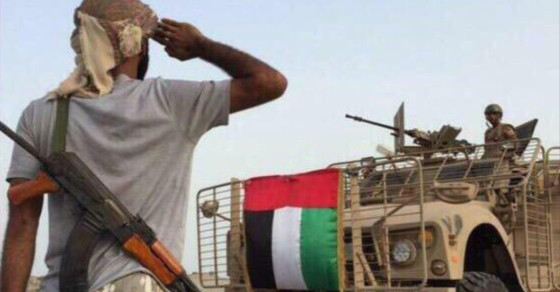
The conflict in Yemen and the UAE’s involvement has helped to bring the community together, according to Emirati editors (image source: vocativ.com)

I wanted to share a fascinating view into Arabic-language media opinions here in the UAE. This week saw the Emirati Media Forum here in Dubai. One of the topics up for discussion was the coverage of the conflict in Yemen. The conflict, which the UAE has been an active participant in since March of this year, has claimed the lives of approximately 70 Emirati combatants. The text below is from Gulf News and is a unique glimpse into how the conflict and those Emiratis who have died have helped to shape the Arabic-language media sector in the UAE and its coverage of the conflict.

The ability of Emiratis to transform tragedy into a sense of unity and national pride was the focal point of discussion at the second session at the Emirati Media Forum.

The session’s theme was ‘The UAE media’s responsible stance on the Yemen events’.

Mohammad Yousuf, president of the UAE Journalists Association, said the media was able to transform the sense of shock, tragedy and loss to positivity and pride.

Sami Al Riyami, Editor-in-Chief of Emarat Al Youm, said the Yemen war was a new experience for the UAE and for the people in the media sector.

“The news came as a shock to us too, as we are humans and Emiratis before we are media people. We were shaken by it as we were not used to seeing the bodies of our martyrs wrapped in the UAE flag — it’s an overwhelming sight. But we were able to turn the tragedy into love and pride for our country,” he said.

Explaining through various media channels why the UAE went to war, what the martyrs died for and what war entails helped in [achieving] this transformation, he said.

The media had no shortage of stories of heroism to write about, Al Riyami said, as the stories just presented themselves.

“It was not about scooping [from] other media outlets; we were all working together so we could get the information out to the people.” Al Riyami said.

In one instance, he said, one of their correspondents lost contact and they had no material to publish. Al Riyami said he called one of his contacts in another newspaper, who gave him the news material to fill the gap in coverage.

“It is our national duty, not a competition about who is getting exclusive content,” he said.

Ali Obaid Al Hameli, director of Dubai TV’s News Centre, said that with the loss of the first martyr on July 16 this year, media outlets felt a great sense of responsibility on how best to break this news to the people of the UAE and, more importantly, to the families of the martyrs.

“The UAE leaders’ engagement and stance and their heartfelt visits to the families of the martyrs and the wounded helped change people’s attitudes and made our job easier,” he said.

He said that they were shocked when they visited martyrs’ families, as the families were the ones consoling them and raising their spirits and not the other way round.

“Many of the families wished that they had more children — brothers and sons — to fight for the UAE,” Al Hamli said.

Abdul Hady Al Shaikh, executive director of Abu Dhabi TV, said that the media also shed light on the humanitarian efforts of the UAE in Yemen — and not just on the military intervention.

“We also wanted to show the Yemeni streets and people, not just coverage of our troops there,” he said.

On the topic of social media’s role, Al Riyami said it is every Emirati’s duty to offset rumours that surface on this platform, by giving correct information on the subject.