How to, and how not to, pitch to the media

Let’s get rid of those bad pitches and give journalists fewer reasons to use the delete button (image source: http://www.meltwater.com)

Having worked as a journalist, as the head of an agency, and finally on the client side, I’ve learned a fair few lessons on the art of pitching a story. The beauty about the communications industry is that no matter how many year’s you’ve put in, you still keep learning. This was the case on Monday of this week, when I received an agency email pitch which basically used the client’s latest piece of coverage as the pitch.

Thanks to that experience I’m sharing with you some tips on how to properly pitch to the media, developed by Forbes contributor Cheryl Connor. They’re simple but effective, and they focus on the content and the delivery rather than the traditional media relations approach used still by many in the region.

1. Choose a target. And make sure the target will actually fit. For example, thousands of companies through the years have attempted to pitch The Wall Street Journal’s Walt Mossberg on writing about products such as network traffic management tools. Yet he specializes in covering products consumers would use. A good fit? Not at all.

2. Read the writer’s prior articles. Thoroughly. Read them with an eye for their interests, their themes, and the way your idea would help extend their subject matter further. (Not “I see you wrote about XX, so how about you write about it again?”) When you make your pitch, let the writer know how and where your idea might fit. Think through the idea through the reporter’s eyes—how will this piece be of interest and need to the reader? How will it meet the criteria the publication and the writer’s section and assignments must meet?

3. Pitch a story—don’t pitch your company. Believe it or not, your company and product, by themselves, are not an interesting topic. But as part of a broader story or an example of a pervasive need or a message—now they can shine. Think of what that story might be and imagine what it might look like in the hands of the reporter you’ve chosen. From that point of view, prepare your pitch. Make your pitch by email first. Let it gel for at least an afternoon, or preferably for a day. If the idea is a good one, the reporter may respond right away. If you don’t hear back, perhaps the next step is a call. When you call, refer to the earlier message. Regardless of whether the reporter has seen it or not, re-forward as a courtesy as you are talking to allow the individual to scan the high points of the message and preliminarily respond.

4. Be respectful of the reporter’s right to make the decision. As tempting as it is to ply the reporter with a strong armed pitch, you will be more successful by respecting the reporter’s right to say yes or no, while providing them with as many meaningful reasons as possible to have the desire to say yes. Is the story an exclusive? An idea or a slant that hasn’t been offered to anybody else? Will it be of broad need and interest to the reporter’s readers or viewers, and does it give them strong news or an angle on the information that hasn’t been presented before? All of these ideas will help.

5. When you speak to the reporter, get straight to the point. The whole idea of buttering a reporter up to the topic you called for is a bad one. Clearly you phoned because you wanted something. With the first words out of your mouth, let them know what it is, and what your reasons are for thinking it’s a good idea. If it’s yes, follow through quickly with the next steps. If not, why not? For another person or with another approach could it be a better idea? With the business of the call handled, you can then visit with the reporter for a bit and catch up if they have the time and the willingness. And at that point, they’ll know the personal interest is sincere.

6. Be honest and transparent about your desire for the interview or the meeting. For example, I was extremely annoyed to get an urgent message from a vendor needing my next available time to discuss their public relations only to find out their one and only reason for the appointment was to give me a demonstration of a product they were hoping I would cover for Forbes. And it was a product that didn’t fit my area of coverage, at that. The executives wasted an hour and a half of their time and mine. Not only will they not see coverage, but the company they represent will now find it highly difficult to get a return appointment with me when they genuinely do want to meet to discuss their PR.

7. If you can’t reach the reporter, avoid the temptation to call repeatedly. Listen to the reporter’s voice mail—it will often provide you with clues. For example, the reporter may be on vacation this week—out sick—moved to another beat (or even another publication) or may be so adamantly opposed to voice messages that you should be aware the message will likely never be heard (or may even offend them). If you do leave a message, one message in a day is ample. If the reporter has left a cell number on the message, refrain from using it unless the matter is genuinely urgent. They’ll appreciate the courtesy you use in reaching out in the ways they most like to be contacted.

8. Consider the strengths of Twitter. Twitter can often be a clue as to where the reporter is and what they are doing on that day. For example, if they Tweet they just arrived at the Oracle World trade show, it’s no wonder they didn’t answer the office phone. Now you know. Time your next call for after the event. Also, many reporters will respond to direct messages through Twitter faster than any other mechanism. Use that advantage, when you can take it, with skill.

These points reflect my own sentiments. A pitch should be interesting and to the point, add value to the journalist and her/his audience and relevant to the journalist’s beat. Communicators are story-tellers. The more interesting our story, the better the chance that the journalist will say yes to the pitch. There’s far too many badly thought-out pitches being made, mass emails promoting a person or a company. The next time you pitch, send the email to a colleague and ask them to answer you, in all honesty, if they’d buy your pitch.
#HappyDubai and the times when you need a good community manager

If you were working on #HappyDubai would you view this image positively or negatively?

If you were working on #HappyDubai would you view this image and the associated Tweet positively or negatively?

First we had the successful #MyDubai initiative. Now, we have #HappyDubai which was launched last week by Dubai Municipality.

According to an article in Gulf News residents can now share positive experiences regarding municipal services through the Happy Dubai initiative. They can post comments and pictures using the #HappyDubai social media hashtag. The feedback will spread through Twitter (@myhappydubai) and the happydubai.ae website. The feel-good initiative, launched on Tuesday, aims to highlight civic services of the Dubai Municipality and feedback from stakeholders.

“With the Happiness Map, we are aiming to track conversations around #HappyDubai and where they are coming from. In time, it will become an interesting reference point to identify areas in Dubai that are the favourite #HappyDubai places for residents,” the municipality told Gulf News.

“This phase of the campaign allows residents to send us their comments and feedback through the website. Residents can also get in touch with us via other touch points including Dubai Municipality’s social media presence, our 24-hour contact number 800900, e-mail us at info@dm.gov.ae or visit our centres around the emirate.”

Here’s where it gets more complicated. The beauty of the #MyDubai campaign is that its objective – the public are asked to share their own experiences of Dubai, without a spin and without a filter. #HappyDubai is subjective, and one of the aims of the Happy Dubai campaign is to make Dubai one of top 10 happiest cities in world by 2021. Dubai’s residents are being asked to share their happiness with Dubai Municipality and the city in general. Rather than engaging in a dialogue, they’re being asked to take a specific emotional stance which is a much riskier strategy.

Hussain Nasser Lootah, director-general of Dubai Municipality, said: “Various initiatives and the projects adopted and executed by Dubai Municipality in different fields give the emirate its unique style which makes it ‘stand out’ among the most developed cities in the world.

“The UAE has been ranked 14th in the happiness index set by the Global Initiative of the UN. Our goal is to spread happiness among the population of UAE and by 2021, Dubai would like to be one of the top ten happiest cities.”

The worst thing that can happen is for the campaign to be hijacked. This isn’t new, and even brands such as McDonalds have had to pull campaigns due to consumers not reacting as they’d hoped (a great example is #McDStories).

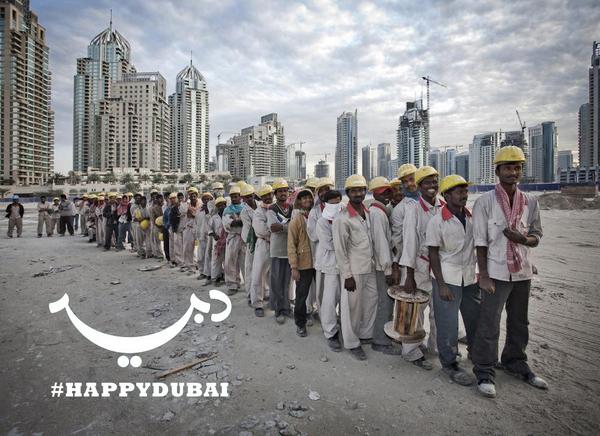
There’s a lot to love about Dubai and the campaign launched by Dubai Municipality (the microsite is a great feature, especially the #HappyDubai map), but not everyone feels as strongly about #HappyDubai as the people behind the campaign. One “David Brown” tweeted repeatedly about the issue facing labourers in the Emirate with the hashtag #HappyDubai. See the below for one Tweet, including a link to a site about alleged human rights abuses in the GCC and the image Photoshopped with the #HappyDubai logo.

Could it get worse? Well, yes it could do if your community manager misunderstands the point being made and then retweets the original message. The follow-up is even worse (unless I’m missing the irony).

The lesson is simple. Before a campaign is even launched whoever handles social media needs to understand the various viewpoints that may be coming his or her way, both positive and negative (the same is also true of the whole organization). There should be talking points and message tracks in place for any negative sentiment. This is especially true of a campaign such as #HappyDubai which takes a subjective stance on people’s emotions towards a specific issue.

And more than anything else, if you can’t spot a negative comment and you work in social media, you need to find a new industry to work in.

#GazaUnderAttack – using Whatsapp to begin a social media campaign

As you’re on the internet reading this, I’m assuming that you’re aware of the events unfolding in Gaza and Israel. Social media has become part of the campaign on both sides to raise awareness for what is happening.

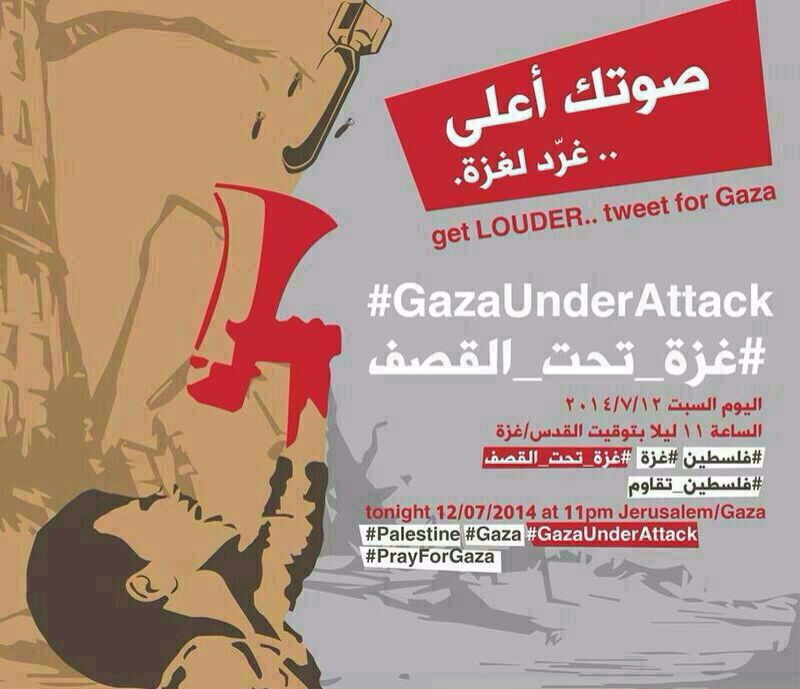
As of 11pm Gaza time, a campaign has begun on Twitter to talk about what is happening in Gaza and spread the word, using the hashtags #GazaUnderAttack and #PrayForGaza. What’s fascinating is that those behind the campaign have used Whatsapp to spread graphics on the campaign a couple of hours before it began. The tactic should have allowed the organizers to spread the awareness as quickly and as quietly as possible, to group their supporters and get them active on Twitter all at the same time. In essence, you’re creating a wave of support online, without anyone on the other side being forewarned.

I’ll be watching this intently, in the hope that that the two sides call a ceasefire as soon as possible. I for one hope that #GazaUnderAttack can be a force for good, to stop the suffering.

The #GazaUnderAttack image was spread via Whatsapp before the campaign was launched on Twitter

The #GazaUnderAttack image was spread via Whatsapp before the campaign was launched on Twitter

How Twitter is helping to foster debate in the Middle East – #WhatisTheSolutionForLebanon & #ImHalfQatari

Despite social media’s reputation for negativity (and getting people jailed in our region), Twitter and other platforms are ideal for beginning and engaging in debate on social issues (image source: lawrencewray.files.wordpress.com)

What’s exciting about social media in today’s Middle East is how the medium is being used to promote conversations organically, and without prompting from any organization. Two examples of hashtag conversations about issues of national interest are #WhatisTheSolutionForLebanon and #ImHalfQatari.

According to the Beirut-based English-language newspaper the Daily Star, the Twitter-based conversation about Lebanon’s political issues began after a crackdown on terrorist cells across the country, which itself was spurred by three suicide bombings within the country. To quote the article:

“Don’t give visas upon airport arrival” was a very common response on the platform, alongside requests to “elect a president now” and “close off Lebanon’s borders.”

When it came to tweeting solutions to Lebanon’s pitfalls, Twitter users split between pessimists who believed that “there is no solution, Lebanon will never be a country,” and others who felt that certain recommendations would improve the situation.

LBCI reporter Yazbek Wehbe’s tweet expressed the view that “ Lebanon should remain neutral [with respect to] regional problems.”

One user suggested a fresh take on security raids by tweeting “[the ISF] should form a special raid unit comprised of Haifa Wehbe, Maya Diab, and Ammar Houry.”

The #ImHalfQatari hashtag was created by Dr. Amal Al-Malki, Associate Professor at Carnegie Mellon University in Qatar. Dr Al-Malki is herself both Qatari, on her father’s side, and Lebanese, on her mother’s. She began the debate after reading an article in the Doha-based Arabic daily Al Raya that suggested Qatari men are increasingly marrying non-Qatari women due to inflated demands for dowries.

The article is excellent and is well worth a read on the state of cultural affairs both in Doha and the wider Gulf in general.

Social media has been criticized by many in the Gulf as a negative phenomenon that often harms both society and individuals. However, as these two hashtags show, Twitter and other social media platforms can be used to foster a positive dialogue about issues that need talking about.

Turkey, Twitter and how a ban couldn’t/wouldn’t happen in the Gulf

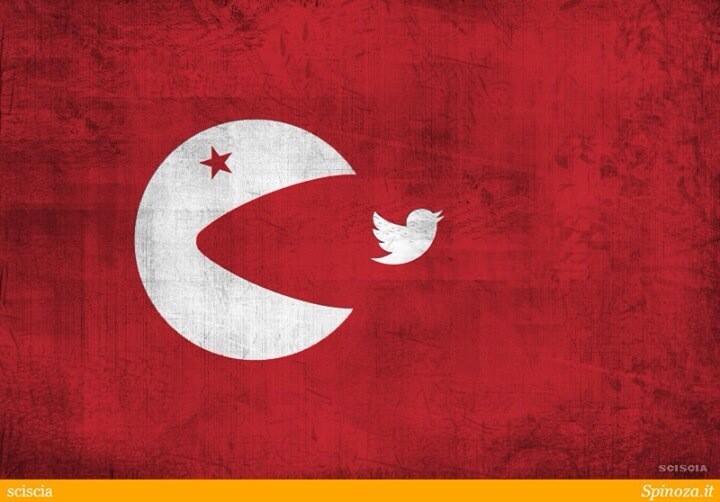
While Turkey is busy trying to gobble up Twitter, there’s little chance of anyone in the Gulf banning social media any time soon (image source: http://www.globalpost.com)

Last week, we in the Arab world were treated to a spectacle that we’re all too often participants in. Instead, we looked on as the government of a neighboring country pulled the plug on a social media service and denied its citizens and residents the right to use Twitter. The story behind the move by Turkey’s Prime Minister, Recep Tayyip Erdoğan, to block access to Twitter is fascinating, a page-turner about corruption, dissent and how one man is trying to dominate political will in his own country (have a read of the background here, in a wonderful piece written by the New Yorker’s Jenna Krajeski).

A question/tweet by the Wall Street Journal’s Ellen Knickmeyer about the situation in Turkey from a Middle Eastern perspective got me thinking about the subject. Here’s my take on the Gulf states country-by-country.

Saudi Arabia

Let’s start with the largest country in the region, Saudi Arabia. There are millions online and active on social media in the Kingdom (both Twitter and Facebook have fifteen million Saudi users between them – Facebook has approximately eight million users and Twitter just under seven million ). For many, social media is a release, a forum for open debate where anything and everything can be discussed.

The whole spectrum of Saudi society is online and using social media – some of the most popular and prolific tweeters are religious scholars. while there is criticism of policy online, would the government be willing to risk a public backlash any social media channels were to be closed? Rather, Saudi’s social media policy can be summed up in one sentence – do what you want online but we are watching you. Saudi’s online laws, which have recently been rehauled, allow for citizens to be detained for their online activities (a recent piece by Abeer Allam for Al-Monitor covers recent developments in the Kingdom).

Bahrain

The second Kingdom on the list, Bahrain has suffered more than most over the past three years. Bahrain’s social media has become almost as polarized as the situation in the country, between those who support the government and those who support the opposition. However, despite the war of words online Bahrain has never threatened to pull the plug on social media (there was a communications blackout during the early days of the political crisis in Bahrain).

Instead, the island state has tightened up its online legislation and has cracked down on bloggers and other activists who use social media (Global Voices’ editor Amira AlHussaini wrote a piece about the arrest of blogger Mohammed Hassan in July 2013).

The Kingdom uses social media to communicate both locally and globally on issues such as security, foreign policy and terrorism. Would Bahrain seek to indirectly legitimize the opposition’s claims that the government is cracking down on media through pulling the plug on social media? Not likely.

The United Arab Emirates

The second largest country in the GCC by population, the United Arab Emirates has taken to social media like a duck to water; the country’s leadership are online, the country’s businesses are online and the country’s population are also online tweeting, updating their statuses and uploading pictures of every single meal and building around them mainly on their smartphones. The UAE’s population communicates about literally everything, except to criticize.

There’s so few people in the UAE who aren’t supporting the country’s leadership that the thought of any social media being pulled seem ludicrous. For those that do dissent the UAE introduced in 2012 more stringent online laws which include jail time for those that defame the country. These laws have been put into effect.

Kuwait

Maybe surprisingly for those who don’t know the region, Kuwait has the freest media industry in the region, with columnists regularly criticizing government policy. Kuwait’s parliamentary system and the level of public discourse in the country means that few subjects are off-limits. Kuwait’s social media scene is also buzzing – Twitter reckons that over half of the country’s population, 1.5 million out of 2.7 million, are active users.

Even in Kuwait however, there have been cases of people being jailed for their tweets, either for insulting the Emir or for blasphemy. Still, it’s hard to see how or why any social media channels would be banned in a country that is known to enjoy a ‘debate’ every now and then.

Oman

On the periphery of the Gulf, Oman was affected by the Arab Spring. The country’s ruler Sultan Qaboos introduced sweeping reforms to appease Omanis calling for a better standard of living. The country has contended with online activists and the authorities have warned people not to spread libel and rumours that prejudice national security. Would Oman seek to shut down social media? Again, it’s unlikely.

Qatar

Last but certainly not least, Qatar has championed its own brand of journalism aka Al Jazeera for over a decade now. The country with its vast gas reserves has not had to contend with any political discussions about its governance and future. Qatar has jailed one person, a Qatari national, for publishing a poem on Twitter.

In addition, the country’s government is seeking to introduce a revised cybercrime law which would increase and expand the capacity under which a person communicating online could be jailed for (for a detailed news piece read this article by Matt Duffy on Al Monitor here). However, there’s little chance of anyone in government shutting down any social media channels in the country.

In short, social media has changed the Gulf just as it’s changed the world. The region’s citizens and residents have much more freedom to talk about issues online. The Gulf’s governments and their business interests have also become adept at using social media to promote their own messaging and market themselves. The region’s citizens are aware that even online they’re being monitored (this BBC article describes this notion of being watched) and most of them will tread carefully about what they say and how they say it. For others, they’ll go online anonymously and tweet to their heart’s content.

For governments, social media has become a release value on societal pressures and the message to nationals is clear – talk about whatever you want but don’t criticize. Examples have been made of those who do. But, while the governments have the ability to cut off social media and even throttle or close access to the internet, thankfully the Gulf isn’t Turkey. No one here is going to ban Twitter or any other social media channel any time soon.

Bahrain, Saudi and the UAE use Facebook to Announce Ambassador Pullout

It’s pretty remarkable – I’m not just referring to the withdrawal of the Bahraini, Emirati and Saudi ambassadors from Doha but also the way the news was announced. I, like many others, saw the news first not on traditional news channels but via Twitter. And where was the original announcement? On the Facebook page of the Saudi Ministry of Foreign Affairs. It’s pretty remarkable to see social media being used to release such information, especially considering the medium is designed with dialogue in mind. If you read Arabic have a look at the comments on the Ministry’s page.

The original announcement, which was later carried in the region’s papers, is below.

The Saudi Ministry of Foreign Affairs announced the pullout of the three ambassadors via its Facebook page before the story broke in the traditional media

The Saudi Ministry of Foreign Affairs announced the pullout of the three ambassadors via its Facebook page before the story broke in the traditional media

Saudi Bans Energy Drinks Advertising – What Now Happens To Social Media

The Kingdom’s Government took the drastic step yesterday of introducing a raft of measures aimed at restricting the sale, promotion and consumption of energy drinks. The move, which was not expected, will mean that as of now energy drinks companies will no longer be able to advertise or carry out promotion campaigns through ‘electronic or print media or any other means’.

It doesn’t end there. The Saudi Cabinet banned the free distribution of energy drinks to consumers belonging to all age groups. Energy drinks have also been banned in restaurants and canteens at government establishments, as well as educational and health institutions, public and private sports clubs and halls.

To quote from the report on the Al-Arabiya news-site, the full list of measures includes:

1 – To prohibit advertising of any energy drink or do advertising or promotional campaigns for any energy drink via any readable, audible or visible media organ, or by any other means.”

2 – To prohibit energy drinks companies, their agents, distributors and marketing associations from sponsoring any sporting, social or cultural event, or taking any procedure leading to promotion.

3 – To prohibit the free distribution of energy drinks to consumers of all age groups.

4 – To prohibit the sale of energy drinks in restaurants and canteens in government facilities; education and health facilities; halls and public and private sports clubs.

5 – Upon the decision, factory owners and importers of energy drinks shall be committing to writing a text on the tin of any energy drink in Arabic and English languages – warning of the harmful effects of energy drinks.”

In a market that has been constantly growing for the energy drinks sector (you can find Red Bull, Bison, Power Horse and other popular energy drinks brands everywhere), this is going to be a major blow for the business. Red Bull has already put out statements defending its position, including its availability in 165 countries worldwide and a lack of evidence to show that it is harmful (you can read the statement in full here). Red Bull and other brands are major event sponsors, and it’s uncertain where the shortfall in funding will come from.

However, the one area which has yet to be clarified is social media. Red Bull has its Saudi Twitter feed (@RedBullSaudi) and Facebook pages for its events. Red Bull did put out a tweet today from its Saudi feed. How is social media classified? Is it advertising or is social media more subtle? And how do the authorities class social media? It’ll be interesting to see how this plays out, both in the real world as well as on social media.

Dubai Police and the ignominy of being hacked on social media

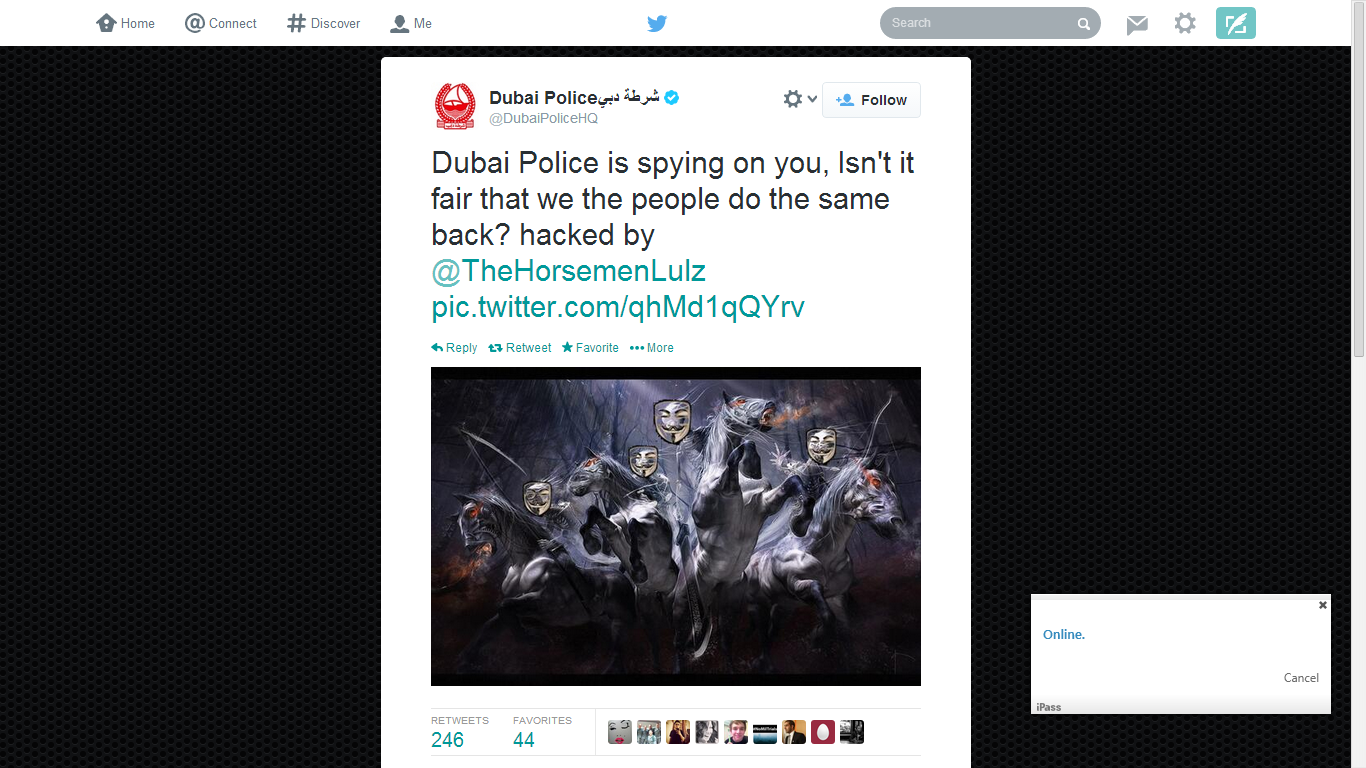
When your day job is to ensure the safety and security of those around you, it doesn’t get worse than this for Dubai Police. The police force best known for solving crimes in a matter of moments and driving around in swanky super cars (the latest is a three million dollar Bugatti Veyron) has just been hacked by a group with the Twitter handle @TheHorsemenLulz – presumably named after the infamous hacker collective LulzSec.

All but one of Dubai Police’s social media sites have been hacked, including Twitter, Tumblr, LinkedIn, and Pinterest (Facebook was the only social media channel that wasn’t hacked). While the images have now been removed, a couple of hours after the sites were compromised, here’s a screenshot of the offending image on the Dubai Police Twitter feed @DubaiPoliceHQ.

A screen shot of the image sent out by the hackers via the @DubaiPoliceHQ Twitter account

A screen shot of the image sent out by the hackers via the @DubaiPoliceHQ Twitter account

While the most obvious questions are how were these accounts hacked and how easy was it to hack the accounts, my issue is more about the group behind the hacks who have claimed several other cyber attacks in the UAE, including crashing the websites of Noor Islamic Bank, the Telecommunications Regulatory Authority and the UAE Central Bank. Do we have a locally-based hacker group in the UAE?

In a Tweet that included the @DubaiPoliceHQ Twitter account the group put out a video in November saying they’d be targeting the UAE Government. While the tweet and the video didn’t make too much sense, why wasn’t the issue taken seriously by those handling the @DubaiPoliceHQ Twitter account? With the UAE’s Government Summit taking place in Dubai tomorrow shouldn’t cyber security be top of the agenda for the public sector, and in particular the Dubai Police?

https://twitter.com/TheHorsemenLulz/status/406006175071625216

What a difference a day makes – the media shift in Bahrain and public perception

It’s often said that 24 hours in the newsroom is a unique experience and Bahrain’s media is no different. The island nation’s media has been reporting on the difficult situation the country is going through for the past couple of years. Wednesday the 15th of January was no different from the past couple of months in that the Kingdom’s English-language media were reporting on government efforts to keep the country safe (much of the focus was on social media and Twitter in particular. The below is a shot of the front page.

The Front Page of Bahrain's Gulf Daily News for the 15 January 2014

The Front Page of Bahrain’s Gulf Daily News for the 15 January 2014

That night, news leaked about national reconciliation talks between Bahrain’s Crown Prince and the largest opposition party Al-Wefaq. As expected, the local media carried the news on their front pages.

The front page of Gulf Daily News from the 16 January. Notice a change in tone?

The front page of Gulf Daily News from the 16 January. Notice a change in tone?

While I won’t discuss the politics of the issue, what I do find interesting is the remarkable shift in position over 24 hours and how groups are described by the media from the one issue to the other. While it may be easy to control the dialogue and the messaging for one of the parties in Bahrain, it’s not so easy to shift public perception. Time will tell what difference this particular 24 hours have made, not only to the media’s take on affairs but also how the public perceives the situation as reported in the media.

#MyDubai and the issue of whether to pay the public for content

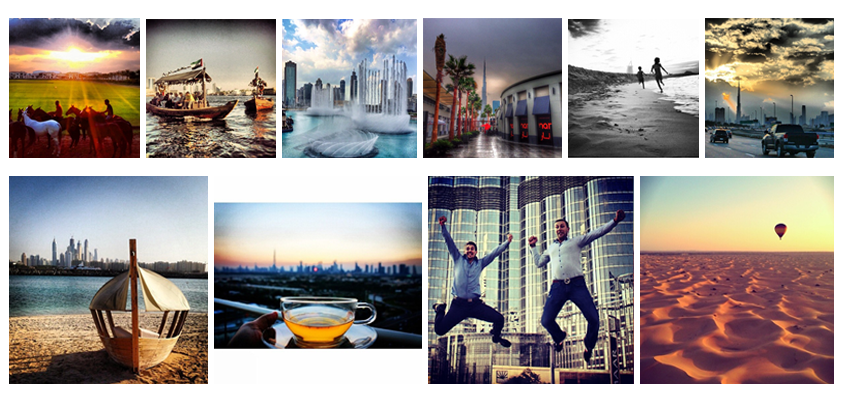
The first images from #MyDubai's initiative provided for free by Dubai residents (image source: www.facebook.com/DefinitelyDubai)

The first images from #MyDubai’s initiative provided for free by Dubai residents (image source: http://www.facebook.com/DefinitelyDubai)

To pay or not to pay? That’s the question. The city-state has launched an interesting project based on social media, dubbed as a social-media autobiography of Dubai to be written by its residents and visitors. To quote The National newspaper:

The year-long project will bring together people in the emirate through Twitter, Instagram, and Facebook. A call has gone out to share pictures and videos using the hashtag #MyDubai.

According to The National the project will tell the real and human stories of the city through residents’ contributions which are posted onto Facebook, Twitter and Instagram (there’s no mention of YouTube and Pinterest which is a shame).

The National followed up today with a second piece on the initiative. Tourism bosses from Dubai’s Department of Tourism and Commerce Marketing (DTCM) will select the best photographs and videos from the Emirate’s residents and showcase them in exhibitions and roadshows as part of the year-long #MyDubai project. The public’s images will be used to promote Dubai throughout the year.

What isn’t mentioned is if the public are going to be paid for their images which are going to be used for advertising the Emirate. As any content producer knows, photography and videography are expensive. While those lucky few whose images get chosen – to quote The National, “more than 25,000 images and videos were uploaded to Instagram using #MyDubai just 12 hours after the campaign was launched” – will be referenced and have been so far online on DTCM’s Definitely Dubai Facebook site is it right to use images provided by the public for free (even if it is with their consent).

And on another note, who owns the copyright to the images? Are the images commissioned by DTCM for their explicit use or do the copyright owners of the images, have the ability to pull the images as and when they please if they object to how the images are portrayed?

I love the concept of #MyDubai but should the public be paid for images that are used, even if only a token amount? If it’s for corporate usage, then I think they should do.