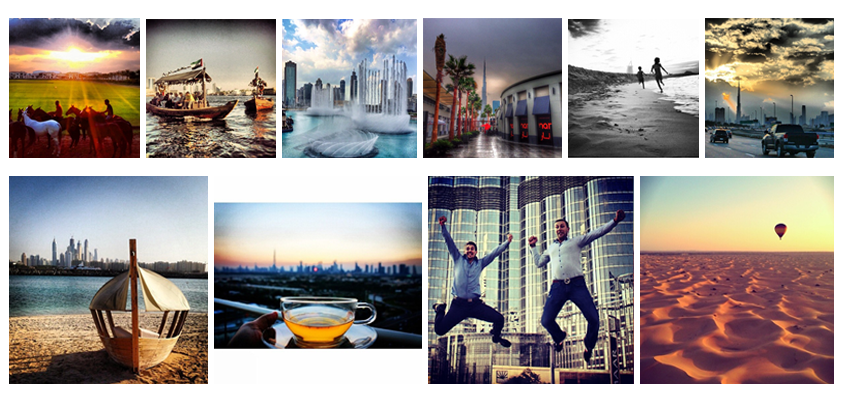
#MyDubai and the issue of whether to pay the public for content

The first images from #MyDubai's initiative provided for free by Dubai residents (image source: www.facebook.com/DefinitelyDubai)

The first images from #MyDubai’s initiative provided for free by Dubai residents (image source: http://www.facebook.com/DefinitelyDubai)

To pay or not to pay? That’s the question. The city-state has launched an interesting project based on social media, dubbed as a social-media autobiography of Dubai to be written by its residents and visitors. To quote The National newspaper:

The year-long project will bring together people in the emirate through Twitter, Instagram, and Facebook. A call has gone out to share pictures and videos using the hashtag #MyDubai.

According to The National the project will tell the real and human stories of the city through residents’ contributions which are posted onto Facebook, Twitter and Instagram (there’s no mention of YouTube and Pinterest which is a shame).

The National followed up today with a second piece on the initiative. Tourism bosses from Dubai’s Department of Tourism and Commerce Marketing (DTCM) will select the best photographs and videos from the Emirate’s residents and showcase them in exhibitions and roadshows as part of the year-long #MyDubai project. The public’s images will be used to promote Dubai throughout the year.

What isn’t mentioned is if the public are going to be paid for their images which are going to be used for advertising the Emirate. As any content producer knows, photography and videography are expensive. While those lucky few whose images get chosen – to quote The National, “more than 25,000 images and videos were uploaded to Instagram using #MyDubai just 12 hours after the campaign was launched” – will be referenced and have been so far online on DTCM’s Definitely Dubai Facebook site is it right to use images provided by the public for free (even if it is with their consent).

And on another note, who owns the copyright to the images? Are the images commissioned by DTCM for their explicit use or do the copyright owners of the images, have the ability to pull the images as and when they please if they object to how the images are portrayed?

I love the concept of #MyDubai but should the public be paid for images that are used, even if only a token amount? If it’s for corporate usage, then I think they should do.
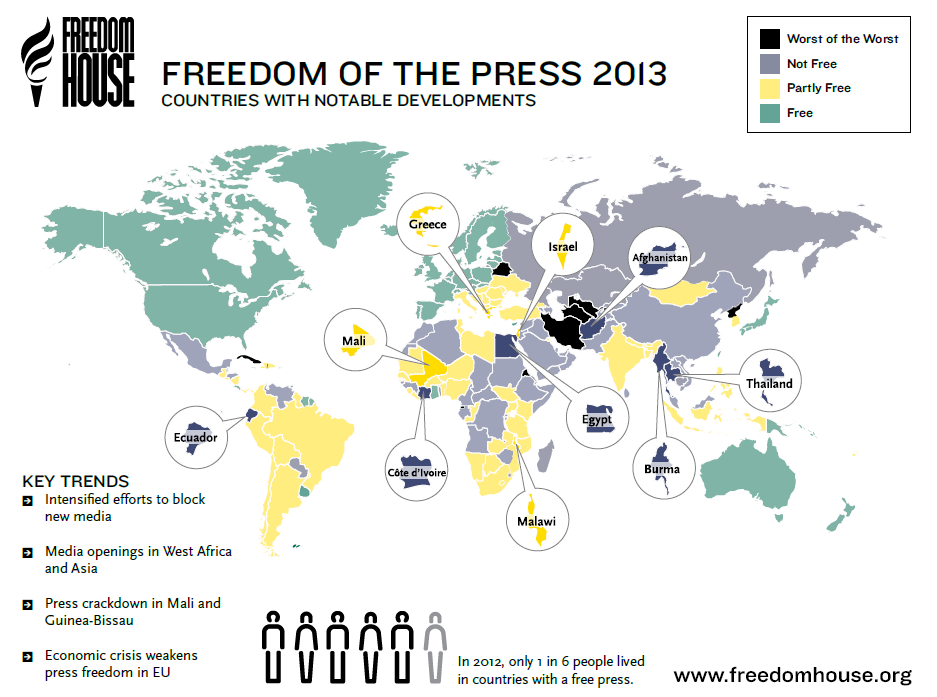
Death, Arrests and Censorship: How the Middle East’s media has fared over 2013

The Middle East's press freedoms have, on the whole, suffered in 2013 (image source: Freedom House)

The Middle East’s press freedoms have, on the whole, suffered in 2013 (image source: Freedom House)

The past twelve months haven’t been lacking in terms of seminal events across the Middle East – we’ve experienced war, coups/democratic/popular revolutions (choose/delete based on your bias), and economic revivals across this diverse region. However, it’s fair to say that 2013 hasn’t been a wonderful year for good quality and independent journalism in the Middle East and North Africa region.

Overall, 2013 recorded a grim milestone for global media. According to the Committee to Protect Journalists, the year documented the 1,000th journalist killed in relation to his/her work since the organization began documenting fatalities in 1992. Sky News cameraman Mick Deane was killed in Egypt in August of this year while covering the violence in Cairo.

Over half of the 70 journalists lost this year were killed in the Middle East trio of Syria, Iraq and Egypt. One of those whom we lost at the end of 2013 was Molhem Barakat, a young Syrian freelance photographer who submitted dozens of pictures of the bloody conflict in Aleppo to Reuters. Molhem was killed while covering fighting between government and opposition fighters on December 20th.

A full list of those who have laid down their lives to bring us the reality in war zones and areas of conflict can be seen here at the Committee to Protect Journalists.

Journalists working in safer climes across the MENA region have also faced serious challenges which has impeded their work. Media freedoms were curtailed across the region, with Lebanon being ranked by the US-based NGO Freedom House as the country with the most free press (Lebanon came in at number 112 globally and its press was rated as partly free).

I’m going to quote below from Freedom House’s Freedom of the Press report on the Middle East and North Africa. The report in full is available to download in pdf format here.

The Middle East and North Africa region continued to have the world’s poorest ratings in 2012, with no countries ranked in the Free category, 5 countries designated Partly Free, and 14 countries assessed as Not Free… Although new information platforms — including blogs, social media such as Twitter and Facebook, and smart phones — have had a positive impact, traditional media in much of the region were still constrained by emergency rule, state ownership and editorial directives, harsh blasphemy legislation, and laws against insulting monarchs and public figures.

While the concept of citizen journalism has been slow to take root in the Middle East, a number of countries have jailed persons who have uploaded information such as videos and photographs onto the internet on charges ranging from insulting the national image and harming the country’s reputation to defamation.

The over-riding trend over 2013 has been efforts to monitor, control and censor online debate. A number of countries in the Gulf and North Africa have enacted highly restrictive laws targeting online publishing including blogs and social media that hurts national interests. Even in Kuwait, which was ranked by Freedom House as the Gulf nation with the freest press, journalists have been jailed for reporting on opposition demonstrations. Journalists have been jailed and remain imprisoned in at least eight countries across the Middle East and North Africa according to the Committee to Protect Journalists.

Looking forward, there’s no reason to believe that 2014 will prove to be different to 2013. Civil disputes in Syria, Iraq and Egypt show no signs of being resolved, and sectarian issues seem to be growing in prominence across the region. One bright spot may be a thaw in relations between the West and Iran, following the election of President Rouhani and discussions over Iran’s nuclear programme. However, as social media becomes the most common form of communications across the Middle East the odds are that online censorship will become ever more prominent.

The End of the Fattah Era at Abu Dhabi’s The National

How will The National change following Fattah’s departure to the world of Public Relations? (image source: http://www.capitalnewyork.com)

As they say, all things must come to an end. This month in the United Arab Emirates we witnessed a rare occurrence, the departure of an editor-in-chief at one of the national newspapers. After five years Hassan Fattah stepped down. The news wasn’t surprising to most of us media watchers when it was officially announced by The National on the 2nd of October. The news had been unofficially published by Capital New York on the 19th of September after personal emails had been leaked to The National staffers (one email apparently contained an employment contract from Fattah’s new employers).

Fattah’s time at The National hasn’t been without controversy. The paper, which was once dubbed “The New York Times of the Middle East”, once held aloft the ideals of freedom of the press and professional journalism in a region that suffers from a lack of both. Today, while The National is a quality read it hasn’t lived up to the goals that its founders and editorial team strived for at the paper’s launch.

Instead, judging by the number of pieces that have been written about The National by blogs and other online news outlets the paper has been riven by leadership issues at the top by people who have had to juggle the demands of producing good quality editorial alongside keeping the newspaper’s owners, Abu Dhabi Media Company, happy. The nadir was reached when disgruntled employees started a Facebook site with the aim of highlighting their unhappiness at how the newspaper was run.

Fattah has moved on to the dark side, to the world of public relations. He’ll be heading up communications for a company that is not much loved in the UAE – GEMS, the ‘world’s largest private education company’. It’ll be interesting to see how he copes with the move; public relations isn’t the easiest profession at the best of times but trying to prove that paying more per year for a child’s education than one would pay for an MBA in a top UK University is good value for money would be a stretch for even the most experienced communications spin doctor. How will Fattah cope with keeping his employer happy and the press onside whilst trying to convince a skeptical public about GEMS’ altruism and the value for money provided by its services for example?

However, my gaze will remain firmly on The National. The paper is still one of my favourites and I believe that despite all of the events of the last couple of years there remains the promise of a publication which can raise journalistic standards in the Gulf. Call me naive, simple or whatever else you want, but I’d rather live in hope that The National can return to the vision spelt out by Abu Dhabi Media chairman Mohamed Khalaf Al Mazrouei on the eve of its inauguration, of “a free, professional and enlightened press” that will play a key role in the development of the country. Am I asking too much? Let’s hope not.

The Middle East and its addiction to Facebook – 2013 stats and figures

Yes, we Arabs have adopted Facebook as our own (image source: muslimscrisisgroup.wordpress.com)

Most of us in the region already know how effective and powerful Facebook is. The social media site played a prominent role in the Arab Spring, particularly in Egypt, and its popularity has endured in the face of challenges from other services such as Twitter and YouTube (I’m not even going to mention Google+ in the same sentence).

Facebook released some figures this week about the site’s usage in the Middle East. According to Facebook’s head of MENA Jonathan Labin over twenty eight million people in the Middle East and North Africa are using Facebook every day. Fifty six million use the site every month and of those thirty three use a phone or tablet device to check their profile. Fifteen million people access the site on a daily basis from their mobiles.

I’m going to give you a little more insight into a couple of different regions: Saudi Arabia; Egypt; the GCC; North Africa, and the Levant. The below figures, which were compiled last month, give a good deal of insight into gender split, age, marriage status, number of friends and page likes, access methods, and interface usage. If you’re a marketer in this region and you’re not using or leveraging Facebook (especially on mobile) then start rethinking your advertising and communications approach.

A glimpse into Social Media in today’s Gulf

It’s not often I can say that Monday is my favourite day of the week (as Bob Geldof says, I don’t like Mondays) but this week was an exception thanks to the inaugural Social Media Forum. Arranged by the Middle East Public Relations Association, the event brought together some of the world’s largest social media names present in the Gulf including Facebook and Twitter’s local agency Connect Ads to talk shop about what’s happening in the social media world. And by the looks of it we’re addicted to social media.

The latest stats from Twitter are stunning; there’s now six and a half million active users of the social media channel in Saudi Arabia (active users are those who use their account on a daily basis), which represents a growth of 500 percent over last year’s numbers. In the UAE there’s 1.5 million users. But the highest percentage of Twitter users to a population is in Kuwait, where one in three people – one in three million – use the service on a daily basis.

While Facebook’s spokesperson didn’t reveal updated numbers about users in the Gulf region usage trends have changed thanks in part to widespread adoption of smartphones and broadband wireless networks such as 3G and 4G. The average user will check Facebook 11 times a day, up from 3 or 4 times, partly thanks to Facebook’s latest mobile applications. Sixty percent of Twitter users in the Middle East and North Africa are now using the service while watching television (the logical question would be, where are you advertisers and why are you not taking advantage of this?).

The good news would seem to be that (some) clients are now understanding social media is more than just followers, likes and retweets according to the head of analysis agency Social Eyez. One speaker at the event, the corporate communications manager for the Qatar Foundation, told the audience that a sixty hour social media activation with FC Barcelona using Twitter drove global brand awareness by upwards of 20 percent. This goal would have been unachievable with conventional media without an eight figure marketing budget. Social media has changed both marketing and communications completely, and long may our love of tweeting and posting continue in the Gulf.

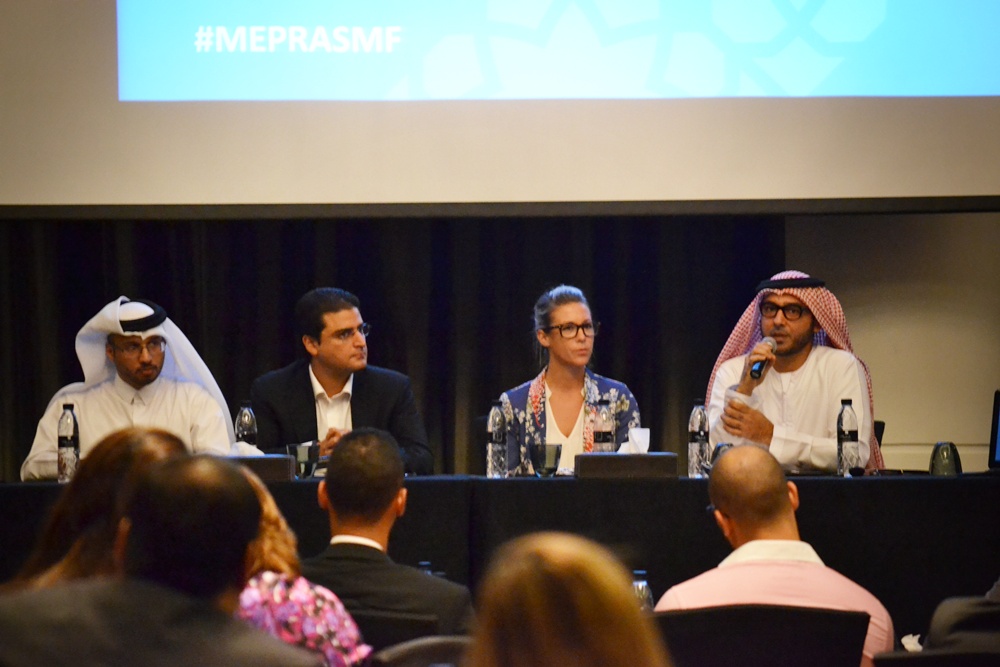
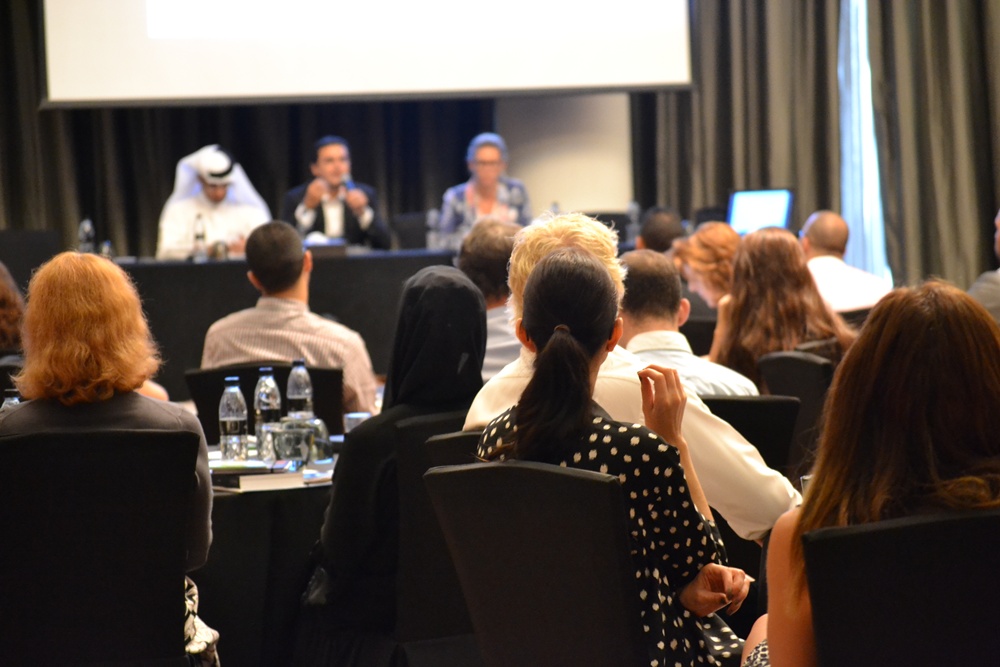
If you’re interesting in seeing the best practice presentations from the event you can download the Facebook Middle East Public Relations Association Presentation here and the Twitter Social Media Forum Presentation here. MEPRA will be holding more events on social media soon, including with the Social Media Club in Bahrain and other areas of the region. For a glimpse of the event have a peek at some of the pictures below.

Is social media making the situation in Egypt better or worse?

Should we still be saying thank you to Facebook and other social media sites today? (image credit: http://www.straighterline.com)

We’ve all seen the horrid news coming out of Egypt over the past couple of days and weeks. The events have been broadcast worldwide. Thanks to social media, they’ve also featured prominently on Facebook, Twitter, YouTube and other channels. There’s been a noticeable trend; the content being shared online is becoming more radical and biased as things have gotten worse in Egypt.

There was a fascinating study by MIT, NYU and the Hebrew University of Jerusalem which suggested specific positive or negative influences create asymmetric herding effects – in plain English that means people are increasingly likely to follow the crowd online and agree with others when there’s a groundswell of opinion, especially when they share similar opinions or views.

There’s a famous English saying which seems apt for social media today, “birds of a feather flock together.” What we’re seeing on social media today is groups of individuals who share the same opinions coming together as groups. There’s less debate online of differing views and more support for and promotion of each others views.

The question is, how is this helping calm the situation on the ground? Are people thinking clearly when they post, share or comment? While Facebook was praised for its role in the 2011 revolution, my own views are that social media is now a key channel for fanning the flames of sectarian division in the country.

I’d hope people think more before they use social media to openly share their feelings on such emotional issues. It’s gotten to a point now where my timelines are split between the various groups who are constantly posting materials which reflect their own opinions. In contrast there’s little effort by either side to reach out to others. The social media world is just as polarized as opinions on the ground (maybe even more so). I’m hiding videos and pictures because I don’t want to see such open hatred on my timelines.

I sympathize with people’s views and I understand the passion on both sides. Hundreds have died and the country is in a state of emergency. On both sides, Egypt’s citizens want what they think is best for their country. But, for the sake of events on the ground, let’s pause before emotions kick in. We need more calm heads rather than hot heads, especially online and on social media.

Subaru Emirates, Facebook, sexism, racism, and loss of life = a social media disaster

I’m a hardened comms person/journalist. I’ve seen a lot of materials which offends and much of that material doesn’t surprise me. However, this morning I was wincing at a post on Facebook, on the UAE page of the automotive brand Subaru. The post, which relates to a recent accident which claimed the lives of four people, offends both women and a specific nationality. While this isn’t enough, not a single positive piece of advice is given to drivers to help avoid such a tragedy in the future. The post is screen-captured below. And to ensure maximum shock value what would you title such a piece? ‘Women drivers at it again’.

For me, pretty much everything that could have been done wrong was done wrong with this post. Frankly, it's disgusting.

For me, pretty much everything that could have been done wrong was done wrong with this post. Frankly, it’s disgusting.

To fan the flames of outrage further, the admin person does not apologize but rather seeks to defend the comments against the criticism (sixty comments and counting and 58 shares within 21 hours). This has gone out to 15,000 accounts who have liked the page and has been distributed to hundreds more through the shares. Depending on Subaru Emirates’ advertising policy in the UAE this could have reached hundreds of thousands more. Stepping aside from the grotesqueness of the post, it’s a remarkable thought that the company could have alienated over half of its potential buyer base. As an aside, I doubt that the page has asked permission from the newspaper Emirates 24/7 to use this image in a commercial setting.

I’m not going to delve deeper into this as there’s little positive about this episode apart from to learn what not to do when promoting a brand through Facebook. Subaru, please do the right thing and apologize for the post and ensure that the admin person learns the error of their ways.

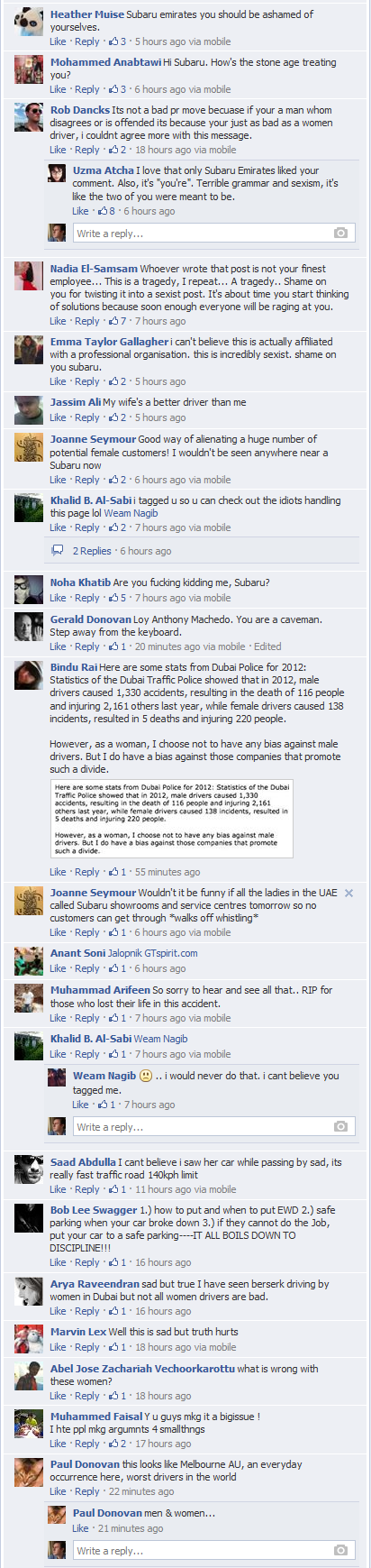
Comments are below for the post (apologies for the size but it’s easy to zoom in and view/read).

This is the first comments screen shot. Note the defensive post by Subaru Emirates and the anger of the responses.

This is the first comments screen shot. Note the defensive post by Subaru Emirates and the anger of the responses.

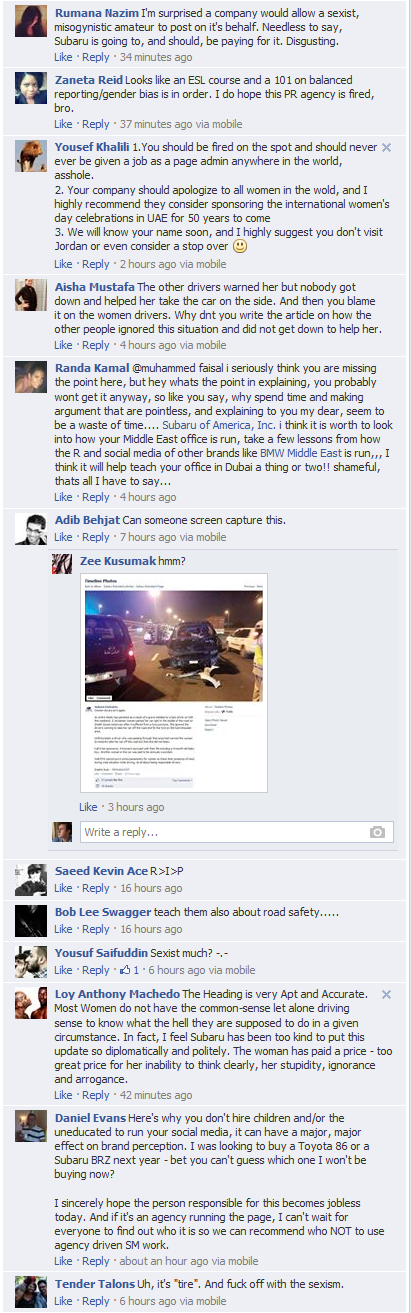
And it goes on...

And it goes on…

And on and on...

And on and on…

I’m sure that Subaru has guidelines for appropriate social media usage for its internal staff and agencies. They need to ensure that these guidelines are understood by all and that they are followed by their social media admin persons. I’ll be writing a how-to blog for how to use Facebook properly soon. As a responsible individual, we all need to understand the other. That’s even more true when you’re running someone else’s brand on their behalf.

Social media brand hijacking – Emirates and Etihad fakes and lessons for a corporate online presence

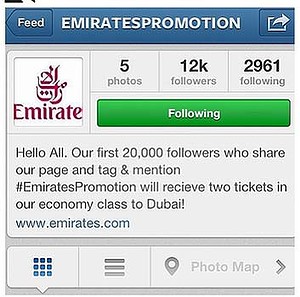
A story broke at the beginning of the month about a couple of campaigns out there in the social media universe. Both piggybacked on two of the UAE’s most established brands. Essentially, the two campaigns offered those who followed the chance to win free flights with Emirates Airline and Etihad Airways.

According to the UAE’s English-language newspaper The National which broke the story here in the UAE, the promotion launched on the picture-sharing site Instagram and stated that the first 20,000 people who would follow each account and would share the respective campaigns with a specific hashtag would receive free tickets for themselves plus one to Dubai or Abu Dhabi. The Emirates Instagram account was named EMIRATESPROMOTION while the Etihad campaign ran under the hashtag #EtihadPromotion.

The branding is there, the name may be dodgy, but there's no official Emirates account. So why not believe it?

The branding is there, the name may be dodgy, but there’s no official Emirates account. So why not believe it?

Too good to be true you may think, and the campaigns were fake. That didn’t stop 10,000 people following the fake Emirates account which featured the company’s logo and photos skinned from the company’s website. I don’t know how long the fake competitions were up and running for, but both Emirates and Etihad put out statements warning people not to fall for the fake campaigns. The Emirates statement is below.

To all our fans, Emirates has three official social media channels which are:

http://www.facebook.com/emirates
http://www.google.com/+Emirates
http://www.youtube.com/Emirates

When we launch competitions or new social media channels, you will be the first to know via our Facebook, G+ or YouTube channels and on emirates.com.

Thank you for your continued support
Emirates”

Emirates also sent a statement to the Australian website The Vine stating that “Emirates Airline does not have an official Instagram account. Any Emirates-related accounts or promotions on Instagram do not belong to us.”

Similarly, Etihad wrote on its Twitter account that “Etihad Airways has no association with any accounts or promotions (such as #EtihadPromotion) competition currently running on Instagram as we don’t have an official Instagram account yet. Thanks for checking.”

How does this concept sound to you? There’s lots of random people out there on social media, and scams and the internet aren’t mutually exclusive. So why do brands focus on some social media channels and not others? For example, both Emirates and Etihad don’t have Instagram accounts. Emirates doesn’t even have a Twitter account. Wouldn’t it be best for a brand simply to park their presence on the major social media channels (no one can do everything on social media, there’s simply too many channels and sites out there).

And this point may be even more relevant albeit off on a tangent for Emirates, which spends several hundred million dollars on sports marketing (the most recent announcement being the tie-up with Formula One). Isn’t the airline missing out through not focusing on social media? Imagine how much Emirates could achieve in brand positioning and amplifying that sports marketing spend by promoting itself through social media. As I’ve said before, technology is a wonderful leveler. It’d seem a waste not to wring every single penny in return on investment from those mega-bucks sports sponsorships.

So next time you see a promotion which is too good to be true just send a Facebook message to the airlines and ask them if they’ve gotten round in Instagram (or Twitter in Emirates’ case). And, as they say in France bon chance!

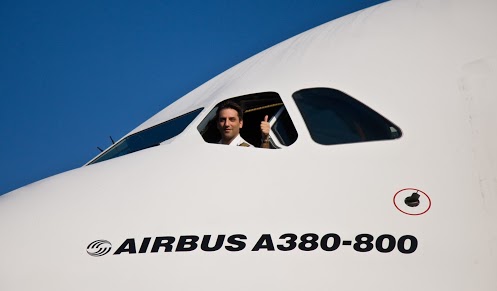
This gentleman clearly feels Emirates would benefit from more social media presence. Do you?

This gentleman clearly feels Emirates would benefit from more social media presence. Do you?

Fifty Three Million and Counting – Facebook’s hold on the Middle East

Based on the latest statistics shared at the Studio Edge event Facebook is the one network to rule them all (unless you’re a keen bird watcher that is)

Facebook came to town last week, and they brought lots of numbers with them. I was lucky enough to be invited along to the first Studio Edge event in the Middle East region. And I was astounded by the numbers that the team kept on rolling out. I’ve summarized these numbers below for you.

According to Facebook’s own research there are fifty three million active Facebook users in the region who use the service at least once a month. Egypt is Facebook’s largest market, followed by Saudi Arabia and then the United Arab Emirates.

Fifty two percent of Facebooks users access the site solely through their desktops and laptops; thirty eight percent use both mobile phones and computers, and ten percent only use their mobiles updating their profile and other Facebook activities. Twenty million people in the Middle East and North Africa are using Facebook today through their smart phones.

The average age of Facebook users in the region is 27 years and 64 percent of MENA users are male. That’s in contrast to the global split of male to female users which is currently 50/50. MENA Facebookers spend approximately seven hours on Facebook a month (that’s double the global average). And fifty two percent of Facebookers in the UAE use Facebook whilst watching television.

Middle East Facebook users like 84 pages compared to the global average of 51, and they view approximately 550 pages a month. Over forty percent of their time is spent on the news feed section of Facebook.

And to top off all of that, Facebook’s user base is growing in excess of 20 percent in the region.

With all of this information above, I’m hoping that we’re going to see more businesses online using the site. But if there was ever any doubt that Facebook is a first-tier consumer communications channel then please do re-evaluate how you use the network and start using the site properly.

One other interesting observation from the Facebook event. Most of the attendees were from advertising and creative agencies. I only spotted one public relations company. And yet, Facebook is all about content. Shouldn’t the Middle East’s PR industry be getting in on the act and promoting the quality of its social media services more?

Photo a pizza while on the move? 800Pizza’s Facebook Faux-Pas

It’s probably not a good idea to ask someone to take a picture while they’re driving. Taking this a step further, it’s probably even less of a good idea to spread that message via a social media platform such as Facebook. But that’s what one pizza company in Dubai did on Monday of last week.

Someone at 800Pizza (great name by the way) thought it’d be a good idea to ask its Facebook followers to take pictures of the company’s delivery drivers whilst on the road. Needless to say, apart from being illegal and downright dangerous the concept backfired and earned the chain a telling off both from a UAE-based road safety group as well as local newspaper 7Days. The article is a great read so do check it out here.

What did it for me (and made me write this) was the comment made by the founder of the firm to the newspaper, which I will quote verbatim below.

When contacted by 7DAYS, Alessandro D’ubaldo, founder of 800 PIZZA said: “I think this has been a bit of a misunderstanding and negative reaction.” Commenting on the edited post, the restaurant owner added: “We even changed the post and someone said ‘that’s just amending the wording, why don’t you remove the whole post?’

“But I don’t understand why they’re so upset – what is all this hate about?” D’ubaldo clarified: “We didn’t mean to tell people to go around and take photos with one hand while you drive with the other hand.”

D’ubaldo also said that he didn’t think the delivery bike drivers were aware of the campaign, adding: “They don’t need to be aware, it’s OK for people to just take pictures around in a public place.”

I’m thinking of launching a campaign to ask certain people to stay off social media. And it really would be for their own good.

You may strain to read this, but anyone encouraging drivers or passengers to take pictures while driving should be prepared for an online backlash

PS thanks Mita Srinivasan for pointing this piece out to me.