The Science of Reputation – What issues matter to stakeholders and why

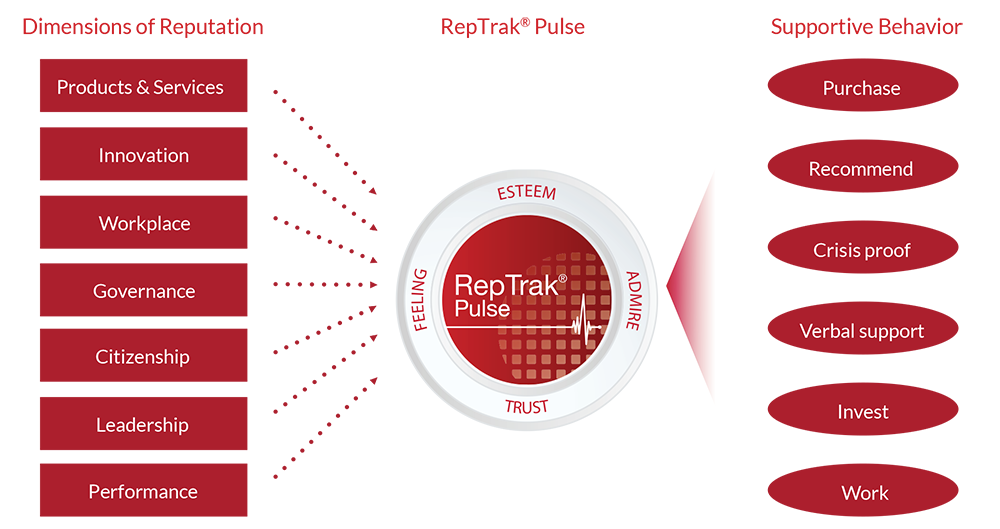
As communicators, we’re often tasked with managing an organization’s reputation. While this may sound simple, the challenge is where do you start with an intangible concept? There are a number of frameworks around which one can begin measuring reputation. One is the RepTrak, a tool developed by the US-based Reputation Institute, which merges seven distinct organizational behaviours (called dimensions) with the behaviours that your stakeholders show towards your organization to create an emotional pulse. It’s an interesting look at how reputation is developed, which you can see below.

The RepTrak is a data-driven approach to understanding reputation based on a number of metrics

The RepTrak is a data-driven approach to understanding reputation based on a number of metrics

According to the Reputation Institute, organizational reputation is driven primarily by seven key rational dimensions of reputation: products and services, innovation, workplace, governance, citizenship, leadership, and performance. What this leads onto may be obvious; reputation matters in terms of business. And, the better the reputation, the more support an organization can count on.

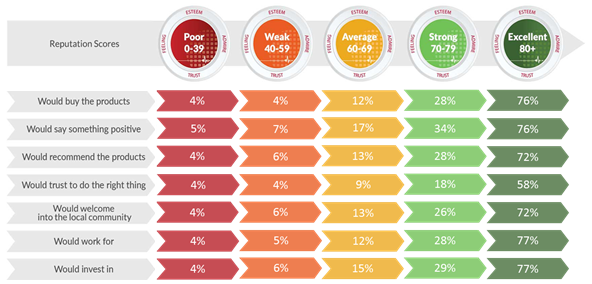
Th Reputation Institute has also done a great deal of research here, including surveying hundred of thousands of different stakeholder groups in 40+ countries over a decade. Their studies underline why reputation matters when it comes to influencing stakeholder behaviour.

Reputation can both positively and negatively impact on stakeholder behaviour

Reputation can both positively and negatively impact on stakeholder behaviour

In the video below, Dr. Charles Fombrun, founder & chairman, Reputation Institute, explains the seven dimensions of reputation as defined in the RepTrak model for reputation measurement

While I have questions around these seven dimensions (do they remain constant for example, across geographies and stakeholder groups?), as well as the Reputation Institute’s global reach (it doesn’t monitor in the MENA region for example), it’s good to see one scientific model for measuring reputation and its impact. There are others in use, including those developed by Carma’s Tom Vesey. I’ll share more insights into reputation management and measurement as I have it.

The Role Communicators Have in Promoting Sustainability

ajman-sustainability-day

I’ve been fortunate in my career to have worked with some amazing brands and organizations. In particular, the most forward-thinking have focused on the issue of sustainability. It’s become a passion for me, as I want my daughter to inherit a world that is better than ours.

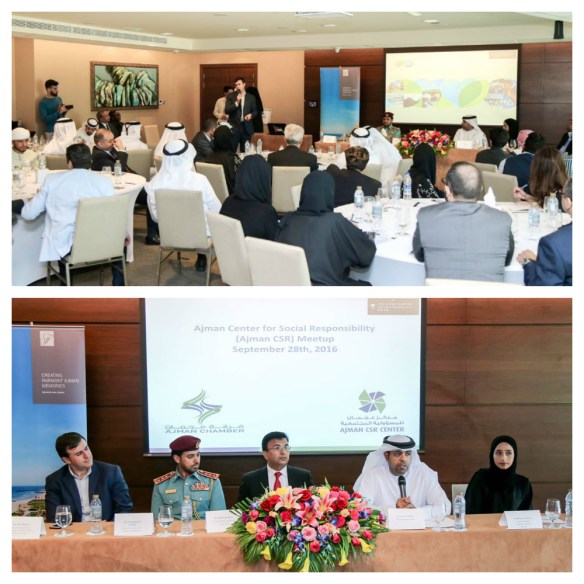
I’m often asked to support events on sustainability. One such initiative which I’m very proud of being able to help is that of the UAE’s Ajman Center for Social Responsibility. Launched by the Ajman Chamber this year, the Ajman Center for Social Responsibility aims to promote the concept of sustainability for both the public and private sectors as well as create a resource for sustainability across this emirate. Assisted by the consultancy firm Sustainable Square, the team at the Center have set for themselves a vision of becoming the regional and global reference for social responsibility and sustainability practices. And, judging by the energy they have, I feel they’ll reach this goal.

For many of us communicators in the Middle East region, we’ve taken on the mantle of championing sustainability. Sometimes it’s due to reputational reasons; the need to be seen to be doing good. For others, it’s been about the willingness to tackle an issue that isn’t going away. There’s some confusion around sustainability and the role of communications in the Middle East; I remember well one senior comms professional erroneously commenting  during a public meeting that the function has always been with communications, despite all of the literature from the 1950s and 1960s by Bowen, Freeman and others which argues that organizations have a social obligation to “to pursue those policies, to make those decisions, or to follow those lines of action which are desirable in terms of the objectives and values of our society.” In short, when it comes to sustainability in the Middle East, we can come across as a confused bunch.

For me, sustainability should be at the heart of any organization – it should be a part of every person’s job function. So, what is the role that communicators should play? We are the change agents, the people whose job it is to tell stories around purpose, and who can best use engagement to win over various stakeholder groups, be they internal (employees, management or shareholders), or external (government, NGOs or the public) as to why there is a need to become more sustainable and how we should get there.

Examples of good sustainability communications work are both global and local in nature. Take for example  the work done by Mars for its M&Ms brand. Mars reached out to the M&Ms consumer base in a smart way, by using the M&Ms characters everyone knows, to talk about initiatives around sustainable cocoa production and other CSR causes by telling the stories through the same M&M characters used to promote the brand.

On a local level, a good communications campaign can be something as simple as promoting safe driving, which environmental and engineering consulting services firm CH2M launched both globally as well as locally.

As communicators, our role is to understand our audience(s), know how to engage with them, and shape messaging that will impact both attitudes and behaviours. It’s never easy to change habits that have been ingrained for years, especially when it comes to sustainability (anyone who has worked on a recycling initiative will know how hard it can be to get people to recycle rather than throw materials into the trash).

However, that’s the beauty of our job as communicators. We’re the front line, the people who take a concept and make it happen with those groups whom we need to come on board. To quote from the United Nations Environmental Program:

Public communication has a key role to play to build on these emerging trends and to make sustainable development approachable and understandable. Informed, motivated and committed people can help us to achieve our sustainability goals. However, communicating effectively about sustainable lifestyles is a challenge. One needs to consider not only what to communicate, but how to communicate it.

Important factors of success include content, messenger, choice of media and tone. Experts are coming to realise that traditional messages from governments and green groups urging the public to adopt the environment into their day-to-day decisions need to be overhauled. Many of these messages are simply too patronising, guilt-laden or disapproving. Instead of turning people on to the environment, they risk switching
them off. The lesson to be learned is that communication styles have to be positive and tailored to different circumstances and cultural contexts.

If you want to know more about communicating sustainable issues, there are people who specialize in this issue. Sustainable Square’s Monaem Ben Lellahom is a great person to approach as he both understands the issue of sustainability as well as how to communicate around it; another person who focuses on sustainability is Stephen King, who focuses on the sustainable development goals. I’d urge you to reach out to either or myself to ask questions about how we can communicate sustainability better in this region.


How to fundraise in Dubai (legally)

Dubai’s fundraising law is meant to regulate giving in the Emirate. While the process is long, it is simple enough and will mean that you can fundraise legally (image source: http://www.thirdforcenews.org)

After a number of incidents, I thought it was about time that someone with experience of fundraising in Dubai wrote on how it should be done (I’ve been fundraising here for about four years, and applying for approvals every couple of months with different charities). While there are legal papers on the issue, most notably from DLA Piper, I’ve been through the process and know its ups and downs, which can be different from what is written in the statute books.

So, here goes.

  • Fundraising is regulated. 

Firstly, let’s start with the obvious. Fundraising is regulated in Dubai, and to fundraise you must do two things. Find a charity that is allowed to collect donations. Then you must submit a request to the Department of Islamic Affairs and Charitable Activities (IACAD). Once this is approved you can fundraise.

If you don’t follow the above, you can face either a year in prison or a fine of up to 500,000AED. And when I mean you, I mean YOU! Even when fundraising is undertaken by a company, an individual must bear responsibility for the application.

  • You have to donate to a Dubai-based charity that is permitted to fundraise.

The number of charities who are licensed to fundraise is short, it used to be seven in total. These include the Dubai Charity Association, Dar Al Ber Society, Dubai Autism Centre, Beit Al Kheir, the UAE Red Crescent Authority, Awqaf & Minors Affairs Foundation, and The Relief Committee.

Other charities have been added to the list since then, including the Dubai Foundation for Women and Children, the Al Jalila Foundation, and Friends of Cancer Patients. For a comprehensive list, do contact the Dubai Chamber of Commerce’s Syed Atif on Syed.Atif@Dubaichamber.com. The Dubai Chamber is particularly active in terms of promoting engagement with charities in the country, and they’ll be able to give you on who and which charity aligns with your cause.

Once you’ve found your charity, you’ll have to talk to them about what you’re doing and why, in order to get their buy-in and support. This may take time, especially when dealing with one or two of the charities on the list of seven above.

Any application through the charities above to IACAD will take up to one month. On the form you’ll need to state what you are doing, why, how much is being raised and how you are raising it. The form is simple enough, and I’ve include it below. You cannot funraised until you have permission from IACAD, who will also follow up after the fundraising, to ensure that the charity has received the money.

There’s another option, which is to support a charity based in Dubai’s International Humanitarian City (IHC). These include Save the Children, SOS Children’s VIllages and UNICEF. In this case, IHC will act as the charity and then route all funds to the intended recipient. This process will take longer than the month mentioned above, so you’ll need to plan ahead.

  • Online fundraising is not exempt from the legislation (and penalties).

Many people I know in Dubai used to fundraise through online sites such as http://www.justgiving.com when undertaking a charity drive. This isn’t strictly legal, as has been shown by a recent criminal case. If you want to fundraise online, then either do it through a registered charity as per the above, or don’t do it in Dubai (ie do it when you’re out of the country and not breaking the law).

To make it as easy as possible, I’m attaching an IACAD form which you can fill in either in Arabic or English. The form is here, and includes contact details at IACAD – Islamic_Affairs_Request_Eng_Arb.

I’ll end on an important note – this only covers fundraising in Dubai. If you want to fundraise in any other Emirate, there are separate procedures you have to follow, or you’ll have to partner with the Emirates Red Crescent, or the Al Jalila Foundation. These are the only two organizations which have the pre-approval to fundraise across the United Arab Emirates.

If you need more advice on fundraising, please do drop me a comment and I’ll help further. While the above isn’t easy, I don’t want people to think that they should stop fundraising. The procedure does take time, but it doable, so keep on fundraising and supporting good causes.

#AylanKurdi, the image that has defined the refugee tragedy and what you can do to help

There are moments when we come across an image that is so powerful that it can drive us to tears. Such an image can galvanize a generation, it can melt the coldest of hearts or it can create a well of emotion inside of us. Think of the Vietnam war’s “Girl in the Picture”, of the naked Vietnamese girl who had been burned by napalm and was in agony, or the picture of the lone student protester who held up a column of tanks during the Tiananmen Square protests of 1989.

This morning, I saw another image that was so powerful it literally made me cry just looking at my screen. The images below are of a three year old Syrian boy whose name is Alyan Kurdi. Like hundreds of thousands of others from Syria, Aylan and his family sought refuge and a new home in Europe.

As a father of a young child, all I care about is her safety and well-being. I can not imagine the horror that Aylan’s father, who was on the boat with Aylan and who lost his other son as well as his wife, is now living through.

This image of three year-old Aylan Kurdi is the story of Syria’s refugee tragedy. Alyan drowned while his parents were trying to reach the Greek island of Kos from the Turkish mainland (image source: Reuters/The Independent).

My one hope is that this image and story will melt hearts across Europe and worldwide, and drive people to step up and help those from Syria and other countries who are fleeing violence and who want to make a home for themselves in a new country, a home that is safe where they can live far from the shadow of death.

For me, Aylan’s story and the images taken by Reuters are heartbreaking. I beseech you to take action, especially if you are European. You can either the suggestions from the Independent or donate to organizations such as UNICEF or Save the Children which are supporting Syrian refugees.

Let’s do more, let’s help those in need. Let’s join together to ensure that there isn’t another Aylan.

Coca-Cola, tackling prejudice & swapping television advertising for digital and CSR this Ramadan

Is Coca-Cola's anti-prejudice message a winner this Ramadan?

Is Coca-Cola’s anti-prejudice message a winner this Ramadan?

A global icon and the brand that defined Christmas has been making waves this Ramadan. Coca-Cola, which spent $3.3 billion on advertising globally in 2013, made a surprise announcement this Ramadan through its Egyptian subsidiary. Instead of spending sizable sums of money on television spots during Ramadan, which is the peak viewing season, the Egyptian operation would only spend money on paid digital spots on Facebook and YouTube. To quote from the company’s press release (please do excuse the hyperbole, the writer was probably on a sugar rush whilst penning this):

This festive season Coca Cola is giving back to the Egyptian community by replacing their always hotly-anticipated television ads with a unique campaign against prejudice rolling out exclusively on digital media. Their TV ad budget is instead being poured into their project of developing 100 villages. In recent days they have also galvanised Egypt’s digital population, pledging that for every post featuring a finger raised against prejudice (symbolising one extra second) they will donate one additional pound to their project.

While the idea of saving advertising money by pulling television ads and using that budget to spend on CSR is different to say the least, especially for a household brand such as Coca-Cola (and, which, in any case isn’t true as Coca-Cola has spent heavily on pan-Arab television advertising), the notion of tackling prejudice is an interesting angle for Coca-Cola to take.

Coca-Cola has launched a number of video shorts for YouTube and Facebook about prejudice, with the key tag line that we should look beyond the seven seconds it takes to form an opinion about others. Have a look at the below (unfortunately, they’re only in Arabic).

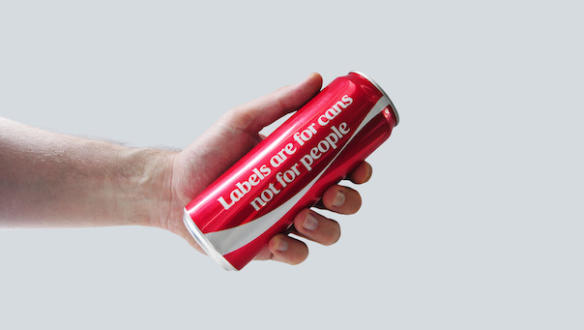
Coca-Cola Middle East is taking a similar approach to its Ramadan messaging, by promoting a world without labels through abandoning its own labeling.

To quote from Coca-Cola’s own website:

“A limited-edition run of red Coca-Cola cans features the brand’s white dynamic ribbon, but not its signature scripted logo. The backs of the cans include the anti-prejudice, pro-tolerance message: “Labels are for cans, not people.”

“Coca-Cola Middle East also released a video documenting a unique social experiment that highlights stereotyping in society. The short film shows how Coke invited six strangers to an iftar – the nightly fast-breaking meal during the holy month of Ramadan, which runs through July 17 – in the dark. The guests conversed without forming prejudices about their fellow diners based on physical appearance.”

Coca-Cola’s approach to Ramadan has been both welcomed as well as questioned. Dubai-based public relations professional and blogger Alexander McNabb posted a list of hilarious thoughts which he shared with Coca-Cola’s media agency about the announcement. Go have a read, and let me know what you think about what Coca-Cola is doing this Ramadan.

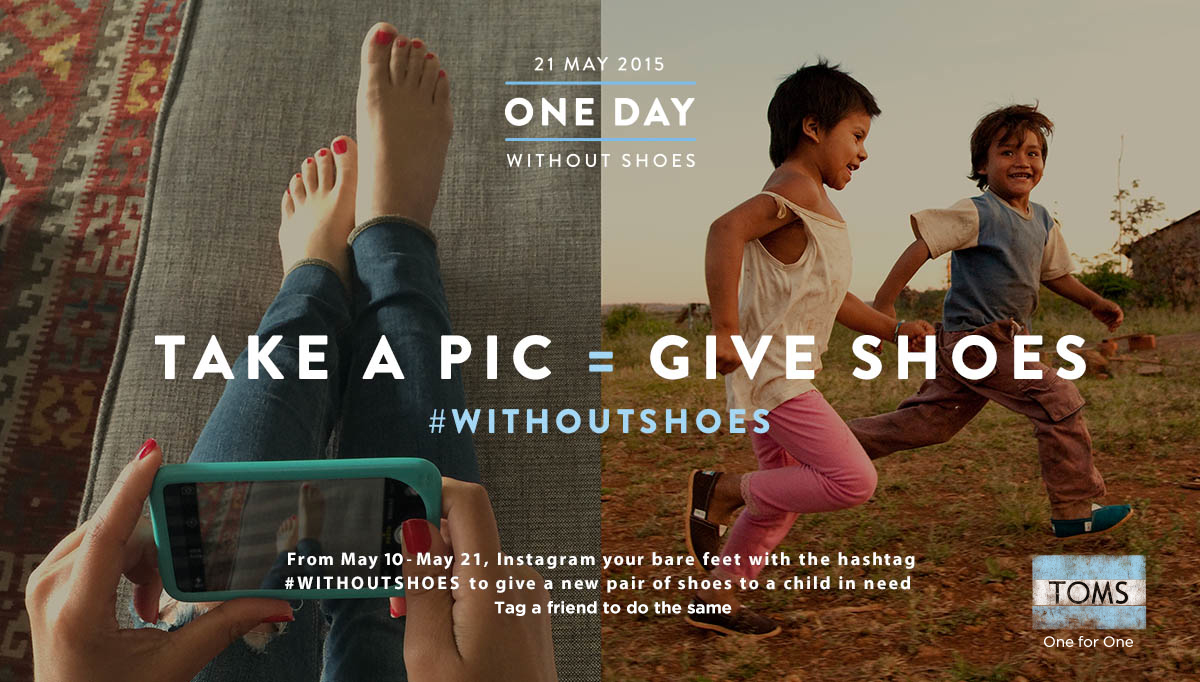
One Day #WithoutShoes – How TOMS is getting consumer sustainability spot on

TOMS' sustainability strategy is simple to understand, its aligned to the business, and it's designed with consumers - and social media - in mind

TOMS’ sustainability strategy is simple to understand, its aligned to the business, and it’s designed with consumers – and social media – in mind

It’s fair to say that getting sustainability right is a challenge for most companies; it’s even harder when you throw consumers into the mix. However, every now and then a campaign comes along that makes you sit up and take notice.

Founded in 2006, the US-based shoe retailer TOMS was founded with a strong sense of giving back to communities in need. The company’s promise was simple – for each pair of shoes bought, it would donate another pair of shoes to a child in need. To date, TOMS has given more than 35 million pairs of new shoes to children in need.

This year TOMS brought their global CSR campaign, which has been running for eight years, to the United Arab Emirates. The company has taken its original premise of “One Day without Shoes”, an event where participants do not wear shoes throughout the day in order to raise awareness for TOMS’ goal of giving shoes to children-in-need, online and onto social media.

The concept is a simple yet powerful initiative where they would like people to take a picture of their bare feet and share it on Instagram. With each picture shared, one pair of shoes will be given to a child in need. A simple picture tagged with #WithoutShoes can help the cause and provide a donation.

As of last Thursday afternoon, more than 296,000 children will benefit from the campaign, according to the company’s website. It’d be interesting to see how many UAE consumers got involved (I’ll see if I can get a response from the UAE retailer which has the TOMS franchise, Apparel Group.

The below are just a sample of the 300,000 plus images which have been generated over the past two weeks, both by consumers as well as celebrities and the media. Let’s hope other companies can learn from TOMS and how powerful a simple concept such as this can be for the brand, the consumer and for communities in need.

https://twitter.com/Pink/status/600440669182656513

Horyou and how one website is looking to bring corporates, charities and volunteers together

Horyou is a platform for social good for corporates, charities and the general public. If you have an idea you'd like to share or you'd like to volunteer go to www.horyou.com.

Horyou is a platform for social good for corporates, charities and the general public. If you have an idea you’d like to share or you’d like to volunteer go to http://www.horyou.com.

Technology can be a wonderful thing, especially when all of the good of the digital world is brought to bear on societal problems. One website I’ve recently been introduced to it Horyou (it’s pronounced Or-You). Horyou’s premise is simple – it is a platform for promoting interaction between corporates, charities and the general public. Horyou aims to transform ideas for social good into action through bringing together these different groups.

While you can check out the Horyou website here and also sign up, I wanted to know more. I recently had the pleasure of sitting down with Noof Al-Shammary, Marketing & Community Relations Manager for the region, to ask a couple more questions about Horyou and what it means for social causes.

Alex: So tell me, why is Horyou unique? What does it offer to individuals, charities and corporations?

Noof: Horyou is action-oriented platform. It is unique because it facilitates the evolution of ideas to actions with a social platform that offers all users (organization, personalities, members) a dedicated environment where they can share and promote positive actions, exchange quality content, and spark meaningful interactions. Our contribution to social networking is the gathering of a dedicated community of individuals looking to make a difference in their surroundings.

Alex: What is Horyou looking to achieve in the region?

Noof: Horyou is a universal platform. We believe in diversity, therefore everything you see on the platform is oriented to enhance positivity. We are working in different regions, including the Middle East, representing an opportunity to continue spreading the concept and practice of social networking with a purpose. We are actively working in both the non-profit and private sectors. Horyou is bringing a social platform to the forefront that can be used to highlight daily good worldwide.

Alex: How can we individuals, charities, and companies contribute and benefit from Horyou?

Noof: Any individual, companies, personalities, or organizations can contribute with their projects, positive actions, knowledge, interactions, and their willingness to be part of this global platform. Everybody’s contribution represents a step towards bringing more good to the world. Horyou is constantly looking for partners, supporters and individuals ready to take part in the promotion of social good.

If you’d like to know more about Horyou, the good people there have produced a short video which sums up their ideas and what they’re trying to achieve. I for one hope to play my part. Will you join me?

When it comes to social media, advertising and the Middle East, why don’t we have any ethics?

The region loves social media, but its influencers and advertisers are less keen to say when a post is paid for (image source: www.business2community.com)

The region loves social media, but its influencers and advertisers are less keen to say when a post is paid for (image source: http://www.business2community.com)

Who needs ethics right? Ethics are boring, they’re dry, and they mean we have to use disclaimers. Ethics really aren’t fun. But you know what, without them we’d be in a fair amount of trouble. With the Arab Social Media Influencers Summit happening this week in Dubai, and a fair few social media influencers being in town (including quite a few from Kuwait who don’t make it clear that they accept money for posting on their social media channels), I want to reprint this post which I shared with the Media Network Middle East last month. I’d love to hear your views on ethics, or the lack thereof, when it comes to social media and advertising in our region.

While European and American consumers are benefiting from crystal clear regulations on sponsored social media content, there’s little to no clarity here on the same.

We’re awash with social media in our region. Everywhere you go, you’ll see people sliding their fingers left and right, pushing up and pulling down on their smartphone screens. We’re all at it, checking our Instagram accounts, refreshing our Twitter feeds, and posting Facebook updates.

Today we have social media celebrities, people who have become famous through their online activities. There are Instagrammers in Kuwait with over a million followers, Facebookers in the UAE with hundreds of thousands of likes, and Saudi Tweeters with followings equal to the population of Bahrain.

Alongside these social media celebrities we have witnessed the rise of paid posts. Those of you with a keen eye will have noticed how many celebrities online have become more commercial, and have begun to share updates, images and videos promoting brands.

There’s nothing wrong with promotional advertising. Using paid influencer marketing is a common tactic to spread awareness, promote a brand, and to engage social media users across the globe. Online advertising can be more cost effective in terms of measurement and reach.

However, there’s no distinction between an advert and paid-for content. Both involve a payment of some kind by a company for a promotion of its brand or services. Regulators across Europe and the United States have essentially ruled that if money is changing hands, obvious disclosure must occur in-ad. Their reasoning is simple; consumers have a right to know what is an advert and what is not an advert.

While European and American consumers are benefiting from crystal clear regulations on sponsored social media content, there’s little to no clarity here on the same. Consumers here have no authority to turn to or no regulations to guide them on what is and what isn’t sponsored.

There seems to be little eagerness for brands or social media celebrities to advertise what is paid-for content either. This is understandable, as their followers may be less inclined to engage with a post if they know it is sponsored, or even follow a person who they know accepts money for posts.

While this lack of disclosure may appeal in the short term and help to maximise revenues (paid-for posts in Kuwait can fetch up to three thousand dollars per posting), it does nothing to building goodwill and trust with consumers across the region. A lack of honesty and transparency on what social media celebrities are paid to post will negatively affect trust in both the sponsoring brand as well as the celebrity who is accepting the payment in return for sharing the content.

In the US the burden is on brands to ensure that their endorsers, such as bloggers and online influencers) are in compliance in terms of disclosure. Paid-for posts have to include language such as #Ad, Ad: or Sponsored. Even brand posts and shares by a company’s employees have to be clearly labeled to account for the bias.

Either brands can take action and begin to self-regulate, or they can wait for regulators to finally step in and possibly take a harder-line approach to sponsored influencer endorsements. Is risking a reputation and trust, built up over years of marketing, worth risking over a lack of disclosure? I hope the answer is no.

Educating the Gulf on our humanity through social video – examples from Bahrain, Saudi and the UAE

Here in the Gulf region we’re increasingly seeing the use of online video content, particularly to tackle issues that are both social and controversial. This week there have been media stories on three examples from three different countries.

The first video has been produced by the Saudi Human Rights Commission to Saudi nationals to be kinder to their domestic workers, most of whom have to leave behind a family of their own to earn a living and support them. The video is well shot, and aims to give humanity back to domestic workers, especially those from South East Asia, through concepts such as motherhood.

The second is from Bahrain, but shot by one social media influencer called Yousef Al Madani. The clip focuses on the treatment of white-collar workers in Bahrain, most of whom come from the Asian subcontinent. Yousef looks to take the place of one of these workers at a local grocery store, where they often have to rush out to take orders from customers who sit in their cars and wait for the items to be brought to them. The clip, which has been talked about in the media, has been viewed over half a million times. This video is dubbed into English as well.

The third and final clip is from a corporate, Cola Cola to be exact. To quote the National:

An online advertising campaign by Coca-Cola showing the company handing out excess baggage tags at the airport to travellers has been viewed almost one million times on YouTube.

The clip “Coca-Cola –Taking Home Happiness” begins by showing passengers checking in at Dubai International Airport to head off to various destinations to see family. By Thursday, the video had generated more than 987,000 hits since it was uploaded a month ago. According to the website for Campaign Middle East magazine, Coco-Cola shot the video on December 22 with the cooperation of the airport.

The campaign – which is available only in the UAE and Oman – is expected to expand with additional prizes like flight vouchers, TVs and mobile phones, the company said. The video follows a similar online campaign last year which showed labour camps with Coca-Cola phone booths, into which bottle tops rather than coins could be fed to pay for international calls.

The video, which is probably the best shot out of the three (this is Coca Cola after all), is also dubbed.

What are your thoughts on the above? Are these videos effective? Would they have been more effective on television as well, or less effective? And is one more effective than the other, possibly due to its topic, its producer, its intent as well as its authenticity? Do let me know your thoughts.

The silent expatriate guests – should we raise our voices or remain quiet on sensitive subjects?

Should we as expatriates remain silent or speak up about issues which we feel are contrary to our beliefs? (image source: http://www.thewordontheword.blogspot.com/)

The past week has been an interesting one for foreign media junkies who follow affairs in the Gulf. Two articles were published in the English-speaking press which have proved to be controversial. The first was a damning piece in the New York Times on labor rights for workers hired from the Asian sub-continent to build the New York University Abu Dhabi. The second was a fine piece of investigative journalism from the Sydney Morning Herald on the subject of government subsidies for Etihad, the Abu Dhabi-owned airline.

The above criticisms in the foreign media shouldn’t surprise experienced communications professionals. Etihad is becoming a global brand with stakes in a number of airlines across Europe and Australia. Similarly, the report about labour issues relates to an American institution, New York University, and its Abu Dhabi campus. Qatar has similarly experienced negative publicity from abroad relating to the country’s labour practices following its winning of the rights to host the 2022 World Cup.

Recently, I attended a conference on the subject of corporate social responsibility. When asked about whether expatriates should tackle these issues with both governments and the national population, one of the most senior communications professionals in the region responded by saying ‘we’re the guests and so we shouldn’t tackle these issues.’

Unfortunately, the most common refrain to any comment which can be taken in a negative light is, ‘if you don’t like it, then leave.’ There’s a lack of moral courage shown by many expatriates to talk about issues which may offend, or which may get them into the bad books. Similarly, are many nationals willing to listen to the opinions of others? The concept of traditional Arabian hospitality is often talked about, a tradition that requires the host to listen to and honour the guest, but the reality on the ground is often different.

Modern societies are mature enough to take on board different voices, to learn from the opinions of others. As a person who has tried to do his part for the rights of others, I do find it embarrassing that as the people who live here in the region, we’re unable to raise these issues with our hosts in a civilized dialogue (and for those who say I’m looking to impose foreign, western standards there are many hadiths or sayings of the Prophet pbuh on issues such as workers’ rights).

Should we have the moral courage to speak on these issues, to benefit the communities and the countries with which and in which we live? Or should we remain silent? The answer, to me at least, is obvious. What do you say?