The launch of LinkedIn Arabic – Did LinkedIn miss a messaging opportunity?

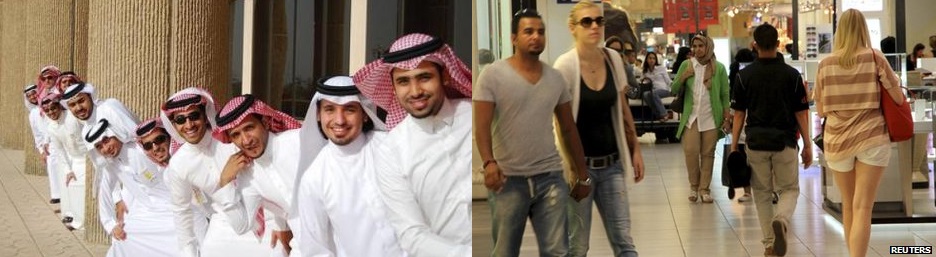
If you're going to launch in Arabic where would you choose? Dubai or Riyadh? (image source: Reuters)

If you’re going to launch in Arabic where would you choose? Dubai or Riyadh? (image source: Reuters)

I love LinkedIn. It’s possibly my favorite social media network. LinkedIn has transformed how professionals network (and get jobs) online. No recruiter could do without LinkedIn.

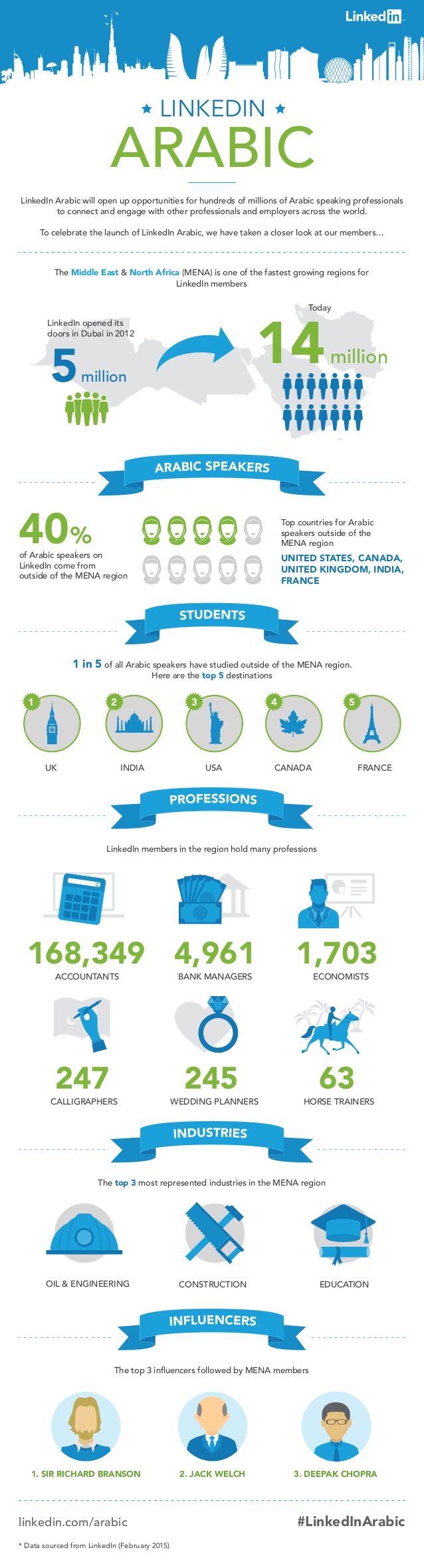
The network has grown steadily in the Middle East since it opened up an office in Dubai back in 2012. Over the past three years LinkedIn has grown its user base from five to fourteen million. The UAE is LinkenIn’s largest market with two million users according to The National. The two largest Arabic-speaking markets in the region are Egypt, with a population of just over 82 million, and Saudi.

The Kingdom is, or should be, LinkedIn’s largest potential market. Saudi doesn’t only have a sizable Arabic-speaking population (28 million and counting), but it also has the spending power. Saudi’s gross domestic product for 2013 was just under 750 billion dollars. Saudi is home to some of the region’s largest corporations, as well as a majority of the country under the age of 25. Add to the mix high internet penetration and smartphone usage, Saudi is LinkedIn’s Arabic-language market.

However, when LinkedIn launched its Arabic-language site last week the management team chose Dubai as the preferred location. There was a guest advocate, in the shape of Noura Al Kaabi, CEO of Abu Dhabi’s twofour54. Bizarrely, LinkedIn’s press materials also included a press statement from Saudi’s Minister of Labor, which was carried extensively in the Kingdom’s media (the quote in full is below and is sourced from Saudi Gazette).

Eng. Adel M. Fakeih, Saudi Arabia’s minister of labor, said: “LinkedIn has been working with us to match talent in the Kingdom with the right opportunity, and with Arabic, this benefit can be rolled-out to a much wider member base.

LinkedIn will continue to be a useful tool for us as we use technology to communicate the need for nationals to up-skill themselves and take advantage of the strong economic climate and significant job-creation in the Kingdom.

Being a part of a global network also helps youth identify the key demand areas, and build their qualifications accordingly.”

Would LinkedIn have been better served by launching Arabic in Saudi, rather than in the UAE (where it could be argued that the lingua franca is English). Would this activation have been more in line with the message that LinkedIn was trying to convey, namely that we are now in Arabic and we want Arabic speakers to use our service.

It’s a small observation, but it seems that LinkedIn missed an opportunity to push home a message through a launch that was misaligned with its target audience. Saudi isn’t the easiest country in terms of getting things right on the ground, but if you’re going to do something then, as the saying goes, if it is worth doing then do it right.

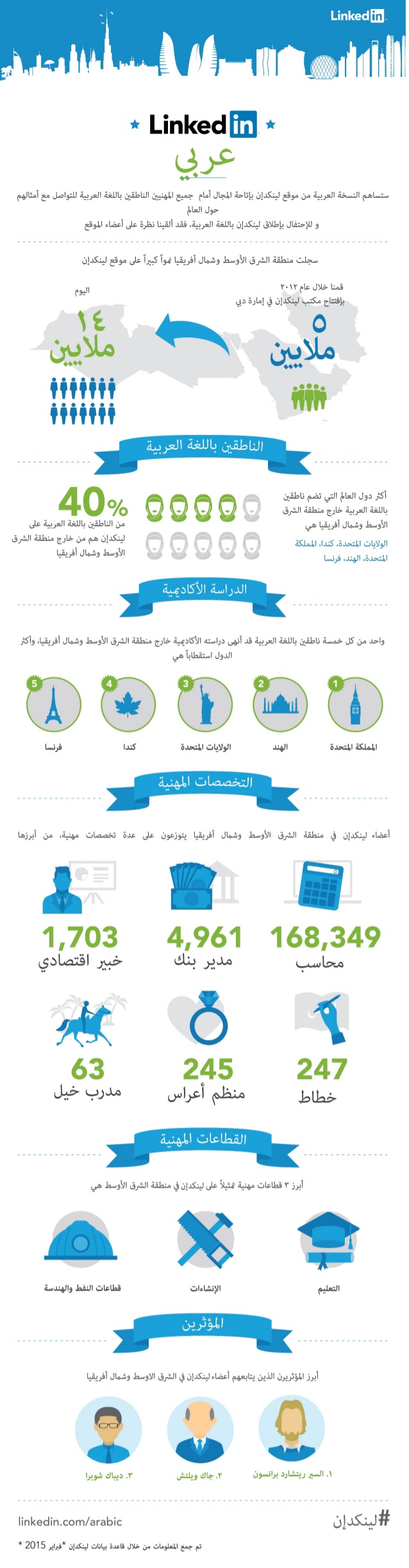
And for more details on LinkedIn in the Middle East have a look at the infographics below, which are in English and Arabic.

The #truthbetold – How Saudi’s UTURN and @omarhuss are tackling taboos through social media

By its very nature, a taboo can be difficult to talk about. Breaking a taboo is traditionally objected to by elements of a society. What we’re seeing in Saudi is an effort to tackle taboos through social media. One of the leading digital and social media agencies is Jeddah-based UTURN, and its founders and presenter Omar Hussein have taken it on themselves to tackle sensitive subjects. Their idea is simple – create scenarios whereby they provoke Saudis to respond to the situation through actors and staged behaviours, record their reactions, and package this for distribution over the internet.

Named #truthbetold or #الحق_ينقال in Arabic, Omar Hussein and UTURN have tackled several issues to date since they began their series at the end of November. The first, in partnership with Ikea Saudi Arabia, was the issue of Saudi women working as cashiers. An actor in the queue would begin cursing the female cashier to prompt a reaction from the audience around him. The video is below and is only in Arabic. However, it is worth watching just to understand the issue and the responses of those featured.

The second, launched a month after at the end of December, is on the issue of alleged racism towards foreign workers in Saudi Arabia, and was staged in the roast chicken chain Tazaj. Again, the video is in Arabic but the body language of those in the set and who are not aware of acting can be read by any person watching.

Released at the end of January, the third episode tackles the issue of child workers in Jeddah. Done in partnership with the Fatoor Faris restaurant, people are seen responding to a Saudi actor abusing a child actor who is pretending to sell him gum.

Each video has been watched over half a million times, and, even more importantly, UTURN is using Facebook as a means for Saudis to discuss these issues. The idea is so simple and yet so powerful. Thank you UTURN and Omar Hussein for doing this. I wish others were as creative and as brave as you.

And I wish that communicators would look at Saudi, a country which is viewed as the most traditional and conservative in the region, to understand how we can better use social media to change perceptions, attitudes and behaviours. You and others in the Kingdom are leading the rest of the Gulf in terms of how we use social media for change.

How many followers have been lost by the Gulf’s Instagrammers?

Instagram has deleted millions of fake accounts, pulling down the follower numbers for many accounts in the Gulf (image source: http://cdn.slashgear.com)

This week, photo-sharing app Instagram removed millions of accounts believed to be posting spam. The action, which has been dubbed the “Instagram Rapture”, hasn’t spared Instagrammers in the Gulf. Instagram is popular in the Gulf, particularly in Kuwait, where some Instagrammers have become celebrities in their own right and have turned the application into a living.

Globally, many of the world’s top 100 Instagram accounts have been hard hit by Instagram’s move to delete fake accounts. Figures released by developer Zach Allia have revealed that celebrities such as Justin Bieber lost over 3,500,000 followers.

So, how did our own Instagrammers do? For Kuwait, stats compiled by the website Kuwaitiful compare numbers before and after. Have a look below at the top accounts in Kuwait (not all are Kuwaiti based, mind you).

Before and after the Instagram purge in Kuwait. Some accounts have hardly been affected, while others have seen their follower numbers fall drastically (source: www.http://kuwaitiful.com/)

Before and after the Instagram purge in Kuwait. Some accounts have hardly been affected, while others have seen their follower numbers fall drastically (source: www.http://kuwaitiful.com/)

For Saudi and the UAE, I’ve gone to Social Insider which also compiled the numbers before and after. Again, we’re seeing a similar picture, with some accounts hardly affected, while others have lost a double-digit percentage of followers (apologies for the image size, but you can zoom into the image to read the numbers).

This list of Instagram accounts from Saudi and the UAE includes the numbers from before and after the purge. One account lost 40% of its followers (source: www.http://social-insider.com)

This list of Instagram accounts from Saudi and the UAE includes the numbers from before and after the purge. One account lost 40% of its followers (source: www.http://social-insider.com)

The reaction from celebrities in the US hasn’t been kind. Rapper Ma$e, who lost more than a million followers, deleted his account after being accused for buying followers. How will those celebrities in our region respond, especially the accounts which have lost over ten percent of their total follower numbers? Also, will this affect how much these Instagrammers are charging for posting paid content? It’d be interesting to hear your thoughts on this one.

#Hajjselfie, Whatsapp and smartphones – how is technology changing Islam and Muslims?

We’re a funny bunch in how we can change so quickly and then justify how we’ve changed 180 degrees. I remember how up until ten years back, camera phones were banned in Saudi Arabia. And today, the hot topics are #Hajjselfie and how modern technology is making its mark on Saudi society.

The beginning of October was the timing for the annual Hajj pilgrimage, a mandatory religious duty for Muslims. During Hajj Muslims are to abstain from all temptations which may lead to sin; in essence, the pilgrimage is a time for renewal for the two million plus Muslims who take the rite of passage annually.

This year, one of the major stories which broke at Hajj was the #hajjselfie. You’ll probably know of the selfie, a self-portrait photograph, typically taken with a hand-held digital camera or camera phone and then shared online via social networking services. This year, the selfie was introduced en-mass to Hajj. To quote from Saudi Gazette and AFP.

Raising his arm, Yousef Ali hugs his elderly father near the Grand Mosque in Makkah as they grin for a selfie — a craze that has hit this year’s Haj. But not everyone is happy about young pilgrims from around the world constantly snapping “selfie”, photographs taken of one’s self, as they carry out Haj rights.

From Tawaf — circumambulating the Holy Kaaba — to prayers atop Mount Mercy in Arafat, and stoning of the “devil” in Mina, the key stages of Haj have all been recorded on cameras and smartphones for posterity, and for instant sharing through social media.

“As this is my first pilgrimage, it is important for me to document all the events taking place around me,” Ali, 24, told AFP, snapping a picture of himself with a green sign reading “Big Jamarah”, which refers to a wall where pilgrims ritually stone the Satan.

“Wherever I go, I take pictures, especially since nowadays we have these little cameras… that offer a full view of the area,” the bearded Kuwaiti said with a smile.

The increasingly popular phenomenon has sparked controversy among conservatives, however, with some taking to Twitter to criticize pilgrims who take selfies.

“When we went for Umrah in the mid-90s, Dad nearly had his camera confiscated to shouts of ‘haram!’ Now, #HajjSelfie is A Thing. What a world,” wrote one Tweeter.

Another user named Kahwaaa wrote: “It’s a time to connect to Allah and purify my soul. #hajjselfies selfies shouldn’t be taken.”

But others said the issue was being blown out of proportion.

“People creating a huge issue about #hajjselfies. If photos are allowed during Haj then what is wrong with selfies?,” asked Abdul Mufeez Shaheed.

Nothing at all, says Ali’s father Mohammed Ali, 65.

“A person taking such pictures is documenting a rare event”, a once-in-a-lifetime experience for many Muslims, he said, wearing a traditional white robe.

“This is a symbolic place representing history,” Mohammed Ali added, pointing to the three sites which pilgrims began stoning on Saturday at the start of the Eid Al-Adha feast of sacrifice, which is celebrated by Muslims worldwide.

Two women covered in traditional black abayas and veils hurried toward the Big Jamarah wall, but not without stopping for a quick self-portrait along the way.

“My daughter and I are taking selfies to show our Haj pictures to our family in Paris. It’s also a nice memento,” said one of the women, a Saudi pilgrim from Jeddah who gave her name only as Umm Abdallah, 44.

Her daughter Wafaa Ahmed, 19, said: “I love taking many selfies wherever I go to keep them for myself, as well as to show them to my friends and brothers.”

Speaking to AFP by telephone, a professor of Islamic Shariah law Riyadh said that “if photographs are only for personal memory and not for disseminating, then no problem.

“But if they were for the purpose of showing off, then they are prohibited, such as the photography that takes place at the (Haj) rites.”

The scholar requested anonymity.

“It is better for Muslims to avoid them,” he said of selfies.

For the teenage pilgrim Wafaa Ahmed, “this is not a convincing view” because taking selfies “has nothing to do with religion”.

The elderly pilgrim Mohammed Ali also discounts the scholar’s opinion.

He says the camera “is a tool such as mobiles, used even by religious scholars who have not prohibited them, so why prohibit another tool of the modern era?”

As he speaks, a group of young Saudi men gather for a group selfie in front of a Jamarah wall before they stone the “devil”.

Analytics of #Hajjselfie by Topsy. The trend peaked on October the 4th.

Analytics of #Hajjselfie by Topsy. The trend peaked on October the 4th.

The #hajjselfie wasn’t the only social media story coming out of Saudi Arabia this month. A recent piece in Saudi Gazette bemoaned the erosion of traditions surrounding the vacation among Saudi nationals.

“Take for instance the recent Haj holidays where it was common practice to visit relatives but several people did not do so,” said Omar Yousif Tobbal, a senior projects manager in a government firm.

He said that these occasions allow families to spend time together but people are increasingly resorting to calling or texting their relatives to extend their greetings instead of actually visiting them.

“If it hadn’t been for modern technology, families would meet, dress up and generally enjoy themselves,” he said, adding that before the advent of technology, Saudis had more time for each other and talked for hours on common themes of interest. However, there are some who still observe the occasion in accordance with tradition, he noted.

It’s not all for the worse however. One positive which came out of the combination of social media and Hajj this year was the appreciation show to the security teams who were working to ensure the safety of the two million pilgrims through the use of the hashtag #thanks_security_men. This time from Arab News.

Photos and videos of security officers from various military sectors assisting and providing services to pilgrims during the Haj season have been trending across social networking sites, such as Twitter. A number of religious leaders and media personnel have devoted their pages to discussing the positive role of security authorities in Saudi Arabia in the success of this year’s Haj season.

Active users on social networking sites produced various hashtags, notably #thanks_security_men, to express their gratitude and appreciation for their humanitarian efforts and positive representation of Saudi Arabia.

What are your thoughts on the above? Do you think #Hajjselfie is halal or haraam? Let me know your thoughts, especially if you were on Hajj. And have a look over the #hajjselfie images below from BuzzFeed, from what is one of the most amazing spectacles on earth.

https://instagram.com/p/tiNN9gykKn

https://instagram.com/p/tTIH6ZEPEs

https://instagram.com/p/thiGdlANFk
@saudigazette’s reader voices and does the Kingdom have an image problem?

Saudi Gazette's new Voices column aims to give readers an opportunity to share their own opinions

Saudi Gazette’s new Voices column aims to give readers an opportunity to share their own opinions

Saudi Gazette has launched a fascinating project to give its readers an opportunity to write more than a letter to the editor, but rather pen a guest column. The first column, named Voices, features the thoughts of former Saudi journalist and doctoral candidate Najah Al-Osaimi. The piece by Najah looks at Saudi’s image and how it is perceived abroad. It makes for an interesting read, even more so when considering its publishing in Saudi Arabia.

Let me know your thoughts on Saudi Arabia and its image problem abroad. And thank you Saudi Gazette for another wonderful idea. If you are interested in writing a column for the Saudi Gazette then email your contribution, no less than 300 words, to voices@saudigazette.com.sa.

A camel drive-thru, changing tyres whilst driving and new Youtube regulations for Saudi

Not only does the Gulf have a 24/7 addiction to watching YouTube, but it seems the content out there is becoming ever more ‘interesting’ to say the least. Two new videos may tickle your fancy. The first is from Saudi, and could be construed as a Dummies Guide on how to change your car’s tyres whilst driving.

The second fun clip is slower-pace. The video, highlighted by Doha News, is more a spoof clip (even in Saudi I never saw an example of this) by a well-known Qatari comedian. If I was the burger chain I’d be paying to promote this online.

On a more serious note, Saudi Arabia’s government is planning to more closely monitor video content produced locally and meant for uploading to channels such as YouTube according to a fascinating report by the Wall Street Journal.

To quote from the piece:

The General Commission for Audiovisual Media will monitor the quality and quantity of content produced in Saudi Arabia on platforms such as YouTube via a code that will include guidelines on alcohol, tobacco, nudity and sexual acts, said Riyadh Najm, the commission’s president. It will also promote private-sector-led investment in the media industry.

“We will make them aware of what’s acceptable in Saudi Arabia and what’s not acceptable,” Mr. Najm said in an interview with The Wall Street Journal. “Criticism is acceptable as long as it’s professional and constructive.”

The irony of the above is that while Saudi Arabia has become one of the most important markets in the world for online video consumption via the likes of YouTube, Keek, Vine and other social media sites, Saudi content produced for mass entertainment has generally steered clear of Saudi taboos such as alcohol and sex. Will the above help or hinder the explosive growth of locally-produced content (you could even argue that censorship isn’t typically undertaken in parallel with promoting the industry to potential investors).

In the meantime, I hope you’ll continue to enjoy uncensored YouTube in Saudi. And if you still can’t get over the two-wheel tyre change, check out this video. Shisha-to-go? No problem. I just want to know why the choice of music!

A German Woman for Every Saudi – a new type of teaser campaign?

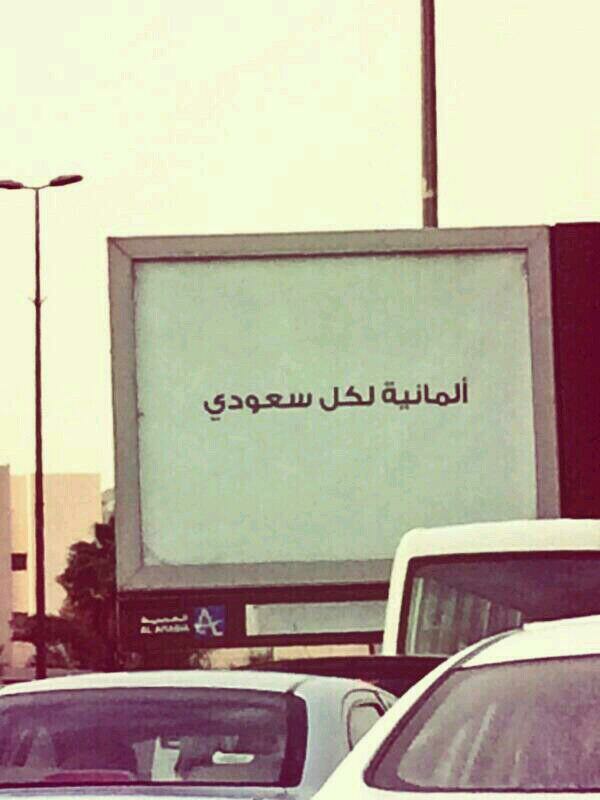
Being a Brit, I’m used to sexual innuendos being used in advertising. Nothing sells better than sex. But this type of thing normally gets pulled up at immigration when it comes to Saudi. So image my surprise at the below advert, which can be interpreted as ‘a German woman for every Saudi man’. The adverts were seen yesterday in Jeddah and I’ll be intrigued to see how long they’re up for. It certainly redefines the concept of a teaser campaign.

A Geman woman for every Saudi man. It's as simple as that.

A Geman woman for every Saudi man. It’s as simple as that.

Saudi Arabia and the Penguin Dance Craze

Saudis and penguins? As they say, opposites attract. And nothing attracts more than moments of random fun. The Wall Street Journal’s Ellen Knickmeyer has written a wonderful piece about how the Penguin dance has taken the country by storm. Read her piece and the watch the video. Don’t ask why and just enjoy!

Arabtec and its executive hiring campaign in Saudi

After a couple of weeks hiatus from blogging due to studies I thought I’d get back into the mix with a short and yet intriguing look at an advertising campaign run by one of the largest construction companies in the Gulf. The company that built the world’s tallest building, the Burj Khalifa, has been expanding of late. As part of its drive to grow its business in Saudi Arabia, the firm placed the below advert in most of the largest newspapers in Saudi Arabia.

Aside from costing what I guess to be about a million Riyals/Dirhams, my question would be what was the purpose of the campaign? Was it to hire a local executives, or was it to drive awareness? If you know, then please do tell!

What's the reason for this advert? And will it help in attracting the right candidate or a couple of thousand CVs?

What’s the reason for this advert? And will it help in attracting the right candidate or a couple of thousand CVs?

Turkey, Twitter and how a ban couldn’t/wouldn’t happen in the Gulf

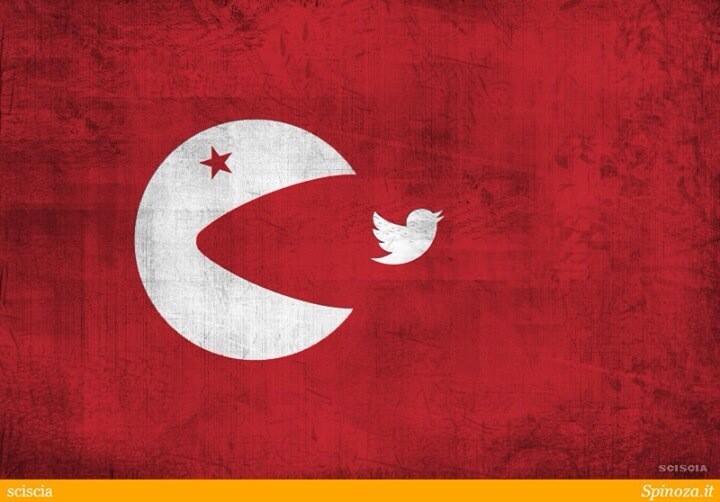
While Turkey is busy trying to gobble up Twitter, there’s little chance of anyone in the Gulf banning social media any time soon (image source: http://www.globalpost.com)

Last week, we in the Arab world were treated to a spectacle that we’re all too often participants in. Instead, we looked on as the government of a neighboring country pulled the plug on a social media service and denied its citizens and residents the right to use Twitter. The story behind the move by Turkey’s Prime Minister, Recep Tayyip Erdoğan, to block access to Twitter is fascinating, a page-turner about corruption, dissent and how one man is trying to dominate political will in his own country (have a read of the background here, in a wonderful piece written by the New Yorker’s Jenna Krajeski).

A question/tweet by the Wall Street Journal’s Ellen Knickmeyer about the situation in Turkey from a Middle Eastern perspective got me thinking about the subject. Here’s my take on the Gulf states country-by-country.

Saudi Arabia

Let’s start with the largest country in the region, Saudi Arabia. There are millions online and active on social media in the Kingdom (both Twitter and Facebook have fifteen million Saudi users between them – Facebook has approximately eight million users and Twitter just under seven million ). For many, social media is a release, a forum for open debate where anything and everything can be discussed.

The whole spectrum of Saudi society is online and using social media – some of the most popular and prolific tweeters are religious scholars. while there is criticism of policy online, would the government be willing to risk a public backlash any social media channels were to be closed? Rather, Saudi’s social media policy can be summed up in one sentence – do what you want online but we are watching you. Saudi’s online laws, which have recently been rehauled, allow for citizens to be detained for their online activities (a recent piece by Abeer Allam for Al-Monitor covers recent developments in the Kingdom).

Bahrain

The second Kingdom on the list, Bahrain has suffered more than most over the past three years. Bahrain’s social media has become almost as polarized as the situation in the country, between those who support the government and those who support the opposition. However, despite the war of words online Bahrain has never threatened to pull the plug on social media (there was a communications blackout during the early days of the political crisis in Bahrain).

Instead, the island state has tightened up its online legislation and has cracked down on bloggers and other activists who use social media (Global Voices’ editor Amira AlHussaini wrote a piece about the arrest of blogger Mohammed Hassan in July 2013).

The Kingdom uses social media to communicate both locally and globally on issues such as security, foreign policy and terrorism. Would Bahrain seek to indirectly legitimize the opposition’s claims that the government is cracking down on media through pulling the plug on social media? Not likely.

The United Arab Emirates

The second largest country in the GCC by population, the United Arab Emirates has taken to social media like a duck to water; the country’s leadership are online, the country’s businesses are online and the country’s population are also online tweeting, updating their statuses and uploading pictures of every single meal and building around them mainly on their smartphones. The UAE’s population communicates about literally everything, except to criticize.

There’s so few people in the UAE who aren’t supporting the country’s leadership that the thought of any social media being pulled seem ludicrous. For those that do dissent the UAE introduced in 2012 more stringent online laws which include jail time for those that defame the country. These laws have been put into effect.

Kuwait

Maybe surprisingly for those who don’t know the region, Kuwait has the freest media industry in the region, with columnists regularly criticizing government policy. Kuwait’s parliamentary system and the level of public discourse in the country means that few subjects are off-limits. Kuwait’s social media scene is also buzzing – Twitter reckons that over half of the country’s population, 1.5 million out of 2.7 million, are active users.

Even in Kuwait however, there have been cases of people being jailed for their tweets, either for insulting the Emir or for blasphemy. Still, it’s hard to see how or why any social media channels would be banned in a country that is known to enjoy a ‘debate’ every now and then.

Oman

On the periphery of the Gulf, Oman was affected by the Arab Spring. The country’s ruler Sultan Qaboos introduced sweeping reforms to appease Omanis calling for a better standard of living. The country has contended with online activists and the authorities have warned people not to spread libel and rumours that prejudice national security. Would Oman seek to shut down social media? Again, it’s unlikely.

Qatar

Last but certainly not least, Qatar has championed its own brand of journalism aka Al Jazeera for over a decade now. The country with its vast gas reserves has not had to contend with any political discussions about its governance and future. Qatar has jailed one person, a Qatari national, for publishing a poem on Twitter.

In addition, the country’s government is seeking to introduce a revised cybercrime law which would increase and expand the capacity under which a person communicating online could be jailed for (for a detailed news piece read this article by Matt Duffy on Al Monitor here). However, there’s little chance of anyone in government shutting down any social media channels in the country.

In short, social media has changed the Gulf just as it’s changed the world. The region’s citizens and residents have much more freedom to talk about issues online. The Gulf’s governments and their business interests have also become adept at using social media to promote their own messaging and market themselves. The region’s citizens are aware that even online they’re being monitored (this BBC article describes this notion of being watched) and most of them will tread carefully about what they say and how they say it. For others, they’ll go online anonymously and tweet to their heart’s content.

For governments, social media has become a release value on societal pressures and the message to nationals is clear – talk about whatever you want but don’t criticize. Examples have been made of those who do. But, while the governments have the ability to cut off social media and even throttle or close access to the internet, thankfully the Gulf isn’t Turkey. No one here is going to ban Twitter or any other social media channel any time soon.