Do you want to know more about social media in the Middle East? Download the TNS ArabSMIS report here

Do you not know where to start when it comes to social media and the Middle East? This report may be your answer (image source: http://blue16media.com)

Do you not know where to start when it comes to social media and the Middle East? This report may be your answer (image source: http://blue16media.com)

We have our fair share of big events in Dubai and this week was no exception. The past two days has seen the Emirate become the place to be for social media influencers. Whilst we found ourselves invaded by all types of beautiful people (and others) waving their selfie sticks and pouting for the camera, there were some handy takeaways for an audience looking to learn more about how to use social media to build brands for themselves, their companies or their countries. Oh, and Twitter has finally decided to open an office in the MENA region, obviously in Dubai.

The most impressive part of the Arab Social Media Influencers Summit was the report. Coming in at a whopping sixty seven pages, the report by research house TNS covers a whole host of areas of social media interest across the MENA region. The study combines both qualitative research with a quantitative survey of more than 7200 users of social media spread evenly
across 18 Arab countries.

If you’re looking to know which channels are used across MENA, then look no further. The report includes stats on LinkedIn, Facebook, Twitter, Instagram, Whatsapp, Google+, and YouTube. It also includes social media usage habits, including time of use, duration of use and devices used. Most importantly, the report looks into attitudes about social media across the region and what people are doing online.

If you’re doing anything online in the MENA region, download this report and start dissecting. You can thank me later, on social media.

The ASMIS Social Media MENA Report

The Gulf’s new social media hybrids and the success of @maxofarabia

Living in a region which is known for diversity but which is still pervaded by barriers between all the cultures you’ll find in the Gulf, I’m fascinated by individuals who bring differing peoples together. One such person is Max, who goes by his online moniker maxofarabia. A British-American by background, Max has not only lived in the Gulf but he’s also taken the region to heart. Unlike many expats, Max has picked up Arabic and is fluent in the language (he has a strong Emirati accent).

By creating content in both English and Arabic about issues that are relevant to nationals, Max is opening up a new world for both expats as well as those outside of the region. Max prefers Instagram, but you can also find him on Twitter and Facebook (he’s also on Snapchat, but I’m way too old for that platform). His popularity among Emiratis is evident, and he regularly uploads videos about the UAE and its people to his Instagram account, where he is followed and watched by almost 190 thousand people. Max has become a social media ambassador for a number of projects in and around Dubai.

If you’re an expat and you’d like to know more about the Emirates in particular, then Max of Arabia is one to watch. Have a look at some of his posts below (apologies but Instagram’s embedding function is taking a day off today).

A good morning from Max's trip into the desert on the trails in the UAE

A good morning from Max’s trip into the desert on the trails in the UAE

Huge thanks to @hooralq for the invitation to @sharjahart - a great evening spent in one of my favorite cities, surrounded by creativity, with some of my favorite people - #Sharjah #SharjahArt

Huge thanks to @hooralq for the invitation to @sharjahart – a great evening spent in one of my favorite cities, surrounded by creativity, with some of my favorite people – #Sharjah #SharjahArt

Max even looks good in a thob - here at a wedding in Riyadh

Max even looks good in a thob – here at a wedding in Riyadh

The curious case of the Dubai TV station which was fined for not airing an interview

Lights, camera, and no action! The Dubai-based station was found to be acting unprofessionally by a Dubai court for not showing an interview, and fined 100,000 Dirhams for its improper conduct (image source: http://www.dreamtek.wordpress.com)

Are you looking for a bizarre story to start off the year? If so, you’re in luck. Dubai’s English-language newspaper Emirates 24/7 reported on the case of a Dubai TV station which was fined over 25 thousand dollars for not airing an interview. Yes, you read it right. The station was fined by a court in the Emirate for not broadcasting a pre-recorded interview. You can read excerpts below.

A well-known guest won a court case and was compensated Dh100,000 by Dubai Court from a TV channel which did not broadcast his interview. A person sued a satellite channel after it hosted him in one of its programmes and did not broadcast the episode after broadcasting advertisement on the channel of his interview and instead broadcasting the interview of a different person.

The plaintiff said that the TV channel approached him for an interview and sent him air tickets and booked him into a hotel. It also recorded an interview with him and said that it will be broadcasted on a particular date.

The plaintiff added that on that day, the TV channel announced that the interview would be broadcasted at a particular time. However, on that time, the TV channel aired an interview with a different person and did not show his interview.

The plaintiff added that he got in touch with the TV channel and tried to find out their reason for not airing his interview, but the TV channel did not give him any answer.

He also said that he requested the TV channel to make an apology for not showing his interview, but there was no response from them.

This, according to the plaintiff, affected him and caused moral damages to him and he filed a lawsuit against the channel before the Dubai Court to compel the TV channel to pay him half-a- million dirhams.

The Dubai Court of First Instances ruled in favour of the plaintiff and that he was eligible of Dh100,000 as compensation for his subsequent psychological and moral damages.

According to Emirates 24/7 the case was reviewed by both the Court of Appeal as well as the the Court of Cassation. The Court of Cassation said in its ruling that the TV channel was guilty of misconduct, and that the station had failed to comply with professional ethics as well as the Press Code of Ethics.

The report doesn’t refer to a specific code of ethics document; in 2007 the UAE media adopted a code of conduct. However, this agreement was based on principles such as respect for the truth, freedom and integrity, fairness to all, transparency, rightful acquisition of information, accuracy in reporting, elimination or minimizing harm, especially in relation to children, credibility in reporting, and respect for personal privacy. The agreement did not seem to be a binding legal contract, and there is no mention of a scenario such as the one above in the reporting on the code of conduct.

I have to hold my hands up and say I’m dumbstruck by this news. For a legal professional to pass judgement on what is essentially a business decision by a news outlet is illogical. The channel did not breach any laws, and it is the right of any media outlet to decide what does construe and what does not construe news. The plaintiff was not out of pocket as his expenses were paid for. His only loss was his time.

The above sets a dangerous precedent for both the media and communicators in the region. While I’m all in favor of professional behaviour for journalists, I also understand and support the right of media outlets to air or publish news as they see fit. The judiciary stepping in to penalize media outlets for simply doing their job is a dangerous precedent for all of us. This is one precedent that I hope is not considered again in any repeated legislation.

First there was #MyDubai, and now we have #InAbuDhabi – Promoting a city on social media

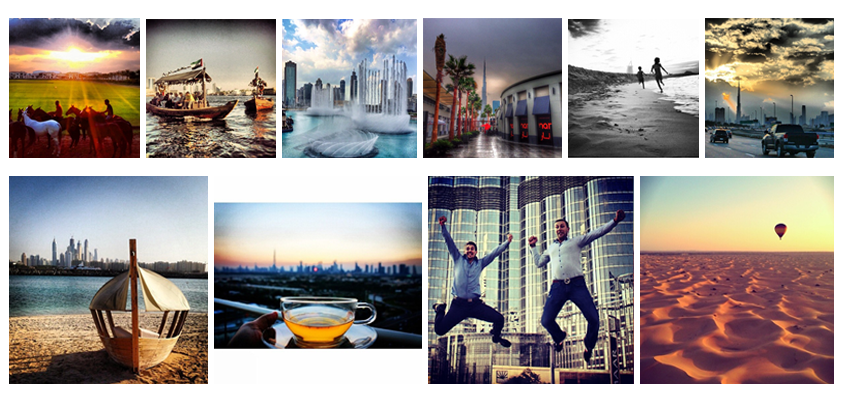
Will #InAbuDhabi do for the capital what #MyDubai has done for Dubai’s social media presence?

There’s a saying that imitation is the sincerest form of flattery. If that’s the case, then #MyDubai, the social media campaign which was launched to give the city’s residents a way to tell their own story, now has another honor to its name in addition to the one million Instagram uploads.

Abu Dhabi has followed in the footsteps of #MyDubai and launched its own hashtag to share experiences. To quote from the Khaleej Times:

Residents and visitors to the Capital have a new platform to share their experiences and events: #inAbuDhabi.

Announced on Sunday by the Abu Dhabi Tourism and Culture Authority (TCA), the new online service is meant to promote the emirate’s culture, entertainment, heritage and hospitality both at home and abroad.

“The #inAbuDhabi campaign will be wide-reaching and rolled out across all communication channels of our visitabudhabi online resource. It will be used across social media for maximum reach and impact and will be a tool to tell the destination story locally, regionally and internationally,” said Mouza Al Shamsi, acting executive director of Marketing and Communications at TCA.

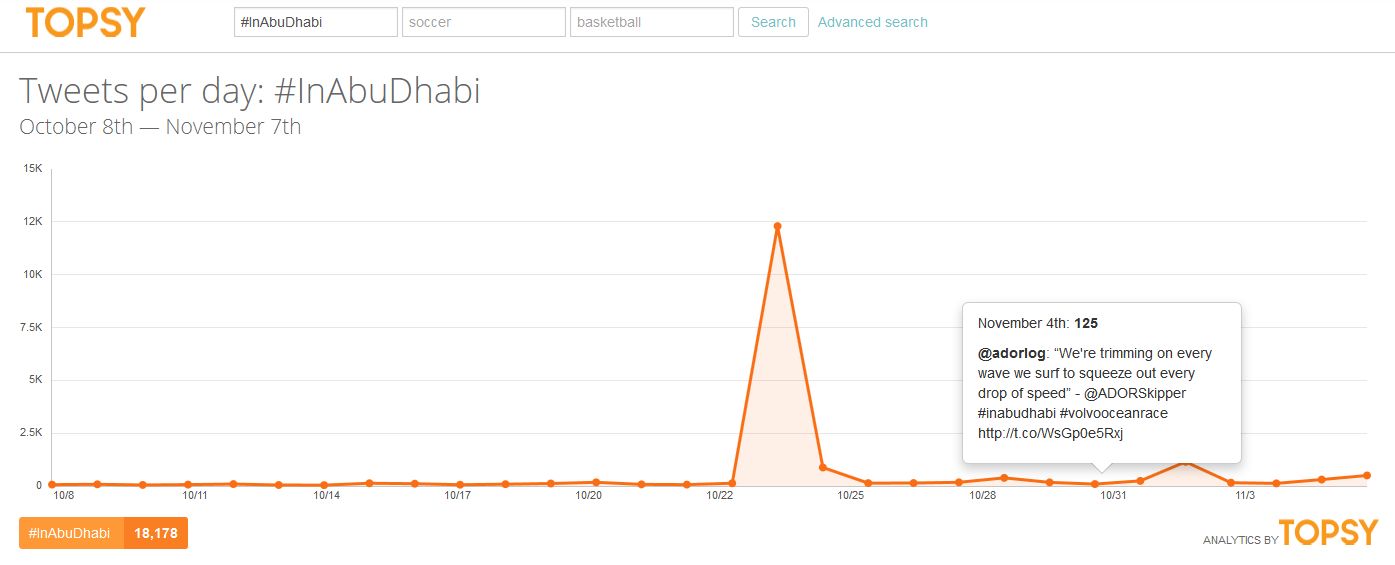
So far, so good. However, despite launching the campaign on October 20th it’s probably fair to say that the #inAbuDhabi hashtag is yet to trend among social media users. Most of the usage has been by corporate accounts related to tourism such as @VisitAbuDhabi, @AbuDhabiEvents and @EtihadAirways.

The hashtag #InAbuDhabi had a strong start but has tailed off rapidly since its launch

The hashtag #InAbuDhabi had a strong start but has tailed off rapidly since its launch

Will #InAbuDhabi become another #MyDubai? Does it have the emotional resonance with residents of the capital? Or should Abu Dhabi’s Tourism and Culture Authority not imitated Dubai and done something completely different? What do you think?

#MyDubai and the issue of whether to pay the public for content

The first images from #MyDubai's initiative provided for free by Dubai residents (image source: www.facebook.com/DefinitelyDubai)

The first images from #MyDubai’s initiative provided for free by Dubai residents (image source: http://www.facebook.com/DefinitelyDubai)

To pay or not to pay? That’s the question. The city-state has launched an interesting project based on social media, dubbed as a social-media autobiography of Dubai to be written by its residents and visitors. To quote The National newspaper:

The year-long project will bring together people in the emirate through Twitter, Instagram, and Facebook. A call has gone out to share pictures and videos using the hashtag #MyDubai.

According to The National the project will tell the real and human stories of the city through residents’ contributions which are posted onto Facebook, Twitter and Instagram (there’s no mention of YouTube and Pinterest which is a shame).

The National followed up today with a second piece on the initiative. Tourism bosses from Dubai’s Department of Tourism and Commerce Marketing (DTCM) will select the best photographs and videos from the Emirate’s residents and showcase them in exhibitions and roadshows as part of the year-long #MyDubai project. The public’s images will be used to promote Dubai throughout the year.

What isn’t mentioned is if the public are going to be paid for their images which are going to be used for advertising the Emirate. As any content producer knows, photography and videography are expensive. While those lucky few whose images get chosen – to quote The National, “more than 25,000 images and videos were uploaded to Instagram using #MyDubai just 12 hours after the campaign was launched” – will be referenced and have been so far online on DTCM’s Definitely Dubai Facebook site is it right to use images provided by the public for free (even if it is with their consent).

And on another note, who owns the copyright to the images? Are the images commissioned by DTCM for their explicit use or do the copyright owners of the images, have the ability to pull the images as and when they please if they object to how the images are portrayed?

I love the concept of #MyDubai but should the public be paid for images that are used, even if only a token amount? If it’s for corporate usage, then I think they should do.

Reality, fiction and a superfast highway for the UAE

You could soon be travelling – legally – at warp speed on Dubai’s highways (picture credit: storiesbywilliams.com)

We’re not big fans of irony in this part of the world. However, one website has been trying to change that. The Pan-Arabia Enquirer, which is also known by its tag-line ‘the world’s only 7-star news source, reported on a fantastical tale, of how a Gold Class lane was to be introduced on road between Dubai and Abu Dhabi. The news piece went like this:

Drivers looking for a bit of luxury on the road between Dubai and Abu Dhabi will soon be able to take advantage of an exclusive members-only car lane when it comes into service next year.

The ‘Gold Class’ lane, which will be available for a set monthly fee, offers a full range of extras unavailable in the other lanes. Gold Class drivers will be given an extra 10kmph top speed limit, newly laid top-of-the-range gold painted tarmac and discounts at various service stations. The whole lane will also be an extra 50cm wide, and will be cordoned off from the other lanes with a red velvet rope.

This piece of news would seem absurd anywhere in the world. But even though we are in Dubai, where reality is often more outlandish than fantasy, I had to pinch myself when I read about a proposal to build a highway with a top speed of 200 kilometers per hour. The Daily Telegraph’s Dubai-based blogger Annabel Kantaria wrote a great piece on the comparison which you can read here.

I’ve taken details of the proposal, from local English-language newspaper Emirates 24/7, which can be read below:

[The concept] was announced by Major General Mohammed Saif Al Zafeen, Director of Dubai’s Traffic Police Department, on the sidelines of a press conference in Dubai on Monday.

Mohammed Saif Al Zafeen explained that the plan is to have at least four lanes in each direction and allow only those cars to drive on the highway, which can go at high speed.

He said the project will be executed after thorough study and support from the private sector.

He said this has been decided following studies which suggest that high speed alone does not cause accidents but there’re other factors involved for the rise in accidents.

He explained that there is a correlation between the occurrence of accidents and the disparity between the car speeds, meaning that accidents increase when one car travelling at 140 kmph is surprised by a car going in front at 60 kmph.

According to the World Health Authority the UAE ranked 171 out of 179 countries in terms of road safety with 37.1 deaths per 100,000 of population in 2011. The good General’s own thinking is countered by the Health Authority of Abu Dhabi which states that the the most important factor relating to the severity of road injuries is speeding.

What does worry me is the concept that a faster car means a safer road. Driving is already poor enough in this part of the world. Would you want to risk your own life by driving on a highway where the sole aim seems to be to floor it and drive bat s$#@. What is the consistency of the message here? Some government departments are saying clearly that speed kills; others painly are saying something different. For the sake of the country, I hope that Major General Al Zafeen is either an admirer of or ghost writer for the Pan-Arabia Enquirer.

XPRESS – the UAE’s investigative newspaper

Over the past couple of weekends I’ve become increasingly irritated. It’s not that I don’t like weekends; on the contrary I enjoy the time away from work. However, I’ve become accustomed to picking up the XPRESS newspaper. The title, which was launched in March 2007, is a weekly newspaper which is published by Al Nisr Group (Al Nisr also publishes Gulf News).

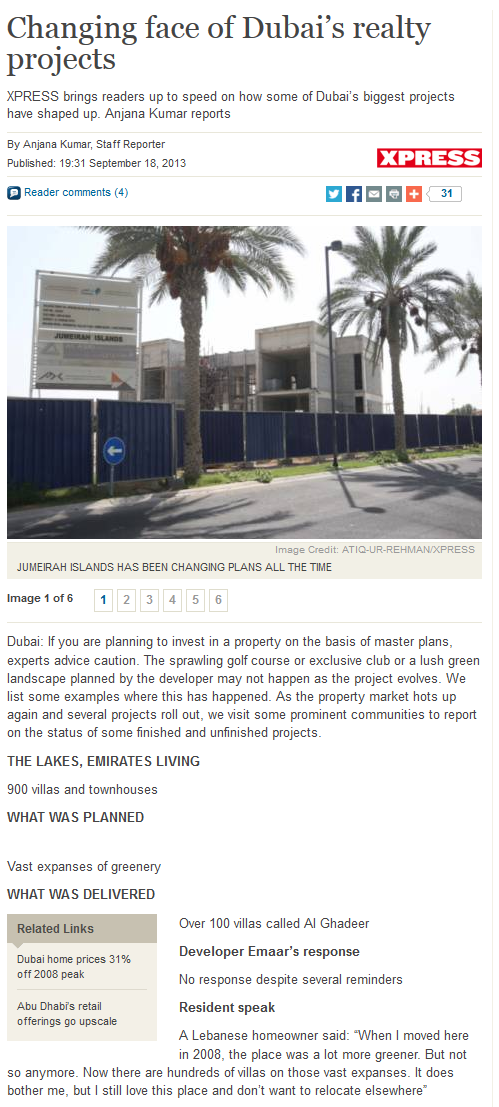
The paper, which describes itself as a community paper, is released every Thursday. Of late, XPRESS has focused on investigative pieces and has run a number of pieces that have caught my eye. Some of the best include a report on the changing face of a number of Dubai’s largest real estate projects (see the below or click on this link), the cost of wasted medicines to the country’s coffers and insurance firms, and the horror story of how the MMA forex scam robbed thousands of their money.

XPRESS regularly focuses on stories that engage the community including this piece on how developers have not kept their word on project developments

XPRESS regularly focuses on stories that engage the community including this piece on how developers have not kept their word on project developments

There have been some duds including a scandalous piece that seemed to suggest expats were more inclined to engage in illegal sexual acts which focused on a Norwegian lady who was raped and yet charged by the local police (this piece and the comments by a number of Emirati lawyers still shocks me). But in general XPRESS is a wonderful read which often puts other newspapers to shame. If you have a spare copy save it for me!

Another breaking news piece by XPRESS which wasn't picked up by other media outlets in the UAE

Another breaking news piece by XPRESS which wasn’t picked up by other media outlets in the UAE

Déjà Vu and Dubai’s Real Estate Sector – Is Communications Doing Enough to Win Back Consumer Trust

We’d just finished off another round of Cityscape here in Dubai, an exhibition that was the highlight of the decade that was the 2000s. When 2008 struck, Cityscape was almost forgotten about. No one wanted to be reminded of how much Dubai’s real estate sector had fallen. Anyone who visited the event this month may have been forgiven for thinking that the downturn never happened. We were bombarded with news about how good everything is looking; one executive from Dubai-based executive Damac claimed there had never been a property bubble to begin with.

All the good news hasn’t been without incident. An announcement at the beginning of this month revived plans to build a canal, this time linking Dubai’s Business Bay waterway system out to the Gulf at what is now Jumeirah Beach Park (Alex McNabb wrote an excellent blog piece about the news which you can read here). Other reports have focused on stalled projects which have neither been revived or cancelled, basically locking in investor money (the law here in the UAE requires projects to be cancelled before any collected monies can be returned to investors), and the proposed establishment of a body that would help return funds to those who invested in projects which never got off the ground.

While there’s no doubt that the boom is back and that Dubai is again one of the leading lights when it comes to global real estate, is enough being done to ensure not just investors but ordinary people out there, the likes of you and me, that mistakes which were made in the past will not be repeated?

If you’re an Arabic speaker listen to this interview at Cityscape with the CEO of Damac Ziad El Chaar.

Lessons in cultural misunderstandings from the Gulf

Are we more a melting pot or a basket-case of cultural groups? (picture source: http://kidspartyheaven.wordpress.com)


The Arabian Gulf is often called a melting pot of cultures, where diverse groups and nationalities meet, work and live together and understand one another. Every now and then, there are moments when a different reality comes to light, when it’s blindingly obvious that we still have a long way to go.

I had the pleasure of having two of those ‘cultural moments’ last Wednesday. The first was with Emirates, the national airline of Dubai. Emirates is an interesting organization, in that it’s one of the most profitable airlines in the world, is owned by the Government of Dubai, and yet most of its senior management is not from the Gulf region.

I enjoy flying Emirates, and I often receive a great service from the airline. I had to rebook both my and my wife’s ticket and pay for the difference over the phone. All went smoothly, until it came to the issue of payment. You see, the habit in the most of the Arab world, and particularly in the Gulf, is for the wife not to take her husband’s name for religious reasons. And yet, I couldn’t pay for her ticket over the phone because my surname obviously is different. The lady on the other end of the phone wasn’t an Arab, but she wasn’t the person who drew up the rules at an airline owned by an Arab government.

Cultural misunderstanding one was resolved not through explaining why my and my wife’s names were different – I did try my best – but for other reasons (I’m a Skywards airline rewards member, which solves everything over the phone). The second cultural crossed-wires was much more fun and less painful but just as much an eye-opener.

I received a message from a friend asking for information about a company I know. Here I was naively thinking he was looking for a job. Instead, he’d been asked by a parent to check up on a person at the company whom a family member had received a proposal of marriage from.

While I’m never averse to providing a job reference or to help someone in their search for the right role, I explained that I may have to draw the line on background checking someone I didn’t know to help facilitate (or not) a marriage request.

We often talk about melting pots, about coming together and living alongside others in harmony et cetera. But how much do we really know about the other? And how often does our lack of cultural awareness catch us out? With Ramadan only a few days away maybe it’s time we did more to understand each other and our diverse backgrounds?