The REAL Entrepreneur of the Week Series – A Sit Down with Shelina Jokhiya

Shelina Jokhiya went from head of legal for a global FMCG to a solopreneur as she set up her business Decluttr Me

Shelina Jokhiya went from head of legal for a global FMCG to a solopreneur as she set up her business Decluttr Me

As they say, if you want something doing, you should do it yourself. I’ve been following a local publication as it recounts stories of entrepreneurship in the region. Whilst setting up a mentorship program, a series of CSR events, or an organization that aims to empower youths (and which doesn’t yet seem to be up and running sadly) are all praiseworthy, for me they’re not examples of entrepreneurship to look up to.

I’ve set up my own business, and there’s nothing harder, or more rewarding. Becoming an entrepreneur essentially means letting go of security for risk, and committing yourself to working harder than you’ve ever done before to achieve your dreams.

In keeping with my aim of sharing stories to help others, I’ve asked a number of entrepreneurs who I know and look up to, to tell their story.

First up is Shelina Jokhiya. Shelina is the founder of UAE-based startup Decluttr Me. DeCluttr Me has recently become the first international accredited member of the Association of Professional Declutters and Organizers U.K. (APDO). Hailing from the UK, Shelina is a Solicitor by education and profession, and was previously Global Compliance and Corporate Governance Manager for Super-Max.

I asked Shelina a number of questions about what it means to be an entrepreneur, why she made the leap and her advice for others thinking of following the same path.

Q: Why did you want to become an entrepreneur?

Shelina: I wanted to start Decluttr Me as I had dreamt about helping other people to declutter and organize for 15 years and finally got the fire to do it after being an in house lawyer for several years. It wasn’t about being an entrepreneur, but more about creating this service.

Q: What do you do and why do you do it?

Shelina: I own DeCluttr Me which is a decluttering and organizing services for homes and office in the UAE and GCC region. I go into homes and offices, declutter the junk, and unwanted items and organize everything that is left into proper systems.

Q: What is different about being an entrepreneur versus being in a job?

Shelina: I am a solopreneur so you have to do everything. I have become MD, Sales, Marketing, HR (fortunately I only have to deal with myself) Finance, IT, Social Media, Legal (the easiest bit) and Business Development as well as off course professional organizer. I am jack of all trades. I do outsource some elements such as creative elements of my business to save me time and energy.

With a job you work mostly the set hours, have a steady income and have to answer to someone at some point. And most importantly you have the steady income (I know I repeated it twice). However, being an entrepreneur I have been able to see the sun more as I get to go out during the day to meetings, events or just to go shopping or see a movie (Star Wars was watched at 9am in IMAX, best thing ever). I have met more people getting out there networking than I would ever have met staying in my corporate office and I have met some amazing clients from different parts of life, cultures and nationalities. It’s been an eye opener and great in that sense.

But then I do work at midnight catching up on admin.

Q: What’s your advice to others?

Shelina: If you think it will be easy to run your own business you are wrong. It is more stressful than being a global head of legal! Save up a lot of money so you have the money whilst you are growing your business. Network a lot! I go to networking events twice a week to talk about my business and to get known. I am now known as the declutter woman and have received business from word of mouth and meeting people at the networking events in this country.

Remember it takes a year and half to get the business running and nearly 3 years to make a profit. Everyone told me this and it was accurate for me. If you get an investor it might be different.

My business is not a sexy app or a cool techie service so I haven’t attracted investors. Which is fine for me, but if you do want investors remember you will lose control of your business, have to answer someone (again) and create the dreaded business plan (I created mind maps for my business rather than business plans).

Also get a mentor. I have a few amazing people in my life who are my mentors and sounding boards for my business. They are supportive but practical with their advice which is what I need.

You will lose a lot of friends starting this business. Remove the negative people and keeping on going. it will work out in the end.

Q: What’s it like being a female entrepreneur in the region?

Shelina: I don’t know to be honest as I don’t think about myself as an “entrepreneur” or a “female entrepreneur”. I run a successful business which takes up my time and my mind and that’s all that matters. If you have faith in your business and have a strong work ethic, then it doesn’t matter what sex you are in this region or any other region. Whoever you are, people will try to disparage your work and others will be massive supporters of your work.

The Best and Worst of Media in the UAE

The UAE’s media community has come together to support long-time radio and television host Jeff Price who needs surgery to help alleviate a rare brain condition.

There are days when you see the best in people, and there are days when you feel the opposite. The pas couple of weeks have shown the UAE’s media industry in both lights.

First, at the end of June, there came the news that the UAE’s Radio 1 and Radio 2 stations would close indefinitely. The decision to pull the plug was effectively made by Abu Dhabi Media which withdrew the frequency licences from Gulf News Broadcasting. I did occasionally listen to the channels, and I’ll miss them (I’m probably one of the few people in the industry which values radio’s reach and impact, especially considering how long people spend in their cars in the UAE).

The worst part of the story is the layoff of the production team and talent who worked on the two stations. Between 25 and 30 people have been let go. The below statement was the only public comment that I know of which made on the closures.

“Gulf News Broadcasting LLC is today announcing that with immediate effect it will no longer be managing the Radio One & Radio Two stations.

“This is as a result of unforeseen circumstances, which are beyond the control of Gulf News Broadcasting LLC.

“Gulf News Broadcasting LLC would like to thank all its employees, advertising partners and supporters for their contribution, effort and commitment for the successful management of Radio One & Radio Two stations over the last 10 years.

“No further comment will be made.”

And now for the better side of the media industry. Some of you may know Jeff Price. For those of you who don’t, I’ll quote the words from his own Go Get Funding site.

Jeff has been in the UAE for over 22 years and during that time has hosted numerous radio and TV shows, he helped launch City 7 TV, Radio 1 and 2 and was the voice of family entertainment for many of Dubai’s premium events Emirates Airline Dubai Rugby Sevens, Legends Rock Dubai Tennis, Dubai Duty Free Tennis and many more. He has lived a high profile life, achieving a huge amount.

What most people don’t know is the incredible amount he’s also done behind the scenes. Jeff has tirelessly championed just causes from repatriating Filipino workers who’ve become too ill to work and can’t get home to raising funds for charities helping construction workers families and those coping with crippling disabilities.Being the Jeff we know and love, he doesn’t mention these projects, causes and achievements, because that is his way.

Yes, he’s worked with everybody from Richard Branson to Chuck Berry, James Brown, and the Black Eyed Peas, and been instrumental in launching the careers of many of our favourite household names, but his passion has always been to help and fight for those unable to help themselves.

Now Jeff needs your help. Urgently.

Earlier this year after searing headaches, Jeff was diagnosed with a rare brain condition that leaks fluid into his skull. Whilst he does have medical insurance, this was not able to cover 2 life-saving operations. Jeff, along with our family, friends and generous colleagues got him through the first two surgeries, but now the money has run out. Jeff needs to raise more than 300,000 AED to have a valve fitted a third time to reduce the pressure on his brain and for further medical treatment required in this complex diagnosis.This is time sensitive as daily his sight is failing and the short–term memory and speech areas of his brain are being damaged.

It’s time to give back to Jeff.

He’s brought joy to countless millions over the years and been a true credit to the UAE expatriate dream, working hard, mentoring others and giving without hesitation to those less fortunate. All while bringing up the two children he adores – 13 year old Maddy and 3 year old CJ, who so many of you also know and love.

We are now asking for Jeff’s vast international family of friends to contribute if they possibly can. Jeff has never shied away from seeking help for those in need, but at a time when he needs that help himself, he feels unable to ask you himself, so we have to do it for him.

We are setting up a fully audited and transparent online contribution blog so that you can pay cash directly and contact others who can help too.

We all know from Jeff being a part of our lives, with his warmth, humour and compassion, that Jeff would help you in a heartbeat.

It’s his time now.

Please give what you can to help us get him the treatment he desperately needs as soon as possible.

Members of our community have helped Jeff reach half his target of 65 thousand pounds. Let’s show how good we are, by donating to Jeff during his hour of need. You can donate at his Go Get Funding page here.

Pokemon Go and the Middle East – Advertiser, Brand and Consumer Reactions to the Global Craze

I wanted to write on something fairly light and fun today in light of recent events in the Middle East and in Europe. So, today I wanted to shine a light on Pokemon Go, the augmented reality mobile app that has become a global sensation (and if you’re asking what is Pokemon Go, where have you been for the past two weeks?). While Pokemon Go hasn’t been introduced into the Middle East officially, people are already playing the game here. And advertisers and brands are also reacting to and using the sensation to market their products.

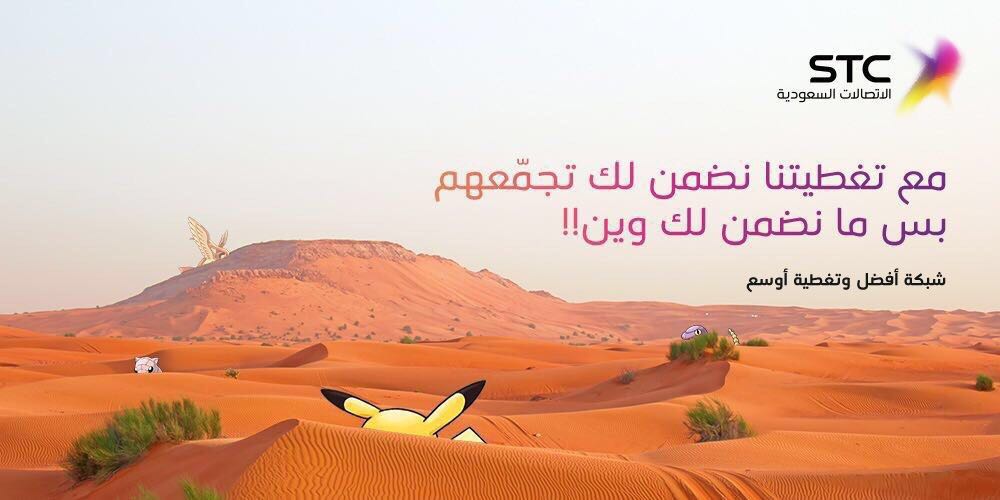
Probably first out of the blocks were, unsurprisingly to me, the Saudis. Two of the Kingdom’s telcos put out adverts promoting the craze, which isn’t surprising considering that you need a mobile and a data connection to play the game.

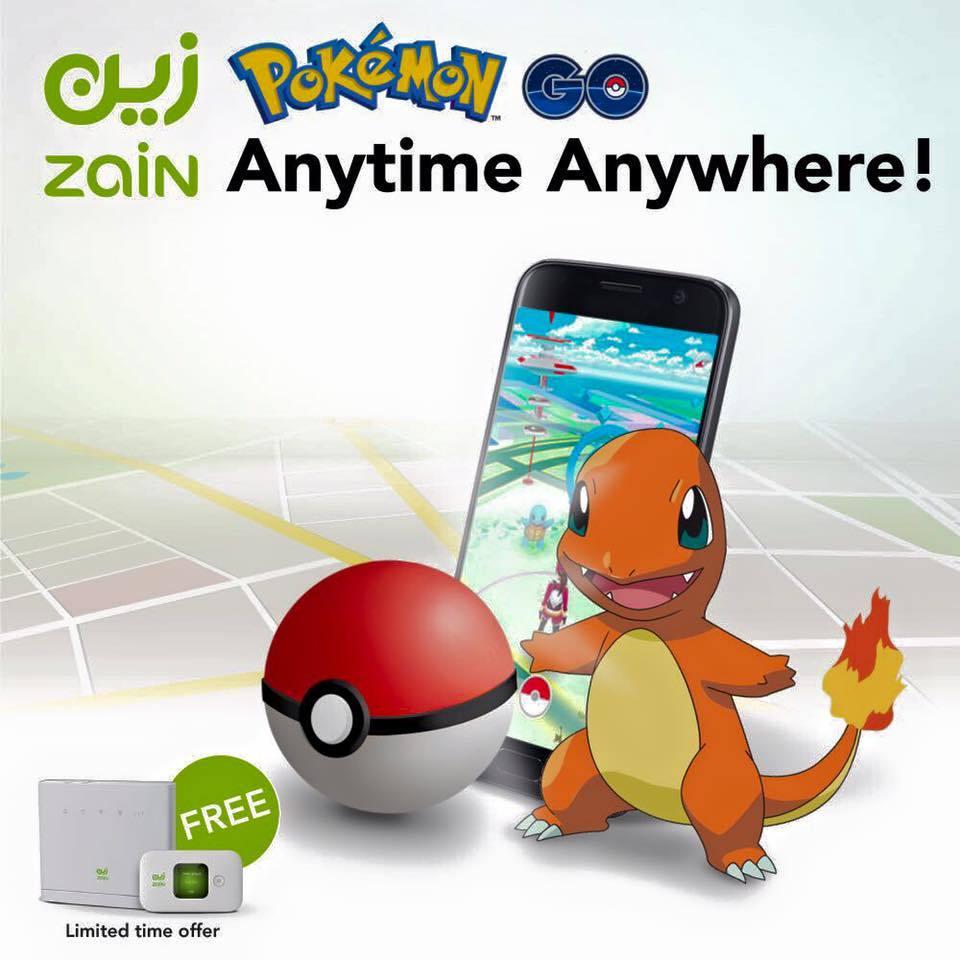
Saudi telco Zain became the first household brand to use Pokemon Go when it ran this advert across its social media channels early this week.

Saudi telco Zain became the first household brand to use Pokemon Go when it ran this advert across its social media channels early this week.

Saudi Telecom ran this artwork the same day as Zain's ad. The ad says, "with our network we guarantee you'll be able to catch'em all, but we can't guarantee where!"

Saudi Telecom ran this artwork the same day as Zain’s ad. The ad says, “with our network we guarantee you’ll be able to catch’em all, but we can’t guarantee where!”

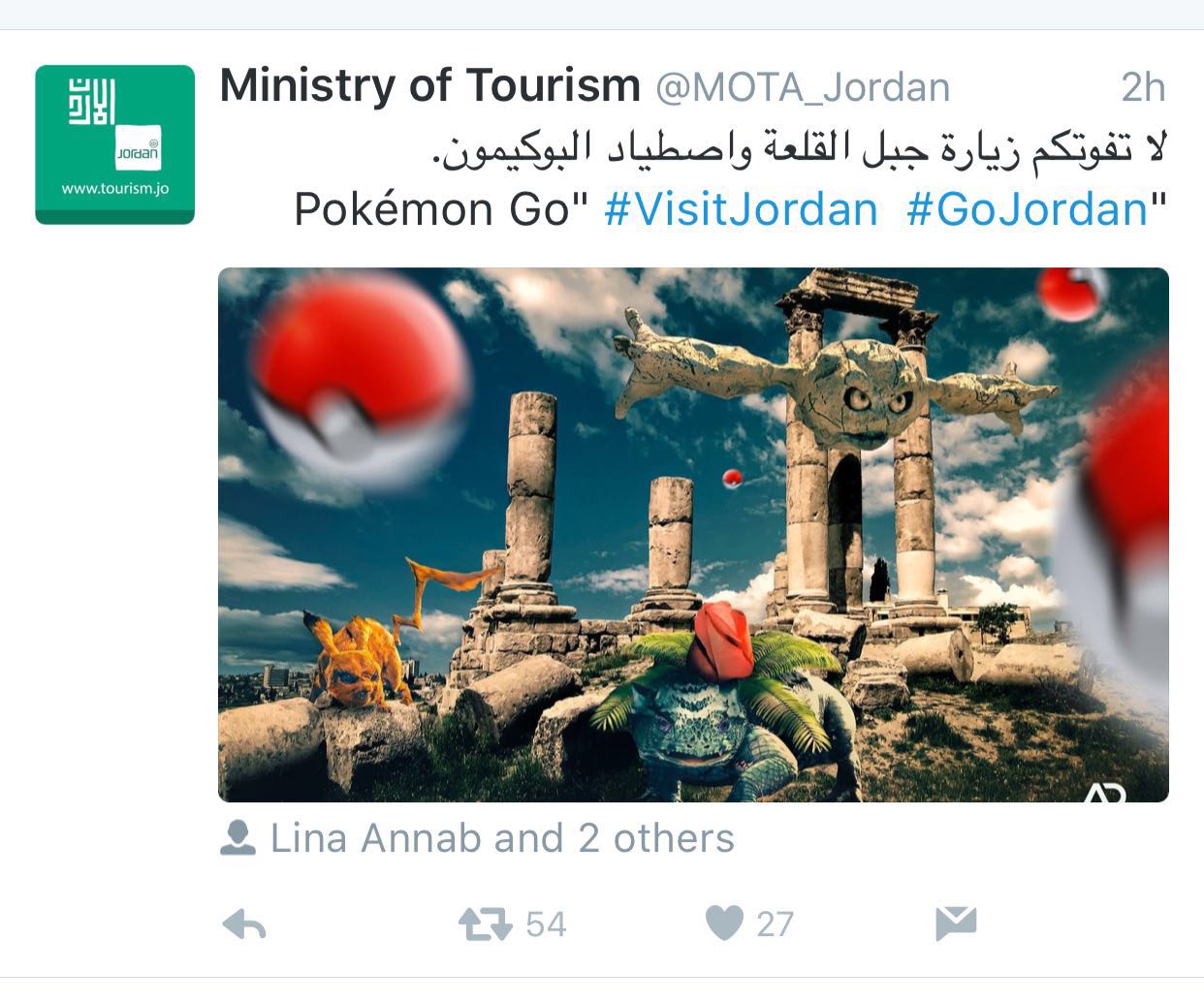
Other brands have also looked to leverage off the lovable Japanese characters. Cab booking service Careem ran out an ad, as did Jordan Tourism. The game uses geotargeting to get people walking around a physical environment such as a city, and brand whose services include travel and tourism (or any location-based product) are fast realizing the potential of getting players to visit their premises (or even country) to hunt the digital creatures.

The UAE-headquartered cab hailing service Careem has leveraged Pokemon Go to promote its service and give gamers a discount

The UAE-headquartered cab hailing service Careem has leveraged Pokemon Go to promote its service and give gamers a discount

Even Jordan's Ministry of Tourism has jumped on the Pokemon Go craze, to get visitors to go and take a look at Amman's Citadel

Even Jordan’s Ministry of Tourism has jumped on the Pokemon Go craze, to get visitors to go and take a look at Amman’s Citadel

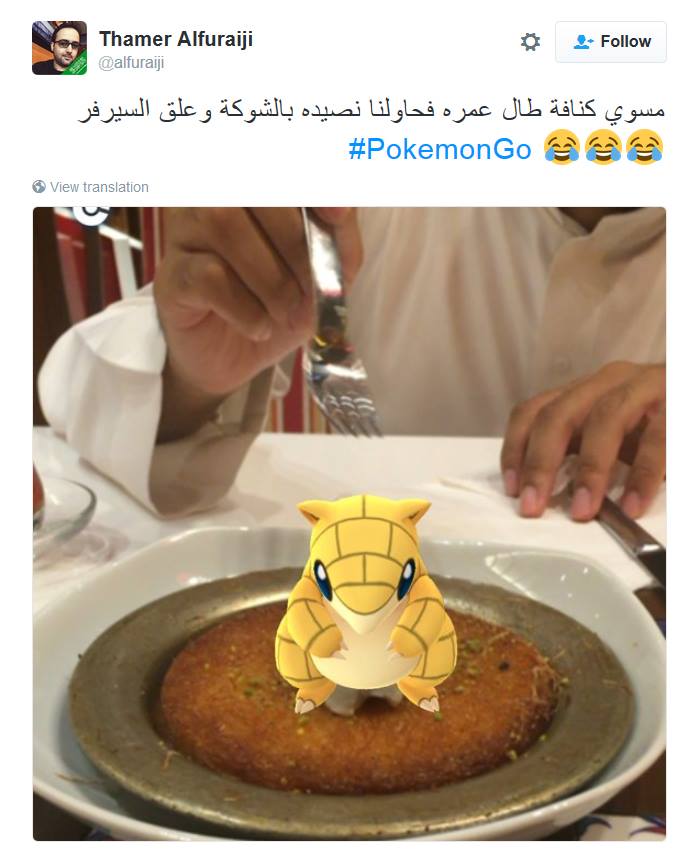
Users have also been having fun and sharing their own experiences online. Some have been sharing their experiences, including one apparently from the front lines in Iraq and others in more mundane locations, including finding a Pokemon on top of a plate of Kunafe.

It's enough to put you off your dessert! A Pokemon on top of a plate of Kunafe (image thanks to Samer Batter).

It’s enough to put you off your dessert! A Pokemon on top of a plate of Kunafe (image thanks to Samer Batter).

This image is apparently from the front lines in Iraq, which probably isn't the safest place to hunt Pokemon

This image is apparently from the front lines in Iraq, which probably isn’t the safest place to hunt Pokemon

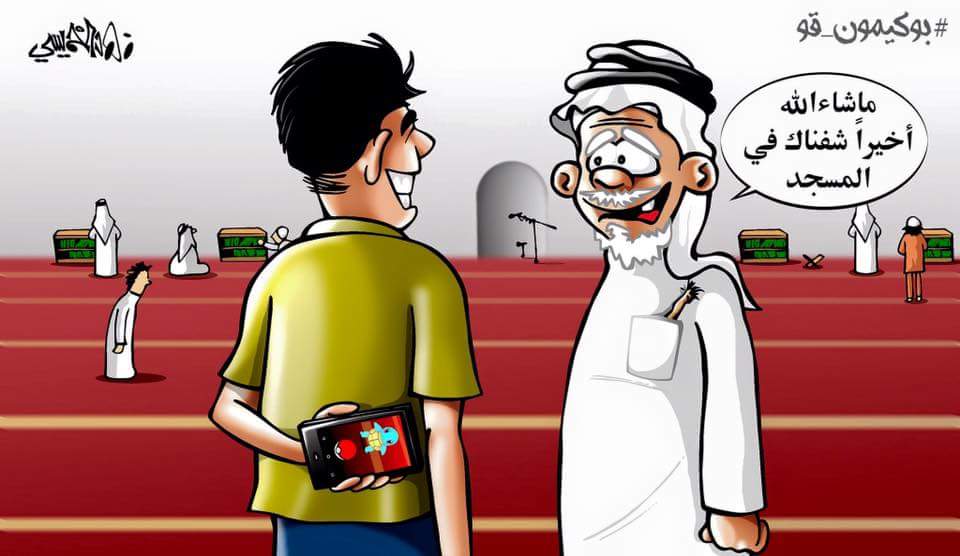
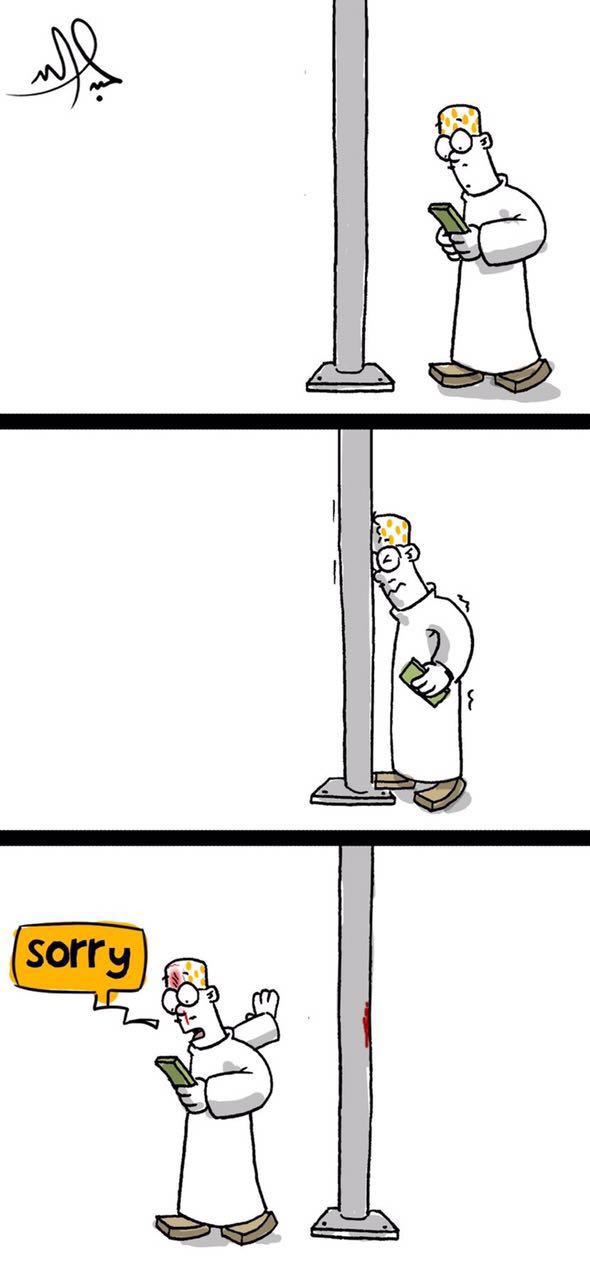
The craze and people’s reaction to it in the region has been picked up by local media. Reports have circulated that people have ventured into all sorts of places as part of the game. Two cartoons below best sum up that sentiment.

With his phone in his hand and an image of a Pokemon monster on the screen, the caption reads, "finally we see you at the Mosque." (image thanks to Yaser Al Amoudi)

With his phone in his hand and an image of a Pokemon monster on the screen, the caption reads, “finally we see you at the Mosque.” (image thanks to Yaser Al Amoudi)

Saudi cartoonist Abdullah Jaber came up with this image of how game players are so engrossed in the game that they don't notice their surroundings

Saudi cartoonist Abdullah Jaber came up with this image of how game players are so engrossed in the game that they don’t notice their surroundings

The craze hasn’t been without controversy. According to Gulf News, Al Azhar, Egypt’s top Islamic institution, has condemned the craze about Pokemon Go as “harmful mania”. “If such a game can deceive youngsters, I do not know where the minds of adults have gone. They can be hit by a car while being busy searching for Pokemon,” said Al-Azhar’s Deputy Abbas Shuman, according to Gulf News. Al Arabiya reported that Egyptian cabinet spokesman Hossam al-Qawish said that an investigation into the game’s dangers was taking place. The spokesman added that the government was also considering new regulations to be imposed on online games to limit possible threats to national security.

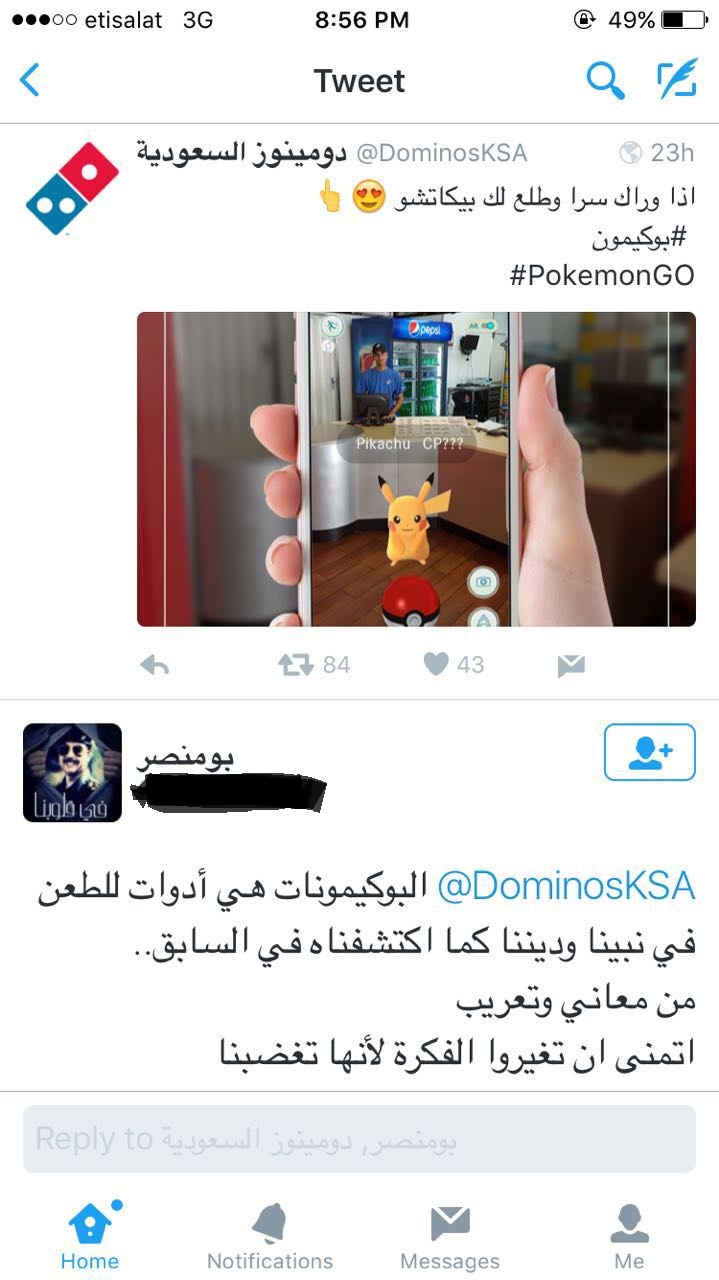
In addition, Gulf News reported that the UAE’s Telecommunications Regulatory Authority (TRA) has warned that criminals could exploit the popular Pokemon Go mobile game. Kuwaiti authorities have also warned against those who take photos of sensitive locations in the country. Brands promoting Pokemon have also been targeted, with the likes of Dominos Pizza and others called into question by those who consider Pokemon to be a work of the devil (if you don’t believe me, see below).

Dominos Pizza's efforts to use Pokemon as part of marketing were called into question by one user, who claimed Pokemon were tools of the devil against Islam. The user told Dominos to change its marketing or risk angering the public.

Dominos Pizza’s efforts to use Pokemon as part of marketing were called into question by one user, who claimed Pokemon were tools of the devil against Islam. The user told Dominos to change its marketing or risk angering the public.

There’s no doubt that the Pokemon craze will continue for some time to come, and will only become more intense/insane when the app is officially launched in the Middle East. Pokemon advertising has been used smartly to get a younger audience to engage with traditional organizations such as museums and promote small businesses. Let’s hope that marketers here are just as savvy, whilst being aware of local sensitivities. If you’re not already doing it, get ready to go catch some Pokemon adverts in your vicinity soon!

And as an extra treat, here’s one television news clip on Pokemon from Kuwait, with a particular focus on how its turning youth into addicts.

The importance of reputation – the examples of Mubadala and IPIC


The concept of reputation, which can be defined as how much stakeholders trust organizations, is often difficult to measure. It’s an intangible, an idea which is often best understood at the most inappropriate time (in other words, during a crisis).

In Abu Dhabi last week news broke about a merger between two government-owned investment vehicles. The deal between Mubadala and IPIC would create a combined fund worth US$135 billion according to Reuters. At a time of budget tightening due to low oil prices, the merger promises to bring about significant cost savings according to media reports.

Reuters had another interesting take on the merger, which I’ll copy from the article.

IPIC is also in the midst of a row with 1MDB. The Abu Dhabi fund has asked a London court to arbitrate in a dispute with the Malaysian state fund over a debt restructuring in which IPIC is claiming about $6.5 billion.

While unlikely to impact these proceedings, the sovereign wealth fund analyst said the scandal had undermined IPIC’s reputation and so a tie-up with Mubadala, which is considered one of the better-run state investment funds in the region, would be beneficial.

The analyst that Reuters spoke to argued that IPIC’s reputation was hit by the issue in Malaysia. In addition, the departure of its previous CEO and dealings in its investments such as Arabtec have also contributed to reputation all issues. In contrast, Mubadala has a strong brand, helped in part to the leadership of its management and financial transparency.

It’s not only communicators who need to understand that every action will impact organizational reputation (leaders of listed companies know all too well what public sentiment can do to the stock price, and their jobs). The Mubadala-IPIC merger is an example of how much both good and not so good reputations can impact the business.

Departing but not goodbye – Fida Chaaban and Frank Kane step down from The Entrepreneur and The National

Frank Kane (left), and Fida Chaaban have left their marks on the UAE's media scene.

Frank Kane (left), and Fida Chaaban have left their marks on the UAE’s media scene.

The UAE’s media scene can oft be described as a merry-go-round; journalists change roles almost as frequently as their colleagues in the public relations industry. Every so often, a journalist comes along whom I develop the utmost respect for, both in terms of their professionalism as well as their personality. They’re a pleasure to deal with.

Just like waiting for a bus, not one but two of my favorite media are leaving their roles this summer. The first is a lady who has redefined what it is to be an editor-in-chief of a publication. Fida Chaaban came to the UAE around about two and a half years ago to head up the newly-launched title Entrepreneur Middle East. During that time she’s built up a strong editorial team who aren’t afraid to publish news on its merit (and say no to ethically-inappropriate requests). Fida has gone beyond that and she’s lived the brand – she could be found at any and every event talking about entrepreneurship including the good, the bad, and the public relations. Fida was a pioneer in terms of engagement; in a region where many editors-in-chief are unapproachable, she’d always be online (when did she sleep?), and responding to anyone and everyone.

Fida announced the change and her stepping down in her own fashion by posting an article about it online (it’s well worth a read). She’ll be staying in Dubai, so I’m not saying goodbye but rather I hope to see her back in the media space soon.

The second person is Frank Kane. Few people in the regional PR industry worth their salt don’t know Frank, a man who has been reporting in London for decades and who moved to the UAE around a decade ago. If you want to learn about proper investigative journalism, Frank is the man to listen to. Frank has been with The National for almost seven years, and during that time his column has been a must read for anyone wanting to understand the nuances of business and culture in the country. Frank will be stepping down from The National at the end of this summer, but he’ll be staying in the UAE.

I could share many anecdotes about Frank, but I’ll do with just one. Back in 2008 I was working on a deal between the New York Stock Exchange and Qatar on a multi-million dollar investment. I was talking with the head of a major public relations firm from London and his experienced team, reviewing the media list. Such was the reverence (and apprehension) for Frank that when we got to his name the gentleman in question said, “I’ll deal with Frank”. When you’re equally respected and feared by public relations executives, that’s when you know you have made it as a true journalist.

I’ll miss dealing with both Fida and Frank, and I do hope that both will be back where they need to be (and where we need them to be), behind a desk working on copy that you can’t put down. We need more journalists like them.

PS do follow Fida and Frank on Twitter, at @fida and @frankkanedubai respectively.

‘Bigger, Better and Smarter’ – how the Middle East’s PR industry rates its performance & development in 2015/2016

The Benchmark survey looked at communications practice areas. The results suggest media relations will soon be replaced by social media as the top communications priority.

The Benchmark survey looked at communications practice areas. The results suggest media relations will soon be replaced by social media as the top communications priority.

Yesterday was a busy day for the PR industry in the UAE, with two events on the same day. The first, which was organized by bespoke agency Secret PR and named PR Pressure, was held in Dubai and tackled the everyday issues faced by both PR professionals and their friends in the media sector (more on this later). The second event of the day was held by the Middle East Public Relations Association in Abu Dhabi and focused on innovation.

As part of the build-up to the event, MEPRA launched the Benchmark survey. Through a self-assessment approach, the research seeks to understand where the industry is headed, what is being done well and where improvements need to be made. And with 138 responses, including from 100 in-house departments, 34 agencies and 4 senior independent consultants representing over 1,611 PR professionals across 14 Middle East countries, there’s a lot to ponder.

Firstly, let’s look at the issues thrown up by the Benchmark research. According to respondents, the nature of the public relations is changing. While media relations is still seen as the backbone of the sector, the survey’s respondents expect this to change over the course of 2016 as social media becomes more important to clients and different stakeholder groups alike. There’ll be a similar growth in areas such as influencer engagement, employee engagement, and integrated communications.

There are also major challenges to tackle in the region’s communications sector, including the need to demonstrate results and show a return on investment. And then there’s the money issue; it’s clear that falling oil prices and subsequent slowing in the region’s economy is beginning to bite. In 2016, two out of three respondents see investment in PR staying the same or growing, down from 87.0 per cent in 2015. Similarly, the proportion of people who see budgets falling has more than doubled (13.0 per cent in 2015, up to 34.0 per cent in 2016). There does seem to be a silver lining however when it comes to budgets; one in six respondents expect budget growth of more than 20 per cent in 2016.

A fifth of respondents claimed they were world class. Would you agree?

A fifth of respondents claimed they were world class. Would you agree?

When it comes to performance some in the region’s PR sector clearly don’t lack for confidence – a fifth of in-house departments and agencies regard themselves as ‘world class’ (those scoring themselves an average of more than 7.0/10 for both practice and performance, across 12 elements of communications, were rated as ‘world class’). Despite this, there’s clearly a need to improve in terms of doing things differently; scores on the area of innovation were the lowest recorded by the survey. Responses were low (a rating of 2.31 out of 5) for the statement: ‘The PR industry in the Middle East is more innovative than the industry in other regions’ in 2015. Similarly, the statement: ‘Middle East campaigns are not afraid to ‘disrupt’ – to ignore established convention – to stand out and achieve results’ in 2015 was rated as low with a score of 2.49/5.0. This may change in 2016, as 12.6% more respondents expect the industry to become innovative.

Based on the survey results, another area which the industry has to get right is its hiring and retention practices, especially when it comes to attracting graduates, particularly locals. Talent acquisition scored 5.26 out of ten, and staff retention 5.16 out of 10. Graduate recruitment and attracting local talent were even lower, at 4.58 and 4.32 respectively.

Research is one thing, experiences are another. During the PR Pressure event there were strong emotions expressed on the issues of media relations, ethics and talent (check out the hashtag #PRPressure for all of the posts on the event). It was clear from those media who were present and talking about their own interactions with the PR industry that we still have a long way to go if we’re going to become ‘world class’. Similarly, unless we get talent issues right, including a focus on training, development and certification (which is a major failing as far as I’m concerned), then whatever progress we make will be unsustainable. If the industry keeps on bringing expats in to do a job at every level, it’s going to fail in engaging with local audiences (there’s also the issue of forced localization, which I’ll blog about at a later date).

While the industry may feel that it’s moving in the right direction (and in many areas it is), maybe it’s time for a more honest glimpse into the looking glass, to start addressing key areas of what we do and how we do it. I desperately want to believe that we’re ‘bigger, better and smarter’, but while my heart feels one emotion my head thinks something else. I for one am looking forward to next year’s MEPRA Benchmark. And if you want to play your part and fill in the survey, get in touch with MEPRA.

Working Mothers and the Gulf – Will efforts to promote flexible working and gender diversity be a game changer for the region’s women and economy?

Will the region's businesses embrace mom-friendly policies?

Will the region’s businesses embrace mom-friendly policies?

It’s no secret to those of us whom know the Gulf; this region has lagged behind when it comes to women in the workplace, particularly mothers. A number of new organizations are looking to change this, either through working to push for the return of working mothers to the workforce or by calling for more female participation in the board room.

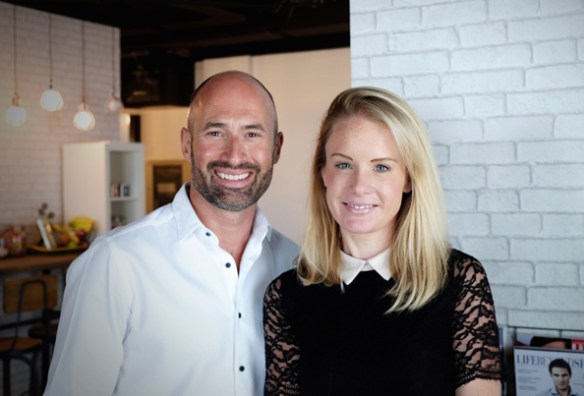
Co-founded by two of the most experienced recruiters in their respective fields in the United Arab Emirates, Hopscotch and Mums@Work are working to transform perceptions about working mothers and promote a change in working practices, such as the introduction of flexible hours and remote working.

Hopscotch's Helen McGuire's own experiences as a career professional who took time out have inspired her to help other women in the Gulf

Hopscotch’s Helen McGuire’s own experiences as a career professional who took time out have inspired her to help other women in the Gulf

“Hopscotch was set up to be much more than a recruitment firm. We’re a support platform to support women and get them back into the workplace. Part time work is doable, but it’s not how it is perceived,” explains Helen McGuire, co-founder and managing director of Hopscotch, which was set up by her and her husband Justin McGuire who himself founded the recruitment agency MCG Associates. “A lot of full time roles are full time simply because that is the standard, that’s the norm. We’re opening up a new talent pool that hasn’t existed before and that means potentially a new way of working for everyone in the region.”

For Louise Karim, the managing director of Mums@Work, her goal is two-fold, namely to promote flexible and part-time working as an option to women who have taken a break from their career for family reasons and to support both these women get back into work as well as corporations who are looking to hire working mothers but don’t know where to start.

“We’ve done our research here and we did a survey [through our parent company Mackenzie Jones] to ask our clients about mums in the workplace. We got an outstanding positive response when we asked if they’d hire mothers,” says Karim. “We also undertook a You Gov Survey which indicated 77% of mothers in the UAE would return to work if flexible options were available.”

Both organizations are looking to tap into what they believe is a significant pool of professionals, many of whom were senior-level executives, who are based in the region but whom don’t feel ready to commit to full time work but would work flexi-hours or remotely if the option was available. As Karim explains, the response has been remarkable.

Mums@Work's Louise Karim (pictured on the right) aims to create a community that will help get moms back into the workplace

Mums@Work’s Louise Karim (pictured on the right) aims to create a community that will help get moms back into the workplace

“Since our launch over a month ago we have had 3,000 CVs, a good percentage of which are very strong candidates, women who were in management and executive positions,” says Karim. “With clients we have had a strong response and our roles range from regional project manager for a multinational retailer, to legal, finance, marketing support. These include full-time flexible work to one or two days a week.”

The reaction to Hopscotch, which was also launched this year, has similarly exceeded expectations states McGuire. The organization, which McGuire describes as being unique in terms of its commitment to training, skills and support through ongoing Workshop series and online resources, has been overwhelmed by a positive response from both corporates and moms who want to get back into work.

“We have been astounded by the response, not just from women, but also from businesses and the media. We imagined some companies would take a little persuasion, but so far the response to bringing a new product to this market which we have done has been really positive.”

As part of their engagement with mothers who have been out of the workforce for some time, both Hopscotch and Mums@Work are going beyond the typical recruitment service and providing additional support to get them ready to re-enter the workforce. Hopscotch is currently running a series of workshops in association with HSBC. In addition to workshops and mentoring, Mums@Work is developing a portal which Karim hopes will turn into a support network for sharing advice, providing guidance and support.

A different approach is being taken by the 30% Club, a movement which was conceived of in the United Kingdom back in 2010 and which found its way to the Gulf last year. The idea is simple – get more women on company boards and they’ll push for a change from within. The 30% Club, which advocates for a minimum of 30% female representation at board level, has spread rapidly around the globe, including in the Gulf where it is being supported by a host of organizations.

Felice Hurst, a board member of the 30% Club in the Gulf, wants to see more female executives sitting on the boards of the region's businesses

Felice Hurst, a board member of the 30% Club in the Gulf, wants to see more female executives sitting on the boards of the region’s businesses

Gender balance on boards not only encourages better leadership and governance, but diversity further contributes to better all-round board performance, and ultimately increased corporate performance for both companies and their shareholders,” explains Felice Hurst, Gulf chapter board volunteer and MENA managing director for Hanson Search. “Women play a very powerful role in the Middle East when it comes to business, and we are witnessing an increased number of women in government, running private businesses, and driving the economy forward in countries such as the UAE, Qatar and Saudi.”

For Hurst, herself a working mother, the issue of getting mothers back into jobs is part of the wider debate about female representation in management. “As an executive recruitment professional, the topic of enhancing the female talent and enabling them to perform well both as Mothers and businesswomen is at the top of the priority list. Women bring in a “new” and often wider perspective to management problem solving, and expanding the female participation in the workforce will expand the pool of talent that the GCC organizations can tap into.”

The argument is also economic, explains Hurst. More female participation will only be better for the local, regional and global economy. “McKinsey recently produced a report “Women Matter” highlighting that companies greatly benefit from gender diversity in leadership positions, with more diversity going hand in hand with higher organizational effectiveness. The report argued that there is an economic case for gender parity, and that advancing equality could add US$12 trillion annually to global GDP by 2025. This is a pressing global issue with huge ramifications not just for the lives and livelihoods of girls and women but, more generally for human development, productivity and GDP growth.”

While it’s too early to tell what impact these organizations and initiatives have made on perceptions and hiring, the fact that we’re seeing a groundswell of support for changing attitudes and policies towards working mothers should be applauded. I for one will be doing what I can to cheer on the 30% Club, Hopscotch and Mums@Work.

Jailed for switching identities for access to an event – What PR practitioners need to be aware of

Seven people working in or for PR agencies were jailed for three years for switching security cards during WFES.

Seven people working in or for PR agencies were jailed for three years for switching security cards during WFES.

Having been in the region for a fair period of time (my family’s history in the Gulf goes back over half a century), I’ve seen and experienced many a situation. These recollections have helped me to grow, metaphorically speaking, a fairly thick skin. But every now and then, a story emerges that still has the power to shock.

A friend shared the below story with me which is from the local rag 7Days. As a PR professional and a former journalist, I know that the below is common practice. But I’ve never heard of such a punishment.

Seven people have been sentenced to three years in jail for swapping security access to attend an energy summit in Abu Dhabi.

The criminal court handed down the sentences to the men and women from Philippines, India, China and Canada after they were found guilty of misusing official documents and access badges and allowing unauthorised people into the World Future Energy Summit on January 18 of this year.

Official documents stated that the defendants, who included expat employees and visitors, exchanged security access badges to allow others who had not registered to enter the conference.

The court heard this not acceptable as the summit was attended by top local government officials and international dignitaries.

Prosecutors said that in one of the cases, a Public Relations official from a local firm gave her access badge to a male photographer who had been sent by their client to take some pictures of the event.

Security officials spotted the Filipina with a woman’s access badge and he was arrested along with the PR official who offered him the access badge. In court the PR woman admitted to giving him the access badge issued in her name.

“I gave it to him so he could access the area and take photos for one of our clients participating in the exhibition at the summit,” said the PR official.

“I just wanted to facilitate the work of our client.”

She told the judge that she had no idea giving her access badge to another person was illegal or that it could jeopardise security at the summit.

The key speakers at the conference included United Nations Secretary-General Ban Ki-Moon.

The defendants can appeal their sentences within 14 days after the ruling was issued

.

With the number of events that are held in the UAE and the cost of entry, it’s not uncommon for photographers and even junior PR professionals from the agency side to resort to borrowing someone else’s badge. While it’s not the best or most ethical route to take, when you’re on a deadline and when you don’t have an hour or two to wait to get a new entry badge, it’s understandable that someone may take another’s badge to get access to do their job as quickly as possible. I’ve seen this countless times with big events. And I’ve seen people getting caught, which usually involves a ticking off from security for having (and using) someone else’s badge.

However, being jailed for three years in prison (which will presumably be followed by deportation for those expats who are involved) is something else entirely; I’ve never seen the like before. In future, just be careful when faced with a similar situation. Seven people from our industry being bars is hard to countenance. I’d hate to see anyone I know going to prison for the same reason.

Does the Bloomberg deal with ADGM impact its impartiality or not?

Does this deal with ADGM (pictured) mean something for Bloomberg's journalistic impartiality in the region?

Does this deal with ADGM (pictured) mean something for Bloomberg’s journalistic impartiality in the region?

The issue of impartiality is one which is seldom discussed in the Middle East – this probably isn’t a surprise when considering that much of the region’s press is owned by some form of government authority. However, when it comes to international media the issue of impartiality is a different story. Journalists from abroad, news wires in particular, often have to navigate the challenging waters of what to report on and how to report. They know that the consequences of their work can be dire, and I have known several brave journalists who have been asked to leave the country they were based in. For me, they’re often the most trusted source of information.

The deal between Bloomberg and Abu Dhabi Global Market (ADGM), the aspiring, brand new international financial centre located in the heart of the UAE’s capital city, was announced last week. The deal, which had been in the works for some time, will include the following details as reported by The National:

The partnership will involve major media initiatives from a new office on ADGM’s Al Maryah Island base, including a dedicated digital platform, new programming and an annual conference of global business leaders in the capital.

Tracy Alloway, Bloomberg’s executive editor of markets, based in New York, and a former Financial Times US correspondent, will lead the ADGM editorial operation.

The TV centrepiece of the new initiative will be a daily global markets programme, from new studios in the Dubai International Financial Centre, which will include editorial content from Ms Alloway broadcast live from ADGM.

A new “anchor” broadcaster will soon be named to present the show, which will seek to bridge the gap between Asian and European markets in Bloomberg’s global network.

There will also be a dedicated Middle East edition of the Bloomberg website, with original input from its 80-strong editorial team, headquartered in Dubai.

I heard about the deal some time back, and what was said to me was that ADGM would be financially supporting Bloomberg’s news organization in Abu Dhabi. It’s a great deal for ADGM, which was recently set up and which has aspirations to become a global hub for financial trading. Alongside the likes of Reuters and Dow Jones, Bloomberg is a global name when it comes to business reporting.

However, is impartiality impacted when money is involved? How will Bloomberg report bad news from ADGM? And how would ADGM respond? All of us who have worked in the media industry in the region know stories of how publishers will behave differently for advertisers, often not reporting negative pieces and instead pushing out good news.

Bloomberg is a different proposition to a local publication; its reporters do write everything, warts and all. Similarly, there’s been a major push to make ADGM a global player on the financial stage, with experienced executives brought in from Singapore and London.

For the sake of argument, let’s address the elephant in the room. As a matter of principle, should Bloomberg have said yes to the deal? Even if no reporting lines are broken, does the deal imply that there could be a measure of bias? Time will tell and each and every organization has its ups and downs. I’m looking forward to seeing Bloomberg’s new setup in ADGM and what it means for journalism and impartiality in the Middle East.

What Customer Service? Etisalat and its inability to put customers first…

Etisalat never ceases to transform me into a mass of seething rage and frustration thanks to its inability to do anything right for its consumers

Etisalat never ceases to transform me into a mass of seething rage and frustration thanks to its inability to do anything right for its consumers

I’m a patient man. Really, I am (I can imagine my wife shaking her head right now, but it’s true). I can put up with anything. It’s just that I don’t want to give up the good fight when it comes to telling companies that we customers in the Gulf (and especially in the UAE) deserve more. Here’s one story of a company that could do a whole lot more to be customer-friendly, my favorite Etisalat.

At the beginning of the year, I was jumping up and down with excitement. For the first time I could change my home internet provider at my home in Abu Dhabi. For years, I’d been stuck with Etisalat and its atrociously poor customer service. Now, I could move to Du. I took up the opportunity, and moved. Unfortunately, no matter how much I wanted it to work, it was a doomed romance. I couldn’t get television services as part of my internet and telephone services (I still can’t explain this one), and, most importantly, Du’s internet connection was poor and often dropped. With a tear in my eye, I had to go back to Etisalat.

I head on down to one of Etisalat’s outlets and make the request for internet at home. The request was simple enough, until we got to the nitty gritty of the agreement which included a router and phone. There was no need for either, I explained, as I’d already spent on both. No worries, I was told by the sales person, I could use my routers but I’d still have to take the router and phone as part of the package (in other words, the package was fixed).

First step done, I waited for the engineer to come around. He did and he had a look at my internet setup. He then asked if could set up the network, including the Etisalat router, a D-Link AC1750 router. I said I’d like my router set up, a Linksys WRT1900ac which I’d already spent a significant chunk of money on and which I’d already set up for my home.

After an hour of ‘discussion’, including lines such as ‘the Etisalat connection will only work with the D-Link router from Etisalat’, and that ‘the Linksys wouldn’t work as it couldn’t be configured’ (both of which were utter nonsense), I spoke to a supervisor who told me that it was a sales decision and that I’d need to go back to the store to sort it out. I even offered to take the router but not to use it. My request was turned down. In essence, no Etisalat router installed = no internet.

Two days later, I received an SMS saying that my original request for internet had been declined and that I’d have to make a new request. Which of course I did, and during which I asked the same things, to be told the same excuses. Essentially, someone in head office had decided that he knew best, better than his customers, and that without a router from Etisalat, which we pay for, we can’t get internet from Etisalat.

What pains me throughout this is that I’m not alone in my point of view (and my suffering). The first engineer explained that every day new seven or eight customers would tell him the same thing, and yet he couldn’t do anything. All that we customers can do is dump our expensive kit so that someone in Etisalat can make more money. Forget listening to the customer, forget keeping them happy and increasing their average spend through giving them what they want. Let’s ram products down their throat as there’s nowhere they can go and no one they can complain to. It’s naturally disappointing, especially when you consider the leaps and bounds that are being made by other operators across the globe, even here in the Gulf.

The experience was topped off by my wife paying the second engineer to reconfigure all of our wireless extenders at home to work with the new router.

Customer service and Etisalat? It seems I, like many others, have no choice but to suffer as we wait for a customer-centric epiphany among Etisalat’s executive management.