The Real #EtisalatChallenge – Where are the eGlobe Cards?

Do you know about the eGlobe card and where to find it? Is this the real #EtisalatChallenge?

Do you know about the eGlobe card and where to find it? Is this the real #EtisalatChallenge?

It’s Gitex week, and its technology time. For those of you who don’t know Gitex, imagine tens of thousands of people talking about hardware, software and all things geeky. But I digress.

We’ve had our little bundle of joy and we’ve been lucky enough to have another addition to the family this month. To help her feel at home, we wanted to buy phone cards so that she could use the landline and she’d know how much she’d spend each time she’d call home (why not a mobile you ask? Well, landlines offer better voice quality, more stable connections and are usually cheaper).

After a little bit of research and a lot of shop visits, we realized that the VoIP calling cards which were being advertised at the start of the year by the two phone companies Etisalat and Du, Five and Hello! respectively, were no longer on sale (though you’d be hard pressed to find an announcement in the media).

Instead, Etisalat, the UAE’s largest phone company, was offering on its website a solution called eGlobe. To quote:

Use your prepaid, disposable Calling Cards for services such as recharging and renewing your Landline Prepaid (Maysour) account, Home Country Direct calls, Prepaid Internet, eVision pay-per-view, Hotspots, and more, in addition to national and international calls from any phone.

All well and good. But where can one buy them?

Buy Prepaid Calling Cards at
• Your nearest Etisalat Business / Service Centres
• Supermarkets, grocery and convenience stores, other outlets

So off I went. To the first store, where the response was, “What?” Ok, it’s a small store. Maybe they’ll have the cards at the local Co-op here in Abu Dhabi. “No, sir. We only have mobile recharge cards.” And then, after calling up the help line and getting no where, I marched off to the Etisalat shop, where, after ten minutes, I finally spoke to someone who knew about the eGlobe cards. “We have them with a chain called Fatima Stores…” So, off I went to the Fatima Store behind Dana hotel in downtown Abu Dhabi.

After walking around for a while, I finally found the shop. And what happened? “No, I’ve never heard of eGlobe cards.”

As the Thursday afternoon and evening passed me by and having driven, walked and talked in circles all of the afternoon and the evening, it dawned on me. What I had written about a couple of months back was a hoax. You launch a product on your website, and yet you tell none of your staff about it or sell it through your traditional distribution channels. It’s almost like one of those impossible game shows where the odds are rigged forever against you. The eGlobe card is the original, the true Etisalat Challenge.

Are you up to the task of finding the eGlobe card?

Periscope, Meerkat and why communicators should be live-streaming events

Are you going to make the most of live-streaming services such as Meerkat (left) or Periscope to better communicate your story?

Are you going to make the most of live-streaming services such as Meerkat (left) or Periscope to better communicate your story?

We all love video delivered via the internet, and now there’s several more reasons to love video on the internet. The online community has been raving about the launch of live streaming video apps such as the Twitter-owned Periscope and Meerkat. I’m also excited, but for a different reason. Both Periscope and Meerkat open up a whole world of possibilities for public relations and communication professionals. These live streaming services, both of which were launched this year, will push us further down the line, towards visual communication and away from the old mantra of press releases and traditional media.

Apps such as Periscope and Meerkat enable any and everyone with an iPhone or Android-based smartphone to live stream, at no additional cost and with high-quality streaming. As a communicator, we can now capture and share our stories worldwide or to a select group through Twitter or directly via the apps as the story happens. Live streaming applications are already being used by journalists and commentators in the UAE. Dr James Piecowye of Dubai Eye (@jamesEd_me) and Khaled AlAmeri of The National (@KhaledAlAmeri) are both using Periscope – James to actually stream his radio show live every night as well as events such as Creative Mornings Dubai, Khaled to live stream his views on current affairs. With Periscope, users can comment during the live-stream which in turn fuels the conversation and promotes engagement.

On the PR News website Mark Renfree sums up eloquently why live streaming apps such as Periscope and Meerkat should matter to PR pros.

1) Capture and share the moment as it happens. Live streaming is here and people are using it. Politicians are giving speeches, celebrities are providing fans with virtual backstage access and people are watching their friends make sandwiches using live streaming apps. During a catastrophic fire in New York’s East Village on Thursday, journalists and citizens used live streaming apps to document and share the tragedy as it developed.

2) PR pros can provide a whole new type of content. Streaming apps offer communicators a whole new way to engage their audiences—whether they’re consumers, employees or the general public. Everything from shareholder meetings to PR stunts can now be broadcast and, specifically with Periscope, saved and posted on other channels.

3) Live streaming can give communicators increased control over messages. Streaming apps allow communicators to broadcast content themselves, a task that was usually left to journalists and the news media. Periscope and Meerkat eliminate the middle man between communicators and their audiences.

4) This opens up a new chapter for the hot-mic problem. Nearly everyone, everywhere is now carrying a live streaming video camera. For individuals and brands in the spotlight, these apps are adding to an environment in which there is already little reprieve from the ever-watchful eye of the public.

Did @Khaleejtimes break the UAE’s defamation law with the Muwatana video?

And the viral video of the year goes to this amazing clip which was published by the Dubai-based English language daily Khaleej Times yesterday morning. The video is of a heated discussion between a UAE national female with an expatriate Arab female (possibly the Egyptian actress Abeer Sabry) about what the Arab expat is wearing. The discussion, which is only 1 minute 22 seconds long and is mainly in Arabic, is about the Emirati lady’s disagreement with what the expatriate Arab lady is wearing.

I’m not going to get into the pros and cons of this – there’s the Twitter hashtag #فيديو_المواطنة which tracks the debate – but the video has been a sensation. It was posted at 10am UAE time on the 12th of May, and within 24 hours it has already had over 1.7 million views.

The question is, does this video and its publishing on an open platform break the UAE’s defamation laws? The UAE does not allow for filming of a person without that person’s permission, which I am assuming was not given in this instance. The basics of the UAE’s defamation law are below:

1) It is publicly forbidden to take a picture of another person without their permission.
2) Verbal abuses or gestures (even without the presence of a witness) can also lead to a fine and/or sentence.
3) Defamation via libel (written) or slander (spoken) is dealt by a criminal court as opposed to a civil court, where punishments would only include a monetary fine.

In addition, following the outcry last year about the Ramadan YouTube incident the authorities stated that they would look into online content if it became a matter for ‘public opinion and concern.’ The person who filmed that clip was arrested for defamation and the videos were pulled from YouTube.

The law isn’t clear on what happens when people share content online, but judging by the interest in this video it’s going to be hard to remove the content which has been shared over 24,000 times.

So, the question stands. While there’s a strong possibility that whoever filmed the incident broke the UAE’s defamation law, did the Khaleej Times break the law by posting the video online without the consent of the persons being filmed? Whether yes or no, the muwatana video as it has been named by social media users will become a precedent for other media outlets who are looking to develop their distribution and reach through the use of content shot by their readers and the general public.

And if you haven’t seen the video, here it is below!

Hashtag hijacking and the need for authenticity – the #EtisalatChallenge

Let’s face it, social media is entertaining. As communicators, we really do need to think through the consequences of using digital. But sometimes, the best of intentions just aren’t enough. Companies who don’t think through the reasoning behind their campaigns will face a backlash online, including derision, contempt, and abuse.

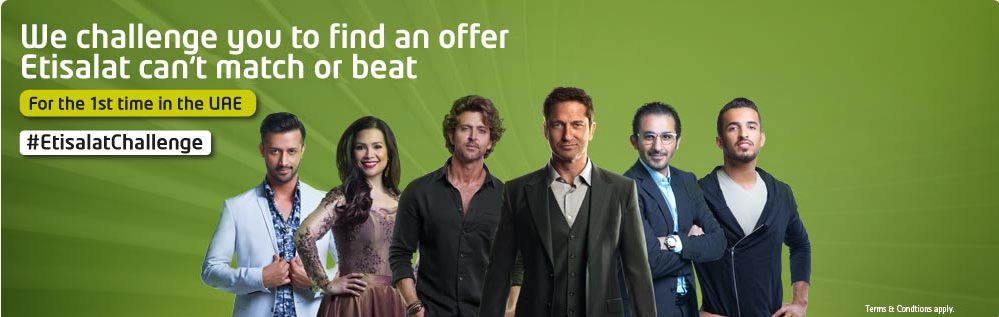
There are many examples globally of hashtag hijacking; possibly the best is McDonalds and its #McStories campaign. Fortunately for us in the Middle East, we now have our own example of how not to launch a hashtag on Twitter. A couple of days back the Abu Dhabi-based telecommunications operator launched an advertising campaign called the #EtisalatChallenge. The idea is simple enough – Etisalat challenges consumers to find offers and prices that are better than their own and they’ll match or beat that offer. You will literally see the below advert everywhere across the UAE at the moment.

Are you ready for the #EtisalatChallenge?

Are you ready for the #EtisalatChallenge?

Now, there’s a couple of issues here. The first is pretty basic; the UAE’s telco market is a duopoly. Both operators are government-owned and there’s not much in the way of competition when compared to other. The second is Etisalat’s reputation. The company isn’t the most consumer-friendly in terms of its support. Shortly after Etisalat launched its hashtag #EtisalatChallenge (complete with a huge marketing campaign), the hashtag itself was taken over by customers complaining about high costs and poor service.

Despite the obvious backfiring of the campaign (and, as you can see from the tweets below, the campaign has been taken over by negative sentiment), Etisalat has persevered with the #EtisalatChallenge.

https://twitter.com/mkdubai/status/595950565483380736

https://twitter.com/ThatGuyNoman/status/595958586204905473

What’s even stranger is the number of bots, of Twitter accounts which are automated which have are now tweeting the same message about the campaign.

https://twitter.com/ThatGuyNoman/status/596655103928438784

The other element of the campaign which is intriguing is the number of celebrities that Etisalat has brought in. There is one of Scotland’s finest, Gerald Butler, Bollywood actor Hrithik Roshan, and Filipina actress and singer Lea Salonga. Etisalat has also paid a number of the UAE’s leading social media influencers. While the use of social media influencers to support marketing campaigns is becoming standard practice, the #EtisalatChallenge in unusual in that many of the influencers have previously worked for the UAE’s rival operator Du. Have a look below.

Emirati social media celebrity Mthayel Al Ali was a Du supporter

Emirati social media celebrity Mthayel Al Ali was a Du supporter

But now Emirati social media celebrity Mthayel Al Ali is also an Etisalat fan

But now Emirati social media celebrity Mthayel Al Ali is also an Etisalat fan

Egyptian footballer and model Sherif Fayed was part of Du's marketing before his switch to Etisalat

Egyptian footballer and model Sherif Fayed was part of Du’s marketing before his switch to Etisalat

Egyptian footballer and model Sherif Fayed is also a fan of green as he shifts to #EtisalatChallenge

Egyptian footballer and model Sherif Fayed is also a fan of green as he shifts to #EtisalatChallenge

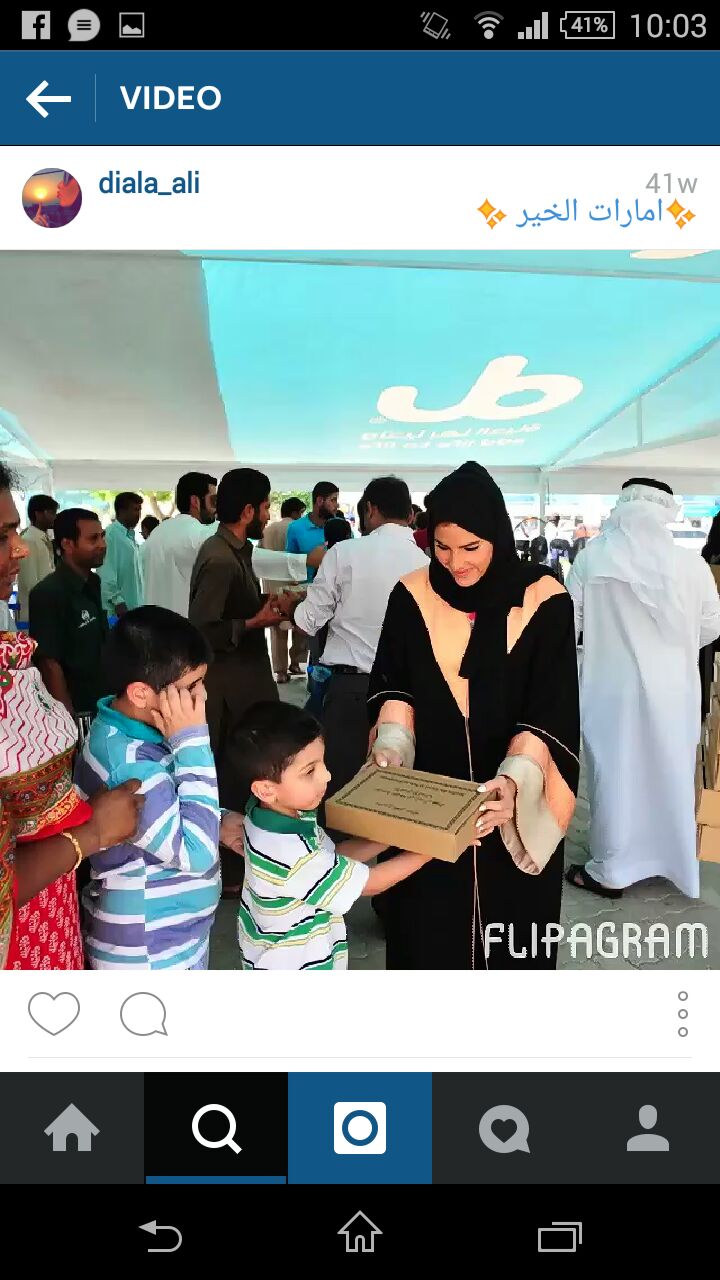
Before her support for the #EtisalatChallenge UAE media personality Diala Ali was a Du supporter.

Before her support for the #EtisalatChallenge UAE media personality Diala Ali was a Du supporter.

From blue to green - UAE media personality Diala Ali shows her support for the #Etisalat Challenge

From blue to green – UAE media personality Diala Ali shows her support for the #Etisalat Challenge

While one can easily fault Etisalat for getting out the cash and spending a fortune on social media endorsements, these online influencers are more to blame in my eyes. They’re doing their own brands more harm than good by changing from one corporate brand to the other so quickly. Their authenticity is at stake, and for someone who runs a social media agency Mthayel Al Ali should understand that authenticity matters to fans, and fans are the reason these people are paid to endorse brands. There’s little long-term thinking from influencers who have worked with Du previously and whom are now working with Etisalat.

Going beyond the pains of creating corporate hashtags (which, in this case clearly don’t work), what was Etisalat thinking? And what is it still thinking, seeing as the campaign is failing so badly? Come on, share with me your #EtisalatChallenge!

Is @Dubai_360 a work of genius or a Google Street View imitation?

There’s a fine line between inspiration and mimicry. At the beginning of the year, Dubai’s Tourism and Culture Marketing body launched Dubai 360, which it markets as the world’s largest and highest quality interactive city tour.

Launched with some amazing video shoots (one of which you can see below which featured local social media celebrity Max Of Arabia), Dubai 360 offers visitors a glimpse into some of Dubai’s most iconic locations such as Burj Khalifa and the Palm. The visuals contain 360° photos and videos and a range of different lens styles such as fisheye to give viewers a unique picture of Dubai wherever they may be.

While the site is very impressive, it is reminiscent of Google Street View. Launched in 2007, Google Street View provides panoramic views of both cities and notable tourist spots around the world. Google actually launched its Street View in Dubai in December 2014.

Dubai 360 has some stunning visuals and videos, and helps tourists understand Dubai from a variety of views. However, with both sites being launched only a month or so apart, would Dubai have been better placed to work with Google to create a co-branded/sponsored site? There’s enough to make the Dubai 360 site outstanding, but will viewers feel that there’s enough here to mark it out as a different experience to Google Street View?

Have a look at the images below, one of Burj Khalifa from Dubai 360 and the other of Burj Khalifa from Google View, and if you haven’t yet checked out Dubai 360 do so. Now.

The Abu Dhabi Reem Island Murder Video – the ethical and moral considerations

The past week was witness to a tragic incident in the UAE’s capital. On the first of December a women, a US national, was fatally stabbed by a suspect wearing an abaya and niqab, the traditional cloak worn by women and a full face covering. You can read the full background here at The National.

This incident is unique; the country is known for its safety for both nationals and expatriates. A major operation was launched by Abu Dhabi police to locate and capture the suspect(s). Two days following the killing, Abu Dhabi Police shared with the media and via their YouTube channel CCTV footage from the mall of the suspect entering and leaving the location. The video has been seen more than two million times in the space of 48 hours.

The next day, on the 4th of December and 48 hours after the murder, the Ministry of Interior made the announcement that everyone was waiting for. The suspect had been caught. The Ministry shared more details of events on that day, including how the suspect had placed an explosive device outside the flat of another American national.

But that wasn’t all. Abu Dhabi Police shared a video, which was an edit of the CCTV footage along with video from the raid on the house where the suspect was arrested. Do watch the video, which is posted below.

Personally, I’ve never seen such footage broadcast before a trial has begun. The video, which runs for over six minutes and has now been watched almost two million times, plays music for dramatic effect on top of the footage.

I have a number of questions and issues, which I’d like your opinion on. Firstly, was the timing right? The video sends out the message that we will catch the perpetrators of such crimes as soon as is possible, but how will this affect a family which is still grieving? Secondly, does this prejudice the defence’s case and the right to be considered innocent until proven guilty?

Most importantly, the video doesn’t answer why the crime was committed. If certain individuals hold views that are anti-foreigner, how are these views to be addressed?

For me, there’s more questions than answers about this case. I’d love to hear your feedback.

#Hajjselfie, Whatsapp and smartphones – how is technology changing Islam and Muslims?

We’re a funny bunch in how we can change so quickly and then justify how we’ve changed 180 degrees. I remember how up until ten years back, camera phones were banned in Saudi Arabia. And today, the hot topics are #Hajjselfie and how modern technology is making its mark on Saudi society.

The beginning of October was the timing for the annual Hajj pilgrimage, a mandatory religious duty for Muslims. During Hajj Muslims are to abstain from all temptations which may lead to sin; in essence, the pilgrimage is a time for renewal for the two million plus Muslims who take the rite of passage annually.

This year, one of the major stories which broke at Hajj was the #hajjselfie. You’ll probably know of the selfie, a self-portrait photograph, typically taken with a hand-held digital camera or camera phone and then shared online via social networking services. This year, the selfie was introduced en-mass to Hajj. To quote from Saudi Gazette and AFP.

Raising his arm, Yousef Ali hugs his elderly father near the Grand Mosque in Makkah as they grin for a selfie — a craze that has hit this year’s Haj. But not everyone is happy about young pilgrims from around the world constantly snapping “selfie”, photographs taken of one’s self, as they carry out Haj rights.

From Tawaf — circumambulating the Holy Kaaba — to prayers atop Mount Mercy in Arafat, and stoning of the “devil” in Mina, the key stages of Haj have all been recorded on cameras and smartphones for posterity, and for instant sharing through social media.

“As this is my first pilgrimage, it is important for me to document all the events taking place around me,” Ali, 24, told AFP, snapping a picture of himself with a green sign reading “Big Jamarah”, which refers to a wall where pilgrims ritually stone the Satan.

“Wherever I go, I take pictures, especially since nowadays we have these little cameras… that offer a full view of the area,” the bearded Kuwaiti said with a smile.

The increasingly popular phenomenon has sparked controversy among conservatives, however, with some taking to Twitter to criticize pilgrims who take selfies.

“When we went for Umrah in the mid-90s, Dad nearly had his camera confiscated to shouts of ‘haram!’ Now, #HajjSelfie is A Thing. What a world,” wrote one Tweeter.

Another user named Kahwaaa wrote: “It’s a time to connect to Allah and purify my soul. #hajjselfies selfies shouldn’t be taken.”

But others said the issue was being blown out of proportion.

“People creating a huge issue about #hajjselfies. If photos are allowed during Haj then what is wrong with selfies?,” asked Abdul Mufeez Shaheed.

Nothing at all, says Ali’s father Mohammed Ali, 65.

“A person taking such pictures is documenting a rare event”, a once-in-a-lifetime experience for many Muslims, he said, wearing a traditional white robe.

“This is a symbolic place representing history,” Mohammed Ali added, pointing to the three sites which pilgrims began stoning on Saturday at the start of the Eid Al-Adha feast of sacrifice, which is celebrated by Muslims worldwide.

Two women covered in traditional black abayas and veils hurried toward the Big Jamarah wall, but not without stopping for a quick self-portrait along the way.

“My daughter and I are taking selfies to show our Haj pictures to our family in Paris. It’s also a nice memento,” said one of the women, a Saudi pilgrim from Jeddah who gave her name only as Umm Abdallah, 44.

Her daughter Wafaa Ahmed, 19, said: “I love taking many selfies wherever I go to keep them for myself, as well as to show them to my friends and brothers.”

Speaking to AFP by telephone, a professor of Islamic Shariah law Riyadh said that “if photographs are only for personal memory and not for disseminating, then no problem.

“But if they were for the purpose of showing off, then they are prohibited, such as the photography that takes place at the (Haj) rites.”

The scholar requested anonymity.

“It is better for Muslims to avoid them,” he said of selfies.

For the teenage pilgrim Wafaa Ahmed, “this is not a convincing view” because taking selfies “has nothing to do with religion”.

The elderly pilgrim Mohammed Ali also discounts the scholar’s opinion.

He says the camera “is a tool such as mobiles, used even by religious scholars who have not prohibited them, so why prohibit another tool of the modern era?”

As he speaks, a group of young Saudi men gather for a group selfie in front of a Jamarah wall before they stone the “devil”.

Analytics of #Hajjselfie by Topsy. The trend peaked on October the 4th.

Analytics of #Hajjselfie by Topsy. The trend peaked on October the 4th.

The #hajjselfie wasn’t the only social media story coming out of Saudi Arabia this month. A recent piece in Saudi Gazette bemoaned the erosion of traditions surrounding the vacation among Saudi nationals.

“Take for instance the recent Haj holidays where it was common practice to visit relatives but several people did not do so,” said Omar Yousif Tobbal, a senior projects manager in a government firm.

He said that these occasions allow families to spend time together but people are increasingly resorting to calling or texting their relatives to extend their greetings instead of actually visiting them.

“If it hadn’t been for modern technology, families would meet, dress up and generally enjoy themselves,” he said, adding that before the advent of technology, Saudis had more time for each other and talked for hours on common themes of interest. However, there are some who still observe the occasion in accordance with tradition, he noted.

It’s not all for the worse however. One positive which came out of the combination of social media and Hajj this year was the appreciation show to the security teams who were working to ensure the safety of the two million pilgrims through the use of the hashtag #thanks_security_men. This time from Arab News.

Photos and videos of security officers from various military sectors assisting and providing services to pilgrims during the Haj season have been trending across social networking sites, such as Twitter. A number of religious leaders and media personnel have devoted their pages to discussing the positive role of security authorities in Saudi Arabia in the success of this year’s Haj season.

Active users on social networking sites produced various hashtags, notably #thanks_security_men, to express their gratitude and appreciation for their humanitarian efforts and positive representation of Saudi Arabia.

What are your thoughts on the above? Do you think #Hajjselfie is halal or haraam? Let me know your thoughts, especially if you were on Hajj. And have a look over the #hajjselfie images below from BuzzFeed, from what is one of the most amazing spectacles on earth.

https://instagram.com/p/tiNN9gykKn

https://instagram.com/p/tTIH6ZEPEs

https://instagram.com/p/thiGdlANFk
#GazaUnderAttack – using Whatsapp to begin a social media campaign

As you’re on the internet reading this, I’m assuming that you’re aware of the events unfolding in Gaza and Israel. Social media has become part of the campaign on both sides to raise awareness for what is happening.

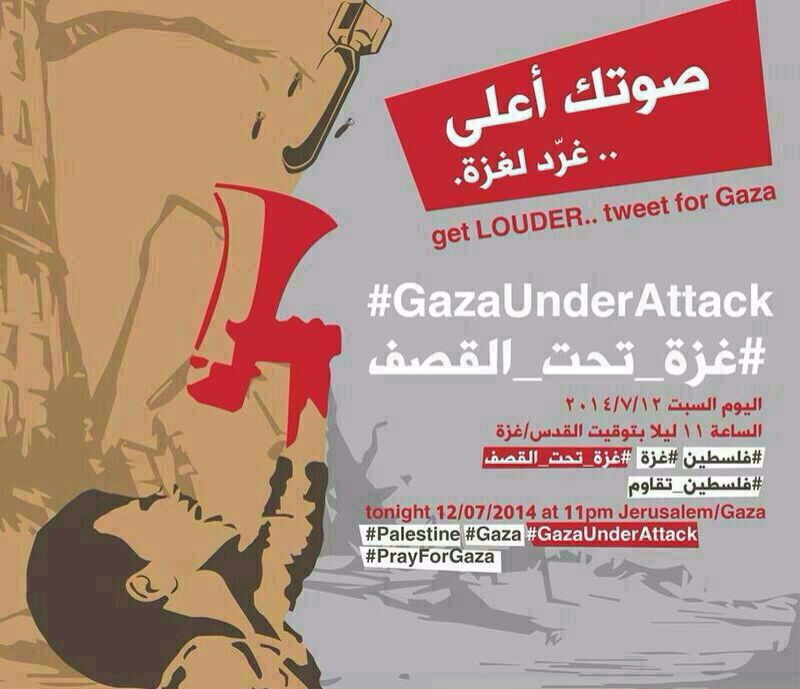
As of 11pm Gaza time, a campaign has begun on Twitter to talk about what is happening in Gaza and spread the word, using the hashtags #GazaUnderAttack and #PrayForGaza. What’s fascinating is that those behind the campaign have used Whatsapp to spread graphics on the campaign a couple of hours before it began. The tactic should have allowed the organizers to spread the awareness as quickly and as quietly as possible, to group their supporters and get them active on Twitter all at the same time. In essence, you’re creating a wave of support online, without anyone on the other side being forewarned.

I’ll be watching this intently, in the hope that that the two sides call a ceasefire as soon as possible. I for one hope that #GazaUnderAttack can be a force for good, to stop the suffering.

The #GazaUnderAttack image was spread via Whatsapp before the campaign was launched on Twitter

The #GazaUnderAttack image was spread via Whatsapp before the campaign was launched on Twitter

How to get on Etihad’s The Residence for free thanks to Kickstarter

The past week has witnessed its fair share of oohs and aahs at the region’s largest tourism show in Dubai. One of the biggest jaw-droppers was the announcement by Abu Dhabi-based airline Etihad of a new travel experience. Named the Residence and akin to a flat in the sky for those traveling on select routes on Etihad’s A380s, the 120 plus square feet of space offers travelers a dining space and living room, their own en-suite shower and bedroom. With perks that include chairs fitted out with the same leather as a Ferrari, a personal butler on call, a personal vanity unit, wardrobe and swiveling TV monitor for viewing from either the seat or the bed. All of this will cost you approximately US$20,000 one way when flying from from Abu Dhabi to London.

And just to prove the point, why don’t you let Etihad’s Guest Ambassador, Dannii Minogue take you on a tour of The Residence.

One budding travel reviewer has turned to Kickstarter to help him raise the money needed to purchase a Residence ticket (I don’t know if you’d purchase a ticket for a flat in the sky). The very young-looking Ben Schlappig is the editor of the One Mile At A Time blog on the Boarding Area website, and his pitch goes like this:

Etihad Airways new A380 features a concept that I believe will revolutionize commercial air travel. Help me review the product!

I’ve been flying frequently since a very young age, and travel and aviation are my greatest passions. Over time that passion for travel and flying grew to finding the cheapest way to travel in luxury. And over the years I’ve reviewed most of the world’s best first class products.

With only one “Residence” per flight, this may very well be the first A380 premium cabin product for which you can’t redeem miles. This may change over time, but with only one “cabin” per flight it’s highly unlikely.

As a result, it may be a long time before we get an independent review of Etihad’s A380 Residences.

What I propose is flying the Residences product within the first week it’s in service, so I can report on all aspects of the experience. Chances are it would otherwise be a long time before we get an unbiased review of Etihad’s new product.

While the thought of paying for someone else to fly in the lap of luxury to write a review may leave some in horror Ben has already raised US$11,000. With 22 days to go, can he raise the additional US$14,000 he needs for his trip? If he does, I’m going to start my own travel blog and try never to pay for a flight myself again.

If you have excess cash which you have no idea what to do with and now want to donate to this cause, go here and splash some cash for Ben.

PS On another note, while I love her to bits (I still remember her in Australian soap Neighbours) does Dannii Minogue scream luxury? She may let loose during the YouTube video to the chagrin of many of those who have left comments but I would have hoped Etihad would have splashed the cash to bring in someone who would be easier to associate with top-tier luxury. What are your thoughts?

A camel drive-thru, changing tyres whilst driving and new Youtube regulations for Saudi

Not only does the Gulf have a 24/7 addiction to watching YouTube, but it seems the content out there is becoming ever more ‘interesting’ to say the least. Two new videos may tickle your fancy. The first is from Saudi, and could be construed as a Dummies Guide on how to change your car’s tyres whilst driving.

The second fun clip is slower-pace. The video, highlighted by Doha News, is more a spoof clip (even in Saudi I never saw an example of this) by a well-known Qatari comedian. If I was the burger chain I’d be paying to promote this online.

On a more serious note, Saudi Arabia’s government is planning to more closely monitor video content produced locally and meant for uploading to channels such as YouTube according to a fascinating report by the Wall Street Journal.

To quote from the piece:

The General Commission for Audiovisual Media will monitor the quality and quantity of content produced in Saudi Arabia on platforms such as YouTube via a code that will include guidelines on alcohol, tobacco, nudity and sexual acts, said Riyadh Najm, the commission’s president. It will also promote private-sector-led investment in the media industry.

“We will make them aware of what’s acceptable in Saudi Arabia and what’s not acceptable,” Mr. Najm said in an interview with The Wall Street Journal. “Criticism is acceptable as long as it’s professional and constructive.”

The irony of the above is that while Saudi Arabia has become one of the most important markets in the world for online video consumption via the likes of YouTube, Keek, Vine and other social media sites, Saudi content produced for mass entertainment has generally steered clear of Saudi taboos such as alcohol and sex. Will the above help or hinder the explosive growth of locally-produced content (you could even argue that censorship isn’t typically undertaken in parallel with promoting the industry to potential investors).

In the meantime, I hope you’ll continue to enjoy uncensored YouTube in Saudi. And if you still can’t get over the two-wheel tyre change, check out this video. Shisha-to-go? No problem. I just want to know why the choice of music!