Twitter and the need to tackle automated, political hate in the Middle East

Twitter has been a huge hit in the Middle East; it has become the one place where everyone can share their views (image source: http://www.sustg.com)

I’ll admit it, Twitter is my favorite social media channel. I love that little blue bird and how it captures the moment. However, we live in a harsh environment in the region and Twitter isn’t without its issues.

I had the privilege to sit down with and talk to Twitter’s local management team recently. Two topics of concern came up: the first was pornography, which is illegal in the Gulf and which Twitter wants to keep off its network in the region; the second was religious extremism and terror-related content, affiliated to the likes of Islamic State, AlQaeda and others.

While I did in part acknowledge that both were issues to tackle, I didn’t fully agree that they were the most pressing problems for the social network. Pornography is much easier to find online, through the use of a VPN, than it is on any social media channel. With religious extremism, much of the conversation has moved onto dark social which cannot be monitored by governments.

Instead, I threw out a different idea. For me, Twitter is the place to come to for discussion and debate, a platform for use by all. However, recent cases have shown that some are automating conversations to dominate discussion.

An example was uncovered by Marc Owen Jones on his research into Bahrain following recent events there. His blog post, which is well worth your time, highlights a key issue facing Twitter when it comes to automated bots hijacking conversations.

While the notion of bot accounts is probably not news to anyone, the evidence here hopefully highlights that much online sectarian discourse is perhaps inflated by those groups or individuals with specific ideological agendas, and the means to do so. Of course we know PR and reputation management companies offer such services, yet their work is often done secretively and behind close doors. Would be interesting to find out who is behind this. It would also suggest that Twitter needs to better regulate spam.

While this isn’t the first time that social media channels have been used unethically in this region (during 2011 bloggers in certain countries were singled out and targeted for retribution through social media), the danger is that automated bots will become more common, taking over conversations and driving real users off Twitter. 

While Twitter has taken action following the work done by Marc Owen Jones, suspending up to 1800 accounts according to his blog post, the team need to be as proactive as possible to take these bots down to ensure that the platform is still a place that welcomes differing points of view. 

More than ever, we in the region need a place for discussion that is independent and welcomes genuine debate. It’d be a shame to see such actions driving people off Twitter and onto closed apps such as WhatsApp and Telegram. 

Twitter can be a force to engage and promote debate in the region, and I hope that it remains so without such bots hijacking conversations for whatever political, sectarian purpose(s).
What does Instagram’s UAE communications remit say about how outsiders understand the region?

Instagram has been a huge hit in Saudi, especially among the Kingdom's youth. How will Instagram's comms team reach out to these groups? (image source: http://sustg.com/)

Instagram has been a huge hit in Saudi, especially among the Kingdom’s youth. How will Instagram’s comms team reach out to these groups? (image source: http://sustg.com/)

Client wins can often make interesting reading, especially when the brand is a household name. Last week was no exception, with the Dubai-based House of Comms winning a brief to represent Instagram in the UAE.

The news caught my attention for a couple of reasons. Firstly, House of Comms is enjoying remarkable success; the agency which was founded in 2012 has expanded rapidly, picked up a host of big name clients and won numerous awards for its work. The agency’s growth reminds me of the rapid rise enjoyed by Dabo & Co (which was eventually bought by Edelman). House of Comms does have an affiliate network across the region, including in the Gulf.

What struck me was Instagram’s choice of market to enter into. While the UAE is the regional public relations hub of the wider Middle East region, I would have thought that the company would have taken a more regional approach to public outreach (Editor’s Note: the agreement with House of Comms is for the UAE, but also includes advisory work for other markets). For instance, the first market to embrace paid influencer marketing, particularly on Instagram, was Kuwait. In terms of numbers on the platform, Saudi is the largest country in the region by far, with a greater number of users than the UAE. Egypt is another key market for the picture and video service. If you’re looking for details on Instagram usage, have a look at the stats below from the second quarter of 2015 from an earlier blog.

In terms of the Gulf, it’s no surprise that Saudi leads the way – there are 10.7 million monthly active users in the Kingdom (just over a third of the population). The UAE follows with 2.2 million monthly users. And, to the West, Egypt has 3.2 million monthly active users. What’s even more impressive is daily active users – a whopping 6.1 million for Saudi, 1.2 million for the UAE, and 1.1 million for Egypt.

In addition, there’s the parent brand to think of. Instagram is owned by Facebook, which has its own PR agency in the region (which is regional). Up until recently, that agency was supporting Instagram. So, why the change? Would having two agencies for the two brands help or hinder media outreach, especially when Instagram is known as a Facebook product?

While the agreement is only for the UAE, I hope that Instagram, one of the most popular social platforms in the Middle East, expands its regional approach to engagement. The Instagram team should have oodles of data to look at when it comes to usage in each and every different country, and they’d be smart to look at Twitter’s model of engaging with influencers to get them onto the platform. Let’s hope that as a digital business, Instagram takes a data-based approach to engagement in an emerging market and work in key markets, rather than follow the much traveled path of using a hub to work remotely instead of actually doing the hard work and going in-country.

Ramadan and the Impact of Social Media

We’re only a week or so away from the holiest month of the Islamic year, when Muslims fast to remember the first revelation of the holy Koran to the Prophet Muhammed. Just as the Middle East has embraced social media, so have Muslims. Ramadan is one of the most active times of the year for social media in the Middle East, on all social media channels, as Muslims reach out to friends and family, as they prepare for the Holy Month, and as they celebrate in the run up to Eid.

First of all, let’s look at Twitter. The short messaging service recorded over 51 million mentions of Ramadan last year, with 8.4 billion impressions.

The number of Tweets during Ramadan in 2015 based on Twitter's own internal statistics

The number of Tweets during Ramadan in 2015 based on Twitter’s own internal statistics

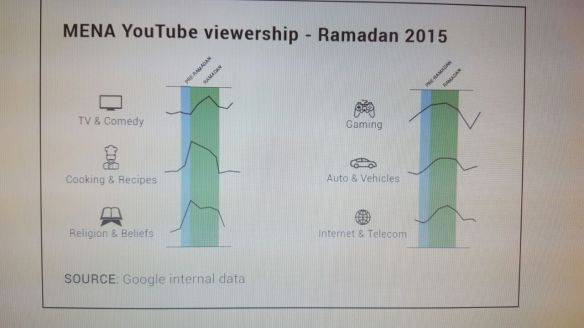
Google’s focus is on YouTube, in particular channels which have a specific relationship with this period of the year. Cooking is initially popular (Ramadan meals are cooked and served at home), followed by religious channels and general entertainment.

YouTube viewership during Ramadan changes dramatically as you can see from this internal Google data

YouTube viewership during Ramadan changes dramatically as you can see from this internal Google data

And last but not least, there’s Facebook. During 2014, 14.6 million Muslims in the MENA region posted 47.6m updates on Ramadan and Eid. The attached presentation from Facebook provides fascinating insights into when Muslims are online and how much more time they’re spending online, as well as the shift towards mobile and a breakdown of chatter by age and sex. Facebook believes that millenials are shifting away from television and towards the internet, which may be disconcerting for advertisers and television networks.

Facebook MENA Ramadan Insights

While it’d be fascinating to understand how Muslims are using Whatsapp and other messaging services to spread religious messages and other related content, I don’t have any data on this (and other) channels.

Whatever you’re planning for Ramadan, do remember the importance of social media channels to Muslims across the region. Make your content engaging (either entertaining or informative), relevant, and shareable. And Ramadan Mubarak!

How do you make a whole country hate a child-focused health intervention programme? Ask Nido…

It’s not often that the first (and most popular) comment on a YouTube video is a request for ISIS to blow up a company’s headquarters. However, as I have learned time and time again, anything is possible when you combine the Gulf’s nationals with social media and an issue they’re passionate about.

To cut a long story short, a video for Nestle’s Nido brand been trending in Saudi. The video tells the story of an initiative by Nestle and the company’s consumers on the occasion of the powdered milk brand’s 70th anniversary, to provide 14 million cups of milk to 40,000 children for six months. The activation is a cause-related marketing exercise which involves the region’s shoppers. And you’d think everyone would love it; who doesn’t like seeing kids being fed and a corporation giving away its products to a good cause?

Well, here’s the issue. Someone behind the video/brand thought it’d be a good idea to boost the number of videos through paid media. For the space of how many days beginning from the 3rd of March, this video was everywhere. To the extent that it’s been watched over ten million times. Which is great, if you like big viewer numbers. However, people don’t like to be forced to do anything online, especially being forced to watch the same video over and over and over again.

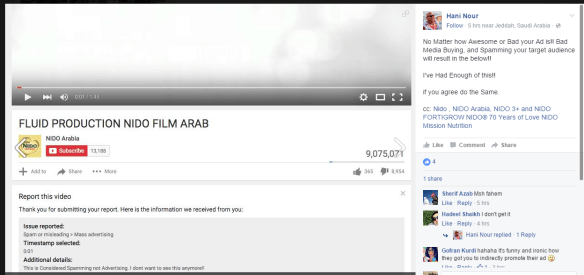
The statistics sum it all up – 419 likes versus 9,663 dislikes. But it’s the venom in the comments, the hatred of how someone (please stand up) who has decided to spend a load of cash to promote the video has ruined the viewing experience of tens of thousands of Saudis who have had to sit through this content. Saudis complained en mass, even going so far as to tweet @nidoarabia and @nestle to ask them to stop promoting the video as well as reporting the video as spam. Peeved that their own content is being pushed to one side and having to deal with disgruntled YouTubers, Saudi content creators have apologizing endlessly. And there’s even been calls for a boycott. Now, that’s how you change beliefs and habits whilst also inspiring action Nestle!

The comments, many of which are hilarious, range from pure hatred of the brand’s blanket to many admitting they’re now beginning to hate drinking milk (and children…).

https://twitter.com/rayankarkadan/status/706429657424523264

We've had enough of Nido!

We’ve had enough of Nido!

There were some Saudis even reminiscing for Marwan Taloudi, the man who spammed Saudis with his YouTube get-rich-quick ads.

YouTube is still a business after all, but if you’re going to get people to like what you do, then don’t shove it down their throats for days on end.

And just cause I love you all, and I love Nido even more, I’d like to share the video with you. I hope you enjoy watching the most hated video in Saudi right now.

A big thanks to Osama Natto for the story and the content.

Who’d be a social media manager? @theregos, @soukonwheels and a teeny Twitter meltdown…

social-media-meltdown-1-638

Disclaimer – There is foul language below (though not from me).

Social media isn’t all it is cracked up to be. True, you do get paid for being online and on Facebook, Twitter, Instagram, Snapchat, YouTube… But, you’re the voice of the organization. As such, you have to be on best behaviour at all times, to ensure that the company is represented in the right fashion. One wrong Tweet and you’re going to get called out for it.

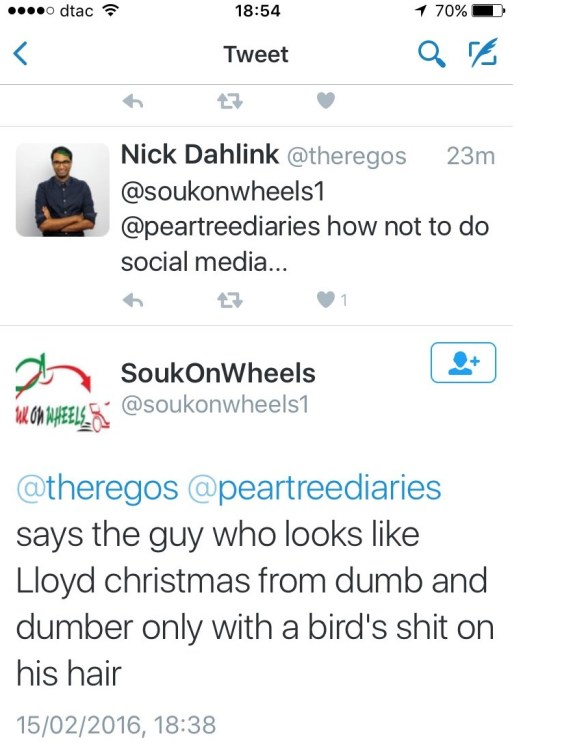
Well, this is a call out for @soukonwheels and @soukonwheels1 (this account is now closed). The person who was handling the account did something which was pretty rude yesterday. And unfortunately for them, they did it to a journalist. Nick Rego isn’t your typical hack either, he’s the ‘dahlink of Twitter’. An open question from Nick about shopping for clothes was followed by the person handling the account jumping in (the brand sells fruit and veg), which Nick didn’t appreciate.

However, the response really wasn’t called for:

How not to win friends and influence people online...

How not to win friends and influence people online…

Kudos to the brand which apologized for the tweet (I do hope they apologized directly to Nick). But really, do you want to be a social media manager? Think carefully, very carefully before you say yes.

And before I forget, there’s a couple more pointers:

1) Once you’ve posted something online, it’s online. If you don’t want it copied, shared or saved, then don’t post it online. And if it offends your mom, then definitely don’t post it online.
2) The community will always do a good job of policing itself, by rallying around and calling out those who offend. This will damage your brand.
3) We all make mistakes. Learn from them, change how your accounts are managed and come back stronger.

Snapchat, Messi, and jail – the story of how a Dubai cop breached the cybercrime law

Will this official be behind bars for a video he took of Messi's passport? (picture courtesy of Hilary Clinton's  Twitter feed)

Will this official be behind bars for a video he took of Messi’s passport? (picture courtesy of Hilary Clinton’s Twitter feed)

It’s happened. That social media channel which everyone under the age of 30 is using (that’s why I’m not on it), has got someone into trouble. The ephemeral network Snapchat has gotten one Dubai police officer into trouble, for taking a picture of the passport of Barcelona footballer Lionel Messi when the footballing superstar came to Dubai. The picture, which I am assuming disappeared after being viewed, found its way to the authorities, and the gentleman in question has been charged with falling foul of the country’s 2012 Cybercrime law. The full story, courtesy of the Washington Post, is below:

A police officer in Dubai is facing a six-month prison sentence and a $130,000 fine for posting a video of Lionel Messi’s passport to Snapchat last month. Prosecutors say the act violated the United Arab Emirates’ Cybercrime Law of 2012.

The officer, identified only as a 26-year-old named J.J., appeared in court this week to plead guilty to the accusations, but maintained his intentions weren’t nefarious. Instead, he said he posted the Messi’s passport to Snapchat out of frustration from being denied the chance to meet the star who had traveled to the country on Dec. 27 to attend the Dubai International Sports Conference.

“I waited for Messi’s arrival [at Dubai International Airport] to take a photo with him … but his private escorts informed me that the player was tired and would not be able to take a photo,” J.J. explained in the Dubai Misdemeanors Court (via Gulf News). “Thereafter I walked to the passport control’s office where I saw Messi’s passport on a desk. I grabbed the passport and opened it to the page that contained Messi’s personal details and took video images with my iPhone via Snapchat.”

The video, which can still be found on YouTube, shows Messi’s photograph and data, and a man (presumably J.J.) can be heard narrating over the image.

“This is Messi here in Dubai… what shall I do now? Burn his passport or let it go?” the man says in Arabic in the Snapchat (via the Independent). “Alas… I will let it go.”

Prosecutors seem less alarmed about the man’s narration than the video itself, however.

“What the suspect did is an act punishable by the Cybercrime Law,” prosecutor Al Shamsi told Gulf News. “His behavior is deemed a breach of Messi’s privacy because the passport is considered a private possession just like the details mentioned on it.”

A verdict is expected this week. But, for those on Snapchat, beware! You may think your images disappear, but remember, nothing ever truly disappears once it goes digital.

How did Facebook fail with its Safety Check in emerging markets?

  
There are some times you really shouldn’t be making a distinction. Last week two tragedies took place, the first in Beirut and the second in Paris.

Others have written, much more eloquently than myself, on the raw emotion they felt after the two acts of terrorism – Beiruti blogger Elie Fares was one of the first to write about his anguish at Lebanons’s suffering being ignored by the West.

What is telling with the decision to activate the Facebook Safety Check was a comment by Alex Schultz, Facebook’s VP for Growth, who said:

In the middle of a complex, uncertain situation affecting many people, Facebook became a place where people were sharing information and looking to understand the condition of their loved ones. We talked with our employees on the ground, who felt that there was a need to fill. So we made the decision to try something that we’ve never done before: activating Safety Check for something other than a natural disaster. There has to be a first time for trying something new, even in complex and sensitive times, and for us that was Paris.

While Facebook’s intentions were to help those in need, the appearance to many in emerging markets such as Africa and the Middle East was that of bias. In effect, it was as if a life in Paris was worth more than a life in Beirut, or in Kenya or in Nigeria. This was compounded by Facebook’s decision to provide users with the option to upload the French flag over their profile picture.

Schultz’s comments that it was a human decision to activate Safety Check for Paris lead me to lose this question. Who at Facebook should have put forward the idea to use this service anywhere or everywhere where there is a crisis? My answer would be the communications and policy teams.

Communications in particular is the function that should act as the bridge between the outside world and the corporation, the part of the business that brings the outside in. That’s why, for example, Comms leads on issues and crisis management. Comms should have a robust understanding of the different stakeholder groups and how they impact the organization.

However, my take on Comms goes further. Comms should act as the conscience of the organization, and the Comms team should be able to advise when something is not right ethically. Unfortunately, Facebook’s team missed this opportunity here and instead turned what should have been an opportunity to play a vital role in helping inform families and friends re the safety oftheir loved ones into an example of unintended double standards (this was compounded by the Safety Check being used for residents of a Western capital rather than an Arab or African one, which in the context of colonialism also doesn’t look good).

Mark has said that Facebook’s policies will change and rightly so. Facebook is considered by many in emerging markets to be a tool for good, which is helping to promote positive change. It’d be a shame to see that opinion shift due to a lack of cultural awareness.

McDonalds Saudi and the Saudi national who was arrested – a lesson in virality and crisis comms

Last week Saudi’s social media space was alive with chatter and calls for a boycott. But this wasn’t for a global cause, a political issue, or a case of consumer activism. It wasn’t even about the color of a dress or the shenanigans of a Kardashian. Instead, it was about a Saudi national who tweeted a complaint about the drink he’d been served at a McDonalds restaurant and the rapidly escalating series of events which got him put in jail.

I’m going to try to keep this story as simple as possible for factual reasons.

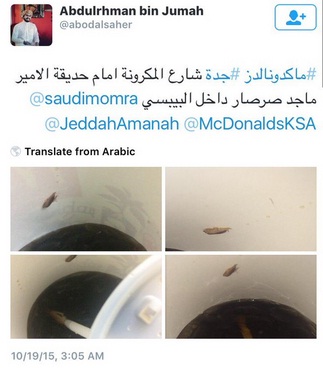
A young Saudi national Abdulrahman bin Jumah was at a McDonalds outlet in Jeddah on the 19th of October and ordered a meal, which included a coke. Inside the cup, he claimed he found a cockroach. He then shared the image on social media to his followers (which I assume would have been less than the 3,216 followers he has now). As Abdulrahman deleted his Tweets, here’s an alleged image from another Saudi Twitter account who retweeted the Tweet.

This was the initial tweet from Abdulrahman on the 19th of October with the alleged cockroach in the cup

This was the initial tweet from Abdulrahman on the 19th of October with the alleged cockroach in the cup

Abdulrahman tweeted his experience and contacted the local municipality online at their Twitter account @JeddahAmanah. The municipality took swift action and closed the branch in question the day after on the 20th.

Simple enough? You’d think so (and restaurant closures are a fairly common occurrence in Saudi as you can see from this tweet announcing the closure of a KFC outlet in Jeddah. I cannot comment as to whether a restaurant closure would be common for McDonalds Saudi).

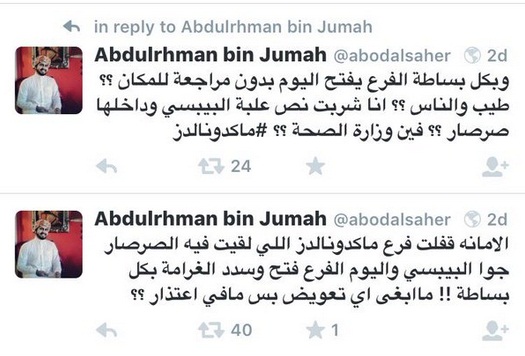
After a day however (I’m assuming here the 21st), the branch reopened and Abdulrahman tweeted his thoughts on the issue, namely that he was surprised that the branch could open so soon, and that he wasn’t looking for compensation but rather an apology for the experience. Again, these are screen shots as the original tweets were deleted.

Abdulrahman tweeted his surprise at how the restaurant could have opened so soon after its closure for an alleged health violation

Abdulrahman tweeted his surprise at how the restaurant could have opened so soon after its closure for an alleged health violation

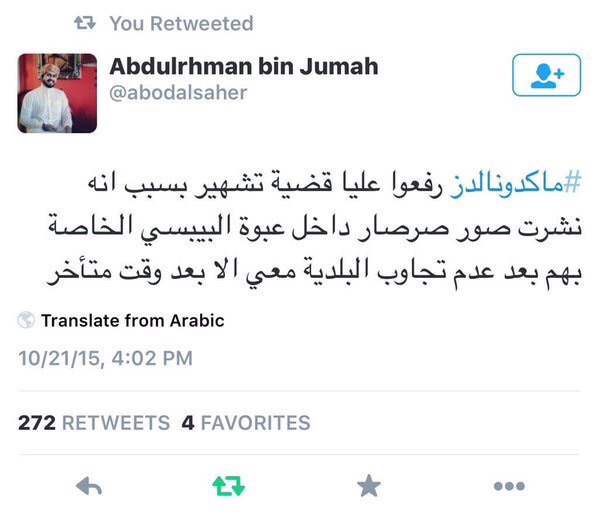
Now this is where it gets murky as later on in the day Abdulrahman was accused of defamation by McDonalds Saudi Arabia. He tweeted his experiences as he was first accused of defamation…

Abdulrahman shared on Twitter the news that McDonalds had made an allegation of defamation against him. Defamation is a criminal offense in Saudi Arabia

Abdulrahman shared on Twitter the news that McDonalds Saudi had made an allegation of defamation against him. Defamation is a criminal offense in Saudi Arabia

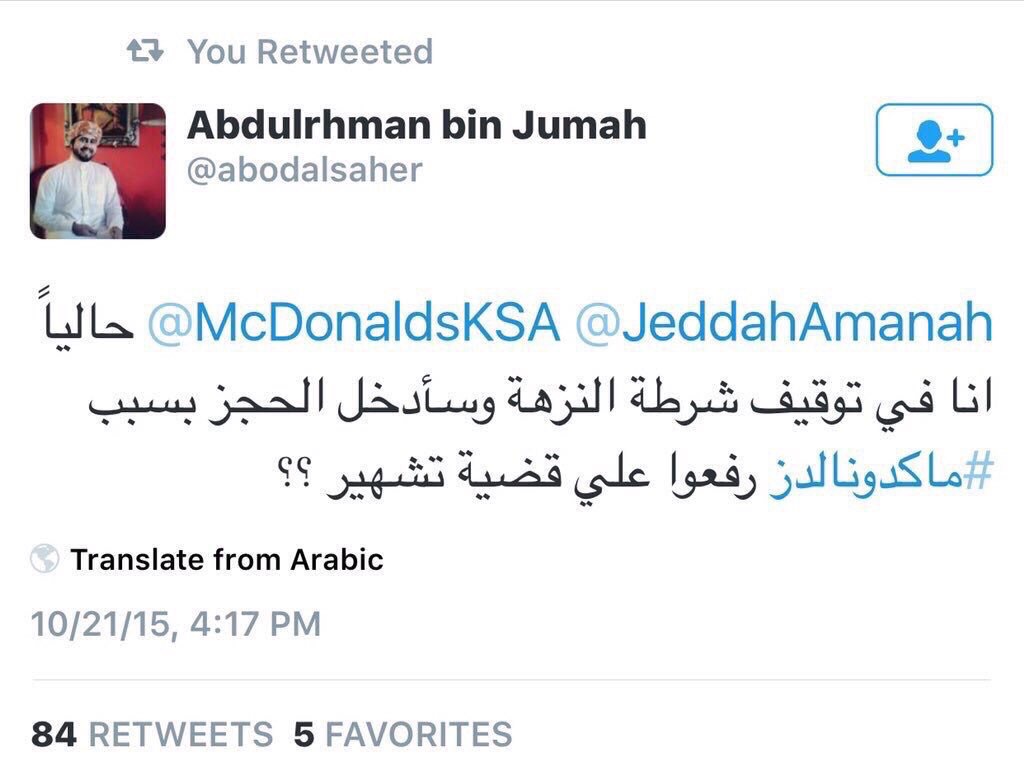
And then arrested by the police. Defamation is a criminal rather than a civil offense in Saudi Arabia. After the below tweet Abdulrahman’s timeline supposedly goes quiet.

The Saudi at the center of the allegation was even tweeting as he was being held by police for defamation

The Saudi at the center of the allegation was even tweeting as he was being held by police for defamation

On the 22nd Abdulrahman tweeted an apology, four times, writing that the bug was not in the cup and that he was sorry for using social media when making the allegations against McDonalds Saudi. The second time he used two hashtags, McDonalds arrests the national and we are all Abdulrahman Jumah (ماكدونالدز_تعاقب_مواطن #كلنا_عبدالرحمن_جمعه#)

https://twitter.com/abodalsaher/status/657194881635495936

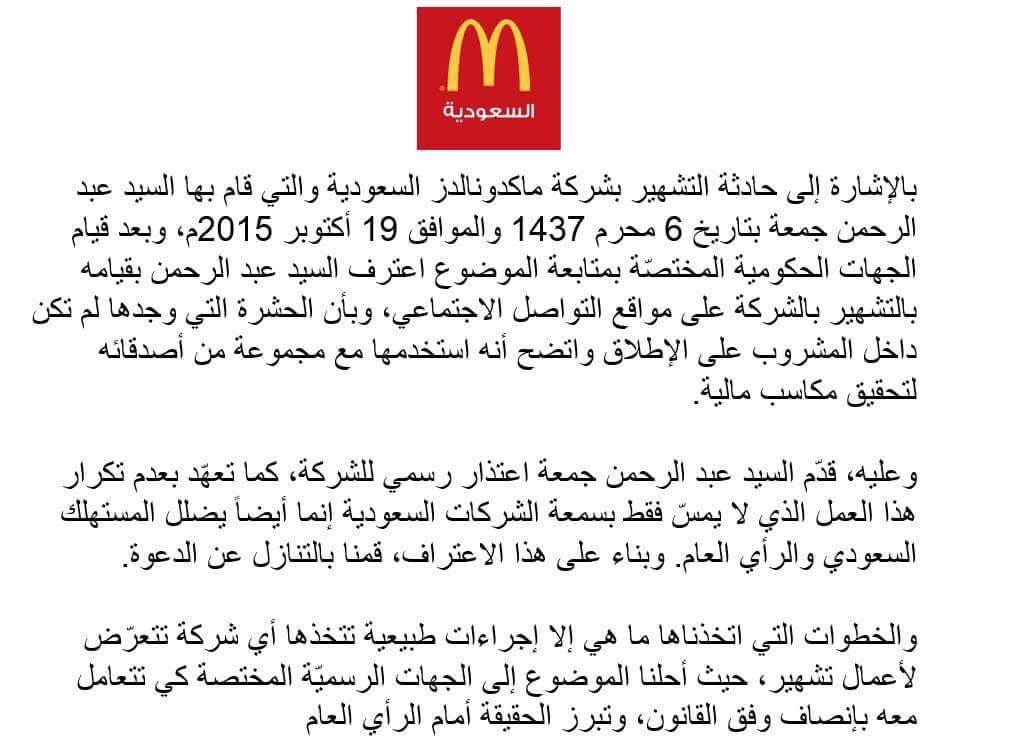
McDonalds Saudi also put out a statement online in response to many in Saudi who have come out to ask about the allegations or who have supported Abdulrahman stating that the case was caused by an intention to gain financially from the allegation that he’d made and that, following the apology, McDonalds Saudi had dropped the case.

McDonalds issued a statement

McDonalds issued a statement that the allegation was false and the case is now closed

Abdulrahman deleted all of the story’s tweets, except those in which he makes an apology.

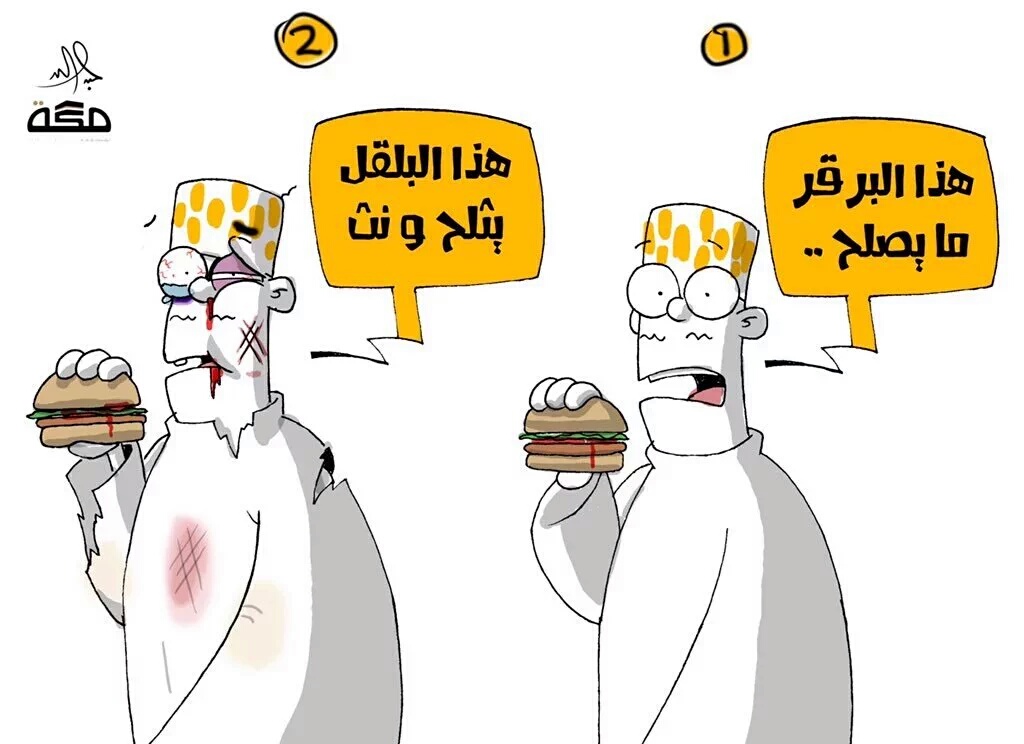
Without knowing the facts in the case, it’s hard to know what really happened. Did Abdulrahman really find a cockroach in his drink or was it a case of extortion? However, Saudis on Twitter have not been kind to McDonalds Saudi and their involvement of the police. The hashtags used by Jumah are replete with angry responses to McDonalds Saudi. The case has also made the national media, albeit indirectly.

Makkah Daily's Abdullah Bin Jaber parodied the story in typical fashion by lampooning McDonalds for their actions

Makkah Daily’s Abdullah Bin Jaber parodied the story in typical fashion by lampooning McDonalds Saudi for their actions

McDonalds Saudi certainly acted quickly in terms of responding to the crisis, but did they respond in the right way? Has the issue done more damage than it otherwise would have thanks to the actions of McDonalds Saudi, or were they right in involving the police when they did due to their belief that they were being blackmailed?

What are your thoughts? What lessons can we take from this case? I’d love to hear from you.

PS Saudi social media personality Omar Hussein has also talked about the issue. For you Arabic-language speakers out there you can see his Facebook video below.

A look into how online behaviour is changing in Saudi from The Online Project

For many of us in communications in the Middle East, it’s hard to remember a time before social media (I still fondly remember receiving floppy disks with press releases, back in 2006). Social media agency agency The Online Project has dipped its toes into the Kingdom’s digital world to look at how social media behaviours are changing.

The agency, which undertook a similar exercise two years ago, went back to revisit some of its findings from 2013. The report, named Reintroducing Social Saudis, is an incredibly insightful look into what Saudis are doing online. Please do download the report and read it in full (it’s 18 pages in length).

Some of the findings include:

    1. Facebook remained the largest social platform in terms of number of users. However, Twitter growth surpassed Facebook by 25% in the past two years.
    2. Saudi preferences towards social entertainment have been changed through emerging platforms like Instagram and Snapchat.
    3. Online video has become a key channel for consuming content on all platforms, especially Facebook and Instagram.
    4. Comedy TV shows and sports are the most popular categories of online watched videos.
    5.While YouTube remained the main video sharing website Facebook and Instagram’s video growth has shifted the online video scene towards more exposure. Video content is no longer a YouTube exclusive.
    6. Hashtags usage on Instagram is just as popular on Twitter. Most used hashtags on Instagram shows how the platform is gradually turning into a female community.

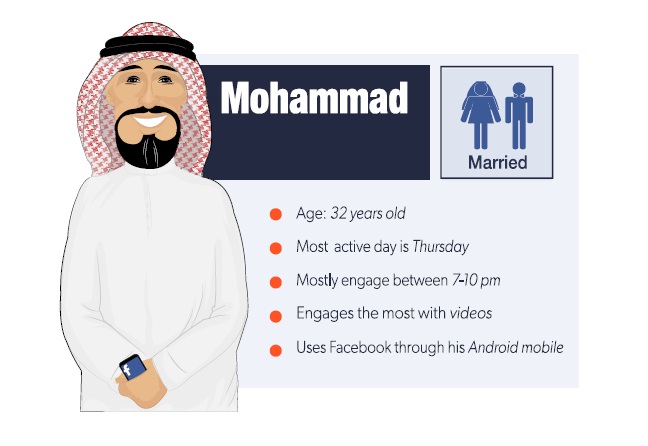
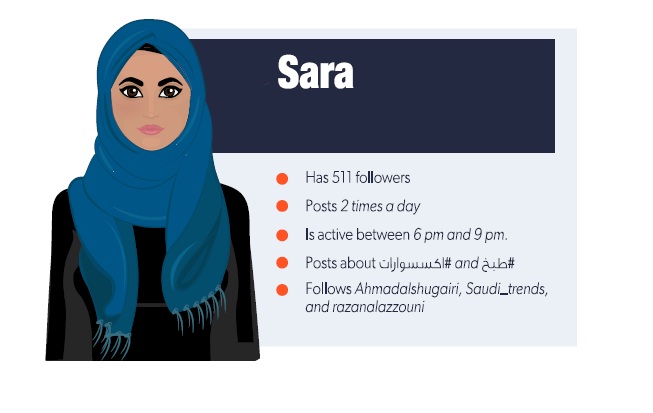
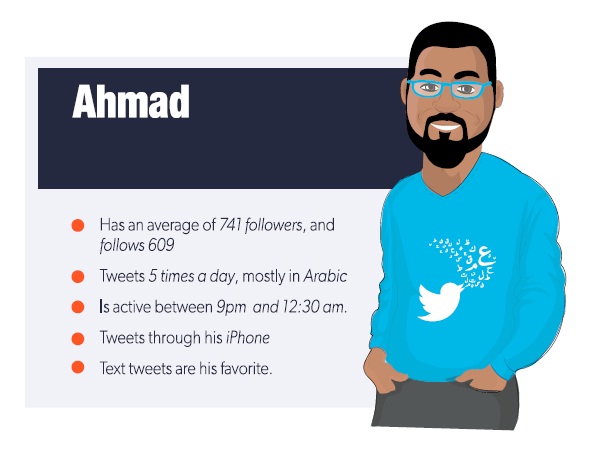
The team have also produced simple visuals and a video telling the stories of Mohamed, Ahmed and Sara, your typical Saudi social media users. You can see both below.

Based on The Online Project's research Mohamed is your average Saudi Facebook user

Based on The Online Project’s research Mohamed is your average Saudi Facebook user

Your average Saudi Instagram user is female and enjoys following social issues as well as fashion

Your average Saudi Instagram user is female and enjoys following social issues as well as fashion

Your average Saudi Tweeter is most active at night and engages most with text Tweets

Your average Saudi Tweeter is most active at night and engages most with text Tweets

If you’d like more info about social behaviour in Saudi, start reading the report and do reach out to the good people at The Online Project.

The Middle East’s love for Instagram (including its adverts)

Here in the Gulf we just love our pictures and photos. We love it so much that you’ll be hard pressed to find many in the Gulf who aren’t on the social media app. Only yesterday and in a period of less than five years Instagram announced that it had crossed the 400 million user mark (the app added 100 million users in the last 10 months alone). Seventy five percent of those 400 million users live outside the US, and the Gulf in particular has taken to the photo and video-sharing application.

In terms of the Gulf, it’s no surprise that Saudi leads the way – there are 10.7 million monthly active users in the Kingdom (just over a third of the population). The UAE follows with 2.2 million monthly users. And, to the West, Egypt has 3.2 million monthly active users. What’s even more impressive is daily active users – a whopping 6.1 million for Saudi, 1.2 million for the UAE, and 1.1 million for Egypt.

This all makes good news for Facebook, Instagram’s owner, which introduced advertising to the platform this month in the MENA region. Facebook rolled out advertising for select partners this month. The launch earlier this month included both regional brands such as telcos Saudi Telecom and Zain and retailers Souq and AlShaya, as well as global advertisers such as Unilever, P&G, Nestle, Mondelez, Visa, L’oreal and Pepsi. The first ad to go live was Souq’s, which you can see below.

Souq's Instagram advert was the first to be seen by Middle East users of the app

Souq’s Instagram advert was the first to be seen by Middle East users of the app

So far, from what I’ve been told, engagement with the adverts has been far higher than expected and much more than these advertisers are used to on Facebook. While there’ll be some negative sentiment from consumers who aren’t used to seeing advertising on their Instagram feeds, it seems that both Facebook and advertisers are onto a winner when it comes to Instagram advertising.

And for those of you curious people out there, the country with the highest penetration, is Bahrain which is closely followed by Kuwait. Both enjoy over 50 percent usage for Instagram; Bahrain’s penetration rate is over seventy five percent. The below visual was shared by social media expert Khaled El-Ahmed, and while the numbers may be slightly off from the above in terms of users, they’re still valid in terms of percentages.

PS For disclosure, I’m a P&G employee.