The #truthbetold – How Saudi’s UTURN and @omarhuss are tackling taboos through social media

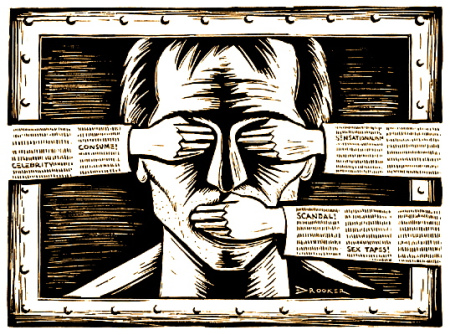
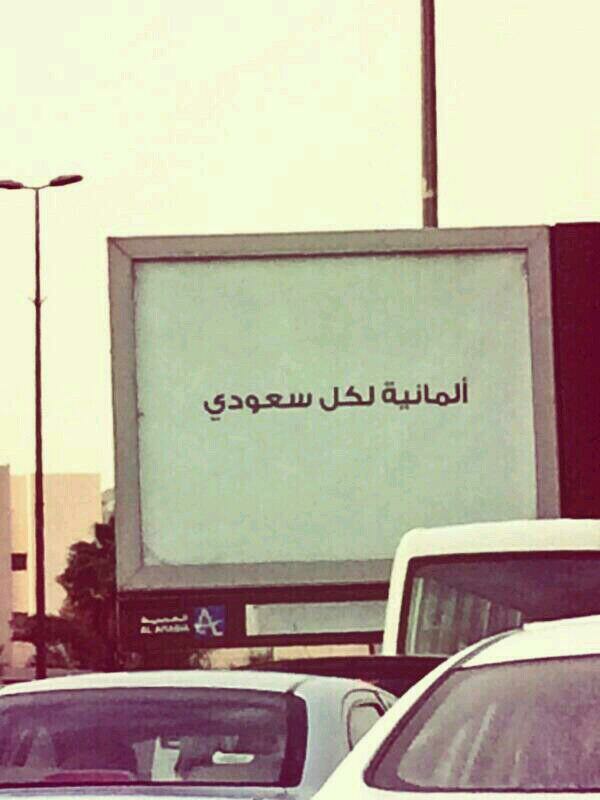
By its very nature, a taboo can be difficult to talk about. Breaking a taboo is traditionally objected to by elements of a society. What we’re seeing in Saudi is an effort to tackle taboos through social media. One of the leading digital and social media agencies is Jeddah-based UTURN, and its founders and presenter Omar Hussein have taken it on themselves to tackle sensitive subjects. Their idea is simple – create scenarios whereby they provoke Saudis to respond to the situation through actors and staged behaviours, record their reactions, and package this for distribution over the internet.

Named #truthbetold or #الحق_ينقال in Arabic, Omar Hussein and UTURN have tackled several issues to date since they began their series at the end of November. The first, in partnership with Ikea Saudi Arabia, was the issue of Saudi women working as cashiers. An actor in the queue would begin cursing the female cashier to prompt a reaction from the audience around him. The video is below and is only in Arabic. However, it is worth watching just to understand the issue and the responses of those featured.

The second, launched a month after at the end of December, is on the issue of alleged racism towards foreign workers in Saudi Arabia, and was staged in the roast chicken chain Tazaj. Again, the video is in Arabic but the body language of those in the set and who are not aware of acting can be read by any person watching.

Released at the end of January, the third episode tackles the issue of child workers in Jeddah. Done in partnership with the Fatoor Faris restaurant, people are seen responding to a Saudi actor abusing a child actor who is pretending to sell him gum.

Each video has been watched over half a million times, and, even more importantly, UTURN is using Facebook as a means for Saudis to discuss these issues. The idea is so simple and yet so powerful. Thank you UTURN and Omar Hussein for doing this. I wish others were as creative and as brave as you.

And I wish that communicators would look at Saudi, a country which is viewed as the most traditional and conservative in the region, to understand how we can better use social media to change perceptions, attitudes and behaviours. You and others in the Kingdom are leading the rest of the Gulf in terms of how we use social media for change.

Beware of the booze! The UK Embassy in Qatar’s @ukinqatar Twitter feeds spreads its Christmas message

Christmas is a merry time of year, and, if you are following the UK Embassy in Qatar on Twitter, then you’d be forgiven that all of us Brits are enjoying ourselves much more than is safe during December.

In the run up to Christmas on the 24th/25th of December, the UK Embassy began tweeting its annual countdown using the lyrics of the traditional song ‘the 12 Days of Christmas’. The Embassy has decided to remind British nationals in Qatar of their behaviours, with a specific focus on alcohol and its side effects.

While there’s not been a backlash as much as bemusement around the campaign (see below for reactions), the reasons for this messaging seems to be the need to stress good behaviour among British nationals in Qatar and the wider Gulf. A British Embassy spokesman told the Doha News that debate around its campaign was welcome.

“We are glad our 12 days of Christmas tweets have sparked a debate amongst Doha’s Twitter community. Whether you love them or hate them, we hope that they make people stop and think about the best way to enjoy a safe and happy festive season.

Christmas is a special time for many of us in Doha but it can be a time when people become carried away with the festivities and forget that the culture and laws in Qatar are different to that of the UK.”

https://twitter.com/vanish_forever/status/540455820803063809

https://twitter.com/escapetoqatar/status/540464143023624192

https://twitter.com/bradycreel/status/541535613745627136

The following Tweets from the Embassy have focused less specifically on alcohol, and whilst some of the responses to the account, which is followed by over 9,000, have been positive and thankful for the reminders, others have been less than impressed. Let’s hope the embassy focuses on positive messaging next year.

#Sit_Down_Hind (#اقعدي_يا_هند) and sexism in Jordan’s politics

All credit to #BBCTrending for an amazing piece on politics in Jordan, following a bizarre debate in the country’s Parliament which turned from a discussion on the Muslim Brotherhood to one of sexism in politics. Please read the full story here from the BBC’s website. In the meantime, I’m going to quote from the BBC piece below. Even if you’re not an Arabic speaker, the body language of those in the video can be understood by anyone.

The Jordanian parliament is no stranger to screaming matches but a recent incident was so controversial that it provoked people to poke fun at their MPs online.

Earlier this week, during a heated argument over the Muslim Brotherhood, independent MP Yehia al-Saud was cut off by one of his female colleagues, Hind al-Fayez.

“Sit down Hind!” al-Saud yelled several times.

When al-Fayez ignored him, al-Saud turned his gaze and hands upwards and shouted “May God have his revenge on whoever brought quota to this parliament!” – a reference to female parliamentary quotas.

Local media reported that al-Saud later made another comment that women were created to put on make-up and cook for their husbands.

Videos of the incident have had over a million views on Facebook and YouTube, and were quickly followed by sarcastic comments and memes.

The Arabic hashtag “Sit down Hind” mocking the MPs also became popular in Jordan.

If there’s anything we have in abundance in the region, its a sense of humor. With scenes like this and outdated views on the place of women, we need a sense of humor more than ever.

#Hajjselfie, Whatsapp and smartphones – how is technology changing Islam and Muslims?

We’re a funny bunch in how we can change so quickly and then justify how we’ve changed 180 degrees. I remember how up until ten years back, camera phones were banned in Saudi Arabia. And today, the hot topics are #Hajjselfie and how modern technology is making its mark on Saudi society.

The beginning of October was the timing for the annual Hajj pilgrimage, a mandatory religious duty for Muslims. During Hajj Muslims are to abstain from all temptations which may lead to sin; in essence, the pilgrimage is a time for renewal for the two million plus Muslims who take the rite of passage annually.

This year, one of the major stories which broke at Hajj was the #hajjselfie. You’ll probably know of the selfie, a self-portrait photograph, typically taken with a hand-held digital camera or camera phone and then shared online via social networking services. This year, the selfie was introduced en-mass to Hajj. To quote from Saudi Gazette and AFP.

Raising his arm, Yousef Ali hugs his elderly father near the Grand Mosque in Makkah as they grin for a selfie — a craze that has hit this year’s Haj. But not everyone is happy about young pilgrims from around the world constantly snapping “selfie”, photographs taken of one’s self, as they carry out Haj rights.

From Tawaf — circumambulating the Holy Kaaba — to prayers atop Mount Mercy in Arafat, and stoning of the “devil” in Mina, the key stages of Haj have all been recorded on cameras and smartphones for posterity, and for instant sharing through social media.

“As this is my first pilgrimage, it is important for me to document all the events taking place around me,” Ali, 24, told AFP, snapping a picture of himself with a green sign reading “Big Jamarah”, which refers to a wall where pilgrims ritually stone the Satan.

“Wherever I go, I take pictures, especially since nowadays we have these little cameras… that offer a full view of the area,” the bearded Kuwaiti said with a smile.

The increasingly popular phenomenon has sparked controversy among conservatives, however, with some taking to Twitter to criticize pilgrims who take selfies.

“When we went for Umrah in the mid-90s, Dad nearly had his camera confiscated to shouts of ‘haram!’ Now, #HajjSelfie is A Thing. What a world,” wrote one Tweeter.

Another user named Kahwaaa wrote: “It’s a time to connect to Allah and purify my soul. #hajjselfies selfies shouldn’t be taken.”

But others said the issue was being blown out of proportion.

“People creating a huge issue about #hajjselfies. If photos are allowed during Haj then what is wrong with selfies?,” asked Abdul Mufeez Shaheed.

Nothing at all, says Ali’s father Mohammed Ali, 65.

“A person taking such pictures is documenting a rare event”, a once-in-a-lifetime experience for many Muslims, he said, wearing a traditional white robe.

“This is a symbolic place representing history,” Mohammed Ali added, pointing to the three sites which pilgrims began stoning on Saturday at the start of the Eid Al-Adha feast of sacrifice, which is celebrated by Muslims worldwide.

Two women covered in traditional black abayas and veils hurried toward the Big Jamarah wall, but not without stopping for a quick self-portrait along the way.

“My daughter and I are taking selfies to show our Haj pictures to our family in Paris. It’s also a nice memento,” said one of the women, a Saudi pilgrim from Jeddah who gave her name only as Umm Abdallah, 44.

Her daughter Wafaa Ahmed, 19, said: “I love taking many selfies wherever I go to keep them for myself, as well as to show them to my friends and brothers.”

Speaking to AFP by telephone, a professor of Islamic Shariah law Riyadh said that “if photographs are only for personal memory and not for disseminating, then no problem.

“But if they were for the purpose of showing off, then they are prohibited, such as the photography that takes place at the (Haj) rites.”

The scholar requested anonymity.

“It is better for Muslims to avoid them,” he said of selfies.

For the teenage pilgrim Wafaa Ahmed, “this is not a convincing view” because taking selfies “has nothing to do with religion”.

The elderly pilgrim Mohammed Ali also discounts the scholar’s opinion.

He says the camera “is a tool such as mobiles, used even by religious scholars who have not prohibited them, so why prohibit another tool of the modern era?”

As he speaks, a group of young Saudi men gather for a group selfie in front of a Jamarah wall before they stone the “devil”.

Analytics of #Hajjselfie by Topsy. The trend peaked on October the 4th.

Analytics of #Hajjselfie by Topsy. The trend peaked on October the 4th.

The #hajjselfie wasn’t the only social media story coming out of Saudi Arabia this month. A recent piece in Saudi Gazette bemoaned the erosion of traditions surrounding the vacation among Saudi nationals.

“Take for instance the recent Haj holidays where it was common practice to visit relatives but several people did not do so,” said Omar Yousif Tobbal, a senior projects manager in a government firm.

He said that these occasions allow families to spend time together but people are increasingly resorting to calling or texting their relatives to extend their greetings instead of actually visiting them.

“If it hadn’t been for modern technology, families would meet, dress up and generally enjoy themselves,” he said, adding that before the advent of technology, Saudis had more time for each other and talked for hours on common themes of interest. However, there are some who still observe the occasion in accordance with tradition, he noted.

It’s not all for the worse however. One positive which came out of the combination of social media and Hajj this year was the appreciation show to the security teams who were working to ensure the safety of the two million pilgrims through the use of the hashtag #thanks_security_men. This time from Arab News.

Photos and videos of security officers from various military sectors assisting and providing services to pilgrims during the Haj season have been trending across social networking sites, such as Twitter. A number of religious leaders and media personnel have devoted their pages to discussing the positive role of security authorities in Saudi Arabia in the success of this year’s Haj season.

Active users on social networking sites produced various hashtags, notably #thanks_security_men, to express their gratitude and appreciation for their humanitarian efforts and positive representation of Saudi Arabia.

What are your thoughts on the above? Do you think #Hajjselfie is halal or haraam? Let me know your thoughts, especially if you were on Hajj. And have a look over the #hajjselfie images below from BuzzFeed, from what is one of the most amazing spectacles on earth.

https://instagram.com/p/tiNN9gykKn

https://instagram.com/p/tTIH6ZEPEs

https://instagram.com/p/thiGdlANFk
@saudigazette’s reader voices and does the Kingdom have an image problem?

Saudi Gazette's new Voices column aims to give readers an opportunity to share their own opinions

Saudi Gazette’s new Voices column aims to give readers an opportunity to share their own opinions

Saudi Gazette has launched a fascinating project to give its readers an opportunity to write more than a letter to the editor, but rather pen a guest column. The first column, named Voices, features the thoughts of former Saudi journalist and doctoral candidate Najah Al-Osaimi. The piece by Najah looks at Saudi’s image and how it is perceived abroad. It makes for an interesting read, even more so when considering its publishing in Saudi Arabia.

Let me know your thoughts on Saudi Arabia and its image problem abroad. And thank you Saudi Gazette for another wonderful idea. If you are interested in writing a column for the Saudi Gazette then email your contribution, no less than 300 words, to voices@saudigazette.com.sa.

How Twitter is helping to foster debate in the Middle East – #WhatisTheSolutionForLebanon & #ImHalfQatari

Despite social media’s reputation for negativity (and getting people jailed in our region), Twitter and other platforms are ideal for beginning and engaging in debate on social issues (image source: lawrencewray.files.wordpress.com)

What’s exciting about social media in today’s Middle East is how the medium is being used to promote conversations organically, and without prompting from any organization. Two examples of hashtag conversations about issues of national interest are #WhatisTheSolutionForLebanon and #ImHalfQatari.

According to the Beirut-based English-language newspaper the Daily Star, the Twitter-based conversation about Lebanon’s political issues began after a crackdown on terrorist cells across the country, which itself was spurred by three suicide bombings within the country. To quote the article:

“Don’t give visas upon airport arrival” was a very common response on the platform, alongside requests to “elect a president now” and “close off Lebanon’s borders.”

When it came to tweeting solutions to Lebanon’s pitfalls, Twitter users split between pessimists who believed that “there is no solution, Lebanon will never be a country,” and others who felt that certain recommendations would improve the situation.

LBCI reporter Yazbek Wehbe’s tweet expressed the view that “ Lebanon should remain neutral [with respect to] regional problems.”

One user suggested a fresh take on security raids by tweeting “[the ISF] should form a special raid unit comprised of Haifa Wehbe, Maya Diab, and Ammar Houry.”

The #ImHalfQatari hashtag was created by Dr. Amal Al-Malki, Associate Professor at Carnegie Mellon University in Qatar. Dr Al-Malki is herself both Qatari, on her father’s side, and Lebanese, on her mother’s. She began the debate after reading an article in the Doha-based Arabic daily Al Raya that suggested Qatari men are increasingly marrying non-Qatari women due to inflated demands for dowries.

The article is excellent and is well worth a read on the state of cultural affairs both in Doha and the wider Gulf in general.

Social media has been criticized by many in the Gulf as a negative phenomenon that often harms both society and individuals. However, as these two hashtags show, Twitter and other social media platforms can be used to foster a positive dialogue about issues that need talking about.

Khambalah – a glimpse into Saudi’s youth through YouTube

My wife has found a new hobby, and I must admit I’m happy about what she’s now up to. It doesn’t involve Louboutins, branded Abayas, or any other habit associated with the size of financial deductions that would even make Premier League footballers nauseous. She’s finally discovered Khambalah, a show produced by Telfaz 11, the makers of La Yekthar. The producers of Khambalah, a word which doesn’t have much of a meaning (my wife translates it as bumming around), use comedy to discuss local issues – some of which are sensitive. Despite the seriousness of the subjects, the shows always hit the mark, even to watchers who may not know Saudi too well.

The trailer debuted about two years ago and the team have produced about 20 shows to date, covering issues such as employment, stereotypes, cultural misunderstandings and the rise of Twitter. The shows have been viewed over 50 million times to date, and the team at Telfaz 11 have again proved their ability to come up with another hit after the success of La Yekhtar.

If you’re a non-Arabic speaker you may find them hard to follow (I’d love it if Telfaz 11 could produce subtitled videos). But the video below, about how Saudis view and think of each other and their reputations is hilarious! Enjoy, and get watching on YouTube!

The silent expatriate guests – should we raise our voices or remain quiet on sensitive subjects?

Should we as expatriates remain silent or speak up about issues which we feel are contrary to our beliefs? (image source: http://www.thewordontheword.blogspot.com/)

The past week has been an interesting one for foreign media junkies who follow affairs in the Gulf. Two articles were published in the English-speaking press which have proved to be controversial. The first was a damning piece in the New York Times on labor rights for workers hired from the Asian sub-continent to build the New York University Abu Dhabi. The second was a fine piece of investigative journalism from the Sydney Morning Herald on the subject of government subsidies for Etihad, the Abu Dhabi-owned airline.

The above criticisms in the foreign media shouldn’t surprise experienced communications professionals. Etihad is becoming a global brand with stakes in a number of airlines across Europe and Australia. Similarly, the report about labour issues relates to an American institution, New York University, and its Abu Dhabi campus. Qatar has similarly experienced negative publicity from abroad relating to the country’s labour practices following its winning of the rights to host the 2022 World Cup.

Recently, I attended a conference on the subject of corporate social responsibility. When asked about whether expatriates should tackle these issues with both governments and the national population, one of the most senior communications professionals in the region responded by saying ‘we’re the guests and so we shouldn’t tackle these issues.’

Unfortunately, the most common refrain to any comment which can be taken in a negative light is, ‘if you don’t like it, then leave.’ There’s a lack of moral courage shown by many expatriates to talk about issues which may offend, or which may get them into the bad books. Similarly, are many nationals willing to listen to the opinions of others? The concept of traditional Arabian hospitality is often talked about, a tradition that requires the host to listen to and honour the guest, but the reality on the ground is often different.

Modern societies are mature enough to take on board different voices, to learn from the opinions of others. As a person who has tried to do his part for the rights of others, I do find it embarrassing that as the people who live here in the region, we’re unable to raise these issues with our hosts in a civilized dialogue (and for those who say I’m looking to impose foreign, western standards there are many hadiths or sayings of the Prophet pbuh on issues such as workers’ rights).

Should we have the moral courage to speak on these issues, to benefit the communities and the countries with which and in which we live? Or should we remain silent? The answer, to me at least, is obvious. What do you say?

A German Woman for Every Saudi – a new type of teaser campaign?

Being a Brit, I’m used to sexual innuendos being used in advertising. Nothing sells better than sex. But this type of thing normally gets pulled up at immigration when it comes to Saudi. So image my surprise at the below advert, which can be interpreted as ‘a German woman for every Saudi man’. The adverts were seen yesterday in Jeddah and I’ll be intrigued to see how long they’re up for. It certainly redefines the concept of a teaser campaign.

A Geman woman for every Saudi man. It's as simple as that.

A Geman woman for every Saudi man. It’s as simple as that.

Saudi Arabia and the Penguin Dance Craze

Saudis and penguins? As they say, opposites attract. And nothing attracts more than moments of random fun. The Wall Street Journal’s Ellen Knickmeyer has written a wonderful piece about how the Penguin dance has taken the country by storm. Read her piece and the watch the video. Don’t ask why and just enjoy!