#HappyDubai and the times when you need a good community manager

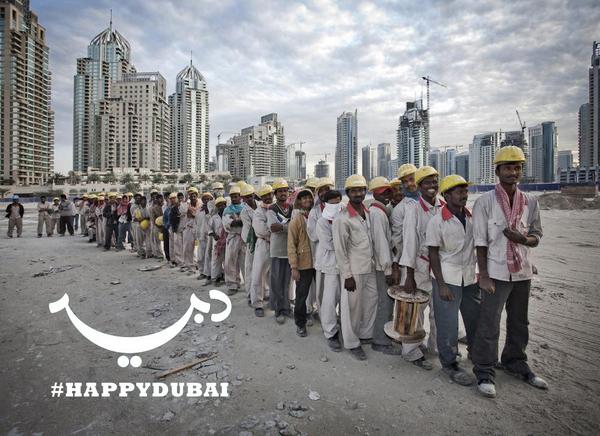
If you were working on #HappyDubai would you view this image positively or negatively?

If you were working on #HappyDubai would you view this image and the associated Tweet positively or negatively?

First we had the successful #MyDubai initiative. Now, we have #HappyDubai which was launched last week by Dubai Municipality.

According to an article in Gulf News residents can now share positive experiences regarding municipal services through the Happy Dubai initiative. They can post comments and pictures using the #HappyDubai social media hashtag. The feedback will spread through Twitter (@myhappydubai) and the happydubai.ae website. The feel-good initiative, launched on Tuesday, aims to highlight civic services of the Dubai Municipality and feedback from stakeholders.

“With the Happiness Map, we are aiming to track conversations around #HappyDubai and where they are coming from. In time, it will become an interesting reference point to identify areas in Dubai that are the favourite #HappyDubai places for residents,” the municipality told Gulf News.

“This phase of the campaign allows residents to send us their comments and feedback through the website. Residents can also get in touch with us via other touch points including Dubai Municipality’s social media presence, our 24-hour contact number 800900, e-mail us at info@dm.gov.ae or visit our centres around the emirate.”

Here’s where it gets more complicated. The beauty of the #MyDubai campaign is that its objective – the public are asked to share their own experiences of Dubai, without a spin and without a filter. #HappyDubai is subjective, and one of the aims of the Happy Dubai campaign is to make Dubai one of top 10 happiest cities in world by 2021. Dubai’s residents are being asked to share their happiness with Dubai Municipality and the city in general. Rather than engaging in a dialogue, they’re being asked to take a specific emotional stance which is a much riskier strategy.

Hussain Nasser Lootah, director-general of Dubai Municipality, said: “Various initiatives and the projects adopted and executed by Dubai Municipality in different fields give the emirate its unique style which makes it ‘stand out’ among the most developed cities in the world.

“The UAE has been ranked 14th in the happiness index set by the Global Initiative of the UN. Our goal is to spread happiness among the population of UAE and by 2021, Dubai would like to be one of the top ten happiest cities.”

The worst thing that can happen is for the campaign to be hijacked. This isn’t new, and even brands such as McDonalds have had to pull campaigns due to consumers not reacting as they’d hoped (a great example is #McDStories).

There’s a lot to love about Dubai and the campaign launched by Dubai Municipality (the microsite is a great feature, especially the #HappyDubai map), but not everyone feels as strongly about #HappyDubai as the people behind the campaign. One “David Brown” tweeted repeatedly about the issue facing labourers in the Emirate with the hashtag #HappyDubai. See the below for one Tweet, including a link to a site about alleged human rights abuses in the GCC and the image Photoshopped with the #HappyDubai logo.

Could it get worse? Well, yes it could do if your community manager misunderstands the point being made and then retweets the original message. The follow-up is even worse (unless I’m missing the irony).

The lesson is simple. Before a campaign is even launched whoever handles social media needs to understand the various viewpoints that may be coming his or her way, both positive and negative (the same is also true of the whole organization). There should be talking points and message tracks in place for any negative sentiment. This is especially true of a campaign such as #HappyDubai which takes a subjective stance on people’s emotions towards a specific issue.

And more than anything else, if you can’t spot a negative comment and you work in social media, you need to find a new industry to work in.

The challenge of control in the age of social media – Garnier, the Israel-Gaza conflict and the threat of boycott

How much damage has Garnier Israel done to the Garnier global brand through its local actions? (image source: http://www.deliberation.info)

Listen long enough to any communicator working for a multinational in an emerging market and they’ll touch on the issue of what is called ‘corporate’. The concept of centralized communications, of control being exerted from head office over global communications is understandable – corporations want to ensure that the message being disseminated is consistent with the aims of the company as a whole. Rather this than each country office doing as they wish, which may result in local messages which are not in alignment with the global communications.

Combine this with the reach and immediacy of social media, and the implications for going off-message can be explosive. Many brands have been implicated in the recent Israel-Gaza conflict, and issues such as this have the ability to polarize opinion, particularly online where millions have been expressing their support for and anger with one side or the other.

While many of the brands who have been targeted by Pro-Palestinian groups advocating for boycotts have in effect kept their own counsel and said nothing (with the exception of Starbucks which took the step of reiterating that it neither operates in Israel nor supports the Israeli army), Garnier was caught out by its local operations.

Halfway through the conflict Garnier Israel had donated 500 gift packs to StandWithUs, an Israeli advocacy group which promotes the country to the world through social media. During July and August StandWithUs also undertook a number of domestic initiatives such as providing gift packs to soldiers on the front line and in support functions.

First, StandWithUS donated the 500 gift packs from Garnier to a group of female Israeli soldiers. The organization then promoted the handout on its social media channels (most prominently on Facebook), with the following comments:

“We are honoured [sic] to be delivering these “girly” care packages for our lovely female IDF fighters!

Today’s delivery of care packages was stocked with thousands of products for our girls protecting Israel. They even received facial soaps and minerals, so they can still take care of themselves, eve while defending the country.

Shout out to the Garnier Israel|גרנייה for the amazing donation of facial soaps, minerals and deodorants!”

Unfortunately for Garnier, the post was quickly picked up by Pro-Palestinian social media goers. As the UK’s Independent newspaper noted on Saturday the 9th of August, the Facebook post alone had been shared over 22,000 times and had garnered 3,000 comments, most of which were calling for a boycott of Garnier products. The post has also inspired a hashtag, #BoycottGarnier, calling for consumers to shop buying the brand. Even Garnier’s own brand ambassador to the Arab World, Hind Sabry, took to the media to voice her displeasure at what had happened. The Independent curated some of the reactions to the post which I’m including below.

https://twitter.com/cnimhearthaile/statuses/495962711373938689

A week after the now-infamous post Garnier USA released a comment distancing itself from the donations by Garnier Israel (have a look below). But, is this too little, too late? In a globalized world of brands which are commonplace in every country on the planet and which need to appeal to as many consumers as possible, what can companies do to ensure that the action of local entities doesn’t harm their global image when it seems that nothing can be communicated to an external audience in private?

“Garnier values peace and harmony and has a strict policy of not getting involved in any conflict or political matter. The hand-out of about 500 products was part of a local retailer initiative. This was managed strictly at local market level and we are very sorry if anyone was offended,” Garnier’s Corporate Communications Director Ms Kerr said.

In the age of social media, the assumption has to be that if the message is going to alienate a specific stakeholder group, then just don’t put it out there, period. For corporations the size of Garnier, that’s easier said than done.

PS To make matters even worse, Garnier’s apology has reportedly upset Israelis who have now vowed to stop buying the company’s products according to the Times of Israel.

Coca Cola’s #OpenUp campaign to promote sharing and caring in the Middle East

Coca Cola has hit upon an interesting initiative for its latest digital campaign, with the aim of promoting openness between families. Released with the hashtag #OpenUp on YouTube, Coca Cola has developed two videos over the past eight days. The first, and for me the most moving, is that of Saudi chef Badr. Badr left behind the family tradition of architecture to study and become a cook, which is a rarity in Saudi society. The video and story are both well conceived and directed.

The second video features a social media star from Kuwait, named Ascia. Ascia recounts the challenges she has had to overcome in society as she has pioneered her ideas through Instagram. She thanks her husband Ahmed for the support he has shown her.

What do you think? Are the concepts powerful enough for you to share your #OpenUp story? Do you find them sincere or too scripted? Let me know your thoughts on the content and on Coca Cola’s work here. I’ll keep you posted on any additional videos that Coca Cola posts for this campaign.

How Twitter is helping to foster debate in the Middle East – #WhatisTheSolutionForLebanon & #ImHalfQatari

Despite social media’s reputation for negativity (and getting people jailed in our region), Twitter and other platforms are ideal for beginning and engaging in debate on social issues (image source: lawrencewray.files.wordpress.com)

What’s exciting about social media in today’s Middle East is how the medium is being used to promote conversations organically, and without prompting from any organization. Two examples of hashtag conversations about issues of national interest are #WhatisTheSolutionForLebanon and #ImHalfQatari.

According to the Beirut-based English-language newspaper the Daily Star, the Twitter-based conversation about Lebanon’s political issues began after a crackdown on terrorist cells across the country, which itself was spurred by three suicide bombings within the country. To quote the article:

“Don’t give visas upon airport arrival” was a very common response on the platform, alongside requests to “elect a president now” and “close off Lebanon’s borders.”

When it came to tweeting solutions to Lebanon’s pitfalls, Twitter users split between pessimists who believed that “there is no solution, Lebanon will never be a country,” and others who felt that certain recommendations would improve the situation.

LBCI reporter Yazbek Wehbe’s tweet expressed the view that “ Lebanon should remain neutral [with respect to] regional problems.”

One user suggested a fresh take on security raids by tweeting “[the ISF] should form a special raid unit comprised of Haifa Wehbe, Maya Diab, and Ammar Houry.”

The #ImHalfQatari hashtag was created by Dr. Amal Al-Malki, Associate Professor at Carnegie Mellon University in Qatar. Dr Al-Malki is herself both Qatari, on her father’s side, and Lebanese, on her mother’s. She began the debate after reading an article in the Doha-based Arabic daily Al Raya that suggested Qatari men are increasingly marrying non-Qatari women due to inflated demands for dowries.

The article is excellent and is well worth a read on the state of cultural affairs both in Doha and the wider Gulf in general.

Social media has been criticized by many in the Gulf as a negative phenomenon that often harms both society and individuals. However, as these two hashtags show, Twitter and other social media platforms can be used to foster a positive dialogue about issues that need talking about.

Khambalah – a glimpse into Saudi’s youth through YouTube

My wife has found a new hobby, and I must admit I’m happy about what she’s now up to. It doesn’t involve Louboutins, branded Abayas, or any other habit associated with the size of financial deductions that would even make Premier League footballers nauseous. She’s finally discovered Khambalah, a show produced by Telfaz 11, the makers of La Yekthar. The producers of Khambalah, a word which doesn’t have much of a meaning (my wife translates it as bumming around), use comedy to discuss local issues – some of which are sensitive. Despite the seriousness of the subjects, the shows always hit the mark, even to watchers who may not know Saudi too well.

The trailer debuted about two years ago and the team have produced about 20 shows to date, covering issues such as employment, stereotypes, cultural misunderstandings and the rise of Twitter. The shows have been viewed over 50 million times to date, and the team at Telfaz 11 have again proved their ability to come up with another hit after the success of La Yekhtar.

If you’re a non-Arabic speaker you may find them hard to follow (I’d love it if Telfaz 11 could produce subtitled videos). But the video below, about how Saudis view and think of each other and their reputations is hilarious! Enjoy, and get watching on YouTube!

A camel drive-thru, changing tyres whilst driving and new Youtube regulations for Saudi

Not only does the Gulf have a 24/7 addiction to watching YouTube, but it seems the content out there is becoming ever more ‘interesting’ to say the least. Two new videos may tickle your fancy. The first is from Saudi, and could be construed as a Dummies Guide on how to change your car’s tyres whilst driving.

The second fun clip is slower-pace. The video, highlighted by Doha News, is more a spoof clip (even in Saudi I never saw an example of this) by a well-known Qatari comedian. If I was the burger chain I’d be paying to promote this online.

On a more serious note, Saudi Arabia’s government is planning to more closely monitor video content produced locally and meant for uploading to channels such as YouTube according to a fascinating report by the Wall Street Journal.

To quote from the piece:

The General Commission for Audiovisual Media will monitor the quality and quantity of content produced in Saudi Arabia on platforms such as YouTube via a code that will include guidelines on alcohol, tobacco, nudity and sexual acts, said Riyadh Najm, the commission’s president. It will also promote private-sector-led investment in the media industry.

“We will make them aware of what’s acceptable in Saudi Arabia and what’s not acceptable,” Mr. Najm said in an interview with The Wall Street Journal. “Criticism is acceptable as long as it’s professional and constructive.”

The irony of the above is that while Saudi Arabia has become one of the most important markets in the world for online video consumption via the likes of YouTube, Keek, Vine and other social media sites, Saudi content produced for mass entertainment has generally steered clear of Saudi taboos such as alcohol and sex. Will the above help or hinder the explosive growth of locally-produced content (you could even argue that censorship isn’t typically undertaken in parallel with promoting the industry to potential investors).

In the meantime, I hope you’ll continue to enjoy uncensored YouTube in Saudi. And if you still can’t get over the two-wheel tyre change, check out this video. Shisha-to-go? No problem. I just want to know why the choice of music!

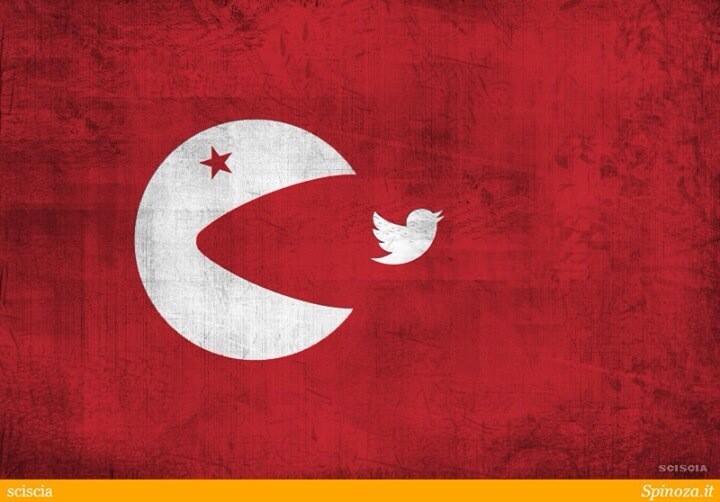
Turkey, Twitter and how a ban couldn’t/wouldn’t happen in the Gulf

While Turkey is busy trying to gobble up Twitter, there’s little chance of anyone in the Gulf banning social media any time soon (image source: http://www.globalpost.com)

Last week, we in the Arab world were treated to a spectacle that we’re all too often participants in. Instead, we looked on as the government of a neighboring country pulled the plug on a social media service and denied its citizens and residents the right to use Twitter. The story behind the move by Turkey’s Prime Minister, Recep Tayyip Erdoğan, to block access to Twitter is fascinating, a page-turner about corruption, dissent and how one man is trying to dominate political will in his own country (have a read of the background here, in a wonderful piece written by the New Yorker’s Jenna Krajeski).

A question/tweet by the Wall Street Journal’s Ellen Knickmeyer about the situation in Turkey from a Middle Eastern perspective got me thinking about the subject. Here’s my take on the Gulf states country-by-country.

Saudi Arabia

Let’s start with the largest country in the region, Saudi Arabia. There are millions online and active on social media in the Kingdom (both Twitter and Facebook have fifteen million Saudi users between them – Facebook has approximately eight million users and Twitter just under seven million ). For many, social media is a release, a forum for open debate where anything and everything can be discussed.

The whole spectrum of Saudi society is online and using social media – some of the most popular and prolific tweeters are religious scholars. while there is criticism of policy online, would the government be willing to risk a public backlash any social media channels were to be closed? Rather, Saudi’s social media policy can be summed up in one sentence – do what you want online but we are watching you. Saudi’s online laws, which have recently been rehauled, allow for citizens to be detained for their online activities (a recent piece by Abeer Allam for Al-Monitor covers recent developments in the Kingdom).

Bahrain

The second Kingdom on the list, Bahrain has suffered more than most over the past three years. Bahrain’s social media has become almost as polarized as the situation in the country, between those who support the government and those who support the opposition. However, despite the war of words online Bahrain has never threatened to pull the plug on social media (there was a communications blackout during the early days of the political crisis in Bahrain).

Instead, the island state has tightened up its online legislation and has cracked down on bloggers and other activists who use social media (Global Voices’ editor Amira AlHussaini wrote a piece about the arrest of blogger Mohammed Hassan in July 2013).

The Kingdom uses social media to communicate both locally and globally on issues such as security, foreign policy and terrorism. Would Bahrain seek to indirectly legitimize the opposition’s claims that the government is cracking down on media through pulling the plug on social media? Not likely.

The United Arab Emirates

The second largest country in the GCC by population, the United Arab Emirates has taken to social media like a duck to water; the country’s leadership are online, the country’s businesses are online and the country’s population are also online tweeting, updating their statuses and uploading pictures of every single meal and building around them mainly on their smartphones. The UAE’s population communicates about literally everything, except to criticize.

There’s so few people in the UAE who aren’t supporting the country’s leadership that the thought of any social media being pulled seem ludicrous. For those that do dissent the UAE introduced in 2012 more stringent online laws which include jail time for those that defame the country. These laws have been put into effect.

Kuwait

Maybe surprisingly for those who don’t know the region, Kuwait has the freest media industry in the region, with columnists regularly criticizing government policy. Kuwait’s parliamentary system and the level of public discourse in the country means that few subjects are off-limits. Kuwait’s social media scene is also buzzing – Twitter reckons that over half of the country’s population, 1.5 million out of 2.7 million, are active users.

Even in Kuwait however, there have been cases of people being jailed for their tweets, either for insulting the Emir or for blasphemy. Still, it’s hard to see how or why any social media channels would be banned in a country that is known to enjoy a ‘debate’ every now and then.

Oman

On the periphery of the Gulf, Oman was affected by the Arab Spring. The country’s ruler Sultan Qaboos introduced sweeping reforms to appease Omanis calling for a better standard of living. The country has contended with online activists and the authorities have warned people not to spread libel and rumours that prejudice national security. Would Oman seek to shut down social media? Again, it’s unlikely.

Qatar

Last but certainly not least, Qatar has championed its own brand of journalism aka Al Jazeera for over a decade now. The country with its vast gas reserves has not had to contend with any political discussions about its governance and future. Qatar has jailed one person, a Qatari national, for publishing a poem on Twitter.

In addition, the country’s government is seeking to introduce a revised cybercrime law which would increase and expand the capacity under which a person communicating online could be jailed for (for a detailed news piece read this article by Matt Duffy on Al Monitor here). However, there’s little chance of anyone in government shutting down any social media channels in the country.

In short, social media has changed the Gulf just as it’s changed the world. The region’s citizens and residents have much more freedom to talk about issues online. The Gulf’s governments and their business interests have also become adept at using social media to promote their own messaging and market themselves. The region’s citizens are aware that even online they’re being monitored (this BBC article describes this notion of being watched) and most of them will tread carefully about what they say and how they say it. For others, they’ll go online anonymously and tweet to their heart’s content.

For governments, social media has become a release value on societal pressures and the message to nationals is clear – talk about whatever you want but don’t criticize. Examples have been made of those who do. But, while the governments have the ability to cut off social media and even throttle or close access to the internet, thankfully the Gulf isn’t Turkey. No one here is going to ban Twitter or any other social media channel any time soon.

Bahrain, Saudi and the UAE use Facebook to Announce Ambassador Pullout

It’s pretty remarkable – I’m not just referring to the withdrawal of the Bahraini, Emirati and Saudi ambassadors from Doha but also the way the news was announced. I, like many others, saw the news first not on traditional news channels but via Twitter. And where was the original announcement? On the Facebook page of the Saudi Ministry of Foreign Affairs. It’s pretty remarkable to see social media being used to release such information, especially considering the medium is designed with dialogue in mind. If you read Arabic have a look at the comments on the Ministry’s page.

The original announcement, which was later carried in the region’s papers, is below.

The Saudi Ministry of Foreign Affairs announced the pullout of the three ambassadors via its Facebook page before the story broke in the traditional media

The Saudi Ministry of Foreign Affairs announced the pullout of the three ambassadors via its Facebook page before the story broke in the traditional media

Saudi Bans Energy Drinks Advertising – What Now Happens To Social Media

The Kingdom’s Government took the drastic step yesterday of introducing a raft of measures aimed at restricting the sale, promotion and consumption of energy drinks. The move, which was not expected, will mean that as of now energy drinks companies will no longer be able to advertise or carry out promotion campaigns through ‘electronic or print media or any other means’.

It doesn’t end there. The Saudi Cabinet banned the free distribution of energy drinks to consumers belonging to all age groups. Energy drinks have also been banned in restaurants and canteens at government establishments, as well as educational and health institutions, public and private sports clubs and halls.

To quote from the report on the Al-Arabiya news-site, the full list of measures includes:

1 – To prohibit advertising of any energy drink or do advertising or promotional campaigns for any energy drink via any readable, audible or visible media organ, or by any other means.”

2 – To prohibit energy drinks companies, their agents, distributors and marketing associations from sponsoring any sporting, social or cultural event, or taking any procedure leading to promotion.

3 – To prohibit the free distribution of energy drinks to consumers of all age groups.

4 – To prohibit the sale of energy drinks in restaurants and canteens in government facilities; education and health facilities; halls and public and private sports clubs.

5 – Upon the decision, factory owners and importers of energy drinks shall be committing to writing a text on the tin of any energy drink in Arabic and English languages – warning of the harmful effects of energy drinks.”

In a market that has been constantly growing for the energy drinks sector (you can find Red Bull, Bison, Power Horse and other popular energy drinks brands everywhere), this is going to be a major blow for the business. Red Bull has already put out statements defending its position, including its availability in 165 countries worldwide and a lack of evidence to show that it is harmful (you can read the statement in full here). Red Bull and other brands are major event sponsors, and it’s uncertain where the shortfall in funding will come from.

However, the one area which has yet to be clarified is social media. Red Bull has its Saudi Twitter feed (@RedBullSaudi) and Facebook pages for its events. Red Bull did put out a tweet today from its Saudi feed. How is social media classified? Is it advertising or is social media more subtle? And how do the authorities class social media? It’ll be interesting to see how this plays out, both in the real world as well as on social media.

The Chicago Tribune and how to get audience participation right through social media

I wanted to highlight this remarkable site from the Chicago Tribune. The blog, which will be hosted for a year and has the hashtag #trib2014, hosts reader photos from Instagram and enables participation through developing weekly themes. The newspaper’s staff are curating the site, but the visuals and captions are stunning. The weekly themes allow for a higher level of audience participation and give readers something to focus on rather than asking for their own images of a generic subject. Have a look at the below images from the blog. I can’t wait for someone to do this type of thing in the Gulf (just so you know, I’m extremely patient).

http://instagram.com/p/jHZ9XpuLdG/

http://instagram.com/p/jMbI0duLfo/

http://instagram.com/p/i1eLDLuLX3/