Horyou and how one website is looking to bring corporates, charities and volunteers together

Horyou is a platform for social good for corporates, charities and the general public. If you have an idea you'd like to share or you'd like to volunteer go to www.horyou.com.

Horyou is a platform for social good for corporates, charities and the general public. If you have an idea you’d like to share or you’d like to volunteer go to http://www.horyou.com.

Technology can be a wonderful thing, especially when all of the good of the digital world is brought to bear on societal problems. One website I’ve recently been introduced to it Horyou (it’s pronounced Or-You). Horyou’s premise is simple – it is a platform for promoting interaction between corporates, charities and the general public. Horyou aims to transform ideas for social good into action through bringing together these different groups.

While you can check out the Horyou website here and also sign up, I wanted to know more. I recently had the pleasure of sitting down with Noof Al-Shammary, Marketing & Community Relations Manager for the region, to ask a couple more questions about Horyou and what it means for social causes.

Alex: So tell me, why is Horyou unique? What does it offer to individuals, charities and corporations?

Noof: Horyou is action-oriented platform. It is unique because it facilitates the evolution of ideas to actions with a social platform that offers all users (organization, personalities, members) a dedicated environment where they can share and promote positive actions, exchange quality content, and spark meaningful interactions. Our contribution to social networking is the gathering of a dedicated community of individuals looking to make a difference in their surroundings.

Alex: What is Horyou looking to achieve in the region?

Noof: Horyou is a universal platform. We believe in diversity, therefore everything you see on the platform is oriented to enhance positivity. We are working in different regions, including the Middle East, representing an opportunity to continue spreading the concept and practice of social networking with a purpose. We are actively working in both the non-profit and private sectors. Horyou is bringing a social platform to the forefront that can be used to highlight daily good worldwide.

Alex: How can we individuals, charities, and companies contribute and benefit from Horyou?

Noof: Any individual, companies, personalities, or organizations can contribute with their projects, positive actions, knowledge, interactions, and their willingness to be part of this global platform. Everybody’s contribution represents a step towards bringing more good to the world. Horyou is constantly looking for partners, supporters and individuals ready to take part in the promotion of social good.

If you’d like to know more about Horyou, the good people there have produced a short video which sums up their ideas and what they’re trying to achieve. I for one hope to play my part. Will you join me?

Obama and Netanyahu reach out to the masses – how the net helps as well as hinders the message

Politicians who use digital for their messaging need to remember that once it's online, it's there forever (image source: YouTube)

Politicians who use digital for their messaging need to remember that once it’s online, it’s there forever (image source: YouTube)

Politicians love to talk, at least those in the West do. Some politicians talk with a purpose, while others talk for the sake of rhetoric. We’ve had plenty of talk over the past couple of weeks, thanks in part to both global and regional political campaigns.

The net has completely changed how leaders communicate with their audiences. For example, leaders can now directly reach out to whole nations directly and without the need for a medium or intermediary such as the media. Two examples come to mind this week. The first is that of Benyamin Netanyahu, who went over the heads of Israeli media to directly address the Jewish Israeli public to exhort them to vote. In his address, which was posted to his Facebook page, he warned of the Israeli Arab threat. You can have a look at the video below.

While the demagoguery may have worked with the right-wing voters, this and other responses to questions such as the possibility of there being a two-state solution are not helping Netanyahu internationally. In a day and age where everything is on the internet and can be translated by a machine, there’s little to no opportunity for politicians to say one thing to one audience and then do a 180 with a different audience. Netanyahu’s media assertions that his words were misinterpreted are difficult to understand for anyone with an internet connection who can watch his words directly online.

Obama has also been using video this week, to address Iranians on the eve of Nowruz, the Iranian New Year. Using the opportunity to reach out directly and talk about the opportunity for an agreement over their nuclear ambitions, Obama’s message is simple and sincere. He’s stepped over the Ayatollahs and the government-controlled media to appeal to Iranians, who can access his speech online (the video is not recorded in high definition, for faster loading for Iranians). I’ve included both the comments and the video below.

“This moment may not come again soon. I believe that our nations have an historic opportunity to resolve this issue peacefully — an opportunity we should not miss. The days and weeks ahead will be critical. Our negotiations have made progress, but gaps remain. And there are people, in both our countries and beyond, who oppose a diplomatic resolution. My message to you — the people of Iran — is that, together, we have to speak up for the future we seek. This year, we have the best opportunity in decades to pursue a different future between our countries.”

There’s no doubt the power of digital to step over the media and appeal directly to the masses. What our leaders need to remember is that whatever is put on this medium is immutable. For politicians who are known for changing their position based on whom they’re talking to such as Netanyahu, digital may come back to haunt them. For others who are trying to reach out and build bridges, such as Obama, video represents the best medium to send a message out to as big an audience as possible.

What do you think? Do you agree or disagree? I’d love to hear your thoughts.

Do you want to know more about social media in the Middle East? Download the TNS ArabSMIS report here

Do you not know where to start when it comes to social media and the Middle East? This report may be your answer (image source: http://blue16media.com)

Do you not know where to start when it comes to social media and the Middle East? This report may be your answer (image source: http://blue16media.com)

We have our fair share of big events in Dubai and this week was no exception. The past two days has seen the Emirate become the place to be for social media influencers. Whilst we found ourselves invaded by all types of beautiful people (and others) waving their selfie sticks and pouting for the camera, there were some handy takeaways for an audience looking to learn more about how to use social media to build brands for themselves, their companies or their countries. Oh, and Twitter has finally decided to open an office in the MENA region, obviously in Dubai.

The most impressive part of the Arab Social Media Influencers Summit was the report. Coming in at a whopping sixty seven pages, the report by research house TNS covers a whole host of areas of social media interest across the MENA region. The study combines both qualitative research with a quantitative survey of more than 7200 users of social media spread evenly
across 18 Arab countries.

If you’re looking to know which channels are used across MENA, then look no further. The report includes stats on LinkedIn, Facebook, Twitter, Instagram, Whatsapp, Google+, and YouTube. It also includes social media usage habits, including time of use, duration of use and devices used. Most importantly, the report looks into attitudes about social media across the region and what people are doing online.

If you’re doing anything online in the MENA region, download this report and start dissecting. You can thank me later, on social media.

The ASMIS Social Media MENA Report

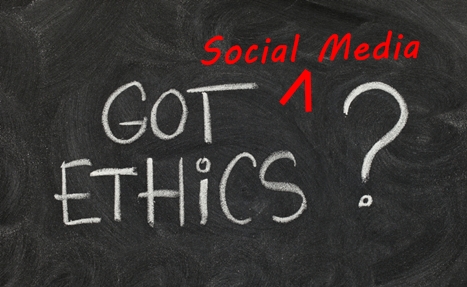
When it comes to social media, advertising and the Middle East, why don’t we have any ethics?

The region loves social media, but its influencers and advertisers are less keen to say when a post is paid for (image source: www.business2community.com)

The region loves social media, but its influencers and advertisers are less keen to say when a post is paid for (image source: http://www.business2community.com)

Who needs ethics right? Ethics are boring, they’re dry, and they mean we have to use disclaimers. Ethics really aren’t fun. But you know what, without them we’d be in a fair amount of trouble. With the Arab Social Media Influencers Summit happening this week in Dubai, and a fair few social media influencers being in town (including quite a few from Kuwait who don’t make it clear that they accept money for posting on their social media channels), I want to reprint this post which I shared with the Media Network Middle East last month. I’d love to hear your views on ethics, or the lack thereof, when it comes to social media and advertising in our region.

While European and American consumers are benefiting from crystal clear regulations on sponsored social media content, there’s little to no clarity here on the same.

We’re awash with social media in our region. Everywhere you go, you’ll see people sliding their fingers left and right, pushing up and pulling down on their smartphone screens. We’re all at it, checking our Instagram accounts, refreshing our Twitter feeds, and posting Facebook updates.

Today we have social media celebrities, people who have become famous through their online activities. There are Instagrammers in Kuwait with over a million followers, Facebookers in the UAE with hundreds of thousands of likes, and Saudi Tweeters with followings equal to the population of Bahrain.

Alongside these social media celebrities we have witnessed the rise of paid posts. Those of you with a keen eye will have noticed how many celebrities online have become more commercial, and have begun to share updates, images and videos promoting brands.

There’s nothing wrong with promotional advertising. Using paid influencer marketing is a common tactic to spread awareness, promote a brand, and to engage social media users across the globe. Online advertising can be more cost effective in terms of measurement and reach.

However, there’s no distinction between an advert and paid-for content. Both involve a payment of some kind by a company for a promotion of its brand or services. Regulators across Europe and the United States have essentially ruled that if money is changing hands, obvious disclosure must occur in-ad. Their reasoning is simple; consumers have a right to know what is an advert and what is not an advert.

While European and American consumers are benefiting from crystal clear regulations on sponsored social media content, there’s little to no clarity here on the same. Consumers here have no authority to turn to or no regulations to guide them on what is and what isn’t sponsored.

There seems to be little eagerness for brands or social media celebrities to advertise what is paid-for content either. This is understandable, as their followers may be less inclined to engage with a post if they know it is sponsored, or even follow a person who they know accepts money for posts.

While this lack of disclosure may appeal in the short term and help to maximise revenues (paid-for posts in Kuwait can fetch up to three thousand dollars per posting), it does nothing to building goodwill and trust with consumers across the region. A lack of honesty and transparency on what social media celebrities are paid to post will negatively affect trust in both the sponsoring brand as well as the celebrity who is accepting the payment in return for sharing the content.

In the US the burden is on brands to ensure that their endorsers, such as bloggers and online influencers) are in compliance in terms of disclosure. Paid-for posts have to include language such as #Ad, Ad: or Sponsored. Even brand posts and shares by a company’s employees have to be clearly labeled to account for the bias.

Either brands can take action and begin to self-regulate, or they can wait for regulators to finally step in and possibly take a harder-line approach to sponsored influencer endorsements. Is risking a reputation and trust, built up over years of marketing, worth risking over a lack of disclosure? I hope the answer is no.

Learning about a local community – Humans of Bahrain

We’re bombarded by adverts on a daily basis, and unfortunately it seems that social media may be going the same way. What with all of the selfies, the food pictures and the holiday snaps it could be argued that there’s little in the way of meaningful insights into wider social communities. However, every now and then you come across a gem that’s worth shouting about.

My wife was the person who first told me about this one Instagram account. Humans of Bahrain aims to tell the story of people living in Bahrain, both local and expatriate. It’s an account that is frank and candid, and shares a personal view of each and every one of the people being profiled by the account (it’s similar to sites found in the US and Asia which profile local communities).

Each picture on the account includes a story told in text below the image, both in English and Arabic. Subjects covered include education, marriage, careers and employment, and good old-fashioned feelings and emotions.

So far, the account has posted 169 images and it has just over three and a half thousand followers. If you’re looking to learn more about culture and the people that make up Bahrain, this is an amazing site to follow. I wish more people would focus on what is around them to tell the story of their community and their home rather than simply themselves.

Educating the Gulf on our humanity through social video – examples from Bahrain, Saudi and the UAE

Here in the Gulf region we’re increasingly seeing the use of online video content, particularly to tackle issues that are both social and controversial. This week there have been media stories on three examples from three different countries.

The first video has been produced by the Saudi Human Rights Commission to Saudi nationals to be kinder to their domestic workers, most of whom have to leave behind a family of their own to earn a living and support them. The video is well shot, and aims to give humanity back to domestic workers, especially those from South East Asia, through concepts such as motherhood.

The second is from Bahrain, but shot by one social media influencer called Yousef Al Madani. The clip focuses on the treatment of white-collar workers in Bahrain, most of whom come from the Asian subcontinent. Yousef looks to take the place of one of these workers at a local grocery store, where they often have to rush out to take orders from customers who sit in their cars and wait for the items to be brought to them. The clip, which has been talked about in the media, has been viewed over half a million times. This video is dubbed into English as well.

The third and final clip is from a corporate, Cola Cola to be exact. To quote the National:

An online advertising campaign by Coca-Cola showing the company handing out excess baggage tags at the airport to travellers has been viewed almost one million times on YouTube.

The clip “Coca-Cola –Taking Home Happiness” begins by showing passengers checking in at Dubai International Airport to head off to various destinations to see family. By Thursday, the video had generated more than 987,000 hits since it was uploaded a month ago. According to the website for Campaign Middle East magazine, Coco-Cola shot the video on December 22 with the cooperation of the airport.

The campaign – which is available only in the UAE and Oman – is expected to expand with additional prizes like flight vouchers, TVs and mobile phones, the company said. The video follows a similar online campaign last year which showed labour camps with Coca-Cola phone booths, into which bottle tops rather than coins could be fed to pay for international calls.

The video, which is probably the best shot out of the three (this is Coca Cola after all), is also dubbed.

What are your thoughts on the above? Are these videos effective? Would they have been more effective on television as well, or less effective? And is one more effective than the other, possibly due to its topic, its producer, its intent as well as its authenticity? Do let me know your thoughts.

The Gulf’s new social media hybrids and the success of @maxofarabia

Living in a region which is known for diversity but which is still pervaded by barriers between all the cultures you’ll find in the Gulf, I’m fascinated by individuals who bring differing peoples together. One such person is Max, who goes by his online moniker maxofarabia. A British-American by background, Max has not only lived in the Gulf but he’s also taken the region to heart. Unlike many expats, Max has picked up Arabic and is fluent in the language (he has a strong Emirati accent).

By creating content in both English and Arabic about issues that are relevant to nationals, Max is opening up a new world for both expats as well as those outside of the region. Max prefers Instagram, but you can also find him on Twitter and Facebook (he’s also on Snapchat, but I’m way too old for that platform). His popularity among Emiratis is evident, and he regularly uploads videos about the UAE and its people to his Instagram account, where he is followed and watched by almost 190 thousand people. Max has become a social media ambassador for a number of projects in and around Dubai.

If you’re an expat and you’d like to know more about the Emirates in particular, then Max of Arabia is one to watch. Have a look at some of his posts below (apologies but Instagram’s embedding function is taking a day off today).

A good morning from Max's trip into the desert on the trails in the UAE

A good morning from Max’s trip into the desert on the trails in the UAE

Huge thanks to @hooralq for the invitation to @sharjahart - a great evening spent in one of my favorite cities, surrounded by creativity, with some of my favorite people - #Sharjah #SharjahArt

Huge thanks to @hooralq for the invitation to @sharjahart – a great evening spent in one of my favorite cities, surrounded by creativity, with some of my favorite people – #Sharjah #SharjahArt

Max even looks good in a thob - here at a wedding in Riyadh

Max even looks good in a thob – here at a wedding in Riyadh

The launch of LinkedIn Arabic – Did LinkedIn miss a messaging opportunity?

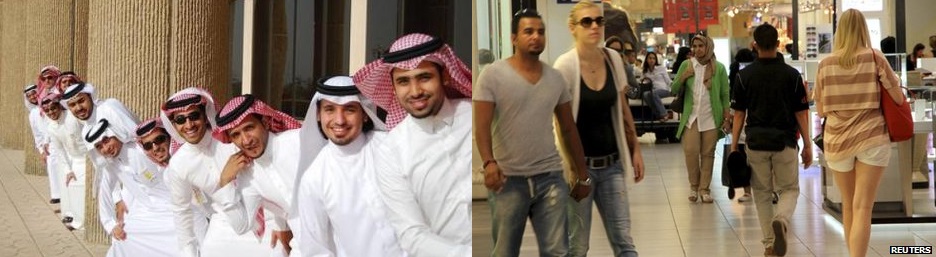
If you're going to launch in Arabic where would you choose? Dubai or Riyadh? (image source: Reuters)

If you’re going to launch in Arabic where would you choose? Dubai or Riyadh? (image source: Reuters)

I love LinkedIn. It’s possibly my favorite social media network. LinkedIn has transformed how professionals network (and get jobs) online. No recruiter could do without LinkedIn.

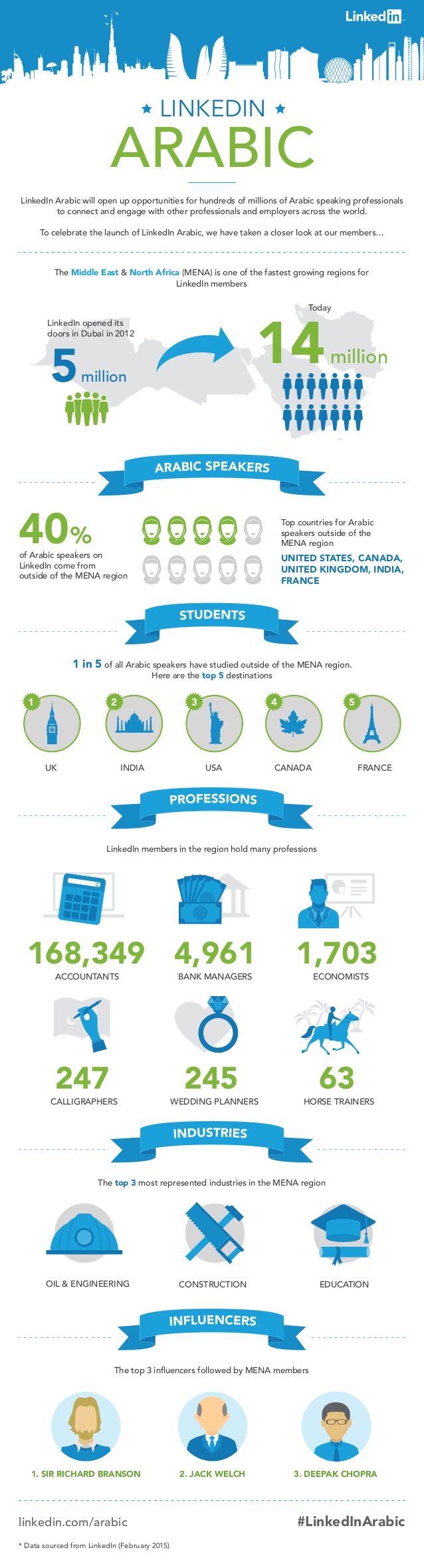
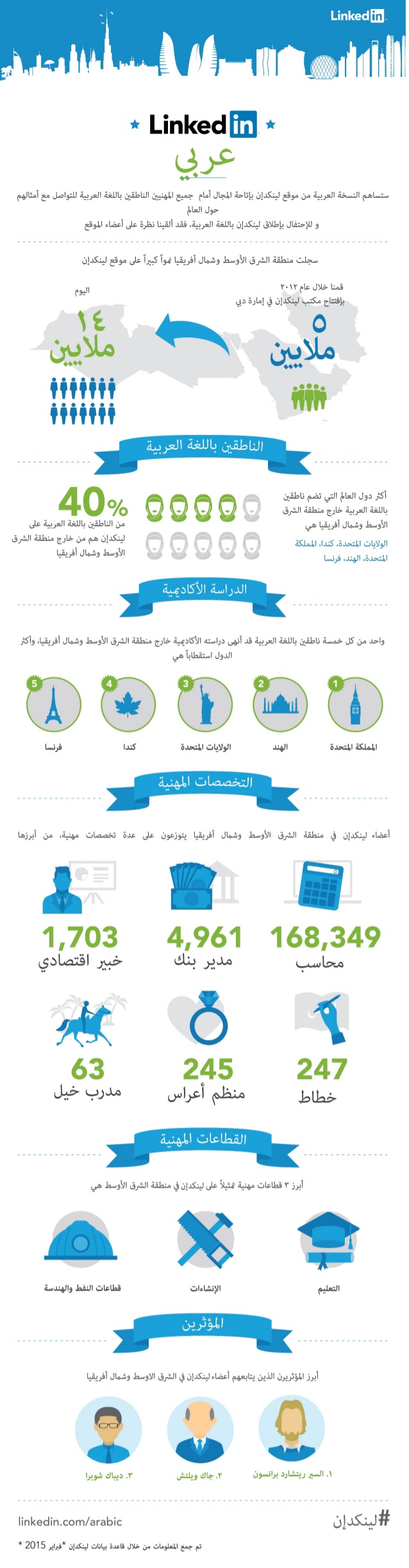
The network has grown steadily in the Middle East since it opened up an office in Dubai back in 2012. Over the past three years LinkedIn has grown its user base from five to fourteen million. The UAE is LinkenIn’s largest market with two million users according to The National. The two largest Arabic-speaking markets in the region are Egypt, with a population of just over 82 million, and Saudi.

The Kingdom is, or should be, LinkedIn’s largest potential market. Saudi doesn’t only have a sizable Arabic-speaking population (28 million and counting), but it also has the spending power. Saudi’s gross domestic product for 2013 was just under 750 billion dollars. Saudi is home to some of the region’s largest corporations, as well as a majority of the country under the age of 25. Add to the mix high internet penetration and smartphone usage, Saudi is LinkedIn’s Arabic-language market.

However, when LinkedIn launched its Arabic-language site last week the management team chose Dubai as the preferred location. There was a guest advocate, in the shape of Noura Al Kaabi, CEO of Abu Dhabi’s twofour54. Bizarrely, LinkedIn’s press materials also included a press statement from Saudi’s Minister of Labor, which was carried extensively in the Kingdom’s media (the quote in full is below and is sourced from Saudi Gazette).

Eng. Adel M. Fakeih, Saudi Arabia’s minister of labor, said: “LinkedIn has been working with us to match talent in the Kingdom with the right opportunity, and with Arabic, this benefit can be rolled-out to a much wider member base.

LinkedIn will continue to be a useful tool for us as we use technology to communicate the need for nationals to up-skill themselves and take advantage of the strong economic climate and significant job-creation in the Kingdom.

Being a part of a global network also helps youth identify the key demand areas, and build their qualifications accordingly.”

Would LinkedIn have been better served by launching Arabic in Saudi, rather than in the UAE (where it could be argued that the lingua franca is English). Would this activation have been more in line with the message that LinkedIn was trying to convey, namely that we are now in Arabic and we want Arabic speakers to use our service.

It’s a small observation, but it seems that LinkedIn missed an opportunity to push home a message through a launch that was misaligned with its target audience. Saudi isn’t the easiest country in terms of getting things right on the ground, but if you’re going to do something then, as the saying goes, if it is worth doing then do it right.

And for more details on LinkedIn in the Middle East have a look at the infographics below, which are in English and Arabic.

The #truthbetold – How Saudi’s UTURN and @omarhuss are tackling taboos through social media

By its very nature, a taboo can be difficult to talk about. Breaking a taboo is traditionally objected to by elements of a society. What we’re seeing in Saudi is an effort to tackle taboos through social media. One of the leading digital and social media agencies is Jeddah-based UTURN, and its founders and presenter Omar Hussein have taken it on themselves to tackle sensitive subjects. Their idea is simple – create scenarios whereby they provoke Saudis to respond to the situation through actors and staged behaviours, record their reactions, and package this for distribution over the internet.

Named #truthbetold or #الحق_ينقال in Arabic, Omar Hussein and UTURN have tackled several issues to date since they began their series at the end of November. The first, in partnership with Ikea Saudi Arabia, was the issue of Saudi women working as cashiers. An actor in the queue would begin cursing the female cashier to prompt a reaction from the audience around him. The video is below and is only in Arabic. However, it is worth watching just to understand the issue and the responses of those featured.

The second, launched a month after at the end of December, is on the issue of alleged racism towards foreign workers in Saudi Arabia, and was staged in the roast chicken chain Tazaj. Again, the video is in Arabic but the body language of those in the set and who are not aware of acting can be read by any person watching.

Released at the end of January, the third episode tackles the issue of child workers in Jeddah. Done in partnership with the Fatoor Faris restaurant, people are seen responding to a Saudi actor abusing a child actor who is pretending to sell him gum.

Each video has been watched over half a million times, and, even more importantly, UTURN is using Facebook as a means for Saudis to discuss these issues. The idea is so simple and yet so powerful. Thank you UTURN and Omar Hussein for doing this. I wish others were as creative and as brave as you.

And I wish that communicators would look at Saudi, a country which is viewed as the most traditional and conservative in the region, to understand how we can better use social media to change perceptions, attitudes and behaviours. You and others in the Kingdom are leading the rest of the Gulf in terms of how we use social media for change.

Lost in the fog – is Etihad’s social media crisis down to an operational failure?

For some passengers, the experience of the fog and resultant delays weren’t helped by Etihad’s social media support despite the best efforts of the social media team (image source: http://www.todayszaman.com)

I love challenges. I’m an even bigger fan of crises. They seem to bring out the best in us, pushing us to our limits and testing our abilities. While I admit to enjoying being put through the ringers, I do feel for Etihad’s social media team during a bout of fog at the beginning of January. On the first Saturday of the year, during a peak time of year for travel, think fog descended on the UAE’s capital and closed Abu Dhabi International Airport for just over an hour. The airport’ closure affected Etihad’s scheduling for several days.

Before I go further, let me brief you on the airline’s communications outreach. Etihad has a sophisticated social media set-up, including a dedicated Twitter account for Etihad’s customer service, at @EtihadHelp, as well as customer support on Facebook. Etihad’s response time is usually less than 20 minutes, and each and every customer correspondence from the team is signed off by the team member’s initials.

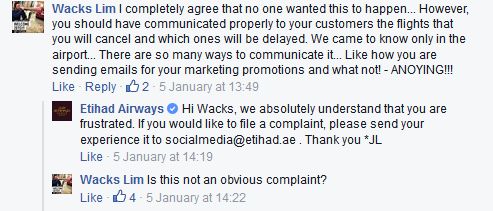
The fog literally consumed the social media team however. As people, the one instance that we can all agree on is that we hate anything going wrong when we travel, including travel delays and lost luggage. Stories of delays, including passengers stranded on the tarmac for half a day, without food or information, made headlines globally. Etihad’s social media channels were replete with angry passengers looking for a solution to their problems. Have a look at some of the exchanges below as well as media coverage.

This is one example of many of the discussions that took place on Facebook between Etihad and its customers following the fog

This is one example of many of the discussions that took place on Facebook between Etihad and its customers following the fog

https://twitter.com/ravaliareddy/status/551286654938251264

A number of thoughts come to mind. While Etihad has a stellar social media operation, how much leverage does the social media have over operations. Or to put it slightly differently, what accountability is there between operations and the social media team. Does the organizational structure, either formal or informal, help or hinder the social media team’s operations on behalf of customers? Etihad is a large organization of just under 15,000 employees; what can the social media team do on the customer’s behalf?

I’ll admit, these are special circumstances. Thousands of passengers were either stranded or had their luggage misplaced. However, we now live in a connected world where consumers’ expectations are amplified. While social media can speed up communications with consumers, is social media being set up to fail if operations cannot keep up? What are your thoughts?