Digital Media Relations this Ramadan – Ideas to Engage

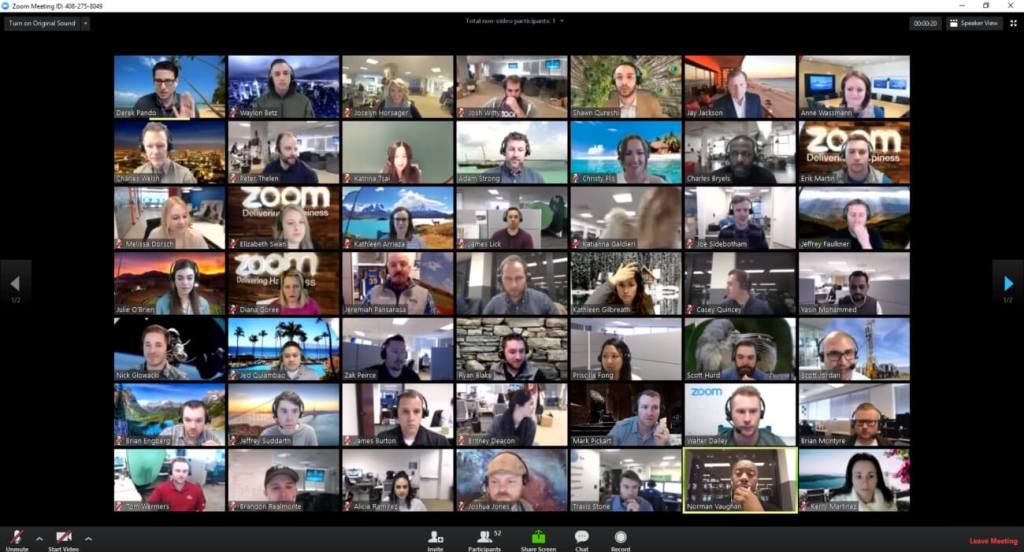
This Ramadan’s media events will look a lot like this. What are you doing to adapt?

It’s the first couple of days of Ramadan, the holiest month of the year for Muslims. It’s a key time too for media relations, with a host of traditions that PR people and journalists follow when it comes to relationship building (to see what I’m talking about, have a look here).

This year is sadly different, given the lockdowns in place across much of the region. But work will continue, and we’ll have to adapt. Here’s a couple of ways you can turn the physical divide into an opportunity to do more online with journalists.

The Ramadan Gift

It’s traditional to share Ramadan gifts with journalists. This would traditionally be something food-related such as dates or chocolate, given that we are fasting all day. The good news is that e-commerce is still functioning, albeit with delivery delays. There is still a challenge however, in that many journalists are working from home rather than work. If you’re thinking of sending over a gift, drop the journalist an email asking for their address details for the purpose of sending a Ramadan gift. They’ll appreciate the gesture.

The Charity Donation

Given the situation facing many across the world right now, it may be a good idea to donate to charity on behalf of the journalists you work with. Ramadan is a time for supporting those in need, and many charities in the Middle East region (or anywhere right now) will allow you to give to charity on behalf of someone else. I’ve done this many times, and it’s always appreciated by the journalists I work with. Do let them know you’re doing this, and ask them if they have a specific charity or cause they’d like to be supported. Given that it’s easier than every to give online, this is a simple but effective way to build relations with journalists whilst also doing good.

The Media Iftar

It’s standard practice to invite a number of media to an Iftar, the meal which breaks the daily fast. This won’t be possible this year due to restaurant closures. Even if restaurants are open, many people may not feel comfortable gathering outside of their homes with non-family members. This is probably the hardest concept to replicate – connecting via teleconference just won’t cut it (I can only imagine the aggravation of having to shout at a screen “turn on the mic” five minutes before the breaking of the fast).

There are other ideas which may work – one could be to arrange food deliveries to the journalists in question (ensuring food deliveries turn up on time during a normal Ramadan is hard enough, and I can’t imagine how difficult it will be with the additional demand this year). Another idea may be for those die-hard enough to value media relations above all else, and that is to hand-deliver food to your journalist contacts. It sounds strange, but it will be appreciated, and it may even be an opportunity for those journalists you’re treating to share a couple of pics of their Iftar.

Zooming for Islam (or using digital content)

The final idea is pretty simple – it’s using digital channels to connect with your journalist contacts. Teleconferencing is awkward in this region at the best of times, and I can’t imagine how this is going to work for a social event (and I doubt anyone around here is using Houseparty). One alternative may be to keep the social interactions simpler, and instead use more digital content to share with your media contacts. What I do mean? It could be as simple as Ramadan and Eid greeting cards shared over WhatsApp or email, to filming yourself and your team sharing personalized Ramadan greetings and sharing these over messaging apps. You can get creative when it comes to the content you’re making, but just be careful of the channels you’re using; email is more formal, and best for when you don’t know the journalist too well, whereas WhatsApp should be used if you already have a good relationship with the journalist (it’s a pet peeve of many journalists here for them to be WhatsApped by PR people they don’t know, or don’t want to know, well).

These are just a couple of simple ideas for you. If you have any, please do share. And before I end, Ramadan Kareem to you all. It’s a very difficult time for many people, so let’s be mindful of how we can help.
The Government Comms Playbook to Fight the Coronavirus

A lack of trust in what the government is saying leads to panic, fear, and citizens taking action into their own hands

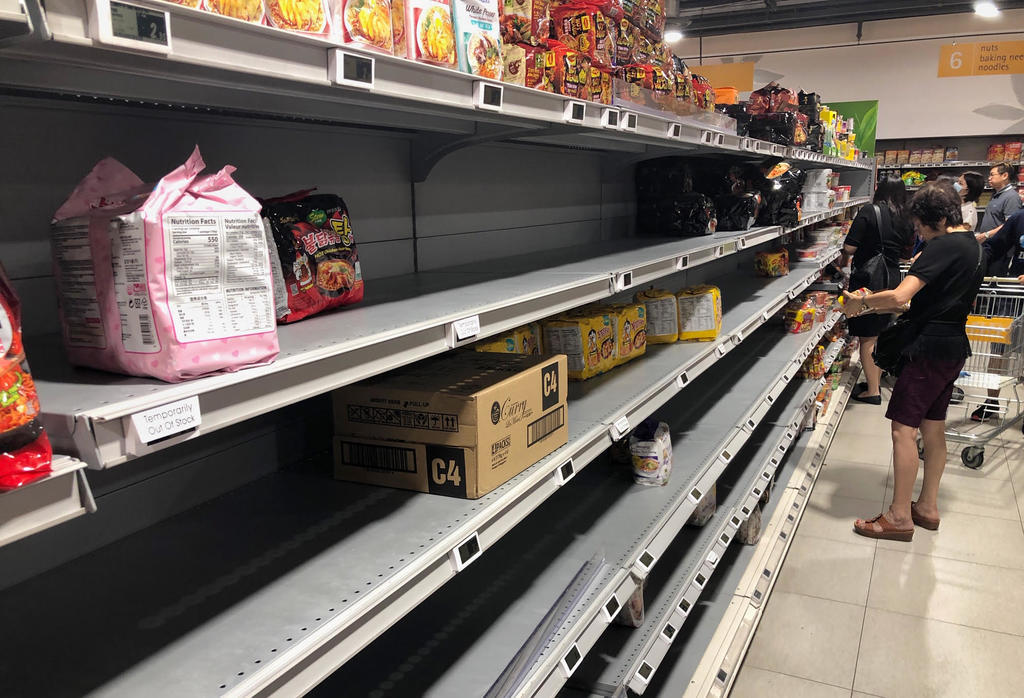
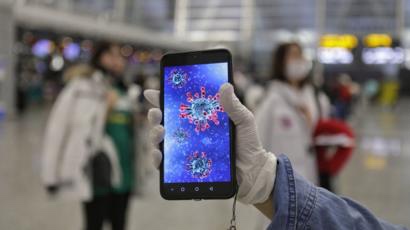
This is the biggest crisis all of us have ever dealt with. The pandemic has impacted every major country, both directly and indirectly. It’s brought whole industries down. And, worst of all, tens of thousands of people have lost their lives. And it’s going to get worse.

The hope is that we can all take action to flatten the curve and reduce the number of infections to a level that our healthcare systems can deal with. And this isn’t just a possibility. Countries such as Singapore and South Korea have shown that the right approach can be found to get us through this in the best shape possible, with fewer infections.

Government communications is key here. I’ve seen some brilliant work, and I’ve seen work which isn’t going to achieve anything other than the opposite of what was intended. Here’s what I hope governments will look at doing right now.

A Single Source of Information

This isn’t just a viral pandemic. We’re seeing fake news spread at an unprecedented rate. Given how many government departments are involved in a crisis response (think health, education, business, finance, legal, customs, transportation, basically everyone), the potential for the message not to be seen is high. Each government department has its own website, its own comms channels, and team.

What a crisis like this requires is a single source of information, especially online. This location needs to take the lead in pushing out any and all information on the virus and its impact, including for individuals and organizations on everything. What others must then do is aggregate information from that website. By doing this, you get people to understand where they should go, not only to source information but to also corroborate what they’ve been told.

One example of a single source is Weqaya.ae, a website set up by the UAE government to educate people on health-related issues. This website is a start (and I haven’t checked out how it looks on mobile, and if the website is responsive in terms of design), but there’s another issue that governments need to tackle, and that’s language.

Multiple Languages

It’s pretty obvious, but I’m yet to see governments in my region push out information in multiple languages. And I’m assuming it’s the same in many other places. Now more than ever, communicators need to understand their audiences, and push out content in as many languages as possible (this is why diversity and inclusion matters when it comes to comms, which many of us seem to have forgotten). Write a piece in multiple languages, translate infographics, and if you can’t dub over a video, use subtitles. In the Gulf, the languages to look at include Tagalog, Hindi, Urdu, Malayalam, Bahasa… If the linguistic group is large enough, bring in people who know the language to translate, and then push out the content through that single source website and via…

The Use of Influencers

This crisis has been a missed opportunity when it comes to using third parties to get the message out. And I’m not just referring to people with blue ticks or big followings. An influencer right now could include a foreign embassy, an ambassador, or any person or account that’s trusted by a specific group of people. These individuals have mass appeal, they’re trusted, and they post consistently. My feeling is that governments are behind brands when it comes to using influencers (and I’ll say that many social media influencers haven’t helped themselves by being tone deaf to the situation).

Some countries have done things differently. Look at what Finland is doing. Read this from the Guardian.

Finland has enlisted social influencers in the government’s efforts to contain the coronavirus pandemic, arguing that they are just as useful as mainstream media in a crisis when it needs to inform the population fast, clearly and accurately.

“We can reach a large part of the public in Finland through official communications and traditional media, but it’s clear the authorities’ messaging doesn’t always reach all population groups,” the government communications director, Päivi Anttikoski, said.

“The aim of this cooperation is to provide better access to information for those who are difficult to reach through traditional channels. As far as we know, Finland is the only country in the world to have defined social media as ‘critical operators’,” – along with doctors, bus drivers and supermarket workers.

Adapt Social Media

Governments have to innovate when it comes to crisis communications. They’ve got to create new channels based on usage and popularity. Oman set up a new Twitter account sharing all official news on what’s happening in the country. The account was set up this month, but it already has 65k followers, and is tweeting in multiple languages.

What the WHO has done with Whatsapp is smart. This channel is used globally, and it’s a simple and effective way of getting out information effectively via a chatbot. It’s also the place where most misinformation spreads (and we have no way of monitoring what is being shared here due to end-to-end encryption). Have a look at the launch of the service, and please do load it into your Whatsapp.

Transparency and Expertise Matters (Especially for Leaders)

My friend Julio Romo wrote a brilliant read on what Singapore is doing to combat the Coronavirus. Given that the state has come through this better than anyone else, their government communications should be studied widely. One aspect of what they’re doing is promoting clear information as to what is happening on the ground, and tell residents what actions they need to take. Their leaders have been using social media and traditional media effectively, to push out a clear message on what is happening, the actions the government is taking to make things better, and what the public can do to help.

Another must-read article was written by Ullrich Ecker and Douglas MacFarlane for the Guardian. They spell out what leaders need to do to ensure that people listen, remain calm, and follow advice. If you’re in comms, read the piece. But needless to say, openness matters.

And third, look to who is delivering your message. Doctors and scientists have emerged as the best communicators right now, because they understand the subject better than anyone. Look to Dr Anthony Fauci, who has become a household name in the US thanks to his clear, no-nonsense advice. Their understanding of the issue is reassuring. I’d like to see more scientists being given the opportunity to speak and guide the public (have a look at this WEF article about scientists and communications).

Avoid Conjecture

My last piece of advice is avoid making comments in the heat of the moment, especially on social media. I’ve seen so many government communicators in the Middle East mouth off on Twitter, making statements about the impact of the virus on the economy only for these statements to become nonsense a couple of days later. I’ve seen others talk about how well residents have been treated, only to have the country close its borders a couple of hours later. To paraphrase, trust takes time to build, and disappear in an instant. Do what you can to engage, to educate, and to listen as well (we don’t talk about listening enough in communications).

That’s the short of it for me – let me know what you’d add, and let’s start communicating better. What we do matters now more than ever, to keep people safe and save lives. We have been given an opportunity to make a difference for the better, so let’s take it.

Public Relations and the Coronavirus – How will we be impacted?

Every industry will be affected by the impact of the coronavirus, including PR. There’ll be opportunity for some, and pain for others (image from BBC News)

Everywhere and everything is Coronavirus. Which is understandable, given how it’s changing every part and place of our world. But I wanted to talk about Public Relations/Communications and what this means for all of us.

The advent of the Coronavirus may be a business boost for some, but it be harder times for many in the industry. Here’s my basic run-down of what we should all expect.

Increased Demand for Crisis Comms and In-House People

If you’re working as a crisis communications consultant, you should have already had dozens of requests coming in for support (my general view of crisis comms is if you’re asking for help during a crisis, then it’s usually too late).

What’s fascinating is client-side demand for communicators. I’m seeing many government entities looking for senior people. My feeling is they’ve been blindsided by this, and they have little to no crisis planning. This is especially true for internal communications.

Prepare for Drastic Budget Cuts

Budgets are going to be cut, and agencies will feel this soon (I’m sure many already are). Contracts won’t be renewed, and clients will want to reduce the scope of work. I know the argument about PR being more cost effective than marketing, but this won’t have much of an impact on business leaders who need to save money for business continuity planning.

The Opportunity and the Challenge

It’s amazing to see how many companies have my details. I’ve received over 200 emails from companies, all listing what’s happening to the business. Everyone is asking questions, and this is a huge opportunity for communicators to support on messaging and positioning.

However, there’s a caveat here. Things are moving so fast that positions and messages can change overnight, especially for certain industries. I’ve seen senior communicators praise what their country is doing for the public one night, only for the government to announce a closure of its borders in the morning. Communicators have to be extra careful about positioning/messaging right now, and ensure that whatever is being conveyed is actually being put into practice.

We All Need Support

Whatever your role and your activity, you’ll need support. None of us have gone through anything like this before (SARS/MERS were the closest examples, but they were still regional). We will all need help in terms of what we are doing. And we will also need mental support.

So many people are relying on us to help them understand what is happening and what they need to do. Let’s do more to support one another. I’ve been encouraged by what regional and global associations are doing. It’s incumbent that all of us reach out to friends and colleagues in the industry to check on one another, and be there to listen and to help. This also includes giving to financial assistance programs run by the likes of the CIPR.

I want to wish you all the best of health right now. Stay well, stay safe, and stay the course. We will prevail.

Are Communicators Missing Brand Purpose?

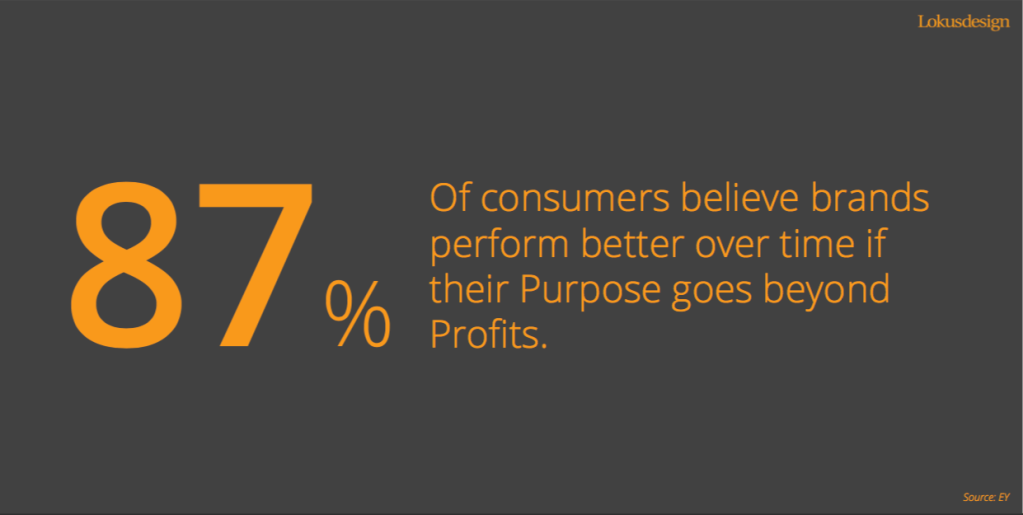
Our stakeholders want us to help on big societal issues. Communicators should be taking the lead on brand purpose (image source: Lokus Design)

Sometimes, well most of the time, we should listen more. Listen without bias, and just sit there and take in what others are saying. This is especially true at conferences, where there’s lots being said but few people listening. I’m can be guilty of not taking my own advice, and this equally applies to me.

Let me explain. The good people of PRovoke (formerly the Holmes Report) held their annual PRovoke MENA event last week. And they asked me to be part of a panel on brand purpose. The idea of brand purpose matters personally to me; I’ve worked for a number of not-for-profits, and I’ve seen how much it matters to a cause when a business steps in to help. And then there’s the bigger picture; given what’s happening in the world around us, the public are demanding that businesses do more on societal issues.

To me, brand purpose isn’t a buzzword. It’s a realization that there’s more to the business world than profit. We can’t keep doing what we’re doing and expect everything to be well if we’re not tackling environmental issues, inequality, poverty or any of the Sustainable Development Goals.

I know that brand purpose isn’t still widely understood or put into practice here, but even I was shocked by what I saw. When we kicked off the panel, I asked the audience of 150 communicators if brands here were doing enough to tackle big societal issues. Only one hand went up. This single vote was even worse in the context of the day’s agenda. The first panel was packed with the country’s biggest brands, talking about how their presence had grown globally. The panel prior to the brand discussion was all about the region’s youth and what they wanted to see in business.

“We want to see brands making more of an impact but we can’t expect a global brand to be 100% ethical overnight,” said Middlesex University student Cham Alatrach who was part of the youth panel. “Small strides do matter. That way you can see the process and what goes behind it. The youth want to see a change, and that doesn’t happen overnight.”

An Issue that Communicator Should Own

As far as I’m concerned, brand purpose should be our cause. Many communicators also include corporate social responsibility in their role, and it’s easy to see why. We engage with stakeholders, we listen to their issues as part of a wider dialogue, and we look to see how we can support their needs. Brand purpose is a natural extension of CSR in many ways. It also matters to employees (it’s the basis of employer branding), and so should be seen as part of internal communications.

My concern is that we’ll miss the boat when it comes to brand purpose, like we did during the introduction of social media. This was an idea based on engagement and dialogue, and yet everyone jumped in, from creatives to media buyers, marketers and even customer support.

How Agencies Can Add Value

I’ve had the good fortune to work with a company that was a pioneer in cause marketing. P&G has been brilliant in creating brands that serve a greater good. For an example of this, look at Pampers-UNICEF and the work this partnership has undertaken to eliminate maternal and neonatal tetanus.

One aspect of my job with P&G which I’ve enjoyed more than anything else has been the opportunity to create new cause ideas. And this is where agencies can add real value, by understanding what’s happening outside the client’s offices/world, looking at the potential to partner with a charity, and make a real impact on a big issue.

I’d pay an agency good money to give me ideas that would contribute to my brand’s purpose. For me, that’s valuable and strategic. And yet, who was coming up with new concepts? It was the creatives. We’ve got to change this.

It’s About Our Reputation Too

One final thought for all of us. The public relations industry has been maligned for years; we’ve been described as spin doctors, as unethical. For me, I’ve always believed that good communications benefits everyone. And brand purpose goes beyond saying, and focuses on the doing, which is at the core of reputation building. Our actions must speak louder than our words, and nothing gives me greater satisfaction than to leave the office and head home knowing that me and my company have supported a big issue, and contributed to positive change.

I want us all to lead on brand purpose. If you’re struggling with this issue (one of the big challenges is how to win over management), please do reach out to me, and I’ll do my best to help.

A Work-In-Progress – What the first capabilities study says about PR in the UAE (and your role too)

Anne Gregory co-lead the Global Capability Framework, and she was in Dubai last week to talk about the first ever study in communication capabilities in the UAE

We had a VVIP in Dubai this week (I was going to say VIP, but everyone is a VIP in this town). Someone who, for me at least, is a public relations rockstar. And a person who has done a great deal to promote the function and its development, globally. Anne Gregory is a name you’ve got to remember. She’s been the chair of the CIPR and the Global Alliance. And, along with Johanna Fawkes, she created the Global Capability Framework (GCF).

I’ve reference the GCF before, and why it should matter to anyone who works in or wants to work in communications. Anne was in Dubai to talk about the UAE GCF research; this piece of work, which is being led by Ganga Dhanesh and Gaelle Duthler from Zayed University, is the first ever study to identify the most (and least) important capabilities of public relations and communication management in the country.

Well, the initial results are in. Anne, Gaelle, and Ganga spoke at an open event this Thursday about the initial findings from the study, to uncover which capabilities matter most to UAE practitioners. The results may surprise you.

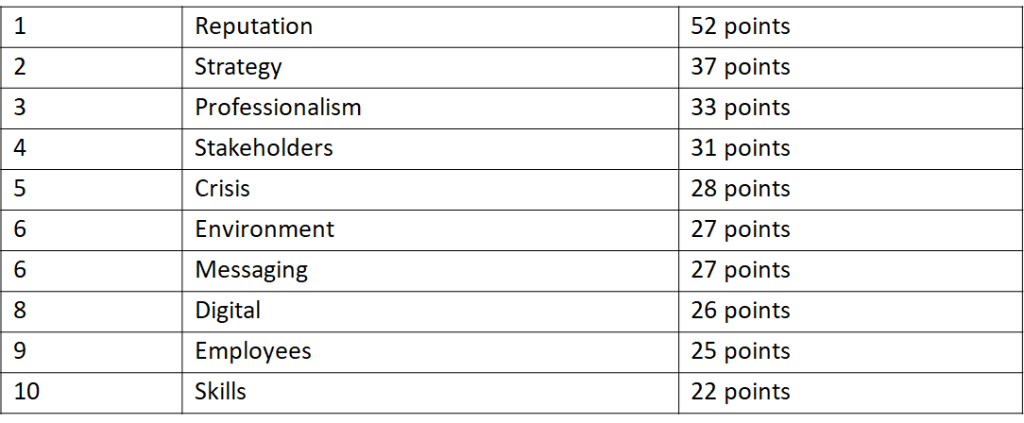
These are the top ten capabilities required of communicators in the UAE as defined by the industry here

At the top by a mile is reputation, which makes a good deal of sense given we’re reputation builders. However, what I’m not showing here is what’s at the bottom. Among that group is ethics. Given what’s happening globally (think fake news, distrust of the media and PR), as well as regionally (social media manipulation, political disagreements, a lack of media/communications transparency), I’m partly surprised, partly understanding of the irony of communicators not linking these two capabilities more closely.

To ask a simple question, which I’ve asked before of others, would you trust someone who you don’t think is ethical? Clearly, we’ve got to do more on raising the need for the industry to view ethics as something which is important, and bodies such as the PRCA and MEPRA have got to play their part.

At number two, strategy was another standout. Conversely, measurement didn’t make it into the top ten, and was also near to the bottom of capabilities listed. While there’s a realization among many senior communicators on the need to align the function with their organization’s goals, measurement of outcomes matters, especially to our organizational leaders. It’s how we prove our worth.

Out of the top ten, what I also found interesting was the focus on crisis communications (is this driven by social media, I wonder), as well as environment (this means a contextual understand of all the factors we’re dealing with regarding our functions and organizations), and digital (I’d assume this reflects how quickly we’ve become a connected society).

How can you use the Global Capabilities Framework?

Now, what Anne and the University of Huddersfield/the Global Alliance have also done is make available a brilliant tool that lets communicators assess themselves and their teams against the framework. It’ll allow you to look at your skills, see your strengths and weaknesses, and understand where you need to develop and then re-assess yourself to see how you’re progressing.

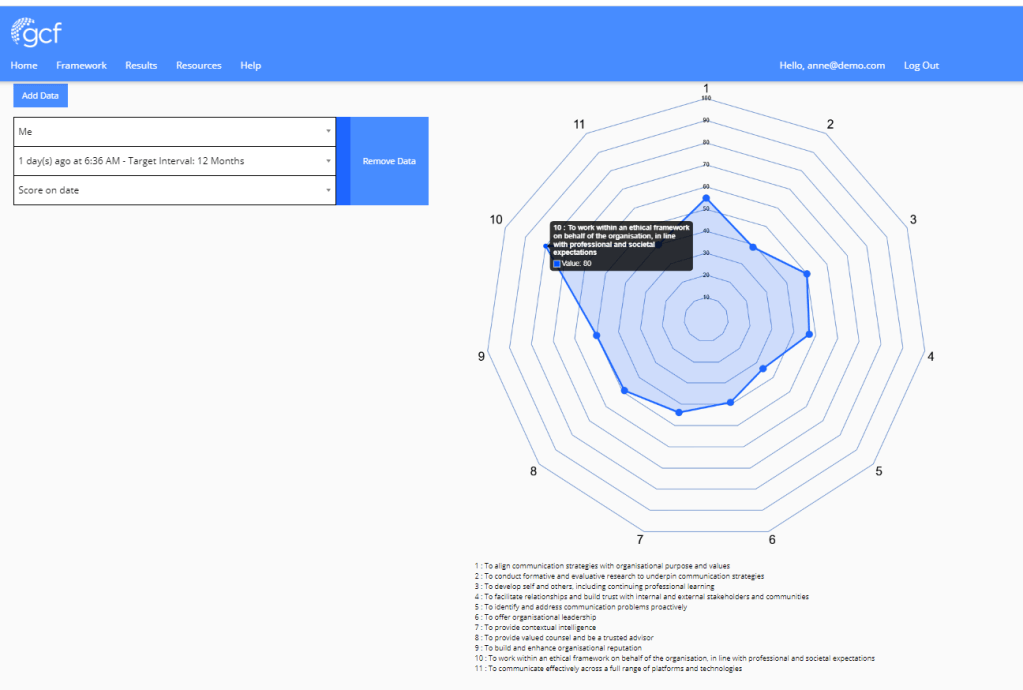
There’s two assessment levels: the Core capability assessment is comprised of 11 questions, and the Full assessment has a total of 37 questions.

Once you’ve done your assessment, you’ll be shown a simple spider chart like the below.

This tool is free for any organization that is part of the Global Alliance (for example, CIPR). It also feeds into various professional development programs. You can check out the GCF tool here.

That’s all from me today. Do you agree with this list? Or do you disagree? As always, drop me a note, share your views and get engaged!

What’s the Middle East’s biggest communications issue? It’s the Arabic language

Arabic is a beautiful, rich language. And yet the communications industry is struggling to attract good Arabic language writers. How can we correct this? (image source: Arab America)

I feel like I’m writing something Kafka-esque. In in the Middle East, a geography of 200 million souls who read and write essentially the same language (I’m going to side-step the awkward question of how Arabic is spoken), and I’m working in communications. And yet, the industry is dominated by non-Arabic language speakers, at least in cities such as Abu Dhabi, Doha, and Dubai.

This isn’t just anecdotal. Overall, just 32% of respondents to PRCA MENA’s inaugural Middle East PR and Communications Census 2019 were nationals of countries in the region. Overall, a fifth of the region’s PR professionals are British, 18% come from India, and the range of other nationalities represented are indicative of the Middle East PR corps having a richly-varied culture mix.

Diversity matters, of course. But I don’t think we even have that when it comes to engagement, given that so much of the content being produced is in English (the most widely spoken language in the UAE isn’t even English, it’s Hindi).

There’s been a concerted push by governments to promote the Arabic language. Friday the 18th of December is the UN Arabic language day. And Dubai’s Sheikh Mohammed Bin Rashid Al Maktoum launched Madrasa, an online initiative with over a thousand videos to help promote learning of the Arabic language.

The communications industry has to play its part too. There’s obvious benefits to improving our ability to communicate in and create Arabic language content. We’ll be reaching a much wider audience in their language. In addition, understanding a language is one step to understanding a culture and its traditions. And by strengthening our Arabic language capabilities, we’ll be able to put Arabic first and create content that’s not translated (any Arabic language native speaker can spot translated content a mile off).

This isn’t going to be a short-term fix. Many of the Arabic-language experts working on the agency side are from countries such as Egypt, Iraq and Syria. Given politics in their own countries, it’s much harder to come across visas for them. We’ve got to do more with the Arab nationals who are already in the Gulf region.

So, what role can we play to change?

Develop Arabic Talent

First of all, we’ve got to foster stronger connections with universities across the
region, and better educate Arab youth on the opportunities that a career in public relations and communications will provide. And we have to do this as an industry. It’s something I hope that the PRCA will continue to work on.

Support Arabic Leadership

Part of the lack of appreciation for the Arabic language is that there aren’t enough Arab nationals in leadership roles, both on the agency side and with clients. Global agencies especially must prioritize fast-tracking Arab talent into leadership roles.

Arabic first

Most of the Arabic content put out by communicators is actually translated from English. We’ve got to turn this around, and start prioritizing Arabic content production, both in the written word, with audio and video. Arabic is such a rich, descriptive language, and so much is lost when content is merely translated.

There’s no better place to start than with myself, and I’m going to commit to writing more myself in Arabic. If you have any suggestions on this subject, please do share them.

What’s the biggest challenge for communicators in 2020? Online disinformation & public activism

It’s been seven days since all the optimism, the hangovers, and the excessive fireworks (at least in the Gulf). So, given our bubbles of hope were burst and then shot down in flames on the morning of the second day of this year, what should we be looking forward to over the coming 12 months?

There’s been some brilliant prediction blogs, including this one from Stephen Waddington which is as comprehensive as it gets. But I wanted to focus in on two big issues that we are going to have to deal with, both in the Middle East and globally.

Fake News Campaigns will proliferate

Fake news isn’t new – it’s been around since humans have been able to talk, write and read. What’s so special about now is that, thanks to the internet and our own inability to question what we see being shared by friends and family, it’s easier than ever to create fake news. There’s even a new breed of firms, “Black PR” agencies, who are willing to set up fake sites that look like news portals, create fake news stories, and then spread them online on social media via bots.

Given the state of politics around the world, with nationalism and xenophobia just two of a dozen negative trends that are driving agendas, it’s no surprise that news is being manipulated by politicians, to both boost their own profiles and smear opponents. Buzzfeed has put out a smart news piece on disinformation for hire.

My concern is what will happen when fake news and the people behind these campaigns begin to target companies. We’ve already seen some of this in the Gulf, given the region’s politics. There have been targeted campaigns against national brands, including airliners, banks and pharmaceutical companies. I feel this is only the start, and we’re going to see more fake news campaigns which are designed to blackmail. How many firms will pay up rather than face a barrage of negativity which, although fake, may convince others to stay away from the brand?

Will your social media people are able to respond quickly, spot the fakes, and mobilize your followers? Do you know what’s going on when it comes to fake content, how to spot it, and who is behind it? What surprises me is how few practitioners in my part of the world are actively researching this phenomenon. I’m seeing more work being done by academics like Marc Owen Jones around issues such as bots, trolls, and fake news campaigns. If you’re a public relations professional, please do your homework and start educating yourself about these issues before they impact you.

Public Activism will be everywhere

The second big theme for 2020 will be public activism. There’s been a strong trend towards employee activism over the past couple of years, especially in the US and with sectors such as tech (just look at Google). As people give up on their politicians doing the right thing, they’re going to increasingly call out corporations.

This trend for public activism is going to happen globally. I’m increasingly seeing this in India, given what’s happening there with the new Citizenship Amendment Act. And we’ll also see this around issues such as the environment (just look at Australia).

This rise of citizen activism is going to especially strain organizations that stay on the sidelines or organizations whose ownership is in the hands of an individual with strong views.

What employers need to do is 1) be much better at listening to sentiment, and 2) empathizing with views that are distinct from those held by management. There are far too many tone-deaf leaders out there, and they’re going to drag their company’s brands down with them unless they change how they engage with stakeholders.

Given these two trends, my one hope is that we start to prioritize listening as a key communications skill. It may not sound as sexy as content creation, or artificial intelligence, but the good old-fashioned practice of listening may just save your organization/client from the biggest reputational crises in 2020.

Northwestern University Qatar: A case study of civil protest through social media

I’m in awe right now. Of one professor at Northwestern University in Qatar. And also the students. They’ve shown that it is possible to hold people to account for their actions and words through civil protest, both online and offline, in the Gulf.

Let’s start from the beginning. Journalism professor Justin Martin recounted how the University’s Dean had responded to student concerns that graduation would be held on the first day of Ramadan during fasting hours by saying to 40 faculty, “They can go to hell.”

This revelation, as well as insights from others, spurred the student campus to take action and voice their views collectively. What’s surprised me is how united the response has been to this incident, and how it’s brought together all nationalities to act together, through voicing their views on social media, through protesting on campus, and through setting up social media channels dedicated to the student campus. A sample of the responses is below.

The response from the University hasn’t been any different from what I’d have expected, with a statement put out that is a sorry/not sorry and which places the blame on Professor Martin himself as the whistleblower (without naming him).

“Over the weekend a series of tweets targeting the dean and members of the staff and faculty at Northwestern University in Qatar was posted. The statements were based on comments and blogs that were made some time ago – from the last academic year to one that was posted 10 years ago.

Supporting the well-being of our community – faculty, staff, and students – is our highest priority, and we take actions like this very seriously. We will continue to monitor this situation and offer our support when needed.

As a community, we all have a responsibility to be respectful of each other and our differences. Over the past decade, there have been instances where we failed to reach that standard and for that, we apologize.

There are no claims of perfection at NU-Q; we are all human; however, we are also one community. It grieves us that someone within NU-Q would try to hurt this community that we all have worked so hard to create.”

In a region where so many grievances aren’t aired out of fear of reprisal (such as termination or deportation), it’s brilliant to see young people in a university standing up so bravely to state their views with respect and civility. The Gulf needs more of us to speak up for what is right, and Dr Martin and Northwestern University in Qatar’s students have shown that it is possible for a group to stand up and advocate for both respect and understanding from those in power. All the power to them, and I hope that NUQatar’s administration both takes the time to actually listen and act.

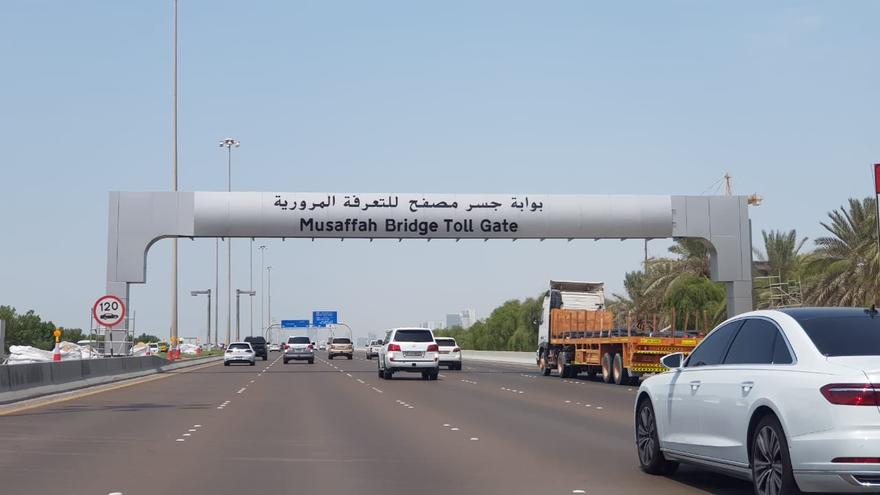
The Story of Abu Dhabi’s Toll Gate – Why Comms Shouldn’t Need to Clean Up After Others

When things go wrong, the first people to deal with the blow-back are communicators. Organizations need to involve comms early on, to better anticipate what may not work, and what the response will be

It’s been a month of chasing, of phone calls, visits and Tweets. And yet, there was no update, no new information. I’m talking here about my experience with Abu Dhabi’s new toll system. The idea is simple; Abu Dhabi, the UAE’s capital city, wanted to set up a road toll tax on drivers entering certain areas. To do this, drivers had to register on a website prior to the system going live (there’s already a road toll system operating in the UAE, in Dubai. The Abu Dhabi version is different to Dubai’s).

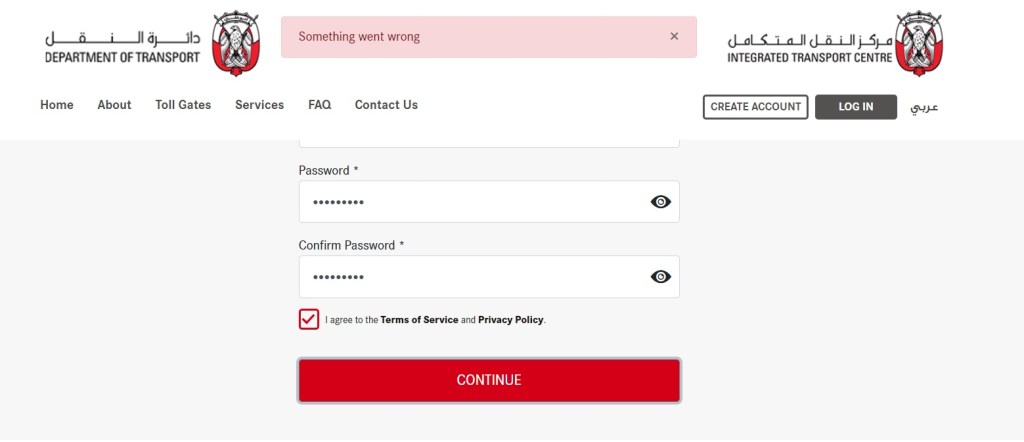
So far, so good. We had just over a month to get our affairs in order, before the toll gates went live on October 15. I wanted to be proactive, and so I went to the website to register my car. The questions were straightforward – I needed to provide the details of my national ID card, my car plate, an email and password. Simple, you’d think. I must have tried a couple of times, and I couldn’t register. All I kept getting was the below message (which really wasn’t helpful).

“Something went wrong” may be an accurate description of the whole IT system, but it’s not going to help users understand the issue

I call up the contact center. They ask for my national ID number before asking for my name (which I found strange), and then advise me to go in and log an issue. I do this, and register a complaint a whole month before the deadline. The adviser tells me I’ll get a call once the issue is solved. No call comes in for a couple of days. I call up, and there’s no update. What I do understand is that many other people are going through this same experience. I tweet, and get the same response over and over again. I’m not alone, sadly.

The inevitable happens, and the service’s introduction was delayed, from October 15 to January 1.

Given the need to register (if you don’t, you’ll be fined per day), I can imagine that there would have been thousands of people wanting help, and spending time reaching out to the government body in question. These channels would have been handled by the customer service/communication teams. I feel for the people manning the phone lines or the social media accounts, as there’s little they can do to control a situation, besides from repeating the line that “IT is working on it.”

This whole back-and-forth conversation reminds me of how uncommon it is in many regions for both communications to be brought into the design process, and how little user testing there actually is before a new system is rolled out.

It’s simple. A difficult experience erodes trust. A good experience builds trust. Transparency in challenges helps engender trust. Spin does the opposite (and lots of people will know when they’re being spun).

My hope is that this story will be a lesson learned, especially for governmental bodies who want to roll out new technologies, and who need to engage both their communications teams and potential users early on. Communications is there to help, so bring the right people in (preferably those with experience who ask the right questions, anticipate what may happen, and understand how to best engage with an intended audience), listen to their advice, and ensure that these people are part of the whole innovation process, from end to end. I’m sure I speak for many communicators in the region when I say that I don’t want to clean up for others; I simply want to help create a better product or experience which I can talk about. Are you with me?

MBC’s Suicide Bomber Promo (I can’t believe I’m writing this)

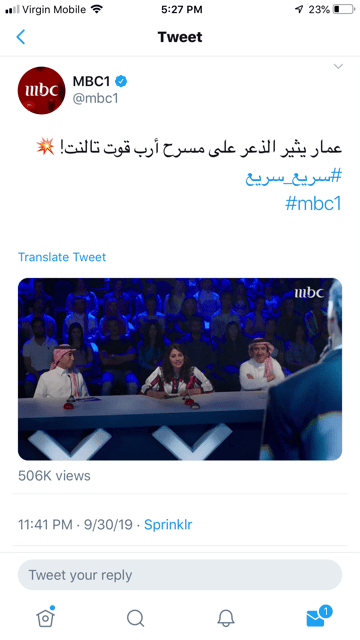
The above tweet from MBC has now been deleted

I’m going to say from the outset that everyone makes mistakes. And I also have considerable respect for work the Middle East Broadcasting Corporation (MBC), the largest broadcaster in the Middle East, has produced (Ahmed Al Shugairi’s Khawatir is the most inspiring program ever aired on Arabic-language television). But what I saw on MBC’s social media channel yesterday horrified me. Before I describe the scene for non-Arabic speakers, I’m going to share the video below.

The video was shared on MBC’s social media account on the evening of the 30th September. It’s effectively a promo for their new series of Arabs Got Talent. Someone wanted to create a video, and they thought it’d be a good idea to depict a would-be suicide bomber on stage, and choosing life instead of destruction.

The dialogue basically conveys the person on stage saying, after he’s opened up his shirt to show the explosive belt, that, “they trained me to blow you all up, but I’ve chosen life and Allah. Can I now sing.” He’s asked by the presenters what he’s doing, and then asked to sing.

There are so many better ways to fight extremism. And there are so many better ways to promote a show (and this is a promo, for anyone who is asking). Given the issues the Middle East faces when it comes to how it is perceived abroad, as well as Islam, who thought this was a good idea? And why did the presenters go along with the idea?

Let’s stop with the stereotyping BS. Extremism is a serious issue, and it should be handled as such, rather than as a prop for a publicity stunt. I’m happy that MBC has taken this down, and I hope that there’ll be discussions internally as to how to better handle such a serious subject, especially by a program which is watched by millions.