One Day #WithoutShoes – How TOMS is getting consumer sustainability spot on

TOMS' sustainability strategy is simple to understand, its aligned to the business, and it's designed with consumers - and social media - in mind

TOMS’ sustainability strategy is simple to understand, its aligned to the business, and it’s designed with consumers – and social media – in mind

It’s fair to say that getting sustainability right is a challenge for most companies; it’s even harder when you throw consumers into the mix. However, every now and then a campaign comes along that makes you sit up and take notice.

Founded in 2006, the US-based shoe retailer TOMS was founded with a strong sense of giving back to communities in need. The company’s promise was simple – for each pair of shoes bought, it would donate another pair of shoes to a child in need. To date, TOMS has given more than 35 million pairs of new shoes to children in need.

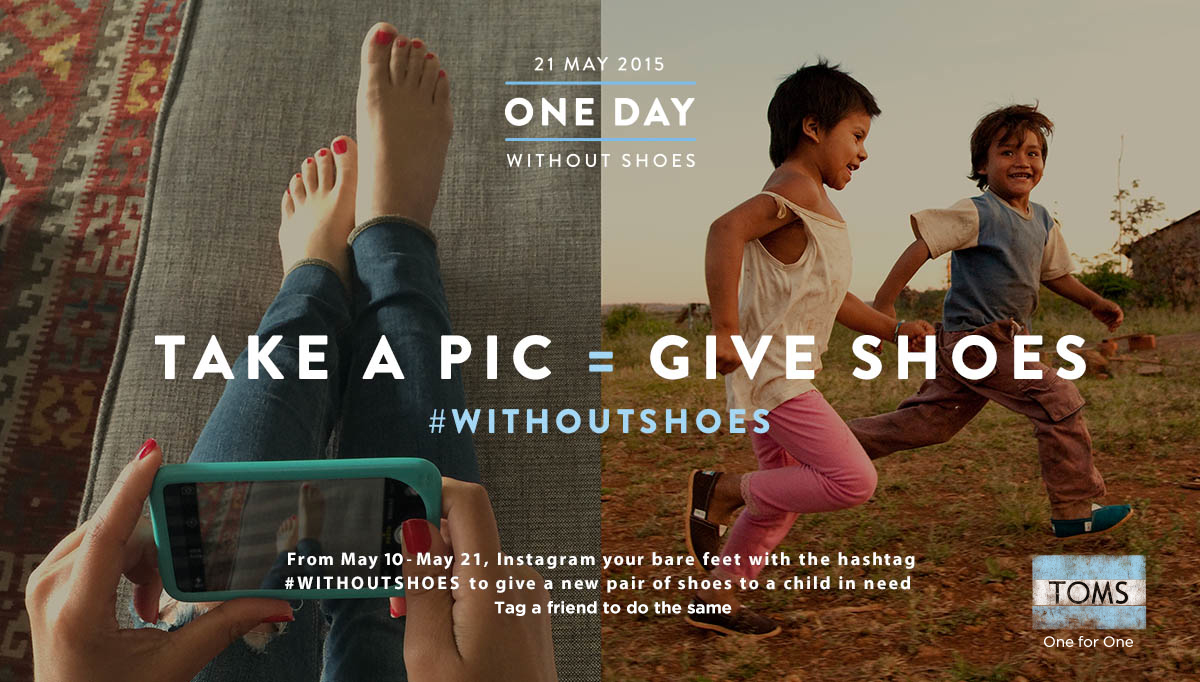
This year TOMS brought their global CSR campaign, which has been running for eight years, to the United Arab Emirates. The company has taken its original premise of “One Day without Shoes”, an event where participants do not wear shoes throughout the day in order to raise awareness for TOMS’ goal of giving shoes to children-in-need, online and onto social media.

The concept is a simple yet powerful initiative where they would like people to take a picture of their bare feet and share it on Instagram. With each picture shared, one pair of shoes will be given to a child in need. A simple picture tagged with #WithoutShoes can help the cause and provide a donation.

As of last Thursday afternoon, more than 296,000 children will benefit from the campaign, according to the company’s website. It’d be interesting to see how many UAE consumers got involved (I’ll see if I can get a response from the UAE retailer which has the TOMS franchise, Apparel Group.

The below are just a sample of the 300,000 plus images which have been generated over the past two weeks, both by consumers as well as celebrities and the media. Let’s hope other companies can learn from TOMS and how powerful a simple concept such as this can be for the brand, the consumer and for communities in need.

https://twitter.com/Pink/status/600440669182656513

When is a brand-celebrity engagement toxic? The Etihad and Landmark stories

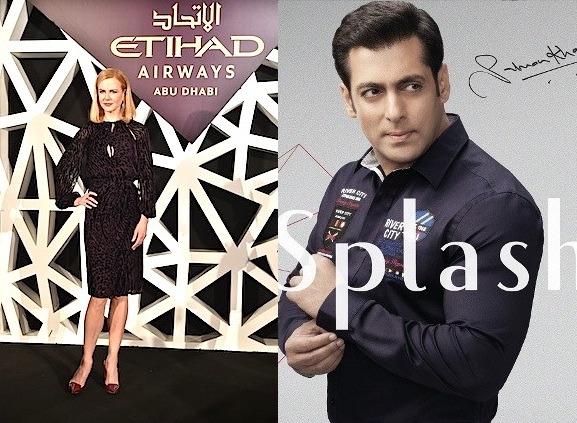
Have brand associations between Kidman and Etihad and Khan and Splash helped or hindered their respective brands?

Have brand associations between Kidman and Etihad and Khan and Splash helped or hindered their respective brands?

We just love celebrity endorsements. They’re useful for building brand equity, for improving ad recall, they convey celebrity status to the brand, and help brands stand out from the pack. When done right, celebrity engagements work wonders for the brand. Think Michael Jordan and Nike or Beyonce and Pepsi.

And then there’s what we do in the Middle East, specifically the Gulf. I’ve had a number of views come my way, particularly in relation to two deals which were done recently. The first is for the Abu Dhabi-based airline Etihad. In March Etihad signed up Hollywood actress Nicole Kidman to front up its latest advertising push which focused on Etihad’s redefinition of luxury travel. You can see the video below.

A global name, Kidman is Etihad’s fourth brand ambassador from Australia (can you name the other three, or the airline’s one Frenchman and German sports stars?). The discussion comes in around Etihad’s customer groups and how much the airline’s brand ambassadors actually resonate with these groups. Despite being Abu Dhabi-based and owned by the UAE’s capital, Etihad doesn’t have a single Arabic-speaking or Arab national as a brand ambassador. It’s hard to know how much Kidman would resonate with audiences in the Gulf, but Etihad hasn’t done much to find and leverage off brand ambassadors who’d appeal to Arabs in and around the Gulf (particularly those who are likely to travel in first class).

For Kidman, the association with Etihad has brought its own risks. Just a couple of weeks after the deal with Etihad, Kidman was criticized by a flight attendants’ union, the Association of Professional Flight Attendants, following her appearance in an advert for an airline it claims treats female employees “deplorably” and operates using “discriminatory labour practices”.

While there’s always a risk of being targeted, and criticized, by a specific interest group as in the case of Kidman, there’s even more risk to a brand’s equity when a celebrity misbehaves (think Tiger Woods and affairs with adult film stars) or does something which consumers may consider to be unethical.

One such example is Bollywood filmstar Salman Khan. Khan, who is an A-list film star in India, is the face of Dubai-based clothing retailer Splash. However, over the past week Khan was found guilty of committing manslaughter in a hit-and-run accident back in 2002 (Khan was allegedly drunk and lost control of his car, which slammed into a group of homeless people sleeping on a pavement).

The editor of Arabian Business, Anil Bhoyrul, penned a strongly-worded opinion piece on the issue only this week. The piece has gone on to become one of the most commented-on pieces in the history of the online news portal.

On a roll, Arabian Business published a piece about a public backlash against Splash for their support of Khan. You can read excerpts below.

Dubai-based Landmark Group is facing a public backlash, after the CEO of one of its leading brands described convicted Bollywood killer Salman Khan as a “great man.”

Bollywood star Salman Khan, who is a brand ambassador for Splash, was sentenced to five years in jail after being found guilty of killing a homeless man while driving under the influence of alcohol. He is currently on bail pending an appeal.

Khan was appointed as a brand ambassador for Splash in 2013, and is currently featured in a number of advertising campaigns for the retailer’s products. His face appears in several large billboards across Dubai, promoting clothing ranges.

But despite the conviction, Splash CEO Raza Beig said last week: “At Splash we love Salman Khan and we will support him through every up & down. My heart breaks to find out about the verdict but as they say every great man in history has gone through some struggle to achieve greater heights so probably this is his calling. We cannot comment on the judgement and do not believe he deserves it but Allah’s will it is.”

Will this brand association and the support of Splash’s CEO for Khan turn toxic and lead to a public boycott? What’s certain is that the Splash brand will not be helped by the current association with Khan, and the CEO’s stance would appear to be at odds with the opinion of many Splash customers. There is one truth all brands need to bear in mind – the consumer is boss. What matters is not what is important to us as people who manage the brand(s), but rather what is important to them.

What do you think of these celebrity endorsements? Are they flying high or are they a damp squib (excuse the puns). Share your thoughts. I’d love to hear from you.

Hashtag hijacking and the need for authenticity – the #EtisalatChallenge

Let’s face it, social media is entertaining. As communicators, we really do need to think through the consequences of using digital. But sometimes, the best of intentions just aren’t enough. Companies who don’t think through the reasoning behind their campaigns will face a backlash online, including derision, contempt, and abuse.

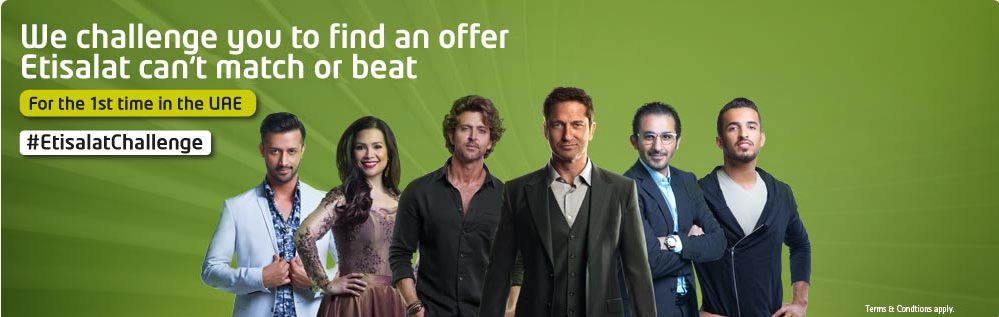
There are many examples globally of hashtag hijacking; possibly the best is McDonalds and its #McStories campaign. Fortunately for us in the Middle East, we now have our own example of how not to launch a hashtag on Twitter. A couple of days back the Abu Dhabi-based telecommunications operator launched an advertising campaign called the #EtisalatChallenge. The idea is simple enough – Etisalat challenges consumers to find offers and prices that are better than their own and they’ll match or beat that offer. You will literally see the below advert everywhere across the UAE at the moment.

Are you ready for the #EtisalatChallenge?

Are you ready for the #EtisalatChallenge?

Now, there’s a couple of issues here. The first is pretty basic; the UAE’s telco market is a duopoly. Both operators are government-owned and there’s not much in the way of competition when compared to other. The second is Etisalat’s reputation. The company isn’t the most consumer-friendly in terms of its support. Shortly after Etisalat launched its hashtag #EtisalatChallenge (complete with a huge marketing campaign), the hashtag itself was taken over by customers complaining about high costs and poor service.

Despite the obvious backfiring of the campaign (and, as you can see from the tweets below, the campaign has been taken over by negative sentiment), Etisalat has persevered with the #EtisalatChallenge.

https://twitter.com/mkdubai/status/595950565483380736

https://twitter.com/ThatGuyNoman/status/595958586204905473

What’s even stranger is the number of bots, of Twitter accounts which are automated which have are now tweeting the same message about the campaign.

https://twitter.com/ThatGuyNoman/status/596655103928438784

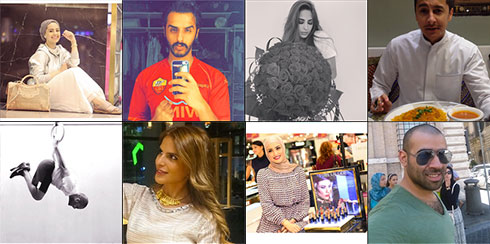
The other element of the campaign which is intriguing is the number of celebrities that Etisalat has brought in. There is one of Scotland’s finest, Gerald Butler, Bollywood actor Hrithik Roshan, and Filipina actress and singer Lea Salonga. Etisalat has also paid a number of the UAE’s leading social media influencers. While the use of social media influencers to support marketing campaigns is becoming standard practice, the #EtisalatChallenge in unusual in that many of the influencers have previously worked for the UAE’s rival operator Du. Have a look below.

Emirati social media celebrity Mthayel Al Ali was a Du supporter

Emirati social media celebrity Mthayel Al Ali was a Du supporter

But now Emirati social media celebrity Mthayel Al Ali is also an Etisalat fan

But now Emirati social media celebrity Mthayel Al Ali is also an Etisalat fan

Egyptian footballer and model Sherif Fayed was part of Du's marketing before his switch to Etisalat

Egyptian footballer and model Sherif Fayed was part of Du’s marketing before his switch to Etisalat

Egyptian footballer and model Sherif Fayed is also a fan of green as he shifts to #EtisalatChallenge

Egyptian footballer and model Sherif Fayed is also a fan of green as he shifts to #EtisalatChallenge

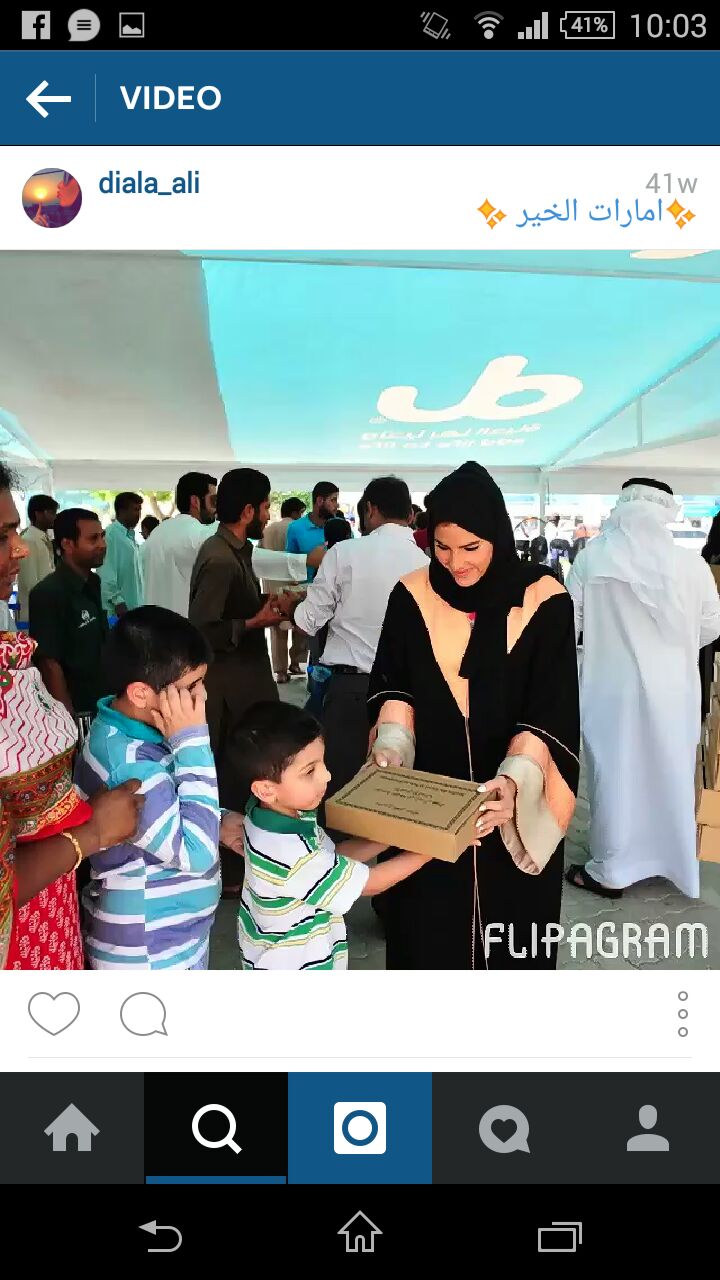
Before her support for the #EtisalatChallenge UAE media personality Diala Ali was a Du supporter.

Before her support for the #EtisalatChallenge UAE media personality Diala Ali was a Du supporter.

From blue to green - UAE media personality Diala Ali shows her support for the #Etisalat Challenge

From blue to green – UAE media personality Diala Ali shows her support for the #Etisalat Challenge

While one can easily fault Etisalat for getting out the cash and spending a fortune on social media endorsements, these online influencers are more to blame in my eyes. They’re doing their own brands more harm than good by changing from one corporate brand to the other so quickly. Their authenticity is at stake, and for someone who runs a social media agency Mthayel Al Ali should understand that authenticity matters to fans, and fans are the reason these people are paid to endorse brands. There’s little long-term thinking from influencers who have worked with Du previously and whom are now working with Etisalat.

Going beyond the pains of creating corporate hashtags (which, in this case clearly don’t work), what was Etisalat thinking? And what is it still thinking, seeing as the campaign is failing so badly? Come on, share with me your #EtisalatChallenge!

When it comes to social media, advertising and the Middle East, why don’t we have any ethics?

The region loves social media, but its influencers and advertisers are less keen to say when a post is paid for (image source: www.business2community.com)

The region loves social media, but its influencers and advertisers are less keen to say when a post is paid for (image source: http://www.business2community.com)

Who needs ethics right? Ethics are boring, they’re dry, and they mean we have to use disclaimers. Ethics really aren’t fun. But you know what, without them we’d be in a fair amount of trouble. With the Arab Social Media Influencers Summit happening this week in Dubai, and a fair few social media influencers being in town (including quite a few from Kuwait who don’t make it clear that they accept money for posting on their social media channels), I want to reprint this post which I shared with the Media Network Middle East last month. I’d love to hear your views on ethics, or the lack thereof, when it comes to social media and advertising in our region.

While European and American consumers are benefiting from crystal clear regulations on sponsored social media content, there’s little to no clarity here on the same.

We’re awash with social media in our region. Everywhere you go, you’ll see people sliding their fingers left and right, pushing up and pulling down on their smartphone screens. We’re all at it, checking our Instagram accounts, refreshing our Twitter feeds, and posting Facebook updates.

Today we have social media celebrities, people who have become famous through their online activities. There are Instagrammers in Kuwait with over a million followers, Facebookers in the UAE with hundreds of thousands of likes, and Saudi Tweeters with followings equal to the population of Bahrain.

Alongside these social media celebrities we have witnessed the rise of paid posts. Those of you with a keen eye will have noticed how many celebrities online have become more commercial, and have begun to share updates, images and videos promoting brands.

There’s nothing wrong with promotional advertising. Using paid influencer marketing is a common tactic to spread awareness, promote a brand, and to engage social media users across the globe. Online advertising can be more cost effective in terms of measurement and reach.

However, there’s no distinction between an advert and paid-for content. Both involve a payment of some kind by a company for a promotion of its brand or services. Regulators across Europe and the United States have essentially ruled that if money is changing hands, obvious disclosure must occur in-ad. Their reasoning is simple; consumers have a right to know what is an advert and what is not an advert.

While European and American consumers are benefiting from crystal clear regulations on sponsored social media content, there’s little to no clarity here on the same. Consumers here have no authority to turn to or no regulations to guide them on what is and what isn’t sponsored.

There seems to be little eagerness for brands or social media celebrities to advertise what is paid-for content either. This is understandable, as their followers may be less inclined to engage with a post if they know it is sponsored, or even follow a person who they know accepts money for posts.

While this lack of disclosure may appeal in the short term and help to maximise revenues (paid-for posts in Kuwait can fetch up to three thousand dollars per posting), it does nothing to building goodwill and trust with consumers across the region. A lack of honesty and transparency on what social media celebrities are paid to post will negatively affect trust in both the sponsoring brand as well as the celebrity who is accepting the payment in return for sharing the content.

In the US the burden is on brands to ensure that their endorsers, such as bloggers and online influencers) are in compliance in terms of disclosure. Paid-for posts have to include language such as #Ad, Ad: or Sponsored. Even brand posts and shares by a company’s employees have to be clearly labeled to account for the bias.

Either brands can take action and begin to self-regulate, or they can wait for regulators to finally step in and possibly take a harder-line approach to sponsored influencer endorsements. Is risking a reputation and trust, built up over years of marketing, worth risking over a lack of disclosure? I hope the answer is no.
The launch of LinkedIn Arabic – Did LinkedIn miss a messaging opportunity?

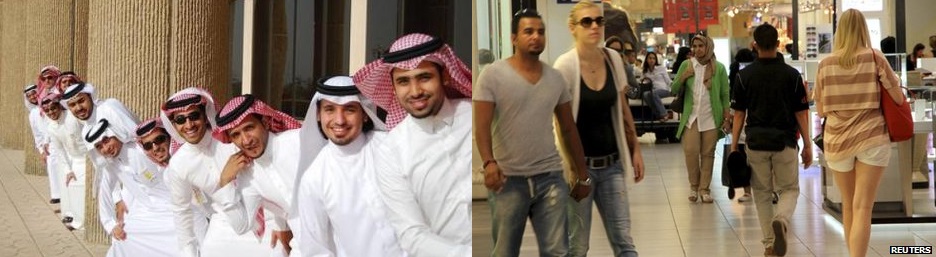
If you're going to launch in Arabic where would you choose? Dubai or Riyadh? (image source: Reuters)

If you’re going to launch in Arabic where would you choose? Dubai or Riyadh? (image source: Reuters)

I love LinkedIn. It’s possibly my favorite social media network. LinkedIn has transformed how professionals network (and get jobs) online. No recruiter could do without LinkedIn.

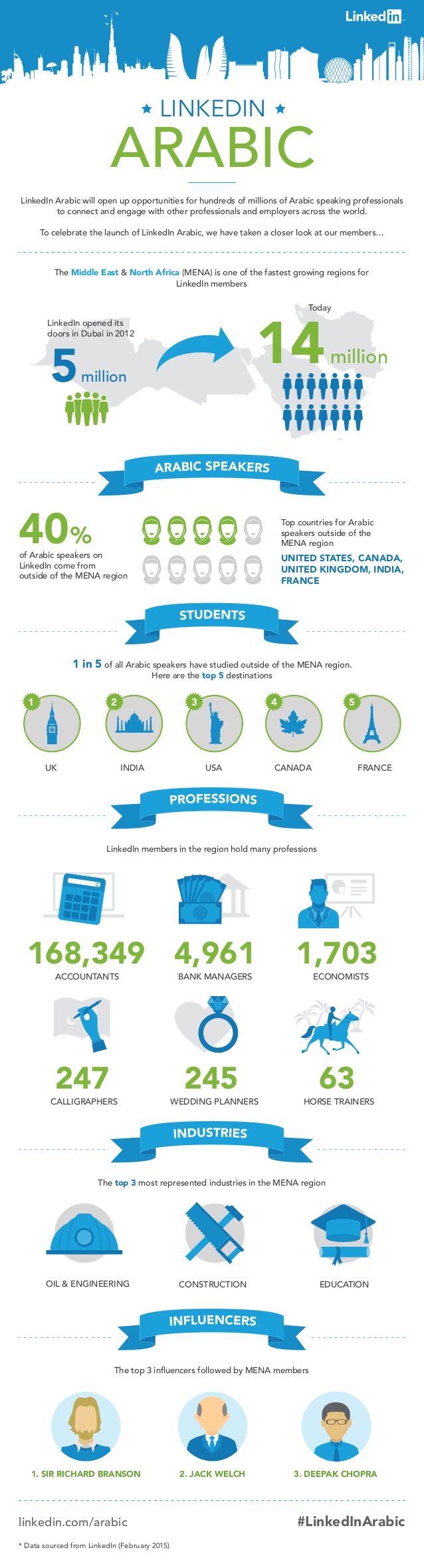
The network has grown steadily in the Middle East since it opened up an office in Dubai back in 2012. Over the past three years LinkedIn has grown its user base from five to fourteen million. The UAE is LinkenIn’s largest market with two million users according to The National. The two largest Arabic-speaking markets in the region are Egypt, with a population of just over 82 million, and Saudi.

The Kingdom is, or should be, LinkedIn’s largest potential market. Saudi doesn’t only have a sizable Arabic-speaking population (28 million and counting), but it also has the spending power. Saudi’s gross domestic product for 2013 was just under 750 billion dollars. Saudi is home to some of the region’s largest corporations, as well as a majority of the country under the age of 25. Add to the mix high internet penetration and smartphone usage, Saudi is LinkedIn’s Arabic-language market.

However, when LinkedIn launched its Arabic-language site last week the management team chose Dubai as the preferred location. There was a guest advocate, in the shape of Noura Al Kaabi, CEO of Abu Dhabi’s twofour54. Bizarrely, LinkedIn’s press materials also included a press statement from Saudi’s Minister of Labor, which was carried extensively in the Kingdom’s media (the quote in full is below and is sourced from Saudi Gazette).

Eng. Adel M. Fakeih, Saudi Arabia’s minister of labor, said: “LinkedIn has been working with us to match talent in the Kingdom with the right opportunity, and with Arabic, this benefit can be rolled-out to a much wider member base.

LinkedIn will continue to be a useful tool for us as we use technology to communicate the need for nationals to up-skill themselves and take advantage of the strong economic climate and significant job-creation in the Kingdom.

Being a part of a global network also helps youth identify the key demand areas, and build their qualifications accordingly.”

Would LinkedIn have been better served by launching Arabic in Saudi, rather than in the UAE (where it could be argued that the lingua franca is English). Would this activation have been more in line with the message that LinkedIn was trying to convey, namely that we are now in Arabic and we want Arabic speakers to use our service.

It’s a small observation, but it seems that LinkedIn missed an opportunity to push home a message through a launch that was misaligned with its target audience. Saudi isn’t the easiest country in terms of getting things right on the ground, but if you’re going to do something then, as the saying goes, if it is worth doing then do it right.

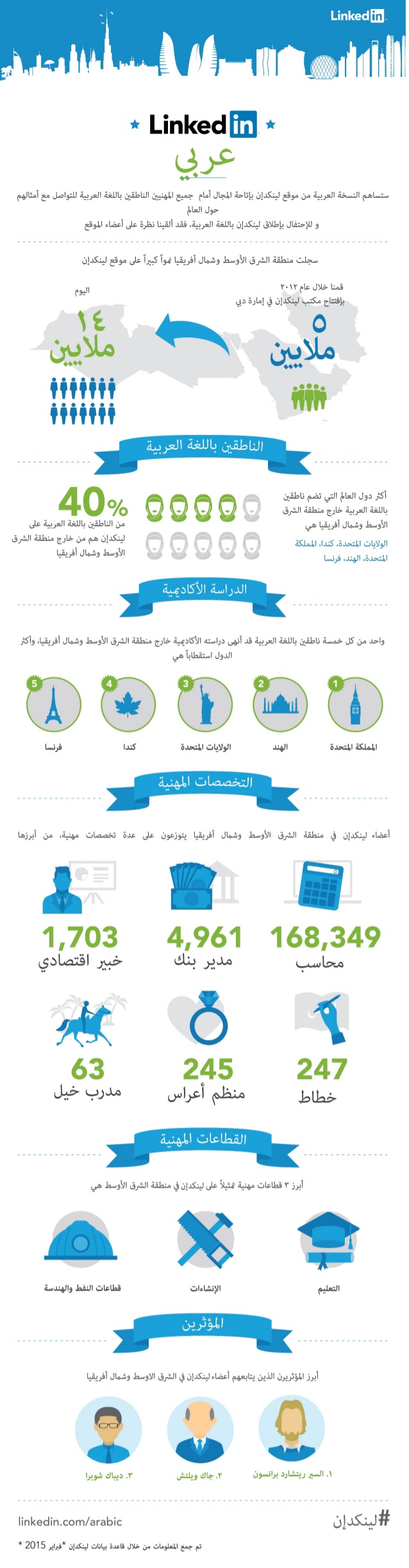
And for more details on LinkedIn in the Middle East have a look at the infographics below, which are in English and Arabic.

Is @Dubai_360 a work of genius or a Google Street View imitation?

There’s a fine line between inspiration and mimicry. At the beginning of the year, Dubai’s Tourism and Culture Marketing body launched Dubai 360, which it markets as the world’s largest and highest quality interactive city tour.

Launched with some amazing video shoots (one of which you can see below which featured local social media celebrity Max Of Arabia), Dubai 360 offers visitors a glimpse into some of Dubai’s most iconic locations such as Burj Khalifa and the Palm. The visuals contain 360° photos and videos and a range of different lens styles such as fisheye to give viewers a unique picture of Dubai wherever they may be.

While the site is very impressive, it is reminiscent of Google Street View. Launched in 2007, Google Street View provides panoramic views of both cities and notable tourist spots around the world. Google actually launched its Street View in Dubai in December 2014.

Dubai 360 has some stunning visuals and videos, and helps tourists understand Dubai from a variety of views. However, with both sites being launched only a month or so apart, would Dubai have been better placed to work with Google to create a co-branded/sponsored site? There’s enough to make the Dubai 360 site outstanding, but will viewers feel that there’s enough here to mark it out as a different experience to Google Street View?

Have a look at the images below, one of Burj Khalifa from Dubai 360 and the other of Burj Khalifa from Google View, and if you haven’t yet checked out Dubai 360 do so. Now.

First there was #MyDubai, and now we have #InAbuDhabi – Promoting a city on social media

Will #InAbuDhabi do for the capital what #MyDubai has done for Dubai’s social media presence?

There’s a saying that imitation is the sincerest form of flattery. If that’s the case, then #MyDubai, the social media campaign which was launched to give the city’s residents a way to tell their own story, now has another honor to its name in addition to the one million Instagram uploads.

Abu Dhabi has followed in the footsteps of #MyDubai and launched its own hashtag to share experiences. To quote from the Khaleej Times:

Residents and visitors to the Capital have a new platform to share their experiences and events: #inAbuDhabi.

Announced on Sunday by the Abu Dhabi Tourism and Culture Authority (TCA), the new online service is meant to promote the emirate’s culture, entertainment, heritage and hospitality both at home and abroad.

“The #inAbuDhabi campaign will be wide-reaching and rolled out across all communication channels of our visitabudhabi online resource. It will be used across social media for maximum reach and impact and will be a tool to tell the destination story locally, regionally and internationally,” said Mouza Al Shamsi, acting executive director of Marketing and Communications at TCA.

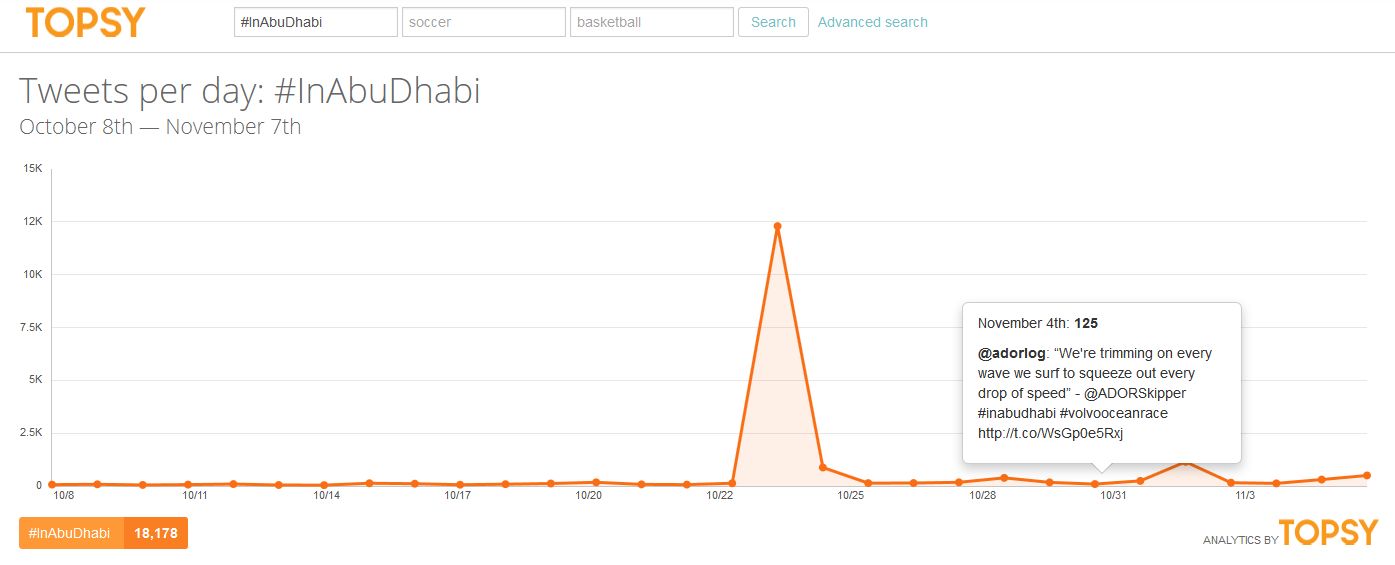
So far, so good. However, despite launching the campaign on October 20th it’s probably fair to say that the #inAbuDhabi hashtag is yet to trend among social media users. Most of the usage has been by corporate accounts related to tourism such as @VisitAbuDhabi, @AbuDhabiEvents and @EtihadAirways.

The hashtag #InAbuDhabi had a strong start but has tailed off rapidly since its launch

The hashtag #InAbuDhabi had a strong start but has tailed off rapidly since its launch

Will #InAbuDhabi become another #MyDubai? Does it have the emotional resonance with residents of the capital? Or should Abu Dhabi’s Tourism and Culture Authority not imitated Dubai and done something completely different? What do you think?

Should executives say sorry? Just Falafel’s ‘we forgot about the food’

Do you agree or disagree with what  Mohamad Bitar did, and why?

Do you agree or disagree with what Mohamad Bitar did, and why?

Should we admit when things don’t go the way we planned? It’s a tough one. Few corporates hold up their hands when plans go awry (unless there’s a crisis of biblical proportions). US-based corporates such as Walmart are now taking on media outlets to argue their point (this post from Walmart is a remarkable example of fighting back).

Even fewer company bosses in the Gulf go off track and talk from the heart. However, as with everything there are exceptions. Just Falafel is often touted as a home-grown success story, a tale of how a local brand has become global. Founded in 2007 in Abu Dhabi, the falafel-focused outlet has approximately 52 stores in 18 countries according to its website.

However, the chain isn’t to everyone’s tastes. A news story on the English-language website Arabian Business which announced the reasons for the departure of the chain’s former CEO Fadi Malas was used as a comment board by readers to explain their reasons for not liking the brand’s falafel.

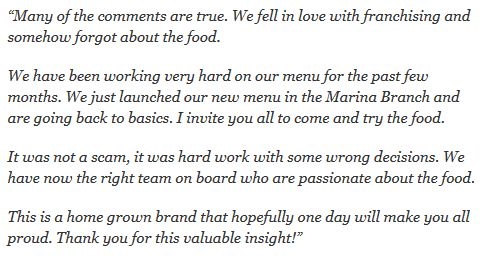
Fair enough you may say. But what followed was either inspirational or horrifying depending on which side of the open/control communications fence you’re on. The Just Falafel founder and MD, Mohamad Bitar, took to the site’s comments section to explain how the company had “forgot about the food”.

The comment as written by just Falafel's Bitar on ArabianBusiness.com

The comment as written by just Falafel’s Bitar on ArabianBusiness.com

The hacks at Arabian Business then took Bitar’s comments and span out a new story, to which readers took to explain what they believe went wrong and how Just Falafel can put it right.

For some consumers, an admission of error can be a powerful tool to reassess and re-engage with a brand. For others, it’s all about projecting an image that others can believe in, and not deviating from that message. Is Mohamad Bitar’s message a moment of genius (if we were in America, I’m sure we’d be calling his move crowd innovation), or does it signal a need for someone to crack the whip at the brand and get everyone on message?

Your thoughts?

The cost, and ethics, of paying Instagrammers in Kuwait

Kuwait is known for its love of Instagram and local Instagrammers (image source: http://www.248am.com)

A fascinating blog post by Mark of TwoFortyEightAM has me focusing on not just the cost of using Instagrammers, but the ethics of advertising through influencers in this region. In his post last week, Mark published a list of how much Kuwaiti Instagrammers get paid per post by advertisers. To quote from Mark’s blog, here’s a sample of some Kuwaiti Instagrammers and how much they/their agencies charge (note: prices are in Kuwaiti Dinars and one KD is just under 3.5 US Dollars).

@ahmad_asb (134,700 followers) KD450
@alimubarak1 (68,152 followers) KD450
@ameralshaibani (204,455 followers) KD450
@ascia_akf (1,005,559 followers) KD850
@azizbader (497,708 followers) KD850
@basharnoo (342,316 followers) KD400
@batoul_alkandari (224,233 followers) KD450
@bb_alabdulmohsen (59,123 followers) KD350
@dalalid (866,687 followers) KD850
@daneeda_t (358,396 followers) KD450
@dr_shammat (887,156 followers) KD750
@elham_alfedhalah74 (1,758,795 followers) KD900
@faisalalbasri (474,132 followers) KD850
@fawaz_alfahad (111,874 followers) KD400
@groupwanasah_ (444,647 followers) KD350
@hayaalshuaibi_79 (814,972 followers) KD700
@kaftanusman (516,835 followers) KD500
@nohastyleicon (811,541 followers) KD850
@omaralothman (92,482 followers) KD500
@thedietninja (351,952 followers) KD550
@therealfouz (216,096 followers) KD500
@theveeview (631,973 followers) KD500
@yousif_alblooshi (171,520 followers) KD350

You can see pricing lists for one agency, Ghaliah, here.

What fascinates me more than the pricing (and the analytics) is that of the ethics associated with influencers such as the above. In the US, if an influencer is taking money for a post they’ll have to make this known to their audience – it’s a legal requirement to ensure that their audience understands what they’ve just posted online is paid-for and therefore is an advert.

However, there are few Instagrammers here who do the same. As mentioned by one of Mark’s visitors, one of the Instagrammers above does use a * to denote a paid-for ad. But as for the others, there’s no suggestion as to what is paid-for and not paid-for.

Is this right? As a follower, I’d like to know if someone is paid for promoting another brand. It’s honest and forthright. Unfortunately, we will have to keep on guessing whether or not these posts are free or paid-for. Maybe this is one area where we need more government legislation to help consumers know what is really going on.

As for the costs of these Instagrammers, it’d be interesting to know how advertisers track their return-on-investment for sponsoring these paid-for posts. While Kuwait is one of the largest markets for Instagram in this region, it’s still difficult to know what percentage of followers is real and what percentage is fake. Similarly, when you’re spending over $2k USD on an Instagram post what are your intended outcomes as an advertiser?

I’d love to hear your thoughts on the above, as well as how much Instagrammers get paid in the rest of the region. Ta for now!

The challenge of control in the age of social media – Garnier, the Israel-Gaza conflict and the threat of boycott

How much damage has Garnier Israel done to the Garnier global brand through its local actions? (image source: http://www.deliberation.info)

Listen long enough to any communicator working for a multinational in an emerging market and they’ll touch on the issue of what is called ‘corporate’. The concept of centralized communications, of control being exerted from head office over global communications is understandable – corporations want to ensure that the message being disseminated is consistent with the aims of the company as a whole. Rather this than each country office doing as they wish, which may result in local messages which are not in alignment with the global communications.

Combine this with the reach and immediacy of social media, and the implications for going off-message can be explosive. Many brands have been implicated in the recent Israel-Gaza conflict, and issues such as this have the ability to polarize opinion, particularly online where millions have been expressing their support for and anger with one side or the other.

While many of the brands who have been targeted by Pro-Palestinian groups advocating for boycotts have in effect kept their own counsel and said nothing (with the exception of Starbucks which took the step of reiterating that it neither operates in Israel nor supports the Israeli army), Garnier was caught out by its local operations.

Halfway through the conflict Garnier Israel had donated 500 gift packs to StandWithUs, an Israeli advocacy group which promotes the country to the world through social media. During July and August StandWithUs also undertook a number of domestic initiatives such as providing gift packs to soldiers on the front line and in support functions.

First, StandWithUS donated the 500 gift packs from Garnier to a group of female Israeli soldiers. The organization then promoted the handout on its social media channels (most prominently on Facebook), with the following comments:

“We are honoured [sic] to be delivering these “girly” care packages for our lovely female IDF fighters!

Today’s delivery of care packages was stocked with thousands of products for our girls protecting Israel. They even received facial soaps and minerals, so they can still take care of themselves, eve while defending the country.

Shout out to the Garnier Israel|גרנייה for the amazing donation of facial soaps, minerals and deodorants!”

Unfortunately for Garnier, the post was quickly picked up by Pro-Palestinian social media goers. As the UK’s Independent newspaper noted on Saturday the 9th of August, the Facebook post alone had been shared over 22,000 times and had garnered 3,000 comments, most of which were calling for a boycott of Garnier products. The post has also inspired a hashtag, #BoycottGarnier, calling for consumers to shop buying the brand. Even Garnier’s own brand ambassador to the Arab World, Hind Sabry, took to the media to voice her displeasure at what had happened. The Independent curated some of the reactions to the post which I’m including below.

https://twitter.com/cnimhearthaile/statuses/495962711373938689

A week after the now-infamous post Garnier USA released a comment distancing itself from the donations by Garnier Israel (have a look below). But, is this too little, too late? In a globalized world of brands which are commonplace in every country on the planet and which need to appeal to as many consumers as possible, what can companies do to ensure that the action of local entities doesn’t harm their global image when it seems that nothing can be communicated to an external audience in private?

“Garnier values peace and harmony and has a strict policy of not getting involved in any conflict or political matter. The hand-out of about 500 products was part of a local retailer initiative. This was managed strictly at local market level and we are very sorry if anyone was offended,” Garnier’s Corporate Communications Director Ms Kerr said.

In the age of social media, the assumption has to be that if the message is going to alienate a specific stakeholder group, then just don’t put it out there, period. For corporations the size of Garnier, that’s easier said than done.

PS To make matters even worse, Garnier’s apology has reportedly upset Israelis who have now vowed to stop buying the company’s products according to the Times of Israel.