The cost, and ethics, of paying Instagrammers in Kuwait

Kuwait is known for its love of Instagram and local Instagrammers (image source: http://www.248am.com)

A fascinating blog post by Mark of TwoFortyEightAM has me focusing on not just the cost of using Instagrammers, but the ethics of advertising through influencers in this region. In his post last week, Mark published a list of how much Kuwaiti Instagrammers get paid per post by advertisers. To quote from Mark’s blog, here’s a sample of some Kuwaiti Instagrammers and how much they/their agencies charge (note: prices are in Kuwaiti Dinars and one KD is just under 3.5 US Dollars).

@ahmad_asb (134,700 followers) KD450
@alimubarak1 (68,152 followers) KD450
@ameralshaibani (204,455 followers) KD450
@ascia_akf (1,005,559 followers) KD850
@azizbader (497,708 followers) KD850
@basharnoo (342,316 followers) KD400
@batoul_alkandari (224,233 followers) KD450
@bb_alabdulmohsen (59,123 followers) KD350
@dalalid (866,687 followers) KD850
@daneeda_t (358,396 followers) KD450
@dr_shammat (887,156 followers) KD750
@elham_alfedhalah74 (1,758,795 followers) KD900
@faisalalbasri (474,132 followers) KD850
@fawaz_alfahad (111,874 followers) KD400
@groupwanasah_ (444,647 followers) KD350
@hayaalshuaibi_79 (814,972 followers) KD700
@kaftanusman (516,835 followers) KD500
@nohastyleicon (811,541 followers) KD850
@omaralothman (92,482 followers) KD500
@thedietninja (351,952 followers) KD550
@therealfouz (216,096 followers) KD500
@theveeview (631,973 followers) KD500
@yousif_alblooshi (171,520 followers) KD350

You can see pricing lists for one agency, Ghaliah, here.

What fascinates me more than the pricing (and the analytics) is that of the ethics associated with influencers such as the above. In the US, if an influencer is taking money for a post they’ll have to make this known to their audience – it’s a legal requirement to ensure that their audience understands what they’ve just posted online is paid-for and therefore is an advert.

However, there are few Instagrammers here who do the same. As mentioned by one of Mark’s visitors, one of the Instagrammers above does use a * to denote a paid-for ad. But as for the others, there’s no suggestion as to what is paid-for and not paid-for.

Is this right? As a follower, I’d like to know if someone is paid for promoting another brand. It’s honest and forthright. Unfortunately, we will have to keep on guessing whether or not these posts are free or paid-for. Maybe this is one area where we need more government legislation to help consumers know what is really going on.

As for the costs of these Instagrammers, it’d be interesting to know how advertisers track their return-on-investment for sponsoring these paid-for posts. While Kuwait is one of the largest markets for Instagram in this region, it’s still difficult to know what percentage of followers is real and what percentage is fake. Similarly, when you’re spending over $2k USD on an Instagram post what are your intended outcomes as an advertiser?

I’d love to hear your thoughts on the above, as well as how much Instagrammers get paid in the rest of the region. Ta for now!

Will Huffington Post’s entry into the Gulf be a game-changer?

How will the Huffington Post affect the Gulf’s media landscape? We’ll find out early next year. (image source: http://www.aim.org)

Being in the Middle East’s media sector can often feel like waiting for a bus. You can wait for years for a new launch (post-2008 in any case) and then all of a sudden you have two of the world’s largest news portals announcing expansion plans. First we had Buzzfeed, and now we have the Huffington Post. The local site Doha News broke the story earlier this month. According to the piece, the site will be partnered by the former director general of the Al Jazeera Media Network Wadah Khanfar and his media firm Integral Media Strategies.

The site will be in Arabic and will launch early next year. HuffPost Arabi, as it will be known, will be based in London. HuffPo founder and editor-in-chief Arianna Huffington is quoted by Doha News as saying the site would “bring more Arab voices into the conversation and deepen the world’s understanding of life in the Arab world, from its problems to its accomplishments to its untapped potential.”

The site will include a combination of aggregation, blog posts from a wide variety of sources and original reporting from HuffPo reporters and Khanfar’s team.

Launched in 2005, the original Huffington Post redefined online media by working with bloggers to aggregate news. The site was the first online news portal to win a Pulitzer and was sold in 2011 for 315 million dollars to AOL. Besides English, the Huffington Post is published in French, Spanish, Italian, Japanese, German, Portuguese and Korean.

However, how will the Arabic be received? Firstly, Khanfar was one of the driving forces behind the success of Al Jazeera. However, with him at the helm HuffPost Arabi is likely to be persona non grata in many of the Gulf states due Al Jazeera’s implied support for Islamist groups and perceived interference in the internal politics of governments across the region.

In addition, much of the dialogue that the Huffington Post is looking to encourage in the region can already be found online on social media. With its base in London, five thousand kilometers from the Gulf, how will the HuffPost Arabi be able to distinguish itself in a crowded media landscape that is government controlled? I can’t wait to find out.

Coca Cola’s #OpenUp campaign to promote sharing and caring in the Middle East

Coca Cola has hit upon an interesting initiative for its latest digital campaign, with the aim of promoting openness between families. Released with the hashtag #OpenUp on YouTube, Coca Cola has developed two videos over the past eight days. The first, and for me the most moving, is that of Saudi chef Badr. Badr left behind the family tradition of architecture to study and become a cook, which is a rarity in Saudi society. The video and story are both well conceived and directed.

http://youtu.be/jVr_OiFt020

The second video features a social media star from Kuwait, named Ascia. Ascia recounts the challenges she has had to overcome in society as she has pioneered her ideas through Instagram. She thanks her husband Ahmed for the support he has shown her.

http://youtu.be/Dhhgb_Fs77Q

What do you think? Are the concepts powerful enough for you to share your #OpenUp story? Do you find them sincere or too scripted? Let me know your thoughts on the content and on Coca Cola’s work here. I’ll keep you posted on any additional videos that Coca Cola posts for this campaign.

Turkey, Twitter and how a ban couldn’t/wouldn’t happen in the Gulf

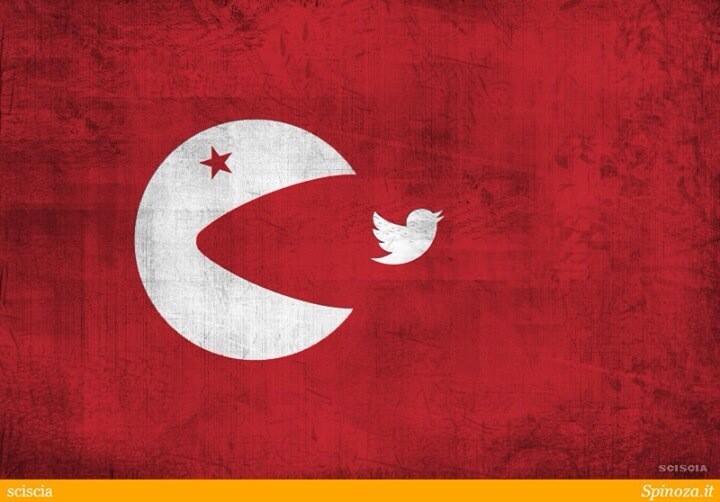
While Turkey is busy trying to gobble up Twitter, there’s little chance of anyone in the Gulf banning social media any time soon (image source: http://www.globalpost.com)

Last week, we in the Arab world were treated to a spectacle that we’re all too often participants in. Instead, we looked on as the government of a neighboring country pulled the plug on a social media service and denied its citizens and residents the right to use Twitter. The story behind the move by Turkey’s Prime Minister, Recep Tayyip Erdoğan, to block access to Twitter is fascinating, a page-turner about corruption, dissent and how one man is trying to dominate political will in his own country (have a read of the background here, in a wonderful piece written by the New Yorker’s Jenna Krajeski).

A question/tweet by the Wall Street Journal’s Ellen Knickmeyer about the situation in Turkey from a Middle Eastern perspective got me thinking about the subject. Here’s my take on the Gulf states country-by-country.

Saudi Arabia

Let’s start with the largest country in the region, Saudi Arabia. There are millions online and active on social media in the Kingdom (both Twitter and Facebook have fifteen million Saudi users between them – Facebook has approximately eight million users and Twitter just under seven million ). For many, social media is a release, a forum for open debate where anything and everything can be discussed.

The whole spectrum of Saudi society is online and using social media – some of the most popular and prolific tweeters are religious scholars. while there is criticism of policy online, would the government be willing to risk a public backlash any social media channels were to be closed? Rather, Saudi’s social media policy can be summed up in one sentence – do what you want online but we are watching you. Saudi’s online laws, which have recently been rehauled, allow for citizens to be detained for their online activities (a recent piece by Abeer Allam for Al-Monitor covers recent developments in the Kingdom).

Bahrain

The second Kingdom on the list, Bahrain has suffered more than most over the past three years. Bahrain’s social media has become almost as polarized as the situation in the country, between those who support the government and those who support the opposition. However, despite the war of words online Bahrain has never threatened to pull the plug on social media (there was a communications blackout during the early days of the political crisis in Bahrain).

Instead, the island state has tightened up its online legislation and has cracked down on bloggers and other activists who use social media (Global Voices’ editor Amira AlHussaini wrote a piece about the arrest of blogger Mohammed Hassan in July 2013).

The Kingdom uses social media to communicate both locally and globally on issues such as security, foreign policy and terrorism. Would Bahrain seek to indirectly legitimize the opposition’s claims that the government is cracking down on media through pulling the plug on social media? Not likely.

The United Arab Emirates

The second largest country in the GCC by population, the United Arab Emirates has taken to social media like a duck to water; the country’s leadership are online, the country’s businesses are online and the country’s population are also online tweeting, updating their statuses and uploading pictures of every single meal and building around them mainly on their smartphones. The UAE’s population communicates about literally everything, except to criticize.

There’s so few people in the UAE who aren’t supporting the country’s leadership that the thought of any social media being pulled seem ludicrous. For those that do dissent the UAE introduced in 2012 more stringent online laws which include jail time for those that defame the country. These laws have been put into effect.

Kuwait

Maybe surprisingly for those who don’t know the region, Kuwait has the freest media industry in the region, with columnists regularly criticizing government policy. Kuwait’s parliamentary system and the level of public discourse in the country means that few subjects are off-limits. Kuwait’s social media scene is also buzzing – Twitter reckons that over half of the country’s population, 1.5 million out of 2.7 million, are active users.

Even in Kuwait however, there have been cases of people being jailed for their tweets, either for insulting the Emir or for blasphemy. Still, it’s hard to see how or why any social media channels would be banned in a country that is known to enjoy a ‘debate’ every now and then.

Oman

On the periphery of the Gulf, Oman was affected by the Arab Spring. The country’s ruler Sultan Qaboos introduced sweeping reforms to appease Omanis calling for a better standard of living. The country has contended with online activists and the authorities have warned people not to spread libel and rumours that prejudice national security. Would Oman seek to shut down social media? Again, it’s unlikely.

Qatar

Last but certainly not least, Qatar has championed its own brand of journalism aka Al Jazeera for over a decade now. The country with its vast gas reserves has not had to contend with any political discussions about its governance and future. Qatar has jailed one person, a Qatari national, for publishing a poem on Twitter.

In addition, the country’s government is seeking to introduce a revised cybercrime law which would increase and expand the capacity under which a person communicating online could be jailed for (for a detailed news piece read this article by Matt Duffy on Al Monitor here). However, there’s little chance of anyone in government shutting down any social media channels in the country.

In short, social media has changed the Gulf just as it’s changed the world. The region’s citizens and residents have much more freedom to talk about issues online. The Gulf’s governments and their business interests have also become adept at using social media to promote their own messaging and market themselves. The region’s citizens are aware that even online they’re being monitored (this BBC article describes this notion of being watched) and most of them will tread carefully about what they say and how they say it. For others, they’ll go online anonymously and tweet to their heart’s content.

For governments, social media has become a release value on societal pressures and the message to nationals is clear – talk about whatever you want but don’t criticize. Examples have been made of those who do. But, while the governments have the ability to cut off social media and even throttle or close access to the internet, thankfully the Gulf isn’t Turkey. No one here is going to ban Twitter or any other social media channel any time soon.

The Gulf, social media and its self-deprecating humour

The Gulf is known for many things but a sense of humour hasn’t traditionally been on the list, even less so self-deprecating humour. With the advent of social media, in particular YouTube, both the Gulf’s residents and nationals have started to develop content like there’s no tomorrow. The best is currently coming from Saudi Arabia. One example is La Yekthar, one of the most popular comedy shows on the net. The team regularly tackles and takes on stereotypes of Saudis, and one of their latest clips was a fantastic set-up of how Saudis are often perceived by foreigners. The video, which is below, also sends a not-so-subtle message to Saudis that this type of image, of arrogance and violence, isn’t the right thing to do.

Bahrain has also followed suit with a number of send-ups of the typical Bahraini stereotypes. The clips, which are common on the video-sharing site Keek, focus on a variety of stereotypes which are mainly based on geography (for example, Al-Riffa and Muharraq). I’m going to have to search for these but I’m going to upload as soon as I can.

Even Qatar is getting in on the act. The only local Qatari comedian I know, Hamad Al-Amari, routinely does stand-up routines poking fun at Qatari stereotypes before switching effortlessly into an Irish accent (he spent part of his childhood in Ireland). Have a look at one of his sets below.

And then there’s the UAE. While there are a number of local comedians here including the likes of Ali Al Sayed the country has arrested those, even nationals, who have poked fun at the country’s stereotypes. Emirati Salim Dahman and a group of young males who made a spoof YouTube video named the ‘The Deadly Satwa Gs’ were arrested after uploading the clip. No reason seems to have been given for their arrest, but the assumption would be that they’ve been detained for insulting national sensitivities.

To quote from 7Days, which featured the story yesterday, ‘The Deadly Satwa Gs’ video is a spoof of young people who try to act tough. At the martial arts school, the recruits learn how to throw a shoe and call for back-up on their mobile phones. When they graduate from the school, they are all given Barcelona football jerseys, supposedly matching a style worn by young men in Dubai.

The video, which is still available online, is hardly groundbreaking satire and is fairly tame when compared to the content coming out of the Magic Kingdom. However, comedy isn’t always a laughing matter depending on where you are in the Gulf.

PS If you want to know why I haven’t mentioned Kuwait ask any Gulf Arab about Kuwaitis and humour.

Social media and diplomacy – @IsraelintheGCC, Israel’s virtual embassy in the Gulf

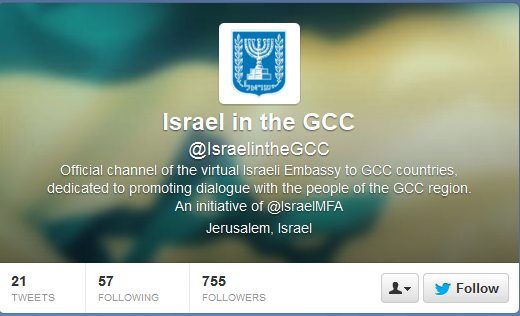
The launch of the @IsraelintheGCC twitter account is a cheap but potentially effective media channel for the Israeli government

The launch of the @IsraelintheGCC twitter account is a cheap but potentially effective media channel for the Israeli government

No matter your political persuasion, you have to admit that the Israelis are an ingenious bunch. Their latest idea is a simple concept, a virtual embassy for a part of the world where there’s little/no Israeli State presence, the Gulf. Israel, which doesn’t enjoy official diplomatic relations with any of the Gulf states, has launched a ‘virtual embassy in the Gulf’ through Twitter. The account, which is named @IsraelintheGCC, aims to “open lines of dialogue” with people living in the Gulf according to a report by the UAE-based English-language daily Gulf News. According to the Israeli daily Haaretz, the person behind the idea is Yoram Morad, Director of the Department of Digital Diplomacy at the Ministry of Foreign Affairs of Israel.

Not unsurprisingly, Israel has always faced challenges when trying to communicate its point of view to its Arab neighbours. However, that hasn’t stopped the State from engaging various mediums to argue for its policies. Israel launched an Arabic-language television channel in 1994 following the announcement of the Israeli-Palestinian peace process. The establishment of the @IsraelintheGCC twitter account follows news of a potential re-engagement between the Israelis and Palestinians as well as mounting pressure on Iran to halt its nuclear enrichment programme.

It could be argued that Israel has been much more active than the Arab states in terms of communicating its key messages – there were plans to launch a Hebrew-language channel in Egypt as of last year according to the Christian Science Monitor, but I haven’t heard much in the way of an actual launch.

The messaging employed by @IsraelintheGCC, which is being run by the Twitter account of the Israeli Foreign Ministry, would appear to be aimed at propagating a more diplomatic tone than that of Israel’s internal politics. The account, which has tweeted 21 times to date, has only quoted the country’s Prime Minister twice (its fair to say that Bibi Netanyahu wouldn’t win many popularity contests in the Gulf), but it has talked about social media in the Arab world, sustainability issues, and wished followers a Ramadan Kareem. The one time Netanyahu has been quoted was in relation to European sanctions on the Lebanese organization Hizbollah which isn’t well liked in the Gulf due to its pro-Iranian stance. There are tweets in Arabic too. Have a look at some of the posts below.

Over the past couple of years social media has allowed companies, politicians and celebrities to directly bypass the media and reach out directly to anyone that wants to listen. Now the same can be said of social media for States who, for diplomatic reasons, cannot establish a physical presence. I’ll be following the account, and am looking forward to seeing how long this project lasts, how much dialogue it generates and how successful it becomes for the Israeli government.

Why do Middle East executives not blog and five reasons for starting a corporate blog today

Is this question even relevant any more? Middle East execs, what are you waiting for? (image source: http://www.homeschoolblogging.com)

There’s no doubt about it, blogging is huge. But don’t take my word for it, let’s look at the numbers. On blogging platform WordPress there are almost seventy million blogs, which are read by 360 million people each month. There’s even more blogs on the Tumblr (over 100 million as of April 2013) and Livejournal platforms (approximately 62 million blog sites as of April 2013). While blogging may not hug the headlines as much as social media, the online writing format continues to grow. By the end of 2011, NM Incite, a Nielsen/McKinsey company, was tracking over 181 million blogs worldwide, compared to only 36 million in 2006.

Similarly, blogging has become one of the most popular tools among corporations in a number of geographies. Research by the Center for Marketing Research at the University of Massachusetts has pointed to growth across both the Fortune 500 and the Inc. 500 in 2012. Forty-four percent of Inc. 500 companies, the fastest publicly-firms in America, were blogging, while twenty-eight percent of America’s largest publicly-listed firms had a corporate blog. The most interesting statistic was that sixty-three percent of CEOs of companies who did blog contributed personally to content.

These statistics from the Center for Marketing Research at the University of Massachusetts Dartmouth underline how popular blogging is with corporations in the US (image source: http://www.umassd.edu)

It’s fair to say that the Middle East corporate world, and the Gulf in particular, doesn’t share this same level of enthusiasm for blogging. Few publicly-listed companies have a blog – we’re literally talking a handful – and even those blogs that are online are rarely updated.

While it’s hard to speculate on the reasons why so few CEOs blog here, the one assumption that I’d make is either they don’t feel a need to communicate with their stakeholders or they don’t want to reveal information through a medium such as a blog (this subject does need more research, but the lack of blogging here maybe reflects a wider lack of understanding of digital communications).

For a pastime that was once considered on the fringe of journalism, blogging is a pivotal online media channel for breaking news, sharing content and developing an audience. Blogs are often quoted in the media and it allows a corporation to control the message and yet promote a healthy dialogue with its internal and external stakeholders.

There are many reasons for starting a corporate blog, but we’re going to focus on the five basics which should underline to your chief executive officer the value in having a blog for your company and including blogging as part of our communications strategy.

1) It’s all about transparency

We all want and sometimes need more information, and yet corporations often keep too much of a lid on what external stakeholders see and know. A blog allows you to let others look inside the company and give them a better understanding of any and every issue you care to tackle, from sustainability to product development and customer relations.

The benefit of transparency is increased trust. Your (potential) customer base should better understand why you do what you do. Customers and investors will feel much better informed and they may be more willing to buy your product and invest in your company.

However, don’t take transparency to mean republishing your press releases in a different format. Some of the most successful corporate blogs are those that take a nuanced approach, that tackle the good and the bad. The less biased you are, the more likely you are to be trusted when publishing a blog.

2) Bringing some humanity to the Corporation

Corporations are often seen as soul-less, grey worlds. And the same can often be said for a corporation’s communications approach; the bland press releases, the staid web-site which rarely seems to be updated. As people we all thrive on interaction and dialogue and that’s why blogs are so successful. They’re your corporation’s personal voice, a voice that need not use corporate-speak and jargon but instead adopt a tone that is more informal and conversational.

Your blog will need a face. It could be the CEO or another senior person. But a blog doesn’t need to be written by an executive. Some of the most insightful blogs are written by product managers, researchers and others who are passionate enough to make what they are saying interesting.

The beauty of blogging is that you don’t need to stay on message all the time. You can write about diverse topics which don’t need to be about the company. Customers will see through marketing pitches so step away from the self-promotion. Instead, offer human insights into recent events, industry news and other related information. Let your customers know more about you than just your product line-up and they’ll begin to become more loyal to your brand.

3) Starting a dialogue

Unlike many other forms of communication, blogs are there to receive feedback as well as to be a voice for the company. When you engage readers and respond to dialogue – both positive and negative – you’ll be doing much more than just promoting your company.

Blogs are a great way to test the water, to understand your customers’ perception on certain issues. And even if the comments are negative, at least you’ll know what your customers are thinking and be able to respond and bring them back on board. Get talking on a blog and even those stakeholders who may not agree with your company’s strategy will appreciate your efforts to talk with and about these issues in a forum that allows for and encourages debate.

4) Drive that web traffic!

Want a business reason for blogging that your sales team can measure? How about the web traffic that a blog will drive to your site. Many web engines such as Google rank sites based on content, on relevance and popularity. A blog that is updated regularly, that has content that is popular and that links to other sites you’ll find your own corporate site being ranked much higher by search engines such as Google. Once your own blogging site has become established you’ll find others linking to you, which will further propel your blog to the top of the search rankings and towards the nirvana of a first page listing.

5) Measure your blogging success

The beauty of communicating on your own site is that you can analyze your visitor statistics, to understand where your visitors are coming from, what they’re doing on your blog, what they’re using to read your blog (are they viewing your blog on a PC, a tablet or a mobile?) and how they’re reaching your site. The beauty of web analytics is that the more you have, the better you can make your blog and improve your visitor numbers. From there you can start defining your blog’s goals and measure your goal conversion, review how you’re promoting your blog and understand which topics and keywords are the most successful in driving traffic to your site.

Unlike traditional public relations metrics, online measurement tools are instant and can give you a full picture of what you’re doing right and how you can improve your blogging outreach. Blogging technologies are evolving but don’t feel daunted by the technological challenge. Blogging can be simple enough to begin with, and most blogging platforms have their own in-built analytics to help you out.

Red Bull and a crisis in Kuwait that hasn’t hit the headlines

Surprisingly, Red Bull has not hit the headlines for what appears to be a number of major events in Kuwait. The company, best known worldwide for popularizing the energy drink concept, has apparently been embroiled in a crisis in Kuwait after a young Kuwaiti passed away after drinking too many cans of Red Bull. I’m going to continually use the word apparently as there’s no information out there in English and the only information in Arabic can be found on chat rooms.

According to Kuwait’s social media scene the Kuwaiti Ministry of Commerce has of the end of March banned all sales of Red Bull to those under 16 years of age. The below are a news piece from Kuwait’s news agency Kuna and an image shared over twitter of a Red Bull fridge with a sign in Arabic saying that Red Bull is not for sale to those under 16 years of age. Here is the same info on a discussion forum.

The article from Kuna on Kuwait’s decision to ban Red Bull sales to those under the age of 16. There’s no publishing date on this however (credit: Downtimes)

And a sign on top of a fridge which states that no sales of Red Bull are allowed to those under 16, which is supposedly from a Kuwaiti grocery store (credit: UAEwomen forum)

Kuwait’s Twitter community has also been focusing on the news, but surprisingly the topic hasn’t been trending outside of the country.

Whether this is all true or not, as it always the case with the internet the story is spreading especially in Arabic. The news can now be found on sites across the Gulf in Arabic. The fear may be that other GCC countries will follow Kuwait’s lead (such an action wouldn’t be unusual). However, it’d be fascinating to know what Red Bull has done to tackle this issue. There have been suggestions that Red Bull has upped its ad spending to tackle the issue, and that may explain why there’s little news of this in Kuwait’s vibrant media scene.

However, Red Bull has avoided the spotlight before. If you do read Arabic have a look at this piece on Red Bull apparently employing women to hand out cans in Riyadh back in December. Some would say brave, others would say silly.

Women walking outside of Riyadh’s Kingdom center apparently handing out Red Bull to passing motorists (credit: Murmur website)