Innovation and the need to think simply

Innovation starts with the ability to ask a question

Innovation starts with the ability to ask a question

This week is a special one in the UAE – it’s officially Innovation Week and the country is full of activities extolling the virtues of innovation and all that this word entails (I admit, I’ve come to dislike this word, not because of what it stands for but rather its constant misuse).

As I’m a media junkie, two news pieces stuck out. The first was an effort by the Dubai Media Office to promote innovation through its Media Innovation Lab, a quarterly event that aims to promote a culture of innovation and creativity in media. To quote from Emirates 24/7, “the initiative seeks to share knowledge on media-related innovation among corporate communication and media professionals and media students. It is also in line with the UAE leadership’s directives to promote innovation in all sectors.”

The second is even more ambitious, and, quite literally, out of this world. I’ll let The National’s copy explain this innovation for you:

High school and university students from across the UAE have the chance to directly shape the future of space exploration.

Two competitions giving them the opportunity to watch their experiments blast off on a rocket to the International Space Station were announced on Tuesday at the launch of The National Space Programme in Abu Dhabi.

In the initial stages of the programme, The National, Abu Dhabi Media’s English-language newspaper, has linked up during Innovation Week with the UAE Space Agency, Boeing and other public and private organisations.

The National Space Programme contests are Genes in Space, challenging high school pupils to create a DNA analysis experiment, and the Satellite Launch project, in which a university team will build a satellite.

There’s a third strand I’d like to bring in here. I had the pleasure of talking to a university professor who teaches media here in the UAE. He was recalling the story of an occasion when the power failed at his academic institution. One of his students, a local, asked if she should cover the happening for the university student publication. He said yes and encouraged her to go and follow up with the operations department who look after issues relating to maintenance.

This student did just that and headed down to the operations department to understand more about the power cut. When she did meet someone, she asked what happened and explained why she was asking a question. And the response? “Why are you asking such questions? Who is your professor?”

While I love the ambitions of blasting into space or talking about creativity in the media, I’d love to see us put our feet on the ground and push for a climate where a question is welcomed, both from each of us as individuals as well as the media. As for the curious student, the brave lady did publish her story. She’s my innovator this week.
More media launches in the Gulf – Newsweek Middle East and Inc.

Who wouldn’t want to be a publisher in the Gulf right now? While the industry is losing money left, right and center in the US (and in Europe), the Gulf is seeing a glut of publication launches. The newest titles are Newsweek Middle East and Inc. Newsweek Middle East was launched recently by ARY Digital Network, a Pakistani television company. Their first issue was launched in English at the end of October and an Arabic edition is also in the pipeline. The website is http://www.newsweekme.com. The publication’s two front pages are below, along with a short video from their Twitter feed (the team have accounts on Facebook and on Instagram, and for those of you young uns out there, they are also running a Snapchat account under the name @NewsweekME).

The second publication, which is yet to launch is Inc. magazine, a monthly publication focusing on fast-growth companies. To be based in Qatar, the publication has been hiring journalists from Dubai publishers and should launch by the turn of the year in both English and Arabic.

https://twitter.com/NewsweekME/status/659700459763015681

https://twitter.com/NewsweekME/status/662256194749390848

https://twitter.com/NewsweekME/status/659419348239446016

While the launches of local editions for two global titles is to be welcomed, especially the Arabic-language editions, the question is if/when will this region suffer the same slowdown in terms of ad sales (Newsweek stopped publishing in the US for sometime in 2012 and 2013 and went fully digital for a year). With the Gulf becoming a global pioneer in terms of digital firsts among consumers (for example smartphone penetration, social media usage), will advertisers realize there’s more ROI to be had in advertising online rather than in print? Let’s wait and find out.

Local Insights – the UAE’s Media Coverage of the Conflict in Yemen

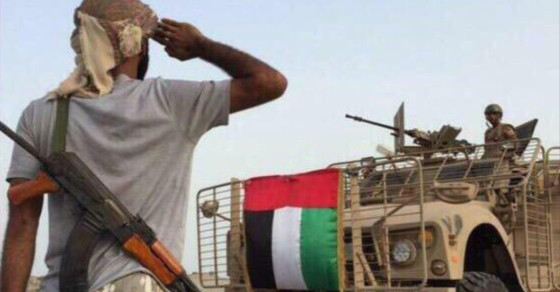
The conflict in Yemen and the UAE's involvement has helped to bring the community together, according to Emirati editors (image source: vocativ.com)

The conflict in Yemen and the UAE’s involvement has helped to bring the community together, according to Emirati editors (image source: vocativ.com)

I wanted to share a fascinating view into Arabic-language media opinions here in the UAE. This week saw the Emirati Media Forum here in Dubai. One of the topics up for discussion was the coverage of the conflict in Yemen. The conflict, which the UAE has been an active participant in since March of this year, has claimed the lives of approximately 70 Emirati combatants. The text below is from Gulf News and is a unique glimpse into how the conflict and those Emiratis who have died have helped to shape the Arabic-language media sector in the UAE and its coverage of the conflict.

The ability of Emiratis to transform tragedy into a sense of unity and national pride was the focal point of discussion at the second session at the Emirati Media Forum.

The session’s theme was ‘The UAE media’s responsible stance on the Yemen events’.

Mohammad Yousuf, president of the UAE Journalists Association, said the media was able to transform the sense of shock, tragedy and loss to positivity and pride.

Sami Al Riyami, Editor-in-Chief of Emarat Al Youm, said the Yemen war was a new experience for the UAE and for the people in the media sector.

“The news came as a shock to us too, as we are humans and Emiratis before we are media people. We were shaken by it as we were not used to seeing the bodies of our martyrs wrapped in the UAE flag — it’s an overwhelming sight. But we were able to turn the tragedy into love and pride for our country,” he said.

Explaining through various media channels why the UAE went to war, what the martyrs died for and what war entails helped in [achieving] this transformation, he said.

The media had no shortage of stories of heroism to write about, Al Riyami said, as the stories just presented themselves.

“It was not about scooping [from] other media outlets; we were all working together so we could get the information out to the people.” Al Riyami said.

In one instance, he said, one of their correspondents lost contact and they had no material to publish. Al Riyami said he called one of his contacts in another newspaper, who gave him the news material to fill the gap in coverage.

“It is our national duty, not a competition about who is getting exclusive content,” he said.

Ali Obaid Al Hameli, director of Dubai TV’s News Centre, said that with the loss of the first martyr on July 16 this year, media outlets felt a great sense of responsibility on how best to break this news to the people of the UAE and, more importantly, to the families of the martyrs.

“The UAE leaders’ engagement and stance and their heartfelt visits to the families of the martyrs and the wounded helped change people’s attitudes and made our job easier,” he said.

He said that they were shocked when they visited martyrs’ families, as the families were the ones consoling them and raising their spirits and not the other way round.

“Many of the families wished that they had more children — brothers and sons — to fight for the UAE,” Al Hamli said.

Abdul Hady Al Shaikh, executive director of Abu Dhabi TV, said that the media also shed light on the humanitarian efforts of the UAE in Yemen — and not just on the military intervention.

“We also wanted to show the Yemeni streets and people, not just coverage of our troops there,” he said.

On the topic of social media’s role, Al Riyami said it is every Emirati’s duty to offset rumours that surface on this platform, by giving correct information on the subject.

How Investigative Journalism Encourages Debate – the Case of Apple and Bloomberg

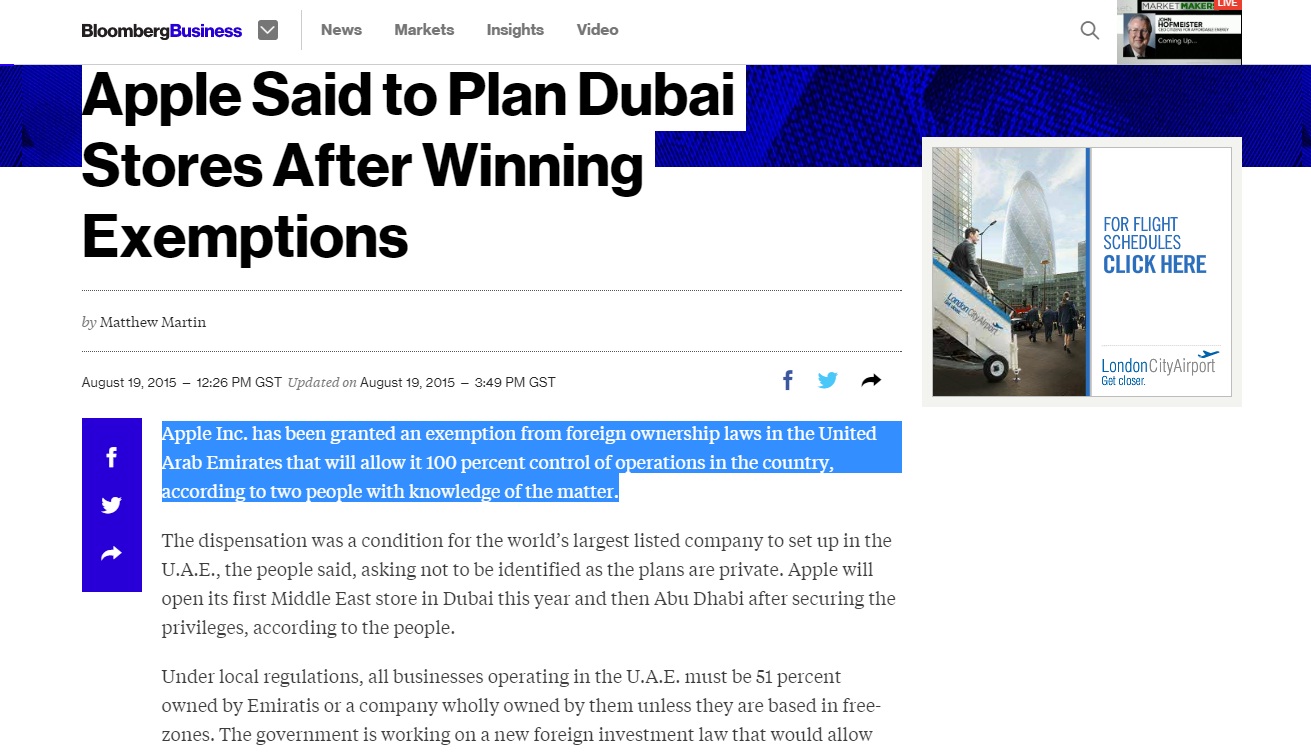
Bloomberg's scoop on Apple's ownership structure in the UAE was an example of investigative journalism that we often sorely miss in the Gulf

Bloomberg’s scoop on Apple’s ownership structure in the UAE was an example of investigative journalism that we often sorely miss in the Gulf

There’s no limit to the respect I have for good journalists. These people can toil away for weeks and months on a story, digging for a piece of information or a lead that will result in the next big story. We aren’t blessed with a great deal of original breaking news in the Gulf region; much of what there is out there is, I’ll admit, news which companies want to release to the media.

It’s refreshing to see news which isn’t essentially public relations, a story which has been diligently worked upon by an investigative journalist. One piece piqued my interest this week, the news of how the IT giant Apple has been granted an exemption from the UAE’s foreign ownership laws to fully own its operations in the UAE. The piece was written by Bloomberg’s Matthew Martin.

The piece is a public interest story which I’m sure Apple would not have wanted to be published and which, unsurprisingly, Apple didn’t respond to, though I’m told they had ample time to do so. As the doyen of modern journalism, Lord Northcliffe, said: “News is what people do not want you to print. All the rest is advertising.”

What I particularly like about such practices is the debate that it engenders, and how it gets people talking. For me, the story leaves me with a host of questions that Apple and the country’s authorities need to address for the benefit of the wider business community. Let’s hope we see more investigative journalism being practiced in the Gulf region. Goodness knows we need it.

How to control the message Egyptian style

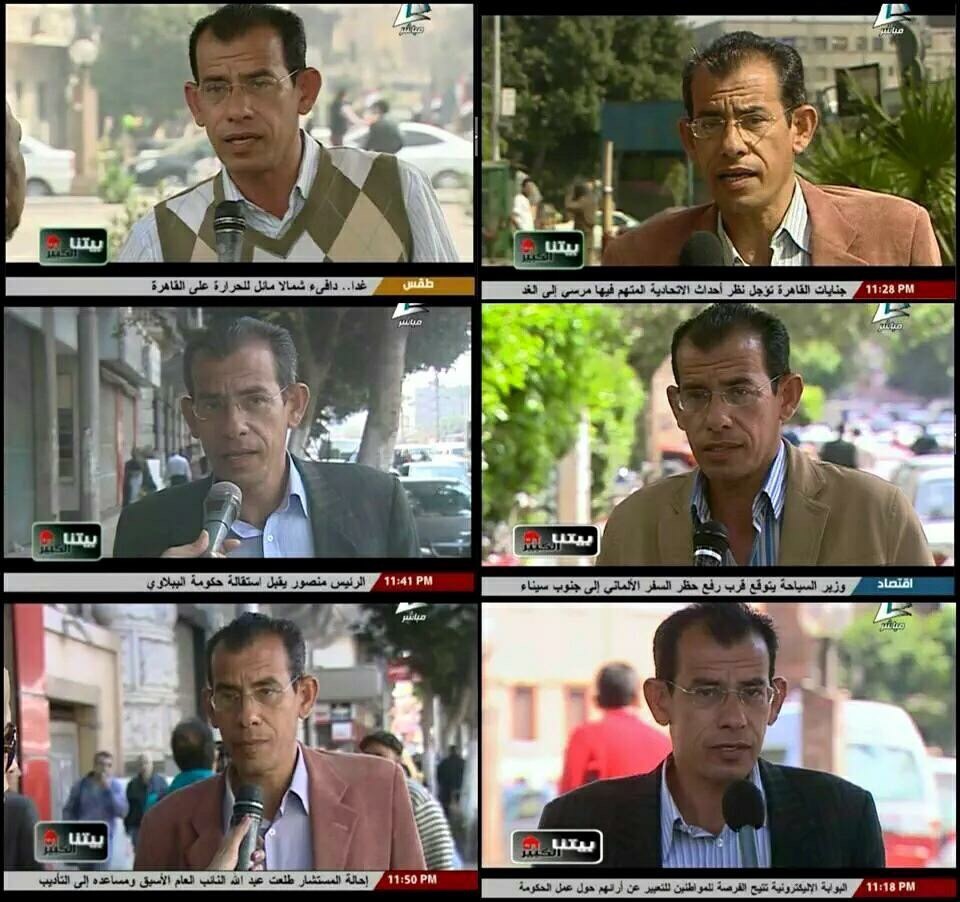
Us communications professionals think that we  control the message. In Egypt, that couldn’t be farther from the truth.

The below image has been circulating on Facebook for a couple of days now. It’s supposedly clips from random street interviews with Egyptians for one TV station in Cairo. But, as you sharp-eyed lot may have noticed, this is either the same man or Egyptian men all look the same.

As the saying goes, if you want something doing right then do it yourself. And this channel obviously doesn’t want the wrong message getting out.


Old News, New News: The strange tale of how the ten-year old drowning daughter story was reported as recent news

The Daily Mail was one of several UK-based publications to fail to fact-check the original story which was published in Emirates 24/7

The Daily Mail was one of several UK-based publications to fail to fact-check the original story which was published in Emirates 24/7

One could be forgiven for thinking it’s funny news season here in the Gulf. One story from Dubai’s shores went global this week, the tale of how an Asian father who prevented Dubai lifeguards from saving his drowning daughter, claiming she would be dishonoured if she was touched by strange men, has been arrested and prosecuted by authorities after his actions led to the death of the 20-year-old girl.

The piece was reported by the UAE’s English-language portal Arabian Business, after a post in the English daily Emirates 24/7. The story, a harrowing tale of how a young woman drowned because her father would not let the male lifeguards touch her, made headlines around the world, and was carried by the UK’s the Daily Mail, the Telegraph, the Metro and Sky News. Here’s the piece from Arabian Business.

An Asian father who prevented Dubai lifeguards from saving his drowning daughter, claiming she would be dishonoured if she was touched by strange men, has been arrested and prosecuted by authorities after his actions led to the death of the 20-year-old girl, Emirates 24/7 reported.

“The Asian father took his wife and kids to the beach for picnic and fun. The kids were swimming in the beach when suddenly, the 20-year-old girl started drowning and screaming for help,” Lt. Col Ahmed Burqibah, Deputy Director of Dubai Police’s Search and Rescue Department, told the website as he recounted the incident, which took place on a Dubai public beach.

“Two rescue men were at the beach, and they rushed to help the girl…. The father was a tall and strong man. He started pulling and preventing the rescue men and got violent with them. He told them that he prefers his daughter being dead than being touched by a strange man.”

“This is one of the incidents which I cannot forget. It shocked me and many others who were involved in the case,” he added.

The actions of the father resulted in the death of the young woman. The father was subsequently arrested for preventing the lifeguards from doing their job and aiding in the death of his daughter.

“He was prosecuted and sued by the concerned authorities,” Lt. Col. Burqibah confirmed.

Unfortunately, whoever picked up the piece from Emirates 24/7 didn’t see one small but pertinent piece of information from the original story.

Speaking to Emirates 24|7, Lt. Col Ahmed Burqibah, Deputy Director of Dubai Police’s Search and Rescue Department, recounting some of the worst incidents he had encountered in his tenure, said that this incident took place at a beach in Dubai.

The mistake was first picked up by the Guardian’s Media Monkey blog. The blog’s writer delighted in having a dig at the publications which had failed to fact check and republish the story as if it were a recent event.

When news editors across the land facing a slow news day on Monday saw the story of a father who let his daughter drown in Dubai because he “didn’t want strange men touching her”, they surely couldn’t believe their luck.

The Mail, Telegraph, Metro and even Sky News all jumped on the story, which came via Agence France Press.

However, Monkey is told that classifying the story as “news” might be stretching it a little.

Apparently the article – which originated on the website Emirates 24/7 – was from an interview in which lifeguards were asked to recount the strangest things that had happened to them. As someone who bothered to check out where it came from tells Monkey: “They mentioned this case of the Asian man who prevented his daughter’s rescue, but, and here’s the catch – it was from 1996.”

Perhaps it’s a case of any old news will do … at least when there isn’t much news at all.

The Gulf’s media is often criticized for not getting the facts right or forgetting to fact-check. But, it seems that even media outlets which are supposed to operate to a different standard can often fail to properly do their homework in the chase for a story which confirms their stereotypes of the region.

I’m now waiting for some journalist looking for a heart-wrenching scoop to pick up on the Cops save boy… villagers kill him with ‘love’ piece, again from Emirates2 4/7.

PS I’m not even going to go into the piece written by Arabian Business which poses the question ‘Does Dubai need more female lifeguards, in light of recent beach tragedy?’ How is this still online?

Did Arabian Business get hoodwinked by the Arab World’s most intelligent person?

Did Arabian Business fully fact check Dr Manahel's credentials before publishing this interview?

Did Arabian Business fully fact check Dr Manahel’s credentials before publishing this interview?

I just love obscure words, and hoodwinked is one of those phrases that we just don’t use enough. The term’s original meaning was to blindfold; its contemporary connotation is to deceive. I’ve finally got a reason to use this phrase in a question which I have on the cover story of the latest edition from Arabian Business.

For those of you who don’t know, Arabian Business is the most widely-distributed English-language weekly business magazine in the Gulf. The publication regularly breaks exclusives and its editorial team are among the most respected journalists in the business regionally.

This last issue was an interesting one. The cover was headlined by a lady called Dr Manahel Thabet, the founder of a business consultancy firm called Smart Tips. According to the Arabian Business piece, Dr Manahel Thabet has an IQ of more than 168, putting her in the top 0.1 percent of the world. Impressed? There’s more (and I’m now quoting from Arabian Business).

Arguably the smartest living Arab, Thabet has three PhDs. The latter, which she received a few days after our interview, suggests how education systems should cater to gifted and talented students to ensure they reach their greatest potential, a subject she is passionate about given her own experience as a gifted child.

Thabet considers herself a polymath — someone who is passionate in many areas — similar to Leonardo di Vinci, who was as great a scientist as he was an artist and engineer. Far from her latest thesis topic, her first PhD — which she obtained at the astonishing age of 25 — is in financial engineering and goes a long way to explain interest rate behaviour. She became the youngest person ever and only Arab to receive such a PhD magna cum laude (with great distinction).

The second is a 350-page groundbreaking formula that scientists and space researchers believe could help them measure distances in space without using the speed of light. The likes of Nasa and the French space agency have been competing for access to it.

All this has been achieved while running her own financial advisory firm and contributing to numerous organisations and boards.

All of this is remarkable, but the more people claim, the more I want to see and understand their credentials. And, this is where it gets interesting thanks to the internet, Google and a wonderful service called Reddit.

A number of Reddit users have taken it upon themselves to discuss Dr Thabet’s credentials, and they’ve taken a sledgehammer to a number of those qualifications.

At the end of the day, this isn’t about a person but more about a process. How do journalists in the region verify their sources? This isn’t the first time I have been left questioning a piece of journalism due to a lack of credibility (does anyone remember the fake press release on a non-melting ice concept for Dubai which was published in AMEInfo, Al Bayan, Al Khaleej and Gulf Today). But if there’s any doubt at all as to what a source is saying or their credentials, shouldn’t the journalist call it out?

Thoughts anyone?

The definition of ‘Nobness’ – the UAE, social media defamation and differing views from the Gulf

It’s that time of year again. I don’t mean Ramadan of course, the month of charity and kindness, but rather the time of year when we read about a case of defamation. Over the past week there was an outcry in Australia following the arrest of an Australian national in the UAE following comments she put up on Facebook. To quote from the Australian Broadcasting Corporation’s website:

In February, Jodi Magi, 39, took a photo of a car in her Abu Dhabi apartment block that was parked across two disabled parking spaces, without any disability stickers.

She blacked out the number plate and put the photo on Facebook, drawing attention to the seemingly selfish act, but not providing any identifying details or names.

However, someone in the apartment block complained to police and the case went to an Abu Dhabi court in June.

Ms Magi, who has lived in Abu Dhabi since 2012, said she was forced to sign multiple documents in Arabic without any translation.

Two weeks ago (at the beginning of July) she was found guilty of “writing bad words on social media about a person” and told she would be deported.

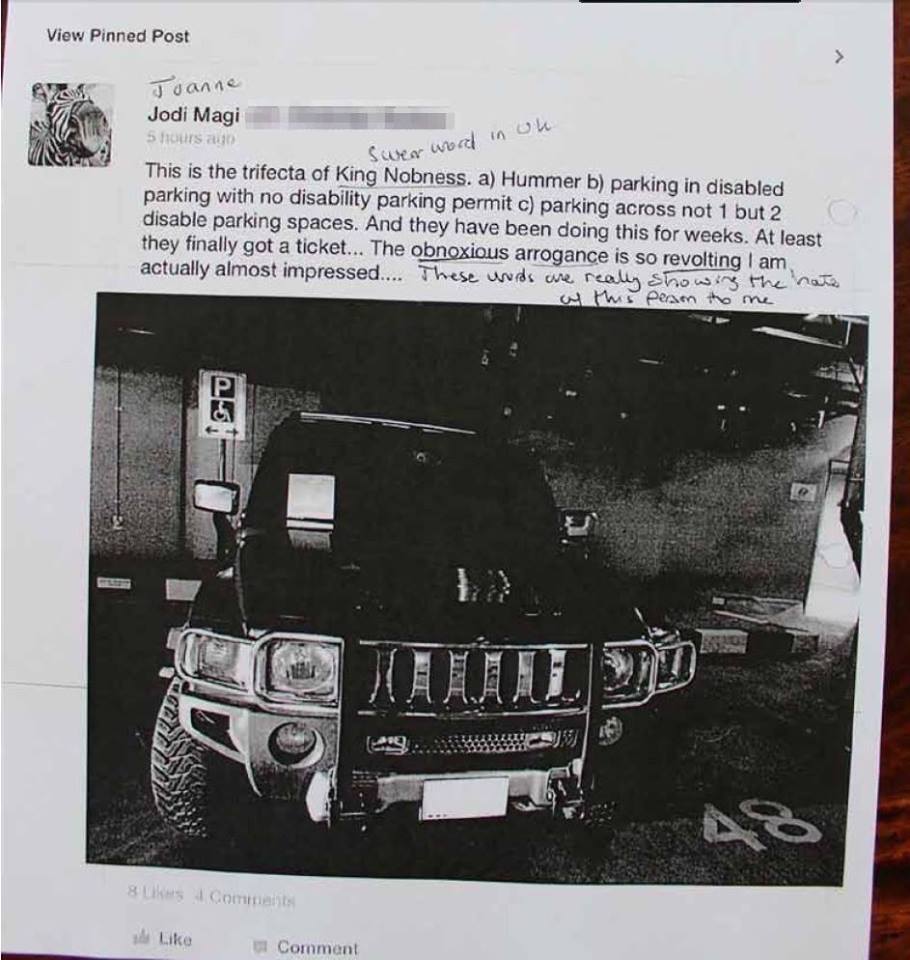
Magi was deported this week from the UAE following intense media coverage. Her argument was that she didn’t know what she’d done wrong in her Facebook post (which you can see below). Her words were considered to be insulting by the complainant, who wasn’t mentioned in the post, and the court agreed with the complainant and, based on the country’s defamation laws (which I’ve written about here), found Magi guilty, fined her, and sentenced her to be deported.

This is the post which got Magi deported. Magi claimed that nobness referred to an Australian term for the elite, rather than the English insult (image source: Facebook)

This is the post which got Magi deported. Magi claimed that nobness referred to an Australian term for the elite, rather than the English insult (image source: Facebook)

While I’m not going to share my views on this (there’s plenty of comments both for and against the issue, but the law is the law), I will share views and thoughts from the rest of the Gulf where double parking is all too common and where the issue is being raised on social media. First up is Bahrain, where there is an Instagram account called Bahrainidiots. Bahrain’s residents are encouraged to share their images of cars which are double-parked for publication on the account’s Instagram feed – for some pictures have a look below.

Similarly, Saudi social media users often share such images, especially on Twitter using the handle #برج_الكلب. Some recent images are below.

https://twitter.com/Dr_MoNassif/status/618500070267355136

https://twitter.com/dr_attar/status/618503839998607361

The most interesting comments about the issue of defamation came from Doha. Speaking to the English-language news site Doha News, criminal attorney and Qatar’s former justice minister Dr. Najeeb Al Nuaimi said it was “highly unlikely” that an expat or Qatari would be arrested for posting a similar picture as Qatar and the UAE differ in their definitions of defamation. To quote:

“In the UAE, this (incident) is seen as ‘you’re showing someone in a bad light’ or that you’re questioning the duty of the police. They didn’t do their job well, and have let this happen, and now you’re posting it and offending them,” he said.

Here, however, the local government would regard sharing such a photo as a “a mark of public service,” he added, continuing:

“We have Qataris posting all over Facebook, Twitter and Instagram (about) things that they don’t like, or wrong things that they see…Here, it’s seen as doing something good.”

One of the publications which wrote about the case, the Abu Dhabi-based English-language daily The National quoted senior Abu Dhabi prosecutor Mohammed Al Dhanhani who explained that Magi was guilty under the 2012 Federal Anti-Information Technology Crimes Law No 5.

“She captured the picture without the consent of the (car’s) owner. She then published the pictures on the web and added insulting phrases.”

Each of these three actions is subject to prosecution under the law, which punishes all violators with a fine and/or jail, and deportation for all expatriates without exceptions, he said.

In an irony not lost on this blogger, while Magi’s state of affairs was playing out The National started its own photo gallery on bad parking in the UAE and posted images on its own website. Based on Al Dhanhani’s own interpretation of the law, is The National also guilty of the same offense under which Magi was sanctioned by capturing pictures without the consent of the car’s owner and then publishing these on the web?

For any lawyers out there, am I right or wrong?

Has Social Media Overtaken the News Cycle? The Story of the Kuwait Mosque Bombing

Last Friday was one of bloodshed and horror in Kuwait. The country, which has not been affected by regional sectarian issues in the same manner as its neighbours Iraq and Saudi Arabia, experienced something truly terrible. During Friday prayers, when men gather to pray together in the mosque, a suicide bomber entered one such mosque with the intent to kill as many of those inside as possible. To date, twenty seven people inside the Imam Sadiq Mosque, a place of worship for Shia Muslims. Two hundred people were injured.

Apart from the horror of this atrocity, which Islamic State claimed responsibility for, what is telling is the speed and amount of information which spread via social media, particularly WhatsApp, in the Gulf.

I was receiving messages about the bombing two hours before the news had made it onto websites such as Al Jazeera English. Not only was the information written down, but people were sharing both images and video thanks to the proliferation of smartphones as well as the availability of high-speed mobile data services.

Below is just a selection of the images that I received on that day.

What’s fascinating is not just the speed of information, but also the accuracy of that information. When Al Jazeera Arabic made a mistake with the name and picture of the suspected bomber an image was shared on social media of the correct suspect.

In addition, the amount of information was remarkable. While global networks provided a couple of minutes of coverage about the bombing, the images and video shared via Whatsapp built up a comprehensive picture of the incident, including video footage of the scene as well as interviews with witnesses and survivors. Unlike the news networks, many of whom don’t have correspondents in Kuwait, this was amazing, in-depth reportage of the Imam Sadiq bombing. Just two of the videos I received are below.

What was missing from all of this was context. On the same day there were terrorist incidents in both Tunisia and France, one of which was claimed by ISIS. Due to the local interest in Kuwait on my Whatsapp channels, no news on these two events was shared. This was a different story on the news networks where the three stories came together into one coherent piece on ISIS and its aim to spread terror across the Middle East and Europe.

Is the Imam Sadiq mosque bombing an example of citizen journalism working at its best in the Gulf? If so, how can media outlets catch up to ensure they have access to this information at the same time as its distribution through both private messaging networks such as WhatsApp as well as open platforms such as Instagram and Twitter? Twitter is looking to bring in a head of media partnerships for the MENA region, to work with publishers. It’ll be interesting to see how this and other efforts to get news outlets to work through social media impacts their ability to tell the story accurately in real time.

On a final note, my thoughts are with those who experienced this terrible incident. May all of those who were injured make a speedy recovery, and those who died always be remembered.

First the Kama Sutra pictures, and then the 2022 GCC media resolution – what is happening to Qatar’s media scene?

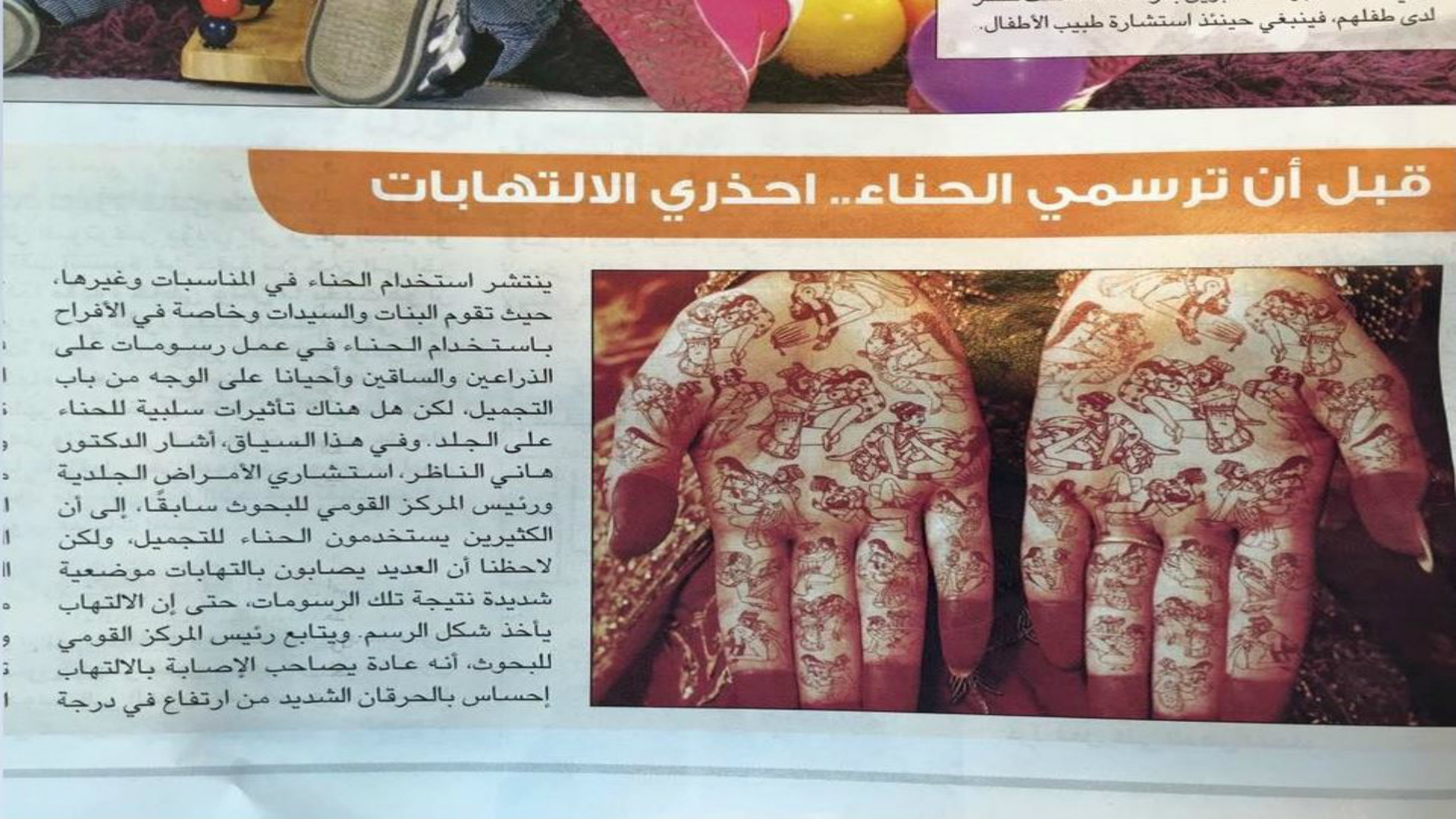
It’s not been the best of summers for Qatar’s media scene. First, there was a slip at the Arabic-language daily Al-Sharq. It wasn’t so much a slip-up as a huge !@#$-up. The paper’s long-time editor-in-chief Jaber Al Harmi was forced to resign after the publication of a photograph depicting sex scenes from the Kama Sutra. The story was best told by the Associated Press. But before that, the offending image is below.

Al Sharq's choice of imagery  for henna tattoos really couldn't have been worse. But where did they find the image?

Al Sharq’s choice of imagery for henna tattoos really couldn’t have been worse. But where did they find the image?

The image showed the woman’s palms decorated in numerous tiny tattoos showing a couple engaged in sexual intercourse.

Harmi took to the paper’s website to describe the incident as “a completely unintended mistake” and the “worst” he had known in his 25-year career in journalism and said he took full responsibility for what happened.

He said he “offered my resignation out of moral responsibility”.

It is not yet known if the resignation has been accepted by the paper’s bosses.

“All apologies are not enough for such a serious mistake, which occurred by publishing morally inappropriate images,” wrote Harmi.

“Our values and principles provide a red line that cannot be breached and so I presented my resignation to the board.”

He added: “This tragic incident revealed to us the extent of the adherence of our community to religion, values and morals.”

On Twitter, he wrote that “all those behind this mistake” have been fired.

But it got better. Following on from the unfolding crisis at FIFA, Qatar has been looking to tackle the corruption allegations surrounding its winning of the 2022 World Cup. As part of this plan, Qatar lobbied the Gulf to request media support. What they got was a call by the Gulf’s governments for all regional media to support Qatar. More from the Doha News website.

In an effort to “counter” media criticism of Qatar’s preparations for the 2022 World Cup, the GCC is calling on journalists in the Gulf to publish stories that support the country’s right to host the international football tournament.

The directive was released following a meeting of GCC information ministers in Doha this week. In a joint statement carried by state news agency QNA late last night, they said:

“GCC information ministers renewed their call for the media to counter all those who seek to question the right of the State of Qatar to host the 2022 World Cup, stressing GCC states full solidarity with the State of Qatar and encouraged media in the GCC to continue countering these campaigns at home and abroad.”

As we say, the media should report the news and not make the news. However, with all that is happening in Qatar, expect more media machinations soon.