What’s in a word? Coverage of Saudi oil minister Ali Al-Naimi’s departure by newswire media and social media reactions

Another week passes by and we witness more remarkable changes in Saudi Arabia. Over the past weekend Saudi King Salman announced a raft of changes which impacted the Kingdom’s government structure as well as those who were tasked with leading the changes.

The headline grabber, in more ways than one, was the departure of the longstanding oil minister Ali Al-Naimi. Al-Naimi had been an ever-present in government, serving as the oil minister for just over two decades. There had long been talk of Ali Al-Naimi, who is now 80, stepping down. When the time came, it was still a surprise to many.

Rather than talk about the man, who is a legend in the oil industry and is held in high regard by Saudis, I wanted to briefly look at the headlines from the AFP, Bloomberg, Reuters and the Wall Street Journal.

AFP used the word ‘sacked’ in their headline, but then reverted to replaced in the copy. Interestingly, the piece which was on the AFP site is no longer present. The below is from the cached version on Google.

AFP Naimi coverage

Bloomberg, which has scored a number of scoops in the Kingdom recently with its coverage of Deputy Crown Prince Mohammed Bin Salman, went for the below title which . The news piece was diplomatic in terms of the wording used about All Al-Naimi’s departure, including the use of the verb ‘replaced’ to describe the change in ministers (Ali Al-Naimi’s successor is the Chairman of Saudi Aramco Khalid Al-Falih).
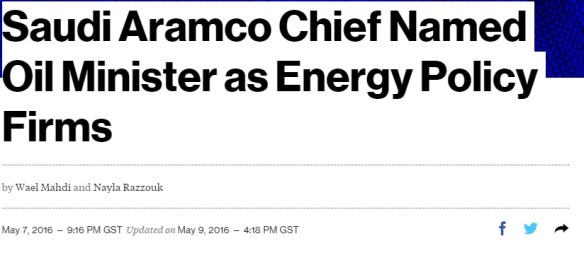
Bloomberg Coverage

Reuters also focused on the incoming minister and used the word replaced.

Reuters coverage

Last but not least, Wall Street Journal initially opted for the word ‘fired’ in their title. After a firestorm on Twitter, including attacks against its Riyadh-based Saudi correspondent (and Saudi national) Ahmed Al-Omran, the title was changed from fired to dismissed (the word fired is still in the url as you can see from the below).

WSJ coverage

The argument that the WSJ team put forward is that the wording was correct – one is appointed to a minister’s post and then one is fired. Fired effectively means the same as replaced, dismissed or sacked. The nuance was lost on many who took offence and reached out directly to Ahmed via Twitter to complain. In a rare display of understanding, the WSJ changed the title. Ahmed Al-Omran also apologized for any offense taken.

https://twitter.com/ahmed/status/728955255883497479

https://twitter.com/ahmed/status/729002340628496385

In a region where the international media has rarely been given much attention by the national population, the Ali Al-Naimi story underlined a possible change in attitudes brought about by social media and the need to communicate what Gulf nationals feel is a correct story or narrative to the outside world. For these reasons, this will not be the last time that the foreign media comes under scrutiny for the wording they use to describe what is happening on the ground here in the Gulf.
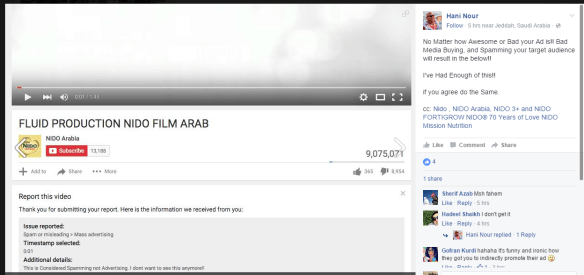
How do you make a whole country hate a child-focused health intervention programme? Ask Nido…

It’s not often that the first (and most popular) comment on a YouTube video is a request for ISIS to blow up a company’s headquarters. However, as I have learned time and time again, anything is possible when you combine the Gulf’s nationals with social media and an issue they’re passionate about.

To cut a long story short, a video for Nestle’s Nido brand been trending in Saudi. The video tells the story of an initiative by Nestle and the company’s consumers on the occasion of the powdered milk brand’s 70th anniversary, to provide 14 million cups of milk to 40,000 children for six months. The activation is a cause-related marketing exercise which involves the region’s shoppers. And you’d think everyone would love it; who doesn’t like seeing kids being fed and a corporation giving away its products to a good cause?

Well, here’s the issue. Someone behind the video/brand thought it’d be a good idea to boost the number of videos through paid media. For the space of how many days beginning from the 3rd of March, this video was everywhere. To the extent that it’s been watched over ten million times. Which is great, if you like big viewer numbers. However, people don’t like to be forced to do anything online, especially being forced to watch the same video over and over and over again.

The statistics sum it all up – 419 likes versus 9,663 dislikes. But it’s the venom in the comments, the hatred of how someone (please stand up) who has decided to spend a load of cash to promote the video has ruined the viewing experience of tens of thousands of Saudis who have had to sit through this content. Saudis complained en mass, even going so far as to tweet @nidoarabia and @nestle to ask them to stop promoting the video as well as reporting the video as spam. Peeved that their own content is being pushed to one side and having to deal with disgruntled YouTubers, Saudi content creators have apologizing endlessly. And there’s even been calls for a boycott. Now, that’s how you change beliefs and habits whilst also inspiring action Nestle!

The comments, many of which are hilarious, range from pure hatred of the brand’s blanket to many admitting they’re now beginning to hate drinking milk (and children…).

https://twitter.com/rayankarkadan/status/706429657424523264

We've had enough of Nido!

We’ve had enough of Nido!

There were some Saudis even reminiscing for Marwan Taloudi, the man who spammed Saudis with his YouTube get-rich-quick ads.

YouTube is still a business after all, but if you’re going to get people to like what you do, then don’t shove it down their throats for days on end.

And just cause I love you all, and I love Nido even more, I’d like to share the video with you. I hope you enjoy watching the most hated video in Saudi right now.

A big thanks to Osama Natto for the story and the content.

McDonalds Saudi and the Saudi national who was arrested – a lesson in virality and crisis comms

Last week Saudi’s social media space was alive with chatter and calls for a boycott. But this wasn’t for a global cause, a political issue, or a case of consumer activism. It wasn’t even about the color of a dress or the shenanigans of a Kardashian. Instead, it was about a Saudi national who tweeted a complaint about the drink he’d been served at a McDonalds restaurant and the rapidly escalating series of events which got him put in jail.

I’m going to try to keep this story as simple as possible for factual reasons.

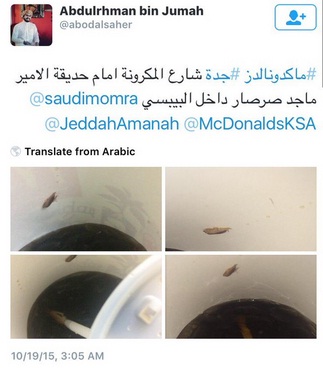
A young Saudi national Abdulrahman bin Jumah was at a McDonalds outlet in Jeddah on the 19th of October and ordered a meal, which included a coke. Inside the cup, he claimed he found a cockroach. He then shared the image on social media to his followers (which I assume would have been less than the 3,216 followers he has now). As Abdulrahman deleted his Tweets, here’s an alleged image from another Saudi Twitter account who retweeted the Tweet.

This was the initial tweet from Abdulrahman on the 19th of October with the alleged cockroach in the cup

This was the initial tweet from Abdulrahman on the 19th of October with the alleged cockroach in the cup

Abdulrahman tweeted his experience and contacted the local municipality online at their Twitter account @JeddahAmanah. The municipality took swift action and closed the branch in question the day after on the 20th.

Simple enough? You’d think so (and restaurant closures are a fairly common occurrence in Saudi as you can see from this tweet announcing the closure of a KFC outlet in Jeddah. I cannot comment as to whether a restaurant closure would be common for McDonalds Saudi).

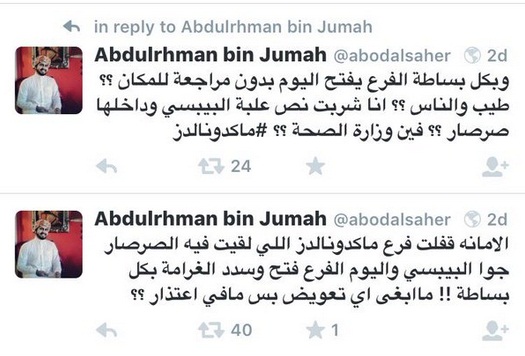
After a day however (I’m assuming here the 21st), the branch reopened and Abdulrahman tweeted his thoughts on the issue, namely that he was surprised that the branch could open so soon, and that he wasn’t looking for compensation but rather an apology for the experience. Again, these are screen shots as the original tweets were deleted.

Abdulrahman tweeted his surprise at how the restaurant could have opened so soon after its closure for an alleged health violation

Abdulrahman tweeted his surprise at how the restaurant could have opened so soon after its closure for an alleged health violation

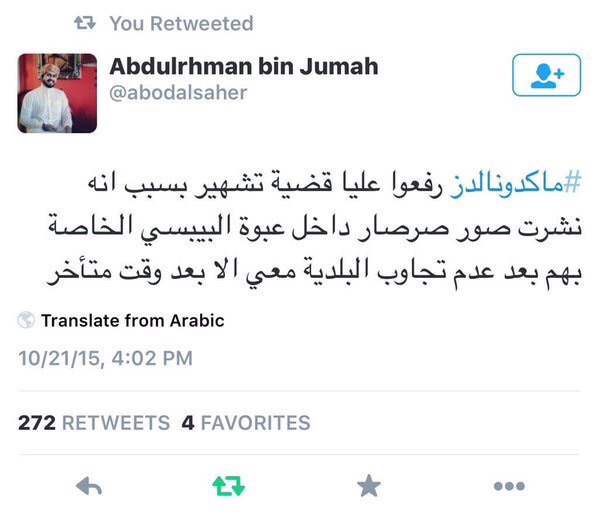
Now this is where it gets murky as later on in the day Abdulrahman was accused of defamation by McDonalds Saudi Arabia. He tweeted his experiences as he was first accused of defamation…

Abdulrahman shared on Twitter the news that McDonalds had made an allegation of defamation against him. Defamation is a criminal offense in Saudi Arabia

Abdulrahman shared on Twitter the news that McDonalds Saudi had made an allegation of defamation against him. Defamation is a criminal offense in Saudi Arabia

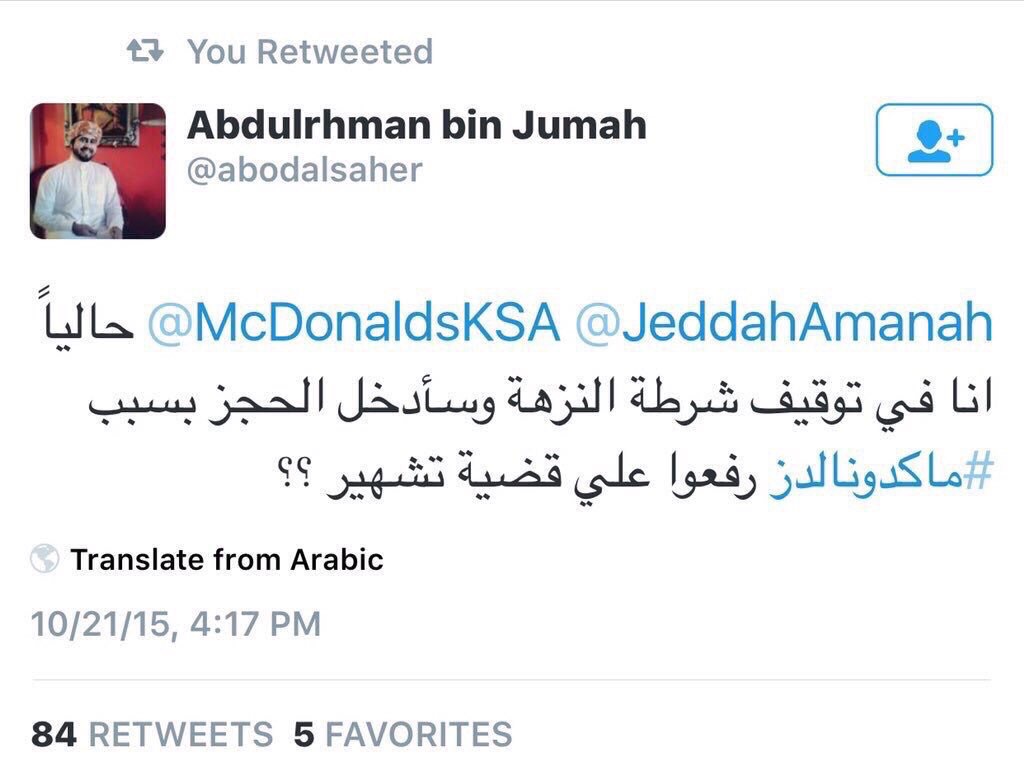
And then arrested by the police. Defamation is a criminal rather than a civil offense in Saudi Arabia. After the below tweet Abdulrahman’s timeline supposedly goes quiet.

The Saudi at the center of the allegation was even tweeting as he was being held by police for defamation

The Saudi at the center of the allegation was even tweeting as he was being held by police for defamation

On the 22nd Abdulrahman tweeted an apology, four times, writing that the bug was not in the cup and that he was sorry for using social media when making the allegations against McDonalds Saudi. The second time he used two hashtags, McDonalds arrests the national and we are all Abdulrahman Jumah (ماكدونالدز_تعاقب_مواطن #كلنا_عبدالرحمن_جمعه#)

https://twitter.com/abodalsaher/status/657194881635495936

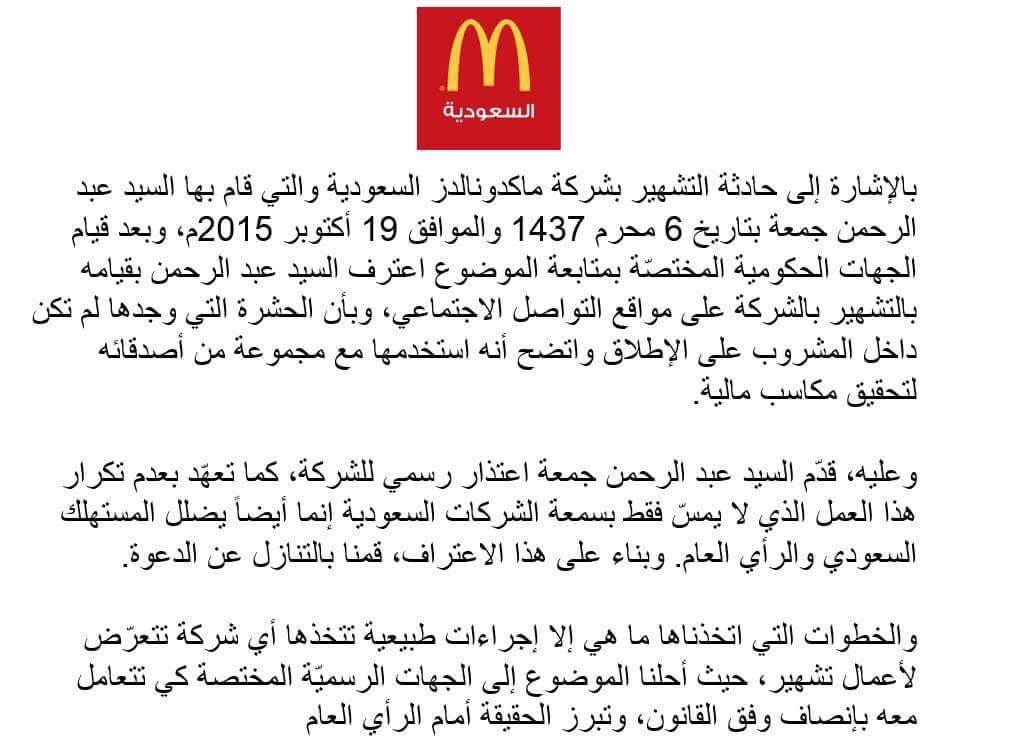
McDonalds Saudi also put out a statement online in response to many in Saudi who have come out to ask about the allegations or who have supported Abdulrahman stating that the case was caused by an intention to gain financially from the allegation that he’d made and that, following the apology, McDonalds Saudi had dropped the case.

McDonalds issued a statement

McDonalds issued a statement that the allegation was false and the case is now closed

Abdulrahman deleted all of the story’s tweets, except those in which he makes an apology.

Without knowing the facts in the case, it’s hard to know what really happened. Did Abdulrahman really find a cockroach in his drink or was it a case of extortion? However, Saudis on Twitter have not been kind to McDonalds Saudi and their involvement of the police. The hashtags used by Jumah are replete with angry responses to McDonalds Saudi. The case has also made the national media, albeit indirectly.

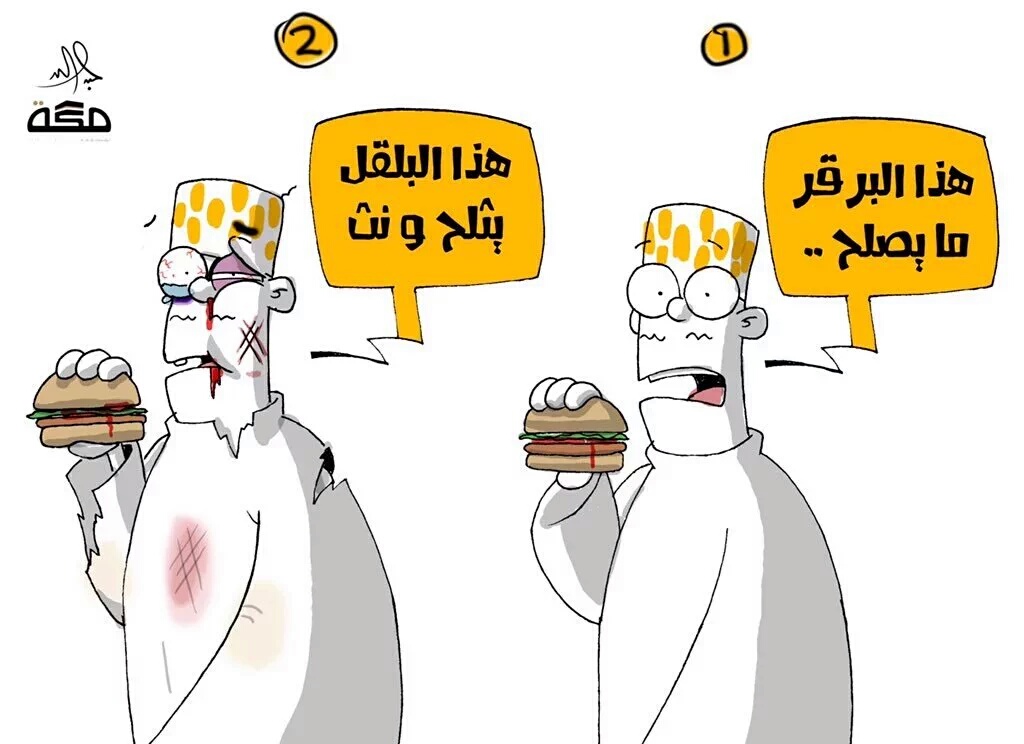
Makkah Daily's Abdullah Bin Jaber parodied the story in typical fashion by lampooning McDonalds for their actions

Makkah Daily’s Abdullah Bin Jaber parodied the story in typical fashion by lampooning McDonalds Saudi for their actions

McDonalds Saudi certainly acted quickly in terms of responding to the crisis, but did they respond in the right way? Has the issue done more damage than it otherwise would have thanks to the actions of McDonalds Saudi, or were they right in involving the police when they did due to their belief that they were being blackmailed?

What are your thoughts? What lessons can we take from this case? I’d love to hear from you.

PS Saudi social media personality Omar Hussein has also talked about the issue. For you Arabic-language speakers out there you can see his Facebook video below.

The Gulf’s push to improve its image – why actions speak louder than words

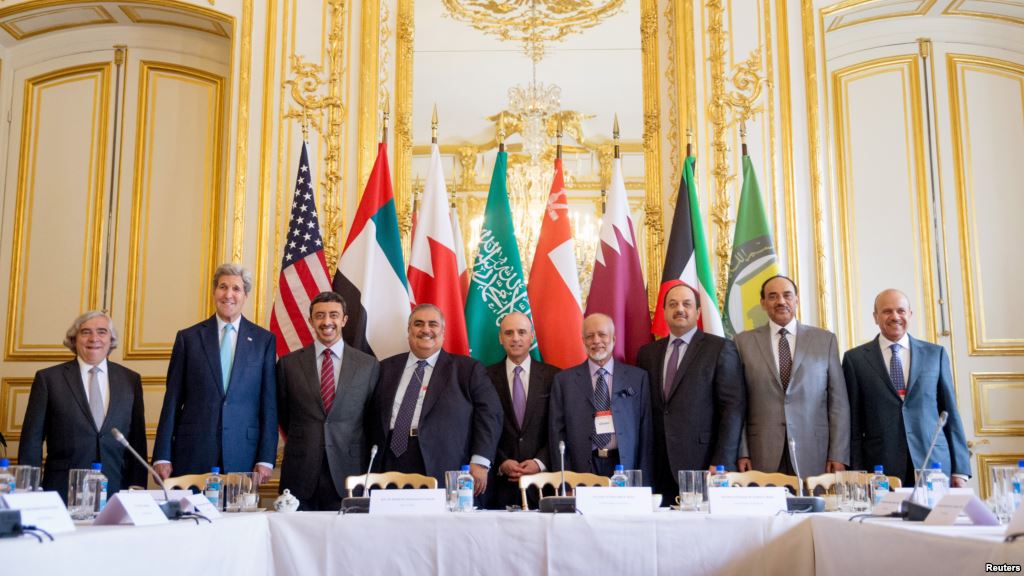
The Gulf's foreign ministers have worked hard to change perceptions of the region abroad. But is there a simpler solution?

The Gulf’s foreign ministers have worked hard to change perceptions of the region abroad. But is there a simpler solution?

I love a good read, especially fiction. But when living in the Gulf, fact can often feel more surreal than fiction. Last week the UAE’s English language daily Gulf News reported on efforts by the six-member Gulf Cooperation Council to improve its image abroad, most notably in Europe and the US. To quote from the newspaper:

Foreign media officials in the Gulf Cooperation Council (GCC) have stressed the need to formulate a common media strategy that will reflect the positive image of the six member countries abroad.

The officials, who were holding a meeting in the Qatari capital Doha, reviewed plans and suggestions for future actions in their communication drive with the international community.

The GCC, established in 1981, comprises Bahrain, Kuwait, Oman, Qatar, Saudi Arabia and the United Arab Emirates.

“The participants discussed several issues related to the progress of their work, including a common strategy to rectify the distorted image that some Western media have about the countries in the region,” Ahmad Al Buainain, the head of the foreign media department at Qatar News Agency (QNA) said.

“The meeting also discussed several papers and new ideas regarding the way forward for the GCC foreign media in European and Asian countries in order to convey the realities on the ground, he said, quoted by QNA.

Plans include holding seminars and meetings with research centres or organizing events at international functions in Europe and in which the GCC countries are participating, he added.

“This new drive is a continuation of the activities conducted by the foreign media officials at past events,” he said.

Ahmed Mussa Al Dhabyan, the head of media cooperation at the GCC Secretariat General, said that the GCC foreign media officials sought to build on their successful experience and formulate a new strategy that matched the latest developments in the communication field.

“The world has gone beyond the global village concept and has now become a single house,” he said. “The GCC has a significant political and economic weight and it has a special standing internationally, and therefore it needs to have a foreign media presence that matches its stature,” he said.

Earlier this month, reports surfaced from Washington D.C. that Saudi was hiring a variety of lobbying groups to bolster its public image in the US. Clearly, the Gulf cares about its reputation abroad, especially when the region’s governments see what they feel to be negative coverage.

On his Facebook account, political commentator (and Sharjah royal family member) Sultan Al-Qassemi gave his take on the article in the Gulf news with a list of suggestions to improve the Gulf’s image abroad.

1- Release activists.
2- Suspend capital punishment.
3- Allow political participation.
4- Eliminate Kafeel (sponsorship) system
5- Expand women’s rights.
6- Enact environmental protection.
7- Broaden citizen’s rights.
8- Bolster freedom of expression (yes within “limits”)

I’d make it even simpler. As any good and ethical public relations practitioner will tell you, your actions speak louder than your words. If the region is serious about tackling any negative perceptions or reputation issues abroad, then behaviour which is contradictory to accepted human norms in regions outside of the Gulf (read the West) must be tackled, and free(r) access should be given to the media. With social media and the internet, it is so much harder to hide anything or to spin information or events. Take for example the leaking of documents from Saudi’s Foreign Ministry recently.

The best way to been seen in a positive light is not more seminars or meetings in European capitals with research centers. Instead, one must behave in a positive light, followed by encouraging the media, both local and international, to report without bias.

While I’ve been in this region long enough to know better, I am still an optimist at heart. And I still believe we are capable of change for the better, as this region is magical in so many ways. However, a word of note. If my face turns shades of blue or purple, do please remind me to breathe.

Me, my wife and our baby – a personal story of how the Gulf is letting down its women by denying their children the right to nationality


The children of Gulf women married to foreigners are not automatically granted nationality, unlike their male counterparts (image source http://www.flight965.com)

 
I promised I’d write on my experiences as a father and I’m having to start things off on a serious note. As some of you may know, my wife is from this region but I am not. We welcomed into our lives a little princess earlier this year.

The sad story is that in the Gulf region children born to Gulf women, in other words women with a nationality from the six GCC states, who are married to foreign men do not receive their mother’s nationality. This is in contrast to Gulf men who are married to foreign women. Their children do receive their father’s nationality.

It’s important to us that our little one cherishes both her cultures and that she’s recognized as both. She’s fortunate to have a European nationality through me, but, try as we might with visits to interior ministry offices and other government bodies, we realized that there is no formal process for our daughter to become a Gulf national like her mother. This is the same all over the Gulf, despite sporadic exemptions to the contrary.

I’ve heard countless reasons for this, such as the need for Gulf women to marry Gulf men, and the legal requirement that a Gulf national should have only one passport. To me, any discussion is bogus. If I was a Gulf male and my wife was a European foreigner our daughter would have qualified automatically for both nationalities.

I hear lots of news about progress being made it terms of women’s rights in the Gulf, which I applaud. However, until Gulf women are able to give their children everything that their male counterparts can, I cannot contend that women here are anywhere near to being equal to the men.

I hope for change, if not for my wife’s generation, then at least for my daughters. I hope you will join me in calling for a change to how Gulf women and their children are treated in the Gulf.

A look into how online behaviour is changing in Saudi from The Online Project

For many of us in communications in the Middle East, it’s hard to remember a time before social media (I still fondly remember receiving floppy disks with press releases, back in 2006). Social media agency agency The Online Project has dipped its toes into the Kingdom’s digital world to look at how social media behaviours are changing.

The agency, which undertook a similar exercise two years ago, went back to revisit some of its findings from 2013. The report, named Reintroducing Social Saudis, is an incredibly insightful look into what Saudis are doing online. Please do download the report and read it in full (it’s 18 pages in length).

Some of the findings include:

    1. Facebook remained the largest social platform in terms of number of users. However, Twitter growth surpassed Facebook by 25% in the past two years.
    2. Saudi preferences towards social entertainment have been changed through emerging platforms like Instagram and Snapchat.
    3. Online video has become a key channel for consuming content on all platforms, especially Facebook and Instagram.
    4. Comedy TV shows and sports are the most popular categories of online watched videos.
    5.While YouTube remained the main video sharing website Facebook and Instagram’s video growth has shifted the online video scene towards more exposure. Video content is no longer a YouTube exclusive.
    6. Hashtags usage on Instagram is just as popular on Twitter. Most used hashtags on Instagram shows how the platform is gradually turning into a female community.

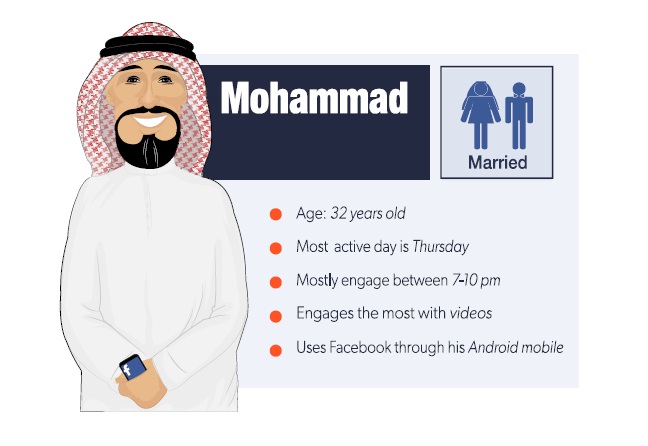
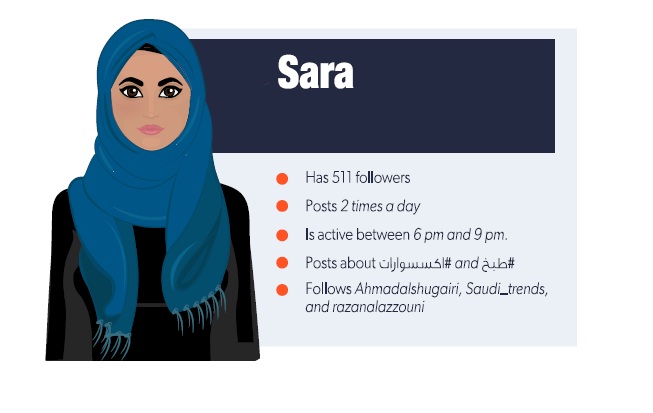
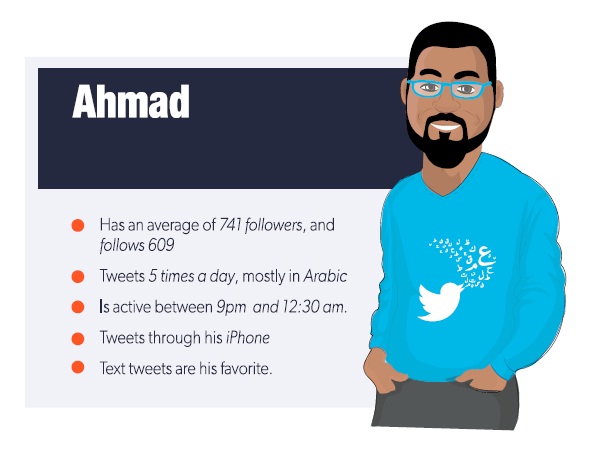
The team have also produced simple visuals and a video telling the stories of Mohamed, Ahmed and Sara, your typical Saudi social media users. You can see both below.

Based on The Online Project's research Mohamed is your average Saudi Facebook user

Based on The Online Project’s research Mohamed is your average Saudi Facebook user

Your average Saudi Instagram user is female and enjoys following social issues as well as fashion

Your average Saudi Instagram user is female and enjoys following social issues as well as fashion

Your average Saudi Tweeter is most active at night and engages most with text Tweets

Your average Saudi Tweeter is most active at night and engages most with text Tweets

If you’d like more info about social behaviour in Saudi, start reading the report and do reach out to the good people at The Online Project.

The Middle East’s love for Instagram (including its adverts)

Here in the Gulf we just love our pictures and photos. We love it so much that you’ll be hard pressed to find many in the Gulf who aren’t on the social media app. Only yesterday and in a period of less than five years Instagram announced that it had crossed the 400 million user mark (the app added 100 million users in the last 10 months alone). Seventy five percent of those 400 million users live outside the US, and the Gulf in particular has taken to the photo and video-sharing application.

In terms of the Gulf, it’s no surprise that Saudi leads the way – there are 10.7 million monthly active users in the Kingdom (just over a third of the population). The UAE follows with 2.2 million monthly users. And, to the West, Egypt has 3.2 million monthly active users. What’s even more impressive is daily active users – a whopping 6.1 million for Saudi, 1.2 million for the UAE, and 1.1 million for Egypt.

This all makes good news for Facebook, Instagram’s owner, which introduced advertising to the platform this month in the MENA region. Facebook rolled out advertising for select partners this month. The launch earlier this month included both regional brands such as telcos Saudi Telecom and Zain and retailers Souq and AlShaya, as well as global advertisers such as Unilever, P&G, Nestle, Mondelez, Visa, L’oreal and Pepsi. The first ad to go live was Souq’s, which you can see below.

Souq's Instagram advert was the first to be seen by Middle East users of the app

Souq’s Instagram advert was the first to be seen by Middle East users of the app

So far, from what I’ve been told, engagement with the adverts has been far higher than expected and much more than these advertisers are used to on Facebook. While there’ll be some negative sentiment from consumers who aren’t used to seeing advertising on their Instagram feeds, it seems that both Facebook and advertisers are onto a winner when it comes to Instagram advertising.

And for those of you curious people out there, the country with the highest penetration, is Bahrain which is closely followed by Kuwait. Both enjoy over 50 percent usage for Instagram; Bahrain’s penetration rate is over seventy five percent. The below visual was shared by social media expert Khaled El-Ahmed, and while the numbers may be slightly off from the above in terms of users, they’re still valid in terms of percentages.

PS For disclosure, I’m a P&G employee.

How Saudi’s consumers took on Saudi Telecom and influenced the Government – مطلب شعب stc الثورة ضد

The hardest part of the digital world is knowing where the tipping points are – it’s relatively easy to work out when things are going against your brand either in the traditional press or on television. The coverage builds gradually (unless there’s a crisis) and you have time to think and respond.

The digital world has completely changed the rules however. There doesn’t need to be a trigger anymore. And so was the case at the end of Ramadan in Saudi, where unhappy customers of Saudi Telecom Company vented their frustration at the slow connection speeds as well as the cost of the service.

Using the hashtag مطلب شعب stc الثورة ضد, which essentially translates as ‘the people demand a revolution against STC’, Twitter users shared thousands of Tweets on their thoughts and demands. Many of the visuals were created by consumers who effectively used home-designed visuals to tell their story.

https://twitter.com/mgoodhagri/status/621854572705742848

https://twitter.com/AbduLLA_Matabi/status/622332077703213056

https://twitter.com/ajffetni1/status/623103370803351552

The hashtag, which included over 100 thousand tweets and was one of the top five trends worldwide on the 17th and 18th of July, also resulted in a direct action, a call to boycott STC and turn off phones for several hours on a pre-agreed day, with expected losses of 10 million Riyals.

https://twitter.com/M900_/status/622729754924335104

While STC didn’t respond during the campaign, Saudi’s Minister of Telecommunications Dr Al Suwayyel had previously tweeted that he’d follow up on the issue of poor services in the Kingdom’s telecommunications sector. With the hashtag and the campaign gaining global attention, it’s clear that Saudi consumers will continue pushing for reforms.

Saudi's Minister for Telecommunication, Dr AlSuwaiel, has previously tweeted about the need to improve services in Saudi Arabia.

Saudi’s Minister for Telecommunication, Dr AlSuwaiel, has previously tweeted about the need to improve services in Saudi Arabia.

The question is, will this consumer activism spread to other areas of the economy or other parts of the Gulf? Despite the poorly received Etisalat Challenge campaign and the backlash against Qtel in 2010, there’s been no consumer demand to reduce prices in other Gulf markets. Will other groups follow in the wake of Saudi consumers and demand better service through mediums such as Twitter?

One other question for you. Is there a harder job than that of a social media manager for a telco in the Gulf. You tell me.

The definition of ‘Nobness’ – the UAE, social media defamation and differing views from the Gulf

It’s that time of year again. I don’t mean Ramadan of course, the month of charity and kindness, but rather the time of year when we read about a case of defamation. Over the past week there was an outcry in Australia following the arrest of an Australian national in the UAE following comments she put up on Facebook. To quote from the Australian Broadcasting Corporation’s website:

In February, Jodi Magi, 39, took a photo of a car in her Abu Dhabi apartment block that was parked across two disabled parking spaces, without any disability stickers.

She blacked out the number plate and put the photo on Facebook, drawing attention to the seemingly selfish act, but not providing any identifying details or names.

However, someone in the apartment block complained to police and the case went to an Abu Dhabi court in June.

Ms Magi, who has lived in Abu Dhabi since 2012, said she was forced to sign multiple documents in Arabic without any translation.

Two weeks ago (at the beginning of July) she was found guilty of “writing bad words on social media about a person” and told she would be deported.

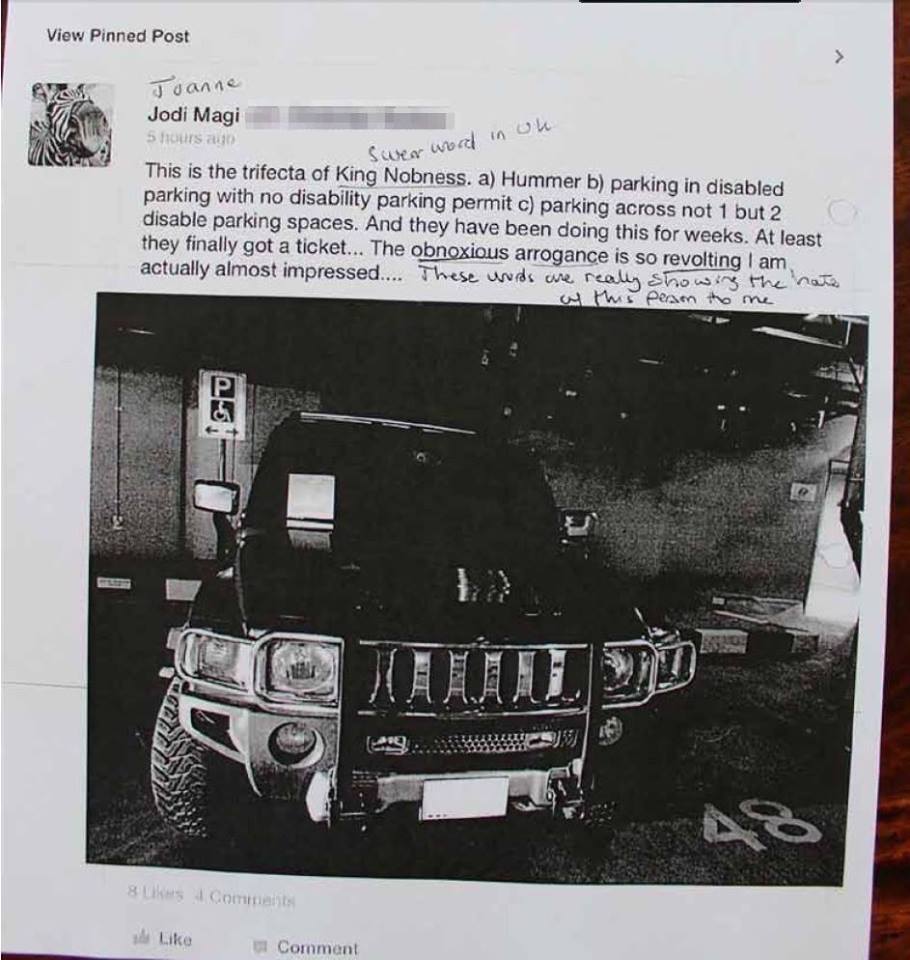
Magi was deported this week from the UAE following intense media coverage. Her argument was that she didn’t know what she’d done wrong in her Facebook post (which you can see below). Her words were considered to be insulting by the complainant, who wasn’t mentioned in the post, and the court agreed with the complainant and, based on the country’s defamation laws (which I’ve written about here), found Magi guilty, fined her, and sentenced her to be deported.

This is the post which got Magi deported. Magi claimed that nobness referred to an Australian term for the elite, rather than the English insult (image source: Facebook)

This is the post which got Magi deported. Magi claimed that nobness referred to an Australian term for the elite, rather than the English insult (image source: Facebook)

While I’m not going to share my views on this (there’s plenty of comments both for and against the issue, but the law is the law), I will share views and thoughts from the rest of the Gulf where double parking is all too common and where the issue is being raised on social media. First up is Bahrain, where there is an Instagram account called Bahrainidiots. Bahrain’s residents are encouraged to share their images of cars which are double-parked for publication on the account’s Instagram feed – for some pictures have a look below.

Similarly, Saudi social media users often share such images, especially on Twitter using the handle #برج_الكلب. Some recent images are below.

https://twitter.com/Dr_MoNassif/status/618500070267355136

https://twitter.com/dr_attar/status/618503839998607361

The most interesting comments about the issue of defamation came from Doha. Speaking to the English-language news site Doha News, criminal attorney and Qatar’s former justice minister Dr. Najeeb Al Nuaimi said it was “highly unlikely” that an expat or Qatari would be arrested for posting a similar picture as Qatar and the UAE differ in their definitions of defamation. To quote:

“In the UAE, this (incident) is seen as ‘you’re showing someone in a bad light’ or that you’re questioning the duty of the police. They didn’t do their job well, and have let this happen, and now you’re posting it and offending them,” he said.

Here, however, the local government would regard sharing such a photo as a “a mark of public service,” he added, continuing:

“We have Qataris posting all over Facebook, Twitter and Instagram (about) things that they don’t like, or wrong things that they see…Here, it’s seen as doing something good.”

One of the publications which wrote about the case, the Abu Dhabi-based English-language daily The National quoted senior Abu Dhabi prosecutor Mohammed Al Dhanhani who explained that Magi was guilty under the 2012 Federal Anti-Information Technology Crimes Law No 5.

“She captured the picture without the consent of the (car’s) owner. She then published the pictures on the web and added insulting phrases.”

Each of these three actions is subject to prosecution under the law, which punishes all violators with a fine and/or jail, and deportation for all expatriates without exceptions, he said.

In an irony not lost on this blogger, while Magi’s state of affairs was playing out The National started its own photo gallery on bad parking in the UAE and posted images on its own website. Based on Al Dhanhani’s own interpretation of the law, is The National also guilty of the same offense under which Magi was sanctioned by capturing pictures without the consent of the car’s owner and then publishing these on the web?

For any lawyers out there, am I right or wrong?

Snapchat and its attempts to win over the Middle East – #Mecca_Live and #WestBankLive

There’s two types of people in today’s digital world. Those internet users who are generally older who have never heard of Snapchat and who while away their hours on Facebook, and, when they’re feeling adventurous, get onto Instagram. And then there are those young people who can’t get enough of the video messaging app where photos and video shorts ‘disappear’ after being shared. For the half that doesn’t know, Snapchat would seem to be the fastest growing application in the Gulf. The application has proved incredibly popular with young audiences across the region.

Snapchat has also done itself a lot of good over the past couple of days by holding what it calls a live story event in Mecca, the spiritual home of Islam. According to Snapchat, Live Stories are a curated stream of user submitted Snaps from various locations and events. Users who have their location services on at the same event location will be given the option to contribute Snaps (videos to you and me) to the Live Story. The end result is a Story told from a community perspective with lots of different points view.

What this means in real English is that Snapchat curates lots of content from different users, brings that content together and combines it to tell a story. This week’s Live Story, which is usually 300 seconds long, took place in Mecca during the holy month of Ramadan. The ensuring Live Story of #Mecca_Live can be seen below.

The feedback for the #Mecca_Live event was nothing short of remarkable. By tapping into sentiment around Ramadan and telling the story of what it means to be in Mecca during the holiest month in the Islamic calendar through people who were there resonated not just with Muslims around the world, many of whom are tired of seeing their faith being associated with negativity, but also non-Muslims who were impressed by the faith and the devotion of those who were featured in the Live Story.

A sample of tweets around the #Mecca_Live hashtag

A sample of tweets around the #Mecca_Live hashtag

This isn’t the first Live Story in the Middle East however. The week before, Snapchat had curated a Live Story from the West Bank. Featuring Snaps from Palestinians, the piece aimed to tell the story of how ordinary people live in this beautiful part of the world. Palestinians gave glimpses into the cities of Bethlehem, Ramallah, and Nablus through 10-second tours of historic sites. They also talked about the wonderful world of Palestinian cooking (including some of my favorite dishes such as knafeh, qatayef and falafel. However, one aspect of life in the West Bank was left out. The allegation made by many was that it underplayed the Israeli occupation. The video is below.

The other allegation made about #WestBankLive was that it was a clumsy attempt to undo some of the damage done by a previous Live Story, #TelAvivLive. Shown the same week as #WestBankLive, this Live Story painted a picture of Tel Aviv, that, to quote the Mondoweiss website:

In the Tel Aviv story, young Israelis were represented as fun-loving, beach-going, peace-promoting people – a far cry from their roles as the occupying soldiers their Palestinian counterparts in the West Bank see on a daily basis. The story also included little in the way of representation of marginalized members of Israeli society such as Palestinian citizens or African refugees. Images of the historic Palestinian port city of Jaffa, referred to in the story by its Hebrew name, were depicted in a way that +972 Magazine says “reproduces the urbicide of this once-thriving Palestinian city in favor of a narrative that ‘keeps the peace.’” In addition, a few of the snaps presented foods like felafel and shawarma as typical Israeli meals, without any reference to their Arab origin. Israelis seemed to be using the Snapchat story as a way to show off appropriated Palestinian culture and locales, claiming them as their own without a second thought.

As Snapchat has found with both #WestBankLive and #TelAvivLive there are few stories that can be shared which are not controversial. Each group has their viewpoint, and, by attempting to be as inclusive as possible through its Live Stories, Snapchat will inevitably offend. Has #Mecca_Live helped to negate criticism of Snapchat? Possibly. But you can be sure that this app, which is already extraordinarily popular among the region’s youth, will continue to cause controversy as it tells the Live Stories of Snapchat users who see reality through their particular viewpoints, and smartphones.