Coca Cola has hit upon an interesting initiative for its latest digital campaign, with the aim of promoting openness between families. Released with the hashtag #OpenUp on YouTube, Coca Cola has developed two videos over the past eight days. The first, and for me the most moving, is that of Saudi chef Badr. Badr left behind the family tradition of architecture to study and become a cook, which is a rarity in Saudi society. The video and story are both well conceived and directed.
The second video features a social media star from Kuwait, named Ascia. Ascia recounts the challenges she has had to overcome in society as she has pioneered her ideas through Instagram. She thanks her husband Ahmed for the support he has shown her.
What do you think? Are the concepts powerful enough for you to share your #OpenUp story? Do you find them sincere or too scripted? Let me know your thoughts on the content and on Coca Cola’s work here. I’ll keep you posted on any additional videos that Coca Cola posts for this campaign.
Coca Cola is all about happiness. The soft drinks giant has been looking to associate itself with the concept of happiness for years, and these efforts regularly involve cause-related marketing activations. The latest effort by Coca Cola in the United Arab Emirates, named Happiness Phone Booth, gave laborers in the country an opportunity to make a call home. The special Hello booths didn’t accept coins but rather Coca-Cola bottle caps. Each bottle of Coca-Cola could be “turned into” a 3-minute free international phone call. Watch the clip below to understand the project in its entirety.
The controversy about this idea, which is clear in the comments underneath the video, is about the source of the bottle tops themselves. Are the labourers given Coca Cola bottles? If so, then why not make this clear on the video. If not, either the labourers have to spend two Dirhams out of their daily 18 Dirham salary on a bottle or find other means (which I’ll leave to your imagination).
So Coca Cola, shouldn’t you have targeted a group of the population who can afford your products for this cause-based marketing campaign?
What are your thoughts? Has Coca Cola done good? Or can it do better?
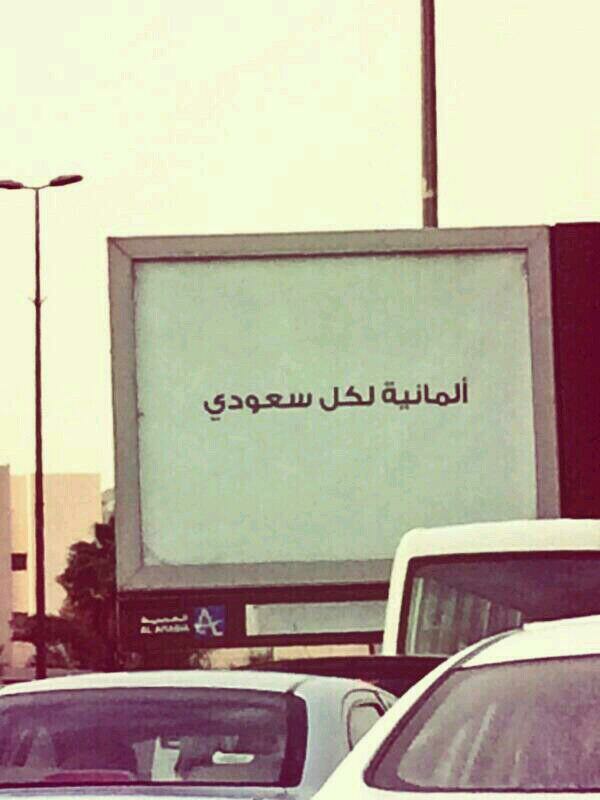
Being a Brit, I’m used to sexual innuendos being used in advertising. Nothing sells better than sex. But this type of thing normally gets pulled up at immigration when it comes to Saudi. So image my surprise at the below advert, which can be interpreted as ‘a German woman for every Saudi man’. The adverts were seen yesterday in Jeddah and I’ll be intrigued to see how long they’re up for. It certainly redefines the concept of a teaser campaign.
A Geman woman for every Saudi man. It’s as simple as that.
After a couple of weeks hiatus from blogging due to studies I thought I’d get back into the mix with a short and yet intriguing look at an advertising campaign run by one of the largest construction companies in the Gulf. The company that built the world’s tallest building, the Burj Khalifa, has been expanding of late. As part of its drive to grow its business in Saudi Arabia, the firm placed the below advert in most of the largest newspapers in Saudi Arabia.
Aside from costing what I guess to be about a million Riyals/Dirhams, my question would be what was the purpose of the campaign? Was it to hire a local executives, or was it to drive awareness? If you know, then please do tell!
What’s the reason for this advert? And will it help in attracting the right candidate or a couple of thousand CVs?
The Kingdom’s Government took the drastic step yesterday of introducing a raft of measures aimed at restricting the sale, promotion and consumption of energy drinks. The move, which was not expected, will mean that as of now energy drinks companies will no longer be able to advertise or carry out promotion campaigns through ‘electronic or print media or any other means’.
It doesn’t end there. The Saudi Cabinet banned the free distribution of energy drinks to consumers belonging to all age groups. Energy drinks have also been banned in restaurants and canteens at government establishments, as well as educational and health institutions, public and private sports clubs and halls.
1 – To prohibit advertising of any energy drink or do advertising or promotional campaigns for any energy drink via any readable, audible or visible media organ, or by any other means.”
2 – To prohibit energy drinks companies, their agents, distributors and marketing associations from sponsoring any sporting, social or cultural event, or taking any procedure leading to promotion.
3 – To prohibit the free distribution of energy drinks to consumers of all age groups.
4 – To prohibit the sale of energy drinks in restaurants and canteens in government facilities; education and health facilities; halls and public and private sports clubs.
5 – Upon the decision, factory owners and importers of energy drinks shall be committing to writing a text on the tin of any energy drink in Arabic and English languages – warning of the harmful effects of energy drinks.”
In a market that has been constantly growing for the energy drinks sector (you can find Red Bull, Bison, Power Horse and other popular energy drinks brands everywhere), this is going to be a major blow for the business. Red Bull has already put out statements defending its position, including its availability in 165 countries worldwide and a lack of evidence to show that it is harmful (you can read the statement in full here). Red Bull and other brands are major event sponsors, and it’s uncertain where the shortfall in funding will come from.
However, the one area which has yet to be clarified is social media. Red Bull has its Saudi Twitter feed (@RedBullSaudi) and Facebook pages for its events. Red Bull did put out a tweet today from its Saudi feed. How is social media classified? Is it advertising or is social media more subtle? And how do the authorities class social media? It’ll be interesting to see how this plays out, both in the real world as well as on social media.
I’m no posterboy for Dubai I’ll admit. But I do admire how the Emirate’s ruler communicates with the media. The BBC aired an interview with Sheikh Mohammed Bin Rashid Al Maktoum this week and the piece made headlines the world over. Sheikh Mo as he’s known here shared his thoughts on everything from Iran, Syria and Egypt to horse doping and human rights in the UAE. Sheikh Mohammed talks plainly, he gets to the point, and he admits when things go wrong; asked about the jailing of a number of young men for a spoof video Sheikh Mohammed says:
“We try to change it. We are not perfect and we try to change it. Any mistakes, we go in and try to change it. We’re not perfect, but we are doing our best.”
If you want to watch and learn from Sheikh Mohammed School of Communication and see a leader who is unique in terms of how he interacts with the media then watch the interview on the BBC on the 17 January at 04:30 GMT & 09:30 GMT and read the article by the BBC’s Jon Sopel here. You can watch a teaser below from the original airing of the interview yesterday.
I wish there were more leaders in the Gulf who’d talk to and with the media.
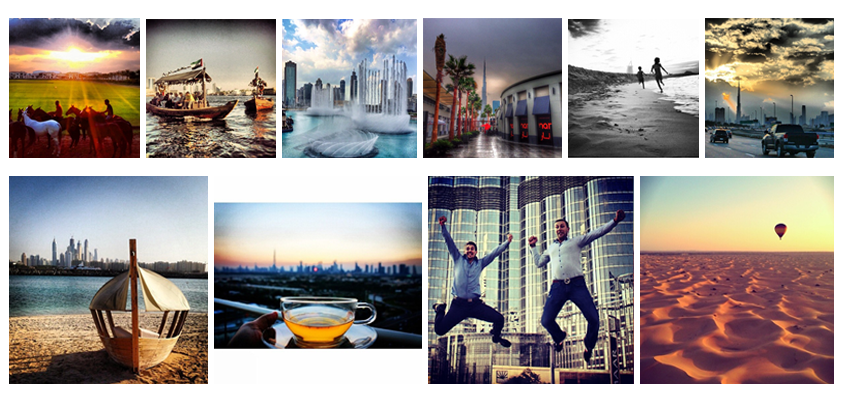
To pay or not to pay? That’s the question. The city-state has launched an interesting project based on social media, dubbed as a social-media autobiography of Dubai to be written by its residents and visitors. To quote The National newspaper:
The year-long project will bring together people in the emirate through Twitter, Instagram, and Facebook. A call has gone out to share pictures and videos using the hashtag #MyDubai.
According to The National the project will tell the real and human stories of the city through residents’ contributions which are posted onto Facebook, Twitter and Instagram (there’s no mention of YouTube and Pinterest which is a shame).
The National followed up today with a second piece on the initiative. Tourism bosses from Dubai’s Department of Tourism and Commerce Marketing (DTCM) will select the best photographs and videos from the Emirate’s residents and showcase them in exhibitions and roadshows as part of the year-long #MyDubai project. The public’s images will be used to promote Dubai throughout the year.
What isn’t mentioned is if the public are going to be paid for their images which are going to be used for advertising the Emirate. As any content producer knows, photography and videography are expensive. While those lucky few whose images get chosen – to quote The National, “more than 25,000 images and videos were uploaded to Instagram using #MyDubai just 12 hours after the campaign was launched” – will be referenced and have been so far online on DTCM’s Definitely Dubai Facebook site is it right to use images provided by the public for free (even if it is with their consent).
And on another note, who owns the copyright to the images? Are the images commissioned by DTCM for their explicit use or do the copyright owners of the images, have the ability to pull the images as and when they please if they object to how the images are portrayed?
I love the concept of #MyDubai but should the public be paid for images that are used, even if only a token amount? If it’s for corporate usage, then I think they should do.
Is it right to trumpet the times when you come top and make excuses when you’re not?
Everybody loves a good ranking, especially when you’re ranked at or near the top of the listings. If you’re doing a survey, a list or a table then you’ll always be welcomed in the UAE. The country has leveraged off its rise up the rankings of global surveys to promote inward investments and position itself as the leading destination in the Gulf and the wider Middle East region for all things consumer and business-related.
Rather than review the article (which was actually entitled ‘The Happiest Women in the World’ in print) I’m going to quote selectively. Enjoy the read while this writer throws her toys out of the pram, belittles the rest of the region and the strides the Gulf’s women have made and harps on about what her country has done without really saying much. Or maybe it’s just me…
“The question of women equality in the UAE is always brought under the limelight with a negative connotation that they are oppressed, discriminated against and constrained — especially in the social, cultural, economic and political perspective. To the UAE, it is just a stereotypical challenge; to other Arab countries, the problem is much more complex.”
“The constitution clearly states that women have equal rights as men and it ensures that they are provided equal opportunities in employment and advancement and equal pay at the work place. And in many cases, a female is favoured over a male candidate — form of an unannounced affirmative action.”
“…we have achieved what no other Arab country has in decades. It is no wonder that we take pride in calling her our model and “Mother of the Nation”. Emirati women enjoy vast privileges that are envied. Based on Islamic rulings, the man is the care provider for the family and financial responsibility rests with him.”
We’d just finished off another round of Cityscape here in Dubai, an exhibition that was the highlight of the decade that was the 2000s. When 2008 struck, Cityscape was almost forgotten about. No one wanted to be reminded of how much Dubai’s real estate sector had fallen. Anyone who visited the event this month may have been forgiven for thinking that the downturn never happened. We were bombarded with news about how good everything is looking; one executive from Dubai-based executive Damac claimed there had never been a property bubble to begin with.
All the good news hasn’t been without incident. An announcement at the beginning of this month revived plans to build a canal, this time linking Dubai’s Business Bay waterway system out to the Gulf at what is now Jumeirah Beach Park (Alex McNabb wrote an excellent blog piece about the news which you can read here). Other reports have focused on stalled projects which have neither been revived or cancelled, basically locking in investor money (the law here in the UAE requires projects to be cancelled before any collected monies can be returned to investors), and the proposed establishment of a body that would help return funds to those who invested in projects which never got off the ground.
Another day, another flood. Nakheel’s attempts to stem the tide of negative PR by not talking to media simply won’t work (image source: arabianbusiness.com
Like any other company, Nakheel has both fans and detractors. However, a recent story on Nakheel by popular Dubai-based news portal Arabian Business raised my interest. The piece, which was about the recent flooding at Nakheel’s Al Furjan development, included a significant paragraph at the end.
* Nakheel no longer responds to media enquiries from Arabian Business, nor does it grant this publication access to any of its media events or announcements.
When a company feels that it has to stonewall, restrict access to and stop all relations with a media outlet there’s something very wrong. Whatever the company expects to gain from this action, I can guarantee all that will result is more negative publicity and an inability to counter negative stories by providing comments from the company itself.
In these cases, my advice to any company facing a barrage of negative media is understand what is at the core is the issue and why there’s so much negativity surrounding the company’s public perception. For Nakheel, maybe their time would be better spent addressing customer service and engineering issues rather than duking it out with the media. In the meantime I’m looking forward to reading more stories about the company on Arabian Business.



 Alex of Arabia's Blog