Death, Arrests and Censorship: How the Middle East’s media has fared over 2013

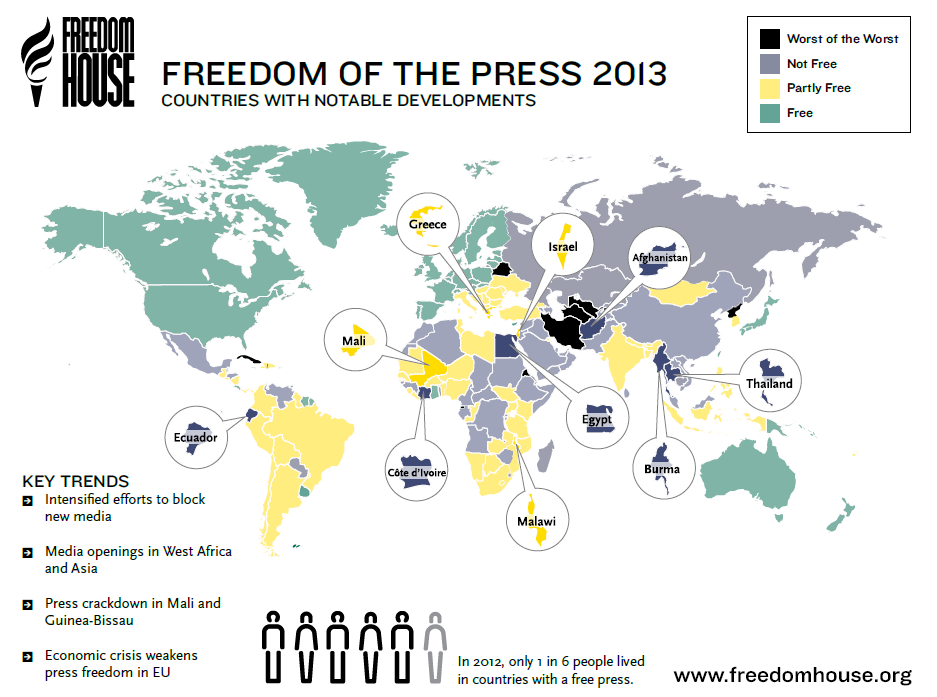
The Middle East's press freedoms have, on the whole, suffered in 2013 (image source: Freedom House)

The Middle East’s press freedoms have, on the whole, suffered in 2013 (image source: Freedom House)

The past twelve months haven’t been lacking in terms of seminal events across the Middle East – we’ve experienced war, coups/democratic/popular revolutions (choose/delete based on your bias), and economic revivals across this diverse region. However, it’s fair to say that 2013 hasn’t been a wonderful year for good quality and independent journalism in the Middle East and North Africa region.

Overall, 2013 recorded a grim milestone for global media. According to the Committee to Protect Journalists, the year documented the 1,000th journalist killed in relation to his/her work since the organization began documenting fatalities in 1992. Sky News cameraman Mick Deane was killed in Egypt in August of this year while covering the violence in Cairo.

Over half of the 70 journalists lost this year were killed in the Middle East trio of Syria, Iraq and Egypt. One of those whom we lost at the end of 2013 was Molhem Barakat, a young Syrian freelance photographer who submitted dozens of pictures of the bloody conflict in Aleppo to Reuters. Molhem was killed while covering fighting between government and opposition fighters on December 20th.

A full list of those who have laid down their lives to bring us the reality in war zones and areas of conflict can be seen here at the Committee to Protect Journalists.

Journalists working in safer climes across the MENA region have also faced serious challenges which has impeded their work. Media freedoms were curtailed across the region, with Lebanon being ranked by the US-based NGO Freedom House as the country with the most free press (Lebanon came in at number 112 globally and its press was rated as partly free).

I’m going to quote below from Freedom House’s Freedom of the Press report on the Middle East and North Africa. The report in full is available to download in pdf format here.

The Middle East and North Africa region continued to have the world’s poorest ratings in 2012, with no countries ranked in the Free category, 5 countries designated Partly Free, and 14 countries assessed as Not Free… Although new information platforms — including blogs, social media such as Twitter and Facebook, and smart phones — have had a positive impact, traditional media in much of the region were still constrained by emergency rule, state ownership and editorial directives, harsh blasphemy legislation, and laws against insulting monarchs and public figures.

While the concept of citizen journalism has been slow to take root in the Middle East, a number of countries have jailed persons who have uploaded information such as videos and photographs onto the internet on charges ranging from insulting the national image and harming the country’s reputation to defamation.

The over-riding trend over 2013 has been efforts to monitor, control and censor online debate. A number of countries in the Gulf and North Africa have enacted highly restrictive laws targeting online publishing including blogs and social media that hurts national interests. Even in Kuwait, which was ranked by Freedom House as the Gulf nation with the freest press, journalists have been jailed for reporting on opposition demonstrations. Journalists have been jailed and remain imprisoned in at least eight countries across the Middle East and North Africa according to the Committee to Protect Journalists.

Looking forward, there’s no reason to believe that 2014 will prove to be different to 2013. Civil disputes in Syria, Iraq and Egypt show no signs of being resolved, and sectarian issues seem to be growing in prominence across the region. One bright spot may be a thaw in relations between the West and Iran, following the election of President Rouhani and discussions over Iran’s nuclear programme. However, as social media becomes the most common form of communications across the Middle East the odds are that online censorship will become ever more prominent.
A glimpse into Social Media in today’s Gulf

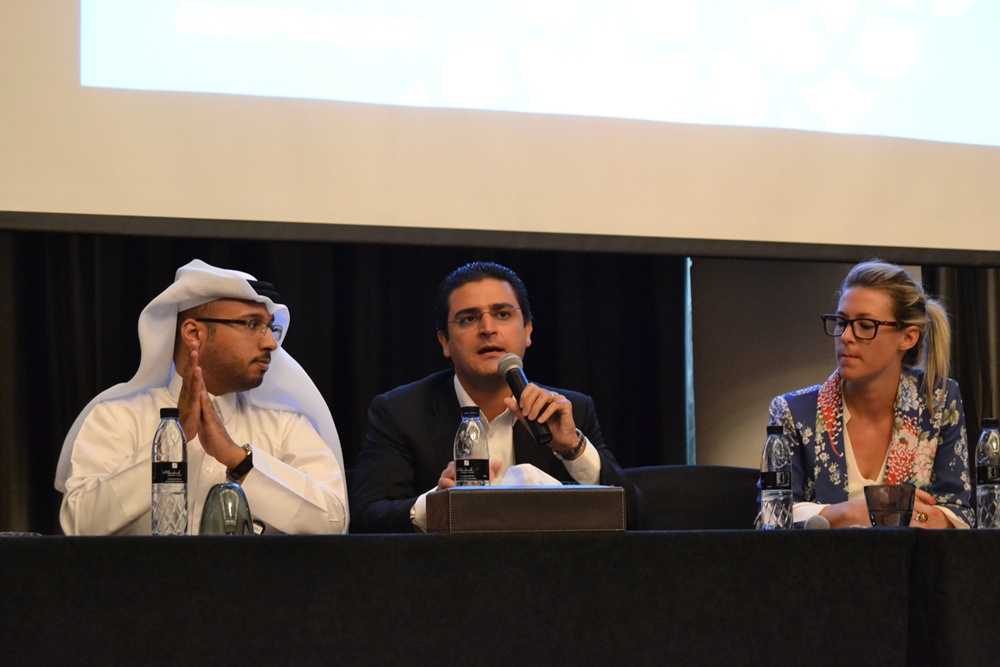
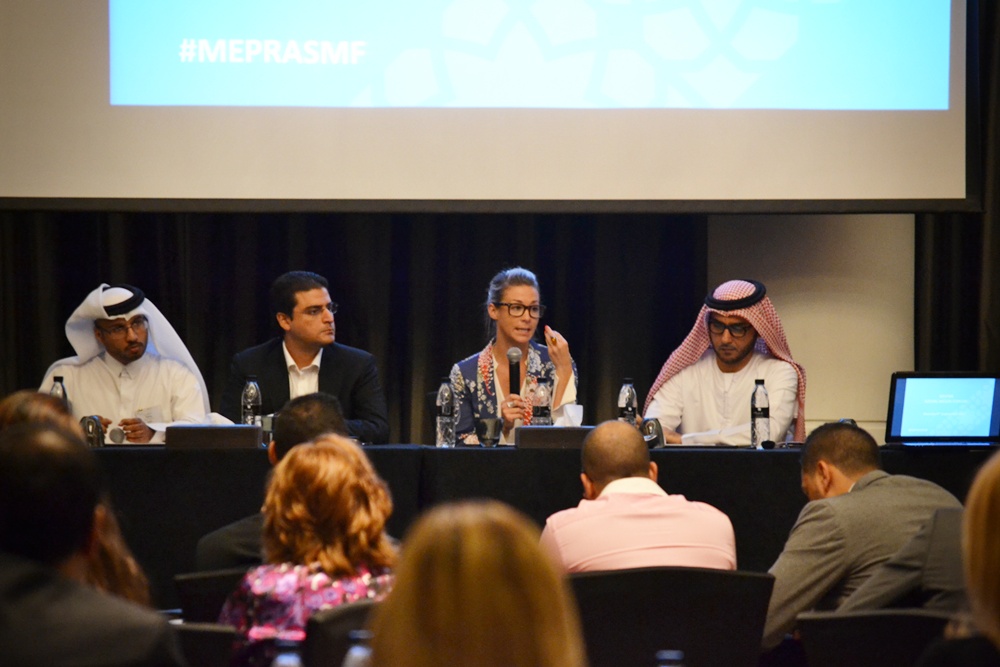
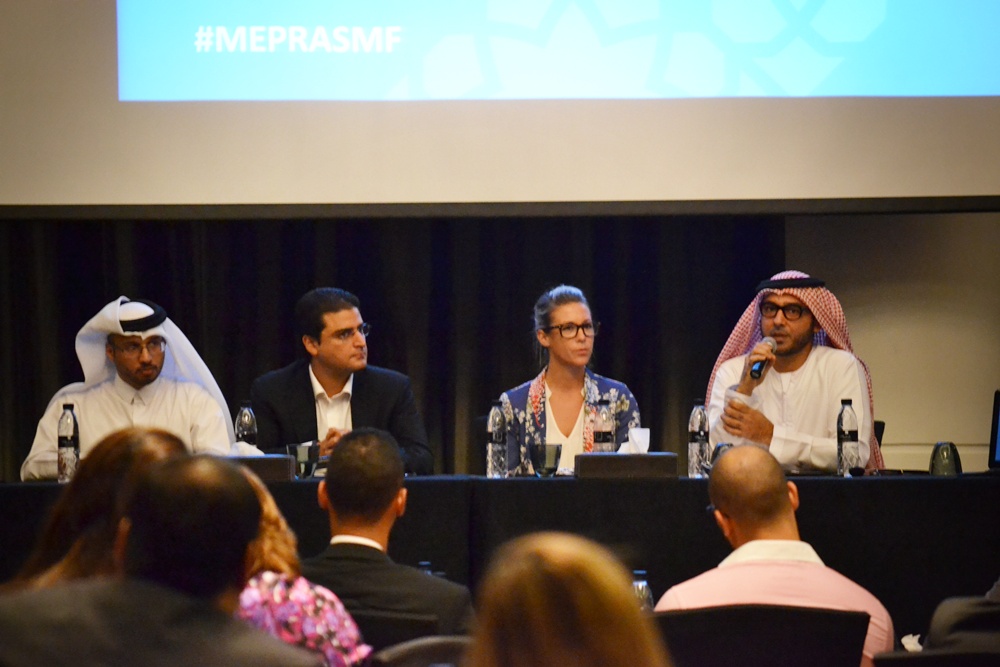
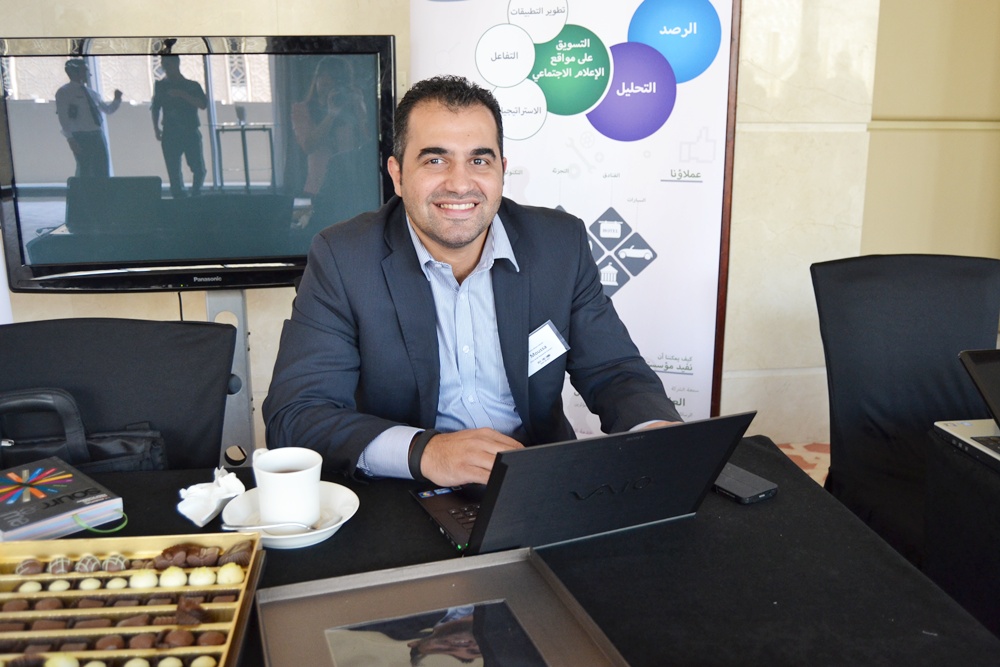
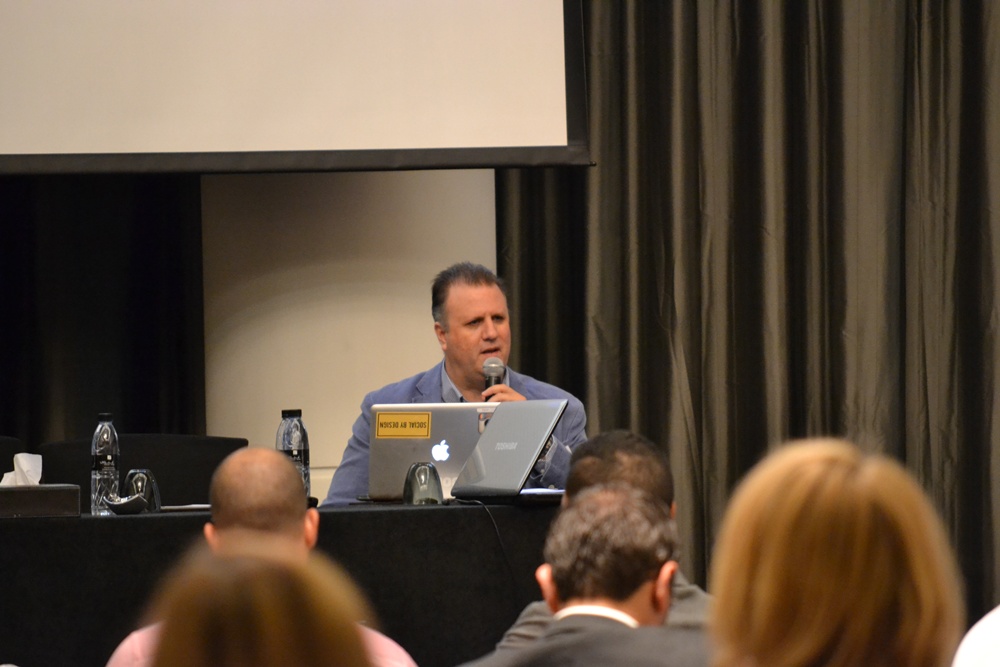
It’s not often I can say that Monday is my favourite day of the week (as Bob Geldof says, I don’t like Mondays) but this week was an exception thanks to the inaugural Social Media Forum. Arranged by the Middle East Public Relations Association, the event brought together some of the world’s largest social media names present in the Gulf including Facebook and Twitter’s local agency Connect Ads to talk shop about what’s happening in the social media world. And by the looks of it we’re addicted to social media.

The latest stats from Twitter are stunning; there’s now six and a half million active users of the social media channel in Saudi Arabia (active users are those who use their account on a daily basis), which represents a growth of 500 percent over last year’s numbers. In the UAE there’s 1.5 million users. But the highest percentage of Twitter users to a population is in Kuwait, where one in three people – one in three million – use the service on a daily basis.

While Facebook’s spokesperson didn’t reveal updated numbers about users in the Gulf region usage trends have changed thanks in part to widespread adoption of smartphones and broadband wireless networks such as 3G and 4G. The average user will check Facebook 11 times a day, up from 3 or 4 times, partly thanks to Facebook’s latest mobile applications. Sixty percent of Twitter users in the Middle East and North Africa are now using the service while watching television (the logical question would be, where are you advertisers and why are you not taking advantage of this?).

The good news would seem to be that (some) clients are now understanding social media is more than just followers, likes and retweets according to the head of analysis agency Social Eyez. One speaker at the event, the corporate communications manager for the Qatar Foundation, told the audience that a sixty hour social media activation with FC Barcelona using Twitter drove global brand awareness by upwards of 20 percent. This goal would have been unachievable with conventional media without an eight figure marketing budget. Social media has changed both marketing and communications completely, and long may our love of tweeting and posting continue in the Gulf.

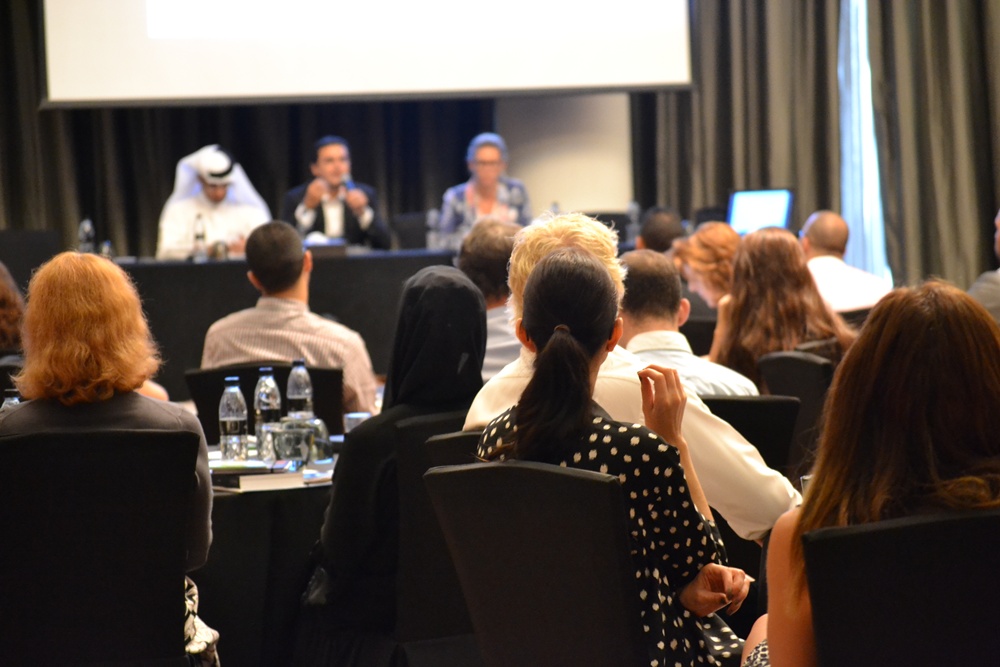
If you’re interesting in seeing the best practice presentations from the event you can download the Facebook Middle East Public Relations Association Presentation here and the Twitter Social Media Forum Presentation here. MEPRA will be holding more events on social media soon, including with the Social Media Club in Bahrain and other areas of the region. For a glimpse of the event have a peek at some of the pictures below.

Is social media making the situation in Egypt better or worse?

Should we still be saying thank you to Facebook and other social media sites today? (image credit: http://www.straighterline.com)

We’ve all seen the horrid news coming out of Egypt over the past couple of days and weeks. The events have been broadcast worldwide. Thanks to social media, they’ve also featured prominently on Facebook, Twitter, YouTube and other channels. There’s been a noticeable trend; the content being shared online is becoming more radical and biased as things have gotten worse in Egypt.

There was a fascinating study by MIT, NYU and the Hebrew University of Jerusalem which suggested specific positive or negative influences create asymmetric herding effects – in plain English that means people are increasingly likely to follow the crowd online and agree with others when there’s a groundswell of opinion, especially when they share similar opinions or views.

There’s a famous English saying which seems apt for social media today, “birds of a feather flock together.” What we’re seeing on social media today is groups of individuals who share the same opinions coming together as groups. There’s less debate online of differing views and more support for and promotion of each others views.

The question is, how is this helping calm the situation on the ground? Are people thinking clearly when they post, share or comment? While Facebook was praised for its role in the 2011 revolution, my own views are that social media is now a key channel for fanning the flames of sectarian division in the country.

I’d hope people think more before they use social media to openly share their feelings on such emotional issues. It’s gotten to a point now where my timelines are split between the various groups who are constantly posting materials which reflect their own opinions. In contrast there’s little effort by either side to reach out to others. The social media world is just as polarized as opinions on the ground (maybe even more so). I’m hiding videos and pictures because I don’t want to see such open hatred on my timelines.

I sympathize with people’s views and I understand the passion on both sides. Hundreds have died and the country is in a state of emergency. On both sides, Egypt’s citizens want what they think is best for their country. But, for the sake of events on the ground, let’s pause before emotions kick in. We need more calm heads rather than hot heads, especially online and on social media.

If you don’t like it, then leave! Hey @Dutweets and how not to deal with customers online

One week, two social media blunders in the United Arab Emirates. First we had Subaru Emirates and now we have Du, the UAE’s second largest telecommunications company, getting everyone into a tizzy.

The background to the story, which has been covered by the UAE-based magazine Computer News Middle East, is an increase in charges for the company’s home user pricing plans. The price increases, which have risen by up to 37 percent, seem to have been posted on the company’s website rather than having being formally announced by the company.

Unsurprisingly, consumers haven’t taken to Du’s price increases (note – for data services the UAE operates a monopolistic system whereby you have to purchase from the sole telco who is licensed to operate in your area, which is either Du or Etisalat). Du’s twitter account, @Dutweets, has been inundated with tweets from aggrieved consumers who understandably don’t want to pay more for their existing service and don’t want Du’s offer of additional phone minutes in compensation for the higher prices. Have a look below:

Unfortunately, for the people in the company running the Du account (Du handles social media internally I believe) things have gone from bad to worse. One reply has gone viral and is receiving a swathe of negative feedback on Du and its social media efforts.

I do feel for @Dutweets as they’re having to face the fallout from a pricing decision which has been poorly executed and hasn’t been communicated in the right manner – from a customer perspective there’s no justification for a price rise for the same service, especially when Du’s customers have no other provider and when their existing contracts should be honored for the contracts’ duration. However, if a company isn’t willing to resolve issues through social media then what’s the point of entering into a dialogue with the community? And no matter the frustration levels you can’t respond to customers in a manner that seems unsympathetic. So please, no more Hey! messages @dutweets. Understand the concerns, pass on the message to the executives and wait for a positive message from upstairs. Don’t do a Subaru, because you’re only going to make things much, much worse for yourselves.

https://twitter.com/WildeTrude/status/364691859576061954

https://twitter.com/alextohme/status/364719579089485826

Social media and diplomacy – @IsraelintheGCC, Israel’s virtual embassy in the Gulf

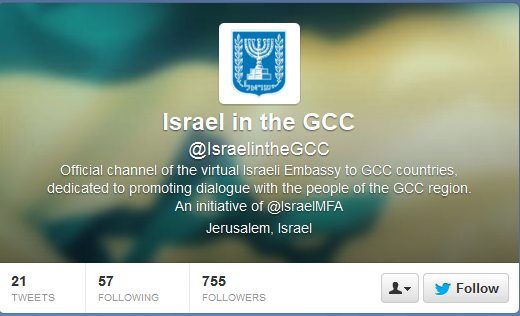
The launch of the @IsraelintheGCC twitter account is a cheap but potentially effective media channel for the Israeli government

The launch of the @IsraelintheGCC twitter account is a cheap but potentially effective media channel for the Israeli government

No matter your political persuasion, you have to admit that the Israelis are an ingenious bunch. Their latest idea is a simple concept, a virtual embassy for a part of the world where there’s little/no Israeli State presence, the Gulf. Israel, which doesn’t enjoy official diplomatic relations with any of the Gulf states, has launched a ‘virtual embassy in the Gulf’ through Twitter. The account, which is named @IsraelintheGCC, aims to “open lines of dialogue” with people living in the Gulf according to a report by the UAE-based English-language daily Gulf News. According to the Israeli daily Haaretz, the person behind the idea is Yoram Morad, Director of the Department of Digital Diplomacy at the Ministry of Foreign Affairs of Israel.

Not unsurprisingly, Israel has always faced challenges when trying to communicate its point of view to its Arab neighbours. However, that hasn’t stopped the State from engaging various mediums to argue for its policies. Israel launched an Arabic-language television channel in 1994 following the announcement of the Israeli-Palestinian peace process. The establishment of the @IsraelintheGCC twitter account follows news of a potential re-engagement between the Israelis and Palestinians as well as mounting pressure on Iran to halt its nuclear enrichment programme.

It could be argued that Israel has been much more active than the Arab states in terms of communicating its key messages – there were plans to launch a Hebrew-language channel in Egypt as of last year according to the Christian Science Monitor, but I haven’t heard much in the way of an actual launch.

The messaging employed by @IsraelintheGCC, which is being run by the Twitter account of the Israeli Foreign Ministry, would appear to be aimed at propagating a more diplomatic tone than that of Israel’s internal politics. The account, which has tweeted 21 times to date, has only quoted the country’s Prime Minister twice (its fair to say that Bibi Netanyahu wouldn’t win many popularity contests in the Gulf), but it has talked about social media in the Arab world, sustainability issues, and wished followers a Ramadan Kareem. The one time Netanyahu has been quoted was in relation to European sanctions on the Lebanese organization Hizbollah which isn’t well liked in the Gulf due to its pro-Iranian stance. There are tweets in Arabic too. Have a look at some of the posts below.

Over the past couple of years social media has allowed companies, politicians and celebrities to directly bypass the media and reach out directly to anyone that wants to listen. Now the same can be said of social media for States who, for diplomatic reasons, cannot establish a physical presence. I’ll be following the account, and am looking forward to seeing how long this project lasts, how much dialogue it generates and how successful it becomes for the Israeli government.

Is Saudi in love with or scared @*#$less by Twitter?

Does this make sense? To anyone? (credit: Arab News)

Someone tell me, what is going on in the Magic Kingdom. Today we have a wonderful piece of editorial quality in Saudi Arabia’s English-language newspaper Arab News. The piece, titled Twitter may be linked to IDs, suggests that the country’s government is studying how to link Twitter accounts to identification cards, presumably to better monitor what all those naughty people are doing on the social media site. Here’s a link to the article and a quote from the piece below (as a journalist in Saudi I’ve never heard of the IT expert, but I’d probably disagree with his comments).

Twitter users beware. The Communications and Information Technology Commission (CITC) is currently studying the possibility of linking the access to microblogging site with the personal identification of social media users, according to sources.

The move is likely to create ripples in the social media circles.

A source at the CITC described the move as a natural result of the successful implementation of CITC’s decision to add a user’s identification numbers while topping up mobile phone credit.

Twitter has changed Saudi, period. And it’s not just me saying that either. There was a wonderful piece on Twitter and Saudi Arabia by CNN’s Christiane Amanpour about how the social media site has transformed how Saudis communicate.

Even the Saudi government has got in on the Twitter act. Public figures including culture and information minister Dr. Abdul Aziz Khoja, labor minister Adel Al-Faqih, and commerce minister Dr. Tawfiq Al-Rabiah all use Twitter, as do religious figures. A number of Saudi royals are also on Twitter and merrily tweeting away. And then there’s Al-Waleed. At the end of 2011 the Rainbow Prince and number XX on Forbes’ billionaire list Prince Alwaleed bin Talal announced a $300 million investment in the website. He said at the time that: “the move demonstrates our ability to identify promising investment opportunities with high potential for global impact.”

The above article follows on from a piece earlier this year in Arab News, which I’m going to quote in its entirety and which you can read yourself here.

It is very difficult to monitor Twitter, one of the most popular social networking sites in Saudi Arabia which at the moment has more than 3 million active users, according to Abdulaziz Khoja, Saudi Minister of culture and information.

“The ministry cannot monitor everything published on Twitter,” Khoja said in a statement.

He stressed the difficulty of monitoring what everybody writes, relying on the need to raise awareness among society members regarding what they write and publish on Twitter, a local paper reported.

Nonetheless Khoja declared that the ministry is following up what is happening on Twitter with a number of government agencies.
The minister highlighted the need to raise the consciousness of the active users of social networking sites and to assist the Ministry of Culture and Information in the monitoring process.

However, Khoja refused to compare the situation of social sites with online newspapers, which have been streamlined following a recent regulation.

Khoja stressed that the control on Twitter should originate from individual values and community culture. “With time, individuals will learn to express their opinions and to deal with the events in a more understanding, knowledgeable and accommodating approach,” Khoja said.

So what’s next? Monitoring what people say/think? Good people in positions of authority, Twitter is a channel and not the source. Someone tell me, what is going on. All I hear is tweet, tweet, flip, flop, flip, flop.

How communities are turning to social media when traditional media fails them: #Thx_Tom_Collins and Bahrain

Professor Tom Collins was the subject of a public campaign on the social media site Twitter. Supporters thanked him via the hashtag #Thx_Tom_Collins for his political stance and decision to resign (credit: Irish Times)

As the Middle East’s media channels have become polarized over the past 24 to 30 months, communities who find that they have little if any representation in these traditional media channels have made social media their medium of choice when spreading and disseminating their viewpoints and opinions.

A great example from Bahrain this week was a campaign organized to thank the Professor Tom Collins, the president of the Bahrain campus of the Royal College of Surgeons in Ireland (RCSI), for his decision to resign from his post after the cancellation of a major conference on medical ethics in island. The RCSI had hoped to facilitate the event at its Bahrain campus but the key organizer Médecins Sans Frontières cancelled the event shortly before it was to be held.

Professor Collins resigned after the news of the conference’s cancellation broke. He has been roundly condemned in Bahrain’s national media for his decision which he said was done “in protest over the cancellation of the two-day event which was to examine “medical ethics and dilemmas in situations of political discord or violence.” The conference’s themes were sensitive in Bahrain following widespread arrests of medics in early 2011 at the country’s main hospital and their subsequent trials, a number of which are still ongoing.

The Twitter-based campaign was launched on Thursday 28th March at 8pm Bahrain time and was organized primarily by many of the medical community in Bahrain who were arrested over the course of the two years.Their message was clear and I’ll post some of the most popular tweets below.

What I find fascinating about the above is the role of the media during a time of crisis. For me, media such as newspapers can have a viewpoint but journalists should (theoretically) report the facts. When you’re disenfranchising such a large proportion of the population what happens to that newspaper not only during a crisis but after the crisis has passed, when agreements are made and a compromise is drawn up. With traditional media suffering globally due to a loss of public trust should editors be fighting the demand to be so overtly biased? What are your thoughts?

Understanding the Gulf’s psyche through social media (well, mainly Twitter)

What are the religious police up to now? Didn’t they learn from #Dammam-Hayaa-Closes-Dinosaur-Show? (credit: expo2020)

I’m endlessly fascinated by social media and how people interact online. For me, online interactions tend to shed light on people’s off-line personalities. In this post I hope to share my own observations about how each of the Gulf’s nationals deals and interacts online.

Let’s start with Bahrain. Bahrain possibly has the highest concentration of social media users in the Gulf. Bahrainis are very media-savvy and that shows in their effective use of social media channels. The country’s polarization following the events of February and March 2011 is evident online, with the two sides doing their utmost to ensure that their voices are heard. Bahrain has some of the most-followed Twitter users in the Gulf but they inevitably relate to the political and human rights situation on the island. There’s a lot of trolls out there as well, so be aware that if you’re going to delve into any issue relating to Bahrain you’re going to draw attention to yourself.

Emiratis are fiercely patriotic and proud of their country’s achievements over the past 41 years. Emiratis speak in unison when it comes to politics and are the most supportive nationality in terms of the country’s leadership. Unlike Saudi, Kuwait, or Bahrain you’ll find little debate on the country and its long-term direction but more insight into social issues particularly those which affect the national community. You’ll find royal family members online, members of the Federal National Council, a police chief and lots of UAE-based expats.

Kuwaitis are known for many things, including being opinionated. This is no different online. The Gulf country with the most blogs per person Kuwait is all about politics and disagreement. Kuwait’s politics is just as vibrant online as it is in the country’s parliament, and when you mix in other electrifying issues such as the Bidoon, the country’s rulers, the Arab Spring and religion you’re going to come up with an incendiary cocktail. Some of the most interesting Tweeters are Kuwaiti bloggers and parliamentarians. Just handle with care!

The Qataris are a mischievous bunch. When they’re not commenting on Qatar’s latest attempt to buy a path across the globe (what next after Marks and Spencers?) they’re making the most out of their sense of fun with raucous commentary on the latest goings on in their country. Their musings on Qtel’s attempts to rebrand itself to Ooredoo were biting, as was the boycott against the very same company for its poor customer service (is anyone in the UAE and Etisalat listening?). The Qataris are a wonderful bunch to follow. And one or two of them love their Dunkin’ Donuts coffee!

Saudis, yes you cannot avoid them online just as you cannot avoid them in the physical world. I love Saudis and I love them just as much in cyberspace. They’re open, they’re diverse and they talk about everything. Saudis are not afraid to poke fun at themselves and they’re just at home talking about social issues, politics, arrange boycotts (aka AlShaya and Al-Marai) and even debate religion. There’s some remarkable Saudis online, from preachers to royals and ministers. Saudi is one of Twitter’s fastest growing markets. And they watch more Youtube than any other country worldwide. They are officially living online. And yes, one of them owns (a bit of) Twitter.

And finally, there’s the Omanis (I’m skipping the alphabetic sequencing on this one). I’ve rarely come across Omanis on social media, possibly because I’m not close to issues that they write about or follow. Omanis are known to be kind, courteous and have a fun sense of humour. Which means I really should go and find some Omani tweeters to detox from all of the politics and debate in the rest of the region.

Social media brand hijacking – Emirates and Etihad fakes and lessons for a corporate online presence

A story broke at the beginning of the month about a couple of campaigns out there in the social media universe. Both piggybacked on two of the UAE’s most established brands. Essentially, the two campaigns offered those who followed the chance to win free flights with Emirates Airline and Etihad Airways.

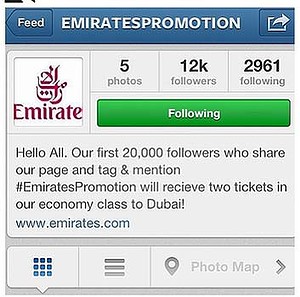
According to the UAE’s English-language newspaper The National which broke the story here in the UAE, the promotion launched on the picture-sharing site Instagram and stated that the first 20,000 people who would follow each account and would share the respective campaigns with a specific hashtag would receive free tickets for themselves plus one to Dubai or Abu Dhabi. The Emirates Instagram account was named EMIRATESPROMOTION while the Etihad campaign ran under the hashtag #EtihadPromotion.

The branding is there, the name may be dodgy, but there's no official Emirates account. So why not believe it?

The branding is there, the name may be dodgy, but there’s no official Emirates account. So why not believe it?

Too good to be true you may think, and the campaigns were fake. That didn’t stop 10,000 people following the fake Emirates account which featured the company’s logo and photos skinned from the company’s website. I don’t know how long the fake competitions were up and running for, but both Emirates and Etihad put out statements warning people not to fall for the fake campaigns. The Emirates statement is below.

To all our fans, Emirates has three official social media channels which are:

http://www.facebook.com/emirates
http://www.google.com/+Emirates
http://www.youtube.com/Emirates

When we launch competitions or new social media channels, you will be the first to know via our Facebook, G+ or YouTube channels and on emirates.com.

Thank you for your continued support
Emirates”

Emirates also sent a statement to the Australian website The Vine stating that “Emirates Airline does not have an official Instagram account. Any Emirates-related accounts or promotions on Instagram do not belong to us.”

Similarly, Etihad wrote on its Twitter account that “Etihad Airways has no association with any accounts or promotions (such as #EtihadPromotion) competition currently running on Instagram as we don’t have an official Instagram account yet. Thanks for checking.”

How does this concept sound to you? There’s lots of random people out there on social media, and scams and the internet aren’t mutually exclusive. So why do brands focus on some social media channels and not others? For example, both Emirates and Etihad don’t have Instagram accounts. Emirates doesn’t even have a Twitter account. Wouldn’t it be best for a brand simply to park their presence on the major social media channels (no one can do everything on social media, there’s simply too many channels and sites out there).

And this point may be even more relevant albeit off on a tangent for Emirates, which spends several hundred million dollars on sports marketing (the most recent announcement being the tie-up with Formula One). Isn’t the airline missing out through not focusing on social media? Imagine how much Emirates could achieve in brand positioning and amplifying that sports marketing spend by promoting itself through social media. As I’ve said before, technology is a wonderful leveler. It’d seem a waste not to wring every single penny in return on investment from those mega-bucks sports sponsorships.

So next time you see a promotion which is too good to be true just send a Facebook message to the airlines and ask them if they’ve gotten round in Instagram (or Twitter in Emirates’ case). And, as they say in France bon chance!

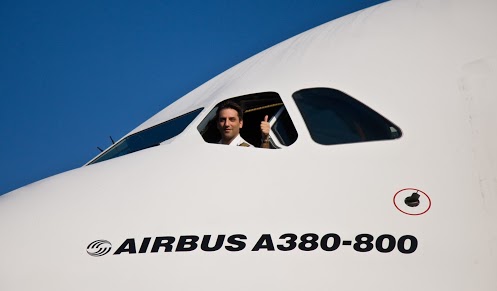
This gentleman clearly feels Emirates would benefit from more social media presence. Do you?

This gentleman clearly feels Emirates would benefit from more social media presence. Do you?

How to avoid the speed cameras in Saudi with Twitter

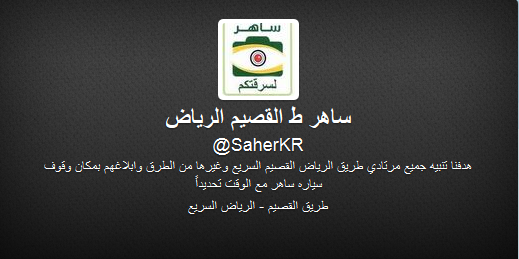
If you're looking for a way to beat the Saudi speed traps look no further than Twitter!

If you’re looking for a way to beat the Saudi speed traps look no further than Twitter!

Saudis are ingenious. And they don’t like to be told what to do. When you combine the two the results are imaginative to say the least. I’m late to the game on this one but I was intrigued when a family member showed me the latest attempt to beat Saher, the country’s traffic cameras which have been fining speeding Saudi drivers ever since they were installed back in 2010.

The friend opened up his phone, went to his Twitter feed and clicked through on to one Twitter account, named @SaherKR. This feed can be used by followers to alert their fellow Formula One drivers of any mobile or fixed Saher cameras, checkpoints, or any other inconveniences on the road between Riyadh and Qasim. One example is below.

https://twitter.com/SaherKR/status/297708381358137344

There’s dozens of these accounts today in Saudi. My favourite is @Saher_khj which is followed by 10,000 Twitterers and gives all the details needed to avoid speed traps including the exact area of the camera, the speed limit and the time of day the user has passed by the camera.

I am left asking myself however how these people have the time to write a 140 character message while most likely doing 150 kilometers an hour in their Toyota Camrys or Hyundai Accords. Maybe that’s why their driving is so erratic as they’re shuffling their fingers across their iPhones whilst attempting to steer the car?

This isn’t the first time that the Saudis have used technology to overcome pesky government interference. The first widely reported solution was a mobile phone application called Trapster which alerted drivers via their iPhones of speed cameras in the vicinity. The application proved so popular that mobile phone shops were charging customers over $100 dollars to install on the iPhone. The application itself was free (if you don’t believe me, it’s printed in the media so it must be true).

And the fun part of this detective work? The family member who showed me all of these Tweets works as a senior manager in the Saudi Interior Ministry and is responsible for road safety. Boys, they know who you are and where you are! Ticketing by Twitter? Sounds good to me!