Understanding the Gulf’s psyche through social media (well, mainly Twitter)

What are the religious police up to now? Didn’t they learn from #Dammam-Hayaa-Closes-Dinosaur-Show? (credit: expo2020)

I’m endlessly fascinated by social media and how people interact online. For me, online interactions tend to shed light on people’s off-line personalities. In this post I hope to share my own observations about how each of the Gulf’s nationals deals and interacts online.

Let’s start with Bahrain. Bahrain possibly has the highest concentration of social media users in the Gulf. Bahrainis are very media-savvy and that shows in their effective use of social media channels. The country’s polarization following the events of February and March 2011 is evident online, with the two sides doing their utmost to ensure that their voices are heard. Bahrain has some of the most-followed Twitter users in the Gulf but they inevitably relate to the political and human rights situation on the island. There’s a lot of trolls out there as well, so be aware that if you’re going to delve into any issue relating to Bahrain you’re going to draw attention to yourself.

Emiratis are fiercely patriotic and proud of their country’s achievements over the past 41 years. Emiratis speak in unison when it comes to politics and are the most supportive nationality in terms of the country’s leadership. Unlike Saudi, Kuwait, or Bahrain you’ll find little debate on the country and its long-term direction but more insight into social issues particularly those which affect the national community. You’ll find royal family members online, members of the Federal National Council, a police chief and lots of UAE-based expats.

Kuwaitis are known for many things, including being opinionated. This is no different online. The Gulf country with the most blogs per person Kuwait is all about politics and disagreement. Kuwait’s politics is just as vibrant online as it is in the country’s parliament, and when you mix in other electrifying issues such as the Bidoon, the country’s rulers, the Arab Spring and religion you’re going to come up with an incendiary cocktail. Some of the most interesting Tweeters are Kuwaiti bloggers and parliamentarians. Just handle with care!

The Qataris are a mischievous bunch. When they’re not commenting on Qatar’s latest attempt to buy a path across the globe (what next after Marks and Spencers?) they’re making the most out of their sense of fun with raucous commentary on the latest goings on in their country. Their musings on Qtel’s attempts to rebrand itself to Ooredoo were biting, as was the boycott against the very same company for its poor customer service (is anyone in the UAE and Etisalat listening?). The Qataris are a wonderful bunch to follow. And one or two of them love their Dunkin’ Donuts coffee!

Saudis, yes you cannot avoid them online just as you cannot avoid them in the physical world. I love Saudis and I love them just as much in cyberspace. They’re open, they’re diverse and they talk about everything. Saudis are not afraid to poke fun at themselves and they’re just at home talking about social issues, politics, arrange boycotts (aka AlShaya and Al-Marai) and even debate religion. There’s some remarkable Saudis online, from preachers to royals and ministers. Saudi is one of Twitter’s fastest growing markets. And they watch more Youtube than any other country worldwide. They are officially living online. And yes, one of them owns (a bit of) Twitter.

And finally, there’s the Omanis (I’m skipping the alphabetic sequencing on this one). I’ve rarely come across Omanis on social media, possibly because I’m not close to issues that they write about or follow. Omanis are known to be kind, courteous and have a fun sense of humour. Which means I really should go and find some Omani tweeters to detox from all of the politics and debate in the rest of the region.
A blogging masterclass with David Hobby at GPP

Am taking the weekend off to go to school! And today is going to be an exciting one! I’m attending a one-day class hosted by Gulf Photo Plus on blogging given by David Hobby. David is a one-man blogging machine with over ten blogs on the go. Over 15,000 people find his site through Google searches alone every day. And boy does he talk! David you should have video blogs if you don’t already.

The write-up from GPP’s website is below… Will let you know how it goes.

Whether you are a photographer, another kind of creative or work for just about any company with an internet presence, a well-run blog may be the most powerful tool on the web. And for those who are willing to take the reins of a company blog, this might be the closest thing to “fire proof” that exists in 2013. Employees who can expand a company’s footprint through effective social media are far more valuable to the business.

A well-crafted blog can do many things. It can establish both recognition and credibility. It can produce income. It can produce strong search engine optimization. It can create a direct channel to your customers, present and future. But blogging does not come naturally for most people. While the platforms may be easy to learn, the process itself can be daunting.

How do you choose a name for your blog? How do you create a voice? Why is it important to understand organic SEO? Where do great ideas come from, and how do you shape them for your blog? For company bloggers, how do you strike a balance between being corporate and being human? Where do you look for ongoing inspiration? How do you leverage external platforms? What steps can you take to help something go viral?

David Hobby created Strobist.com in 2006. Five years on, it receives over 3,000,000 page views a month and was recently named one of the Best 25 Blogs in the World by Time Magazine.

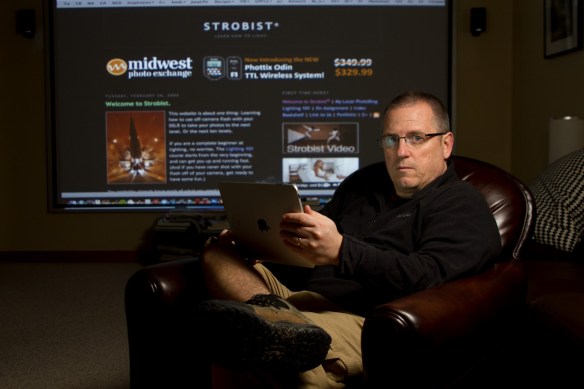
David Hobby is the man behind strobist.com. If you haven’t checked it out please do, now! (credit: lisadierolfphotography.com)

David Hobby is the man behind strobist.com. If you haven’t checked it out please do, now! (credit: lisadierolfphotography.com)

A Bikers Cafe with no bikers – an Emirati breakfast and local modeling hotspot

If you're after a taste of local cuisine come on down to Bikers Cafe. And no, you don't need to be a biker

If you’re after a taste of local cuisine come on down to Bikers Cafe. And no, you don’t need to be a biker

Imagine your typical biker. Most likely a he, about 120 kilos plus and built like a reinforced brick wall. Add in the long hair, and the leather gear (at the least the leather jacket). And then there’s the bike, a roaring Harley Davidson or a feast-your-eyes chopper. Who doesn’t love bikers?

And so imagine my delight when my wife declared one weekend morning, “we are heading to the Bikers Cafe!” While I’m not a biker, I was looking forward to the breakfast menu. Bikers Cafe is the only place I’ve come across where there’s a full local Emirati breakfast on offer. Me and the wife arrived at the Bikers Cafe which is within walking distance of Mercato Mall on Jumeirah Road fairly late in the morning at 10.30am. While the place itself wasn’t too hard to spot (look for a motorbike on the pavement), the first surprise was the lack of bikers at the cafe. We were greeted by a sea of white and black and I’d found where the local community comes on a weekend for their breakfast and Chai Kerak.

After grabbing a table (warning – on the weekend be prepared to wait for a seat) we poured over the menu and plumped for a Royal Breakfast which is apparently called so after a local VIP ordered the dish. While the price, at 180 Dirhams for the two of us without drinks, was excessive the dish featured all the local favourites which I love from Bahrain. Khameer, traditional bread which is often spiced with saffron and cardamon, was on the plate, as was Chebab, a small pancake I always associate with Scotch pancakes.

And then there was Balaleet, which simply put is a vermicelli and egg omelet which is a favourite (no one does this better than my mother-in-law), and Nakhee or spiced chickpeas and fuul beans. I also spotted raqaq, a paper-thin unleavened bread, and Emirati crepes also known as Mahalla. We sampled a date flour mixture which I know well from Saudi.

The cherry on top for both of us was the Chai Kerak – a mixture of sugar, tea, milk and cardamon – which was exquisite. However, we are both used to drinking Kerak from a paper cup rather than crockery. And again, the prices weren’t cheap at about 20 Dirhams a serving (I always pay a couple of Dirhams in Bahrain for the privilege).

While the food was undoubtedly worth a trip to Jumeirah, I think that most of the crowd were there to do a spot of modeling. If you’re looking to people watch and understand more about the local community then the Bikers Cafe is the place for you (you can check out the website and the menu here). As for me I’m looking forward to heading back to Bahrain to enjoy a local Bahraini breakfast at a fraction of the price.

How much variety and discrimination is there in the Gulf?

The GCC is as diverse and complicated as any other part of the globe (credit: rasheedsworld.com)


Looking on in from the outside, most expatriates see the Arabian Peninsula as one monotonous geography. The women wear black (unless they’re Kuwaiti) and the mean wear white. The language is the same, and everyone is a Muslim. And that’s the Gulf.

Well, hardly. Each country is unique, and offers a wealth of diversity in terms of culture, history and opinions. The range of accents in Bahrain is so prominent that a local will be able to tell where a compatriot may be from how the greeting alone.

Saudi is the most diverse country in the region. Its twenty million nationals come from all four corners of the world, and don’t be surprised to meet a Saudi whose roots trace back to Indonesia, China, or Western Africa. The Kingdom’s Western Region is the richest melting pot you’ll come across, thanks to hundreds of years of pilgrimage to the two holy cities of Makkah and Madinah. Often foreigners think that Dubai or Doha are the two cities that offer the greatest contrast of cultures and groups, but they don’t come close to what Jeddah has to offer.

And Christians in Kuwait and Bahrain? And a Jewish community in Manama? Yes, they’re locals (but there’s not many of them).

And of course, with variety comes discrimination. There’s a good deal of nepotism across the Gulf mainly due to the tribal, bedouin nature. It’s not uncommon to find a certain group dominating in one company – it’s not so much where a person is from as often as what their tribal name is. Many Saudis don’t use their tribal names any more. And there’s also discrimination based on region (Jeddah versus Riyadh, Dubai versus Abu Dhabi etc), on the history behind the family name (in other words how far back can the family’s genealogy be traced), and on religion (which mathab or religious affiliation a person adheres to).

While this isn’t unique to the Gulf (tell me a place where there isn’t any discrimination) what I do find interesting is the institutionalized discrimination in certain parts of the GCC. Some states, most notably Saudi Arabia, Kuwait, Bahrain and Oman count GCC nationals as locals when it comes to hiring and nationalization quotas. The UAE and Qatar do not – when they say local they mean local. For a European the difference in policy between the two groups is hard to fathom (especially when considering the relatively small populations of both Qatar and the UAE when compared to Saudi Arabia).

So, the next time you’re sitting in the coffee ship and sipping on your coffee do remember to ask yourself where the gentleman in white is from. You may be surprised at how much you can learn about a region that is full of culture and contrast.

Mission Impossible? Rehabilitating the image of the UAE’s expat education system…

The question used to be who’d be a teacher. Today it’s more likely be to who’d be a school owner in the UAE? The country’s private education system has been under attack recently for the cost of educating (mainly) expatriate children. There was a wonderful article written by Arabian Business Editor Courtney Trenwith about the issue of high school fees in the UAE, and an apt comparison was made between secondary education in the UAE and tertiary education back in the United Kingdom.

An Arabian Business investigation last month revealed the startling fact that it costs more to send a child to some Dubai schools than a British university.

Fees for a three-year old are as high as AED55,000 (US$15,000) per year, while they escalate to AED69,283 for a typical child aged six to nine, to AED79,733 for many ten to 13-year olds and as much as AED96,140 for the most expensive secondary schools.

Meanwhile, a year’s tuition at universities such as Cambridge and Oxford is less than AED53,000. Until recently, UK university fees were even cheaper.

One of the largest private education firms is GEMS, which claims to educate over 110,000 children and be the leading Kindergarten to Grade 12 private education operator in the world. In December of 2012 GEMS announced that it would close Westminster School in Dubai, which caters to 4,800 pupils from ages five to 18-years old.

The issue which has been covered extensively by the online portal and business publication Arabian Business has caused an uproar with parents who are naturally concerned about the disruption to their children’s education. In a letter sent to parents which was published by Arabian Business, GEMS said the Westminster School would shut in June 2014 with students being given priority placement in other GEMS institutions.

“In recent times our ability to invest the resources required to produce the improvements needed, both educationally and in infrastructure, have been severely restricted because of the current fee structure… We simply cannot offer a high quality education at this level that we see as our duty to provide. Indeed, salary increases during the same period have been at a level higher than any fee awards,” wrote GEMS executive director Dino Varkey to parents.

And now we come to the issue of communications. There are few subjects as sensitive as education, especially when it is for your own children. As the largest company in the industry and one which seems to be making the most headlines, GEMS should realize it needs to do more in terms of its messaging. The company is currently looking to hire a PR and communications manager in Dubai through LinkedIn (if you’re interested in Mission Impossible do click through here).

The question I’d pose to GEMS is how can anyone justify charging more for a year in high school than for a year in university? As there’s little to no public schooling system here for expatriates (in theory an expatriate child can go to a government school but fees will still apply) what are parents to do apart from swallow the bitter pill? But will that help GEMS and the other companies in the long-run? Isn’t the issue more than simply looking at how to spin the company line on high educational costs and school closures? Isn’t this more about the fundamentals of the business, which need reassessing?

The very same Dino Varkey told Arabian Business editor Anil Bhoyrul in an interview in March 2011 that:

“The ambition that we work towards is five million students by 2024. If we got to the five million number as a conservative [estimate] we would be a $60bn company; we would be employing 450,000 teachers, 55,000 senior leaders – that’s the size of organisation that we are trying to build. ”

In the meantime I spotted this recently in a book store in Dubai. As always, if you don’t keep the customer happy someone else will muscle in and try to offer a better service at the same or a lower cost regardless of your communications strategy.

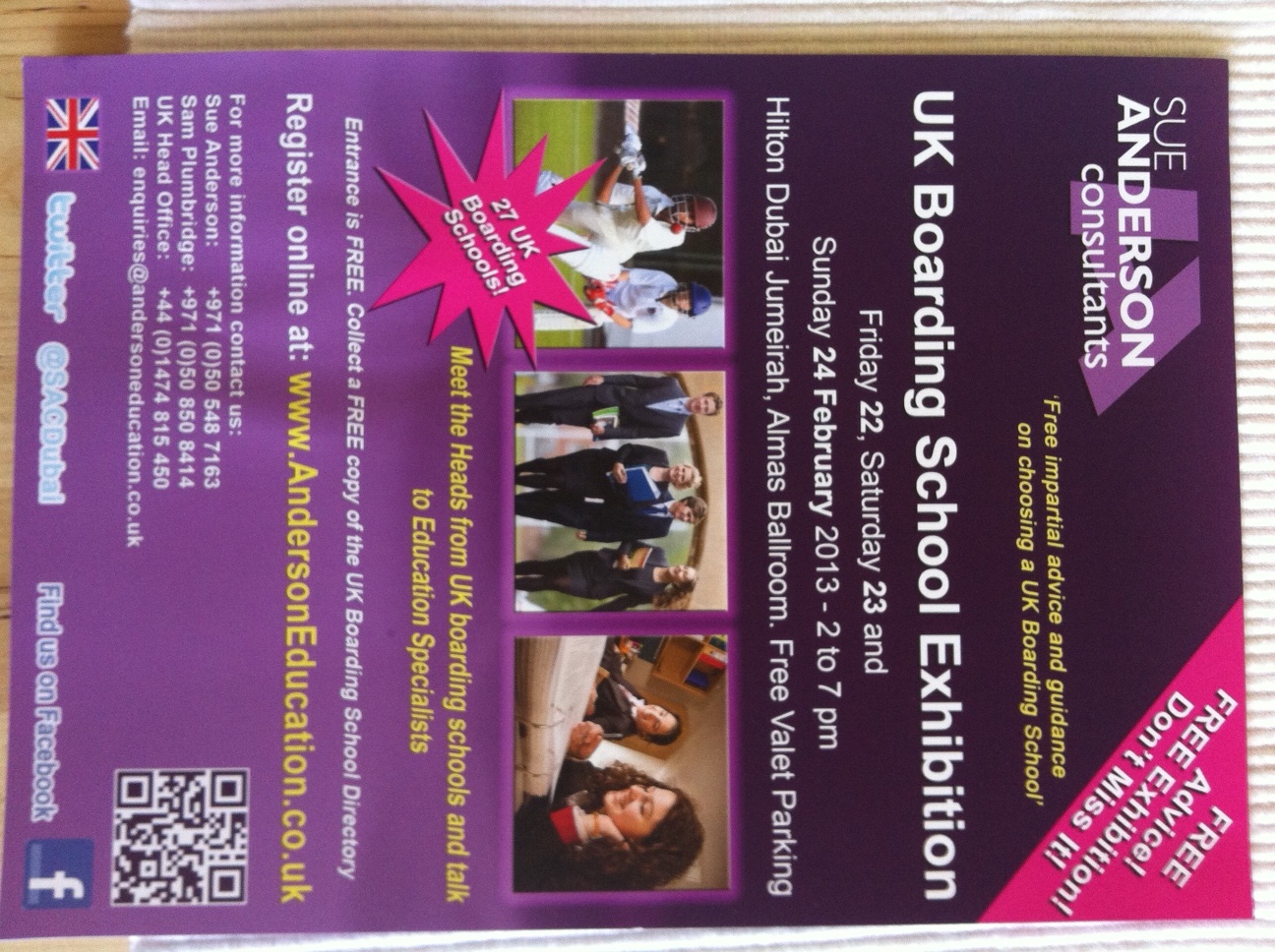
There's always an alternative but would your child be happier and better off boarding in the UK than going to school in Dubai? And would it be cheaper?

There’s always an alternative but would your child be happier and better off boarding in the UK than going to school in Dubai? And would it be cheaper?

Social media brand hijacking – Emirates and Etihad fakes and lessons for a corporate online presence

A story broke at the beginning of the month about a couple of campaigns out there in the social media universe. Both piggybacked on two of the UAE’s most established brands. Essentially, the two campaigns offered those who followed the chance to win free flights with Emirates Airline and Etihad Airways.

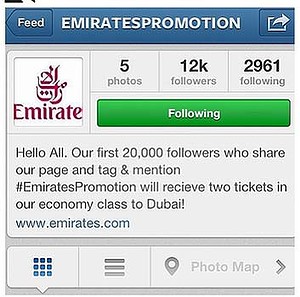
According to the UAE’s English-language newspaper The National which broke the story here in the UAE, the promotion launched on the picture-sharing site Instagram and stated that the first 20,000 people who would follow each account and would share the respective campaigns with a specific hashtag would receive free tickets for themselves plus one to Dubai or Abu Dhabi. The Emirates Instagram account was named EMIRATESPROMOTION while the Etihad campaign ran under the hashtag #EtihadPromotion.

The branding is there, the name may be dodgy, but there's no official Emirates account. So why not believe it?

The branding is there, the name may be dodgy, but there’s no official Emirates account. So why not believe it?

Too good to be true you may think, and the campaigns were fake. That didn’t stop 10,000 people following the fake Emirates account which featured the company’s logo and photos skinned from the company’s website. I don’t know how long the fake competitions were up and running for, but both Emirates and Etihad put out statements warning people not to fall for the fake campaigns. The Emirates statement is below.

To all our fans, Emirates has three official social media channels which are:

http://www.facebook.com/emirates
http://www.google.com/+Emirates
http://www.youtube.com/Emirates

When we launch competitions or new social media channels, you will be the first to know via our Facebook, G+ or YouTube channels and on emirates.com.

Thank you for your continued support
Emirates”

Emirates also sent a statement to the Australian website The Vine stating that “Emirates Airline does not have an official Instagram account. Any Emirates-related accounts or promotions on Instagram do not belong to us.”

Similarly, Etihad wrote on its Twitter account that “Etihad Airways has no association with any accounts or promotions (such as #EtihadPromotion) competition currently running on Instagram as we don’t have an official Instagram account yet. Thanks for checking.”

How does this concept sound to you? There’s lots of random people out there on social media, and scams and the internet aren’t mutually exclusive. So why do brands focus on some social media channels and not others? For example, both Emirates and Etihad don’t have Instagram accounts. Emirates doesn’t even have a Twitter account. Wouldn’t it be best for a brand simply to park their presence on the major social media channels (no one can do everything on social media, there’s simply too many channels and sites out there).

And this point may be even more relevant albeit off on a tangent for Emirates, which spends several hundred million dollars on sports marketing (the most recent announcement being the tie-up with Formula One). Isn’t the airline missing out through not focusing on social media? Imagine how much Emirates could achieve in brand positioning and amplifying that sports marketing spend by promoting itself through social media. As I’ve said before, technology is a wonderful leveler. It’d seem a waste not to wring every single penny in return on investment from those mega-bucks sports sponsorships.

So next time you see a promotion which is too good to be true just send a Facebook message to the airlines and ask them if they’ve gotten round in Instagram (or Twitter in Emirates’ case). And, as they say in France bon chance!

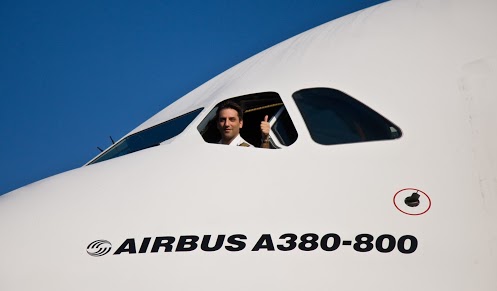
This gentleman clearly feels Emirates would benefit from more social media presence. Do you?

This gentleman clearly feels Emirates would benefit from more social media presence. Do you?

Dubizzle and shifting buying habits online for the UAE’s automotive sector

When it comes to online shopping, you should pity us poor souls in the Gulf and the wider Middle East. There’s no Amazon and no eBay. We’ve only had our own iTunes store for a couple of months (Apple officially launched its UAE iTunes store in December of 2012). When we refer to online and shopping in the Gulf, what we really mean is messaging our friends on BBM or Whatsapp while roaming the nearest/biggest mall in town.

There are some brave souls who are trying to make a difference and fight the good fight. One of my favorite sites is Dubizzle, which specializes in online classified advertising across 13 countries in the Middle East and North Africa region. Basically put, whatever you need, you’ll find it being sold on Dubizzle.

And now comes the fun part. I wouldn’t have thought that people in this region would take to the internet to buy cars, but after receiving a number of stats from Dubizzle’s very friendly marketing manager I’ve been proved completely wrong. Have a look at the below Infographic and then tell me why we don’t have more e-commerce companies operating in this region.

You think people don't buy cars online? Have a look at this, and think again.

You think people don’t buy cars online? Have a look at this, and think again.

A tale of two CRMs – Emirates and Bahrain Air

A couple of days ago was a very special day. Many years back something of immense importance occurred and I popped out into this world. I’m so proud of this day that I tell each and every company that I come into contact with online through their forms pages. My favourite firms out there are the airlines, who want me to repeat my birth date each and every time I think of flying with them.

Well, that special day which only comes once a year neared and I was pleasantly surprised to receive a host of name customized emails from businesses I have dealt with reminding me it was my birthday. I’d used Bahrain Air a couple of times, most recently at the end of May in 2012. I was impressed that they’d set up the feature (it isn’t too hard to automate the process if you have a good database and e-marketing tool) and that they’d not only sent it to my own email but also my wife’s email which I’d booked for the same trip.

Thank you Bahrain Air for the kind thought!

Thank you Bahrain Air for the kind thought!

And then there was another airline, the airline which we were traveling on that very day. I first traveled on Emirates in 2003 and love the airline. However, did the good people remember this ground-breaking day? Unfortunately they didn’t, despite me reminding them every two weeks when I travel between Dubai and Bahrain. No card, no happy birthday. There was a boarding reminder however (does that count?).

Technology is a wonderful business leveler. I was impressed by an airline that is low-cost and that has a fleet of four planes. In contrast Emirates has at least 190 planes and spends ridiculous sums on marketing every year, which Bahrain Air certainly does not. That Bahrain Air was able to make an impression at such a low cost says wonders for their marketing team, unlike the good people at Emirates. Now if only they were able to offer an added incentive to travel with them, a call to action such as a small discount, I’d probably have gone and booked immediately.

As for Emirates that day, even the world-class persuasive powers of my wife weren’t enough to get us an upgrade (it’s his birthday she said with a stern voice). And to top it off, the in-flight entertainment system wasn’t working. Oh well, at least we were spared from the 15 minutes of advertising that the airline is now showing in-flight.

At least I didn’t see this on my in-flight with Emirates… (Photo credit: Themetapicture.com)

Fifty Three Million and Counting – Facebook’s hold on the Middle East

Based on the latest statistics shared at the Studio Edge event Facebook is the one network to rule them all (unless you’re a keen bird watcher that is)

Facebook came to town last week, and they brought lots of numbers with them. I was lucky enough to be invited along to the first Studio Edge event in the Middle East region. And I was astounded by the numbers that the team kept on rolling out. I’ve summarized these numbers below for you.

According to Facebook’s own research there are fifty three million active Facebook users in the region who use the service at least once a month. Egypt is Facebook’s largest market, followed by Saudi Arabia and then the United Arab Emirates.

Fifty two percent of Facebooks users access the site solely through their desktops and laptops; thirty eight percent use both mobile phones and computers, and ten percent only use their mobiles updating their profile and other Facebook activities. Twenty million people in the Middle East and North Africa are using Facebook today through their smart phones.

The average age of Facebook users in the region is 27 years and 64 percent of MENA users are male. That’s in contrast to the global split of male to female users which is currently 50/50. MENA Facebookers spend approximately seven hours on Facebook a month (that’s double the global average). And fifty two percent of Facebookers in the UAE use Facebook whilst watching television.

Middle East Facebook users like 84 pages compared to the global average of 51, and they view approximately 550 pages a month. Over forty percent of their time is spent on the news feed section of Facebook.

And to top off all of that, Facebook’s user base is growing in excess of 20 percent in the region.

With all of this information above, I’m hoping that we’re going to see more businesses online using the site. But if there was ever any doubt that Facebook is a first-tier consumer communications channel then please do re-evaluate how you use the network and start using the site properly.

One other interesting observation from the Facebook event. Most of the attendees were from advertising and creative agencies. I only spotted one public relations company. And yet, Facebook is all about content. Shouldn’t the Middle East’s PR industry be getting in on the act and promoting the quality of its social media services more?

Photo a pizza while on the move? 800Pizza’s Facebook Faux-Pas

It’s probably not a good idea to ask someone to take a picture while they’re driving. Taking this a step further, it’s probably even less of a good idea to spread that message via a social media platform such as Facebook. But that’s what one pizza company in Dubai did on Monday of last week.

Someone at 800Pizza (great name by the way) thought it’d be a good idea to ask its Facebook followers to take pictures of the company’s delivery drivers whilst on the road. Needless to say, apart from being illegal and downright dangerous the concept backfired and earned the chain a telling off both from a UAE-based road safety group as well as local newspaper 7Days. The article is a great read so do check it out here.

What did it for me (and made me write this) was the comment made by the founder of the firm to the newspaper, which I will quote verbatim below.

When contacted by 7DAYS, Alessandro D’ubaldo, founder of 800 PIZZA said: “I think this has been a bit of a misunderstanding and negative reaction.” Commenting on the edited post, the restaurant owner added: “We even changed the post and someone said ‘that’s just amending the wording, why don’t you remove the whole post?’

“But I don’t understand why they’re so upset – what is all this hate about?” D’ubaldo clarified: “We didn’t mean to tell people to go around and take photos with one hand while you drive with the other hand.”

D’ubaldo also said that he didn’t think the delivery bike drivers were aware of the campaign, adding: “They don’t need to be aware, it’s OK for people to just take pictures around in a public place.”

I’m thinking of launching a campaign to ask certain people to stay off social media. And it really would be for their own good.

You may strain to read this, but anyone encouraging drivers or passengers to take pictures while driving should be prepared for an online backlash

PS thanks Mita Srinivasan for pointing this piece out to me.