The Dabo-Edelman deal and what it means for the Gulf’s communications industry

What does the Dabo-Edelman deal mean for the region's PR industry?

What does the Dabo-Edelman deal mean for the region’s PR industry?

It’s rare to see any big changes, any mergers and acquisitions, in the region’s public relations sector. The region, especially Dubai, is the home for hundreds of PR agencies and communications consultants. But every now and then a piece of news shakes up the status-quo. The last big acquisition of a Dubai-based agency was in 2008, when Grayling Huntsworth acquired its regional partner Momentum.

Edelman, the world’s largest independent communications agency with 5,000 plus employees and 2014 revenues of 780 million dollars, announced last month that it would acquire Dabo & Co. Founded by sisters Camilla and Lucy d’Abo, the agency has around 65 staff and its clients have included the likes of BMW, Unilever, Canon, DHL, HSBC, Hilton Worldwide, Qantas, Nokia and Rolls-Royce.

The media coverage has focused on what Dabo brings to Edelman. Here’s what Matthew Harrington, global chief operating officer, Edelman, was quoted as saying.

“Globally Edelman looks to invest in firms that are committed to reshaping the focus of the communications marketing industry, and Dabo & Co demonstrates this vision through its highly creative, client-centric approach. As the industry develops in the Middle East, this partnership will position us to create engaging and innovative communications programs that support our clients’ needs.”

For Dabo, the acquisition is the next step in their development. The agency has done a number of things which have set it apart from other regional agencies:

1) The investment in local talent – Dabo has focused on developing the skills of its staff, including everything from regular opt-in lunch and learns to offsites for the whole agency. Dabo does more than this, and provides young, talented executives with the opportunity to stretch their abilities. They’ve had one MEPRA young communicator of the year, Jamal Al Mawed, and another who was the runner-up last year, Rijosh Joseph.

2) Self-promotion – Despite us being in the business of communications, PR agencies are not well-known for promoting their successes. Dabo has bucked this trend and has focused on showcasing its successes through awards and nominations. The agency has won MEPRA, Dubai Lynx, and Campaign ME awards for its communications work, as well as other recognitions such as Great Place to Work.

3) Full-service provision – Dabo was quick to spot the opportunity presented by working with clients to offer a range of services including both digital and events thus making themselves a one-stop shop for all of their clients’ communications needs.

What I’m still trying to understand is what this will bring to the table for Edelman. This isn’t a case of Edelman entering the market – they’ve been in the UAE for a number of years with some high-profile accounts such as Mubadala. Plus, Dabo is UAE-based and so won’t give Edelman a foothold in new geographies. However, the argument being made in the media is that Dabo will allow Edelman to expand its consumer reach – Dabo’s clients are primarily B2C brands which are household names. But again, Edelman globally works with the likes of Unilever, Starbucks, Samsung, and Johnson & Johnson. Has Edelman under-delivered on its business potential in the Middle East to date?

It’ll be interesting to see how this pans out for both agencies. Dabo are the rising star, and they’re an example of how those with experience in the industry and some regional know-how can establish an agency in an already-crowded market that will grow and be successful. As for Edelman, will Dabo give them the momentum they need to become one of the top three agencies in the Middle East? I can’t wait to find out!
Hashtag hijacking and the need for authenticity – the #EtisalatChallenge

Let’s face it, social media is entertaining. As communicators, we really do need to think through the consequences of using digital. But sometimes, the best of intentions just aren’t enough. Companies who don’t think through the reasoning behind their campaigns will face a backlash online, including derision, contempt, and abuse.

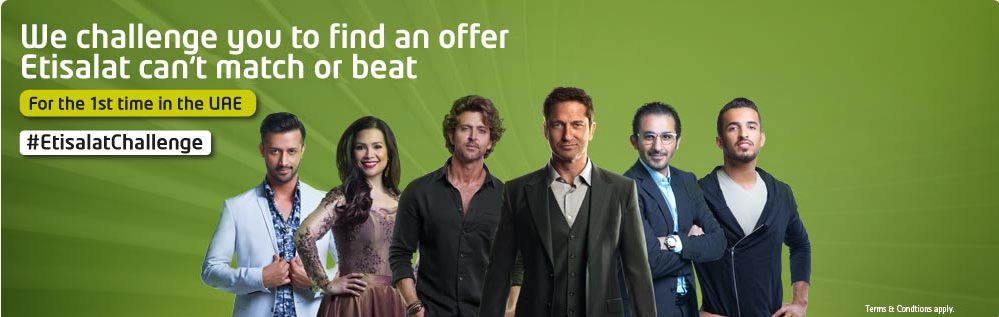
There are many examples globally of hashtag hijacking; possibly the best is McDonalds and its #McStories campaign. Fortunately for us in the Middle East, we now have our own example of how not to launch a hashtag on Twitter. A couple of days back the Abu Dhabi-based telecommunications operator launched an advertising campaign called the #EtisalatChallenge. The idea is simple enough – Etisalat challenges consumers to find offers and prices that are better than their own and they’ll match or beat that offer. You will literally see the below advert everywhere across the UAE at the moment.

Are you ready for the #EtisalatChallenge?

Are you ready for the #EtisalatChallenge?

Now, there’s a couple of issues here. The first is pretty basic; the UAE’s telco market is a duopoly. Both operators are government-owned and there’s not much in the way of competition when compared to other. The second is Etisalat’s reputation. The company isn’t the most consumer-friendly in terms of its support. Shortly after Etisalat launched its hashtag #EtisalatChallenge (complete with a huge marketing campaign), the hashtag itself was taken over by customers complaining about high costs and poor service.

Despite the obvious backfiring of the campaign (and, as you can see from the tweets below, the campaign has been taken over by negative sentiment), Etisalat has persevered with the #EtisalatChallenge.

https://twitter.com/mkdubai/status/595950565483380736

https://twitter.com/ThatGuyNoman/status/595958586204905473

What’s even stranger is the number of bots, of Twitter accounts which are automated which have are now tweeting the same message about the campaign.

https://twitter.com/ThatGuyNoman/status/596655103928438784

The other element of the campaign which is intriguing is the number of celebrities that Etisalat has brought in. There is one of Scotland’s finest, Gerald Butler, Bollywood actor Hrithik Roshan, and Filipina actress and singer Lea Salonga. Etisalat has also paid a number of the UAE’s leading social media influencers. While the use of social media influencers to support marketing campaigns is becoming standard practice, the #EtisalatChallenge in unusual in that many of the influencers have previously worked for the UAE’s rival operator Du. Have a look below.

Emirati social media celebrity Mthayel Al Ali was a Du supporter

Emirati social media celebrity Mthayel Al Ali was a Du supporter

But now Emirati social media celebrity Mthayel Al Ali is also an Etisalat fan

But now Emirati social media celebrity Mthayel Al Ali is also an Etisalat fan

Egyptian footballer and model Sherif Fayed was part of Du's marketing before his switch to Etisalat

Egyptian footballer and model Sherif Fayed was part of Du’s marketing before his switch to Etisalat

Egyptian footballer and model Sherif Fayed is also a fan of green as he shifts to #EtisalatChallenge

Egyptian footballer and model Sherif Fayed is also a fan of green as he shifts to #EtisalatChallenge

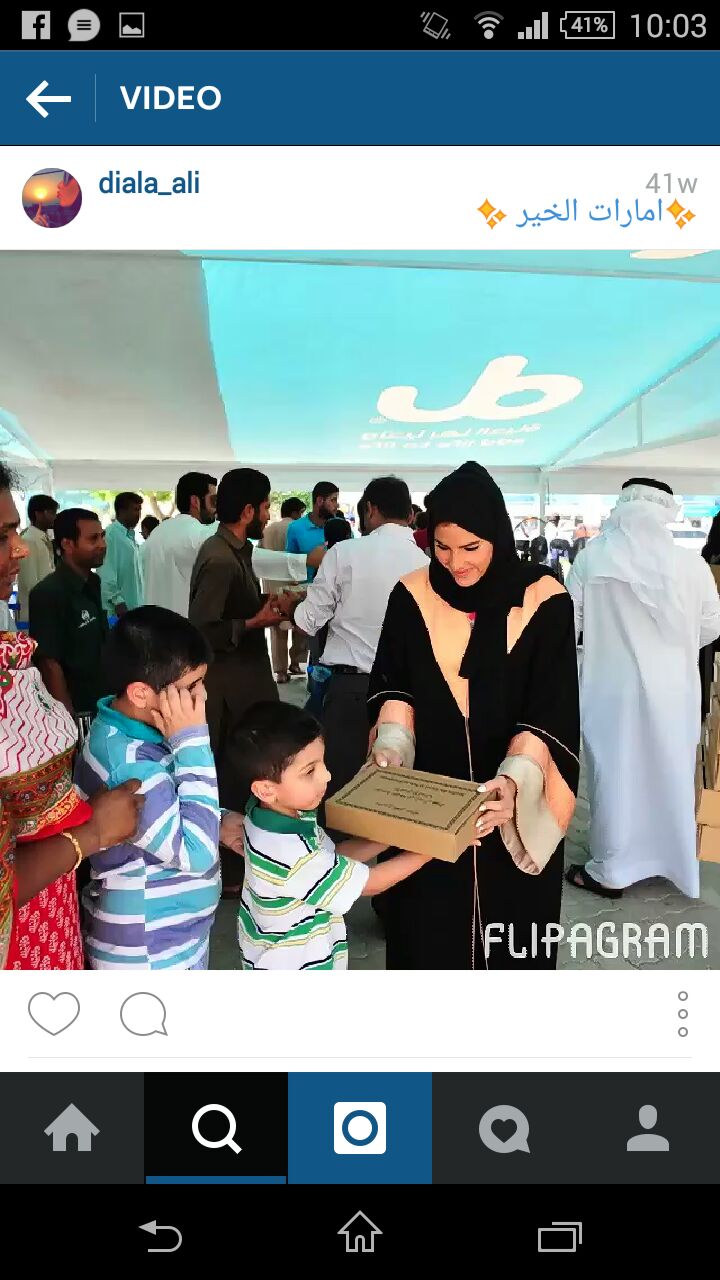
Before her support for the #EtisalatChallenge UAE media personality Diala Ali was a Du supporter.

Before her support for the #EtisalatChallenge UAE media personality Diala Ali was a Du supporter.

From blue to green - UAE media personality Diala Ali shows her support for the #Etisalat Challenge

From blue to green – UAE media personality Diala Ali shows her support for the #Etisalat Challenge

While one can easily fault Etisalat for getting out the cash and spending a fortune on social media endorsements, these online influencers are more to blame in my eyes. They’re doing their own brands more harm than good by changing from one corporate brand to the other so quickly. Their authenticity is at stake, and for someone who runs a social media agency Mthayel Al Ali should understand that authenticity matters to fans, and fans are the reason these people are paid to endorse brands. There’s little long-term thinking from influencers who have worked with Du previously and whom are now working with Etisalat.

Going beyond the pains of creating corporate hashtags (which, in this case clearly don’t work), what was Etisalat thinking? And what is it still thinking, seeing as the campaign is failing so badly? Come on, share with me your #EtisalatChallenge!

Did Skydive Dubai do enough communications following the tragic death of skydiver Majed Al Shuaiby?

There are days I love my job as a communicator. And then there are days when my heart breaks. One of those days was last week, with the tragic news of a death at Skydive Dubai. Majed Al Shuaiby was an experienced skydiver – he had over 700 dives under his belt according to the local media. On April the 30th Majed took to the skies. Unfortunately, his parachute did not open and he died on impact.

This news, as sad as it is, is also newsworthy. We have a young man, who is only 35 years old, who perished whilst undertaking a sport which is often thought of as high risk. The accident made the news, with coverage nationally and regionally (Majed was a Saudi national). Unsurprisingly, the news first appeared on social media, on the evening of the 30th, the day of the accident.

In a tribute Majed’s name trended on Twitter in Saudi with the hashtag #ماجد_الشعيبي.

Many of those who were online and who knew of the accident started to reach out to Skydive Dubai. The initial reaction was, to put it mildly, disappointing.

https://twitter.com/ammorsy/status/593784283237457921

What Skydive Dubai did, a day after the accident, was put up a post on its Facebook Desert Campus page and push users there. There’s no separate post on Skydive Dubai’s main Facebook page and no posts on Twitter.

The holding statement above has been used for media attribution as well, as can be seen from The National’s story.

Was the statement from Skydive Dubai enough or could they have done more?

Was the statement from Skydive Dubai enough or could they have done more?

While the investigation is still under way to determine what happened, could Skydive Dubai have done more to publicly address the incident and offer their condolences to the family, whilst also addressing concerns around the safety of skydiving?

No one wants to go through a crisis, especially when people are injured or there’s a fatality. However, we as communicators are on the front line to advise our employers and communicate in a way that is respectful, that comforts, and that shows we are also human. As we say, perception is reality and Skydive Dubai’s initial response, to block users, would seem entirely at odds with what communicators should do in a crisis. Going beyond that, is a holding statement enough? We need to present both the facts and show our emotion. We should never simply ignore bad news, and block conversations. Could Skydive Dubai have done more? Do let me know your thoughts.

On a final note, I’d like to convey my condolences to Majed’s family. Allah yurhamu and may god bless his soul.

The Gulf’s Communications Sector and the Challenge for Authenticity

Is the communications industry in the Gulf authentic enough?

Is the communications industry in the Gulf authentic enough?

I am, sometimes, allowed to get out by my better half. And this month has been replete with communications events. Two in particular come to mind. The first was an anniversary for a well-known communications consultancy firm which was celebrating a milestone for its UAE-based operations. The second was for a social media network which was talking about the largest advertising period in the region, namely Ramadan.

Both events struck me, but probably for the reasons that the organizers hadn’t intended for. At the first event, for the consultancy anniversary, I’d have expected to have seen a couple of nationals. After all, a number of the company’s clients were government bodies and we were in the capital where the ratio of nationals is much higher than in Dubai. But, unfortunately, there was only one national. Instead, the audience was western, English-speaking and middle-aged.

The second event was just as perplexing. Despite Ramadan being a part of Islam (Ramadan is the Islamic month of fasting), I didn’t see a single Arab or Muslim talk about the event. At both events I was left asking myself, where are the personal insights, where’s the local understanding which I can either learn from or relate to?

In truth, these occasions are a microcosm of the communications and marketing industry in the Gulf region. We’re facing an issue with sustainability – there are far too few nationals and Arabic-language speakers in the industry, especially in high-level positions. To me this essentially means that, as we don’t accurately represent the audience we are trying to communicate with, that we’re not able to do our jobs properly.

I often get asked if I can suggest or recommend good talent, both by agencies and clients. Instead, let me offer a different suggestion. Let’s go straight to the source. Do you know how many young, talented nationals and children of expats who have grown up in the UAE are studying communications? We’re talking about at least 3,000 communications students between institutions such as Zayed University, Canadian University in Dubai, Abu Dhabi University, the American University of Sharjah, the American University of Dubai and Middlesex University. And then there’s the Saudis, the Bahrainis and others in the Gulf.

There’s enough talent out there, particularly Arabic-speaking youth, who want to get into the industry. However, we need to engage with them. The below are just a couple of ideas to get us all engaged on making the communications industry sustainable:

1) Get on campus! There are so many on-site events at universities and both agencies and companies need to step in, to both understand how much talent is out there as well as to educate students on what career opportunities are out there for them, especially for nationals who prefer a government job.

2) Mentor, mentor, mentor – the second option is to engage with students over a longer period. Mentoring allows students to learn from middle to senior-level professionals in the industry and for both to exchange their views. In a time where social media dominates, mentors can also learn a great deal from Arab youth on digital trends.

3) Bring in the interns – the longest-lasting and the most meaningful of the three engagements, an internship will allow students to get on-the-job experience with, hopefully, a view to joining the organization they’re interning with. An internship is the closest thing a student will get to a real-life job and will enable them to complement their in-class learnings with hands-on experience.

Organizations such as the Middle East Public Relations Association are promoting all of the above, in the hope that the industry becomes more representative of the communities in which we live. If we’re hoping to communicate as well as we can to all of the audiences that make up the Gulf, we have to take a different approach to hiring and promoting talent. Bringing in the expat with no local experience or understanding is no longer the right thing to do. We have to be authentic if we are going to be relevant. Are you up to the challenge?

The National and how it (finally) got the Saayidat Gas Blast story right

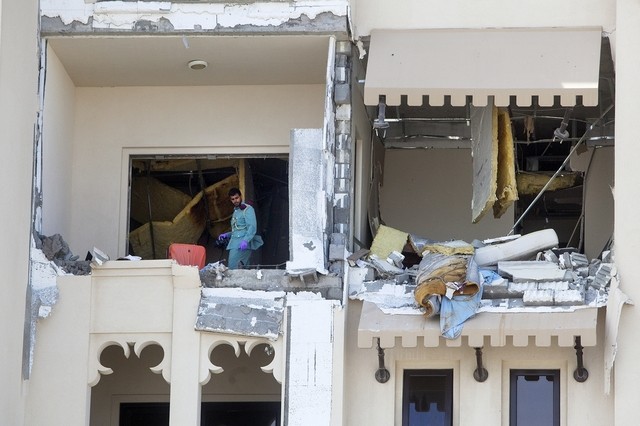
The money picture of the gas blast flat was captured on the second day by The National (image source: The National)

The money picture of the gas blast flat was captured on the second day by The National (image source: The National)

As an ex-journalist who nowadays spends more time in corporate communications than writing for the press, I still enjoy spending time reading what the media produce. One local story was particularly moving for me. On the 24th of March, in the evening, a gas explosion tore through the compound where me and my wife live in Abu Dhabi. My wife felt the blast, which she described as feeling like an earthquake.

As you’d expect, the incident made the news. Abu Dhabi-based English-language newspaper The National was quick out of the blocks to cover the incident with an online piece posted the same night. While the speed of the output was noteworthy, the paper got several essential facts wrong.

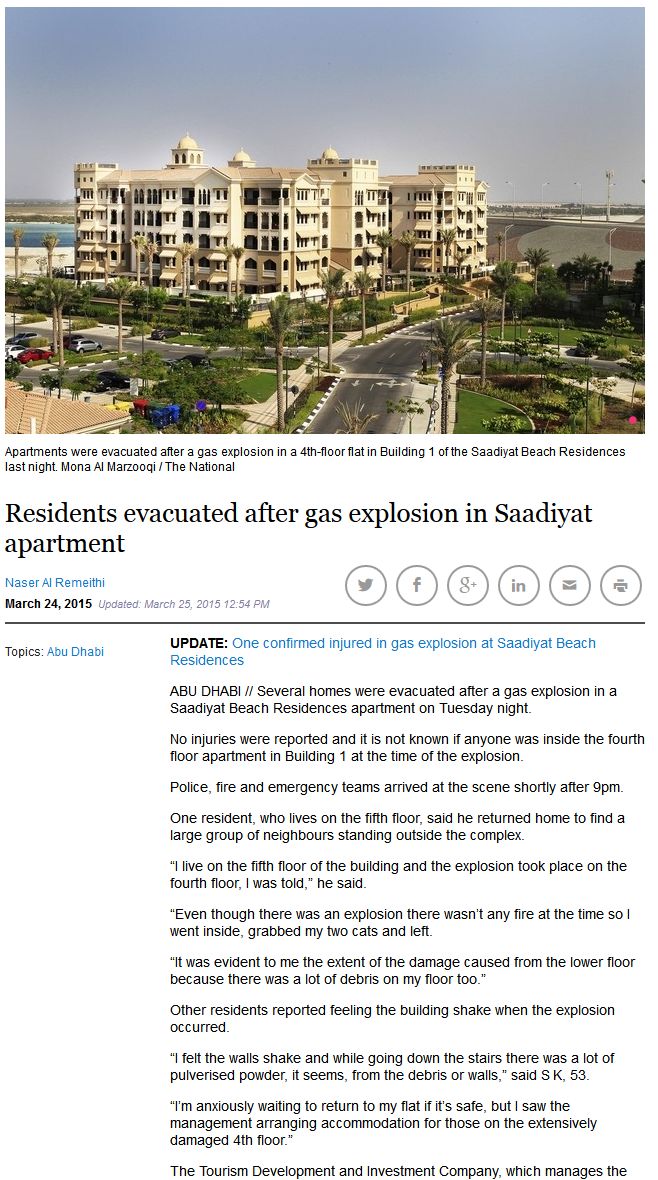
The first was the explosion’s timing – the incident happened at 7.30pm and emergency services were quickly on site afterwards. Secondly, and even more importantly, there were injuries despite the article’s assertion that no injuries were reported (two ambulances were on-site). And thirdly, a stock image of the building was used rather than a picture of the location following the blast (the compound is thirty minutes drive from The National’s offices).

The National's first story on the Saadiyat gas blast was quick to print but important details were wrong

The National’s first story on the Saadiyat gas blast was quick to print but important details were wrong

The piece didn’t feel as if it was put together in the right fashion, as if there wasn’t anyone on site from the paper to collect statements and talk to the authorities. It felt as if it was a desk-job. There was definitely no photographer on site to take the gold-ticket picture which would have set the stage for the piece.

However, the next day The National upped the ante in their second piece. First of all, they had the picture of the gas-blast flat which the first piece desperately needed. This money shot was supplemented by additional images. The piece confirmed the one injury. The piece was much stronger in terms of its facts as well as the emotional focus of the residents who were in the building when the blast occurred and their fears and concerns.

Was there still an issue? As far I am concerned, yes. The piece was almost a gushing testimonial to the compound’s developer TDIC. I felt as if TDIC had commissioned the piece, rather than having a piece written about them by an objective journalist (disclaimer – both TDIC and The National enjoy shared ownership, though that shouldn’t have any bearing on editorial independence). Have a look at the extract from the article and tell me what your opinion is.

Ionnais Xenakis, 27, a pilot with Etihad, lives on the fourth floor with his wife Erini, 27, a few apartments away from the flat where the explosion occurred.

“I was sitting on the sofa with my husband and baby. We heard a loud noise and a vibration,” Mrs Xenakis said.

“We weren’t sure what it was so we grabbed our baby and dog, and ran. We saw our neighbour Barry who was injured in the explosion. He told us that he turned on his light and then the apartment exploded.

“He has just moved into the building and told us that his gas wasn’t even connected yet. It was a little difficult to get out of the emergency exit because it was dark, and the emergency doors were damaged and blocked the path,” she said.

“We helped him out until the paramedics came. It was tough, but the one thing that we can all agree upon is TDIC’s swift reaction and assistance.

“They supported us like a family. They did more than we expected them to do. I was even given a stroller for my baby by one of the employees.

“They also gave me everything I needed for my baby. They were there, attending to all of our needs about 15 minutes after the explosion.”

TDIC made arrangements for the Xenakis family’s dog and cat to be taken to the Australian Veterinary Clinic in Abu Dhabi.

The third and fourth pieces by The National switched from reporting on the blast to the feelings of the residents and their concerns about the safety of their homes. The third piece was much shorter, but it was all the better for it. The fourth piece followed in a similar vein, and both included quotes from two residents (albeit the same residents). There was also the required comment from the local authorities on the steps they were taking to reassure the public – this gas blast was the second in the capital in the space of a week.

The paper saved the best for last, with a piece at the beginning of this week on the injured man himself and his own story as to what happened that night. The journalist rounded off the piece with a final comment from one of the residents.

Residents were displaced for several days. Some tenants from the blast floor are still being housed at the Anantara Eastern Mangroves by the Tourism Development and Investment Company. They are eager to find out what caused the explosion.

“It’s important to identify the error behind this because I believe it could’ve been prevented,” said L R, a neighbour of Mr Johnson. “A poor man was seriously injured because of this. We don’t need hard lessons and tragic stories to learn from our mistakes.”

The National did the right thing and got the piece right, with rolling coverage on the story and a focus on the facts as well as a human-interest element that rounded off the coverage. The journalist made amends for the initial piece which was lacking in both information and visuals to craft a number of pieces that hit the mark every time. The only thing left to say is to wish the person injured in the blast, Barry Johnson, a speedy recovery. It was a memorable night for all the wrong reasons, and I hope that he will be back on his feet and fully recovered sooner rather than later. I hope to read about Barry’s recovery in The National as soon as it happens.

I’d like to wish Barry Johnson a speedy recovery and I hope to read the news soon in The National (image source: The National)

How to destroy a brand through poor communications – the Nakheel example

Nakheel_flags

I’ll admit it. Every now and then I do get pangs of schadenfreude when I see brands being pulled up online by the media and the public. However, seeing a brand destroy itself is a different proposition.

I’ve been watching Nakheel for some time, and I’ve written about the company and its bad media habits before. The Dubai government-owned real-estate developer is responsible for some of the Emirate’s most iconic projects, including the Palm Jumeirah and The World. However, its customer service is, unfortunately, just as infamous as its successes are famous.

Last week, Sarah Townsend of Arabian Business wrote a scathing piece on Nakheel. Entitled ‘Nakheel PR: The toughest job in Dubai?’, she took a sledgehammer to Nakheel’s reputation The article is well worth a read, especially for those of us whom have spent long enough in the region to forget what quality journalism looks like.

If it were just one person taking aim at Nakheel, the issue would be manageable. However, due to our digital world reputation-bashing is a team sport. The article has gathered seventeen comments, all negative and some from disgruntled Nakheel owners. My favorite is the below.

A comment from a not-very-happy Nakheel property resident on the Palm

A comment from a not-very-happy Nakheel property resident on the Palm

On top of this, Nakheel is facing additional issues regarding its stalled Palm Jebel Ali project. However, it’s not the media which is causing trouble for Nakheel, but rather angry investors who have yet to see their properties take shape after years of delay. To quote from The National.

Hundreds of investors on Dubai’s Palm Jebel Ali have called on developer Nakheel to restart the project.

An estimated 400 to 450 people, most of whom made down payments during Dubai’s boom years between 2004 and 2008, find themselves in financial limbo.

All the units under the Palm Jebel Ali project, including its signature and garden villas and water homes, are “under cancellation”, according to Dubai’s Land Department.

In November, 74 homeowners wrote to Mohammed Al Shaibani, the head of the Ruler’s Court and Dubai Investment Authority, to look into the matter.

“The lack of certainty as to when our homes will be built has caused, and is causing, tremendous financial and emotional suffering for us and our families, and many of us continue to endure ongoing mortgage and rental costs while we are waiting,” the letter says. “Many of us have invested our life savings into the Palm Jebel Ali.”

Over a 100 Palm Jebel Ali owners have set up a group on Twitter with the handle @PJAOwners to lobby the government on their issue (bizarrely Nakheel doesn’t have an account on Twitter and there are several Facebook accounts, none of which seem to be legitimate).

For an organization which claims to be one of the largest and most successful property developers in the world, the media issues that Nakheel has gotten itself into are unforgivable (blacklisting the media doesn’t help). Having said that, many of the company’s issues are rather to do with how they operate. Public relations can never be used as a figleaf for unpopular or damaging actions. As Mark Twain said, “The public is the only critic whose opinion is worth anything at all.”

At the end of her article Townsend stated that Nakheel are looking for a PR exec to join their ranks. I could be even bolder and suggest that they look at how they do business and rebuild their reputation first. Anything else would be putting the cart before the horse and will continue to destroy what is left of Nakheel’s brand. I’m betting things will get worse for Nakheel in terms of its brand image and reputation. But I won’t take any pleasure from watching this sorry story of a brand being destroyed from within.

Do you want to know more about social media in the Middle East? Download the TNS ArabSMIS report here

Do you not know where to start when it comes to social media and the Middle East? This report may be your answer (image source: http://blue16media.com)

Do you not know where to start when it comes to social media and the Middle East? This report may be your answer (image source: http://blue16media.com)

We have our fair share of big events in Dubai and this week was no exception. The past two days has seen the Emirate become the place to be for social media influencers. Whilst we found ourselves invaded by all types of beautiful people (and others) waving their selfie sticks and pouting for the camera, there were some handy takeaways for an audience looking to learn more about how to use social media to build brands for themselves, their companies or their countries. Oh, and Twitter has finally decided to open an office in the MENA region, obviously in Dubai.

The most impressive part of the Arab Social Media Influencers Summit was the report. Coming in at a whopping sixty seven pages, the report by research house TNS covers a whole host of areas of social media interest across the MENA region. The study combines both qualitative research with a quantitative survey of more than 7200 users of social media spread evenly
across 18 Arab countries.

If you’re looking to know which channels are used across MENA, then look no further. The report includes stats on LinkedIn, Facebook, Twitter, Instagram, Whatsapp, Google+, and YouTube. It also includes social media usage habits, including time of use, duration of use and devices used. Most importantly, the report looks into attitudes about social media across the region and what people are doing online.

If you’re doing anything online in the MENA region, download this report and start dissecting. You can thank me later, on social media.

The ASMIS Social Media MENA Report

Educating the Gulf on our humanity through social video – examples from Bahrain, Saudi and the UAE

Here in the Gulf region we’re increasingly seeing the use of online video content, particularly to tackle issues that are both social and controversial. This week there have been media stories on three examples from three different countries.

The first video has been produced by the Saudi Human Rights Commission to Saudi nationals to be kinder to their domestic workers, most of whom have to leave behind a family of their own to earn a living and support them. The video is well shot, and aims to give humanity back to domestic workers, especially those from South East Asia, through concepts such as motherhood.

The second is from Bahrain, but shot by one social media influencer called Yousef Al Madani. The clip focuses on the treatment of white-collar workers in Bahrain, most of whom come from the Asian subcontinent. Yousef looks to take the place of one of these workers at a local grocery store, where they often have to rush out to take orders from customers who sit in their cars and wait for the items to be brought to them. The clip, which has been talked about in the media, has been viewed over half a million times. This video is dubbed into English as well.

The third and final clip is from a corporate, Cola Cola to be exact. To quote the National:

An online advertising campaign by Coca-Cola showing the company handing out excess baggage tags at the airport to travellers has been viewed almost one million times on YouTube.

The clip “Coca-Cola –Taking Home Happiness” begins by showing passengers checking in at Dubai International Airport to head off to various destinations to see family. By Thursday, the video had generated more than 987,000 hits since it was uploaded a month ago. According to the website for Campaign Middle East magazine, Coco-Cola shot the video on December 22 with the cooperation of the airport.

The campaign – which is available only in the UAE and Oman – is expected to expand with additional prizes like flight vouchers, TVs and mobile phones, the company said. The video follows a similar online campaign last year which showed labour camps with Coca-Cola phone booths, into which bottle tops rather than coins could be fed to pay for international calls.

The video, which is probably the best shot out of the three (this is Coca Cola after all), is also dubbed.

What are your thoughts on the above? Are these videos effective? Would they have been more effective on television as well, or less effective? And is one more effective than the other, possibly due to its topic, its producer, its intent as well as its authenticity? Do let me know your thoughts.

The Gulf’s new social media hybrids and the success of @maxofarabia

Living in a region which is known for diversity but which is still pervaded by barriers between all the cultures you’ll find in the Gulf, I’m fascinated by individuals who bring differing peoples together. One such person is Max, who goes by his online moniker maxofarabia. A British-American by background, Max has not only lived in the Gulf but he’s also taken the region to heart. Unlike many expats, Max has picked up Arabic and is fluent in the language (he has a strong Emirati accent).

By creating content in both English and Arabic about issues that are relevant to nationals, Max is opening up a new world for both expats as well as those outside of the region. Max prefers Instagram, but you can also find him on Twitter and Facebook (he’s also on Snapchat, but I’m way too old for that platform). His popularity among Emiratis is evident, and he regularly uploads videos about the UAE and its people to his Instagram account, where he is followed and watched by almost 190 thousand people. Max has become a social media ambassador for a number of projects in and around Dubai.

If you’re an expat and you’d like to know more about the Emirates in particular, then Max of Arabia is one to watch. Have a look at some of his posts below (apologies but Instagram’s embedding function is taking a day off today).

A good morning from Max's trip into the desert on the trails in the UAE

A good morning from Max’s trip into the desert on the trails in the UAE

Huge thanks to @hooralq for the invitation to @sharjahart - a great evening spent in one of my favorite cities, surrounded by creativity, with some of my favorite people - #Sharjah #SharjahArt

Huge thanks to @hooralq for the invitation to @sharjahart – a great evening spent in one of my favorite cities, surrounded by creativity, with some of my favorite people – #Sharjah #SharjahArt

Max even looks good in a thob - here at a wedding in Riyadh

Max even looks good in a thob – here at a wedding in Riyadh

Are you in need of a CreativeMorning? Dubai’s latest addition to the media industry

Creative Mornings Dubai is the latest (and greatest) addition to the creative industry in the city

Creative Mornings Dubai is the latest (and greatest) addition to the creative industry in the city

I just love meetups and networking, especially when there’s someone different and engaging out in front and talking about an issue I care about. While there often seems to be an excess of events in Dubai, there’s few that offer a real chance for us to learn something new, understand different perspectives, and engage in a meaningful conversation.

Supported by TECOM, the good people at Digital Ape and Dubai Eye Radio’s/Zayed University’s very own James Piecowye have come together to bring a global phenomenon to the region. Creative Mornings is a simple idea; you bring in an engaging speaker to talk to the local creative community in the morning. There’s lots of coffee and some great talks followed by fascinating question and answer sessions with the audience.

The Creative Morning formula is simple. There’s one every month and they’re held on the third Thursday of every month from 8am to 9am in the CNN building in Dubai Media City. So far, we’ve had four Creative Mornings in Dubai, each of whom has shared their particular insights on issues such as the climate of creativity, the challenges of success and following your own dreams (the session was imaginatively called It Might Get Ugly), the links between education & art, and taking chances & finding your passion.

As you’d imagine from a radio host, James is a wonderful MC (if you don’t know him, go and search Google for Hawaiian shirts in Dubai). The team at Digital Age, including Haifa, Paul, Alia’a and Maria are the people behind the cameras, who make everything happen in terms of supporting with speakers, with the on-site arrangements and the production work – they also work on the social media including the Facebook page. You can also follow their Twitter feed which is @CM_Dubai.

If you’re free on a Thursday morning next month, why don’t you come down and check out Creative Morning. Here’s to great conversations, thanks to James, Digital Ape, and Creative Morning.