The Ups and Downs of Periscope in the UAE

It was a case of down Periscope last week in the UAE

It was a case of down Periscope last week in the UAE

No pun intended with the title, but Periscope, the live video streaming app which is owned by Twitter, really has been through the wringer of late. The service, which only launched at the beginning of this year, was picking up steam in the UAE thanks to its purchase by Twitter.

However, the country’s users were left out in the cold after the government’s Telecommunications Regulatory Authority put a halt to its usage last week. The allegation made on social media was the Periscope users were sharing content that they shouldn’t have been sharing and which was not in keeping with the UAE’s culture.

But that’s only part of the story. According to the UAE’s Telecommunications Regulatory Authority there was no ban on the application, but rather a technical problem which was stopping users from accessing the application in the country.

As of Thursday and 48 hours after the initial blockage the app was up and running. However, the episode is another example of how easy it is for applications to be blocked in the region without notice. You’ve been warned.

Stepping into the Continent’s Political Minefield – Etihad’s Independence Day faux-pas

When I was growing up and in the Gulf, I was often told by my father, “don’t talk about three things.” Those three things were politics, religion and sex. One was to never go against this cardinal rule. Of course, rules are made to be broken. But there’s a difference between when an individual does this, and when a corporation gets it wrong.

The past couple of days are important for our friends from the Asian sub-continent. The 14th of August is the commemoration of Pakistan’s independence from the British Empire. The very next day, the 15th of August, is symbolic for Indians as the date of India’s independence. Both countries are neighbors, but due to history and politics their relationship hasn’t always been neighborly.

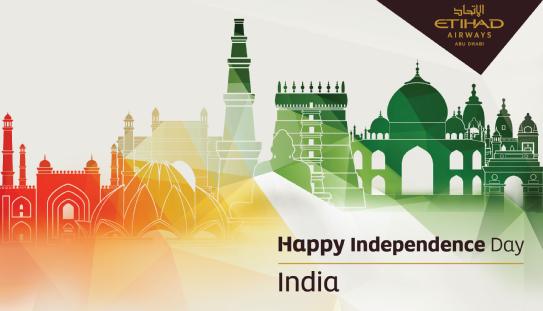
Etihad stepped into the political minefield yesterday. The national airline was ostensibly trying to do the right thing by reaching out to Indian nationals and wishing them a Happy Independence Day. Over and above the emotional aspect of the occasion, the move makes perfect sense – Etihad has a sizable stake in the Indian airline Jet Airways, and Indians make up over a third of the UAE’s population. The post, on Etihad’s LinkedIn page, should have been welcomed by all.

Etihad's Happy Independence Day message to India... It's a shame Etihad forgot to do the same for Pakistan the day before.

Etihad’s Happy Independence Day message to India… It’s a shame Etihad forgot to do the same for Pakistan the day before.

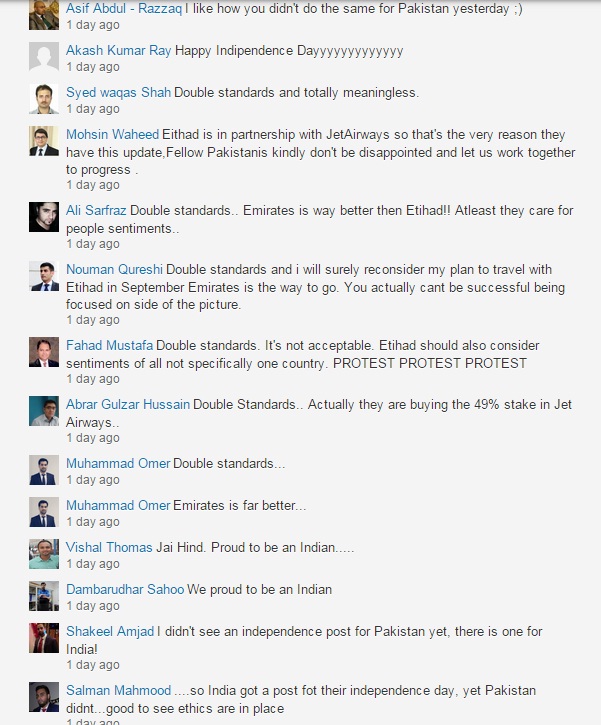
However, Etihad forgot one thing. They hadn’t posted the same for Pakistan the day before. Reading through the comments and it’s clear that the Pakistani nationals have found umbrage with Etihad’s faux-pas. While the majority of responses are positive, those from Etihad’s Pakistani national followers speak for themselves.

Etihad's move to wish well to India and not to Pakistan for their respective Independence Days didn't go down well with the airline's Pakistani fans

Etihad’s move to wish well to India and not to Pakistan for their respective Independence Days didn’t go down well with the airline’s Pakistani fans

It’s an easy mistake to make in a country which is home to over 130 different nationalities, but when you consider that Pakistani nationals make up a sizable percentage of the UAE’s population (probably 10 to 15 percent), plus the history between the two nations, maybe Etihad would have been best advised to either go all in or not wish anyone a Happy Independence Day. As is, a simple omission can lead to the loss of both business and reputation among a key segment of the population.

How Saudi’s consumers took on Saudi Telecom and influenced the Government – مطلب شعب stc الثورة ضد

The hardest part of the digital world is knowing where the tipping points are – it’s relatively easy to work out when things are going against your brand either in the traditional press or on television. The coverage builds gradually (unless there’s a crisis) and you have time to think and respond.

The digital world has completely changed the rules however. There doesn’t need to be a trigger anymore. And so was the case at the end of Ramadan in Saudi, where unhappy customers of Saudi Telecom Company vented their frustration at the slow connection speeds as well as the cost of the service.

Using the hashtag مطلب شعب stc الثورة ضد, which essentially translates as ‘the people demand a revolution against STC’, Twitter users shared thousands of Tweets on their thoughts and demands. Many of the visuals were created by consumers who effectively used home-designed visuals to tell their story.

https://twitter.com/mgoodhagri/status/621854572705742848

https://twitter.com/AbduLLA_Matabi/status/622332077703213056

https://twitter.com/ajffetni1/status/623103370803351552

The hashtag, which included over 100 thousand tweets and was one of the top five trends worldwide on the 17th and 18th of July, also resulted in a direct action, a call to boycott STC and turn off phones for several hours on a pre-agreed day, with expected losses of 10 million Riyals.

https://twitter.com/M900_/status/622729754924335104

While STC didn’t respond during the campaign, Saudi’s Minister of Telecommunications Dr Al Suwayyel had previously tweeted that he’d follow up on the issue of poor services in the Kingdom’s telecommunications sector. With the hashtag and the campaign gaining global attention, it’s clear that Saudi consumers will continue pushing for reforms.

Saudi's Minister for Telecommunication, Dr AlSuwaiel, has previously tweeted about the need to improve services in Saudi Arabia.

Saudi’s Minister for Telecommunication, Dr AlSuwaiel, has previously tweeted about the need to improve services in Saudi Arabia.

The question is, will this consumer activism spread to other areas of the economy or other parts of the Gulf? Despite the poorly received Etisalat Challenge campaign and the backlash against Qtel in 2010, there’s been no consumer demand to reduce prices in other Gulf markets. Will other groups follow in the wake of Saudi consumers and demand better service through mediums such as Twitter?

One other question for you. Is there a harder job than that of a social media manager for a telco in the Gulf. You tell me.

The definition of ‘Nobness’ – the UAE, social media defamation and differing views from the Gulf

It’s that time of year again. I don’t mean Ramadan of course, the month of charity and kindness, but rather the time of year when we read about a case of defamation. Over the past week there was an outcry in Australia following the arrest of an Australian national in the UAE following comments she put up on Facebook. To quote from the Australian Broadcasting Corporation’s website:

In February, Jodi Magi, 39, took a photo of a car in her Abu Dhabi apartment block that was parked across two disabled parking spaces, without any disability stickers.

She blacked out the number plate and put the photo on Facebook, drawing attention to the seemingly selfish act, but not providing any identifying details or names.

However, someone in the apartment block complained to police and the case went to an Abu Dhabi court in June.

Ms Magi, who has lived in Abu Dhabi since 2012, said she was forced to sign multiple documents in Arabic without any translation.

Two weeks ago (at the beginning of July) she was found guilty of “writing bad words on social media about a person” and told she would be deported.

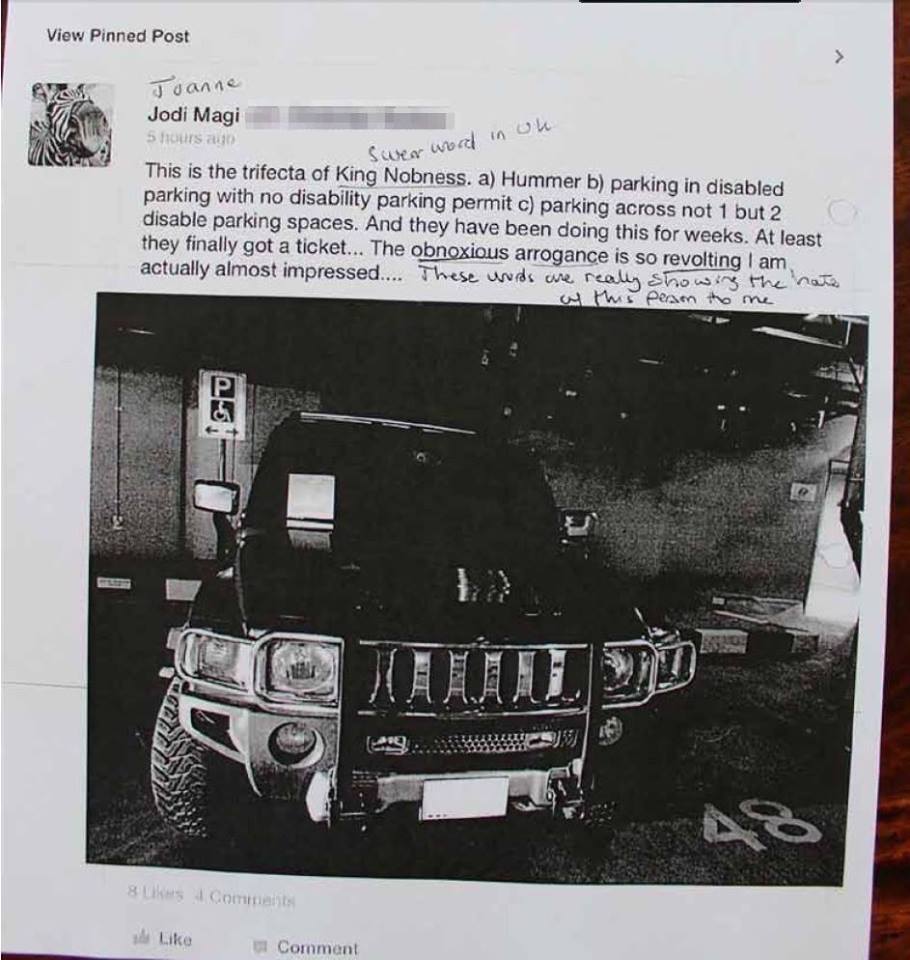
Magi was deported this week from the UAE following intense media coverage. Her argument was that she didn’t know what she’d done wrong in her Facebook post (which you can see below). Her words were considered to be insulting by the complainant, who wasn’t mentioned in the post, and the court agreed with the complainant and, based on the country’s defamation laws (which I’ve written about here), found Magi guilty, fined her, and sentenced her to be deported.

This is the post which got Magi deported. Magi claimed that nobness referred to an Australian term for the elite, rather than the English insult (image source: Facebook)

This is the post which got Magi deported. Magi claimed that nobness referred to an Australian term for the elite, rather than the English insult (image source: Facebook)

While I’m not going to share my views on this (there’s plenty of comments both for and against the issue, but the law is the law), I will share views and thoughts from the rest of the Gulf where double parking is all too common and where the issue is being raised on social media. First up is Bahrain, where there is an Instagram account called Bahrainidiots. Bahrain’s residents are encouraged to share their images of cars which are double-parked for publication on the account’s Instagram feed – for some pictures have a look below.

Similarly, Saudi social media users often share such images, especially on Twitter using the handle #برج_الكلب. Some recent images are below.

https://twitter.com/Dr_MoNassif/status/618500070267355136

https://twitter.com/dr_attar/status/618503839998607361

The most interesting comments about the issue of defamation came from Doha. Speaking to the English-language news site Doha News, criminal attorney and Qatar’s former justice minister Dr. Najeeb Al Nuaimi said it was “highly unlikely” that an expat or Qatari would be arrested for posting a similar picture as Qatar and the UAE differ in their definitions of defamation. To quote:

“In the UAE, this (incident) is seen as ‘you’re showing someone in a bad light’ or that you’re questioning the duty of the police. They didn’t do their job well, and have let this happen, and now you’re posting it and offending them,” he said.

Here, however, the local government would regard sharing such a photo as a “a mark of public service,” he added, continuing:

“We have Qataris posting all over Facebook, Twitter and Instagram (about) things that they don’t like, or wrong things that they see…Here, it’s seen as doing something good.”

One of the publications which wrote about the case, the Abu Dhabi-based English-language daily The National quoted senior Abu Dhabi prosecutor Mohammed Al Dhanhani who explained that Magi was guilty under the 2012 Federal Anti-Information Technology Crimes Law No 5.

“She captured the picture without the consent of the (car’s) owner. She then published the pictures on the web and added insulting phrases.”

Each of these three actions is subject to prosecution under the law, which punishes all violators with a fine and/or jail, and deportation for all expatriates without exceptions, he said.

In an irony not lost on this blogger, while Magi’s state of affairs was playing out The National started its own photo gallery on bad parking in the UAE and posted images on its own website. Based on Al Dhanhani’s own interpretation of the law, is The National also guilty of the same offense under which Magi was sanctioned by capturing pictures without the consent of the car’s owner and then publishing these on the web?

For any lawyers out there, am I right or wrong?

Snapchat and its attempts to win over the Middle East – #Mecca_Live and #WestBankLive

There’s two types of people in today’s digital world. Those internet users who are generally older who have never heard of Snapchat and who while away their hours on Facebook, and, when they’re feeling adventurous, get onto Instagram. And then there are those young people who can’t get enough of the video messaging app where photos and video shorts ‘disappear’ after being shared. For the half that doesn’t know, Snapchat would seem to be the fastest growing application in the Gulf. The application has proved incredibly popular with young audiences across the region.

Snapchat has also done itself a lot of good over the past couple of days by holding what it calls a live story event in Mecca, the spiritual home of Islam. According to Snapchat, Live Stories are a curated stream of user submitted Snaps from various locations and events. Users who have their location services on at the same event location will be given the option to contribute Snaps (videos to you and me) to the Live Story. The end result is a Story told from a community perspective with lots of different points view.

What this means in real English is that Snapchat curates lots of content from different users, brings that content together and combines it to tell a story. This week’s Live Story, which is usually 300 seconds long, took place in Mecca during the holy month of Ramadan. The ensuring Live Story of #Mecca_Live can be seen below.

The feedback for the #Mecca_Live event was nothing short of remarkable. By tapping into sentiment around Ramadan and telling the story of what it means to be in Mecca during the holiest month in the Islamic calendar through people who were there resonated not just with Muslims around the world, many of whom are tired of seeing their faith being associated with negativity, but also non-Muslims who were impressed by the faith and the devotion of those who were featured in the Live Story.

A sample of tweets around the #Mecca_Live hashtag

A sample of tweets around the #Mecca_Live hashtag

This isn’t the first Live Story in the Middle East however. The week before, Snapchat had curated a Live Story from the West Bank. Featuring Snaps from Palestinians, the piece aimed to tell the story of how ordinary people live in this beautiful part of the world. Palestinians gave glimpses into the cities of Bethlehem, Ramallah, and Nablus through 10-second tours of historic sites. They also talked about the wonderful world of Palestinian cooking (including some of my favorite dishes such as knafeh, qatayef and falafel. However, one aspect of life in the West Bank was left out. The allegation made by many was that it underplayed the Israeli occupation. The video is below.

The other allegation made about #WestBankLive was that it was a clumsy attempt to undo some of the damage done by a previous Live Story, #TelAvivLive. Shown the same week as #WestBankLive, this Live Story painted a picture of Tel Aviv, that, to quote the Mondoweiss website:

In the Tel Aviv story, young Israelis were represented as fun-loving, beach-going, peace-promoting people – a far cry from their roles as the occupying soldiers their Palestinian counterparts in the West Bank see on a daily basis. The story also included little in the way of representation of marginalized members of Israeli society such as Palestinian citizens or African refugees. Images of the historic Palestinian port city of Jaffa, referred to in the story by its Hebrew name, were depicted in a way that +972 Magazine says “reproduces the urbicide of this once-thriving Palestinian city in favor of a narrative that ‘keeps the peace.’” In addition, a few of the snaps presented foods like felafel and shawarma as typical Israeli meals, without any reference to their Arab origin. Israelis seemed to be using the Snapchat story as a way to show off appropriated Palestinian culture and locales, claiming them as their own without a second thought.

As Snapchat has found with both #WestBankLive and #TelAvivLive there are few stories that can be shared which are not controversial. Each group has their viewpoint, and, by attempting to be as inclusive as possible through its Live Stories, Snapchat will inevitably offend. Has #Mecca_Live helped to negate criticism of Snapchat? Possibly. But you can be sure that this app, which is already extraordinarily popular among the region’s youth, will continue to cause controversy as it tells the Live Stories of Snapchat users who see reality through their particular viewpoints, and smartphones.

Has Social Media Overtaken the News Cycle? The Story of the Kuwait Mosque Bombing

Last Friday was one of bloodshed and horror in Kuwait. The country, which has not been affected by regional sectarian issues in the same manner as its neighbours Iraq and Saudi Arabia, experienced something truly terrible. During Friday prayers, when men gather to pray together in the mosque, a suicide bomber entered one such mosque with the intent to kill as many of those inside as possible. To date, twenty seven people inside the Imam Sadiq Mosque, a place of worship for Shia Muslims. Two hundred people were injured.

Apart from the horror of this atrocity, which Islamic State claimed responsibility for, what is telling is the speed and amount of information which spread via social media, particularly WhatsApp, in the Gulf.

I was receiving messages about the bombing two hours before the news had made it onto websites such as Al Jazeera English. Not only was the information written down, but people were sharing both images and video thanks to the proliferation of smartphones as well as the availability of high-speed mobile data services.

Below is just a selection of the images that I received on that day.

What’s fascinating is not just the speed of information, but also the accuracy of that information. When Al Jazeera Arabic made a mistake with the name and picture of the suspected bomber an image was shared on social media of the correct suspect.

In addition, the amount of information was remarkable. While global networks provided a couple of minutes of coverage about the bombing, the images and video shared via Whatsapp built up a comprehensive picture of the incident, including video footage of the scene as well as interviews with witnesses and survivors. Unlike the news networks, many of whom don’t have correspondents in Kuwait, this was amazing, in-depth reportage of the Imam Sadiq bombing. Just two of the videos I received are below.

What was missing from all of this was context. On the same day there were terrorist incidents in both Tunisia and France, one of which was claimed by ISIS. Due to the local interest in Kuwait on my Whatsapp channels, no news on these two events was shared. This was a different story on the news networks where the three stories came together into one coherent piece on ISIS and its aim to spread terror across the Middle East and Europe.

Is the Imam Sadiq mosque bombing an example of citizen journalism working at its best in the Gulf? If so, how can media outlets catch up to ensure they have access to this information at the same time as its distribution through both private messaging networks such as WhatsApp as well as open platforms such as Instagram and Twitter? Twitter is looking to bring in a head of media partnerships for the MENA region, to work with publishers. It’ll be interesting to see how this and other efforts to get news outlets to work through social media impacts their ability to tell the story accurately in real time.

On a final note, my thoughts are with those who experienced this terrible incident. May all of those who were injured make a speedy recovery, and those who died always be remembered.

Will Etihad’s use of Twitter for Premium customer communications take off?

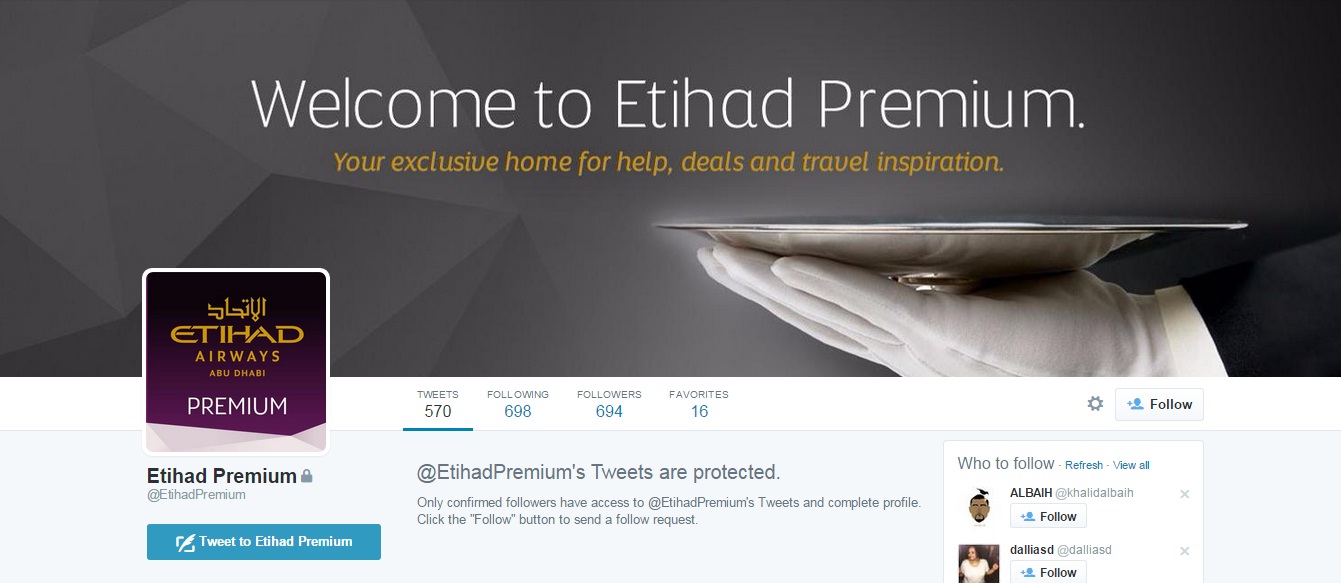
Etihad's Premium Twitter account is an exclusive account just for Etihad's Gold customers. Is Twitter the right channel for reaching out to premium customers however?

Etihad’s Premium Twitter account is an exclusive account just for Etihad’s Gold customers. Is Twitter the right channel for reaching out to premium customers however?

Excuse the pun in the title, but Etihad caught my eye this week with the news that it has set up a new Twitter account to communicate exclusively with Etihad Guest Gold members. The account, named @EtihadPremium, was launched at the beginning of May and Etihad Guest Gold members, Etihad customers who have flown 50,000 tier miles or 40 tier segments in one 12 month period, received emails on the new service. Below is the text of the email that Etihad sent out to its Etihad Guest Gold members over a month ago (courtesy of www.flyertalk.com).

We’ve launched a Twitter Channel to better serve you! We value your loyalty and have created a new channel that delivers a range of benefits with you, our guest, in mind.

Etihad Guest Gold members can now follow us on http://www.twitter.com/EtihadPremium and enjoy the following exclusive benefits:

Five minute response times
Dedicated service
Retro mileage claims
Exclusive deals

To sign up, please:

Email us at socialmedia@etihad.ae with: a photocopy of your Etihad Guest Card, Date of Birth, Post Code, Twitter Handle.
Please allow 24 hours for review and verification.
Post-verification, our team will follow you on Twitter and send a confirmation email.
Follow us back at http://www.twitter.com/EtihadPremium

The choice of Twitter has sparked some debate online. Hussein Dajani, a UAE-based social media commentator, listed on his LinkedIn profile some of the reasons why he thought Etihad’s use of Twitter didn’t make sense.

1- Etihad already has many existing Twitter accounts (Etihad Airways, Etihad Deals, Etihad Help, etc). Do people (Premium or not) really need one more account to follow?
2- Most of the “Premium” users are high profile people, how many of those are actually on Twitter or would use Twitter when having an inquiry or a complaint?
3- Will Etihad block a person if he / she no longer remains as a Premium customer?
4- How is Etihad being transparent and “fair” to all its customers when treating them differently?
5- Can’t Etihad identify who are its Premium customers from non Premium customers and get their Twitter handles?

Etihad’s social media lead Asif Khan shared his opinion as well. According to Asif, the reasons why Etihad went with Twitter for this concept were the customers themselves.

Etihad has public Twitter accounts and pretty tight SLAs for them – all users (Premium and non-Premium). This is an additional Twitter account for Premium members because there was massive demand – we have done proper research and tried to fulfill appetite – not just another channel launch. You’d be surprised to know how many Premium inquiries we receive. It’s just having a unique key number of managing first class and business class guests on a contact centre – different is its a Twitter account.

Just to clarify, this is an additional channel for communication with our high-valued guests – not the ONLY channel. There are other traditional channels that are being used – dedicated contact centre number, email address, etc. etc. Not sure if I entirely agree with your one-many concept because end of the day we’re not broadcasting information on this channel (one-many) because the intent is to have meaningful personalised conversation with each premium customer with contextual information available to us.

With premium customers, personalization is key. They want a one-to-one conversation, and they want the best possible support. Talking to a Facebook executive recently, she told me that Whatsapp was the sleeping giant of the Middle East’s digital sector. Back in March, Whatsapp was named the region’s most popular means of online communication by a survey commissioned by the Dubai Government.

But let’s go further. Whatsapp is one-to-one communication, through which one can share images, video, and recorded audio messages (we can’t use Whatsapp Call in the UAE as it’s blocked on a national level). Whatsapp can also share the user’s location or a contact, and its secure. Unlike a Twitter handle, I can’t communicate with another Whatsapp user unless I know their mobile number – and, let’s face it, how many premium customers will be flying around the world without a mobile?

The other concern I have is about Twitter and its security. What will Etihad do if the Twitter account is hacked? How can it safeguard the information of these premium customers?

The response to Etihad’s initiative has been mixed on travel websites such as OneMileAtATime and FlyerTalk, with some premium passengers praising the move, others saying they don’t have a Twitter account, and some going so far as to say that Etihad needs to improve its overall customer service levels available through its existing social media accounts.

I’d be fascinated to see how this works for Etihad. The initiative is bold, but with the choice of communications being Twitter will it work as Etihad hopes?


Periscope, Meerkat and why communicators should be live-streaming events

Are you going to make the most of live-streaming services such as Meerkat (left) or Periscope to better communicate your story?

Are you going to make the most of live-streaming services such as Meerkat (left) or Periscope to better communicate your story?

We all love video delivered via the internet, and now there’s several more reasons to love video on the internet. The online community has been raving about the launch of live streaming video apps such as the Twitter-owned Periscope and Meerkat. I’m also excited, but for a different reason. Both Periscope and Meerkat open up a whole world of possibilities for public relations and communication professionals. These live streaming services, both of which were launched this year, will push us further down the line, towards visual communication and away from the old mantra of press releases and traditional media.

Apps such as Periscope and Meerkat enable any and everyone with an iPhone or Android-based smartphone to live stream, at no additional cost and with high-quality streaming. As a communicator, we can now capture and share our stories worldwide or to a select group through Twitter or directly via the apps as the story happens. Live streaming applications are already being used by journalists and commentators in the UAE. Dr James Piecowye of Dubai Eye (@jamesEd_me) and Khaled AlAmeri of The National (@KhaledAlAmeri) are both using Periscope – James to actually stream his radio show live every night as well as events such as Creative Mornings Dubai, Khaled to live stream his views on current affairs. With Periscope, users can comment during the live-stream which in turn fuels the conversation and promotes engagement.

On the PR News website Mark Renfree sums up eloquently why live streaming apps such as Periscope and Meerkat should matter to PR pros.

1) Capture and share the moment as it happens. Live streaming is here and people are using it. Politicians are giving speeches, celebrities are providing fans with virtual backstage access and people are watching their friends make sandwiches using live streaming apps. During a catastrophic fire in New York’s East Village on Thursday, journalists and citizens used live streaming apps to document and share the tragedy as it developed.

2) PR pros can provide a whole new type of content. Streaming apps offer communicators a whole new way to engage their audiences—whether they’re consumers, employees or the general public. Everything from shareholder meetings to PR stunts can now be broadcast and, specifically with Periscope, saved and posted on other channels.

3) Live streaming can give communicators increased control over messages. Streaming apps allow communicators to broadcast content themselves, a task that was usually left to journalists and the news media. Periscope and Meerkat eliminate the middle man between communicators and their audiences.

4) This opens up a new chapter for the hot-mic problem. Nearly everyone, everywhere is now carrying a live streaming video camera. For individuals and brands in the spotlight, these apps are adding to an environment in which there is already little reprieve from the ever-watchful eye of the public.

Hashtag hijacking and the need for authenticity – the #EtisalatChallenge

Let’s face it, social media is entertaining. As communicators, we really do need to think through the consequences of using digital. But sometimes, the best of intentions just aren’t enough. Companies who don’t think through the reasoning behind their campaigns will face a backlash online, including derision, contempt, and abuse.

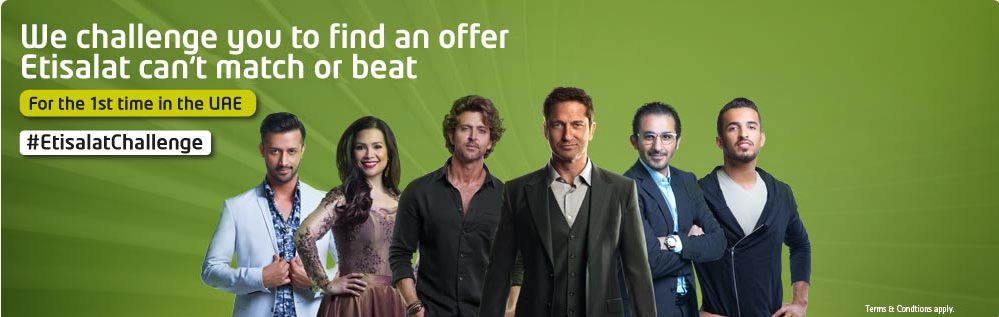
There are many examples globally of hashtag hijacking; possibly the best is McDonalds and its #McStories campaign. Fortunately for us in the Middle East, we now have our own example of how not to launch a hashtag on Twitter. A couple of days back the Abu Dhabi-based telecommunications operator launched an advertising campaign called the #EtisalatChallenge. The idea is simple enough – Etisalat challenges consumers to find offers and prices that are better than their own and they’ll match or beat that offer. You will literally see the below advert everywhere across the UAE at the moment.

Are you ready for the #EtisalatChallenge?

Are you ready for the #EtisalatChallenge?

Now, there’s a couple of issues here. The first is pretty basic; the UAE’s telco market is a duopoly. Both operators are government-owned and there’s not much in the way of competition when compared to other. The second is Etisalat’s reputation. The company isn’t the most consumer-friendly in terms of its support. Shortly after Etisalat launched its hashtag #EtisalatChallenge (complete with a huge marketing campaign), the hashtag itself was taken over by customers complaining about high costs and poor service.

Despite the obvious backfiring of the campaign (and, as you can see from the tweets below, the campaign has been taken over by negative sentiment), Etisalat has persevered with the #EtisalatChallenge.

https://twitter.com/mkdubai/status/595950565483380736

https://twitter.com/ThatGuyNoman/status/595958586204905473

What’s even stranger is the number of bots, of Twitter accounts which are automated which have are now tweeting the same message about the campaign.

https://twitter.com/ThatGuyNoman/status/596655103928438784

The other element of the campaign which is intriguing is the number of celebrities that Etisalat has brought in. There is one of Scotland’s finest, Gerald Butler, Bollywood actor Hrithik Roshan, and Filipina actress and singer Lea Salonga. Etisalat has also paid a number of the UAE’s leading social media influencers. While the use of social media influencers to support marketing campaigns is becoming standard practice, the #EtisalatChallenge in unusual in that many of the influencers have previously worked for the UAE’s rival operator Du. Have a look below.

Emirati social media celebrity Mthayel Al Ali was a Du supporter

Emirati social media celebrity Mthayel Al Ali was a Du supporter

But now Emirati social media celebrity Mthayel Al Ali is also an Etisalat fan

But now Emirati social media celebrity Mthayel Al Ali is also an Etisalat fan

Egyptian footballer and model Sherif Fayed was part of Du's marketing before his switch to Etisalat

Egyptian footballer and model Sherif Fayed was part of Du’s marketing before his switch to Etisalat

Egyptian footballer and model Sherif Fayed is also a fan of green as he shifts to #EtisalatChallenge

Egyptian footballer and model Sherif Fayed is also a fan of green as he shifts to #EtisalatChallenge

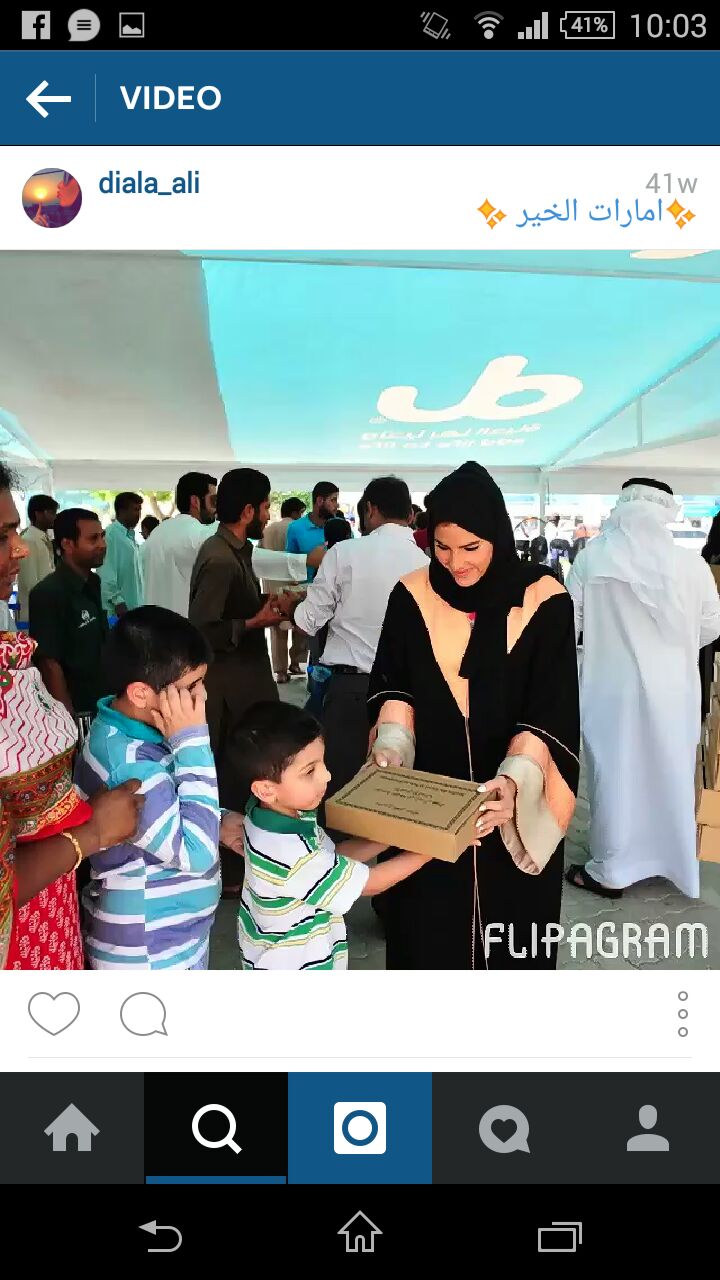
Before her support for the #EtisalatChallenge UAE media personality Diala Ali was a Du supporter.

Before her support for the #EtisalatChallenge UAE media personality Diala Ali was a Du supporter.

From blue to green - UAE media personality Diala Ali shows her support for the #Etisalat Challenge

From blue to green – UAE media personality Diala Ali shows her support for the #Etisalat Challenge

While one can easily fault Etisalat for getting out the cash and spending a fortune on social media endorsements, these online influencers are more to blame in my eyes. They’re doing their own brands more harm than good by changing from one corporate brand to the other so quickly. Their authenticity is at stake, and for someone who runs a social media agency Mthayel Al Ali should understand that authenticity matters to fans, and fans are the reason these people are paid to endorse brands. There’s little long-term thinking from influencers who have worked with Du previously and whom are now working with Etisalat.

Going beyond the pains of creating corporate hashtags (which, in this case clearly don’t work), what was Etisalat thinking? And what is it still thinking, seeing as the campaign is failing so badly? Come on, share with me your #EtisalatChallenge!

Did Skydive Dubai do enough communications following the tragic death of skydiver Majed Al Shuaiby?

There are days I love my job as a communicator. And then there are days when my heart breaks. One of those days was last week, with the tragic news of a death at Skydive Dubai. Majed Al Shuaiby was an experienced skydiver – he had over 700 dives under his belt according to the local media. On April the 30th Majed took to the skies. Unfortunately, his parachute did not open and he died on impact.

This news, as sad as it is, is also newsworthy. We have a young man, who is only 35 years old, who perished whilst undertaking a sport which is often thought of as high risk. The accident made the news, with coverage nationally and regionally (Majed was a Saudi national). Unsurprisingly, the news first appeared on social media, on the evening of the 30th, the day of the accident.

In a tribute Majed’s name trended on Twitter in Saudi with the hashtag #ماجد_الشعيبي.

Many of those who were online and who knew of the accident started to reach out to Skydive Dubai. The initial reaction was, to put it mildly, disappointing.

https://twitter.com/ammorsy/status/593784283237457921

What Skydive Dubai did, a day after the accident, was put up a post on its Facebook Desert Campus page and push users there. There’s no separate post on Skydive Dubai’s main Facebook page and no posts on Twitter.

The holding statement above has been used for media attribution as well, as can be seen from The National’s story.

Was the statement from Skydive Dubai enough or could they have done more?

Was the statement from Skydive Dubai enough or could they have done more?

While the investigation is still under way to determine what happened, could Skydive Dubai have done more to publicly address the incident and offer their condolences to the family, whilst also addressing concerns around the safety of skydiving?

No one wants to go through a crisis, especially when people are injured or there’s a fatality. However, we as communicators are on the front line to advise our employers and communicate in a way that is respectful, that comforts, and that shows we are also human. As we say, perception is reality and Skydive Dubai’s initial response, to block users, would seem entirely at odds with what communicators should do in a crisis. Going beyond that, is a holding statement enough? We need to present both the facts and show our emotion. We should never simply ignore bad news, and block conversations. Could Skydive Dubai have done more? Do let me know your thoughts.

On a final note, I’d like to convey my condolences to Majed’s family. Allah yurhamu and may god bless his soul.