Do you want to know more about social media in the Middle East? Download the TNS ArabSMIS report here

Do you not know where to start when it comes to social media and the Middle East? This report may be your answer (image source: http://blue16media.com)

Do you not know where to start when it comes to social media and the Middle East? This report may be your answer (image source: http://blue16media.com)

We have our fair share of big events in Dubai and this week was no exception. The past two days has seen the Emirate become the place to be for social media influencers. Whilst we found ourselves invaded by all types of beautiful people (and others) waving their selfie sticks and pouting for the camera, there were some handy takeaways for an audience looking to learn more about how to use social media to build brands for themselves, their companies or their countries. Oh, and Twitter has finally decided to open an office in the MENA region, obviously in Dubai.

The most impressive part of the Arab Social Media Influencers Summit was the report. Coming in at a whopping sixty seven pages, the report by research house TNS covers a whole host of areas of social media interest across the MENA region. The study combines both qualitative research with a quantitative survey of more than 7200 users of social media spread evenly
across 18 Arab countries.

If you’re looking to know which channels are used across MENA, then look no further. The report includes stats on LinkedIn, Facebook, Twitter, Instagram, Whatsapp, Google+, and YouTube. It also includes social media usage habits, including time of use, duration of use and devices used. Most importantly, the report looks into attitudes about social media across the region and what people are doing online.

If you’re doing anything online in the MENA region, download this report and start dissecting. You can thank me later, on social media.

The ASMIS Social Media MENA Report

What not to say on live TV – Qatar Airway’s CEO and the bull**** comment on CNN Money

There’s few things worse to do on live television than swearing. Unless you’re a CEO that is. After being accused of treating foreign workers, especially female cabin crew, with disdain in an article published in the Washington Post (the article is entitled ‘The surprising ways in which some flight attendants are still made to live in the 1960s’), Akbar al-Baker did the media rounds to defend his airline’s position and dismiss the claims. Watch the video and the offending comment for yourselves.

To say Akbar al-Baker is gaffe-prone would be an understatement. He has led the airline since 1997 through a period of unparalleled growth. However, when does a leader become a liability? Is Akbar al-Baker, of which much has been said by former staff, a liability to the airline and to Qatar?

Beware of the booze! The UK Embassy in Qatar’s @ukinqatar Twitter feeds spreads its Christmas message

Christmas is a merry time of year, and, if you are following the UK Embassy in Qatar on Twitter, then you’d be forgiven that all of us Brits are enjoying ourselves much more than is safe during December.

In the run up to Christmas on the 24th/25th of December, the UK Embassy began tweeting its annual countdown using the lyrics of the traditional song ‘the 12 Days of Christmas’. The Embassy has decided to remind British nationals in Qatar of their behaviours, with a specific focus on alcohol and its side effects.

While there’s not been a backlash as much as bemusement around the campaign (see below for reactions), the reasons for this messaging seems to be the need to stress good behaviour among British nationals in Qatar and the wider Gulf. A British Embassy spokesman told the Doha News that debate around its campaign was welcome.

β€œWe are glad our 12 days of Christmas tweets have sparked a debate amongst Doha’s Twitter community. Whether you love them or hate them, we hope that they make people stop and think about the best way to enjoy a safe and happy festive season.

Christmas is a special time for many of us in Doha but it can be a time when people become carried away with the festivities and forget that the culture and laws in Qatar are different to that of the UK.”

https://twitter.com/vanish_forever/status/540455820803063809

https://twitter.com/escapetoqatar/status/540464143023624192

https://twitter.com/bradycreel/status/541535613745627136

The following Tweets from the Embassy have focused less specifically on alcohol, and whilst some of the responses to the account, which is followed by over 9,000, have been positive and thankful for the reminders, others have been less than impressed. Let’s hope the embassy focuses on positive messaging next year.

Will Huffington Post’s entry into the Gulf be a game-changer?

How will the Huffington Post affect the Gulf’s media landscape? We’ll find out early next year. (image source: http://www.aim.org)

Being in the Middle East’s media sector can often feel like waiting for a bus. You can wait for years for a new launch (post-2008 in any case) and then all of a sudden you have two of the world’s largest news portals announcing expansion plans. First we had Buzzfeed, and now we have the Huffington Post. The local site Doha News broke the story earlier this month. According to the piece, the site will be partnered by the former director general of the Al Jazeera Media Network Wadah Khanfar and his media firm Integral Media Strategies.

The site will be in Arabic and will launch early next year. HuffPost Arabi, as it will be known, will be based in London. HuffPo founder and editor-in-chief Arianna Huffington is quoted by Doha News as saying the site would β€œbring more Arab voices into the conversation and deepen the world’s understanding of life in the Arab world, from its problems to its accomplishments to its untapped potential.”

The site will include a combination of aggregation, blog posts from a wide variety of sources and original reporting from HuffPo reporters and Khanfar’s team.

Launched in 2005, the original Huffington Post redefined online media by working with bloggers to aggregate news. The site was the first online news portal to win a Pulitzer and was sold in 2011 for 315 million dollars to AOL. Besides English, the Huffington Post is published in French, Spanish, Italian, Japanese, German, Portuguese and Korean.

However, how will the Arabic be received? Firstly, Khanfar was one of the driving forces behind the success of Al Jazeera. However, with him at the helm HuffPost Arabi is likely to be persona non grata in many of the Gulf states due Al Jazeera’s implied support for Islamist groups and perceived interference in the internal politics of governments across the region.

In addition, much of the dialogue that the Huffington Post is looking to encourage in the region can already be found online on social media. With its base in London, five thousand kilometers from the Gulf, how will the HuffPost Arabi be able to distinguish itself in a crowded media landscape that is government controlled? I can’t wait to find out.

How Twitter is helping to foster debate in the Middle East – #WhatisTheSolutionForLebanon & #ImHalfQatari

Despite social media’s reputation for negativity (and getting people jailed in our region), Twitter and other platforms are ideal for beginning and engaging in debate on social issues (image source: lawrencewray.files.wordpress.com)

What’s exciting about social media in today’s Middle East is how the medium is being used to promote conversations organically, and without prompting from any organization. Two examples of hashtag conversations about issues of national interest are #WhatisTheSolutionForLebanon and #ImHalfQatari.

According to the Beirut-based English-language newspaper the Daily Star, the Twitter-based conversation about Lebanon’s political issues began after a crackdown on terrorist cells across the country, which itself was spurred by three suicide bombings within the country. To quote the article:

β€œDon’t give visas upon airport arrival” was a very common response on the platform, alongside requests to β€œelect a president now” and β€œclose off Lebanon’s borders.”

When it came to tweeting solutions to Lebanon’s pitfalls, Twitter users split between pessimists who believed that β€œthere is no solution, Lebanon will never be a country,” and others who felt that certain recommendations would improve the situation.

LBCI reporter Yazbek Wehbe’s tweet expressed the view that β€œ Lebanon should remain neutral [with respect to] regional problems.”

One user suggested a fresh take on security raids by tweeting β€œ[the ISF] should form a special raid unit comprised of Haifa Wehbe, Maya Diab, and Ammar Houry.”

The #ImHalfQatari hashtag was created by Dr. Amal Al-Malki, Associate Professor at Carnegie Mellon University in Qatar. Dr Al-Malki is herself both Qatari, on her father’s side, and Lebanese, on her mother’s. She began the debate after reading an article in the Doha-based Arabic daily Al Raya that suggested Qatari men are increasingly marrying non-Qatari women due to inflated demands for dowries.

The article is excellent and is well worth a read on the state of cultural affairs both in Doha and the wider Gulf in general.

Social media has been criticized by many in the Gulf as a negative phenomenon that often harms both society and individuals. However, as these two hashtags show, Twitter and other social media platforms can be used to foster a positive dialogue about issues that need talking about.

A camel drive-thru, changing tyres whilst driving and new Youtube regulations for Saudi

Not only does the Gulf have a 24/7 addiction to watching YouTube, but it seems the content out there is becoming ever more ‘interesting’ to say the least. Two new videos may tickle your fancy. The first is from Saudi, and could be construed as a Dummies Guide on how to change your car’s tyres whilst driving.

The second fun clip is slower-pace. The video, highlighted by Doha News, is more a spoof clip (even in Saudi I never saw an example of this) by a well-known Qatari comedian. If I was the burger chain I’d be paying to promote this online.

On a more serious note, Saudi Arabia’s government is planning to more closely monitor video content produced locally and meant for uploading to channels such as YouTube according to a fascinating report by the Wall Street Journal.

To quote from the piece:

The General Commission for Audiovisual Media will monitor the quality and quantity of content produced in Saudi Arabia on platforms such as YouTube via a code that will include guidelines on alcohol, tobacco, nudity and sexual acts, said Riyadh Najm, the commission’s president. It will also promote private-sector-led investment in the media industry.

“We will make them aware of what’s acceptable in Saudi Arabia and what’s not acceptable,” Mr. Najm said in an interview with The Wall Street Journal. “Criticism is acceptable as long as it’s professional and constructive.”

The irony of the above is that while Saudi Arabia has become one of the most important markets in the world for online video consumption via the likes of YouTube, Keek, Vine and other social media sites, Saudi content produced for mass entertainment has generally steered clear of Saudi taboos such as alcohol and sex. Will the above help or hinder the explosive growth of locally-produced content (you could even argue that censorship isn’t typically undertaken in parallel with promoting the industry to potential investors).

In the meantime, I hope you’ll continue to enjoy uncensored YouTube in Saudi. And if you still can’t get over the two-wheel tyre change, check out this video. Shisha-to-go? No problem. I just want to know why the choice of music!

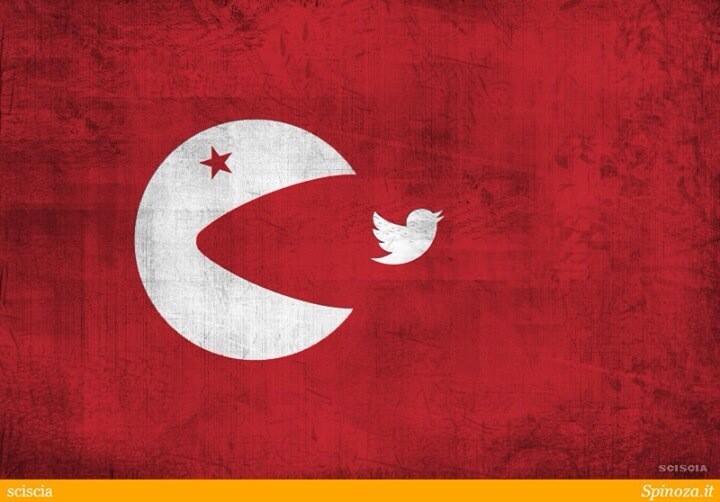
Turkey, Twitter and how a ban couldn’t/wouldn’t happen in the Gulf

While Turkey is busy trying to gobble up Twitter, there’s little chance of anyone in the Gulf banning social media any time soon (image source: http://www.globalpost.com)

Last week, we in the Arab world were treated to a spectacle that we’re all too often participants in. Instead, we looked on as the government of a neighboring country pulled the plug on a social media service and denied its citizens and residents the right to use Twitter. The story behind the move by Turkey’s Prime Minister, Recep Tayyip Erdoğan, to block access to Twitter is fascinating, a page-turner about corruption, dissent and how one man is trying to dominate political will in his own country (have a read of the background here, in a wonderful piece written by the New Yorker’s Jenna Krajeski).

A question/tweet by the Wall Street Journal’s Ellen Knickmeyer about the situation in Turkey from a Middle Eastern perspective got me thinking about the subject. Here’s my take on the Gulf states country-by-country.

Saudi Arabia

Let’s start with the largest country in the region, Saudi Arabia. There are millions online and active on social media in the Kingdom (both Twitter and Facebook have fifteen million Saudi users between them – Facebook has approximately eight million users and Twitter just under seven million ). For many, social media is a release, a forum for open debate where anything and everything can be discussed.

The whole spectrum of Saudi society is online and using social media – some of the most popular and prolific tweeters are religious scholars. while there is criticism of policy online, would the government be willing to risk a public backlash any social media channels were to be closed? Rather, Saudi’s social media policy can be summed up in one sentence – do what you want online but we are watching you. Saudi’s online laws, which have recently been rehauled, allow for citizens to be detained for their online activities (a recent piece by Abeer Allam for Al-Monitor covers recent developments in the Kingdom).

Bahrain

The second Kingdom on the list, Bahrain has suffered more than most over the past three years. Bahrain’s social media has become almost as polarized as the situation in the country, between those who support the government and those who support the opposition. However, despite the war of words online Bahrain has never threatened to pull the plug on social media (there was a communications blackout during the early days of the political crisis in Bahrain).

Instead, the island state has tightened up its online legislation and has cracked down on bloggers and other activists who use social media (Global Voices’ editor Amira AlHussaini wrote a piece about the arrest of blogger Mohammed Hassan in July 2013).

The Kingdom uses social media to communicate both locally and globally on issues such as security, foreign policy and terrorism. Would Bahrain seek to indirectly legitimize the opposition’s claims that the government is cracking down on media through pulling the plug on social media? Not likely.

The United Arab Emirates

The second largest country in the GCC by population, the United Arab Emirates has taken to social media like a duck to water; the country’s leadership are online, the country’s businesses are online and the country’s population are also online tweeting, updating their statuses and uploading pictures of every single meal and building around them mainly on their smartphones. The UAE’s population communicates about literally everything, except to criticize.

There’s so few people in the UAE who aren’t supporting the country’s leadership that the thought of any social media being pulled seem ludicrous. For those that do dissent the UAE introduced in 2012 more stringent online laws which include jail time for those that defame the country. These laws have been put into effect.

Kuwait

Maybe surprisingly for those who don’t know the region, Kuwait has the freest media industry in the region, with columnists regularly criticizing government policy. Kuwait’s parliamentary system and the level of public discourse in the country means that few subjects are off-limits. Kuwait’s social media scene is also buzzing – Twitter reckons that over half of the country’s population, 1.5 million out of 2.7 million, are active users.

Even in Kuwait however, there have been cases of people being jailed for their tweets, either for insulting the Emir or for blasphemy. Still, it’s hard to see how or why any social media channels would be banned in a country that is known to enjoy a ‘debate’ every now and then.

Oman

On the periphery of the Gulf, Oman was affected by the Arab Spring. The country’s ruler Sultan Qaboos introduced sweeping reforms to appease Omanis calling for a better standard of living. The country has contended with online activists and the authorities have warned people not to spread libel and rumours that prejudice national security. Would Oman seek to shut down social media? Again, it’s unlikely.

Qatar

Last but certainly not least, Qatar has championed its own brand of journalism aka Al Jazeera for over a decade now. The country with its vast gas reserves has not had to contend with any political discussions about its governance and future. Qatar has jailed one person, a Qatari national, for publishing a poem on Twitter.

In addition, the country’s government is seeking to introduce a revised cybercrime law which would increase and expand the capacity under which a person communicating online could be jailed for (for a detailed news piece read this article by Matt Duffy on Al Monitor here). However, there’s little chance of anyone in government shutting down any social media channels in the country.

In short, social media has changed the Gulf just as it’s changed the world. The region’s citizens and residents have much more freedom to talk about issues online. The Gulf’s governments and their business interests have also become adept at using social media to promote their own messaging and market themselves. The region’s citizens are aware that even online they’re being monitored (this BBC article describes this notion of being watched) and most of them will tread carefully about what they say and how they say it. For others, they’ll go online anonymously and tweet to their heart’s content.

For governments, social media has become a release value on societal pressures and the message to nationals is clear – talk about whatever you want but don’t criticize. Examples have been made of those who do. But, while the governments have the ability to cut off social media and even throttle or close access to the internet, thankfully the Gulf isn’t Turkey. No one here is going to ban Twitter or any other social media channel any time soon.
Reputational Issues and the Pressure from Outside to Change – Will the Gulf’s Firms Be Forced to Adopt More Worker-Friendly Policies

Smile for the media! Will Gulf-based airlines be forced to change their employment practices or will they risk possible reputational damage in the face of criticism from the foreign press? (image source: http://www.nycaviation.com)

First there was Qatar and now the UAE. I’m not talking GDPs, economic growth or any other metric that a government may promote in the public spotlight. Rather, I’m talking about media criticism, notably international media criticism of worker rights.

Over the past couple of weeks a series of articles have been written, mainly by the European media, critiquing the lack of rights for employees of Qatar Airways and Emirates. The pieces, in particular a lengthy series of allegations in Swedish newspaper Expressen, have shone a light on employment practices, many of which appear distasteful to those not used to working or living in the Gulf.

The article in Expressen entitled the Truth About the Luxury of Qatar Airways details the conditions under which Qatar Airways employees have to live. The report, which can be read here, tells of strict curfew times for air hostesses and pilots, constant surveillance, and instant terminations.

Others have run similar allegations. Even locally, we’re beginning to see these articles appear in the press; Arabian Business recently ran two pieces on the HR practices of both Qatar Airways and Emirates.

With a global presence comes greater media scrutiny. Similarly, global events on your doorstep can attract negative headlines (look no further than Brazil in the run up to this year’s World Cup or even Qatar, the 2022 World Cup andthe country’s labor camps).

In a sense, I’m surprised that this hasn’t happened sooner. The region’s three big airlines are global players who aim to capture transit traffic which they shuttle through their hubs in the Gulf. Similarly, the region’s sovereign wealth funds have been snapping up brands globally for some time now, but especially in Europe where trophy assets have become a staple for SWFs in Doha and Abu Dhabi.

So, how do the airlines react? Never one to be outdone for a quote, Qatar Airways’ CEO has furiously denied all of the allegations and has instead railed at the newspapers printing the articles and called them, in effect, racist. To quote from Arabian Business:

β€œLike any other organisation, we terminate nonperforming employees and these are allegations made by ex-QA staff.”

“This is not against Qatar Airways but against my home country. They are throwing stones at my country for no reason at all.”

Emirates has been more low-key in their response on the claim that they mistreat female employees by firing female cabin crew who become pregnant during the first three years of their employment.

In the long-term how should the airlines respond? If they continue to deny or ignore the allegations, will they face a backlash from consumers concerned about the airlines’ reputation? What’s certain is that the headlines are not going to go away; to the contrary, the deeper you dig, the more bodies you will find. It’s going to be fascinating to see if the negative media coverage from outside the region eventually forces a change in worker policies.

This is one theme I’m going to be following with increasing interest.

Bahrain, Saudi and the UAE use Facebook to Announce Ambassador Pullout

It’s pretty remarkable – I’m not just referring to the withdrawal of the Bahraini, Emirati and Saudi ambassadors from Doha but also the way the news was announced. I, like many others, saw the news first not on traditional news channels but via Twitter. And where was the original announcement? On the Facebook page of the Saudi Ministry of Foreign Affairs. It’s pretty remarkable to see social media being used to release such information, especially considering the medium is designed with dialogue in mind. If you read Arabic have a look at the comments on the Ministry’s page.

The original announcement, which was later carried in the region’s papers, is below.

The Saudi Ministry of Foreign Affairs announced the pullout of the three ambassadors via its Facebook page before the story broke in the traditional media

The Saudi Ministry of Foreign Affairs announced the pullout of the three ambassadors via its Facebook page before the story broke in the traditional media