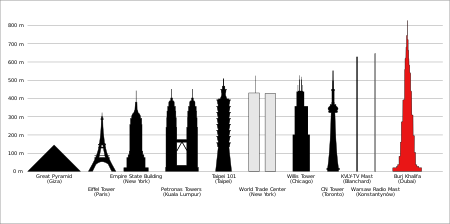
The biggest, flashiest and most expensive… Dubai’s obsession with superlatives

When it comes to Dubai you just can’t keep a good thing down…

It was a satirical website that got me onto this topic. I was on one of my favourite web sites in Dubai, the Pan-Arabia Enquirer, enjoying a parody of the stereotypical superlative press release that used to be all the rage in Dubai before the financial crisis (I’ll admit to having written a couple of those releases in my time pre-2008). If you enjoy your Middle Eastern satire served piping hot and creamy have a read at the parody here and check out the site.

Well, back to the subject of the post and it seems that the superlative is making a comeback in the part of the world in the only way possible… the biggest, flashiest, and most expensive is back with the world’s most expensive abaya (only costing 65 million Dirhams) which made an appearance in Dubai to the most lucrative photography competition in the world (with prize money totaling 300,000 Euros in case you’re wondering), and then there’s the most prestigious and richest horse race in the world.

The list of the biggest and the best is endless. There’s so many world records over here that Guinness opened up an office here just to keep up and reduce their costs (it’s cheaper to have someone over here permanently than keep flying them over I’m guessing).

What’s the reason behind the drive to constantly go above and beyond and splash the cash? Is it for the publicity, the attention or recognition? There’s no end to the next big thing in this remarkable city, but I’m hoping that the concept of less is more one day catches on in Dubai (and if it does you can be sure Dubai will do it better than anyone else and go more Spartan than the Greeks).

Mission Impossible? Rehabilitating the image of the UAE’s expat education system…

The question used to be who’d be a teacher. Today it’s more likely be to who’d be a school owner in the UAE? The country’s private education system has been under attack recently for the cost of educating (mainly) expatriate children. There was a wonderful article written by Arabian Business Editor Courtney Trenwith about the issue of high school fees in the UAE, and an apt comparison was made between secondary education in the UAE and tertiary education back in the United Kingdom.

An Arabian Business investigation last month revealed the startling fact that it costs more to send a child to some Dubai schools than a British university.

Fees for a three-year old are as high as AED55,000 (US$15,000) per year, while they escalate to AED69,283 for a typical child aged six to nine, to AED79,733 for many ten to 13-year olds and as much as AED96,140 for the most expensive secondary schools.

Meanwhile, a year’s tuition at universities such as Cambridge and Oxford is less than AED53,000. Until recently, UK university fees were even cheaper.

One of the largest private education firms is GEMS, which claims to educate over 110,000 children and be the leading Kindergarten to Grade 12 private education operator in the world. In December of 2012 GEMS announced that it would close Westminster School in Dubai, which caters to 4,800 pupils from ages five to 18-years old.

The issue which has been covered extensively by the online portal and business publication Arabian Business has caused an uproar with parents who are naturally concerned about the disruption to their children’s education. In a letter sent to parents which was published by Arabian Business, GEMS said the Westminster School would shut in June 2014 with students being given priority placement in other GEMS institutions.

“In recent times our ability to invest the resources required to produce the improvements needed, both educationally and in infrastructure, have been severely restricted because of the current fee structure… We simply cannot offer a high quality education at this level that we see as our duty to provide. Indeed, salary increases during the same period have been at a level higher than any fee awards,” wrote GEMS executive director Dino Varkey to parents.

And now we come to the issue of communications. There are few subjects as sensitive as education, especially when it is for your own children. As the largest company in the industry and one which seems to be making the most headlines, GEMS should realize it needs to do more in terms of its messaging. The company is currently looking to hire a PR and communications manager in Dubai through LinkedIn (if you’re interested in Mission Impossible do click through here).

The question I’d pose to GEMS is how can anyone justify charging more for a year in high school than for a year in university? As there’s little to no public schooling system here for expatriates (in theory an expatriate child can go to a government school but fees will still apply) what are parents to do apart from swallow the bitter pill? But will that help GEMS and the other companies in the long-run? Isn’t the issue more than simply looking at how to spin the company line on high educational costs and school closures? Isn’t this more about the fundamentals of the business, which need reassessing?

The very same Dino Varkey told Arabian Business editor Anil Bhoyrul in an interview in March 2011 that:

“The ambition that we work towards is five million students by 2024. If we got to the five million number as a conservative [estimate] we would be a $60bn company; we would be employing 450,000 teachers, 55,000 senior leaders – that’s the size of organisation that we are trying to build. ”

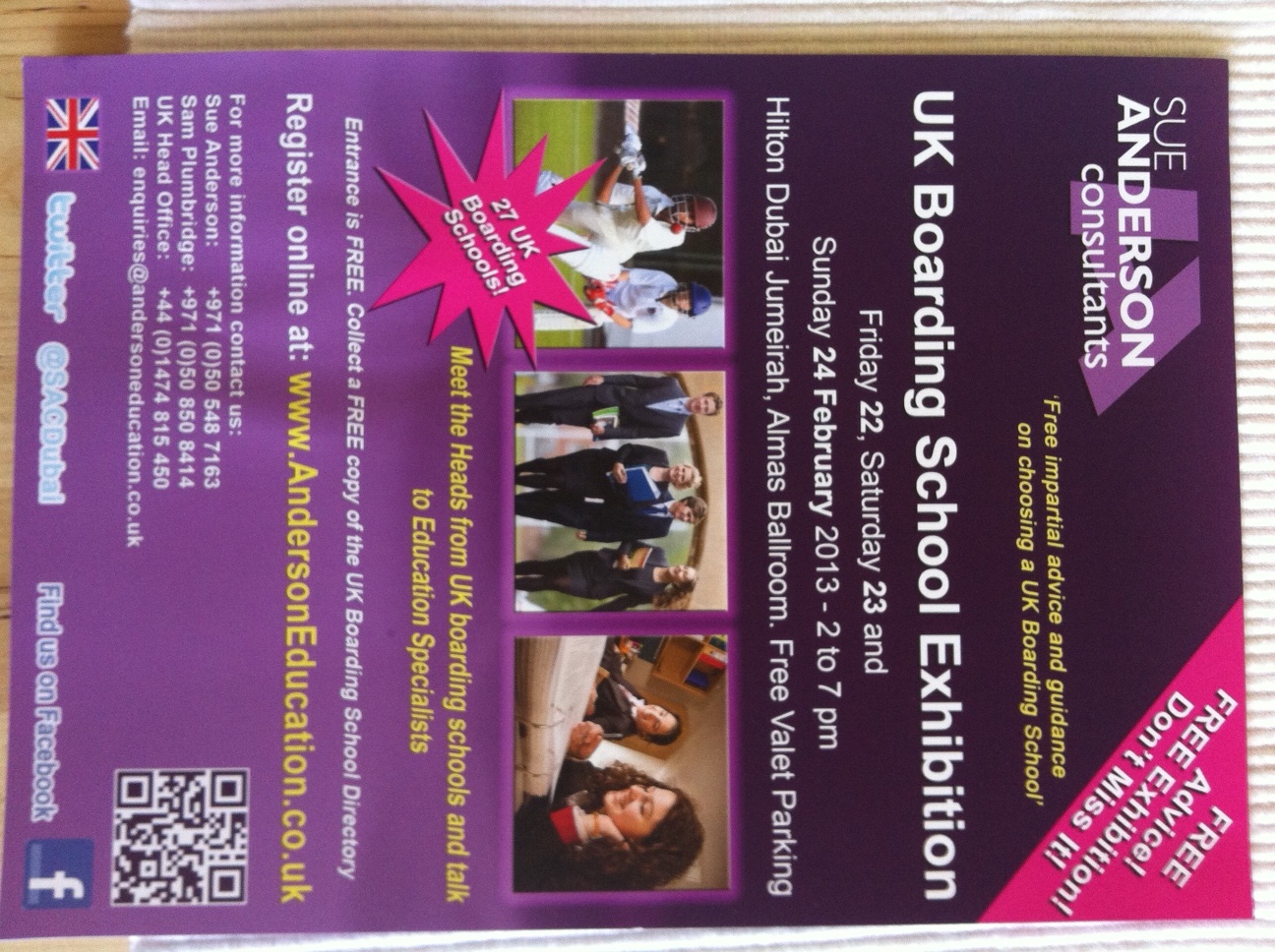
In the meantime I spotted this recently in a book store in Dubai. As always, if you don’t keep the customer happy someone else will muscle in and try to offer a better service at the same or a lower cost regardless of your communications strategy.

There's always an alternative but would your child be happier and better off boarding in the UK than going to school in Dubai? And would it be cheaper?

There’s always an alternative but would your child be happier and better off boarding in the UK than going to school in Dubai? And would it be cheaper?
Social media brand hijacking – Emirates and Etihad fakes and lessons for a corporate online presence

A story broke at the beginning of the month about a couple of campaigns out there in the social media universe. Both piggybacked on two of the UAE’s most established brands. Essentially, the two campaigns offered those who followed the chance to win free flights with Emirates Airline and Etihad Airways.

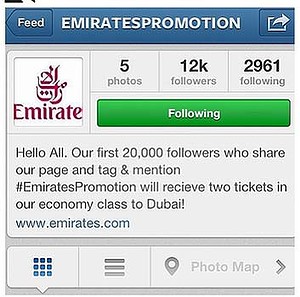
According to the UAE’s English-language newspaper The National which broke the story here in the UAE, the promotion launched on the picture-sharing site Instagram and stated that the first 20,000 people who would follow each account and would share the respective campaigns with a specific hashtag would receive free tickets for themselves plus one to Dubai or Abu Dhabi. The Emirates Instagram account was named EMIRATESPROMOTION while the Etihad campaign ran under the hashtag #EtihadPromotion.

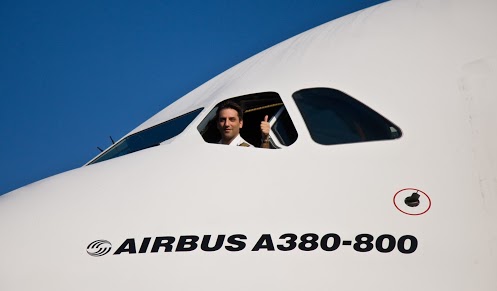
The branding is there, the name may be dodgy, but there's no official Emirates account. So why not believe it?

The branding is there, the name may be dodgy, but there’s no official Emirates account. So why not believe it?

Too good to be true you may think, and the campaigns were fake. That didn’t stop 10,000 people following the fake Emirates account which featured the company’s logo and photos skinned from the company’s website. I don’t know how long the fake competitions were up and running for, but both Emirates and Etihad put out statements warning people not to fall for the fake campaigns. The Emirates statement is below.

To all our fans, Emirates has three official social media channels which are:

http://www.facebook.com/emirates
http://www.google.com/+Emirates
http://www.youtube.com/Emirates

When we launch competitions or new social media channels, you will be the first to know via our Facebook, G+ or YouTube channels and on emirates.com.

Thank you for your continued support
Emirates”

Emirates also sent a statement to the Australian website The Vine stating that “Emirates Airline does not have an official Instagram account. Any Emirates-related accounts or promotions on Instagram do not belong to us.”

Similarly, Etihad wrote on its Twitter account that “Etihad Airways has no association with any accounts or promotions (such as #EtihadPromotion) competition currently running on Instagram as we don’t have an official Instagram account yet. Thanks for checking.”

How does this concept sound to you? There’s lots of random people out there on social media, and scams and the internet aren’t mutually exclusive. So why do brands focus on some social media channels and not others? For example, both Emirates and Etihad don’t have Instagram accounts. Emirates doesn’t even have a Twitter account. Wouldn’t it be best for a brand simply to park their presence on the major social media channels (no one can do everything on social media, there’s simply too many channels and sites out there).

And this point may be even more relevant albeit off on a tangent for Emirates, which spends several hundred million dollars on sports marketing (the most recent announcement being the tie-up with Formula One). Isn’t the airline missing out through not focusing on social media? Imagine how much Emirates could achieve in brand positioning and amplifying that sports marketing spend by promoting itself through social media. As I’ve said before, technology is a wonderful leveler. It’d seem a waste not to wring every single penny in return on investment from those mega-bucks sports sponsorships.

So next time you see a promotion which is too good to be true just send a Facebook message to the airlines and ask them if they’ve gotten round in Instagram (or Twitter in Emirates’ case). And, as they say in France bon chance!

This gentleman clearly feels Emirates would benefit from more social media presence. Do you?

This gentleman clearly feels Emirates would benefit from more social media presence. Do you?

Are the Saudis the QR Code kings of the region?

The Magic Kingdom always seems to get a bad reputation when it comes to adoption; everyone else always seem to think that Saudi Arabia will be the last to the party. However, on my last trip to Riyadh a couple of weeks back I was pleasantly surprised to see QR codes at the airport and throughout the city.

I’m sure that even if you can’t recall what QR codes are, you will have seen them in magazines or on posters. QR codes (the QR stands for quick response) are optical machine-readable labels which resemble bar codes. QR codes have become popular in consumer advertising in the United States, Europe and Asia due to their ease of use and the ability to guide/track a consumer’s actions through the technology; smartphone users (that’s most of us nowadays) can use QR-code scanner apps to open a website which relates to the advertiser and its products. For an example of a QR code have a look below; the code is even branded.

A branded QR code from the BBC (credit: shadowdev.com)

In Riyadh’s King Khalid Airport the mobile operator Mobily is using QR codes on its advertising boards to direct traffic to product microsites. Riyadh Municipality is also using QR codes to help the public identify street names and places. Similarly, Jeddah Municipality has started rolling out a QR code tagging system for its streets. To quote from the English-language daily Arab News article.

Visitors and residents will be able to learn of a street name, location and GPS coordinates by taking a snap shot using their smart phone reader.

“The signs have already been mounted at number Jeddah’s districts,” said undersecretary for projects and urban construction at the Jeddah mayor’s office Ibrahim Kutub Khana. “This includes Basateen, Muhamadia, Naeem and Salamh. These new signs includes a property’s GPS coordinates, street name and location inside the district. To make locating and navigating in Jeddah more easier and convenient visitors and residents.”

By pointing their smart phones at the QR code tag, all the information is stored inside a database. The information can be accessed through satellite positioning systems.

Plans are also under way for installing additional new signs in more of the city’s districts.

Not only are advertisers using QR codes, but the Saudi government has managed to implement a system for two cities, each with a population of seven million people. How’s that for a regional first? Let’s hope other advertisers in the region follow the Saudi lead and start using QR codes in their advertising/content.

Dubizzle and shifting buying habits online for the UAE’s automotive sector

When it comes to online shopping, you should pity us poor souls in the Gulf and the wider Middle East. There’s no Amazon and no eBay. We’ve only had our own iTunes store for a couple of months (Apple officially launched its UAE iTunes store in December of 2012). When we refer to online and shopping in the Gulf, what we really mean is messaging our friends on BBM or Whatsapp while roaming the nearest/biggest mall in town.

There are some brave souls who are trying to make a difference and fight the good fight. One of my favorite sites is Dubizzle, which specializes in online classified advertising across 13 countries in the Middle East and North Africa region. Basically put, whatever you need, you’ll find it being sold on Dubizzle.

And now comes the fun part. I wouldn’t have thought that people in this region would take to the internet to buy cars, but after receiving a number of stats from Dubizzle’s very friendly marketing manager I’ve been proved completely wrong. Have a look at the below Infographic and then tell me why we don’t have more e-commerce companies operating in this region.

You think people don't buy cars online? Have a look at this, and think again.

You think people don’t buy cars online? Have a look at this, and think again.

A tale of two CRMs – Emirates and Bahrain Air

A couple of days ago was a very special day. Many years back something of immense importance occurred and I popped out into this world. I’m so proud of this day that I tell each and every company that I come into contact with online through their forms pages. My favourite firms out there are the airlines, who want me to repeat my birth date each and every time I think of flying with them.

Well, that special day which only comes once a year neared and I was pleasantly surprised to receive a host of name customized emails from businesses I have dealt with reminding me it was my birthday. I’d used Bahrain Air a couple of times, most recently at the end of May in 2012. I was impressed that they’d set up the feature (it isn’t too hard to automate the process if you have a good database and e-marketing tool) and that they’d not only sent it to my own email but also my wife’s email which I’d booked for the same trip.

Thank you Bahrain Air for the kind thought!

Thank you Bahrain Air for the kind thought!

And then there was another airline, the airline which we were traveling on that very day. I first traveled on Emirates in 2003 and love the airline. However, did the good people remember this ground-breaking day? Unfortunately they didn’t, despite me reminding them every two weeks when I travel between Dubai and Bahrain. No card, no happy birthday. There was a boarding reminder however (does that count?).

Technology is a wonderful business leveler. I was impressed by an airline that is low-cost and that has a fleet of four planes. In contrast Emirates has at least 190 planes and spends ridiculous sums on marketing every year, which Bahrain Air certainly does not. That Bahrain Air was able to make an impression at such a low cost says wonders for their marketing team, unlike the good people at Emirates. Now if only they were able to offer an added incentive to travel with them, a call to action such as a small discount, I’d probably have gone and booked immediately.

As for Emirates that day, even the world-class persuasive powers of my wife weren’t enough to get us an upgrade (it’s his birthday she said with a stern voice). And to top it off, the in-flight entertainment system wasn’t working. Oh well, at least we were spared from the 15 minutes of advertising that the airline is now showing in-flight.

At least I didn’t see this on my in-flight with Emirates… (Photo credit: Themetapicture.com)

Photo a pizza while on the move? 800Pizza’s Facebook Faux-Pas

It’s probably not a good idea to ask someone to take a picture while they’re driving. Taking this a step further, it’s probably even less of a good idea to spread that message via a social media platform such as Facebook. But that’s what one pizza company in Dubai did on Monday of last week.

Someone at 800Pizza (great name by the way) thought it’d be a good idea to ask its Facebook followers to take pictures of the company’s delivery drivers whilst on the road. Needless to say, apart from being illegal and downright dangerous the concept backfired and earned the chain a telling off both from a UAE-based road safety group as well as local newspaper 7Days. The article is a great read so do check it out here.

What did it for me (and made me write this) was the comment made by the founder of the firm to the newspaper, which I will quote verbatim below.

When contacted by 7DAYS, Alessandro D’ubaldo, founder of 800 PIZZA said: “I think this has been a bit of a misunderstanding and negative reaction.” Commenting on the edited post, the restaurant owner added: “We even changed the post and someone said ‘that’s just amending the wording, why don’t you remove the whole post?’

“But I don’t understand why they’re so upset – what is all this hate about?” D’ubaldo clarified: “We didn’t mean to tell people to go around and take photos with one hand while you drive with the other hand.”

D’ubaldo also said that he didn’t think the delivery bike drivers were aware of the campaign, adding: “They don’t need to be aware, it’s OK for people to just take pictures around in a public place.”

I’m thinking of launching a campaign to ask certain people to stay off social media. And it really would be for their own good.

You may strain to read this, but anyone encouraging drivers or passengers to take pictures while driving should be prepared for an online backlash

PS thanks Mita Srinivasan for pointing this piece out to me.

Rediscovering customer excellence – my trip to see Gary Rhodes

Well, the title may be misleading but these experiences are something I have meant to blog about since Boxing Day last year. To me customer service is paramount. Your product may not be the best value, but if you make me feel appreciated as a customer I’ll keep on coming back. Unfortunately in the Gulf region customer service usually means blaming the customer; the phrase ‘no Sir’ will constantly ring in your ears. There are times when even the cynic in me is proved wrong and I end up being taken aback by an organisation’s/employee’s devotion to the customer.

As usual, my food cravings are my weakness. I’ve often felt that I have the desires of a pregnant women when it comes to indulging my taste buds and Christmas was no exception. Wanting a three course British menu to fulfill my nostalgia for those Christmases long-past when I’d whoof down a couple of kilos of turkey, stuffing and Brussels sprouts I searched out for a suitable restaurant for me and my wife.

After doing all of the research (not including tasting) we plumped for a visit to The Embassy in Dubai’s Grosvenor House hotel. All the reviews had stressed that this was a top notch place with the best English grub around. Who could say no to cherry tomato tart with goat’s cheese and onion marmalade or a roast lamb with a mint crust and potatoes? And the Eton mess? Heaven!

We headed down on Christmas Day in the evening (yes, I was working that day unfortunately) and ready to be amazed. We arrived and were wowed by the views (the restaurant has a remarkable view from the 45th floor of the hotel). And then I opened the menu. And it wasn’t my menu. The Embassy’s head chef had changed and the restaurant’s new head chef had changed the menu. My craving wasn’t satisfied, even after the chef did a special off-the-menu order of Eton mess for us. We didn’t complain, we enjoyed our food but we did tell the maitre d’ that we’d expected something else. I left with a full tummy, but my desires hadn’t been fulfilled.

Flash forward two days and my wife received a call from the hotel (her number had been stored on their customer management system). They told her the head chef at Gary Rhodes Mezzanine would do us a special no-alcohol Christmas menu replete with roast turkey, turnip puree, baby potatoes and all the other trimmings. My explanation doesn’t even do the menu or the cooking justice (truffle crumpets is just magical and no, I don’t Instagram food). After two and a half hours of food heaven, including five different courses and more English tradition than the Queen giving her Christmas address followed by Only Fools and Horses I went home more than satisfied.

What did it for me was the attention to detail, and how the staff had remembered our comments the first time we visited the hotel, how they had reached out us and how they had done all they could do to make us happy. The food and beverage manager Lorenzo had gone out of his way to arrange a special night and a one-off menu. He’d come to visit us at the restaurant and he’d personally seen to it that we were happy throughout. For me, customer service was redeemed in the Gulf. And all it took was a man called Lorenzo at the Grosvenor House.

Is there anything better than Bread and Butter pudding? Well, maybe Gary Rhodes’ version. There’s nothing like customer excellence to keep you coming back for more!

Seizing the moment – the GCC’s energy subsidies and communicating a solution

Is energy a problem for the Gulf? At first thought one wouldn’t think so. However, the Gulf region is facing a ticking bomb. To put it as simply as possible, the cost of producing electricity is becoming unsustainable. Demand for electricity has reached a point where countries are burning up to a fifth of their daily oil production. Unfortunately electricity prices have barely risen over the past couple of decades.

I didn’t realize the scale of the problem of electricity subsidies and the growing demand for electricity in the Gulf region until I worked in the energy sector. The issue is slowly gaining the attention that it deserves. One of the most impressive public sector leaders I know, Dr Saleh Al Awaji, has been constantly working to highlight ways to reduce energy consumption in Saudi Arabia. Only last week the BBC’s Middle East analyst Bill Law wrote a compelling article on the subject, which should be read by everyone who is concerned about energy consumption in the Gulf.

Bill Law's article on electricity subsidies makes for a a compelling read.

Bill Law’s article on electricity subsidies makes for a a compelling read.

And this brings me to my argument. In marketing and communications we all hope to plan and work to a long-term plan. For me, what distinguishes the good from the great are those professionals who know when and how to seize the moment, take the initiative and weave these waves of interest in related subjects into the communications plan.

So, what would make sense within the context of the above issue of energy subsidies? Possibly a company’s vision and thoughts on how its technology can reduce residential energy consumption, or improve the efficiency of electricity distribution, or ways in which alternative energy can complement traditional fossil fuel energy production.

The idea is simple. But it’s all about timing and approach in order to gain the maximum coverage for a company and its thought leadership. I’d love to see how energy leaders such as GE and Siemens are aiming to help the Gulf’s utilities and governments in averting the electricity subsidy cliff.

Of course there are times when it may appear in bad taste to seize the moment and partake in tactical, opportunistic communications activities. For example, promoting armored backpacks days after the devastating school shooting in Newtown.

If you were a company producing armored backpacks for school children would you promote your product after a deadly shooting?

If you were a company producing armored backpacks for school children would you promote your product after a deadly shooting?

Teaching with passion: the story of PCCI and Mariano ‘Jun’ Miranda

Video

You’ll not meet a more passionate photographer and teacher than PCCI’s founder Jun Miranda


I’ve been away from the sandpit for a couple of weeks. While I do miss home, I’ve had the pleasure of being in the Philippines for several weeks with my better half. Several years back we were told by a dear friend of ours, the late Moses Dizon, about a training center in the Philippines that specialized in photography and creative imaging. The center’s name was the
Philippine Center for Creative Imaging.

After lots of planning and preparation we flew over to Manila to enroll in a number of photography, creative and web design training courses. We fought through Manila’s traffic and got to grips with the capital’s manic urban planning to walk through the doors of PCCI as it’s best known. And then we met Mariano ‘Jun’ Miranda.

Some institutions are modeled after their founders. Think Apple, think Steve Jobs. The same is true of PCCI and Jun Miranda. To call Jun a photographer wouldn’t do the man justice. Beyond his abilities and skills he is a firm believer in education and teaching. With a number of colleagues he set up PCCI 12 years ago. He believes in teaching but with passion, in educating others to empower them, and in enjoying the learning experience.

I had the chance to sit down with Jun for a couple of minutes to record a short interview. Have a listen to the man and if you get the chance visit PCCI. You can see more of what they’re up to at their website which is http://pcci.com.ph/.