Unknown's avatar

About alexofarabia

I'm am obsessive compulsive communicator who has lived in the Gulf for almost a decade. Enjoying the challenge of working in a region where you've got to be innovative, patient and determined to make things happen. Miss being a full-time journalist! Miss family even more! Sometimes I mouth off, but more often I grit my teeth and try to encourage change through a smile (not as easy as you think). Despite now living in Dubai Bahrain is home for me.

Has Coca Cola hit or missed the CSR mark with its Happiness Phone Booth labourer project?

Coca Cola is all about happiness. The soft drinks giant has been looking to associate itself with the concept of happiness for years, and these efforts regularly involve cause-related marketing activations. The latest effort by Coca Cola in the United Arab Emirates, named Happiness Phone Booth, gave laborers in the country an opportunity to make a call home. The special Hello booths didn’t accept coins but rather Coca-Cola bottle caps. Each bottle of Coca-Cola could be “turned into” a 3-minute free international phone call. Watch the clip below to understand the project in its entirety.

The controversy about this idea, which is clear in the comments underneath the video, is about the source of the bottle tops themselves. Are the labourers given Coca Cola bottles? If so, then why not make this clear on the video. If not, either the labourers have to spend two Dirhams out of their daily 18 Dirham salary on a bottle or find other means (which I’ll leave to your imagination).

So Coca Cola, shouldn’t you have targeted a group of the population who can afford your products for this cause-based marketing campaign?

What are your thoughts? Has Coca Cola done good? Or can it do better?

How to get on Etihad’s The Residence for free thanks to Kickstarter

The past week has witnessed its fair share of oohs and aahs at the region’s largest tourism show in Dubai. One of the biggest jaw-droppers was the announcement by Abu Dhabi-based airline Etihad of a new travel experience. Named the Residence and akin to a flat in the sky for those traveling on select routes on Etihad’s A380s, the 120 plus square feet of space offers travelers a dining space and living room, their own en-suite shower and bedroom. With perks that include chairs fitted out with the same leather as a Ferrari, a personal butler on call, a personal vanity unit, wardrobe and swiveling TV monitor for viewing from either the seat or the bed. All of this will cost you approximately US$20,000 one way when flying from from Abu Dhabi to London.

And just to prove the point, why don’t you let Etihad’s Guest Ambassador, Dannii Minogue take you on a tour of The Residence.

One budding travel reviewer has turned to Kickstarter to help him raise the money needed to purchase a Residence ticket (I don’t know if you’d purchase a ticket for a flat in the sky). The very young-looking Ben Schlappig is the editor of the One Mile At A Time blog on the Boarding Area website, and his pitch goes like this:

Etihad Airways new A380 features a concept that I believe will revolutionize commercial air travel. Help me review the product!

I’ve been flying frequently since a very young age, and travel and aviation are my greatest passions. Over time that passion for travel and flying grew to finding the cheapest way to travel in luxury. And over the years I’ve reviewed most of the world’s best first class products.

With only one “Residence” per flight, this may very well be the first A380 premium cabin product for which you can’t redeem miles. This may change over time, but with only one “cabin” per flight it’s highly unlikely.

As a result, it may be a long time before we get an independent review of Etihad’s A380 Residences.

What I propose is flying the Residences product within the first week it’s in service, so I can report on all aspects of the experience. Chances are it would otherwise be a long time before we get an unbiased review of Etihad’s new product.

While the thought of paying for someone else to fly in the lap of luxury to write a review may leave some in horror Ben has already raised US$11,000. With 22 days to go, can he raise the additional US$14,000 he needs for his trip? If he does, I’m going to start my own travel blog and try never to pay for a flight myself again.

If you have excess cash which you have no idea what to do with and now want to donate to this cause, go here and splash some cash for Ben.

PS On another note, while I love her to bits (I still remember her in Australian soap Neighbours) does Dannii Minogue scream luxury? She may let loose during the YouTube video to the chagrin of many of those who have left comments but I would have hoped Etihad would have splashed the cash to bring in someone who would be easier to associate with top-tier luxury. What are your thoughts?

A camel drive-thru, changing tyres whilst driving and new Youtube regulations for Saudi

Not only does the Gulf have a 24/7 addiction to watching YouTube, but it seems the content out there is becoming ever more ‘interesting’ to say the least. Two new videos may tickle your fancy. The first is from Saudi, and could be construed as a Dummies Guide on how to change your car’s tyres whilst driving.

The second fun clip is slower-pace. The video, highlighted by Doha News, is more a spoof clip (even in Saudi I never saw an example of this) by a well-known Qatari comedian. If I was the burger chain I’d be paying to promote this online.

On a more serious note, Saudi Arabia’s government is planning to more closely monitor video content produced locally and meant for uploading to channels such as YouTube according to a fascinating report by the Wall Street Journal.

To quote from the piece:

The General Commission for Audiovisual Media will monitor the quality and quantity of content produced in Saudi Arabia on platforms such as YouTube via a code that will include guidelines on alcohol, tobacco, nudity and sexual acts, said Riyadh Najm, the commission’s president. It will also promote private-sector-led investment in the media industry.

“We will make them aware of what’s acceptable in Saudi Arabia and what’s not acceptable,” Mr. Najm said in an interview with The Wall Street Journal. “Criticism is acceptable as long as it’s professional and constructive.”

The irony of the above is that while Saudi Arabia has become one of the most important markets in the world for online video consumption via the likes of YouTube, Keek, Vine and other social media sites, Saudi content produced for mass entertainment has generally steered clear of Saudi taboos such as alcohol and sex. Will the above help or hinder the explosive growth of locally-produced content (you could even argue that censorship isn’t typically undertaken in parallel with promoting the industry to potential investors).

In the meantime, I hope you’ll continue to enjoy uncensored YouTube in Saudi. And if you still can’t get over the two-wheel tyre change, check out this video. Shisha-to-go? No problem. I just want to know why the choice of music!

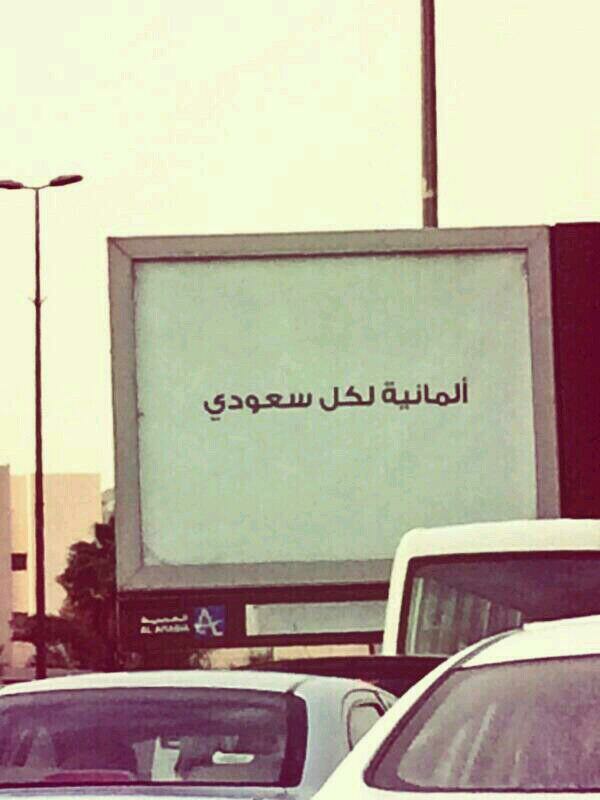
A German Woman for Every Saudi – a new type of teaser campaign?

Being a Brit, I’m used to sexual innuendos being used in advertising. Nothing sells better than sex. But this type of thing normally gets pulled up at immigration when it comes to Saudi. So image my surprise at the below advert, which can be interpreted as ‘a German woman for every Saudi man’. The adverts were seen yesterday in Jeddah and I’ll be intrigued to see how long they’re up for. It certainly redefines the concept of a teaser campaign.

A Geman woman for every Saudi man. It's as simple as that.

A Geman woman for every Saudi man. It’s as simple as that.

Saudi Arabia and the Penguin Dance Craze

Saudis and penguins? As they say, opposites attract. And nothing attracts more than moments of random fun. The Wall Street Journal’s Ellen Knickmeyer has written a wonderful piece about how the Penguin dance has taken the country by storm. Read her piece and the watch the video. Don’t ask why and just enjoy!

Is Mugabe’s DMCC visit a PR coup or disaster?

Image

There’s few people who have been more vilified in the Western media than the President of Zimbabwe for events in the African country over the past couple of decades. Robert Mugabe is a pariah in the West. But he’s been over in Dubai, and his government is set to open up a ‘diamond embassy’ in Dubai. Dubai Multi Commodities Centre (DMCC), where the embassy will be based, put out a press release and photo op. I’ll leave it to you to answer the title question, namely was chasing media coverage the right or wrong thing for DMCC to do when it comes to Mugabe?

Will the press release and the above image of the visit backfire on DMCC and erode public trust in the organization? Or it is a sign of pragmatism and a coup for the country’s diamond business (image source: arabianbusiness.com)

Arabtec and its executive hiring campaign in Saudi

After a couple of weeks hiatus from blogging due to studies I thought I’d get back into the mix with a short and yet intriguing look at an advertising campaign run by one of the largest construction companies in the Gulf. The company that built the world’s tallest building, the Burj Khalifa, has been expanding of late. As part of its drive to grow its business in Saudi Arabia, the firm placed the below advert in most of the largest newspapers in Saudi Arabia.

Aside from costing what I guess to be about a million Riyals/Dirhams, my question would be what was the purpose of the campaign? Was it to hire a local executives, or was it to drive awareness? If you know, then please do tell!

What's the reason for this advert? And will it help in attracting the right candidate or a couple of thousand CVs?

What’s the reason for this advert? And will it help in attracting the right candidate or a couple of thousand CVs?

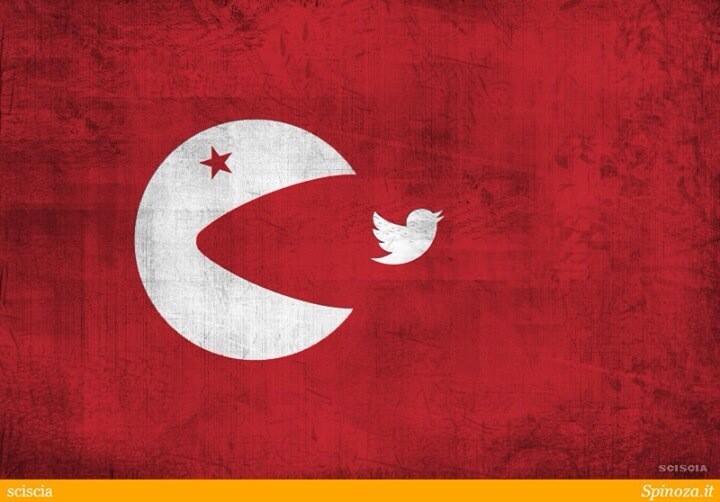
Turkey, Twitter and how a ban couldn’t/wouldn’t happen in the Gulf

While Turkey is busy trying to gobble up Twitter, there’s little chance of anyone in the Gulf banning social media any time soon (image source: http://www.globalpost.com)

Last week, we in the Arab world were treated to a spectacle that we’re all too often participants in. Instead, we looked on as the government of a neighboring country pulled the plug on a social media service and denied its citizens and residents the right to use Twitter. The story behind the move by Turkey’s Prime Minister, Recep Tayyip Erdoğan, to block access to Twitter is fascinating, a page-turner about corruption, dissent and how one man is trying to dominate political will in his own country (have a read of the background here, in a wonderful piece written by the New Yorker’s Jenna Krajeski).

A question/tweet by the Wall Street Journal’s Ellen Knickmeyer about the situation in Turkey from a Middle Eastern perspective got me thinking about the subject. Here’s my take on the Gulf states country-by-country.

Saudi Arabia

Let’s start with the largest country in the region, Saudi Arabia. There are millions online and active on social media in the Kingdom (both Twitter and Facebook have fifteen million Saudi users between them – Facebook has approximately eight million users and Twitter just under seven million ). For many, social media is a release, a forum for open debate where anything and everything can be discussed.

The whole spectrum of Saudi society is online and using social media – some of the most popular and prolific tweeters are religious scholars. while there is criticism of policy online, would the government be willing to risk a public backlash any social media channels were to be closed? Rather, Saudi’s social media policy can be summed up in one sentence – do what you want online but we are watching you. Saudi’s online laws, which have recently been rehauled, allow for citizens to be detained for their online activities (a recent piece by Abeer Allam for Al-Monitor covers recent developments in the Kingdom).

Bahrain

The second Kingdom on the list, Bahrain has suffered more than most over the past three years. Bahrain’s social media has become almost as polarized as the situation in the country, between those who support the government and those who support the opposition. However, despite the war of words online Bahrain has never threatened to pull the plug on social media (there was a communications blackout during the early days of the political crisis in Bahrain).

Instead, the island state has tightened up its online legislation and has cracked down on bloggers and other activists who use social media (Global Voices’ editor Amira AlHussaini wrote a piece about the arrest of blogger Mohammed Hassan in July 2013).

The Kingdom uses social media to communicate both locally and globally on issues such as security, foreign policy and terrorism. Would Bahrain seek to indirectly legitimize the opposition’s claims that the government is cracking down on media through pulling the plug on social media? Not likely.

The United Arab Emirates

The second largest country in the GCC by population, the United Arab Emirates has taken to social media like a duck to water; the country’s leadership are online, the country’s businesses are online and the country’s population are also online tweeting, updating their statuses and uploading pictures of every single meal and building around them mainly on their smartphones. The UAE’s population communicates about literally everything, except to criticize.

There’s so few people in the UAE who aren’t supporting the country’s leadership that the thought of any social media being pulled seem ludicrous. For those that do dissent the UAE introduced in 2012 more stringent online laws which include jail time for those that defame the country. These laws have been put into effect.

Kuwait

Maybe surprisingly for those who don’t know the region, Kuwait has the freest media industry in the region, with columnists regularly criticizing government policy. Kuwait’s parliamentary system and the level of public discourse in the country means that few subjects are off-limits. Kuwait’s social media scene is also buzzing – Twitter reckons that over half of the country’s population, 1.5 million out of 2.7 million, are active users.

Even in Kuwait however, there have been cases of people being jailed for their tweets, either for insulting the Emir or for blasphemy. Still, it’s hard to see how or why any social media channels would be banned in a country that is known to enjoy a ‘debate’ every now and then.

Oman

On the periphery of the Gulf, Oman was affected by the Arab Spring. The country’s ruler Sultan Qaboos introduced sweeping reforms to appease Omanis calling for a better standard of living. The country has contended with online activists and the authorities have warned people not to spread libel and rumours that prejudice national security. Would Oman seek to shut down social media? Again, it’s unlikely.

Qatar

Last but certainly not least, Qatar has championed its own brand of journalism aka Al Jazeera for over a decade now. The country with its vast gas reserves has not had to contend with any political discussions about its governance and future. Qatar has jailed one person, a Qatari national, for publishing a poem on Twitter.

In addition, the country’s government is seeking to introduce a revised cybercrime law which would increase and expand the capacity under which a person communicating online could be jailed for (for a detailed news piece read this article by Matt Duffy on Al Monitor here). However, there’s little chance of anyone in government shutting down any social media channels in the country.

In short, social media has changed the Gulf just as it’s changed the world. The region’s citizens and residents have much more freedom to talk about issues online. The Gulf’s governments and their business interests have also become adept at using social media to promote their own messaging and market themselves. The region’s citizens are aware that even online they’re being monitored (this BBC article describes this notion of being watched) and most of them will tread carefully about what they say and how they say it. For others, they’ll go online anonymously and tweet to their heart’s content.

For governments, social media has become a release value on societal pressures and the message to nationals is clear – talk about whatever you want but don’t criticize. Examples have been made of those who do. But, while the governments have the ability to cut off social media and even throttle or close access to the internet, thankfully the Gulf isn’t Turkey. No one here is going to ban Twitter or any other social media channel any time soon.

Reputational Issues and the Pressure from Outside to Change – Will the Gulf’s Firms Be Forced to Adopt More Worker-Friendly Policies

Smile for the media! Will Gulf-based airlines be forced to change their employment practices or will they risk possible reputational damage in the face of criticism from the foreign press? (image source: http://www.nycaviation.com)

First there was Qatar and now the UAE. I’m not talking GDPs, economic growth or any other metric that a government may promote in the public spotlight. Rather, I’m talking about media criticism, notably international media criticism of worker rights.

Over the past couple of weeks a series of articles have been written, mainly by the European media, critiquing the lack of rights for employees of Qatar Airways and Emirates. The pieces, in particular a lengthy series of allegations in Swedish newspaper Expressen, have shone a light on employment practices, many of which appear distasteful to those not used to working or living in the Gulf.

The article in Expressen entitled the Truth About the Luxury of Qatar Airways details the conditions under which Qatar Airways employees have to live. The report, which can be read here, tells of strict curfew times for air hostesses and pilots, constant surveillance, and instant terminations.

Others have run similar allegations. Even locally, we’re beginning to see these articles appear in the press; Arabian Business recently ran two pieces on the HR practices of both Qatar Airways and Emirates.

With a global presence comes greater media scrutiny. Similarly, global events on your doorstep can attract negative headlines (look no further than Brazil in the run up to this year’s World Cup or even Qatar, the 2022 World Cup andthe country’s labor camps).

In a sense, I’m surprised that this hasn’t happened sooner. The region’s three big airlines are global players who aim to capture transit traffic which they shuttle through their hubs in the Gulf. Similarly, the region’s sovereign wealth funds have been snapping up brands globally for some time now, but especially in Europe where trophy assets have become a staple for SWFs in Doha and Abu Dhabi.

So, how do the airlines react? Never one to be outdone for a quote, Qatar Airways’ CEO has furiously denied all of the allegations and has instead railed at the newspapers printing the articles and called them, in effect, racist. To quote from Arabian Business:

“Like any other organisation, we terminate nonperforming employees and these are allegations made by ex-QA staff.”

“This is not against Qatar Airways but against my home country. They are throwing stones at my country for no reason at all.”

Emirates has been more low-key in their response on the claim that they mistreat female employees by firing female cabin crew who become pregnant during the first three years of their employment.

In the long-term how should the airlines respond? If they continue to deny or ignore the allegations, will they face a backlash from consumers concerned about the airlines’ reputation? What’s certain is that the headlines are not going to go away; to the contrary, the deeper you dig, the more bodies you will find. It’s going to be fascinating to see if the negative media coverage from outside the region eventually forces a change in worker policies.

This is one theme I’m going to be following with increasing interest.