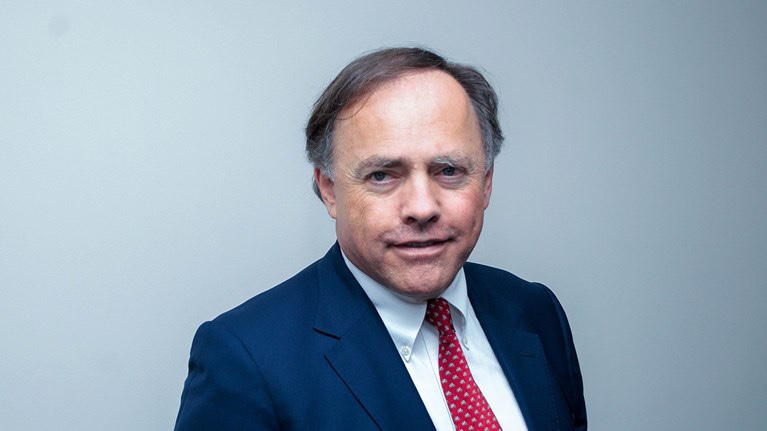
How to pull off a public relations fake coup – the handsome Emirati who didn’t get kicked out of Saudi

Saudi Arabia often has the ability to surprise, delight and amaze in equal measures. But every now and then, it’s not the Magic Kingdom that surprises as much as the lack of knowledge and ignorance shown by the outside world. One story broke in April that didn’t fail to grab headlines the world over.

Allegedly three Emirati men were kicked out of Saudi Arabia’s largest cultural festival by the religious authorities for “being too handsome”. The three men were asked to leave Janadriyah and then deported from Saudi to protect the virtues of the Saudi women present. The story was broken in America by Jezebel and the piece makes for a very entertaining read.

There’s been literally thousands of pieces now written on this and the ensuing ‘outing’ of one of the men, an aspiring actor whose name is Omar Borkan Al Gala.

Unfortunately ladies, which Omar obviously exists the story is a hoax. LiveLeak website was one of the first to break the news of the hoax and this is how whoever was behind the public relations coup did it.

Let’s start firstly with the facts. We have three Emirati men who were kicked out of Janadriyah. Firstly, this is feasible. Riyadh is a conservative place and the religious authorities are present at Janadriyah to monitor all the naughtiness that goes on. However, having been to the Festival a number of times these three would have had to have whipped off their kandouras/thobs to get kicked out such is the amount of inappropriate behaviour that can occur at Janadriyah.

There was an incident at the UAE pavilion when one of the religious authorities objected to Emirati singer Aryam’s presence at the event. He himself tried to force her removal but was instead arrested by the National Guard. The incident was captured on Youtube and is below.

The other apparent truth is that one of the three Emiratis who was outed was present at Janadriyah. However, he had gone into the family section where single male bachelors are not allowed and started dancing. His dancing apparently wasn’t to the taste of everyone present and he was asked to leave the area according to LiveLeak which quotes from a news piece which now seems to have disappeared.

And that seems to be the basis for what then happened.

Someone with an active imagination, a good deal of time and a great deal of media talent spotted an opportunity to seed a story with Elaph.com, an online website that focuses on news in Saudi Arabia. The original story, which has disappeared into the caches of the internet, wrote that three Emiratis had been deported from the Janadriyah Festival and Saudi Arabia for being too handsome. There was a quote to this effect from an ‘unnamed’ Saudi official.

The story quickly snowballed after getting picked up by the English press in the Kingdom, and one of the three men, Omar Borkan Al Gala, apparently outed himself on his Facebook page. The man became a celebrity overnight. He’s been interviewed worldwide and he’s already picked up acting work.

The story surrounding Borkan Al Gala, which loosely translates to Volcano of Love, contains numerous inaccuracies. The first is deportation from Saudi Arabia. As an Emirati and a GCC National he cannot be deported from Saudi Arabia under these circumstances. I’ve never even heard of a GCC National being deported from one country to another. Strike one…

Secondly, the other two Emiratis have never been outed. You’d think that they’d be in on the act as well and keen to grab their fifteen minutes of fame. But unfortunately, the ladies will have to wait for their pictures to be plastered over the web. Strike two…

And finally, the story broke via a news website from an ‘unnamed Saudi official’. Saudi officials rarely speak out of turn, especially on such a topic. It took over a week for Al Gala’s name to be ‘leaked’. In this day and age of instant social media updates, I’d have assumed that this story and the identity of the three Emirati men would have been the news item on both Saudi and Emirati Arabic-language Twitter networks. But no, that wasn’t the case. Strike three…

I’ve got to give it to Al Gala. He’s made the most of the opportunity, of the ignorance about Saudi Arabia, and of the lack of fact-checking on this one. It’s a fun story and one which doesn’t do any harm. But seriously, being too handsome for Saudi? Have the Emiratis met any Saudi boys lately? In the words of my partner, “Saudi men are much more attractive…”

He got kicked out of Saudi and I didn’t? But I’m impossibly handsome (source: http://www.hippobrigade.com)

Putting the communications cart before the horse – internal communications, Emirates and no bonuses

There’s a reason why internal communications is the base of any communications function – you need to ensure the message is understood internally before spreading that message to a public audience.

Emirates Airline had a taste of not to get things right this week after announcing its financial results for last year. The below quotes are taken from www.arabianbusiness.com.

Dubai-based Emirates Airline has posted a 52 percent increase in profits to $622m in the last financial year.

Meanwhile, Emirates Group – of which the airline is a subsidiary – posted a 34 percent increase in profits to $845m, helped by a 17 percent increase in revenues to $21.1bn.

For Emirates Airline staff, much of their potential compensation is paid in the form of bonuses which they receive if the company hits certain targets. It seems that the company however is not paying out bonuses this year. This disappointment is clearly reflected in the comments section of the Arabian Business piece which I’m posting below.

Posted by: Rajae Sunday, 12 May 2013 9:29 AM[UAE] – Uae

Emirates profit release doesn’t mean a thing to its more than 68,000 people who in d end didn’t get a single dirham share.
Two consecutive year of no bonus seem to be too unfair when all you read in the paper is of company’s soaring revenue and money generated.

Posted by: eyrocks Friday, 10 May 2013 3:44 PM[UAE] – uae

Emirates makes money because of its staff but forgets to reward them unlike FlyDubai and Etihad. Sad

Posted by: Rajae Sunday, 12 May 2013 9:28 AM[UAE] – Uae

I totally agree. Its the people thats the source of the company’s success but always been taken for granted.
Press release always seem to be so lucrative and rewarding but not a single reward thats given back to its staff. Its all blah blah blah

Posted by: May be unload factor Friday, 10 May 2013 12:28 PM[UAE] – Spain

Will the cabin crew finally get the long waited promised bonuses???

Posted by: Euro Friday, 10 May 2013 12:26 PM[UAE] – UAE

It is a very sad day for all Emirates Airline employees. Not a single dirham was shared with the men and woman working for the airline. Huge profits and nothing was given back to the staff. Zero profit share.
I am guessing Emirates is part of paying off Dubai Inc’s debt??

Someone at Emirates has had the sense to post a follow-up piece for Arabian Business stating why bonuses haven’t been paid, apparently due to targets not being met. However, wouldn’t have it been wise to have focused internally on the messaging rather than going out in the media and trumpeting the growth whilst forgetting or not focusing on how to assuage the feelings of those who have done their best to deliver on that profit, namely Emirates’ staff?

You can read the follow-up story here. I can’t wait for the comments to come rolling in.

Image

A Riyadh favourite – Wadi Hanifah and Diriyah

There’s nowhere I love more than Wadi Hanifah and Diriyah. Only fifteen kilometers from Riyadh’s Olaya road Diriyah is the home of the Al Saud family and was their first capital. Parts of Diriyah are a UNESCO world heritage site and the area is full of mud-brick structures, some of which are in disrepair. Diriyah is the perfect get-away from Riyadh’s hectic pace. Here’s some pictures of my latest trip down, after the recent April/May rains. I do hope you enjoy and if you’d like to know more about the place do read the Wikipedia entry here.

Getting the communications balance right – Ras al-Khaimah, beaches and modesty

This slideshow requires JavaScript.

I do feel for anyone who has to communicate on behalf of a government body in the Gulf. That’s especially so in places where there’s conflicting, divergent views resulting from a strong cultural diversity and significant business interests with the outside world. I remember the late Yasser Arafat often getting away with making one point in Arabic and then saying the exact opposite in English (there’s many other examples out there too). With the advent of the internet, social media, and a horde of citizen journalists out there in cyberspace it’s no longer possible to say explicitly different things to different constituents.

In this week’s The National newspaper in the UAE there was a great example of the above. On the 22nd of April police from the Emirate of Ras al-Khaimah announced a bikini ban for the area’s beaches. Ras al-Khaimah is a beautiful part of the United Arab Emirates. With a population of just over a quarter of a million people Ras al-Khaimah is known for its pristine beaches, and also for its rapidly growing tourism sector and free trade zone. However, the Emirate is also conservative. Trying to balance the two interests, tourism and tradition, isn’t easy as the below quotes from The National’s article on the 22nd April illustrates.

Bikinis have been banned from public beaches in the emirate as police urge residents to “use common sense” and dress modestly.

The municipality and police have put up signs on public beaches that state: “All coastgoers should commit to public morality and modest clothing”.

Offenders will be given a warning and after a second warning, they could face an unspecified fine.

The two most popular beaches in Ras Al Khaimah are located next to hotels where swimmers sunbathe in thong bikinis or trunks alongside women in burkinis, a modest full-body swimsuit designed for Muslim women.

On weekends and at sunsets, RAK’s public beaches fill with women in full hijab, who come with their families. Women in swimwear are a rare sight at these beaches and there are no women-only beaches in RAK.

In a plea to the public, police urged beachgoers to comply with “public morality and dressing modestly” to respect the country’s traditions and culture.

The move followed complaints by families about tourists who attended public beaches wearing indecent clothing.

The public have greeted the ban in Ras Al Khaimah, a conservative emirate with a large Emirati population. In RAK, it is common for women to dress for the beach by putting on more clothing so that they do not attract attention from men.

“I totally agree with that [ban] for us because it’s not a respectful thing to have on our beaches,” said Hessa Ahmed, a 31-year-old Emirati mother-of-two.

Many people, like Ms Ahmed, would like tourists to cover up but are too shy or polite to approach them. Her last visit to the beach ended abruptly when a man and woman in revealing swimwear sat near her family.

“I wasn’t sure about what she was going to do,” said Ms Ahmed. “I was afraid she would take off her top. So I preferred just to drive away just in case anything was going to happen, so I would just be away and my kids wouldn’t see them.

“There was no sign or board to inform these people you shouldn’t wear this, you shouldn’t wear that.”

Ras Al Khaimah has adopted a lenient approach to public dress in hotels but customs remains overwhelmingly conservative in public spaces, such as shopping malls.

The above was a great piece and insight into the challenges facing a country that is looking to adapt culture with business. And then came the follow-up article the next day in The National.

Police have backtracked over their statement that bikinis and tight trunks are banned from public beaches.

Revealing swimwear is not officially outlawed but strongly discouraged because of cultural sensitivities, police clarified.

“We respect the rights for people. We follow UAE law,” said Maj Marwan Al Mansoori, the head of public relations and moral guidance for RAK Police.

“Our campaign is not about catching people. We just want to tell people about our culture and our community.”

“You should respect our culture and our community rights but you have your rights,” said Maj Al Mansoori. “If it is under our law, you can do it.

“We wanted to tell people what we are thinking. It is communication between cultures. We want to explain this to people.”

It’s worth reading both articles in full, and to put this in its full context few Westerners will use a public beach in Ras al-Khaimah; all the hotels have private beaches which are fully equipped and only for the use of guests. However, such communications outreach isn’t going to help draw foreigners to a part of the country and world that has everything to offer. Perception is everything, especially online when social media is involved. The more people who talk about an issue, the more that issue or perspective is believed no matter its veracity.

This is a reminder about the challenges of trying to get the communications balance right in today’s connected world, where a tourism can view such news pieces while booking their vacation just as easily as a local sitting for a tea and reading the morning newspaper. Media relations is a tough job and I do hope that lessons are learned from this and that the right balance is found, both in terms of educating foreigners coming in (can you really tell someone what to wear after they’ve seen the glossy brochure/website, booked, traveled and arrived) and in preserving local cultural norms. And remember, if nothing else works there’s always the burkini!

The burkini! Foot flicking and hands on hips are optional (credit alrasub.com)

Visiting Saudi Arabia’s Moon Mountain

Here’s another set of amazing images from Jeddah-based photographer Thamer Ossra. Moon Mountain is only 45 minutes drive from Jeddah and is named after its stunning landscape. The views from the top of Moon Mountain are remarkable. Enjoy the images and I hope you also get the chance to visit.

This slideshow requires JavaScript.

Red Bull and a crisis in Kuwait that hasn’t hit the headlines

Surprisingly, Red Bull has not hit the headlines for what appears to be a number of major events in Kuwait. The company, best known worldwide for popularizing the energy drink concept, has apparently been embroiled in a crisis in Kuwait after a young Kuwaiti passed away after drinking too many cans of Red Bull. I’m going to continually use the word apparently as there’s no information out there in English and the only information in Arabic can be found on chat rooms.

According to Kuwait’s social media scene the Kuwaiti Ministry of Commerce has of the end of March banned all sales of Red Bull to those under 16 years of age. The below are a news piece from Kuwait’s news agency Kuna and an image shared over twitter of a Red Bull fridge with a sign in Arabic saying that Red Bull is not for sale to those under 16 years of age. Here is the same info on a discussion forum.

The article from Kuna on Kuwait’s decision to ban Red Bull sales to those under the age of 16. There’s no publishing date on this however (credit: Downtimes)

And a sign on top of a fridge which states that no sales of Red Bull are allowed to those under 16, which is supposedly from a Kuwaiti grocery store (credit: UAEwomen forum)

Kuwait’s Twitter community has also been focusing on the news, but surprisingly the topic hasn’t been trending outside of the country.

Whether this is all true or not, as it always the case with the internet the story is spreading especially in Arabic. The news can now be found on sites across the Gulf in Arabic. The fear may be that other GCC countries will follow Kuwait’s lead (such an action wouldn’t be unusual). However, it’d be fascinating to know what Red Bull has done to tackle this issue. There have been suggestions that Red Bull has upped its ad spending to tackle the issue, and that may explain why there’s little news of this in Kuwait’s vibrant media scene.

However, Red Bull has avoided the spotlight before. If you do read Arabic have a look at this piece on Red Bull apparently employing women to hand out cans in Riyadh back in December. Some would say brave, others would say silly.

Women walking outside of Riyadh’s Kingdom center apparently handing out Red Bull to passing motorists (credit: Murmur website)

Forget the debt – Dubai cops now have a Lamborghini and Ferrari (and more Salik toll gates)

Who needs to think about debt when you’re out and about driving a supercar. In their wisdom and in a public relations exercise that is reminiscent of the city pre-2008, Dubai police unveiled the latest addition to their motor pool last week. The US$400,000 Lamborghini Aventador can do speeds of up to 349km/h and will be used to chase down whoever has the balls to think they can speed in Dubai and not get caught. I’m still trying to work out how they’d stop criminals, but I’d assume the very fact that a cop is driving one of these cars would be enough to startle transgressors into taking their foot off the accelerator.

In preparation for the hard work of bringing law-breakers to justice, the Lamborghini and its driving team were dispatched to Dubai Mall to drive around the world’s largest shopping center and pose for pictures. The aim? To show tourists “how classy Dubai is”.

But Dubai Police didn’t just stop there. The news was followed a couple of days later by the announcement that they’d be adding a Ferrari as well. After all, just having a Lamborghini alone is so passe, especially since the UK, Qatar and Italy also did the same several years back. The Ferrari FF is cheaper than the Lamborghini and sells for 900,000 Dirhams or just over US$250,000 dollars. The supercar is slightly zippier than the Lamborghini (I’ve been told) and does 0-100km in a 3.7 seconds. And it has more storage space, including room for two Krispy Kreme dozen donut boxes and paper coffee cups.

To your left, the Ferrari FF. And to your right, the Lamborghini Aventador. It’s Dubai’s version of toys for the cops (credit: Emirates 24/7)

With impeccable timing, Dubai’s Roads and Transport Authority also announced that two new Salik toll gates would be going live on the Dubai-Sharjah border. The gates will collect a toll of 4 Dirhams from each car that passes through them, and the full story plus lots of interesting comments can be read here on ArabianBusiness.com. One adventurous resident posted his take on both stories. I like the idea.

Dubai’s new Ferrari fund, brought to you by the RTA (credit: @danielmarcevans)

On a serious note, most of us could agree that we’re living in an age of austerity. Dubai itself hasn’t been immune from the global economic drop, and the city-state will have to pay US$22 billion of debt next year according to rating agency Moody’s. Most countries worldwide have had to cut back on spending, and if this idea had been ventured in Europe you’d probably find someone losing their job. With so much money to pay off does this send out the right message about debt and responsibility, both on a local and a global level.

While both supercar stories make for great PR, I wonder what thought went into the decision especially with the timing of the two new toll gates. Have the silly days returned to Dubai? For a city that has done so much good and yet still has many challenges to face, I do hope not.

No mention has been made if Dubai Police have insurance for the Lamborghini or the Ferrari.