The rise of the Khaleeji Woman as online content creators (part two)

As it’s International Women’s Day, I couldn’t wait any longer and, I’ll be brutally honest, I wanted to see lots of cake porn! Here’s the second of a two-part guest blog on how women across the Gulf are using social media and their skills not only to create entertaining and informative content, but to also earn a living. In this second post, Paul Kelly, creative director and co-founder at Digital Ape, argues that brands need to rethink how they both develop and execute content creation strategies with online female content creators in the Gulf. Enjoy the read, and let Paul know what you think!

During the last post, we discussed a survey of MENA based women, and their attitudes to content, particularly food content online. This week we will focus on the content creators who these surveyed women follow and imitate. We will look at how they are creating engaging content and why that matters for brands and publishing houses alike.

How are they doing it?

People are attracted to people. If I can find someone online, who understands what happens in my day, speaks my dialect and knows what I need better than say a publisher in Dubai, then I will follow their content, and my friends will too.

Women across the GCC are doing this in their millions, Khaleeji women want to see themselves reflected in their entertainment, and they want advice and recommendations tailored to them. Gone are the days when they must consume content created by an American in New York, and served to them on TV or in print. Women from the UAE to Saudi and beyond and seeking out other women who look like them, speak like them and understand their lives.

This I believe is one of the reasons why old fashioned publishing houses, should be quaking in their boots. As much as we try, Western or Levantine men in Dubai will never truly understand what Khaleeji women want in entertainment content, and now that they have a choice, these women will choose to consume content made by their peers and when that happens at scale, these content creators become publishers in their own right.

A content creator who builds an audience and keeps them engaged is no different to a publisher, and creators with a female Khaleeji audience, have an audience underserved by content, and exponential growth rates equal revenue.

The train-wreck.

So how has it come to influencers being ridiculed for their work? Worse still, how has it come to people calling themselves influencers, buying audiences and getting a free meal ticket?

Aside from the typical Dubai-syndrome of echo chamber marketing; it’s a mix of naïve marketing managers chasing trends, agencies ill-equipped for creative relationships (trying to replace banner ad revenue) and people who see social media as a shortcut to making a quick dirham.

Instead of actively investing the time needed in these powerful communities, brands, in place of real strategies, throw wads of cash at so-called influencers and hope for big results, often leading to disappointment.

At Digital Ape, we’ve got this down to an art. Just like money is a hygiene factor when it comes to employment, so too is it when it comes to dealing with real people creating content. It’s about giving content creators what they need; Props, filming equipment, sessions with filmmakers, assistance in real-time sessions with editing, contract help, this way everyone gets the best of the relationship. Creators develop better content with help from the brand thereby growing audiences, which in turn helps the brand. Women develop a revenue stream from content that fits and that the audience understands. This isn’t horse trading it’s about developing a win-win situation for creators, brands and audiences.

Find the fit for your brand by having an empathetic network of people to draw on, then seek out their audiences. Work WITH them. Don’t use influencers, work with your content creators. It’s an investment that pays handsomely.

 The future.

It’s no surprise that local publishing houses are scrambling to get on board with the creator craze – they after all, were the content creators and influencers of an older generation. Less able to respond to a new reality of screens and pixels, and even less able to understand how to convert revenue from the eyeballs they’ve been left behind as content becomes borderless and habits are quickly changing.

After all, is what someone like PewDiePie doing any different to what VICE was doing in 2010? Arguably with 54mn subscribers (at time of writing) on YouTube he has as much impact as a medium sized cable network. Is Kim Kardashian any different to Hello! Circa 1998? Her ability to shift units of anything she sells is phenomenal.

Some will argue until that until we have proper regulation in the GCC we’ll never achieve a level of sophistication that will mean any content creator is taken seriously.

Forget that.

What I am, and us at Digital Ape say, is that the content creators are the new publishers. Instead of being locked up in an edit suite at MBC, they are at home in their own bedrooms with their phones, doing the exact same thing, for an audience which increases with every post.

What we are seeing is a new model of content democracy where the 1% who make the content for the 99% are now starting to take back their revenue. Where once it was the Newscorps or CNN’s or ITP’s relying on their talent to sell time, space or inches, it’s now the Felix’s, Rayyan’s and countless mothers, wives and daughters who have a passion to create that will shape our entertainment for the next 20 years.

Digital Ape’s research with MENA women underlines the role digital plays in offline purchase intent
How will Snapchat’s Dubai opening change the region’s social media landscape?

snapchat-02c-02-592x333

The Middle East’s social media scene is going to get much hotter with Snapchat opening up in Dubai (image source: hashtag-me.com)

It’s finally happening. The ephemeral social media network, the reason behind the doggie nose pictures and floral crowns, is coming to the Middle East. Yes, Snapchat is almost here. The story was broken by Communicate Middle East last week, with Cairo-based online publisher Digital Boom adding more details. I’ve included all the information below from both stories.

As reported by multiple industry sources, Snapchat is ready to make its entry into the Middle East market with its first office in Dubai toward the end of this year.

Heading the operation will be Hussein Freijeh, who is best known for his long-standing role with Maktoob – and then Yahoo – for more than a decade, until Yahoo shut down its Middle East operations in late 2015.

While pricing levels have yet to be set for Middle East customers, Snapchat will be offering a number of products, including geofilters and SnapAds. The service, which is especially popular with internet users under the age of 18 across the Gulf region, revealed in June that 150 million people were using the service each day globally, surpassing the daily active users on social media micro-site Twitter. The app had 110 million daily users in December 2015.

Snapchat’s timing of its move into the region is fascinating. The company may IPO as early as March next year, and the Gulf is a fast growing market for the firm’s app (possibly its fastest worldwide). How will brands react? It’s a difficult one to say, as Snapchat has an interesting range of advertising products which are different from anything in the market. In terms of the youth market, Snapchat will be the key platform to use. However, how will this affect spending on other platforms? Will Snapchat pull in dollars from Instagram, its closest rival, or from other platforms such as Facebook, Twitter and YouTube.

What is clear is that with Snapchat opening up its platform to advertising in the MENA region, brands here will have to develop a Snapchat presence and start learning about this unique social media channel. To date, there are few Arab brands on the site (Souq.com, Al Hilal Bank and a couple of hotels are some exceptions I know of), and brands will face a steep learning curve if they’re to get the best out of Snapchat and engage with its young audience.

Saudi Telecom, Boycotts, Social Media (راح_نفلسكم#) and Stock Price Impact

Forgive my wordy headline, but there’s a lot to get into this story. Before anything else, let me spell out the context. Saudi and Saudis love social media, but they haven’t been enthused by the efforts of the telecommunication providers in the country to block free call apps or services offered by the likes of FaceTime, SnapChat and WhatsApp. To add insult to injury, consumers have claimed that the Kingdom’s three telcos (Mobily, Saudi Telecom and Zain) have rolled back unlimited data services.

So what have the country’s social media-crazy consumers done? Yes, you guessed right. They’ve taken to social media to call for a boycott. Under the hashtags (which basically means we’ll bankrupt you) and  (boycott telco companies), the idea is simple.

Starting from last weekend, Saudi users have begun to switch off their phones. The hashtag and others have gone viral, and users have taken to Twitter to demand action against the telcos, including physical boycotts of stores.

The ultimate mark of consumer sentiment is cartoons, and Saudi’s most prominent cartoonist Abdullah Jaber stepped in to pen his own thoughts on the issue (the below translates as the Telco company on the right, saying to the consumer, “why are you angry?”

https://twitter.com/jabertoon/status/782641470012530688

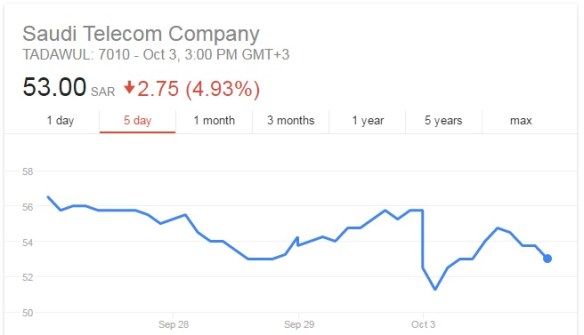
Saudi Telecom in particular has been hit, both in terms of its social media following (the carrier has lost almost 150,000 followers on its Twitter account), as well as its share price which dropped by several percent on Sunday morning after trading opened on the Saudi bourse.

stc-followers

Saudi Telecom’s Twitter account @STC_KSA lost over 140,000 followers in the space of two days as boycott calls spread (source: Twitter Count).

stc-stock-price

Saudi Telecom’s stock price was also hit on Sunday, with an initial fall of 8% (source: Google Finance)

There’s a further dimension to this story, with some online accounts in the UAE calling for similar action to be taken against the two telco incumbents (see the hashtag  and ).

Is this type of online activism on a single economic issue going to become more common, particularly with the state of finances across the region? And what can communicators do about an issue that is about a product and a strategy that consumers don’t like?

As always, it’d be good to hear your thoughts.

Snapchat and what it offers communicators

I’ll be the first to admit, that Snapchat is still a mystery to me. And, judging by my conversations with others, I’m not the only one. However, Snapchat is the social network for young millennials, with 60% of users in the US aged between 13 and 24 years. The service has over 150 million daily users (these numbers are higher than Twitter’s own daily usage). The service reaches 41% of all 18 to 34 year-olds in the US. I wouldn’t be surprised if we see similar numbers over here in the Gulf.

As communicators, we have to embrace Snapchat (whether we understand it or not). While much has been written on Snapchat, on how to use it, as well as how Snapchat compares to other products such as Instagram, I wanted to share different ideas on how to reach an audience via the hottest social media channel for youth in the Middle East region.

Several of the most effective options that we communicators have to reach out via Snapchat are paid-for. Snapchat’s advertising solutions are very different to what you’ll be used to on other social media platforms. Here’s three of their top solutions.

Your Traditional Video Ads

Let’s start with the basic Snapchat ad. Called Snap Ads, these products begin with an up to 10-second vertical, full screen video ad that appears in the context of other Snaps. Brands can give Snapchatters the choice to swipe up and see more, just like they do elsewhere on Snapchat. Snap Ads give brands the opportunity to embed further content as well; by swiping up on the video, the Snapchatter will be able to access extended content including long form videos, articles, app install ads, or a mobile website. Snapchat claims that the swipe-up rate for Snap Ads is 5x higher than the average click-through rate on comparable platforms.

Sponsored Lenses

And now we get to the fun stuff. Sponsored Lenses offer a different take on brand activation, offering not just an impression, but what Snapchat calls “play time” — the time Snapchatters spend playing with the interactive ad you’ve created for your brand.

It couldn’t be easier for Snapchatters to use the Sponsored Lens product. To activate Lenses, Snapchatters press and hold on their faces. The product is designed to promote engagement; lenses can include prompts like “raise your eyebrows” to trigger an animation. Snapchatters can send Lenses to a friend or post a Lens to their Story. On average, Snapchatters play with a Sponsored Lens for 20 seconds.

Sponsored Lenses can prove extremely popular – take the example of Taco Bell and its Cinco de Mayo Snapchat Lens which was viewed 224 million times.

taco-bell-filter

The Taco Bell Sponsored Lens was the most popular in the app’s history, and was used by millions of Snapchatters.

Sponsored Geofilters

The third option for creating paid-for engagement on Snapchat is sponsored geofilters. This product does what it says; when Snapchatters in a specific location(s) take a Snap, they’ll be able to see the Geofilter and use it to explain where, when, and why they took the Snap. The campaign can cover a country, a city, or even a location such as a mall, an airport, a monument or a hotel. In the US, a single National Sponsored Geofilter typically reaches 40% to 60% of daily Snapchatters. A good, simple example of a Geofilter is shown below from Yankee Stadium, and was created by 6S Marketing.

6s-snapchat-sponsored-geofilter

Snapchat Geofilters give Snapchatters the option of branding their Snap with your location-specific messaging. Check this out this filter from Yankee Stadium courtesy of 6S Marketing

The Drawbacks

These options aren’t available as of today in the MENA region. However, my hope is (well, it’s more than a hope) that Snapchat will be opening up soon in Dubai and provide these products to brands locally. The other caveat is cost. Snapchat advertising products don’t come cheap. The Fast Company reported that Snapchat was asking US-based advertisers to cough up hefty sums of cash for a Sponsored Lens: $450,000 per day for Sunday to Thursday, $500,000 for Fridays and Saturdays, and $700,000 for holidays. There are cheaper options, but you’ll have to have a decent budget to play on Snapchat.

However, if budgets allow and once Snapchat expands into the Middle East, be prepared to go Snapchat crazy!

Two-Thirds of UAE Residents Will Take Advice from Social Media Influencers on a Purchase, Apparently…

Now, this may shock you. But, we’re all now listening to social media celebrities to decide what we want to buy and eat. At least, that’s the result of research carried out by PR agency BPG Cohn & Wolfe with YouGov. Out of over a thousand people surveyed, 71 percent of those aged between 18 and 40 said they’d be happy to take advice from their favorite social media influencer before buying. And if you don’t believe me, Results for BPG Survey (Fashion Food, & Beauty Influencer), see the press release or have a look at the infographic below.

The growing power of social media influencers and bloggers has been borne out by new research from Dubai-based PR agency BPG Cohn & Wolfe that shows that 71 per cent of UAE residents aged 18-40 are happy to take advice online before purchasing.


Beauty, fashion and food are the areas where residents are most likely to turn to leading social media influencers for recommendations say the results of the research undertaken for the agency by YouGov who interviewed 1000 men and women across the country.


Tech-savvy residents used their smartphones to follow their favourite influencers with 68 per cent of those polled admitting that where they eat out can be prompted by online recommendations or reviews and 63 per cent more likely to buy fashion or beauty products based on what these influencers might say.


BPG Cohn & Wolfe PR Director, Consumer Practice, Taghreed Oraibi managed the research process and said: “We are working closer than ever with bloggers and influencers and wanted to find out just how influential they have become in a country that is more switched on and digital than many all over the world.


“The results have clearly shown that companies now have to take these online influencers seriously and listen to what they have to say and find creative and engaging ways to work with them to tell their story and reach customers in that vital 18-40 demographic.


“BPG Cohn & Wolfe has identified the rise in influence of bloggers for some time and this led to commissioning the research to assess just how widespread their influence is and in what areas they have the most impact.”


BPG's research has found that over two thirds of UAE consumers will take advice from social media influencers before they buy. But what does this really mean?

BPG’s research has found that over two thirds of UAE consumers will take advice from social media influencers before they buy. But what does this really mean?

The issue of social media influencers is controversial (have a read of this guest blog post from yesterday by Rijosh Joseph). I’m personally a fan of working with social media influencers when they’re used strategically (i.e. who they are and what they do is aligned to the brand they are working with), when there’s a long-term commitment rather than an agreement for a single post or three, and when the goals are clear and there’s a sensible set of measurement metrics in place.

And, I’ll be honest, I don’t see many organizations in the region thinking through what influencer engagement can do for their brands or customers. Instead, it’s a ‘me-too’ approach. I hope I’m wrong.on this (if I’m wrong, then tell me). In the meantime, I’ll be listening to my influencers when making my next purchase, namely my wife and daughter.

Birth of digital influencers = death of true journalism! Who’s to blame?

Have social media influencers negatively impacted our profession?

I’ll be hosting more guest bloggers on the site. This piece is from Rijosh Joseph, and focuses on the contentious issue of social media influencers and their impact on the media and the concept of public relations in general. Enjoy the read, and thank you Rijosh!

Call me old-fashioned, but I am quite annoyed with the evolution of modern day PR! I often wonder, if not all but at least, some of us PR folks, have lost the plot or whether we are passing the buck to the modern-day advertisers?

The topic had been “vocal” both in my mind and among a few of my peers within this industry. A recent YouGov report published by BPG stirred further debate and hence I find the need to put forth a lay opinion.

When this study was posted as a pitch for editorial opportunities in “UAE Journalists”, a private Facebook group that has members within the media and communications industry, it laid the platform for members to “engage” with their views. And honestly, it was a very interesting thread to follow.

Coming back to the point, it frustrates me to sit with PR teams (clients + agency) only to educate them on the incorrect notion of treating journalists inferior to digital “influencers”.

For instance, a certified journalist, are in most cases, served with a press release, which PR folks expect them to carry in their publication. Yet a blogger or digital influencer, plugged to the cage of technology, and who does not possess any insights on journalism, gets pampered at an all-inclusive media event. I agree, product reviews, giveaways and meals never pay their bills. However, we hardly realize that it is a lifestyle choice that they made.

In my honest opinion, digital influencers could strive for a path wherein the real essence of journalism and the need for materialism, can co-exist. Instead of just showing up at events for the freebies, one can get creative in myriad ways of generating revenue while preserving the quality of good writing.

For starters, one can turn a blog into a revenue generating business-model with meaningful campaigns, rather than a platform for paid editorials or tainted and biased op-eds. For example, if you love travelling, then creating a memorable travel experience alongside partnering with brands that are willing to collaborate and for the same cause will let you fill your pocket and keep the sanctity of good blogging.

If one is in to fashion and beauty, then developing a fashion line or partnering with make-up brands they believe in for workshops etc., will lead consumers to their webpage, at the same time maintain the dignity of unbiased content with a penchant for money.

The core essence of blogging is channeling one’s opinion based on their passion points. It does not become a blog if it turns out to be a tool to endorse commercial products.

In the last couple of years I have come across several bloggers and digital influencers who “review” products, but end up in situations wherein they stoop-down to cringe-worthy negotiations, like refusing to publish the review without payments or price-tags being involved. It had also got to the point where they create a drama when we politely decline the opportunity and request to collect the product to return to the client as they are all part of a rotating media review sample quota.

Similarly for media events, if influencers expect them to be invited, it is only fair for PR folks to expect them to cover it. Be it, positive, negative or neutral – give us the coverage if you have shown up to the event and taken a press kit. It is highly frustrating when they send an email with their rate card following the event to publish or cover it. Instead, stop asking to be paid to be part of a media experience and honestly write your thoughts about it. That isn’t the role of true bloggers.

The point here is, I’m not trying to fully kill or disapprove influencer marketing. As communications professionals, we must tie up with influencers only if they can provide clients with tangible analytics to back up exactly what ROI they can bring to a campaign. But with the current state-of-affairs, too many lines have been crossed and it is appalling that we are forced to please every new kid on the block who claims to be an influencer and, worse, bend and break to their whims and fancies.

From the debate on this topic in the “UAE Journalists” Facebook post, there was one comment, which caught my attention to also reflect from the other side of the spectrum. The post stated:

“What is the difference between a paid influencer and a journalist who has absolutely no freedom or inclination to write a story unless there’s significant advertising spend? What’s the difference when a journalist calls you up, asking if you can get them tickets for a concert or movie, etc. Not saying all journalists do this, but let’s be honest, most do. Whether we like it or not, celebrity influencers have always been a part of the marketing and comms-mix, now with social media, the rise of the “digital influencer” is inevitable. You and I, may not have let an influencer sway our opinion on a product or service, but I think most of us, have tried out that new restaurant just because we heard everyone talk about it.”

And it is sad that I have to fully agree to the above post. All UAE journalists are not saints. We all have had our countless experiences that make us wonder as to why chose to be in PR. It is also a fact that in this region, the ethics in journalism among journalists have gone down. This might also be a reason for incessant rise in influencer marketing.

So, what can be done to clean up the mess?

To begin with, from a digital perspective, I feel it is time the scene becomes regulated by relevant authorities of the media council to make it mandatory that all paid editorial content on digital platforms get declared as “sponsored content” as opposed to how it is being offered to readers now. This should bring about a sense of equilibrium among all stakeholders playing within this sphere of media and communications.

And on that note, it is high-time, members within digital fraternity consider ways to stop asking for money merely to be part of a media experience. And as responsible PR professionals, we must not dig our own grave by fostering current practices with influencer marketing.

Ramadan and the Impact of Social Media

We’re only a week or so away from the holiest month of the Islamic year, when Muslims fast to remember the first revelation of the holy Koran to the Prophet Muhammed. Just as the Middle East has embraced social media, so have Muslims. Ramadan is one of the most active times of the year for social media in the Middle East, on all social media channels, as Muslims reach out to friends and family, as they prepare for the Holy Month, and as they celebrate in the run up to Eid.

First of all, let’s look at Twitter. The short messaging service recorded over 51 million mentions of Ramadan last year, with 8.4 billion impressions.

The number of Tweets during Ramadan in 2015 based on Twitter's own internal statistics

The number of Tweets during Ramadan in 2015 based on Twitter’s own internal statistics

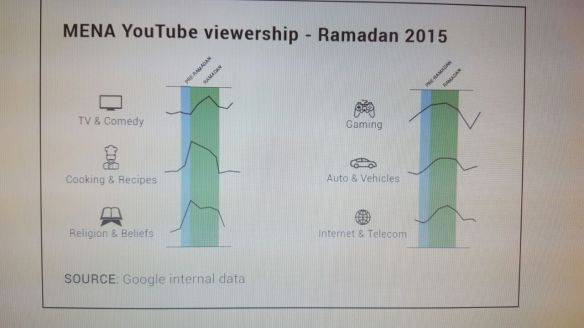
Google’s focus is on YouTube, in particular channels which have a specific relationship with this period of the year. Cooking is initially popular (Ramadan meals are cooked and served at home), followed by religious channels and general entertainment.

YouTube viewership during Ramadan changes dramatically as you can see from this internal Google data

YouTube viewership during Ramadan changes dramatically as you can see from this internal Google data

And last but not least, there’s Facebook. During 2014, 14.6 million Muslims in the MENA region posted 47.6m updates on Ramadan and Eid. The attached presentation from Facebook provides fascinating insights into when Muslims are online and how much more time they’re spending online, as well as the shift towards mobile and a breakdown of chatter by age and sex. Facebook believes that millenials are shifting away from television and towards the internet, which may be disconcerting for advertisers and television networks.

Facebook MENA Ramadan Insights

While it’d be fascinating to understand how Muslims are using Whatsapp and other messaging services to spread religious messages and other related content, I don’t have any data on this (and other) channels.

Whatever you’re planning for Ramadan, do remember the importance of social media channels to Muslims across the region. Make your content engaging (either entertaining or informative), relevant, and shareable. And Ramadan Mubarak!

Keep Calm, Say Nothing – QNB’s response to the customer data hack crisis

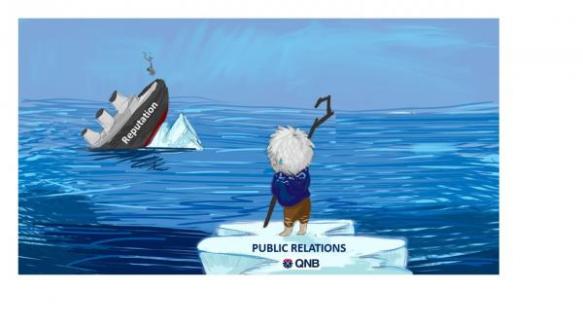
Qatar National Bank's reputation has literally gone down like the Titanic according to this visual from a reader of Doha News (source: Doha News)

Qatar National Bank’s reputation has literally gone down like the Titanic according to this visual from a reader of Doha News (source: Doha News)

Like it or not, there will be times when the proverbial @#$% hits the fan. Each and every organization will go through a crisis. What matters is how an organization responds to the crisis and communicates this response.

Before I talk about the bank in question, I want to step to talk a little about crisis communications. Crisis comms is an artform, and some people (who get paid lots of money) do crisis comms for a full time living. When dealing with a crisis, communications theory states that there are three steps. The first is pre-crisis, which involves setting up a team and processes (the who and the how), and then practising for situations that are likely to occur. The second phase is the crisis itself, and the third is post-crisis and fixing the issue.

Last week someone allegedly released a huge amount of customer data which was hacked from Qatar National Bank. The 1.4 gigabyte file was put online for download. A data hack of customer information is one of the worst things that can happen to a retail bank. But it gets worse. To quote from Doha News.

The data included the financial and personal information of thousands people, many of them QNB customers, and is being spread widely on social media and file-sharing websites.

Cyber security experts said as many as 400,000 customers could be affected, in what is being called one of Qatar’s biggest data breaches.

Since yesterday, several customers have reported attempts to break into their bank accounts, although these appear to have been blocked before any transfers took place.

Others have said there have been attempts to access and even alter their social media accounts.

Yes, it was that bad. But instead of communicating and advising customers on what to do and how to keep themselves safe, QNB’s media team didn’t say a thing. Well, almost. Again, back to Doha News.

More than 24 hours after the data breach became public, QNB has not answered questions from Doha News on what actions customers should take to protect themselves and many customers say they have yet to be contacted by the bank.

Online, it has continued to respond to questions by pointing to yesterday’s statement that said it does not comment on “social media speculation,” even though the confidential information about thousands of its customers is online for anyone to access.

According to the reaction of dozens of customers, some of the information is correct. And yet, even QNB’s Call Center and retail branches are holding fast and not saying anything. One customer was allegedly told that the allegations were ‘propaganda’.

All credit to Doha News. The Qatar-based news website has covered the issue from its beginning with a level of thoroughness that should be a lesson for all local media outlets in the region. The last piece it ran was about a website which could help QNB customers check if they were hacked or not.

Doha News has also been doing much of the work which should have been done by QNB itself, namely advise customers on what is happening, tell them what action they should take and why. QNB’s silence on the issue is a classic example of how organizations in the region used to deal with a crisis prior to the advent of social media. You dig your head in the sand and hope it’ll go away. Well, this is what they’ve done and their reputation has gone down with the Titanic.

Instead, they should have been responding through all consumer-focused communications channels, including social media (a digital crisis consultant I respect greatly and ex-head of comms for the BBC, Donald Steel, advises that any online response should take no longer than 15 minutes). By acknowledging the problem, by explaining how their customers can keep safe, and by promising a review of their security setup, QNB would have helped to have turned a crisis into an opportunity to demonstrate both transparency and concern for customers and their well-being.

In their response (or lack thereof) QNB has looked archaic and they’ve compounded the damage by seeming not to care. I hope that others take stock of the online backlash and understand that when it comes to a crisis in the Gulf, silence is never golden.

A look into how online behaviour is changing in Saudi from The Online Project

For many of us in communications in the Middle East, it’s hard to remember a time before social media (I still fondly remember receiving floppy disks with press releases, back in 2006). Social media agency agency The Online Project has dipped its toes into the Kingdom’s digital world to look at how social media behaviours are changing.

The agency, which undertook a similar exercise two years ago, went back to revisit some of its findings from 2013. The report, named Reintroducing Social Saudis, is an incredibly insightful look into what Saudis are doing online. Please do download the report and read it in full (it’s 18 pages in length).

Some of the findings include:

    1. Facebook remained the largest social platform in terms of number of users. However, Twitter growth surpassed Facebook by 25% in the past two years.
    2. Saudi preferences towards social entertainment have been changed through emerging platforms like Instagram and Snapchat.
    3. Online video has become a key channel for consuming content on all platforms, especially Facebook and Instagram.
    4. Comedy TV shows and sports are the most popular categories of online watched videos.
    5.While YouTube remained the main video sharing website Facebook and Instagram’s video growth has shifted the online video scene towards more exposure. Video content is no longer a YouTube exclusive.
    6. Hashtags usage on Instagram is just as popular on Twitter. Most used hashtags on Instagram shows how the platform is gradually turning into a female community.

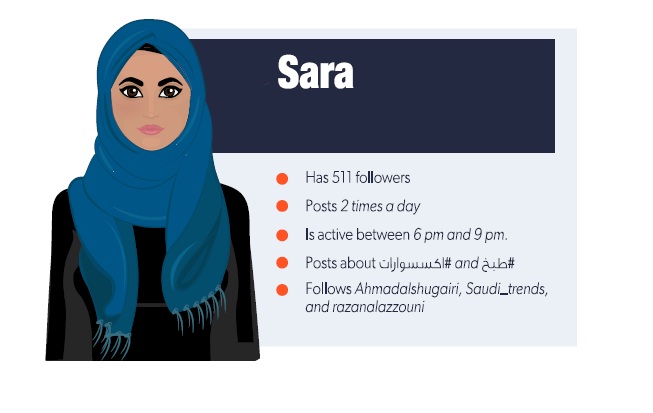
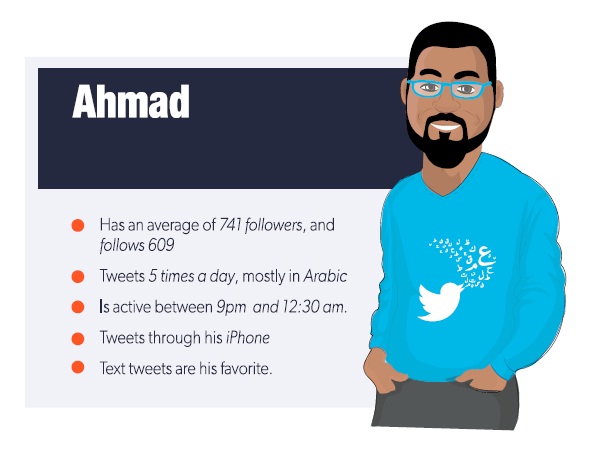
The team have also produced simple visuals and a video telling the stories of Mohamed, Ahmed and Sara, your typical Saudi social media users. You can see both below.

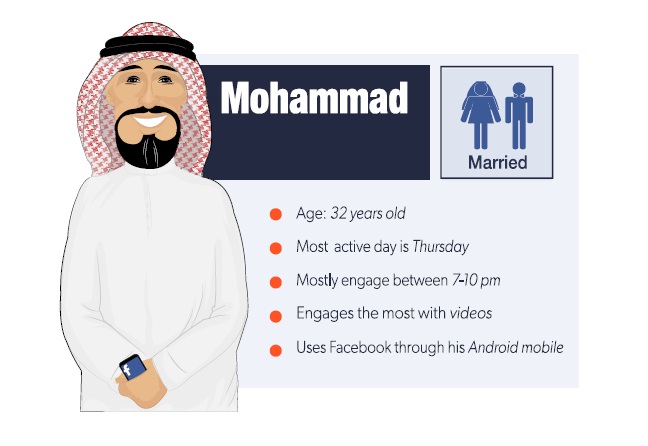
Based on The Online Project's research Mohamed is your average Saudi Facebook user

Based on The Online Project’s research Mohamed is your average Saudi Facebook user

Your average Saudi Instagram user is female and enjoys following social issues as well as fashion

Your average Saudi Instagram user is female and enjoys following social issues as well as fashion

Your average Saudi Tweeter is most active at night and engages most with text Tweets

Your average Saudi Tweeter is most active at night and engages most with text Tweets

If you’d like more info about social behaviour in Saudi, start reading the report and do reach out to the good people at The Online Project.

Social media crises – Lebanon’s Fransabank and the email banning employees from attending Friday prayers

A second post this week focusing on social media and the digital world. And, similarly to the STC story, this article is also about a crisis. However, the background to what happened with Lebanon’s Fransabank is different to that of the public backlash against STC and its alleged poor customer service.

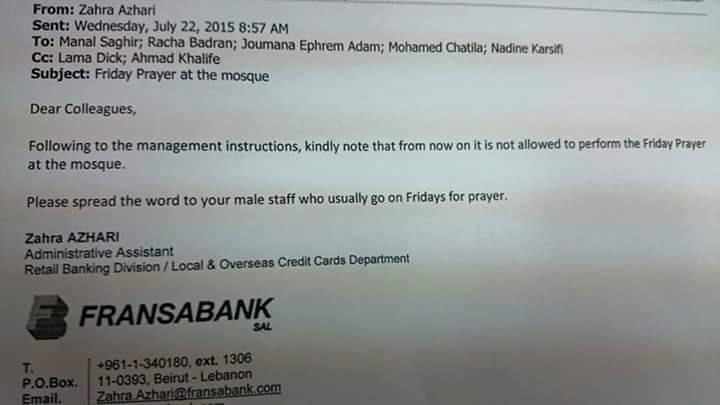
On the 22nd of July a picture began to circulate on social media channels of an email allegedly sent from an administration assistant banning male employees at Fransabank from going to Friday Prayers. A little context here for those who don’t know Lebanon. Unlike in the rest of the Middle East, Lebanon’s weekend is Saturday and Sunday and not Friday. For Muslims, the weekly communal prayer is held on a Friday at noon, and according to Lebanon’s constitution regarding freedom of religion all Muslim employees have the right to attend Friday prayers during their working day.

The connotation behind the alleged email was that male Muslim employees were not returning back to work after their prayers. You can see a screenshot of the email below.

This is a copy of the email allegedly written by a Fransabank employee and then leaked to the net

This is a copy of the email allegedly written by a Fransabank employee and then leaked to the net

As with many other religious issues in Lebanon, a country that is home to a complex mixture of religions and ethnicities, the email set off a storm of commentary on Facebook in particular. The issue reached back to Fransabank and their communications team acted to take control of the situation.

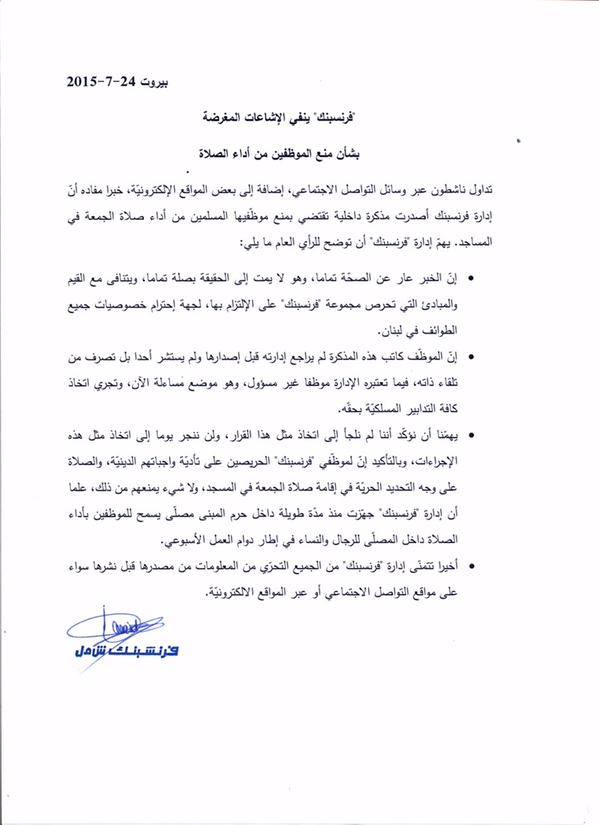
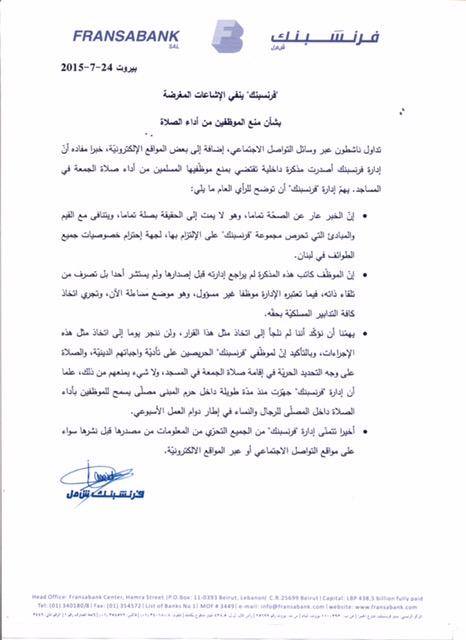
On the same day they issued a statement, in the form of a letter in Arabic, reaffirming respect for all of their employees and their religious duties. In addition, the letter (which is a fairly long crisis statement), also noted that the email was not authorized to be sent by the Bank (which would imply that the email was sent by an actual employee).

This was the first response from Fransabank on the email leak.

This was the first response from Fransabank on the email leak.

All well and good you’d think, but it didn’t stop there. Unfortunately, the first statement was signed but no one knows by whom as there was no name underneath the signature. Secondly, the letter was printed on a plain piece of A4 rather than a Fransabank letterhead. Cue the second letter, which you can see below.

Which was followed by a second statement from Fransabank, this time on an official letterhead

Which was followed by a second statement from Fransabank, this time on an official letterhead

There are obvious lessons here for all of us in communications. Firstly, get your internal communications right and make sure that your employees are aware of your values and your obligations. Legally, no employee should have shared an email regarding stopping their colleagues from performing their religious duties. From the perspective of values, would any Muslim employee want to work at an institution that doesn’t respect their right to pray on a Friday? While there were allegations of employees not returning to work after prayer, was such a response the right reaction? If values and compliance were communicated internally well and the issue of non-attendance handed in a different manner, maybe the email would never ever have been written, let alone leaked via social media.

Secondly, the response. Kudos to the Fransabank team for responding promptly on the same day after becoming aware of the issue (one question I have is how did they come across the original email post). But was the response adequate? Was a letter the right way to do it, especially a letter with no name attached and which is not printed on the bank’s letterhead? Could the team have responded differently, through a video message from a senior executive or a briefer holding statement that goes to the core of the issue about respect for religion and respect for their employees’ right to pray on a Friday?

The Fransabank story is another reminder that social media can bite you at any time. Every employee will have access to the internet, if not on their company computers, then through their mobile phones. Every employee will also have access to a camera, thanks to those same internet-enabled phones. Any content can be uploaded which can harm a person’s reputation. Was Fransabank ready for the crisis? And are you ready if something similar leaks online?