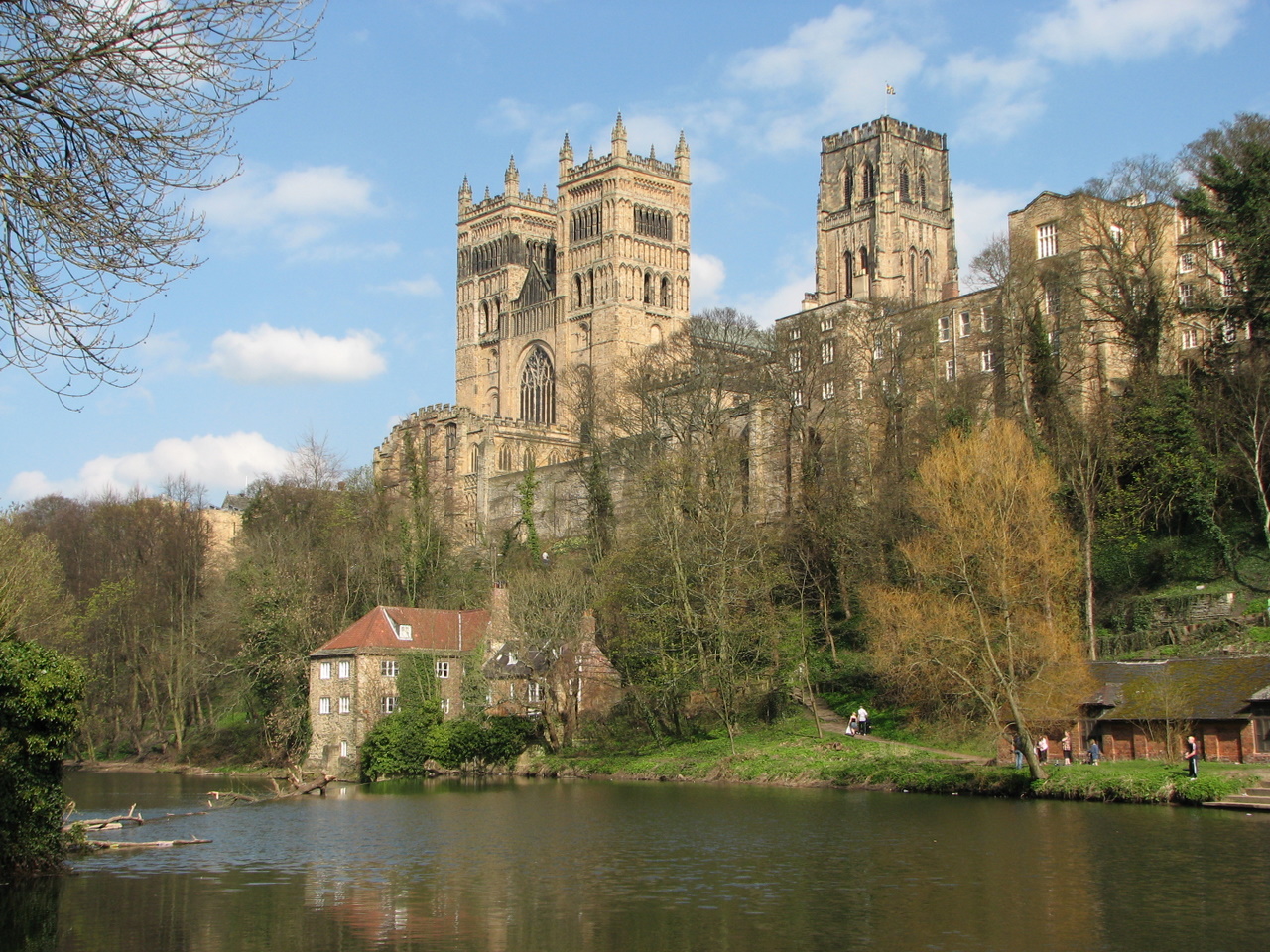
Why we all need some reflection in our lives – my journey back to Durham University

Many years ago I had the opportunity to spend three years at Durham, a small town in the North East of England. Those three years were spent studying my undergraduate degree. In some ways, I was a typical student. In others, I was not. Maybe due to my background as an Arab-European I was imbued with a hope that I could make a difference.

When I was at Durham, I had the chance to engage with others, to support good causes and promote a very special charity, the Durham Palestine Educational Trust (I will blog more about this very special cause soon).

Time has passed, and priorities seem to have changed. I’ve spent a decade in the Gulf, looking after family, getting married, and embarking on a career.

I took it upon myself to do a second Masters degree, in marketing, and I chose to study online with Durham University. This week I returned to Durham University, to study two residential modules. The six days I spent back in Durham were for me a chance to catch up with those student days, to meet with lecturers and old friends, and to remember. The experience has meant so much to me.

The visit to my Alma Mater has reminded me of memories, of hopes, and dreams. This may be optimistic of me, but I hope that it has awakened in me a belief that no matter who we are, what we may be doing or where we may be we can still carry those positives with us and be the difference that we want to see around us.

Think back, remember the time when you were young(er) and remember what was important. Think about how you’ve changed. And then think about how you can make that difference which you hoped to all those years back.

Thank you again Durham and all those people whom I knew and loved from my time there. You had such a profound effect on me and who I am today. I hope that this week will help me to reflect on what I need to do better.

The dangers of speaking your mind online – lessons from the Middle East

Kuwaiti graphic designer Mohammed Sharaf @MohammadRSharaf created the following image to support Nasser Abdul during his trial for tweeting offensive material

The internet is full of misconceptions. I often feel that most people think that the world wide web is a place where they can go to say anything, both positive and (most often) negative. The past 18 months and pending legislation should make anyone and everyone think twice about the above. Cases in Saudi Arabia, Bahrain, and Kuwait have cast aside the notion that cyberspace is a domain where anything and everything goes.

A number of trials and guilty verdicts both underline the importance of tempering what people say online as well as underscore what authorities do and do not deem as illegal. The first high-profile legal proceedings took place in Kuwait when in June of last year a Kuwaiti national was charged with slandering Bahrain’s royal family and a religious group.

Despite claiming that his Twitter account was hacked Nasser Abdul was found guilty and sentenced to three months in jail which he had already served by the time his sentence was pronounced. There have been other cases in Kuwait, including the prosecution and sentencing of Mubarak Al-Bathali to six years in jail (this was commuted to six months) for Tweets attacking certain religious groups.

The most famous case of jailing for tweeting is that of Hamza Kashgari, who published three tweets about an imaginary meeting between himself and the Prophet Mohammed. His comments drew an instant reaction from Saudis online; in the hours that followed over 30,000 tweets regarding Kashgari were published online. Kashgari was accused of apostasy and fled to Malaysia. He was deported back to Saudi Arabia and jailed. Kashgari is still in detention, despite pleas by his family for his release and his apology for his actions (the basic story and roundup can be read here on Wikipedia).

Bahrain’s authorities have also taken to court individuals for publishing their thoughts in online public forums. The most famous and most recent case is that of activist Nabeel Rajab who tweeted about the Prime Minister’s visit to Muharraq in June and was accused of publicly insulting Muharraq’s residents for their support of Sheikh Khalifa bin Salman al-Khalifa. According to Bahrain’s prosecutor Rajab had claimed that Muharraq’s residents had only welcomed the Prime Minister during a visit because he had offered them subsidies.

Bahrain’s Information Affairs Authority said his acquittal on defamation charges “was due to the judge’s uncertainty regarding the evidence submitted to support the lawsuit”. Rajab, who has spent two months in jail while awaiting the outcome of this and another case, had been faced with possible charges before for his use of Twitter, in 2011, in what would have been the first such case in the Middle East.

Clearly the Arab Spring, which has led to regime change in three Middle East countries and is still being felt across the region, has sharpened the thinking of numerous governments across the region. According to media reports in June of this year, Bahrain is introducing legislation to curb misuse of social media.

I am still trying to fully understand the full implications of Bahrain’s proposed social media law, but I am assuming that this would cover and make an illegal offense the publishing of any comments online or through social media that would appear to contradict government policy or government statements. Kuwait is also leaning in this direction, as this editorial by Reuters makes clear.

What is clear is that the Middle East’s online community is becoming increasingly politicized. I’d argue that many people, frustrated with the lack of political debate in traditional media, are going online to voice their issues and concerns. The Dubai School of Government has estimated that there are 1.3 million active users on Twitter in the region.

Switching tack slightly, how will the increase in political discourse affect online communication efforts/campaigns? Will communication professionals and agencies steer completely away from anything that could be construed as political or biased to one community? And will we see more people using online aliases? While many governments would like to regulate online activity, how are they going to force users to reveal their true identities when using services that are based in Europe or the US?

Would we even see sites such as Facebook or Twitter blocked by governments in the region (this did happen in Egypt during January 2011 when the authorities tried to stop any and all access to social networking sites)? That’s the logical conclusion, but how would you do this when these sites have become part of people’s everyday lives? As always, there seem to be many more questions than answers when it comes to the Middle East. The freedom to voice one’s thoughts online are no exception.
Do you need more bling in your life? Car painting and modding in Saudi…

As it’s almost the weekend, I thought I’d write a short blog before adding more content tomorrow and Saturday. Here’s two wonderful pictures of car designs/gratification in Riyadh. I should have more pictures (there’s an unbelievable car painting/modding scene here due to the money spent on cars and the lack of alternative entertainment for young men) but I’m often the one driving.

Enjoy the pictures below and I’ll upload more as and when I take/receive them.

Missing out on some love this Valentines Day when in Riyadh? Don’t worry, this Toyota has more than enough hearts to go round. I just hope they can outrun the religious authorities.

Or how about a Hummer H2 in gold?

Or if you prefer your rims and high suspension, you can always do this…

And if you’re wondering what people (sometimes) do with these cars, have a look at the below video.

And after that?

This is a famous roundabout sculpture in Jeddah. The image is taken from Susie of Arabia’s blog site, which can be accessed at http://susieofarabia.wordpress.com/

Eid Mubarak to you all!

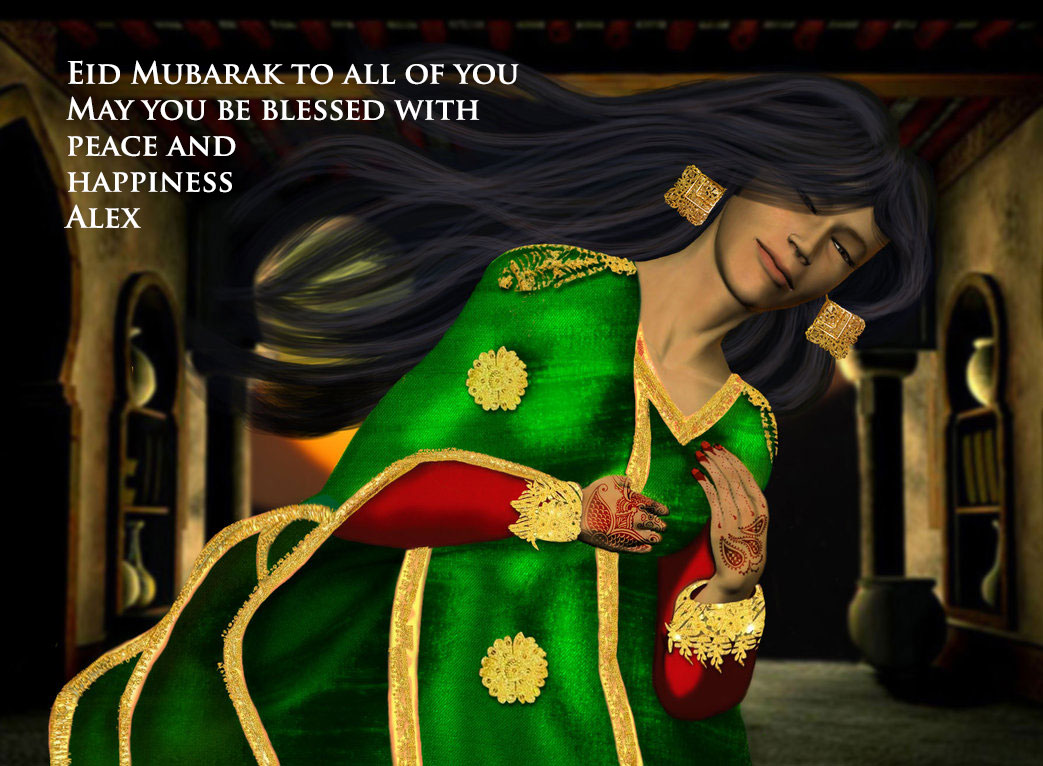
Ramadan is over and the Muslim world and the Middle East is celebrating the Islamic festival of Eid. My very talented and lovely wife did me a design for the occasion for you all (I’ll admit I’m a day late posting this due to Eid obligations and niece sitting yesterday!).

So, as we say here Eid Mubarak to you all. Kol ahm wa intum bkhayr, or may you enjoy peace, good health and prosperity for the year to come!

The image is of a Bahraini folklore dancer. My wife says its a work in progress but the image looks great to me (well, I’m biased anyways!)

AlBaik… The best fast food in the world? And it’s Saudi!

AlBaik. If you’ve been to Jeddah the name is unforgettable. AlBaik is delicious, jaw-dropping, explosion-in-the-mouth chicken. Either broasted or fried, AlBaik chicken is so popular that the restaurant chain does travel packs for plane-bound travelers.

The chain is Saudi-owned and based in the country’s Western Region (think Jeddah, Mecca and Medinah). Next to AlBaik no other fast food chain gets a look in. This place is so popular that when AlBaik raises its prices the news makes national headlines (and you can read it here if you don’t believe me).

Here’s two clips of AlBaik from Youtube. One is from the Travel Channel. The other is AlBaik opening after prayer time (trust me, this clip isn’t an exaggeration). I will start blogging more on Saudi culture so enjoy!

And again, trust me, the below isn’t a fake video.

A Bahraini tradition – spending the night with the kids for #Gergaoun

Ramadan is a wonderful month for so many different reasons. One of my favourite nights during the holy month is Gergaoun, which is celebrated in both Kuwait and Bahrain on the 14th of Ramadan (Gergaoun is also celebrated in the UAE but a month beforehand).

I’ve been told by family that Gergaoun’s roots hail back to the birth of the Prophet’s grandson Hassan. The Prophet came bearing sweets to celebrate the occasion (if there’s other reasons for Gergaoun, I’d love to hear them).

During Gergaoun children wear traditional dress such as jalabiyas and thobs before rushing out into the streets and knocking on every door in the neighbourhood with their empty Gergaoun bags in their hands. They’re handed chocolates, candies, crisps, pastries, popcorn, juice, pizza etc (you get the picture by now…) and only head back home once their bags are full of goodies and sweets.

During Gergaoun families will often gather together to play games. Older children and some of the adults will dress up as Fraysa or the horseman to wander the neighborhood, sing Gergaoun songs and beat traditional drums.

Enough of me and my poor excuse for an explanation as to how fun Gergaoun is. Have a look at this classic clip from Bahrain TV. The video features popular singer Mohammed Yousef who is belting out the Gergaoun song which all the children recite when going from house to house. The clip also features the Fraysa or horseman. I just love the traditional costumes that the children wear. And believe me, when it comes to collecting sweets not even Halloween tops Gergaoun. These kids are just voracious when it comes to grabbing anything sweet and sugary in their vicinity!