When it comes to online shopping, you should pity us poor souls in the Gulf and the wider Middle East. There’s no Amazon and no eBay. We’ve only had our own iTunes store for a couple of months (Apple officially launched its UAE iTunes store in December of 2012). When we refer to online and shopping in the Gulf, what we really mean is messaging our friends on BBM or Whatsapp while roaming the nearest/biggest mall in town.
There are some brave souls who are trying to make a difference and fight the good fight. One of my favorite sites is Dubizzle, which specializes in online classified advertising across 13 countries in the Middle East and North Africa region. Basically put, whatever you need, you’ll find it being sold on Dubizzle.
And now comes the fun part. I wouldn’t have thought that people in this region would take to the internet to buy cars, but after receiving a number of stats from Dubizzle’s very friendly marketing manager I’ve been proved completely wrong. Have a look at the below Infographic and then tell me why we don’t have more e-commerce companies operating in this region.
You think people don’t buy cars online? Have a look at this, and think again.
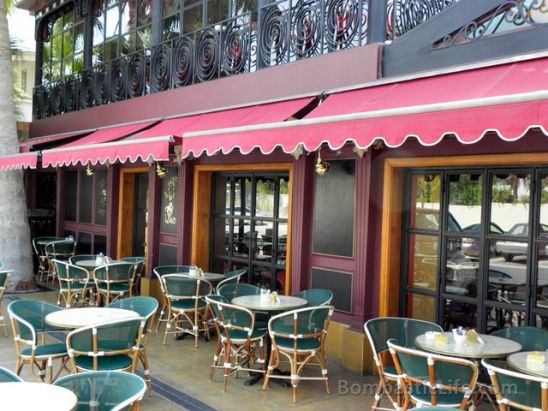
I love cakes. And there’s one place I love more than anywhere else when it comes to cakes. Cafe Lilou is an institution in Bahrain, it’s a place where people meet and forget about trivialities such as calories. There’s two sides to Cafe Lilou – the first is the cafe itself which is fairly easy to spot (pictured below) just after Gulf Hotel.
This is the coffee shop that everybody in Bahrain knows and loves. It’s jam-packed at any time of day or night (credit: Bombasticlife.com)
And then there is the bakery which is hidden behind the back of the cafe about 500 yards away in a warren of small lanes. This place is an Aladdin’s Cave when it comes to cakes. The team here can and do make anything, and their flavours include chocolate fudge, chocolate pistachio, vanilla nutella oreo, chocolate nutella oreo, marble cake, vanilla fudge, rose cake, red velvet cake and almond cake. In addition there’s fruit flavoured cakes.
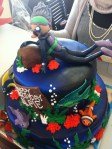
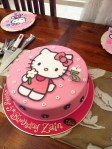
If you doubt my words as to the skills of the team at Cafe Lilou, have a look at these two beauties. One is a Hello Kitty Cake from Lilou’s stock catalog. The second is a custom design for me. And what’s even better than the design is the taste. Wooooowwww!
My Diver cake as ordered by the missus! Is there anything that I’d like to undress more than this?
Eight kilos of pure, unadulterated pleasure! Top half is chocolate-pistacho, the bottom is rose. Yum!
Is there anything cuter? For my five year-old niece
If you want to know more about Cafe Lilou and gain several kilos in the process then visit their Facebook page and get dialing!
There’s nothing better to start off the day than this combination of two dishes and the Afghani bread called tamees. For my family every Friday was fuul and adas morning, and I’d dutifully drive 15 minutes to our preferred fuul … Continue reading →
Saudi Arabia’s next Second Deputy Prime Minister Prince Mugrin Bin Abdulaziz Al Saud whom we found to be a captivating individual
For all you Saudi fans and fanatics out there, the news of Prince Mugrin’s appointment as the second deputy prime minister took most by surprise. There’s a wonderful piece on Prince Mugrin and what this means to Saudi Arabia here by Michael Stephens. However, it is possible that Prince Mugrin, who is the youngest surviving son of the founder of the Kingdom, would become King.
I’m not going to go over the same ground that every Saudi watcher has covered over the past few days. What I will do is recall me and my wife’s personal memories of Mugrin from 2007. We were media partners to the first e-government conference in Saudi Arabia, e-Transactions, and had unfettered access to the event and its speakers. Prince Mugrin was, if I remember correctly, the only royal family member to both attend and speak at the event.
Prince Mugrin was on a panel which was addressing the issue of bureaucracy as it relates to online services. What struck my wife in particular was how candid the Prince was, particularly in relation to Saudi government. In effect, he said that Saudi Arabia had far too much bureaucracy and that e-government could not be in place sooner. For a prince who is first-tier (even the royal family in KSA has rankings) and who held the position of head of the Saudi Intelligence at the time Mugrin seemed acutely aware of the problems that faced society. We were impressed by his open demeanor and his directness.
A more lasting impression, and probably an indication as to why Mugrin is reportedly close to King Abdullah, was made during Mugrin’s tour of the exhibitor partners. Again, as the publisher of the media guides to the event, we had a stand in the exhibition area. A number of the team on the stand were female, and Prince Mugrin greeted them all warmly and even going so far as to shake their hands and asking them about the conference.
To this day my wife who was at the stand when Prince Mugrin visited talks fondly of the encounter. While much has been made of the succession remaining with the sons of the founder of the Kingdom rather than being passed down to the next generation of the Al Saud family, I’m optimistic that Prince Mugrin will continue to promote King Abdullah’s agenda to slowly but surely reform the Kingdom’s government and cultural practices.
Based on the latest statistics shared at the Studio Edge event Facebook is the one network to rule them all (unless you’re a keen bird watcher that is)
Facebook came to town last week, and they brought lots of numbers with them. I was lucky enough to be invited along to the first Studio Edge event in the Middle East region. And I was astounded by the numbers that the team kept on rolling out. I’ve summarized these numbers below for you.
According to Facebook’s own research there are fifty three million active Facebook users in the region who use the service at least once a month. Egypt is Facebook’s largest market, followed by Saudi Arabia and then the United Arab Emirates.
Fifty two percent of Facebooks users access the site solely through their desktops and laptops; thirty eight percent use both mobile phones and computers, and ten percent only use their mobiles updating their profile and other Facebook activities. Twenty million people in the Middle East and North Africa are using Facebook today through their smart phones.
The average age of Facebook users in the region is 27 years and 64 percent of MENA users are male. That’s in contrast to the global split of male to female users which is currently 50/50. MENA Facebookers spend approximately seven hours on Facebook a month (that’s double the global average). And fifty two percent of Facebookers in the UAE use Facebook whilst watching television.
Middle East Facebook users like 84 pages compared to the global average of 51, and they view approximately 550 pages a month. Over forty percent of their time is spent on the news feed section of Facebook.
And to top off all of that, Facebook’s user base is growing in excess of 20 percent in the region.
With all of this information above, I’m hoping that we’re going to see more businesses online using the site. But if there was ever any doubt that Facebook is a first-tier consumer communications channel then please do re-evaluate how you use the network and start using the site properly.
One other interesting observation from the Facebook event. Most of the attendees were from advertising and creative agencies. I only spotted one public relations company. And yet, Facebook is all about content. Shouldn’t the Middle East’s PR industry be getting in on the act and promoting the quality of its social media services more?
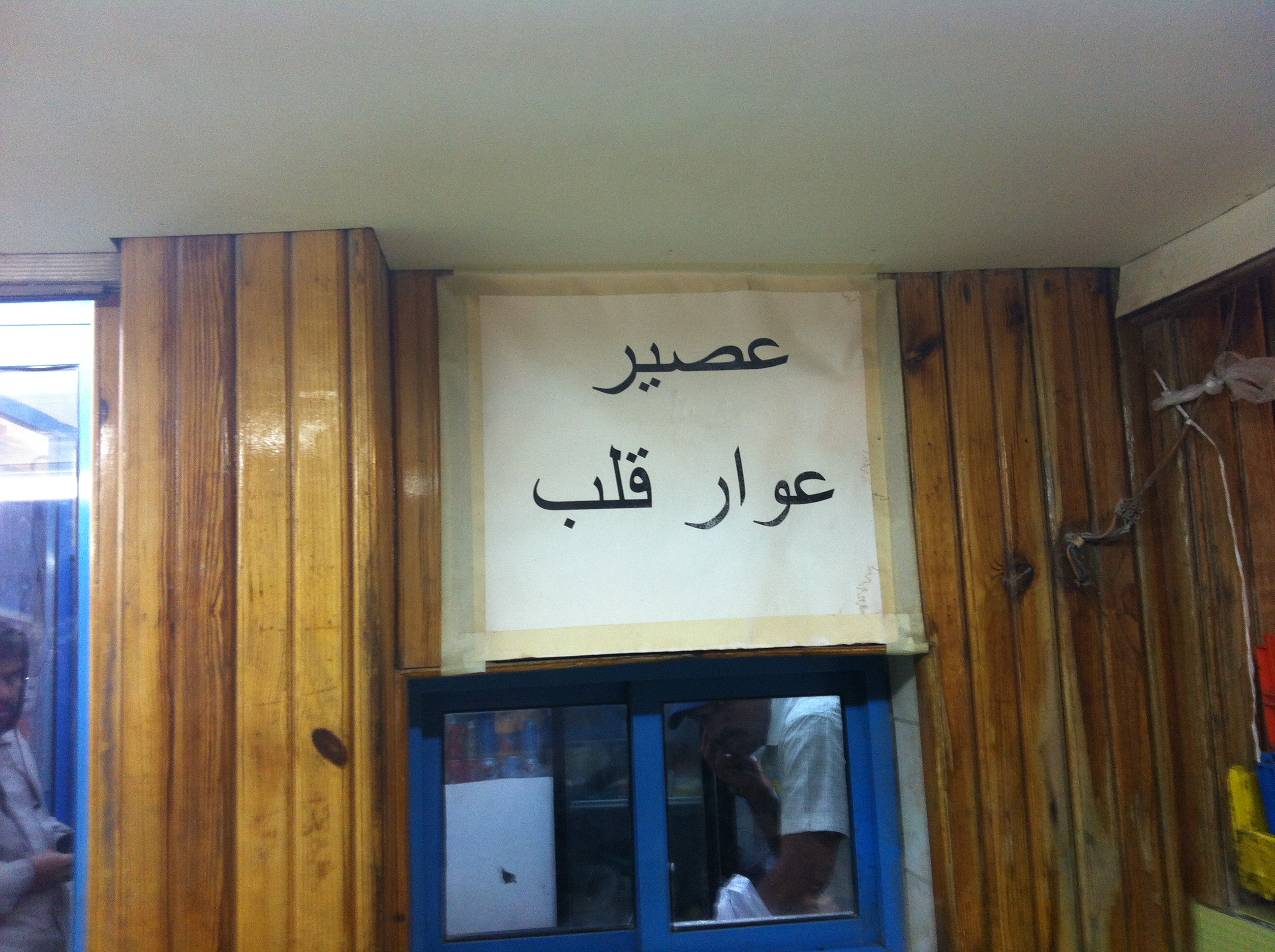
No, this isn’t a 1980s love ballad or a line from a new age diet fad. This sign, and the line above, can be found at our favourite juice shop in Bahrain. The Arabic literally reads as juice that will pain the heart. It’s very tasty and doesn’t give me indigestion, but then I do have a cast-iron tummy.
PS there’s more prose at this place. Apparently, they also do cordon-bleu grilled meat sandwiches.
I don’t think these guys read the marketing manual (unless they skipped to the shock marketing chapter)
Saudi Arabia’s society is changing at a much faster rate than many of its neighbours
Hands up all those people who’ve heard of or been to the cosmopolitan Dubai. I’m sure that you’ll know about Qatar, the country that has made a name for itself by investing all over Europe and for winning the 2022 World Cup. And there’s Kuwait, probably best known for its role in the first and second Gulf wars. One of the most beautiful countries I’ve ever visited, one could say that Oman unfortunately isn’t as well known abroad as it should be.
And then there’s Saudi Arabia, a mysterious land which up until recently was spoken of in Chinese whispers. The Magic Kingdom was a country that was known for oil, religious and cultural conservatism. Despite the spread of the internet and the ensuing countless videos and other types of multimedia information hosted online Saudi Arabia is still an unknown to most people.
The country’s reputation, image and visa regime doesn’t help to educate foreigners, but I’ve been struck recently on a number of occasions how open today’s Saudis are. This is especially true of the younger generation. Many of the Saudis I know who are under the age of 40 will talk about anything and everything, especially in a closed environment. They’re knowledgeable, they’ll know much more about the workings of the country and national government than is written about or published in the news. And they’re not afraid to be blunt about what is right and what is wrong when it comes to public policy.
Having lived in Saudi for a fair few years I’ve always been fascinated by how Saudis are becoming ever more open to sharing their views with people they know and trust, especially in the setting of the Majlis where the men traditionally gather in the evening to discuss both personal and business issues.
The difference in openness between Saudis and other GCC nationals is becoming ever more noticeable. While traditionally the most open society in the Gulf, Bahrain has been transformed due to the events of the past two years. Both Qataris and Emiratis are very welcoming, but they’re less inclined than Saudis to talk at length with foreigners on the issues that are shaping their respective countries.
And then there’s the Kuwaitis, who are probably definitely the most outspoken people in the Gulf. But for me, today’s Saudis are more open because many will acknowledge both the positives and negatives of their country.
I’m not suggesting that the country is a bastion of diverse views which are aired in public by all and sundry. There are still many subjects that are taboo, but many barriers have been broken over the past two years partly thanks to the widespread adoption of social media by many young Saudis. Just think of any controversial topic in the Gulf, and you’re going to find it being discussed in Saudi by bloggers, on Twitter and Facebook.
Looking forward, I can only hope that this openness will be a blessing to the Kingdom as it looks to tackle issues such as unemployment, the changing role of women in the society, graft and governance. These subjects will be better dealt with if there’s an open dialogue between the country’s nationals. As always, I’m optimistic about where Saudi Arabia is headed and would like to hear if you agree with me or not about my thoughts.
Has much changed in the Gulf? Looking back over the last 12 months, the headlines have rightly been dominated by news of events in Egypt and Syria. On the sidelines, Iran, Israel and Palestine have filled the column inches. In comparison, the Gulf seems to have changed little.
Most of us know to think before we speak. We understand that certain issues may be difficult to discuss during certain occasions. And then there’s self-censorship, the concept of altering the spoken and written word, picture, or other published material out of concern about the consequences.
Having talked to people I admire from the art world, publishing and the online communities there is a concern and fear that the boundaries of expression are shifting. The region’s powers that be are not just watching and listening, but they are also taking action. The number of persons questioned and detained for stating their views or thoughts publicly seems to have increased, and the media coverage surrounding these events has certainly gone up several notches.
So where does that leave those writers, publishers, artists and the like who live in the Gulf? We’ve always had soft censorship in the region’s media, the concept of avoiding sensitive topics to not upset advertisers, the authorities/media owners.
However, today’s conservative wave (it may be even called a tsunami if the levels of monitoring and action pick up pace) following the Arab Spring has come up against an awakening of expression brought about by social media tools. Who will win out?
The question in my mind today is where are the red lines? What should be spoken about and when should one stay silent? And can one censor the web today without unplugging oneself from the internet?
Has there been an increase in self-censorship across the Gulf?
You’ll not meet a more passionate photographer and teacher than PCCI’s founder Jun Miranda
I’ve been away from the sandpit for a couple of weeks. While I do miss home, I’ve had the pleasure of being in the Philippines for several weeks with my better half. Several years back we were told by a dear friend of ours, the late Moses Dizon, about a training center in the Philippines that specialized in photography and creative imaging. The center’s name was the
Philippine Center for Creative Imaging.
After lots of planning and preparation we flew over to Manila to enroll in a number of photography, creative and web design training courses. We fought through Manila’s traffic and got to grips with the capital’s manic urban planning to walk through the doors of PCCI as it’s best known. And then we met Mariano ‘Jun’ Miranda.
Some institutions are modeled after their founders. Think Apple, think Steve Jobs. The same is true of PCCI and Jun Miranda. To call Jun a photographer wouldn’t do the man justice. Beyond his abilities and skills he is a firm believer in education and teaching. With a number of colleagues he set up PCCI 12 years ago. He believes in teaching but with passion, in educating others to empower them, and in enjoying the learning experience.
I had the chance to sit down with Jun for a couple of minutes to record a short interview. Have a listen to the man and if you get the chance visit PCCI. You can see more of what they’re up to at their website which is http://pcci.com.ph/.
Years ago, there was only one, the phone to rule all phones. No body ever asked for a phone. They asked for a Nokia. Saudi Arabia was the land of Nokia. And the rest of the Gulf wasn’t far behind. One tale I was told about the Finnish phone behemoth was that Saudi was the largest market worldwide for Nokia’s Communicator series of phones.
Saudi ten years back. Yes, Saudis loved their Nokia Communicators (this isn’t a Communicator but they’re about the same size).
And the came Apple, followed by Samsung, HTC, Blackberry and other mobile devices of all shapes and form. And Nokia was no longer the same company that it was before.
But then, there was a change. Nokia came together with Microsoft. And something new was born.
The Lumia 920 in all its glory. Yellow is optional.
The portents didn’t speak well for the partnership between the two companies. I remember owning a Windows-based SPV phone about ten years ago. While the phone did last, it wasn’t the easiest device to use. Microsoft hasn’t had a good track record when it comes to mobile operating systems. And Nokia’s Symbian has died a death. How would the two companies compete with Apple’s iOS software and Google’s Android platform?
As a reformed optimist and a gadget monster I took the plunge and ordered a new Nokia Lumia 920 on its release last month. I liked the look of the hardware – the Lumia has a 768 by 1280 pixel screen which is slightly larger than the iPhone 4, a 1.5GHz dual-core Qualcomm processor, 32Gb of storage, an eight megapixel Carl Zeiss lens camera, NFC, Bluetooth, HSDPA and HSUPA connectivity and all the Wi-Fi that you’d need. The phone is chunkier than most, weighing in at 185 grams and with a dimension of 130.3 by 70.8 and 10.7mm, but I like my phones chunky and plumpy.
Going beyond the hardware, what I liked most about the new Nokia Windows-based lineup was the software. The operating system is simple to use with tiles on the front page to heavily-used applications and functions. The front screen can be easily customized to meet the needs of the user, it’s intuitive and copying files to and from the phone is so simple (though Microsoft still needs to work on the Windows Phone app which tends to crash when copying music). I can also sync files to my desktop and laptop using Microsoft’s Skydrive. All in all, the phone’s operating system is a joy to use and Microsoft is heading in the right direction when it comes to usability (though I’d love to see more shortcut buttons or tiles.
But there’s more good stuff to come. Nokia has long been a leader in the maps space following its acquisition of Navteq in 2008. The maps on the Lumia 920 are rich with detail including 3D rendering, they’re simple to use and most importantly they’re full of detail. With Nokia Drive you can do away with any other GPS software and hardware you may use for driving. Again, the system is easy to use, the voice directions are clear and I haven’t found any glaring mistakes in terms of geography and topography.
The most fun thing about my Nokia 920 experience so far is the Nokia City Lens, which is the smartest use of augmented reality so far. Basically, the City Lens allows you to look at the screen and view what locations of interest are nearby (be they restaurants, hotel, museums, shops, or even famous sights). Once you click on a point of interest you’ll be able to view pictures, read reviews and be guided there by Nokia Maps. Much of the content on Nokia City Lens is consumer-generated, which is going to make the application even more interesting as time goes by. As my brief explanation hasn’t the app any justice have a look at the embedded video.
I have tried the camera and true to form Nokia’s cameras as wonderfully clear. There’s much more I need to play around with on the camera settings, but I leave the photography to my talented wife.
And the downside? The applications, or lack of, currently available for the phone. There’s no Instagram as of yet and no native Twitter application, Whatsapp is still unstable, and compared to the iPhone and Android-based phones Microsoft needs to do more to convince developers to create apps for Windows 8 Mobile.
Having tested the phone both at home and abroad I know that Nokia is onto a winner. The Windows 8 environment will grow and develop with time and Nokia has bet its future on the operating system (it’s only crashed twice, which is remarkable for a Microsoft device). I’d love to see Microsoft publicize the operating system more (they’ve been surprisingly quiet in talking about Windows 8 Mobile despite it being crucial to their vision of a connected PC-phone-tablet ecosystem).
The question is now, will Nokia pick itself up again in the Gulf? While Blackberry is dying a death globally, the Canadian manufacturer is still doing remarkably well in the Gulf due in part to its Blackberry Messenger Service. Apple retains bragging rights to the best smartphone around, despite (in my view) doing remarkably little with the device since the launch of the 3GS. And then there’s Google. Can anyone stop the search giant with its Android operating system?
I’m certainly hoping that Nokia comes back strong. The product is one to shout about. Will its marketing be strong and bold enough to cut through the disappointment and ambivalence that many people feel about Nokia today in the Gulf to rediscover the love affair that they once had with the Finnish giant? Toivotaan niin Nokia! Game on Apple!






 Alex of Arabia's Blog