Me, my wife and our baby – a personal story of how the Gulf is letting down its women by denying their children the right to nationality


The children of Gulf women married to foreigners are not automatically granted nationality, unlike their male counterparts (image source http://www.flight965.com)

 
I promised I’d write on my experiences as a father and I’m having to start things off on a serious note. As some of you may know, my wife is from this region but I am not. We welcomed into our lives a little princess earlier this year.

The sad story is that in the Gulf region children born to Gulf women, in other words women with a nationality from the six GCC states, who are married to foreign men do not receive their mother’s nationality. This is in contrast to Gulf men who are married to foreign women. Their children do receive their father’s nationality.

It’s important to us that our little one cherishes both her cultures and that she’s recognized as both. She’s fortunate to have a European nationality through me, but, try as we might with visits to interior ministry offices and other government bodies, we realized that there is no formal process for our daughter to become a Gulf national like her mother. This is the same all over the Gulf, despite sporadic exemptions to the contrary.

I’ve heard countless reasons for this, such as the need for Gulf women to marry Gulf men, and the legal requirement that a Gulf national should have only one passport. To me, any discussion is bogus. If I was a Gulf male and my wife was a European foreigner our daughter would have qualified automatically for both nationalities.

I hear lots of news about progress being made it terms of women’s rights in the Gulf, which I applaud. However, until Gulf women are able to give their children everything that their male counterparts can, I cannot contend that women here are anywhere near to being equal to the men.

I hope for change, if not for my wife’s generation, then at least for my daughters. I hope you will join me in calling for a change to how Gulf women and their children are treated in the Gulf.

The Middle East’s love for Instagram (including its adverts)

Here in the Gulf we just love our pictures and photos. We love it so much that you’ll be hard pressed to find many in the Gulf who aren’t on the social media app. Only yesterday and in a period of less than five years Instagram announced that it had crossed the 400 million user mark (the app added 100 million users in the last 10 months alone). Seventy five percent of those 400 million users live outside the US, and the Gulf in particular has taken to the photo and video-sharing application.

In terms of the Gulf, it’s no surprise that Saudi leads the way – there are 10.7 million monthly active users in the Kingdom (just over a third of the population). The UAE follows with 2.2 million monthly users. And, to the West, Egypt has 3.2 million monthly active users. What’s even more impressive is daily active users – a whopping 6.1 million for Saudi, 1.2 million for the UAE, and 1.1 million for Egypt.

This all makes good news for Facebook, Instagram’s owner, which introduced advertising to the platform this month in the MENA region. Facebook rolled out advertising for select partners this month. The launch earlier this month included both regional brands such as telcos Saudi Telecom and Zain and retailers Souq and AlShaya, as well as global advertisers such as Unilever, P&G, Nestle, Mondelez, Visa, L’oreal and Pepsi. The first ad to go live was Souq’s, which you can see below.

Souq's Instagram advert was the first to be seen by Middle East users of the app

Souq’s Instagram advert was the first to be seen by Middle East users of the app

So far, from what I’ve been told, engagement with the adverts has been far higher than expected and much more than these advertisers are used to on Facebook. While there’ll be some negative sentiment from consumers who aren’t used to seeing advertising on their Instagram feeds, it seems that both Facebook and advertisers are onto a winner when it comes to Instagram advertising.

And for those of you curious people out there, the country with the highest penetration, is Bahrain which is closely followed by Kuwait. Both enjoy over 50 percent usage for Instagram; Bahrain’s penetration rate is over seventy five percent. The below visual was shared by social media expert Khaled El-Ahmed, and while the numbers may be slightly off from the above in terms of users, they’re still valid in terms of percentages.

PS For disclosure, I’m a P&G employee.

The definition of ‘Nobness’ – the UAE, social media defamation and differing views from the Gulf

It’s that time of year again. I don’t mean Ramadan of course, the month of charity and kindness, but rather the time of year when we read about a case of defamation. Over the past week there was an outcry in Australia following the arrest of an Australian national in the UAE following comments she put up on Facebook. To quote from the Australian Broadcasting Corporation’s website:

In February, Jodi Magi, 39, took a photo of a car in her Abu Dhabi apartment block that was parked across two disabled parking spaces, without any disability stickers.

She blacked out the number plate and put the photo on Facebook, drawing attention to the seemingly selfish act, but not providing any identifying details or names.

However, someone in the apartment block complained to police and the case went to an Abu Dhabi court in June.

Ms Magi, who has lived in Abu Dhabi since 2012, said she was forced to sign multiple documents in Arabic without any translation.

Two weeks ago (at the beginning of July) she was found guilty of “writing bad words on social media about a person” and told she would be deported.

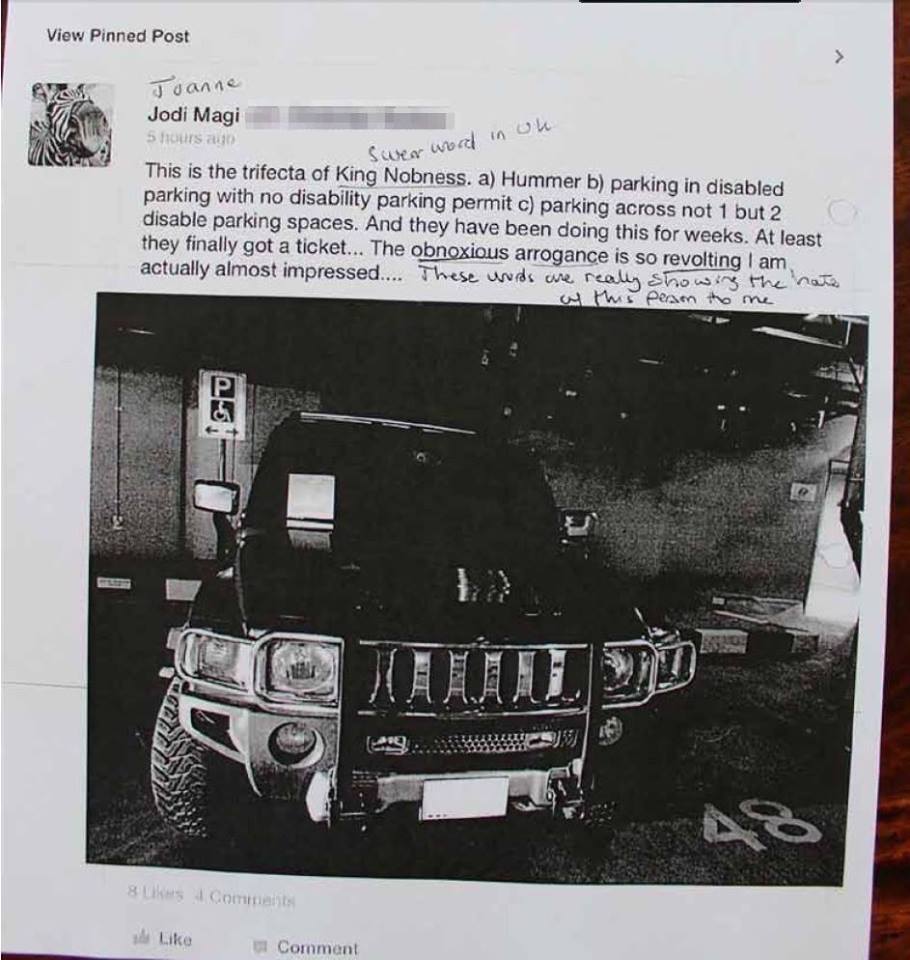
Magi was deported this week from the UAE following intense media coverage. Her argument was that she didn’t know what she’d done wrong in her Facebook post (which you can see below). Her words were considered to be insulting by the complainant, who wasn’t mentioned in the post, and the court agreed with the complainant and, based on the country’s defamation laws (which I’ve written about here), found Magi guilty, fined her, and sentenced her to be deported.

This is the post which got Magi deported. Magi claimed that nobness referred to an Australian term for the elite, rather than the English insult (image source: Facebook)

This is the post which got Magi deported. Magi claimed that nobness referred to an Australian term for the elite, rather than the English insult (image source: Facebook)

While I’m not going to share my views on this (there’s plenty of comments both for and against the issue, but the law is the law), I will share views and thoughts from the rest of the Gulf where double parking is all too common and where the issue is being raised on social media. First up is Bahrain, where there is an Instagram account called Bahrainidiots. Bahrain’s residents are encouraged to share their images of cars which are double-parked for publication on the account’s Instagram feed – for some pictures have a look below.

Similarly, Saudi social media users often share such images, especially on Twitter using the handle #برج_الكلب. Some recent images are below.

https://twitter.com/Dr_MoNassif/status/618500070267355136

https://twitter.com/dr_attar/status/618503839998607361

The most interesting comments about the issue of defamation came from Doha. Speaking to the English-language news site Doha News, criminal attorney and Qatar’s former justice minister Dr. Najeeb Al Nuaimi said it was “highly unlikely” that an expat or Qatari would be arrested for posting a similar picture as Qatar and the UAE differ in their definitions of defamation. To quote:

“In the UAE, this (incident) is seen as ‘you’re showing someone in a bad light’ or that you’re questioning the duty of the police. They didn’t do their job well, and have let this happen, and now you’re posting it and offending them,” he said.

Here, however, the local government would regard sharing such a photo as a “a mark of public service,” he added, continuing:

“We have Qataris posting all over Facebook, Twitter and Instagram (about) things that they don’t like, or wrong things that they see…Here, it’s seen as doing something good.”

One of the publications which wrote about the case, the Abu Dhabi-based English-language daily The National quoted senior Abu Dhabi prosecutor Mohammed Al Dhanhani who explained that Magi was guilty under the 2012 Federal Anti-Information Technology Crimes Law No 5.

“She captured the picture without the consent of the (car’s) owner. She then published the pictures on the web and added insulting phrases.”

Each of these three actions is subject to prosecution under the law, which punishes all violators with a fine and/or jail, and deportation for all expatriates without exceptions, he said.

In an irony not lost on this blogger, while Magi’s state of affairs was playing out The National started its own photo gallery on bad parking in the UAE and posted images on its own website. Based on Al Dhanhani’s own interpretation of the law, is The National also guilty of the same offense under which Magi was sanctioned by capturing pictures without the consent of the car’s owner and then publishing these on the web?

For any lawyers out there, am I right or wrong?

The Gulf’s Communications Sector and the Challenge for Authenticity

Is the communications industry in the Gulf authentic enough?

Is the communications industry in the Gulf authentic enough?

I am, sometimes, allowed to get out by my better half. And this month has been replete with communications events. Two in particular come to mind. The first was an anniversary for a well-known communications consultancy firm which was celebrating a milestone for its UAE-based operations. The second was for a social media network which was talking about the largest advertising period in the region, namely Ramadan.

Both events struck me, but probably for the reasons that the organizers hadn’t intended for. At the first event, for the consultancy anniversary, I’d have expected to have seen a couple of nationals. After all, a number of the company’s clients were government bodies and we were in the capital where the ratio of nationals is much higher than in Dubai. But, unfortunately, there was only one national. Instead, the audience was western, English-speaking and middle-aged.

The second event was just as perplexing. Despite Ramadan being a part of Islam (Ramadan is the Islamic month of fasting), I didn’t see a single Arab or Muslim talk about the event. At both events I was left asking myself, where are the personal insights, where’s the local understanding which I can either learn from or relate to?

In truth, these occasions are a microcosm of the communications and marketing industry in the Gulf region. We’re facing an issue with sustainability – there are far too few nationals and Arabic-language speakers in the industry, especially in high-level positions. To me this essentially means that, as we don’t accurately represent the audience we are trying to communicate with, that we’re not able to do our jobs properly.

I often get asked if I can suggest or recommend good talent, both by agencies and clients. Instead, let me offer a different suggestion. Let’s go straight to the source. Do you know how many young, talented nationals and children of expats who have grown up in the UAE are studying communications? We’re talking about at least 3,000 communications students between institutions such as Zayed University, Canadian University in Dubai, Abu Dhabi University, the American University of Sharjah, the American University of Dubai and Middlesex University. And then there’s the Saudis, the Bahrainis and others in the Gulf.

There’s enough talent out there, particularly Arabic-speaking youth, who want to get into the industry. However, we need to engage with them. The below are just a couple of ideas to get us all engaged on making the communications industry sustainable:

1) Get on campus! There are so many on-site events at universities and both agencies and companies need to step in, to both understand how much talent is out there as well as to educate students on what career opportunities are out there for them, especially for nationals who prefer a government job.

2) Mentor, mentor, mentor – the second option is to engage with students over a longer period. Mentoring allows students to learn from middle to senior-level professionals in the industry and for both to exchange their views. In a time where social media dominates, mentors can also learn a great deal from Arab youth on digital trends.

3) Bring in the interns – the longest-lasting and the most meaningful of the three engagements, an internship will allow students to get on-the-job experience with, hopefully, a view to joining the organization they’re interning with. An internship is the closest thing a student will get to a real-life job and will enable them to complement their in-class learnings with hands-on experience.

Organizations such as the Middle East Public Relations Association are promoting all of the above, in the hope that the industry becomes more representative of the communities in which we live. If we’re hoping to communicate as well as we can to all of the audiences that make up the Gulf, we have to take a different approach to hiring and promoting talent. Bringing in the expat with no local experience or understanding is no longer the right thing to do. We have to be authentic if we are going to be relevant. Are you up to the challenge?
Do you want to know more about social media in the Middle East? Download the TNS ArabSMIS report here

Do you not know where to start when it comes to social media and the Middle East? This report may be your answer (image source: http://blue16media.com)

Do you not know where to start when it comes to social media and the Middle East? This report may be your answer (image source: http://blue16media.com)

We have our fair share of big events in Dubai and this week was no exception. The past two days has seen the Emirate become the place to be for social media influencers. Whilst we found ourselves invaded by all types of beautiful people (and others) waving their selfie sticks and pouting for the camera, there were some handy takeaways for an audience looking to learn more about how to use social media to build brands for themselves, their companies or their countries. Oh, and Twitter has finally decided to open an office in the MENA region, obviously in Dubai.

The most impressive part of the Arab Social Media Influencers Summit was the report. Coming in at a whopping sixty seven pages, the report by research house TNS covers a whole host of areas of social media interest across the MENA region. The study combines both qualitative research with a quantitative survey of more than 7200 users of social media spread evenly
across 18 Arab countries.

If you’re looking to know which channels are used across MENA, then look no further. The report includes stats on LinkedIn, Facebook, Twitter, Instagram, Whatsapp, Google+, and YouTube. It also includes social media usage habits, including time of use, duration of use and devices used. Most importantly, the report looks into attitudes about social media across the region and what people are doing online.

If you’re doing anything online in the MENA region, download this report and start dissecting. You can thank me later, on social media.

The ASMIS Social Media MENA Report

Learning about a local community – Humans of Bahrain

We’re bombarded by adverts on a daily basis, and unfortunately it seems that social media may be going the same way. What with all of the selfies, the food pictures and the holiday snaps it could be argued that there’s little in the way of meaningful insights into wider social communities. However, every now and then you come across a gem that’s worth shouting about.

My wife was the person who first told me about this one Instagram account. Humans of Bahrain aims to tell the story of people living in Bahrain, both local and expatriate. It’s an account that is frank and candid, and shares a personal view of each and every one of the people being profiled by the account (it’s similar to sites found in the US and Asia which profile local communities).

Each picture on the account includes a story told in text below the image, both in English and Arabic. Subjects covered include education, marriage, careers and employment, and good old-fashioned feelings and emotions.

So far, the account has posted 169 images and it has just over three and a half thousand followers. If you’re looking to learn more about culture and the people that make up Bahrain, this is an amazing site to follow. I wish more people would focus on what is around them to tell the story of their community and their home rather than simply themselves.

Educating the Gulf on our humanity through social video – examples from Bahrain, Saudi and the UAE

Here in the Gulf region we’re increasingly seeing the use of online video content, particularly to tackle issues that are both social and controversial. This week there have been media stories on three examples from three different countries.

The first video has been produced by the Saudi Human Rights Commission to Saudi nationals to be kinder to their domestic workers, most of whom have to leave behind a family of their own to earn a living and support them. The video is well shot, and aims to give humanity back to domestic workers, especially those from South East Asia, through concepts such as motherhood.

The second is from Bahrain, but shot by one social media influencer called Yousef Al Madani. The clip focuses on the treatment of white-collar workers in Bahrain, most of whom come from the Asian subcontinent. Yousef looks to take the place of one of these workers at a local grocery store, where they often have to rush out to take orders from customers who sit in their cars and wait for the items to be brought to them. The clip, which has been talked about in the media, has been viewed over half a million times. This video is dubbed into English as well.

The third and final clip is from a corporate, Cola Cola to be exact. To quote the National:

An online advertising campaign by Coca-Cola showing the company handing out excess baggage tags at the airport to travellers has been viewed almost one million times on YouTube.

The clip “Coca-Cola –Taking Home Happiness” begins by showing passengers checking in at Dubai International Airport to head off to various destinations to see family. By Thursday, the video had generated more than 987,000 hits since it was uploaded a month ago. According to the website for Campaign Middle East magazine, Coco-Cola shot the video on December 22 with the cooperation of the airport.

The campaign – which is available only in the UAE and Oman – is expected to expand with additional prizes like flight vouchers, TVs and mobile phones, the company said. The video follows a similar online campaign last year which showed labour camps with Coca-Cola phone booths, into which bottle tops rather than coins could be fed to pay for international calls.

The video, which is probably the best shot out of the three (this is Coca Cola after all), is also dubbed.

What are your thoughts on the above? Are these videos effective? Would they have been more effective on television as well, or less effective? And is one more effective than the other, possibly due to its topic, its producer, its intent as well as its authenticity? Do let me know your thoughts.

Inauspicious Beginnings or PR Coup: Al Waleed’s Al-Arab TV station and how it was shut down on its opening day by Bahrain

Al Waleed’s Al-Arab is now known worldwide thanks to Bahrain’s closure of its operations on its first day of broadcasting (image source: http://www.bbc.com)

Have you heard of the saying, ‘There is no such thing as bad publicity’? If you’re a communications professional at BP or you work for Bill Cosby you may feel differently, but the quote, often attributed to the American self-publicist PT Barnum, still rings true in terms of brand awareness and familiarity.

One man who doesn’t lack for publicity is the Saudi Prince Al Waleed Bin Talal Al Saud. Al Waleed, who has long had an interest in the media (he owns stakes in News Corp, Fox and Saudi Research and Publishing Group), set out his own media vision for the region a couple of years back when he announced his intention to set up his own news channel. Named Al-Arab, the channel would compete with the likes of Al-Jazeera and MBC Al-Arabiya to shape the news agenda.

After years of planning, the channel went live this week. Al-Arab is based in Bahrain, ostensibly to allow the channel to benefit from Bahrain’s relative media freedoms and, as the channel’s general manager and Saudi journalist Jamal Khashoggi put it, to cover “all views” in the region.

On its first day of operations the channel was temporarily suspended by Bahrain’s information ministry. Akhbar al-Khaleej, a pro-government paper, reported that the suspension was due to the channel “not adhering to the norms prevalent in Gulf countries”.

The allegation is that Bahrain’s government took offense to an interview aired with Bahraini opposition activist and politician Khalil al-Marzooq, who was talking about Manama’s decision at the weekend to revoke the citizenship of 72 Bahrainis.

The closure has made headlines worldwide, and has guaranteed headlines for Al-Arab in capitals such as Washington, London, Paris and Berlin. While the closure may have been an operational nightmare, for a publicist it has been a coup. As Oscar Wilde put it, the only thing worse than being talked about is not being talked about. By this measure Al Waleed should be delighted with the launch of his television channel.

The stunt may have also have helped to cement Al-Arab’s position as a channel that will tackle any and all subjects. Before the channel’s launch, Khashoggi stated the need to be both bold in terms of talking about taboos as well as the need to discuss issues from a balanced perspective. “We are going to be neutral; we are not going to take sides,” he said. “We are going to bring in all sides in any conflict because right now we have a conflict in almost every Arab country.”

By setting down this marker from day one, will Al-Arab be able to set itself apart from other channels in the region which do have particular media biases. Will Al-Arab create a middle ground that wins over Arab audiences?

According to Al-Arab’s Twitter feed the station will be operational again soon. I for one can’t wait to watch its re-launch.

And if you want to see the alleged reason for why Al-Arab was shut down watch the clip below.

Social Media trends for 2015 – Instagram hacking

We’re only a few days into 2015 and yet we’ve already seen one trend that is likely to become a major issue in the Middle East. Over the past two weeks a number of Instagram accounts of celebrities and well-known figures have been hacked. The first to be targeted, at the end of 2014, was the Lebanese singer Nancy Ajram.

Nancy Ajram’s account was hacked at the end of December

Ajram was only the first of a spate of hackings. Only this week the Crown Prince of Dubai, Sheikh Hamdan Bin Mohamed’s Instagram account was broken into by a hacker called @MRJL6H, who posted a number of images with text which can be translated as ‘we do not claim to be intelligent, but seek to destroy those who themselves claim to be intelligent.

Sheikh Hamdan Bin Mohamed's instagram account was hacked for only a short period but the hacker posted a number of images

Sheikh Hamdan Bin Mohamed’s instagram account was hacked for only a short period but the hacker posted a number of images

The hacker @MRJL6H posted several images highlighting his/her views on Sheikh Hamdan's Instagram account

The hacker @MRJL6H posted several images highlighting his/her views on Sheikh Hamdan’s Instagram account

Yesterday, a Bahrain-based actress and model Shaila Sabt was hacked in a similar manner to that above by @2h2, using presumably the same techniques used to hack into Sheikh Hamdan’s and Nancy Ajram’s accounts.

Bahrain-based actress Shaila Sabt had her Instagram account hacked by @2h2 in what seems to be a copycat of the hack on Sheikh Hamdan's account

Bahrain-based actress Shaila Sabt had her Instagram account hacked by @2h2 in what seems to be a copycat of the hack on Sheikh Hamdan’s account

There seems to be no reason to attack these Instagram celebrities, besides from the number of their followers. However, the compromising of these accounts is a reminder to everyone online to be aware of their security and initiate two step authentication where possible. If you’d like to know more about two step authentication read Google’s advice here.

My own feeling is that this trend will only grow during 2015. We’ve been fortunate to avoid hacking incidents, despite the popularity of social media in the Gulf. That may change over the coming 12 months, and we may see many more social media celebrities being hacked, either for fun or to spread a particular political or social message.

#ChallengeBahrain, an island in gridlock and a social media backlash

If you were planning to enjoy a quiet weekend in Bahrain this weekend, you’ll have been disappointed. Most likely, you’ll have also spent your Saturday stuck in traffic. The island kingdom was host to Challenge Bahrain, a professional triathlon with a $500,000 prize purse. Most importantly, for the smallest country in the Gulf (which measures a whopping 765.3 km²), the Challenge Bahrain triathlon covered a total of 113 kilometers.

The size of the triathlon meant that many of the roads around Bahrain were closed for most of Saturday, including the island’s key highways such as King Faisal Highway, and Sheikh Isa Bin Salman Causeway. Unfortunately, most of Bahrain’s residents seemed to be unaware that there was 1) a race, and 2) that the race would mean traffic chaos during the weekend.

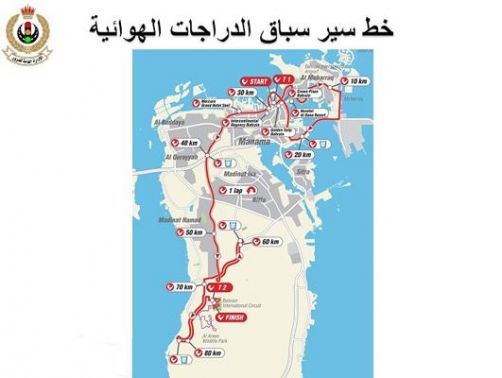
To give you an idea of how much the race affected the island, this is a map of the race's path across Bahrain

To give you an idea of how much the race affected the island, this is a map of the race’s path across Bahrain

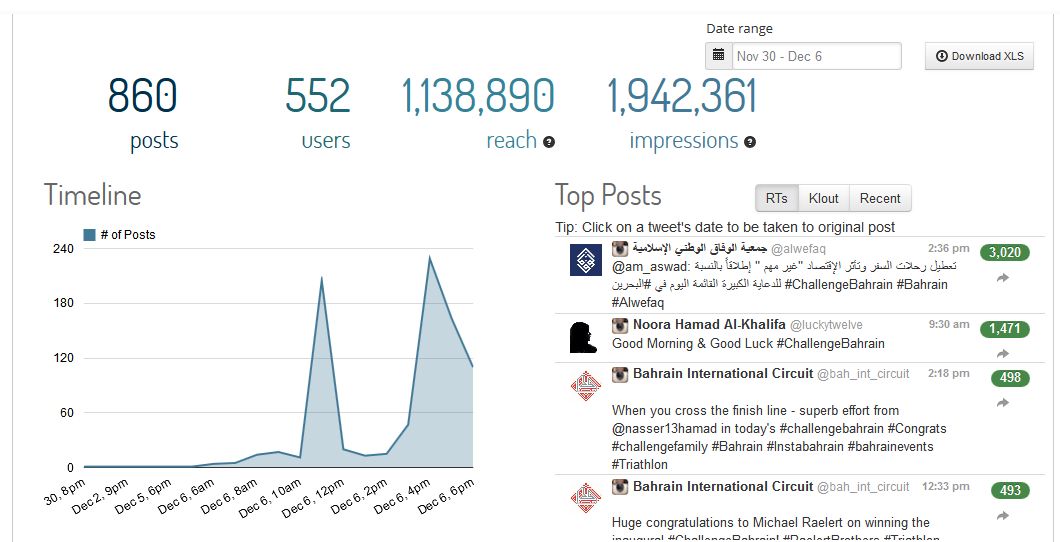
The ensuing disruption to traffic meant that most people decided to stay at home. Instead, they vented their annoyance online, on social media. To give you an idea of how popular the topic became, have a look at the below analysis from Keyhole, and remember that the total population of Bahrain is just over 1.3 million people.

An analysis of the #ChallengeBahrain hashtag by Keyhole

An analysis of the #ChallengeBahrain hashtag by Keyhole

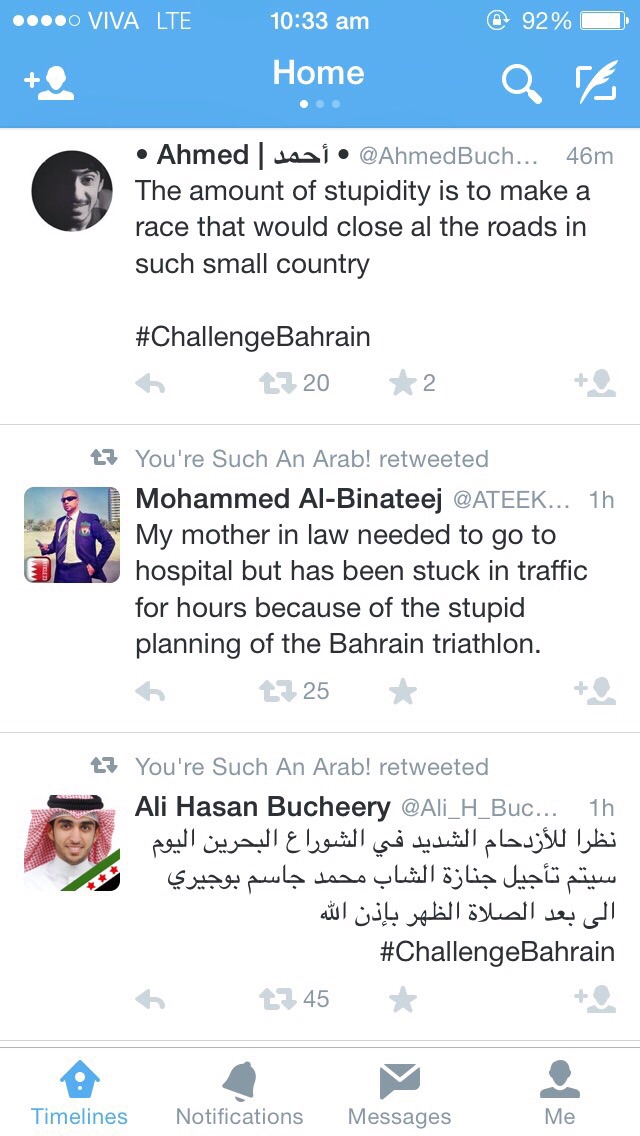
Tweeting and messaging with the hashtags #ChallengeBahrain and #ترايثلون_البحرين Bahrainis showed their feelings about the race and its planning. They let the race organizers know of their displeasure.

A small selection of the Twitter posts using the hashtag #ChallengeBahrain

A small selection of the Twitter posts using the hashtag #ChallengeBahrain

More tweets from yesterday's #ChallengeBahrain

More tweets from yesterday’s #ChallengeBahrain

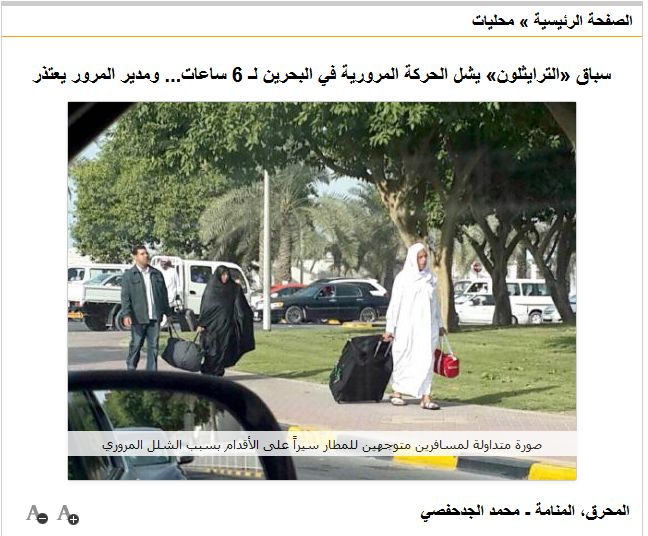
For those heading to the airport it was even worse. As many of the roads to Bahrain International Airport were closed people had to walk for kilometers just to make it to the terminal.

Images of the traffic from Al-Deir and Samaheej near to the Bahrain International Airport. People had to walk for miles to reach the terminal building.

Images of the traffic from Al-Deir and Samaheej near to the Bahrain International Airport. People had to walk for miles to reach the terminal building.

Unfortunately, Bahrain’s Gulf Air was one of the sponsors. Forty two flights were delayed due to transportation in and around the Airport; hardly the type of brand association any airline would need.

The traffic was so bad that even Bahrain’s chief traffic cop had to apologize publicly for the mess.

Bahrain's top traffic cop apologizes for the gridlock during #ChallengeBahrain

Bahrain’s top traffic cop apologizes for the gridlock during #ChallengeBahrain

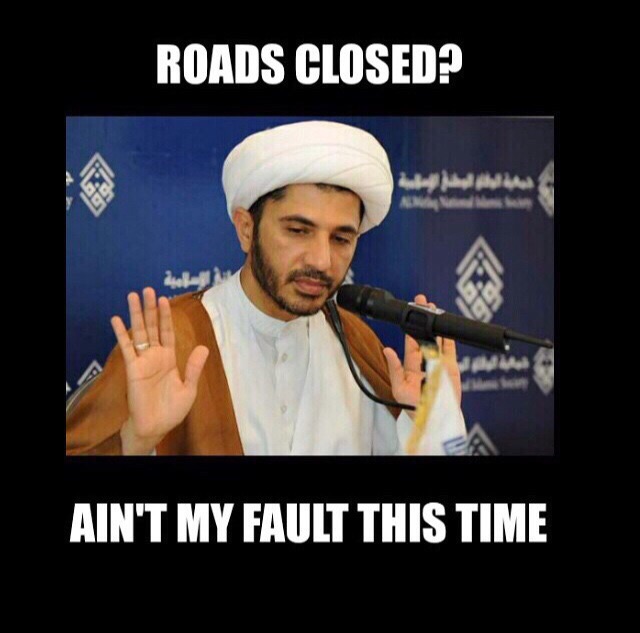
Some Bahrainis did see the funny side. Many created and shared memes, particularly on dark social sites such as Whatsapp, hinting at how successful the event had been in shutting down Bahrain, a feat which even Bahrain’s main political opposition couldn’t achieve.

A meme of AlWefaq's leader and #ChallengeBahrain

A meme of AlWefaq’s leader and #ChallengeBahrain

While the event came to a close on the same day, many of the organizers are looking ahead to 2015 and the second edition of Challenge Bahrain. For most Bahrainis, their hope is that someone will be listening to their social media and that whatever happens next year will not impact the island on the scale as they saw yesterday. If it takes several months to get in shape for a triathlon, I can’t wait to see what the island’s residents have in store for next year’s gridlock as they prepare over the next 12 months for Challenge Bahrain 2015.