Unknown's avatar

About alexofarabia

I'm am obsessive compulsive communicator who has lived in the Gulf for almost a decade. Enjoying the challenge of working in a region where you've got to be innovative, patient and determined to make things happen. Miss being a full-time journalist! Miss family even more! Sometimes I mouth off, but more often I grit my teeth and try to encourage change through a smile (not as easy as you think). Despite now living in Dubai Bahrain is home for me.

My first test drive – getting to grips with the family-oriented Chevrolet Traverse

As a new daddy, I’ve had to change my way of thinking. Now that I am responsible for a little one, I’ve been asked to rethink my ride. My workhorse car, a British-brand SUV, has served me well for over seven years. While it has traveled almost 280,000 kilometers (don’t ask) and has been dealer-serviced, my wife’s concern when it comes to my car (which I’ve worked hard over all of these years), boils down to the ‘what ifs’: what if the car breaks down with the little one in the back seat? What if the air conditioning stops working? What if a tire blows out?

With these things in mind, I started looking at cars in the market to get a better idea of what I should be buying. I wanted a car that would be safe for my daughter but still have lots of gadgets for me to play with. A good friend pointed me in the direction of General Motors and their Chevrolet brand. He also urged me to check out the Traverse and take it for a test drive. So I did just that.

No, this isn't me parking in Jebel Ali. But the Traverse handled itself well when I had to go off the tarmac

No, this isn’t me parking in Jebel Ali. But the Traverse handled itself well when I had to go off the tarmac

Right, let’s start with first impressions. I have a small yet sturdy SUV, but the Traverse’s roomy, spacious interior immediately blew me away. We had no issues fitting in the pram along with what felt like an endless array of grocery bags. In addition, we still had space left over for even more shopping bags, which is no mean feat if you know my wife. The space in the back was comfortable for both my daughter and wife, and because of all of the extra legroom they had –compared to my current car – I didn’t need to push my chair forward. When you’re six feet tall and you drive quite often, it’s good to not have to be cramped.

The Traverse has oodles of room in the back. The pram fitted in easily alongside all of the weekly shopping

The Traverse has oodles of room in the back. The pram fitted in easily alongside all of the weekly shopping

There were also many options at the back for anyone who sat there to play with, including rear seat entertainment systems, USB ports to charge smartphones, AUV jacks, and air conditioning controls (the air conditioning circulated well throughout the car, including at the back). My current car is so old that many of these functions are only available to me, so it’s nice to not be asked to change the A/C settings every couple of minutes. Instead, I could actually focus on the road (sorry darling). Our ISOfix car seat was also super easy to fit into the backseat, and the hooks for the ISOfix were simple to locate underneath the seat covers.

Now, let’s talk about daddy’s personal experience. As a ride, the Traverse was easy to handle; the car didn’t feel heavy or weighed down, especially when going into corners. I’d have liked a bit more oomph from the engine, but as a new daddy, I have to accept the fact that driving fast is no longer for me. There were also many additional features designed to offer driving support, some of which I loved. The alerts, including side blind zone and forward collision alerts were very helpful when trying to avoid unnecessary bumps while out and about (and parking, I will admit). What I loved even more was the lane departure warning system. I live in Abu Dhabi and I work in Dubai, so I have two long drives every day. That lane departure warning system helped me focus whilst on the road, making me a safer driver both for myself as well as others around me.

The Traverse's panel display was crisp and easy to use. The GPS handled Dubai's road network with ease.

The Traverse’s panel display was crisp and easy to use. The GPS handled Dubai’s road network with ease

And now for the gadgets! There’s so much to talk about here, including the obvious USB docking stations for my smartphone (the car is also Bluetooth-enabled) as well as a fully equipped central panel which included everything from a comprehensive GPS navigation system map – to help me get from point A to point B using the shortest and quietest route – to a host of radio and video options for both me and the passengers in the back.

Another great feature was the central panel, which is built into the wheel itself. I could control pretty much all of the tech stuff from the steering wheel, including the usual suspects such as the radio and audio functions as well as my actual phone (using voice commands, which I found to be very handy). This is a system called Chevrolet MyLink and is basically a touch-screen display that gives you easy access to all sorts of things (navigation, entertainment, phone apps, and even your contact list). I had everything at my fingertips, literally.
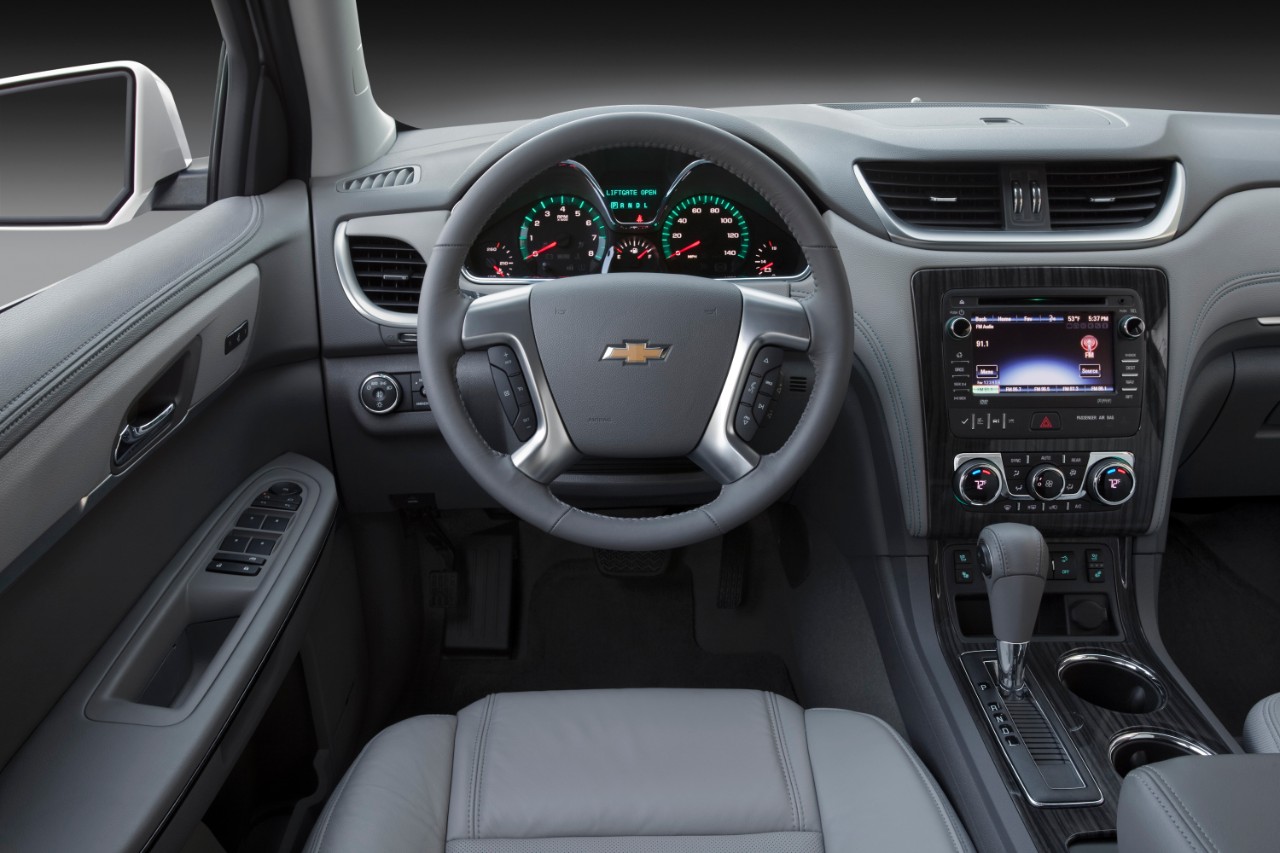
I enjoyed all of the tech in the Traverse and how its layout was convenient for me as a driver

I enjoyed all of the tech in the Traverse and how its layout was convenient for me as a driver

When I was driving to work by myself, I got to listen to some music via the Bose surround sound system. Let me tell you, the sound was crisp, loud, and very clear. This also made phone calls a joy (hands-free of course).

To round it off, I’ll admit that, prior to this experience, I had never thought of the Chevrolet Traverse as a viable option. Having stepped into the car and sat behind the wheel on my own as well as with the family, I have to say, I’m impressed. The car comes with a host of options to keep everyone in the family happy all the while offering a safe and smooth ride (thanks to side airbags and the industry’s first front center side air bag). And that to me is the most important factor to consider when choosing my next car.

As for the price? The car I was driving, a Traverse LT AWD, starts from 125,764 AED. Needless to say, it’s well worth your while.
McDonalds Saudi and the Saudi national who was arrested – a lesson in virality and crisis comms

Last week Saudi’s social media space was alive with chatter and calls for a boycott. But this wasn’t for a global cause, a political issue, or a case of consumer activism. It wasn’t even about the color of a dress or the shenanigans of a Kardashian. Instead, it was about a Saudi national who tweeted a complaint about the drink he’d been served at a McDonalds restaurant and the rapidly escalating series of events which got him put in jail.

I’m going to try to keep this story as simple as possible for factual reasons.

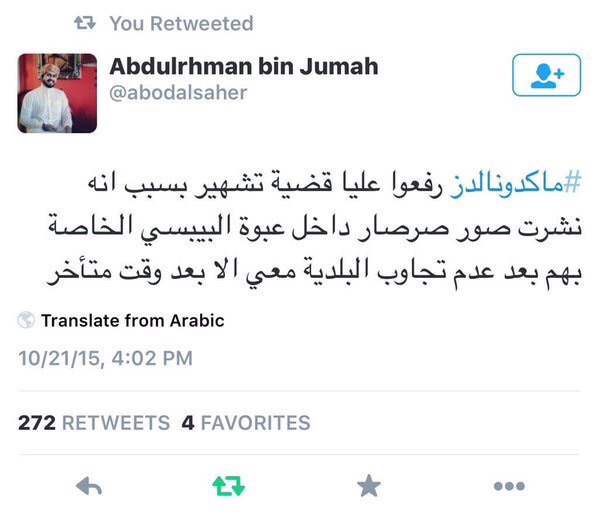
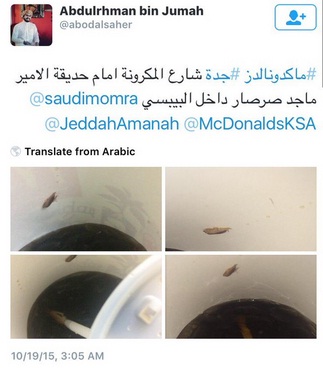
A young Saudi national Abdulrahman bin Jumah was at a McDonalds outlet in Jeddah on the 19th of October and ordered a meal, which included a coke. Inside the cup, he claimed he found a cockroach. He then shared the image on social media to his followers (which I assume would have been less than the 3,216 followers he has now). As Abdulrahman deleted his Tweets, here’s an alleged image from another Saudi Twitter account who retweeted the Tweet.

This was the initial tweet from Abdulrahman on the 19th of October with the alleged cockroach in the cup

This was the initial tweet from Abdulrahman on the 19th of October with the alleged cockroach in the cup

Abdulrahman tweeted his experience and contacted the local municipality online at their Twitter account @JeddahAmanah. The municipality took swift action and closed the branch in question the day after on the 20th.

Simple enough? You’d think so (and restaurant closures are a fairly common occurrence in Saudi as you can see from this tweet announcing the closure of a KFC outlet in Jeddah. I cannot comment as to whether a restaurant closure would be common for McDonalds Saudi).

After a day however (I’m assuming here the 21st), the branch reopened and Abdulrahman tweeted his thoughts on the issue, namely that he was surprised that the branch could open so soon, and that he wasn’t looking for compensation but rather an apology for the experience. Again, these are screen shots as the original tweets were deleted.

Abdulrahman tweeted his surprise at how the restaurant could have opened so soon after its closure for an alleged health violation

Abdulrahman tweeted his surprise at how the restaurant could have opened so soon after its closure for an alleged health violation

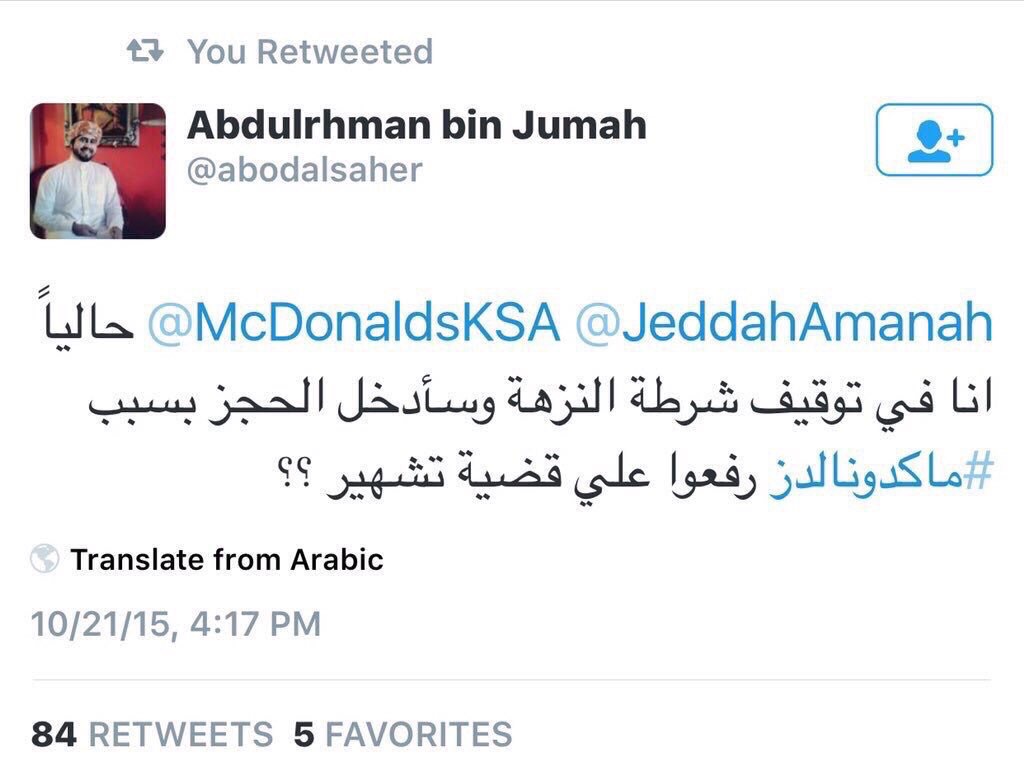
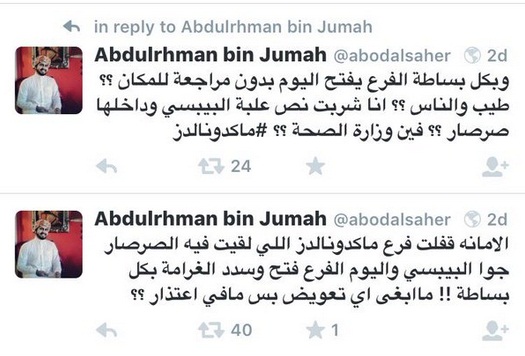
Now this is where it gets murky as later on in the day Abdulrahman was accused of defamation by McDonalds Saudi Arabia. He tweeted his experiences as he was first accused of defamation…

Abdulrahman shared on Twitter the news that McDonalds had made an allegation of defamation against him. Defamation is a criminal offense in Saudi Arabia

Abdulrahman shared on Twitter the news that McDonalds Saudi had made an allegation of defamation against him. Defamation is a criminal offense in Saudi Arabia

And then arrested by the police. Defamation is a criminal rather than a civil offense in Saudi Arabia. After the below tweet Abdulrahman’s timeline supposedly goes quiet.

The Saudi at the center of the allegation was even tweeting as he was being held by police for defamation

The Saudi at the center of the allegation was even tweeting as he was being held by police for defamation

On the 22nd Abdulrahman tweeted an apology, four times, writing that the bug was not in the cup and that he was sorry for using social media when making the allegations against McDonalds Saudi. The second time he used two hashtags, McDonalds arrests the national and we are all Abdulrahman Jumah (ماكدونالدز_تعاقب_مواطن #كلنا_عبدالرحمن_جمعه#)

https://twitter.com/abodalsaher/status/657194881635495936

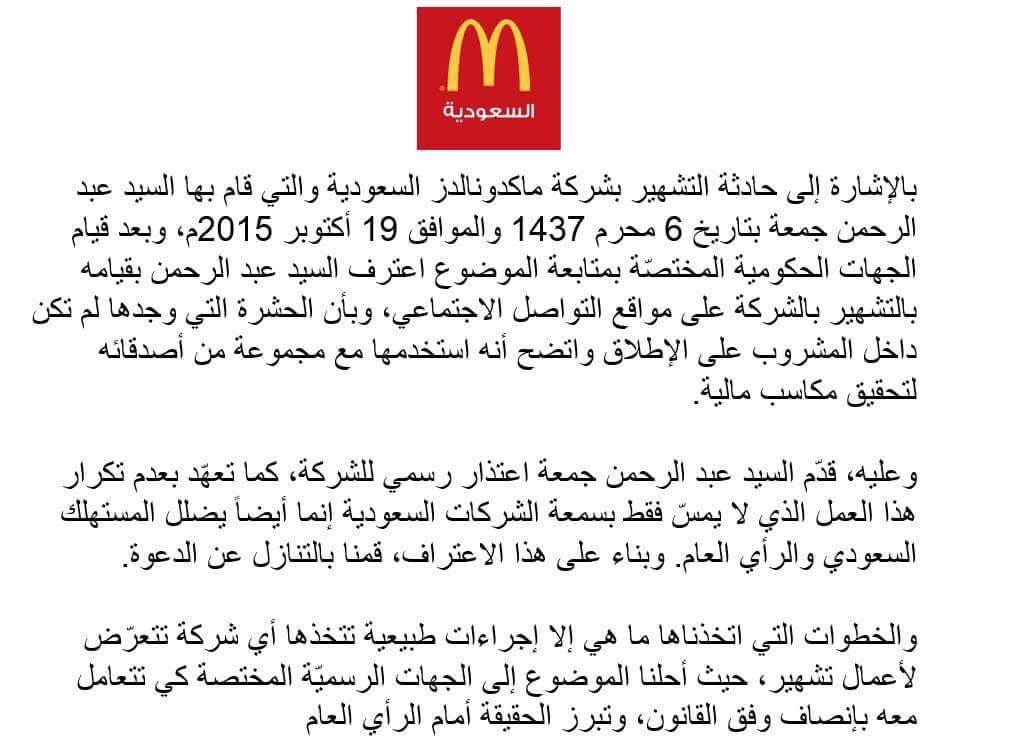
McDonalds Saudi also put out a statement online in response to many in Saudi who have come out to ask about the allegations or who have supported Abdulrahman stating that the case was caused by an intention to gain financially from the allegation that he’d made and that, following the apology, McDonalds Saudi had dropped the case.

McDonalds issued a statement

McDonalds issued a statement that the allegation was false and the case is now closed

Abdulrahman deleted all of the story’s tweets, except those in which he makes an apology.

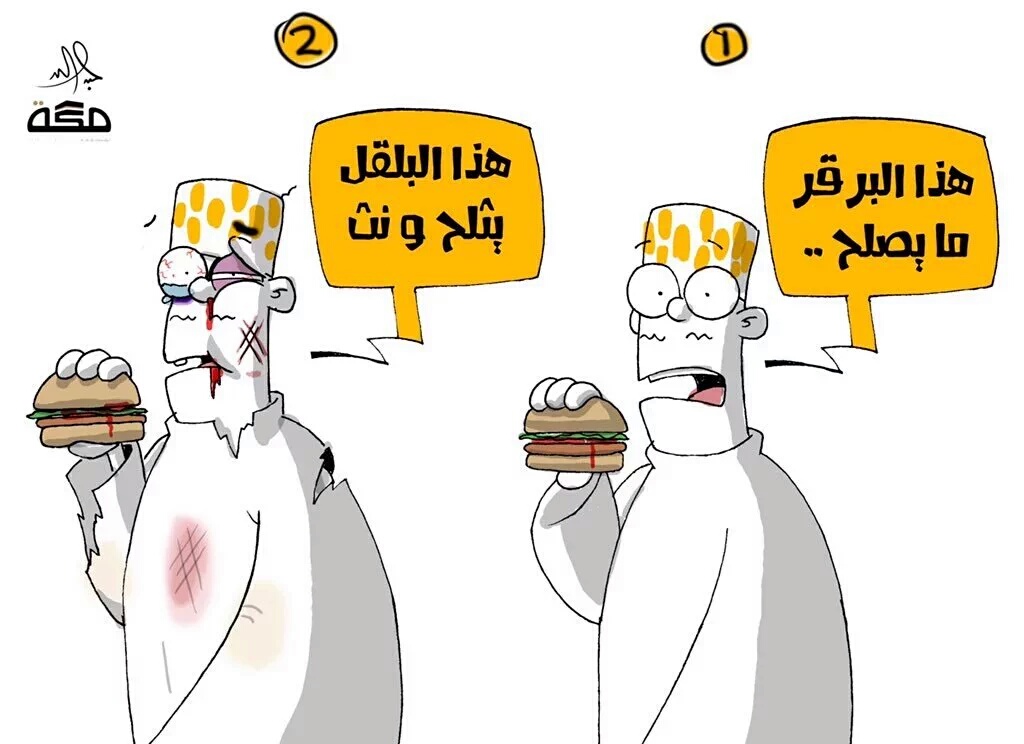
Without knowing the facts in the case, it’s hard to know what really happened. Did Abdulrahman really find a cockroach in his drink or was it a case of extortion? However, Saudis on Twitter have not been kind to McDonalds Saudi and their involvement of the police. The hashtags used by Jumah are replete with angry responses to McDonalds Saudi. The case has also made the national media, albeit indirectly.

Makkah Daily's Abdullah Bin Jaber parodied the story in typical fashion by lampooning McDonalds for their actions

Makkah Daily’s Abdullah Bin Jaber parodied the story in typical fashion by lampooning McDonalds Saudi for their actions

McDonalds Saudi certainly acted quickly in terms of responding to the crisis, but did they respond in the right way? Has the issue done more damage than it otherwise would have thanks to the actions of McDonalds Saudi, or were they right in involving the police when they did due to their belief that they were being blackmailed?

What are your thoughts? What lessons can we take from this case? I’d love to hear from you.

PS Saudi social media personality Omar Hussein has also talked about the issue. For you Arabic-language speakers out there you can see his Facebook video below.

The Gulf’s push to improve its image – why actions speak louder than words

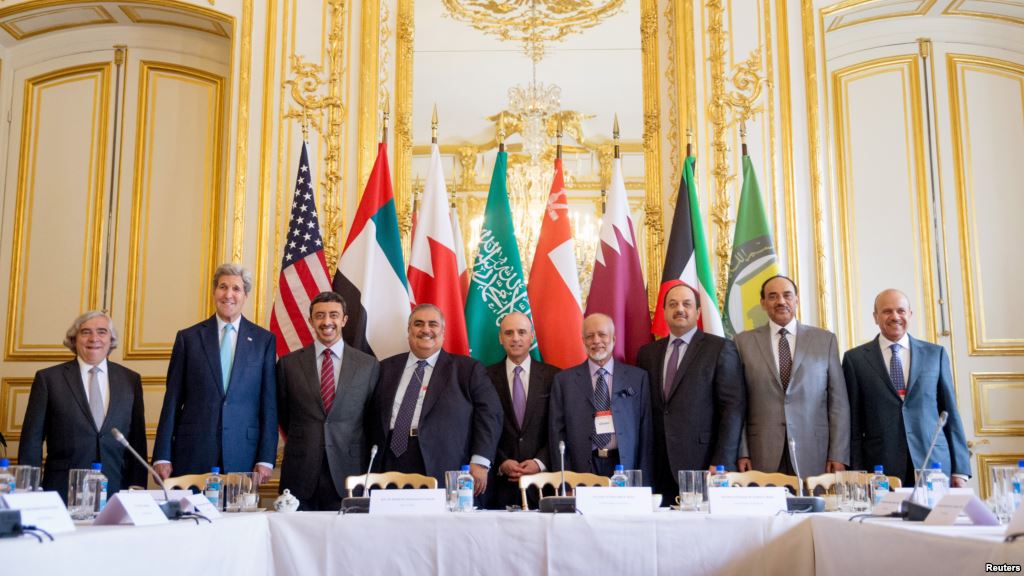
The Gulf's foreign ministers have worked hard to change perceptions of the region abroad. But is there a simpler solution?

The Gulf’s foreign ministers have worked hard to change perceptions of the region abroad. But is there a simpler solution?

I love a good read, especially fiction. But when living in the Gulf, fact can often feel more surreal than fiction. Last week the UAE’s English language daily Gulf News reported on efforts by the six-member Gulf Cooperation Council to improve its image abroad, most notably in Europe and the US. To quote from the newspaper:

Foreign media officials in the Gulf Cooperation Council (GCC) have stressed the need to formulate a common media strategy that will reflect the positive image of the six member countries abroad.

The officials, who were holding a meeting in the Qatari capital Doha, reviewed plans and suggestions for future actions in their communication drive with the international community.

The GCC, established in 1981, comprises Bahrain, Kuwait, Oman, Qatar, Saudi Arabia and the United Arab Emirates.

“The participants discussed several issues related to the progress of their work, including a common strategy to rectify the distorted image that some Western media have about the countries in the region,” Ahmad Al Buainain, the head of the foreign media department at Qatar News Agency (QNA) said.

“The meeting also discussed several papers and new ideas regarding the way forward for the GCC foreign media in European and Asian countries in order to convey the realities on the ground, he said, quoted by QNA.

Plans include holding seminars and meetings with research centres or organizing events at international functions in Europe and in which the GCC countries are participating, he added.

“This new drive is a continuation of the activities conducted by the foreign media officials at past events,” he said.

Ahmed Mussa Al Dhabyan, the head of media cooperation at the GCC Secretariat General, said that the GCC foreign media officials sought to build on their successful experience and formulate a new strategy that matched the latest developments in the communication field.

“The world has gone beyond the global village concept and has now become a single house,” he said. “The GCC has a significant political and economic weight and it has a special standing internationally, and therefore it needs to have a foreign media presence that matches its stature,” he said.

Earlier this month, reports surfaced from Washington D.C. that Saudi was hiring a variety of lobbying groups to bolster its public image in the US. Clearly, the Gulf cares about its reputation abroad, especially when the region’s governments see what they feel to be negative coverage.

On his Facebook account, political commentator (and Sharjah royal family member) Sultan Al-Qassemi gave his take on the article in the Gulf news with a list of suggestions to improve the Gulf’s image abroad.

1- Release activists.
2- Suspend capital punishment.
3- Allow political participation.
4- Eliminate Kafeel (sponsorship) system
5- Expand women’s rights.
6- Enact environmental protection.
7- Broaden citizen’s rights.
8- Bolster freedom of expression (yes within “limits”)

I’d make it even simpler. As any good and ethical public relations practitioner will tell you, your actions speak louder than your words. If the region is serious about tackling any negative perceptions or reputation issues abroad, then behaviour which is contradictory to accepted human norms in regions outside of the Gulf (read the West) must be tackled, and free(r) access should be given to the media. With social media and the internet, it is so much harder to hide anything or to spin information or events. Take for example the leaking of documents from Saudi’s Foreign Ministry recently.

The best way to been seen in a positive light is not more seminars or meetings in European capitals with research centers. Instead, one must behave in a positive light, followed by encouraging the media, both local and international, to report without bias.

While I’ve been in this region long enough to know better, I am still an optimist at heart. And I still believe we are capable of change for the better, as this region is magical in so many ways. However, a word of note. If my face turns shades of blue or purple, do please remind me to breathe.

The Real #EtisalatChallenge – Where are the eGlobe Cards?

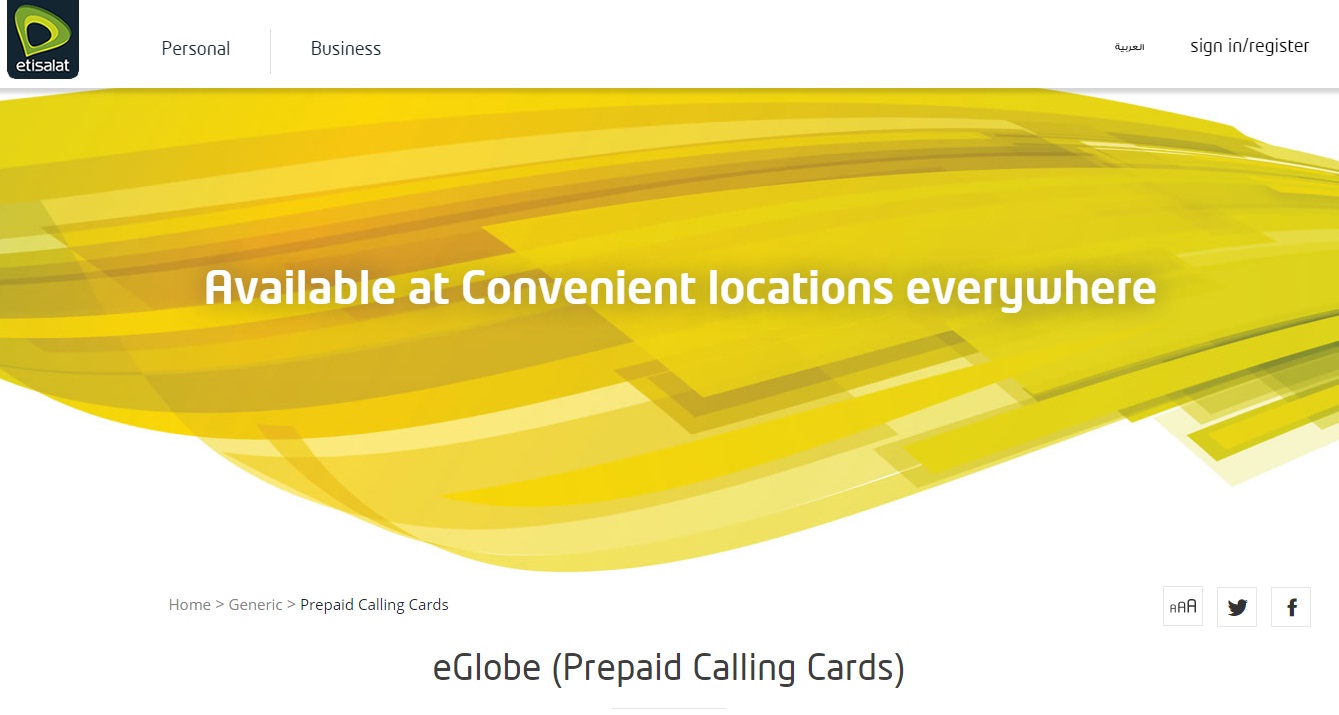
Do you know about the eGlobe card and where to find it? Is this the real #EtisalatChallenge?

Do you know about the eGlobe card and where to find it? Is this the real #EtisalatChallenge?

It’s Gitex week, and its technology time. For those of you who don’t know Gitex, imagine tens of thousands of people talking about hardware, software and all things geeky. But I digress.

We’ve had our little bundle of joy and we’ve been lucky enough to have another addition to the family this month. To help her feel at home, we wanted to buy phone cards so that she could use the landline and she’d know how much she’d spend each time she’d call home (why not a mobile you ask? Well, landlines offer better voice quality, more stable connections and are usually cheaper).

After a little bit of research and a lot of shop visits, we realized that the VoIP calling cards which were being advertised at the start of the year by the two phone companies Etisalat and Du, Five and Hello! respectively, were no longer on sale (though you’d be hard pressed to find an announcement in the media).

Instead, Etisalat, the UAE’s largest phone company, was offering on its website a solution called eGlobe. To quote:

Use your prepaid, disposable Calling Cards for services such as recharging and renewing your Landline Prepaid (Maysour) account, Home Country Direct calls, Prepaid Internet, eVision pay-per-view, Hotspots, and more, in addition to national and international calls from any phone.

All well and good. But where can one buy them?

Buy Prepaid Calling Cards at
• Your nearest Etisalat Business / Service Centres
• Supermarkets, grocery and convenience stores, other outlets

So off I went. To the first store, where the response was, “What?” Ok, it’s a small store. Maybe they’ll have the cards at the local Co-op here in Abu Dhabi. “No, sir. We only have mobile recharge cards.” And then, after calling up the help line and getting no where, I marched off to the Etisalat shop, where, after ten minutes, I finally spoke to someone who knew about the eGlobe cards. “We have them with a chain called Fatima Stores…” So, off I went to the Fatima Store behind Dana hotel in downtown Abu Dhabi.

After walking around for a while, I finally found the shop. And what happened? “No, I’ve never heard of eGlobe cards.”

As the Thursday afternoon and evening passed me by and having driven, walked and talked in circles all of the afternoon and the evening, it dawned on me. What I had written about a couple of months back was a hoax. You launch a product on your website, and yet you tell none of your staff about it or sell it through your traditional distribution channels. It’s almost like one of those impossible game shows where the odds are rigged forever against you. The eGlobe card is the original, the true Etisalat Challenge.

Are you up to the task of finding the eGlobe card?

Me, my wife and our baby – a personal story of how the Gulf is letting down its women by denying their children the right to nationality


The children of Gulf women married to foreigners are not automatically granted nationality, unlike their male counterparts (image source http://www.flight965.com)

 
I promised I’d write on my experiences as a father and I’m having to start things off on a serious note. As some of you may know, my wife is from this region but I am not. We welcomed into our lives a little princess earlier this year.

The sad story is that in the Gulf region children born to Gulf women, in other words women with a nationality from the six GCC states, who are married to foreign men do not receive their mother’s nationality. This is in contrast to Gulf men who are married to foreign women. Their children do receive their father’s nationality.

It’s important to us that our little one cherishes both her cultures and that she’s recognized as both. She’s fortunate to have a European nationality through me, but, try as we might with visits to interior ministry offices and other government bodies, we realized that there is no formal process for our daughter to become a Gulf national like her mother. This is the same all over the Gulf, despite sporadic exemptions to the contrary.

I’ve heard countless reasons for this, such as the need for Gulf women to marry Gulf men, and the legal requirement that a Gulf national should have only one passport. To me, any discussion is bogus. If I was a Gulf male and my wife was a European foreigner our daughter would have qualified automatically for both nationalities.

I hear lots of news about progress being made it terms of women’s rights in the Gulf, which I applaud. However, until Gulf women are able to give their children everything that their male counterparts can, I cannot contend that women here are anywhere near to being equal to the men.

I hope for change, if not for my wife’s generation, then at least for my daughters. I hope you will join me in calling for a change to how Gulf women and their children are treated in the Gulf.

A look into how online behaviour is changing in Saudi from The Online Project

For many of us in communications in the Middle East, it’s hard to remember a time before social media (I still fondly remember receiving floppy disks with press releases, back in 2006). Social media agency agency The Online Project has dipped its toes into the Kingdom’s digital world to look at how social media behaviours are changing.

The agency, which undertook a similar exercise two years ago, went back to revisit some of its findings from 2013. The report, named Reintroducing Social Saudis, is an incredibly insightful look into what Saudis are doing online. Please do download the report and read it in full (it’s 18 pages in length).

Some of the findings include:

    1. Facebook remained the largest social platform in terms of number of users. However, Twitter growth surpassed Facebook by 25% in the past two years.
    2. Saudi preferences towards social entertainment have been changed through emerging platforms like Instagram and Snapchat.
    3. Online video has become a key channel for consuming content on all platforms, especially Facebook and Instagram.
    4. Comedy TV shows and sports are the most popular categories of online watched videos.
    5.While YouTube remained the main video sharing website Facebook and Instagram’s video growth has shifted the online video scene towards more exposure. Video content is no longer a YouTube exclusive.
    6. Hashtags usage on Instagram is just as popular on Twitter. Most used hashtags on Instagram shows how the platform is gradually turning into a female community.

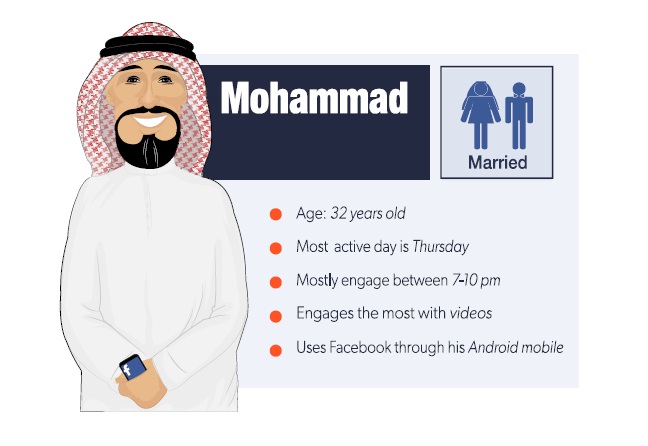
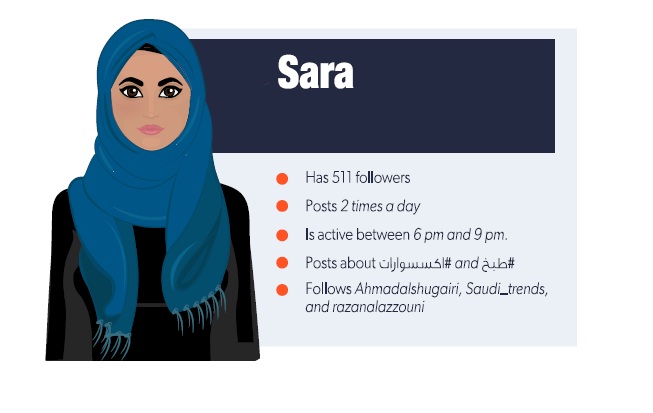
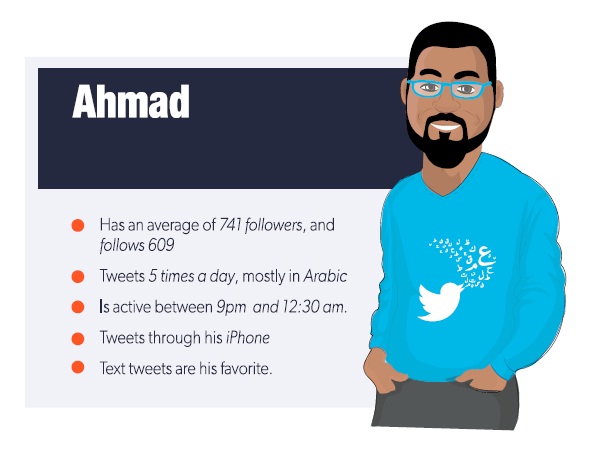
The team have also produced simple visuals and a video telling the stories of Mohamed, Ahmed and Sara, your typical Saudi social media users. You can see both below.

Based on The Online Project's research Mohamed is your average Saudi Facebook user

Based on The Online Project’s research Mohamed is your average Saudi Facebook user

Your average Saudi Instagram user is female and enjoys following social issues as well as fashion

Your average Saudi Instagram user is female and enjoys following social issues as well as fashion

Your average Saudi Tweeter is most active at night and engages most with text Tweets

Your average Saudi Tweeter is most active at night and engages most with text Tweets

If you’d like more info about social behaviour in Saudi, start reading the report and do reach out to the good people at The Online Project.

The Middle East’s love for Instagram (including its adverts)

Here in the Gulf we just love our pictures and photos. We love it so much that you’ll be hard pressed to find many in the Gulf who aren’t on the social media app. Only yesterday and in a period of less than five years Instagram announced that it had crossed the 400 million user mark (the app added 100 million users in the last 10 months alone). Seventy five percent of those 400 million users live outside the US, and the Gulf in particular has taken to the photo and video-sharing application.

In terms of the Gulf, it’s no surprise that Saudi leads the way – there are 10.7 million monthly active users in the Kingdom (just over a third of the population). The UAE follows with 2.2 million monthly users. And, to the West, Egypt has 3.2 million monthly active users. What’s even more impressive is daily active users – a whopping 6.1 million for Saudi, 1.2 million for the UAE, and 1.1 million for Egypt.

This all makes good news for Facebook, Instagram’s owner, which introduced advertising to the platform this month in the MENA region. Facebook rolled out advertising for select partners this month. The launch earlier this month included both regional brands such as telcos Saudi Telecom and Zain and retailers Souq and AlShaya, as well as global advertisers such as Unilever, P&G, Nestle, Mondelez, Visa, L’oreal and Pepsi. The first ad to go live was Souq’s, which you can see below.

Souq's Instagram advert was the first to be seen by Middle East users of the app

Souq’s Instagram advert was the first to be seen by Middle East users of the app

So far, from what I’ve been told, engagement with the adverts has been far higher than expected and much more than these advertisers are used to on Facebook. While there’ll be some negative sentiment from consumers who aren’t used to seeing advertising on their Instagram feeds, it seems that both Facebook and advertisers are onto a winner when it comes to Instagram advertising.

And for those of you curious people out there, the country with the highest penetration, is Bahrain which is closely followed by Kuwait. Both enjoy over 50 percent usage for Instagram; Bahrain’s penetration rate is over seventy five percent. The below visual was shared by social media expert Khaled El-Ahmed, and while the numbers may be slightly off from the above in terms of users, they’re still valid in terms of percentages.

PS For disclosure, I’m a P&G employee.

Getting engagement right – Zain Kuwait’s ‘We Know You Well’ ads

Advertising is a tortuous task – get it wrong (which most brands do) and your advert is either forgotten or, even worse, hated. Consumers will turn over as soon as they view the advert or hear the copy. But when a brand gets the advert right, the content becomes engaging, entertaining and even iconic. Think Fairy, Hamlet or Heineken.

Unlike in the UK, brands in the Middle East are loathe to do things differently. The Kuwait-based telco Zain is different however. They’re often looking at pushing the envelope in terms of both creativity and message.

My wife stumbled across a couple of adverts run by Zain this Ramadan. Named ‘We Know You Well’, these adverts which are purely aimed at promoting the brand are a fun poke at the younger generation of Kuwaitis and how, despite their lifestyle changes, they still revert to their old selves. If you know any Gulf Arabs, especially Kuwaitis, Saudis or Bahrainis, ask them to explain the particulars to you. The message in the second video is easier to understand, but the nuances and details, from the accents to the music and the voice-over text are uniquely understandable to anyone who knows Kuwait. The title of the adverts also plays on the telco’s own name (Zain means well or good in Arabic).

The adverts are simple, the message is clear, and the content is not only engaging but entertaining (both thanks to the voice-over as well as the acting). The characters are believable as well. All in all, they’re a powerful piece of content which consumers can not only understand but enjoy.

For an added extra, Zain also released a behind-the-scenes video on social media.

If you want to be bold, then look no further than Zain Kuwait and how the telco does advertising. You are truly Zain my friends…

Trying something new – the Parenting Game

For those of you who don’t know me personally, I’ve been fairly busy of late. The lack of sleep and general state of red eye has been caused by the arrival of my little princess.

As a first time father I’m both delighted with living the role and taking up my responsibilities (I genuinely do enjoy the 2am feeds and burping walks).

But what I also want to start doing is blogging about this, particularly my experiences. I’m going to start reviewing things that my little one loves and which keep her safe and sound.

I hope you enjoy reading these blogs as much as I do living them with my little one.


#AylanKurdi, the image that has defined the refugee tragedy and what you can do to help

There are moments when we come across an image that is so powerful that it can drive us to tears. Such an image can galvanize a generation, it can melt the coldest of hearts or it can create a well of emotion inside of us. Think of the Vietnam war’s “Girl in the Picture”, of the naked Vietnamese girl who had been burned by napalm and was in agony, or the picture of the lone student protester who held up a column of tanks during the Tiananmen Square protests of 1989.

This morning, I saw another image that was so powerful it literally made me cry just looking at my screen. The images below are of a three year old Syrian boy whose name is Alyan Kurdi. Like hundreds of thousands of others from Syria, Aylan and his family sought refuge and a new home in Europe.

As a father of a young child, all I care about is her safety and well-being. I can not imagine the horror that Aylan’s father, who was on the boat with Aylan and who lost his other son as well as his wife, is now living through.

This image of three year-old Aylan Kurdi is the story of Syria’s refugee tragedy. Alyan drowned while his parents were trying to reach the Greek island of Kos from the Turkish mainland (image source: Reuters/The Independent).

My one hope is that this image and story will melt hearts across Europe and worldwide, and drive people to step up and help those from Syria and other countries who are fleeing violence and who want to make a home for themselves in a new country, a home that is safe where they can live far from the shadow of death.

For me, Aylan’s story and the images taken by Reuters are heartbreaking. I beseech you to take action, especially if you are European. You can either the suggestions from the Independent or donate to organizations such as UNICEF or Save the Children which are supporting Syrian refugees.

Let’s do more, let’s help those in need. Let’s join together to ensure that there isn’t another Aylan.