Culture, Empathy and Changing Views – Why Communicators Must Be Aware Of How Global Trends Can Impact Local Populations

Have global movements such as Black Lives Matter shifted views on Israel and the Palestinians?

The past couple of weeks have been remarkable; we’ve seen many across the world voice their opinion on events in Israel and the Palestinian Territories. What’s been marked is how support for Palestinian rights is growing, especially in the United States. We’ve had voices in Congress stand up and argue that how Palestinian citizens are treated is akin to apartheid. That would have been unthinkable even a decade back.

What’s indisputable is that civil debate and activism around race in the US and Europe, from causes such as Black Lives Matter (BLM) to colonial historical legacies, is pushing many people to rethink how they view conflicts in the Middle East. There’s been lots of good writing on this recently, such as this piece in the Washington Post on BLM and the Israeli-Palestinian conflict.

What’s also been fascinating to see is how local populations in the Gulf, most especially in the UAE and Saudi, have spoken with anger and emotion about what Israel has done, both in Gaza and in Jerusalem. Only last year, the UAE and Bahrain signed the Abraham Accords with Israel, formally establishing ties between the three countries (they were followed by Sudan and Morocco).

At the time there was an outpouring of support in the UAE among nationals for the agreement, and little in the way of pushback (there was noticeable pushback in Bahrain). It’s rare for nationals to actively voice their own views online, if those views go against governmental policy. To quote a recent piece by the Associated Press, “No matter what your national priorities are at the moment or regional priorities are at the moment, when stuff like this happens, the Palestinian issue comes back and hits you,” Emirati political analyst Abdulkhaleq Abdulla told the AP’s Aya Batrawy.

So, what can these two points teach us? Firstly, global events have never been more interrelated, thanks to the raw filter of social media. And second, raw emotions can still overcome national considerations, especially when it’s a religious issue.

As communicators, we’ve got to be able to understand the implications of these issues for our audiences. We keep talking about reading the room, and being the link between the outside and the inside. Which is true. But how many brands are proactive on these social issues, rather than reactive?

On that note, I did wonder about the timing of an award by the local public relations association last week. They gave out two fellowships, recognising people for their service to the industry. One is the head of communications for the UAE’s foreign ministry, who’s greatest success to date has been communicating the Abraham Accords.

While this person is a fine communicator, couldn’t the association have delayed giving this award? Would it have been more sensitive to do this, in light of people’s feelings about the conflict?

As always, am happy to hear your views. Let me know via the comments or on social media.

Comms Conversations – A Twitter Space to Talk About Big Issues in MENA

I’m excited about being able to take the discussion online through audio

It’s about time we talked openly about big issues for communicators in the Middle East, and what better way to do this than having a conversation in a chat room?

That’s the idea for Comms Conversations, which I’m going to start hosting on Twitter Spaces (I’d have loved to have done on Clubhouse but it’s not usable in the UAE or Oman).

Every couple of weeks, we’ll host a new discussion on Twitter Spaces. For up to an hour, we’ll share views and experiences on big issues we all face.

The first Comms Conversation will happen on Wednesday the 26th May at 11.30am Dubai time. We will be joined by the editor-in-chief of PRovoke Media, Arun Sudhaman.

Join us then, and follow @alex_malouf on Twitter as we speak openly about comms in the region – the good, the bad and everything in between!

We have much to learn from Asia’s Communicators

Asia-Pacific Association of Communication Directors | LinkedIn

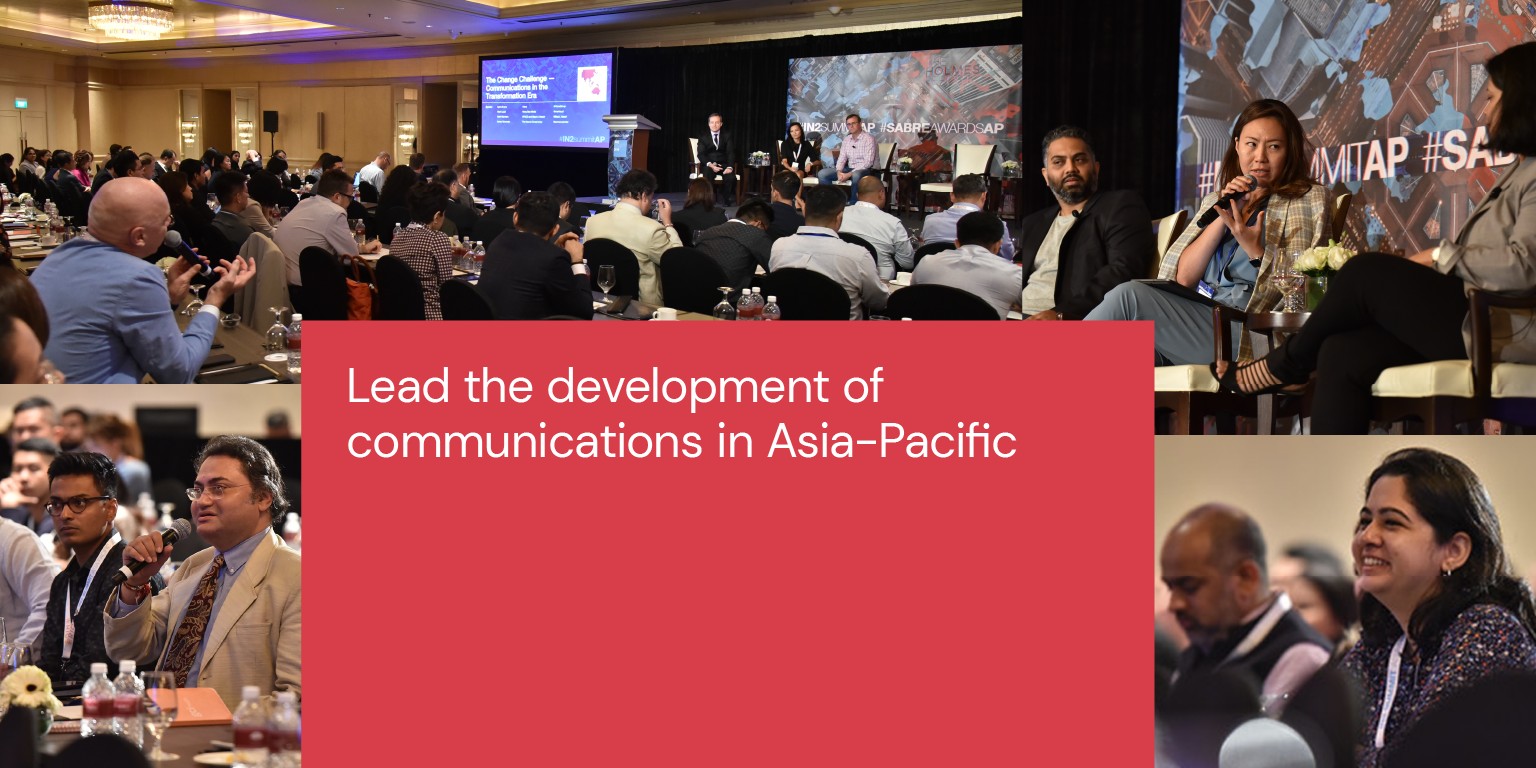
I’m excited. And I’ll tell you why. We’re launching the Asia-Pacific Association of Communication Directors in the Gulf. This matters to me, and should matter to us all. And here’s why. Many of us have looked to the West for instruction on communications. But I believe we need to look towards Asia. And here’s the simple reasons why.

Cultural Foundations

In many respects, our cultures are very similar. The Middle East is a blend of high context cultures, with many things left unsaid. That’s the same for much of Asia, where cultural awareness is key to communicating. We share religious similarities, and common linguistic traits. Our governance structures could also be described as similar, with a certain opaqueness when it comes to public lobbying. And then there’s the growth of regional hubs such as Singapore, which resemble Dubai in many ways.

Similar Challenges

And then there’s the issues that we face. There’s a fascinating research article by Jim Macnamara, Ana Adi, May Lwin, and Ansgar Zerfass about PR management across Asia Pacific. For anyone in the Middle East, it’s like déjà vu, with a focus on digital, issues around trust, linking business needs to communications, and dealing with increasing amounts of information. If anything, we’re closer to Asia-Pacific in our challenges than any other region.

Shared Experiences

What’s fascinating is our shared experiences. Asia’s communicators have dealt with a myriad of challenging issues, such as the Asian Financial Crisis, the SARS and H1N1 pandemics, and a host of political crises. What’s also fascinating to look at is how many communicators in the Middle East hail from Asia. There’s more Asian expats in the Gulf working in communications than from any other region. And we have much to learn from them and from communicators across Asia-Pacific.

The APACD

I believe that the APACD can be a bridge to gap the Gulf and Asia-Pacific. And as the co-chair, alongside my good friend Saba Al-Busaidi, we’re going to work with the APACD to bring their activities to the Gulf, so that we can learn from our colleagues in Asia-Pacific, as well as share our own experiences and abilities with them. That’s why I’m excited. If you want to know more, go and visit their website (click on the below) or reach out to me to know more.