If you don’t like it, then leave! Hey @Dutweets and how not to deal with customers online

One week, two social media blunders in the United Arab Emirates. First we had Subaru Emirates and now we have Du, the UAE’s second largest telecommunications company, getting everyone into a tizzy.

The background to the story, which has been covered by the UAE-based magazine Computer News Middle East, is an increase in charges for the company’s home user pricing plans. The price increases, which have risen by up to 37 percent, seem to have been posted on the company’s website rather than having being formally announced by the company.

Unsurprisingly, consumers haven’t taken to Du’s price increases (note – for data services the UAE operates a monopolistic system whereby you have to purchase from the sole telco who is licensed to operate in your area, which is either Du or Etisalat). Du’s twitter account, @Dutweets, has been inundated with tweets from aggrieved consumers who understandably don’t want to pay more for their existing service and don’t want Du’s offer of additional phone minutes in compensation for the higher prices. Have a look below:

Unfortunately, for the people in the company running the Du account (Du handles social media internally I believe) things have gone from bad to worse. One reply has gone viral and is receiving a swathe of negative feedback on Du and its social media efforts.

I do feel for @Dutweets as they’re having to face the fallout from a pricing decision which has been poorly executed and hasn’t been communicated in the right manner – from a customer perspective there’s no justification for a price rise for the same service, especially when Du’s customers have no other provider and when their existing contracts should be honored for the contracts’ duration. However, if a company isn’t willing to resolve issues through social media then what’s the point of entering into a dialogue with the community? And no matter the frustration levels you can’t respond to customers in a manner that seems unsympathetic. So please, no more Hey! messages @dutweets. Understand the concerns, pass on the message to the executives and wait for a positive message from upstairs. Don’t do a Subaru, because you’re only going to make things much, much worse for yourselves.

https://twitter.com/WildeTrude/status/364691859576061954

https://twitter.com/alextohme/status/364719579089485826

Subaru Emirates, Facebook, sexism, racism, and loss of life = a social media disaster

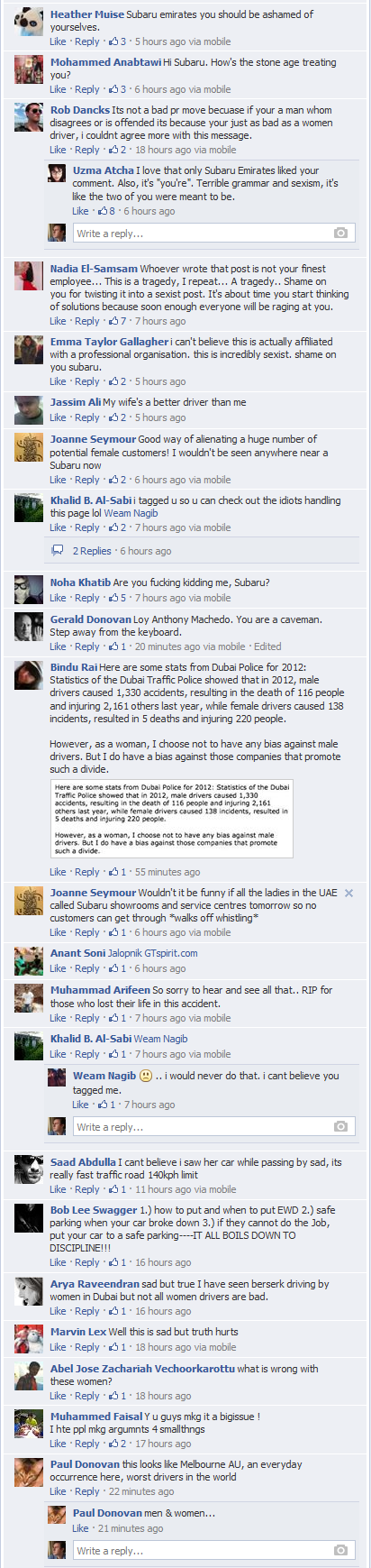
I’m a hardened comms person/journalist. I’ve seen a lot of materials which offends and much of that material doesn’t surprise me. However, this morning I was wincing at a post on Facebook, on the UAE page of the automotive brand Subaru. The post, which relates to a recent accident which claimed the lives of four people, offends both women and a specific nationality. While this isn’t enough, not a single positive piece of advice is given to drivers to help avoid such a tragedy in the future. The post is screen-captured below. And to ensure maximum shock value what would you title such a piece? ‘Women drivers at it again’.

For me, pretty much everything that could have been done wrong was done wrong with this post. Frankly, it's disgusting.

For me, pretty much everything that could have been done wrong was done wrong with this post. Frankly, it’s disgusting.

To fan the flames of outrage further, the admin person does not apologize but rather seeks to defend the comments against the criticism (sixty comments and counting and 58 shares within 21 hours). This has gone out to 15,000 accounts who have liked the page and has been distributed to hundreds more through the shares. Depending on Subaru Emirates’ advertising policy in the UAE this could have reached hundreds of thousands more. Stepping aside from the grotesqueness of the post, it’s a remarkable thought that the company could have alienated over half of its potential buyer base. As an aside, I doubt that the page has asked permission from the newspaper Emirates 24/7 to use this image in a commercial setting.

I’m not going to delve deeper into this as there’s little positive about this episode apart from to learn what not to do when promoting a brand through Facebook. Subaru, please do the right thing and apologize for the post and ensure that the admin person learns the error of their ways.

Comments are below for the post (apologies for the size but it’s easy to zoom in and view/read).

This is the first comments screen shot. Note the defensive post by Subaru Emirates and the anger of the responses.

This is the first comments screen shot. Note the defensive post by Subaru Emirates and the anger of the responses.

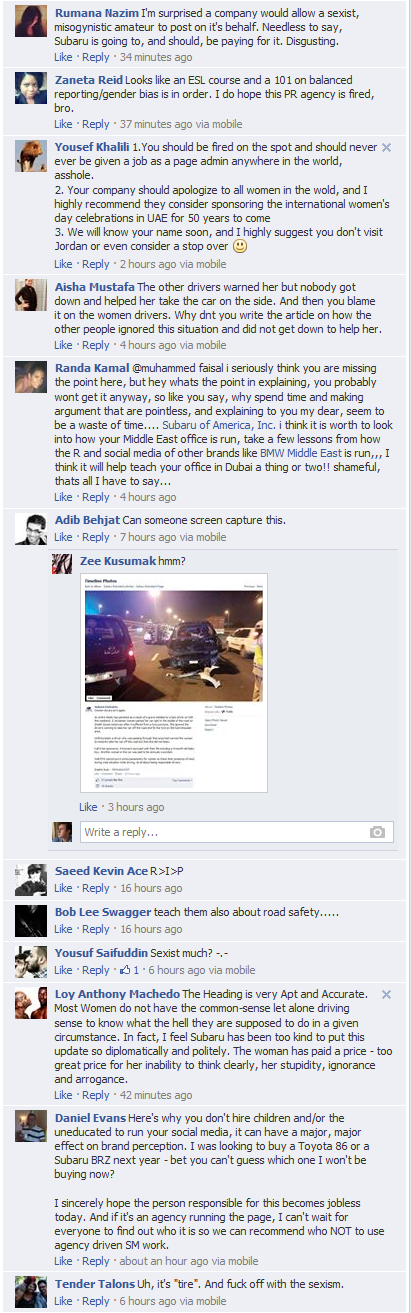
And it goes on...

And it goes on…

And on and on...

And on and on…

I’m sure that Subaru has guidelines for appropriate social media usage for its internal staff and agencies. They need to ensure that these guidelines are understood by all and that they are followed by their social media admin persons. I’ll be writing a how-to blog for how to use Facebook properly soon. As a responsible individual, we all need to understand the other. That’s even more true when you’re running someone else’s brand on their behalf.

Social media and diplomacy – @IsraelintheGCC, Israel’s virtual embassy in the Gulf

The launch of the @IsraelintheGCC twitter account is a cheap but potentially effective media channel for the Israeli government

The launch of the @IsraelintheGCC twitter account is a cheap but potentially effective media channel for the Israeli government

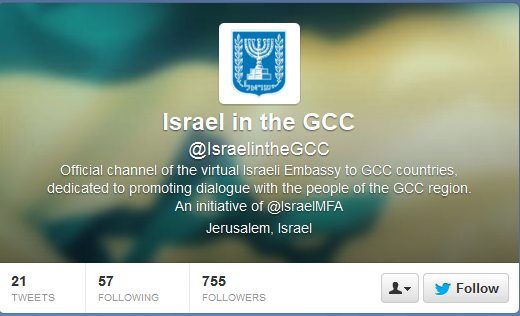
No matter your political persuasion, you have to admit that the Israelis are an ingenious bunch. Their latest idea is a simple concept, a virtual embassy for a part of the world where there’s little/no Israeli State presence, the Gulf. Israel, which doesn’t enjoy official diplomatic relations with any of the Gulf states, has launched a ‘virtual embassy in the Gulf’ through Twitter. The account, which is named @IsraelintheGCC, aims to “open lines of dialogue” with people living in the Gulf according to a report by the UAE-based English-language daily Gulf News. According to the Israeli daily Haaretz, the person behind the idea is Yoram Morad, Director of the Department of Digital Diplomacy at the Ministry of Foreign Affairs of Israel.

Not unsurprisingly, Israel has always faced challenges when trying to communicate its point of view to its Arab neighbours. However, that hasn’t stopped the State from engaging various mediums to argue for its policies. Israel launched an Arabic-language television channel in 1994 following the announcement of the Israeli-Palestinian peace process. The establishment of the @IsraelintheGCC twitter account follows news of a potential re-engagement between the Israelis and Palestinians as well as mounting pressure on Iran to halt its nuclear enrichment programme.

It could be argued that Israel has been much more active than the Arab states in terms of communicating its key messages – there were plans to launch a Hebrew-language channel in Egypt as of last year according to the Christian Science Monitor, but I haven’t heard much in the way of an actual launch.

The messaging employed by @IsraelintheGCC, which is being run by the Twitter account of the Israeli Foreign Ministry, would appear to be aimed at propagating a more diplomatic tone than that of Israel’s internal politics. The account, which has tweeted 21 times to date, has only quoted the country’s Prime Minister twice (its fair to say that Bibi Netanyahu wouldn’t win many popularity contests in the Gulf), but it has talked about social media in the Arab world, sustainability issues, and wished followers a Ramadan Kareem. The one time Netanyahu has been quoted was in relation to European sanctions on the Lebanese organization Hizbollah which isn’t well liked in the Gulf due to its pro-Iranian stance. There are tweets in Arabic too. Have a look at some of the posts below.

Over the past couple of years social media has allowed companies, politicians and celebrities to directly bypass the media and reach out directly to anyone that wants to listen. Now the same can be said of social media for States who, for diplomatic reasons, cannot establish a physical presence. I’ll be following the account, and am looking forward to seeing how long this project lasts, how much dialogue it generates and how successful it becomes for the Israeli government.

Why do Middle East executives not blog and five reasons for starting a corporate blog today

Is this question even relevant any more? Middle East execs, what are you waiting for? (image source: http://www.homeschoolblogging.com)

There’s no doubt about it, blogging is huge. But don’t take my word for it, let’s look at the numbers. On blogging platform WordPress there are almost seventy million blogs, which are read by 360 million people each month. There’s even more blogs on the Tumblr (over 100 million as of April 2013) and Livejournal platforms (approximately 62 million blog sites as of April 2013). While blogging may not hug the headlines as much as social media, the online writing format continues to grow. By the end of 2011, NM Incite, a Nielsen/McKinsey company, was tracking over 181 million blogs worldwide, compared to only 36 million in 2006.

Similarly, blogging has become one of the most popular tools among corporations in a number of geographies. Research by the Center for Marketing Research at the University of Massachusetts has pointed to growth across both the Fortune 500 and the Inc. 500 in 2012. Forty-four percent of Inc. 500 companies, the fastest publicly-firms in America, were blogging, while twenty-eight percent of America’s largest publicly-listed firms had a corporate blog. The most interesting statistic was that sixty-three percent of CEOs of companies who did blog contributed personally to content.

These statistics from the Center for Marketing Research at the University of Massachusetts Dartmouth underline how popular blogging is with corporations in the US (image source: http://www.umassd.edu)

It’s fair to say that the Middle East corporate world, and the Gulf in particular, doesn’t share this same level of enthusiasm for blogging. Few publicly-listed companies have a blog – we’re literally talking a handful – and even those blogs that are online are rarely updated.

While it’s hard to speculate on the reasons why so few CEOs blog here, the one assumption that I’d make is either they don’t feel a need to communicate with their stakeholders or they don’t want to reveal information through a medium such as a blog (this subject does need more research, but the lack of blogging here maybe reflects a wider lack of understanding of digital communications).

For a pastime that was once considered on the fringe of journalism, blogging is a pivotal online media channel for breaking news, sharing content and developing an audience. Blogs are often quoted in the media and it allows a corporation to control the message and yet promote a healthy dialogue with its internal and external stakeholders.

There are many reasons for starting a corporate blog, but we’re going to focus on the five basics which should underline to your chief executive officer the value in having a blog for your company and including blogging as part of our communications strategy.

1) It’s all about transparency

We all want and sometimes need more information, and yet corporations often keep too much of a lid on what external stakeholders see and know. A blog allows you to let others look inside the company and give them a better understanding of any and every issue you care to tackle, from sustainability to product development and customer relations.

The benefit of transparency is increased trust. Your (potential) customer base should better understand why you do what you do. Customers and investors will feel much better informed and they may be more willing to buy your product and invest in your company.

However, don’t take transparency to mean republishing your press releases in a different format. Some of the most successful corporate blogs are those that take a nuanced approach, that tackle the good and the bad. The less biased you are, the more likely you are to be trusted when publishing a blog.

2) Bringing some humanity to the Corporation

Corporations are often seen as soul-less, grey worlds. And the same can often be said for a corporation’s communications approach; the bland press releases, the staid web-site which rarely seems to be updated. As people we all thrive on interaction and dialogue and that’s why blogs are so successful. They’re your corporation’s personal voice, a voice that need not use corporate-speak and jargon but instead adopt a tone that is more informal and conversational.

Your blog will need a face. It could be the CEO or another senior person. But a blog doesn’t need to be written by an executive. Some of the most insightful blogs are written by product managers, researchers and others who are passionate enough to make what they are saying interesting.

The beauty of blogging is that you don’t need to stay on message all the time. You can write about diverse topics which don’t need to be about the company. Customers will see through marketing pitches so step away from the self-promotion. Instead, offer human insights into recent events, industry news and other related information. Let your customers know more about you than just your product line-up and they’ll begin to become more loyal to your brand.

3) Starting a dialogue

Unlike many other forms of communication, blogs are there to receive feedback as well as to be a voice for the company. When you engage readers and respond to dialogue – both positive and negative – you’ll be doing much more than just promoting your company.

Blogs are a great way to test the water, to understand your customers’ perception on certain issues. And even if the comments are negative, at least you’ll know what your customers are thinking and be able to respond and bring them back on board. Get talking on a blog and even those stakeholders who may not agree with your company’s strategy will appreciate your efforts to talk with and about these issues in a forum that allows for and encourages debate.

4) Drive that web traffic!

Want a business reason for blogging that your sales team can measure? How about the web traffic that a blog will drive to your site. Many web engines such as Google rank sites based on content, on relevance and popularity. A blog that is updated regularly, that has content that is popular and that links to other sites you’ll find your own corporate site being ranked much higher by search engines such as Google. Once your own blogging site has become established you’ll find others linking to you, which will further propel your blog to the top of the search rankings and towards the nirvana of a first page listing.

5) Measure your blogging success

The beauty of communicating on your own site is that you can analyze your visitor statistics, to understand where your visitors are coming from, what they’re doing on your blog, what they’re using to read your blog (are they viewing your blog on a PC, a tablet or a mobile?) and how they’re reaching your site. The beauty of web analytics is that the more you have, the better you can make your blog and improve your visitor numbers. From there you can start defining your blog’s goals and measure your goal conversion, review how you’re promoting your blog and understand which topics and keywords are the most successful in driving traffic to your site.

Unlike traditional public relations metrics, online measurement tools are instant and can give you a full picture of what you’re doing right and how you can improve your blogging outreach. Blogging technologies are evolving but don’t feel daunted by the technological challenge. Blogging can be simple enough to begin with, and most blogging platforms have their own in-built analytics to help you out.

Attacks on Al-Jazeera intensify following the fall of Egypt’s Muslim Brotherhood

Al-Jazeera has come under fire for its alleged political ideology in its coverage of Egyptian news (image source: islam.ru)

Who doesn’t know Al-Jazeera? The Doha-based and Qatar-owned news broadcaster became infamous for its airing of messages from Al-Qaeda’s leaders, most notably Osama Bin Laden. The news channel, which was created in 1996 following attempts by the British Broadcasting Corporation to set up their own Arabic channel failed, has always been the target of criticism partly due to its political inclinations and its inability to criticize its owners – the State of Qatar – while running documentaries and publishing news critical of neighbouring Middle East states.

However, Al-Jazeera has been having a particularly rough time of late following recent events in Egypt. partly of its own making but what’s even more interesting is the level of coverage that other media has given to targeting Al-Jazeera following the fall of the Muslim Brotherhood’s Government in Egypt.

Ever since the events of the end of June and the start of July in Cairo it’s almost felt as if there’s been a witch-hunt against Al-Jazeera due to its Egyptian coverage. The main accusation? Al-Jazeera’s bias towards the Muslim Brotherhood.

While I understand the accusation, the fact that many of those making the claims are firstly media publications and secondly state-owned doesn’t sit well with me. I know of few state-owned media who are not guilt of being their master’s voice and hence being guilty of their own allegations against Al-Jazeera. Furthermore, I always find it strange when media attack other media; it’s hard enough being a journalist as it is today without being criticized by fellow colleagues.

I’m going to highlight a couple of articles below, from the Dubai-based and Dubai-owned Gulf News. The first and the most conspicuous news item was a special which was run on the 14th July entitled Al Jazeera loses respect over Egypt coverage. Do read over and share your views with me on this one.

Founded in 1996 and funded by Qatar, Al Jazeera was supported by many Egyptian revolutionaries. Demonstrators in Tahrir Squar chanted for it. Also, Al Jazeera staffers were feeling proud that they contributed to the Egyptian revolution with their work and coverage. They made the network the most popular channel in the country.

However, when the now ousted president Mohammad Mursi pushed through an unpopular consistution last November, many Egyptians found themselves flipping from Al Jazeera to other Egyptian networks. Distrust over its coverage reached unprecedented levels and took it from being the most popular to the most hated channel — its staff were now feeling embarrassed as their reputation was dragged through the mud.

A senior official at Al Jazeera who did not want to be named said that while the network appeared to be a neutral media network it was still a political tool in the hands of the Qatari emir. “He personally visited the studios during the Iraq war to make sure no footage of dead of abducted soldiers was aired. It was clear he was under US pressure,” the official said.

“In a special meeting in 2009 attended by some media seniors in Doha, the Emir said that Egypt’s regional role must be ended forever,” said another official. “When the Muslim Brotherhood announced it would field deputy chairman Khairat Al Shater as a candidate in the elections, the news team slotted it as the second story in the news bulletin, but then upon special request from the Emir’s palace, it was bumped up to the first news story.”

A producer claimed that when people started complaining and accusing Al Jazeera of favouring Islamists in Egypt, the station started to exclude any outspoken political analysts and opponents of the Brotherhood from appearing on its screen. On the other hand, he said, video reports that propped up Mursi and the Brotherhood’s image were welcomed by management in Doha. Anchors who used to interrupt the Muslim Brotherhood’s opponents in live interviews were judged as excellent.

The perceived bias prompted many leading journalists and TV anchors to leave the network. Aktham Suliaman, the German-based correspondent who left the station recently, told the German magazine Der Spiegel: “Before the beginning of the Arab Spring, we were a voice for change — a platform for critics and political activists throughout the region. Now, Al Jazeera has become a propaganda broadcaster.”

Another Beirut-based correspondent said that “Al Jazeera takes a clear position in every country from which it reports — not based on journalistic priorities but rather on the interests of the Foreign Ministry of Qatar. In order to maintain my integrity as a reporter, I had to quit.”

Other interesting articles from Gulf News include Al Jazeera staff resign after biased Egypt coverage, Al Jazeera’s role raises questions, and media bias infuriates Egyptian moderates which I am quoting from below.

Al Jazeera’s Egypt channel (Al Jazeera Mubasher Misr) is blatant in its support for the Brotherhood giving no platform whatsoever to the other side. Egyptian authorities attempted to remove it from air, but failed to do so because Al Jazeera allegedly hijacked broadcast vehicles from Egyptian State TV, now protected by the crowds in Rabaa Adawiya.

Local reporters were so incensed they demanded the ejection of Al Jazeera’s senior editor in Egypt from a press conference. Some 22 of Al Jazeera’s employees resigned asserting pro-Islamist bias at the top. On Friday, I was shocked to see someone I recognised on the stage in Rabaa Adawiya, engaged in whipping up the crowds.

There was the host of Al Jazeera’s programme Bela Hodod (Without Frontiers) Ahmad Mansour advising on how to manipulate media coverage and insisting that pictures of June 30 massive anti-Mursi protest had been photoshopped.

June 30’s aftermath has not only thrust the Arab world’s most populated country into uncertainty, it has eroded media credibility and prompted the crossing of a thin red line between honest reporting and political/ideological propaganda. Journalism requires an ethical revolution before Al Jazeera, CNN and others can ever be trusted again.

What I find ironic is the lack of coherency of the argument as it relates to allies. An example in point would be Bahrain. The island’s press is markedly pro-government, and yet there’s no media bias criticism from those who have pointed their finger at Al-Jazeera. If you’re going to adopt an argument at least be consistent in its use. Otherwise, why should we the public trust any of you?

What are the dos and dont’s regarding defamation in the UAE

Defamation in the UAE is a criminal rather than a civil matter and the burden of proof is on the defendant. So be aware of the risks when you post online (image source: http://www.turbosquid.com).

After the outcry surrounding the arrest of the videographer who filmed an alleged assault in the street this week I thought it best to recap what defamation in the UAE covers and how to ensure that you don’t get into issues when creating and uploading content to the web.

Defamation in the UAE is different to most European jurisdictions in that defamation is a criminal rather than a civil matter. Raising a defamation case in the UAE is easy to do (actually, it’s much easier to do here than in other Gulf states including Saudi Arabia) and there’s no distinction between public forums and being online. The basics, as noted by Adil Khan in a post for sovedo.com, are below.

  • It is publicly forbidden to take a picture of another person without their permission.
  • Verbal abuses or gestures (even without the presence of a witness) can also lead to a fine and/or sentence.
  • Defamation via libel (written) or slander (spoken) is dealt by a criminal court as opposed to a civil court, where punishments would only include a monetary fine.

The burden of proof is on the defendant to show that the allegations are false. Similarly, truth isn’t an absolute defense if the comment or content has proved to be damaging to the reputation of the person or organization who/which claims to have been defamed.

The issue of defamation gets even more complicated when it comes to social media. Blogger extraordinaire Alexander McNabb covered a case back of May of a University Lecturer who’d been charged of defamation for writing a blog about his experience with a previous employer. All social media channels are considered to be public forums, regardless of where those forums are hosted. Social media channels are considered to be prominent public forums and even those people posting anonymously can be prosecuted.

Two legal counsels from law firm Clyde and Co., Rebecca Kelly and Sharon Procter, have published one piece on AMEinfo that is worth a read both for individuals and their employers when it comes to social media and defamation in the UAE.

Probably, the best piece of advice is play it safe if you’re not sure whether your comments could be construed as defamation or not. And if you’re still unsure, remember the penalty for being convicted of defamation can be up to two years in prison and a fine of as much as Dh20,000 (US$5,444). So post in haste, repent at leisure.

How long do we have to wait for competition in the UAE’s telco space?

Sometimes you have to wonder if anyone at Du, Etisalat or the TRA is listening when it comes to doing a deal on market liberalization (image source: http://www.healthyblackmen.org)

As the saying goes, everything comes to those who wait. If you’re waiting for competition in the UAE’s telco space you may have a couple more years of waiting. Reuters published a story today detailing how despite talks beginning in September 2009, Du and Etisalat have yet to agree terms for network sharing. The best bits from the Reuters piece are below.

The United Arab Emirates’ two telecom operators, Etisalat and du, remain at loggerheads over a deal to allow them to compete on fixed line services nearly four years after negotiations began.

Du and Etisalat already offer fixed-line, broadband and television packages in the UAE, but not in the same districts, with du confined to the newer areas of Dubai.

The two companies, which are both majority-owned by government institutions, started technology trials that would allow network sharing more than two years ago and an agreement was slated to be concluded by 2011-end.

But a report from the Telecommunications Regulatory Authority (TRA) this week shows the companies cannot agree on the extent of so-called bitstream access, which would enable one operator to permit the other to use its fixed network, or a method to determine the fees for allowing such access.

“The two licensees are still negotiating,” states the regulator’s report, which was published on its website.
“Bitstream access could have a significant impact on competition.”

The TRA states it will “impose a requirement to offer bitstream access products for both residential and business markets,” reiterating a commitment it made in a 2010 policy document.

Further liberalisation has proved fraught – mobile number portability, which would allow customers to retain their phone number when switching provider, has yet to be introduced despite the regulator previously stating this would be available by mid-2008.

Now, almost four years later ad yet we’re still nowhere near having any competition in the telecoms space in the UAE. The question is when is the UAE’s Telecoms Regulatory Authority going to step up and force the two telcos to agree a deal?

Across the region, we have some powerful regulators who have forced incumbent operators into making changes (Bahrain’s TRA is a great example of how a regulator should act on behalf of a country’s consumers). And yet, despite repeated promises from the TRA the UAE’s public is still waiting for a raft of measures that will liberalize the telecommunications sector, reduce costs and, hopefully, raise the quality of the country’s telecommunication services.

Just remember, if you’re waiting for the respective parties to agree and benefit from market liberalisation in the UAE’s telco sector it’s probably best not to hold your breath based on Du’s and Etisalat’s track record.

Citizen journalist beware – the perils of shooting video in Dubai

Dubai’s social media was buzzing yesterday with chatter about a video uploaded to Youtube of a local apparently beating a van driver. The video, which was initially taken off Youtube and which can be viewed above, shows the national using his agal to hit the Indian driver who’d apparently clipped his four-wheel drive and who hadn’t stopped during the initial collision. Part of the incident, including the national’s car license plate were captured in the video, which was reposted several times on Youtube. According to media reports including one piece from the daily Gulf News, the issue became a police matter not due to the alleged assault itself but rather due to the video going viral and the attention that it attracted.

A video of a government official beating a van driver was posted on YouTube has generated a public outcry and urged police to take legal action, said a legal expert.
“Initially it was an ordinary assault case, yet as soon as it was posted on YouTube, it went viral on social media channels. Since then, the case became of public concern and incited public opinion — that was when Dubai Police intervened. They took the required legal action against the involved persons,” advocate Mohammad Abdullah Al Redha told Gulf News.

Sources from Dubai Public Prosecution confirmed to Gulf News that investigations started in the afternoon as soon as they received the case.

Al Redha said: “It became a case of disdain and disparagement and particularly that it’s Ramadan, the month of mercy and forgiveness. When such incidents develop into a matter of public opinion and concern, police have the right to refer the case to prosecutors. According to the Criminal Procedures Law’s article 10, the Public Prosecution [in its capacity as the legal representative of the public right] can order the police to open an official complaint against the government official even if the van driver doesn’t do so.”

The case took an interesting turn today with the news that the person who took the video, a fellow driver, was arrested. According to Gulf News, the alleged defendant’s son lodged the case citing defamation of his father and family.

Major General Al Mazeina, acting chief of Dubai Police, said the Asian man who posted the clip was arrested after the Emirati official’s son lodged a defamation complaint at Al Ghusais Police Station.

“We only arrested the man who took the video because of a complaint lodged by the family of the Emirati official,” said Major General Al Mazeina.

He said that no one had the right to take pictures or film anyone without permission and acknowledgment from the person who is pictured.

“The man who took the video was supposed to take the video to the police or to the concerned authority to report the incident and then the police for sure would take action but instead of that the man posted the video on YouTube,” said Major General Al Mazeina.

The son told police that the video had been seen by hundred of thousands of people worldwide, which had damaged the reputation of his father and the whole family.

Major General Al Mazeina said the Asian man admitted to police that he took the video and posted it on YouTube and that he also sent it to some of his friends. He said the Asian man happened to be passing by at the time the incident took place.

Under the UAE’s cybercrime laws, recording videos in public without the permission of those being filmed is illegal and constitutes defamation. Despite the uproar over the issue, it seems that the authorities may not be willing to drop the case against the person who took the video despite calls on social media to reward his decision to film and post the event online. The message is simple – don’t film anything that could be construed as negative and share it online. Or else you could be facing public charges.

The Ratner effect in Dubai: Ahmed Bin Sulayem and Jumeirah’s Lakes

He’s the boss of Jumeirah Lakes Towers but ‘he doesn’t like lakes’ (image source: arabianbusiness.com)

For those people who are old enough and who lived in the United Kingdom during the end of the Thatcher years, there’s one piece of tabloid news that always brings back memories. On 23 April 1991 the then CEO of a popular high street jewelry chain called Ratners told an audience of executives at the Institute of Directors that his products were “total crap”. Just over a year later Gerald Ratner was out of a job as consumers deserted his shops in protest at his comments.

While it’s not on the same ‘did he say that’ proportions I enjoyed reading an article last week on the UAE’s news portal Arabian Business. The publication had interviewed the executive chairman of the Dubai Multi Commodities Center Authority Ahmed Bin Sulayem. The DMCC as it’s called oversees an area of Dubai called Jumeirah Lake Towers. The lakes part of the name is fairly accurate, in that the area does have a selection of bodies of still water of considerable size.

Back to the piece by Arabian Business, and Ahmed Bin Sulayem comes out with a whopper. The executive chairman of an area named the lakes doesn’t like lakes. What’s more, he wants to do something about them (and presumably the name of the real estate).

“It’s no secret, I hate lakes. I love more efficiency. The only lake that I think will be untouchable is the one facing the Dubai Diamond Exchange [because of] the view.”

With 65,000 people living and working in almost 7,000 registered businesses and 65 completed and operational towers Jumeirah Lakes Towers is one of the largest free zones in Dubai. However Bin Sulayem goes on to say that the lakes, one of the key designs of the community, are not needed any more.

“I don’t work like that. We don’t need [the lakes], the demand is here; we don’t need to do these things to attract businesses. If I do fill in other lakes it will not be the same set-up that the park [will have]. It will be something else that gives value to the community … whatever we can add that makes more value for the community without leaving and getting into traffic. It wouldn’t be extra towers though. That’s all I can say.”

What I enjoy just as much as the story itself, what with its controversial quote which is then expanded and elucidated upon, are the comments. One particular gem is:

Bin Sulayem,

You have no concept of community or people’s rights and desires!!!

We bought lake front property not something with a cheap tacky gold souk that nobody would want. Talk to your community first and don’t just come up with comments like this on a whim!

To his credit however, Ahmed Bin Sulayem does respond to reader criticisms in the comments section. His first comment is the below:

Ahmed Bin Sulayem
Friday, 12 July 2013 5:18 PM – UAE
Roadworrier, AHMED HANIF, MOHAMED HANIF AHAMED, omar faris, nimby, Faisal, F Backer, Sheikha & Michael all of you are more than welcome to come by my office or I can visit you in JLT to see what really grieves you, the article states my opinion not what will be done. No other Lake would be touched unless the community wants a change or an addition to the JLT Community. If you don’t live in JLT I don’t follow why you would be upset about any of this especially when we are getting recommendations from the JLT community to change all the Lakes into parks which I have reservations because if the other Lakes are to be changed they should be adding more diversity & value to the JLT community.

Your constructive thoughts are very much welcomed, you can tweet on our twitter accounts @DMCCauthority & or @TheJLTCommunity as for the roads you have @RTA_Dubai

However, despite this proactive outreach by Bin Sulayem my question is why talk to the media on this specific issue. As they’re expert at, Arabian Business have published two additional pieces on the issue which are worth reading, including one where Bin Sulayem hits back at criticsm and another vowing to clean up the lakes.

Wouldn’t the communications have been handled better by releasing a resident or business survey, undertaking a town-house meeting with residents, listening to their opinions and then acting on their wishes rather than the boss saying I don’t like lakes and I want to change as implied by the article?

Isn’t it best to learn from the likes of Ratner and get the necessary media training to say what you want to say but in the right manner. But at the end of the day, shouldn’t someone be listening to the customers rather than talking to them. After all, isn’t the customer always right, even in Dubai?

Lessons in cultural misunderstandings from the Gulf

Are we more a melting pot or a basket-case of cultural groups? (picture source: http://kidspartyheaven.wordpress.com)


The Arabian Gulf is often called a melting pot of cultures, where diverse groups and nationalities meet, work and live together and understand one another. Every now and then, there are moments when a different reality comes to light, when it’s blindingly obvious that we still have a long way to go.

I had the pleasure of having two of those ‘cultural moments’ last Wednesday. The first was with Emirates, the national airline of Dubai. Emirates is an interesting organization, in that it’s one of the most profitable airlines in the world, is owned by the Government of Dubai, and yet most of its senior management is not from the Gulf region.

I enjoy flying Emirates, and I often receive a great service from the airline. I had to rebook both my and my wife’s ticket and pay for the difference over the phone. All went smoothly, until it came to the issue of payment. You see, the habit in the most of the Arab world, and particularly in the Gulf, is for the wife not to take her husband’s name for religious reasons. And yet, I couldn’t pay for her ticket over the phone because my surname obviously is different. The lady on the other end of the phone wasn’t an Arab, but she wasn’t the person who drew up the rules at an airline owned by an Arab government.

Cultural misunderstanding one was resolved not through explaining why my and my wife’s names were different – I did try my best – but for other reasons (I’m a Skywards airline rewards member, which solves everything over the phone). The second cultural crossed-wires was much more fun and less painful but just as much an eye-opener.

I received a message from a friend asking for information about a company I know. Here I was naively thinking he was looking for a job. Instead, he’d been asked by a parent to check up on a person at the company whom a family member had received a proposal of marriage from.

While I’m never averse to providing a job reference or to help someone in their search for the right role, I explained that I may have to draw the line on background checking someone I didn’t know to help facilitate (or not) a marriage request.

We often talk about melting pots, about coming together and living alongside others in harmony et cetera. But how much do we really know about the other? And how often does our lack of cultural awareness catch us out? With Ramadan only a few days away maybe it’s time we did more to understand each other and our diverse backgrounds?