Bahrain’s hidden pearl – Zaafaran Cafe

Bahrain is a wonderful place; it’s a country that is always full of pleasant surprises. My wife and her family told me about a restaurant called Zaafaran, a small place in the heart of Souq Muharraq that is known for its traditional Bahraini dishes. We headed down to Muharraq on a Friday morning and I had to keep my eyes open when looking for the place (Zaafaran is just after Souq Al Qaiseriya a right hand turn after all of the sweet shops on the main road for those who know Muharraq).

After spotting the place and finding a parking spot, which is no mean feat in Muharraq, we headed to Zaafaran. The restaurant itself is tiny, with seating for no more than 30 people. The decor is traditional, and the staff are also dressed to match in traditional Bahraini attire. The setting is almost as impressive as the food, with (comfy) wooden benches to plump yourself down on.

The breakfast menu is set, with a selection of small dishes that include balaleet or sweetened vermicelli with egg, nakhi which is a Bahraini twist on chick peas, mahiawa bread or bread cooked in fish sauce, fuul, spicy tomato beans, and Bahraini kebab sandwiches (which are vegetarian for anyone who’s interested). It’s most fun to eat with your hands and the bread basket which comes as standard.

I wouldn’t be doing justice to Zaafaran by saying that this place is remarkable both for the food and the setting. If you’re looking for both a wonderful eat as well as an amazing time out then head down to Zaafaran. It’s right next to Souq Al Qaiseriya which is one of the oldest markets in Bahrain and an amazing spectacle in itself. And as for the cost? It’s a whole lot cheaper than Dubai’s Biker Cafe’s breakfast for the best local breakfast in the Arabian Gulf and costs about 50 to 60 Dirhams a person including all the chai kerak tea you can woof down. Just down measure your cholesterol levels for a good few days after!

Enjoy the pictures and get down to Zaafaran while there’s still space left at this remarkable restaurant-cafe.

How communities are turning to social media when traditional media fails them: #Thx_Tom_Collins and Bahrain

Professor Tom Collins was the subject of a public campaign on the social media site Twitter. Supporters thanked him via the hashtag #Thx_Tom_Collins for his political stance and decision to resign (credit: Irish Times)

As the Middle East’s media channels have become polarized over the past 24 to 30 months, communities who find that they have little if any representation in these traditional media channels have made social media their medium of choice when spreading and disseminating their viewpoints and opinions.

A great example from Bahrain this week was a campaign organized to thank the Professor Tom Collins, the president of the Bahrain campus of the Royal College of Surgeons in Ireland (RCSI), for his decision to resign from his post after the cancellation of a major conference on medical ethics in island. The RCSI had hoped to facilitate the event at its Bahrain campus but the key organizer Médecins Sans Frontières cancelled the event shortly before it was to be held.

Professor Collins resigned after the news of the conference’s cancellation broke. He has been roundly condemned in Bahrain’s national media for his decision which he said was done “in protest over the cancellation of the two-day event which was to examine “medical ethics and dilemmas in situations of political discord or violence.” The conference’s themes were sensitive in Bahrain following widespread arrests of medics in early 2011 at the country’s main hospital and their subsequent trials, a number of which are still ongoing.

The Twitter-based campaign was launched on Thursday 28th March at 8pm Bahrain time and was organized primarily by many of the medical community in Bahrain who were arrested over the course of the two years.Their message was clear and I’ll post some of the most popular tweets below.

What I find fascinating about the above is the role of the media during a time of crisis. For me, media such as newspapers can have a viewpoint but journalists should (theoretically) report the facts. When you’re disenfranchising such a large proportion of the population what happens to that newspaper not only during a crisis but after the crisis has passed, when agreements are made and a compromise is drawn up. With traditional media suffering globally due to a loss of public trust should editors be fighting the demand to be so overtly biased? What are your thoughts?

Understanding the Gulf’s psyche through social media (well, mainly Twitter)

What are the religious police up to now? Didn’t they learn from #Dammam-Hayaa-Closes-Dinosaur-Show? (credit: expo2020)

I’m endlessly fascinated by social media and how people interact online. For me, online interactions tend to shed light on people’s off-line personalities. In this post I hope to share my own observations about how each of the Gulf’s nationals deals and interacts online.

Let’s start with Bahrain. Bahrain possibly has the highest concentration of social media users in the Gulf. Bahrainis are very media-savvy and that shows in their effective use of social media channels. The country’s polarization following the events of February and March 2011 is evident online, with the two sides doing their utmost to ensure that their voices are heard. Bahrain has some of the most-followed Twitter users in the Gulf but they inevitably relate to the political and human rights situation on the island. There’s a lot of trolls out there as well, so be aware that if you’re going to delve into any issue relating to Bahrain you’re going to draw attention to yourself.

Emiratis are fiercely patriotic and proud of their country’s achievements over the past 41 years. Emiratis speak in unison when it comes to politics and are the most supportive nationality in terms of the country’s leadership. Unlike Saudi, Kuwait, or Bahrain you’ll find little debate on the country and its long-term direction but more insight into social issues particularly those which affect the national community. You’ll find royal family members online, members of the Federal National Council, a police chief and lots of UAE-based expats.

Kuwaitis are known for many things, including being opinionated. This is no different online. The Gulf country with the most blogs per person Kuwait is all about politics and disagreement. Kuwait’s politics is just as vibrant online as it is in the country’s parliament, and when you mix in other electrifying issues such as the Bidoon, the country’s rulers, the Arab Spring and religion you’re going to come up with an incendiary cocktail. Some of the most interesting Tweeters are Kuwaiti bloggers and parliamentarians. Just handle with care!

The Qataris are a mischievous bunch. When they’re not commenting on Qatar’s latest attempt to buy a path across the globe (what next after Marks and Spencers?) they’re making the most out of their sense of fun with raucous commentary on the latest goings on in their country. Their musings on Qtel’s attempts to rebrand itself to Ooredoo were biting, as was the boycott against the very same company for its poor customer service (is anyone in the UAE and Etisalat listening?). The Qataris are a wonderful bunch to follow. And one or two of them love their Dunkin’ Donuts coffee!

Saudis, yes you cannot avoid them online just as you cannot avoid them in the physical world. I love Saudis and I love them just as much in cyberspace. They’re open, they’re diverse and they talk about everything. Saudis are not afraid to poke fun at themselves and they’re just at home talking about social issues, politics, arrange boycotts (aka AlShaya and Al-Marai) and even debate religion. There’s some remarkable Saudis online, from preachers to royals and ministers. Saudi is one of Twitter’s fastest growing markets. And they watch more Youtube than any other country worldwide. They are officially living online. And yes, one of them owns (a bit of) Twitter.

And finally, there’s the Omanis (I’m skipping the alphabetic sequencing on this one). I’ve rarely come across Omanis on social media, possibly because I’m not close to issues that they write about or follow. Omanis are known to be kind, courteous and have a fun sense of humour. Which means I really should go and find some Omani tweeters to detox from all of the politics and debate in the rest of the region.

How much variety and discrimination is there in the Gulf?

The GCC is as diverse and complicated as any other part of the globe (credit: rasheedsworld.com)


Looking on in from the outside, most expatriates see the Arabian Peninsula as one monotonous geography. The women wear black (unless they’re Kuwaiti) and the mean wear white. The language is the same, and everyone is a Muslim. And that’s the Gulf.

Well, hardly. Each country is unique, and offers a wealth of diversity in terms of culture, history and opinions. The range of accents in Bahrain is so prominent that a local will be able to tell where a compatriot may be from how the greeting alone.

Saudi is the most diverse country in the region. Its twenty million nationals come from all four corners of the world, and don’t be surprised to meet a Saudi whose roots trace back to Indonesia, China, or Western Africa. The Kingdom’s Western Region is the richest melting pot you’ll come across, thanks to hundreds of years of pilgrimage to the two holy cities of Makkah and Madinah. Often foreigners think that Dubai or Doha are the two cities that offer the greatest contrast of cultures and groups, but they don’t come close to what Jeddah has to offer.

And Christians in Kuwait and Bahrain? And a Jewish community in Manama? Yes, they’re locals (but there’s not many of them).

And of course, with variety comes discrimination. There’s a good deal of nepotism across the Gulf mainly due to the tribal, bedouin nature. It’s not uncommon to find a certain group dominating in one company – it’s not so much where a person is from as often as what their tribal name is. Many Saudis don’t use their tribal names any more. And there’s also discrimination based on region (Jeddah versus Riyadh, Dubai versus Abu Dhabi etc), on the history behind the family name (in other words how far back can the family’s genealogy be traced), and on religion (which mathab or religious affiliation a person adheres to).

While this isn’t unique to the Gulf (tell me a place where there isn’t any discrimination) what I do find interesting is the institutionalized discrimination in certain parts of the GCC. Some states, most notably Saudi Arabia, Kuwait, Bahrain and Oman count GCC nationals as locals when it comes to hiring and nationalization quotas. The UAE and Qatar do not – when they say local they mean local. For a European the difference in policy between the two groups is hard to fathom (especially when considering the relatively small populations of both Qatar and the UAE when compared to Saudi Arabia).

So, the next time you’re sitting in the coffee ship and sipping on your coffee do remember to ask yourself where the gentleman in white is from. You may be surprised at how much you can learn about a region that is full of culture and contrast.

Cafe Lilou – Bahrain’s cake heaven

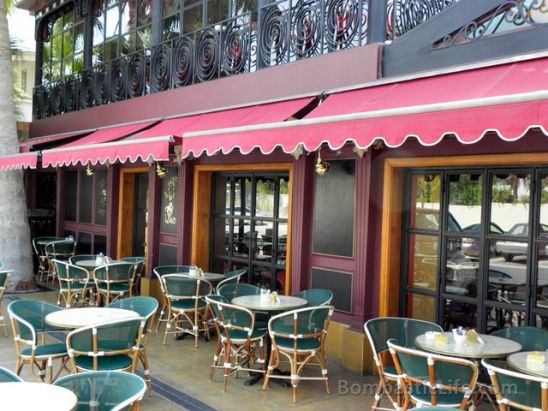
I love cakes. And there’s one place I love more than anywhere else when it comes to cakes. Cafe Lilou is an institution in Bahrain, it’s a place where people meet and forget about trivialities such as calories. There’s two sides to Cafe Lilou – the first is the cafe itself which is fairly easy to spot (pictured below) just after Gulf Hotel.

This is the coffee shop that everybody in Bahrain knows and loves. It’s jam-packed at any time of day or night (credit: Bombasticlife.com)

And then there is the bakery which is hidden behind the back of the cafe about 500 yards away in a warren of small lanes. This place is an Aladdin’s Cave when it comes to cakes. The team here can and do make anything, and their flavours include chocolate fudge, chocolate pistachio, vanilla nutella oreo, chocolate nutella oreo, marble cake, vanilla fudge, rose cake, red velvet cake and almond cake. In addition there’s fruit flavoured cakes.

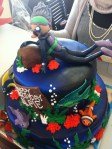
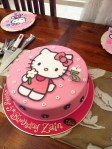
If you doubt my words as to the skills of the team at Cafe Lilou, have a look at these two beauties. One is a Hello Kitty Cake from Lilou’s stock catalog. The second is a custom design for me. And what’s even better than the design is the taste. Wooooowwww!

If you want to know more about Cafe Lilou and gain several kilos in the process then visit their Facebook page and get dialing!

A tale of two CRMs – Emirates and Bahrain Air

A couple of days ago was a very special day. Many years back something of immense importance occurred and I popped out into this world. I’m so proud of this day that I tell each and every company that I come into contact with online through their forms pages. My favourite firms out there are the airlines, who want me to repeat my birth date each and every time I think of flying with them.

Well, that special day which only comes once a year neared and I was pleasantly surprised to receive a host of name customized emails from businesses I have dealt with reminding me it was my birthday. I’d used Bahrain Air a couple of times, most recently at the end of May in 2012. I was impressed that they’d set up the feature (it isn’t too hard to automate the process if you have a good database and e-marketing tool) and that they’d not only sent it to my own email but also my wife’s email which I’d booked for the same trip.

Thank you Bahrain Air for the kind thought!

Thank you Bahrain Air for the kind thought!

And then there was another airline, the airline which we were traveling on that very day. I first traveled on Emirates in 2003 and love the airline. However, did the good people remember this ground-breaking day? Unfortunately they didn’t, despite me reminding them every two weeks when I travel between Dubai and Bahrain. No card, no happy birthday. There was a boarding reminder however (does that count?).

Technology is a wonderful business leveler. I was impressed by an airline that is low-cost and that has a fleet of four planes. In contrast Emirates has at least 190 planes and spends ridiculous sums on marketing every year, which Bahrain Air certainly does not. That Bahrain Air was able to make an impression at such a low cost says wonders for their marketing team, unlike the good people at Emirates. Now if only they were able to offer an added incentive to travel with them, a call to action such as a small discount, I’d probably have gone and booked immediately.

As for Emirates that day, even the world-class persuasive powers of my wife weren’t enough to get us an upgrade (it’s his birthday she said with a stern voice). And to top it off, the in-flight entertainment system wasn’t working. Oh well, at least we were spared from the 15 minutes of advertising that the airline is now showing in-flight.

At least I didn’t see this on my in-flight with Emirates… (Photo credit: Themetapicture.com)

Juice that pains the heart

Image

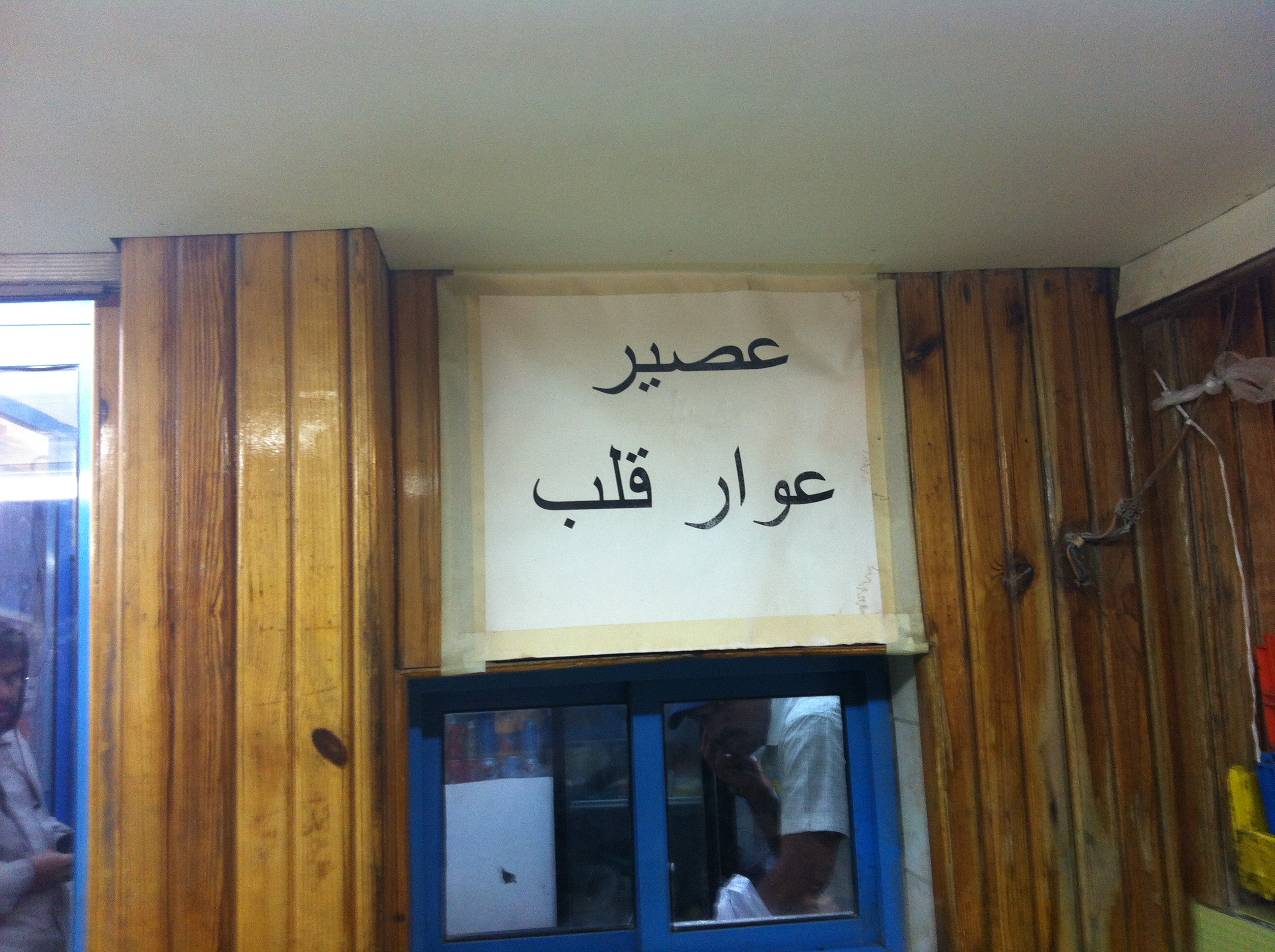
No, this isn’t a 1980s love ballad or a line from a new age diet fad. This sign, and the line above, can be found at our favourite juice shop in Bahrain. The Arabic literally reads as juice that will pain the heart. It’s very tasty and doesn’t give me indigestion, but then I do have a cast-iron tummy.

PS there’s more prose at this place. Apparently, they also do cordon-bleu grilled meat sandwiches.

I don't think these guys read the marketing manual (unless they skipped to the shock marketing chapter)

I don’t think these guys read the marketing manual (unless they skipped to the shock marketing chapter)

Get your V for Vendetta masks, now in Bahrain!

Image

While walking to pick up the tamees and nakhi I spotted this bizarre advert in a certain part of Bahrain. Needless to say, we’re way past Bonfire Night, so I wonder what people would want to buy a V for Vendetta mask for? And are there any freebies which come along with the purchase?

Anybody in Bahrain fancy a V for Vendetta mask?

Anybody in Bahrain fancy a V for Vendetta mask?

Lessons on leadership… Apple, Bahrain and Dubai

It’s (hopefully) common sense that leadership can make or break any company or organisation. A leader, normally the CEO, will define the company’s direction, they will set the agenda, lead the execution and innovate.

Leaders like Steve Jobs define their organisation and create success on their own terms, much like Dubai’s Sheikh Mohammed Al Maktoum has done.

The late, great Steve Jobs has been acclaimed as one of the best CEOs in business. Jobs did it his way, he focused on the business and on creating works of art/technology that changed how we live our lives.

For me, the Apple of today is different to the Apple of yesterday. Nothing would go out of the door until Jobs was satisfied that the product was right and ready.

A simple example is cited by Mike Elgan in his recent article on Apple.

Apple had been developing the iPhone for years. After major arguments about materials, the team had decided to use reinforced plastic on the screens for the first version. That was the plan, and everybody spent more than a year working on it.

Just one month before the first iPhone shipped, Jobs summoned his team and issued an edict: The screen would be glass. He just didn’t like the plastic screen.

Of course, Job wasn’t perfect. He had his flaws. But I can’t imagine that Jobs would have let Apple Maps into the world without the solution being ready (the linked article here does make the point that Jobs himself was late to realize the importance of a maps application). As a leader could we imagine anyone else taking Apple forward better than Jobs? No. That is evident more so today when he’s missed.

So how is this relevant to us in the desert? I was talking to a work colleague, a well-respected Emirati, about the Gulf and how it has developed. He was talking about Bahrain, and commenting on how 20 to 30 years back Bahrain was where Emiratis would travel to shop and vacation.

What he was saying made sense to me; Bahrain had a well-developed economy at the time and Dubai was setting out on the journey to become one of the globe’s trading hubs. Bahrain was the GCC’s banking hub, Gulf Air was the airline of the region, and the island could do no wrong.

Fast-track to today, and it’s as if the roles have been reversed. Dubai is now the trading hub for the region, and it’s the one must-visit destination for business and tourism. Emirates is the world’s largest airline by passenger numbers, Dubai-owned Jumeirah is becoming a global brand for the hospitality sector, and, despite the credit crunch, Dubai is still thriving. As for Bahrain, it’s fair to say that the country isn’t doing as well as Dubai.

Countries are no different from companies. The leadership shown by the ruler, the prime minister or whoever at the top can be and often is the difference between success and failure. Nowhere is that more apparent than in today’s Gulf and in the vision set out by Dubai’s ruler Sheikh Mohammed Al Maktoum. Leadership is success, and a lack of leadership can be the opposite.

A talented Khaleeji designer and her creative work – have a look!

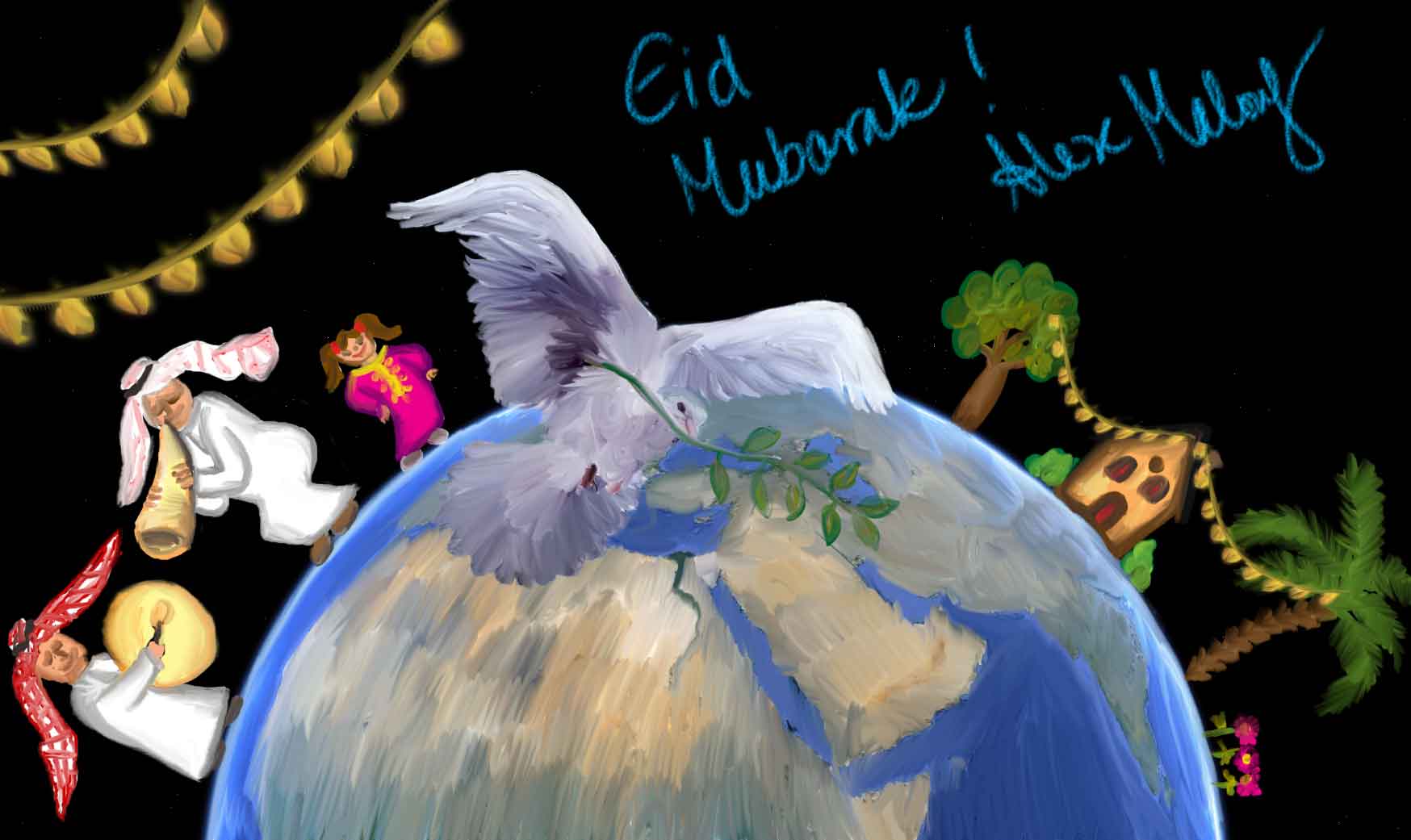
Eid has already passed but I wanted to share a sample of her work which was done for me on the occasion of Eid Al-Adha. Jehan Abdulkarim is a marketing executive during the day, but she’s also an incredibly talented designer and photographer. I hope to share more of her work here with you, but for the meantime please do enjoy the below and let me know your thoughts!

A greeting card for Eid created by my good friend Jehan Abdulkarim.